Minoksikutan®
Ukraine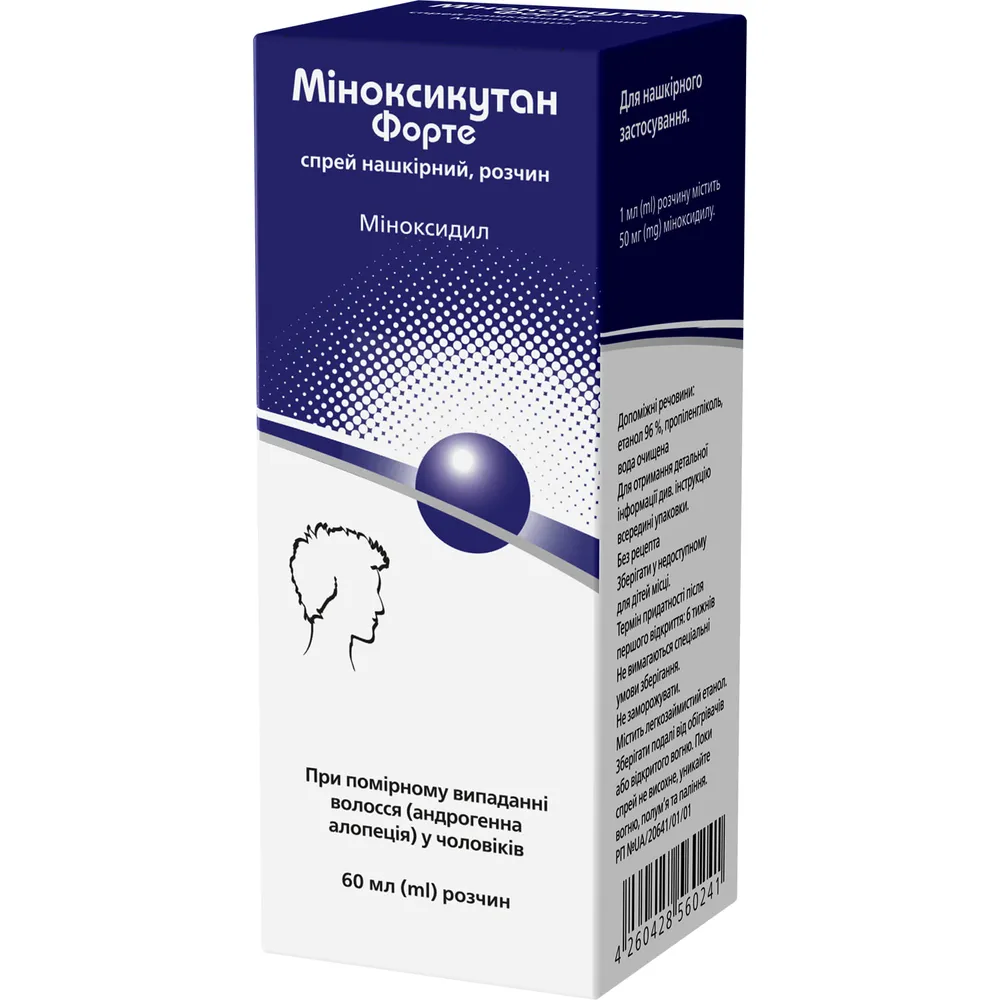
Table of Contents
INSTRUCTIONS FOR MEDICAL USE OF THE MEDICINAL PRODUCT MİNOXİKUTAN®
Composition:
Active substance: minoxidil;
1 ml of solution contains 20 mg of minoxidil;
Excipients: propylene glycol, ethanol 96%, purified water.
Pharmaceutical form. Topical spray, solution.
Main physicochemical characteristics: clear solution, colorless to slightly yellowish.
Pharmacotherapeutic group. Medicinal products used in dermatology. Other dermatological preparations. ATC code D11AX01.
Pharmacological properties
Pharmacodynamics
Minoxidil stimulates hair growth in individuals with androgenetic alopecia, which manifests as diffuse hair loss or thinning of hair on the scalp.
Mechanism of action
The exact mechanism by which minoxidil stimulates hair growth is not fully understood. However, minoxidil may prevent hair loss in androgenetic alopecia by:
- increasing the diameter of the hair shaft;
- stimulating hair growth in the anagen phase;
- prolonging the anagen phase;
- shortening the telogen phase, enabling faster transition to the anagen phase.
Pharmacodynamic effects
As a peripheral vasodilator, minoxidil enhances microcirculation in hair follicles. Minoxidil stimulates vascular endothelial growth factor (VEGF), which likely accounts for increased capillary permeability and thus reflects high metabolic activity observed during the anagen phase.
Reduction in hair loss is observed in 80–90% of women. New hair growth may become noticeable after 3–4 months.
The data presented below are from studies of topical medicinal products containing minoxidil, provided by the marketing authorization holder of the original medicinal product: in clinical studies, the average serum concentration of minoxidil in patients using minoxidil was found to be 0.6 ng/mL. In pharmacological studies in hemodynamically sensitive patients with mild untreated hypertension, a minor effect on heart rate was observed only at serum concentrations of 21.7 ng/mL or higher.
After discontinuation of treatment, scalp hair returns to its pre-treatment state within 3–4 months.
Pharmacokinetics
Absorption
With topical application of minoxidil solution, approximately 1–2% of the active substance is systemically absorbed, compared to 90–100% absorption following oral administration.
The data presented below are from studies of topical medicinal products containing minoxidil, provided by the marketing authorization holder of the original medicinal product.
In a study in men, the mean serum concentration (AUC) of minoxidil for the 20 mg/mL solution was 7.54 ng·h/mL, compared to a mean AUC of 35 ng·h/mL for the 2.5 mg oral formulation. The mean plasma concentration (Cmax) for the topical solution was 1.25 ng/mL, compared to 18.5 ng/mL after oral administration of 2.5 mg.
In another study in men, systemic absorption of the 50 mg/mL foam formulation was approximately half that of the 50 mg/mL solution. The mean AUC (0–12 h) and Cmax for the 50 mg/mL foam, i.e., 8.81 ng·h/mL and 1.11 ng/mL, respectively, were approximately 50% of the AUC (0–12 h) and Cmax values for the 5% solution, i.e., 18.71 ng·h/mL and 2.13 ng/mL, respectively.
For the 50 mg/mL foam, the time to peak plasma concentration (tmax) of 5.42 hours was comparable to that of the solution, i.e., 5.79 hours. Hemodynamic effects of minoxidil were not observed at serum concentrations below 21.7 ng/mL.
Distribution
The volume of distribution after intravenous administration of 4.6 mg and 18.4 mg of minoxidil was 73.1 L and 69.2 L, respectively.
Biotransformation
Following topical application, approximately 60% of absorbed minoxidil is metabolized to glucuronides, primarily in the liver.
Elimination
The elimination half-life of minoxidil after topical application is 22 hours, compared to 1.49 hours for oral formulations. Approximately 97% of minoxidil is excreted in urine and 3% in feces.
Mean renal clearance of minoxidil and its glucuronides, based on data from oral formulations, is 261 mL/min and 290 mL/min, respectively.
After discontinuation of treatment, approximately 95% of the minoxidil absorbed following topical application is eliminated within 4 days.
Clinical characteristics.
Indications.
Minoxidil Cutaneous Solution® is indicated for moderate hair loss (androgenetic alopecia) in adults, both men and women. It promotes hair growth and helps stabilize hair loss.
Contraindications.
Minoxidil Cutaneous Solution® should not be used in case of hypersensitivity to the active substance or to any of the excipients listed in the section "Composition".
Interaction with other medicinal products and other forms of interaction.
Minoxidil for topical use should not be used simultaneously with other topical agents (including corticosteroids, tretinoin, anthralin) on the scalp, as these topical products may alter skin permeability and lead to changes in minoxidil absorption.
An interaction between guanethidine and oral formulations of minoxidil has been reported, resulting in rapid and pronounced reduction in blood pressure.
Special precautions for use
Before applying minoxidil topically, the patient must ensure that the skin of the scalp is normal and healthy.
It should not be applied if the scalp skin is inflamed, infected, irritated, or painful.
Increased transdermal absorption of minoxidil, which may lead to systemic effects, is possible in the following cases:
- presence of dermatosis or skin lesions on the scalp,
- concomitant use of retinoic acid, anthralin, or any other topical irritant,
- increased dosage or frequency of application: it is essential to adhere strictly to the recommended dosage and application regimen.
Although widespread use of minoxidil solution has not revealed systemic effects, it cannot be excluded that greater absorption due to individual variability or unusual sensitivity may cause systemic effects. Patients should be warned about this possibility.
If systemic effects occur (such as decreased blood pressure, tachycardia, signs of fluid retention (swelling of hands or feet), chest pain), severe dermatological reactions (e.g., persistent redness or irritation of the scalp), loss of consciousness, dizziness, sudden unexplained weight gain, or any other unexpected symptoms (see section "Adverse reactions"), treatment must be discontinued immediately and the patient should consult a physician.
Patients with cardiovascular disorders or cardiac arrhythmia should consult a physician before using topical minoxidil. In such patients, the benefits of treatment should be carefully weighed against potential risks.
They should be more thoroughly informed about potential adverse reactions so that treatment can be stopped as soon as any of them appear, and a physician should be notified.
If symptoms persist or worsen, or if new symptoms develop, patients should discontinue treatment and consult a physician.
Minoxidil must not be used:
- in cases of partial and/or sudden hair loss, hair loss following illness, medication use, or childbirth, or if the cause of alopecia is unknown,
- on other parts of the body,
- concurrently with other topical medications applied to the scalp.
Accidental ingestion may cause serious adverse reactions, particularly cardiovascular effects (see section "Adverse reactions"). Therefore, this medicinal product should be stored out of reach of children.
In case of accidental contact with eyes, damaged skin, or mucous membranes, the solution (containing ethanol) may cause burning sensation and/or irritation: thoroughly rinse with cold running water.
Exposure to sunlight should be avoided during treatment with minoxidil.
Do not inhale.
Using a higher dose or increasing the frequency of application will not improve treatment outcomes.
Continuation of treatment is necessary to enhance and maintain hair regrowth. Otherwise, hair loss will resume.
During the first 2–6 weeks of treatment, temporary increased hair shedding may occur.
Unwanted hair growth may appear due to transfer of the product to areas other than the scalp.
Hypertrichosis in children after accidental topical exposure to minoxidil:
Cases of hypertrichosis in infants have been reported following skin contact with application sites of minoxidil in patients (or caregivers) using topical minoxidil. Hypertrichosis in infants was reversible within several months after cessation of minoxidil exposure. Therefore, contact between children and minoxidil application sites should be avoided.
Due to the presence of ethanol and propylene glycol in Minoksikutan®, repeated application of Minoksikutan® to hair outside the scalp area may cause increased dryness and/or stiffness of the hair.
Minoksikutan® contains 96% ethanol and may cause eye stinging and irritation. In case of accidental contact with sensitive areas (eyes, damaged skin, mucous membranes), the product should be washed off immediately with large amounts of water.
This medicinal product contains 199 mg of propylene glycol (E 1520) per millilitre, which may cause skin irritation.
This medicinal product contains 494 mg of alcohol (ethanol) per millilitre. When applied to damaged skin, it may cause a burning sensation.
Use during pregnancy or breastfeeding
Topical minoxidil should not be used during pregnancy or breastfeeding.
Pregnancy
Animal studies have shown fetal risk at very high concentrations compared to the expected human exposure. In humans, there may be a low, although unlikely, risk of fetal harm.
Period of breastfeeding
When administered systemically, minoxidil is excreted in breast milk; therefore, use of the product should be avoided in breastfeeding women.
Ability to affect reaction speed when driving or operating machinery
This medicinal product may cause dizziness or arterial hypotension (see section "Adverse reactions"). If patients experience such effects, they should not drive or operate machinery.
Method of Administration and Dosage
Dosage
Apply 1 mL of Minoxycutan® twice daily (in the morning and evening) to the affected areas of the scalp.
The daily dosage should not be exceeded, i.e., 2×1 mL of solution, regardless of the size of the affected scalp area.
Method of Administration
For topical use only.
Before applying Minoxycutan®, ensure that the scalp is dry. Minoxycutan® should not be applied to other parts of the body.
After application of the topical spray or solution, hands should be thoroughly washed to avoid accidental contact with mucous membranes and eyes.
After applying Minoxycutan®, normal hairstyling is permitted. However, the scalp should not be wetted for approximately 4 hours afterwards to prevent washing off the medication.
Each Minoxycutan® package contains two different spray applicators:
- a pre-assembled applicator for application to larger areas,
- a separate applicator with an extended tip for smaller areas.
Both applicators can be interchanged by detaching one and replacing it with the other.
To deliver a 1 mL dose, press the spray pump 6 times.
Instructions for Use/Application
The solution should be sprayed directly onto the scalp in the areas of hair loss. To do this, press the spray pump 6 times. After each press, gently spread the liquid evenly over the affected area using fingertips, avoiding inhalation of the spray.
Duration of Treatment
The onset and extent of hair growth vary among individual patients.
Generally, treatment must be continued twice daily for 2–4 months before a visible effect is observed. To maintain the effect, continuous application twice daily is recommended. Applying Minoxycutan® in higher amounts or more frequently does not result in better outcomes. Adequate clinical experience exists regarding therapeutic efficacy for treatment periods up to 48 weeks.
If the desired therapeutic response has not been achieved after 8 months, treatment should be discontinued.
Missed Dose
If too little Minoxycutan® has been applied or a dose has been missed, the patient should not apply an additional dose. Treatment should continue as recommended with the standard dosage.
Children
Minoxycutan® should not be used in children and adolescents under 18 years of age, as there are no controlled efficacy and safety data available for these age groups.
Overdose
Increased systemic absorption of minoxidil, potentially leading to adverse reactions, may occur if doses exceeding the recommended amount are applied to larger body surface areas or to areas other than the scalp.
Accidental ingestion may cause systemic effects due to the vasodilatory action of minoxidil (5 mL of solution contains 100 mg of minoxidil, which is the maximum oral dose used in adults for the treatment of arterial hypertension). Signs and symptoms of possible overdose are of cardiovascular origin and include arterial hypotension, tachycardia, lethargy, and fluid retention. Fluid retention can be managed with appropriate diuretic therapy. Tachycardia and angina can be treated with a beta-blocker or another sympatholytic agent. Symptomatic hypotension should be managed by intravenous administration of isotonic sodium chloride solution. Sympathomimetic agents such as noradrenaline and adrenaline should be avoided due to the risk of excessive cardiac stimulation.
Keep out of reach of children. In case of accidental ingestion, seek immediate medical attention or contact emergency services.
Adverse reactions
The adverse reactions listed below are classified according to the following frequency categories:
Very common (≥1/10)
Common (≥1/100 to <1/10)
Uncommon (≥1/1000 to <1/100)
Rare (≥1/10,000 to <1/1000)
Very rare (<1/10,000)
Frequency not known (cannot be estimated based on available data)
The safety of topical minoxidil was evaluated based on data from seven placebo-controlled randomized clinical trials in adults investigating minoxidil solutions of 20 mg/mL or 50 mg/mL, and two placebo-controlled randomized clinical trials in adults investigating a 50 mg/mL minoxidil foam formulation.
The table below presents adverse reactions identified during clinical trials and post-marketing experience, organized by System Organ Class (SOC).
| System Organ Class (SOC) |
Frequency |
Adverse reaction |
| Infections and infestations |
frequency unknown |
otitis externa |
| Immune system disorders |
frequency unknown |
allergic reactions, including angioneurotic edema (with symptoms such as swelling of the lips, oral cavity, tongue and larynx, swelling of the lips, tongue and oropharyngeal edema) |
| hypersensitivity (including facial swelling, generalized skin rash, generalized pruritus, facial swelling and throat tightness) |
||
| contact dermatitis |
||
| Nervous system disorders |
very common |
headache |
| uncommon |
dizziness |
|
| frequency unknown |
dysgeusia, neuritis, paresthesia |
|
| Eye disorders |
frequency unknown |
eye irritation, visual disturbance |
| Cardiac disorders |
frequency unknown |
tachycardia, palpitations |
| Vascular disorders |
frequency unknown |
arterial hypotension |
| Respiratory, thoracic and mediastinal disorders |
common |
dyspnea |
| Gastrointestinal disorders |
uncommon |
nausea |
| frequency unknown |
vomiting |
|
| Hepatobiliary disorders |
frequency unknown |
liver function changes |
| Skin and subcutaneous tissue disorders |
common |
pruritus, hypertrichosis (including facial hair growth in women), dermatitis, acneiform dermatitis, rash |
| frequency unknown |
temporary hair loss, hair color changes, abnormal hair growth, hair structure changes |
|
| General disorders and administration site conditions |
common |
peripheral edema |
| frequency unknown |
administration site reactions: these may sometimes affect surrounding structures including the ears and face, and usually present as pruritus, irritation, pain, burning sensation, skin rash, acne, swelling, dry skin and erythema; however, they may occasionally be more serious and include desquamation, dermatitis, blistering, bleeding and ulceration. |
|
| asthenia |
||
| Investigations |
common |
weight increased |
Reporting of suspected adverse reactions
Reporting of adverse reactions following the registration of a medicinal product is of great importance. It enables continuous monitoring of the benefit/risk balance of the medicinal product. Medical and pharmaceutical professionals, as well as patients or their legal representatives, should report all cases of suspected adverse reactions and lack of efficacy via the Automated Pharmacovigilance Information System at the following link: https://aisf.dec.gov.ua.
Shelf life. 36 months.
After first opening – 6 weeks.
Storage conditions.
No special storage conditions required. Keep out of the reach of children.
Do not freeze.
Contains flammable ethanol. Keep away from heaters or open flames.
Packaging.
60 ml of solution in a bottle with an integrated pump system and an adapter with an extended nozzle. One bottle together with the instruction for medical use is packed in a carton.
Availability category. Over-the-counter (without prescription).
Manufacturer. mibe GmbH Arzneimittel.
Manufacturer's location and address of its business premises.
Muenchenstrasse 15, Brehna, Saxony-Anhalt, 06796, Germany.