Milistan multisymptom
Ukraine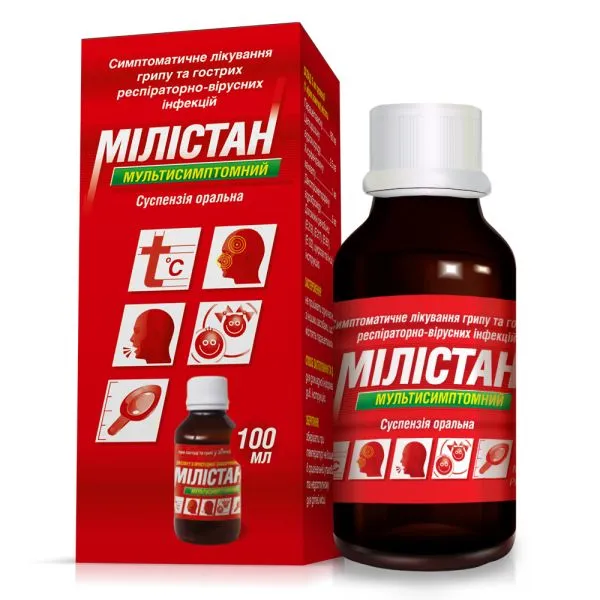
Table of Contents
INSTRUCTIONS FOR MEDICAL USE OF THE MEDICINAL PRODUCT MILESTAN MULTISYMPTOMATIC (MILISTAN MULTISYMPTOMATIC)
Composition:
Active substances: paracetamol, cetirizine hydrochloride, chlorpheniramine maleate, dextromethorphan hydrobromide;
5 ml of suspension contain: paracetamol 160 mg, cetirizine hydrochloride 2.5 mg, chlorpheniramine maleate 1 mg, dextromethorphan hydrobromide 5 mg;
Excipients: sodium methylparaben (E 219), sodium propylparaben (E 217), sodium carboxymethylcellulose, aspartame (E 951), xanthan gum, sorbitol solution 70%, disodium edetate, carmoisine dye (E 122), sucrose, fruit flavoring, purified water.
Pharmaceutical form. Oral suspension.
Main physicochemical properties: suspension from light pink to pink in color.
Pharmacotherapeutic group. Analgesics and antipyretics. Paracetamol, combinations without psychotropic agents. ATC code N02BE51.
Pharmacological properties.
Pharmacodynamics.
Paracetamol has analgesic, antipyretic, and weak anti-inflammatory effects. Its mechanism of action is associated with inhibition of prostaglandin synthesis and predominant influence on the thermoregulatory center in the hypothalamus.
Cetirizine hydrochloride has antiallergic properties due to inhibition of the late-phase migration of cells involved in inflammatory reactions (mainly eosinophils). It suppresses the action of other mediators and inducers of histamine secretion, such as PAF (platelet-activating factor) and substance P. It has virtually no anticholinergic or anti-serotonergic effects. At therapeutic doses, it does not cause sedative effects.
Dextromethorphan hydrobromide is an antitussive agent effective against non-productive bronchial cough caused by bronchial irritation from inhaling cold air. Its mechanism of action is related to its effect on the cough center in the medulla oblongata.
Chlorpheniramine maleate is an antiallergic agent and a histamine H1-receptor blocker. It produces a moderately pronounced sedative effect.
Pharmacokinetics.
Absorption. After oral administration, the drug is rapidly and almost completely absorbed from the gastrointestinal tract.
Concomitant intake of food with the drug does not affect absorption but slightly reduces the rate.
Distribution. Paracetamol is well distributed in tissues (except adipose tissue) and cerebrospinal fluid. Plasma protein binding of paracetamol is approximately 10% and increases only slightly in cases of overdose. Cetirizine also binds to plasma proteins. It has a low volume of distribution (Vd – 0.5 L/kg) and does not penetrate into cells.
Metabolism. Paracetamol is primarily metabolized in the liver via conjugation with glucuronide and sulfate, as well as oxidation involving mixed liver oxidases and cytochrome P450. Cetirizine is practically not metabolized in the liver. Dextromethorphan hydrobromide is rapidly and almost completely metabolized in the liver to the active metabolite dextrorphan.
Elimination. The elimination half-life of paracetamol is 1–4 hours. In patients with liver cirrhosis, the elimination half-life is prolonged. Plasma protein binding is variable. Renal clearance of paracetamol is 5%. It is excreted in urine mainly as glucuronide and sulfate conjugates, with less than 5% excreted unchanged. The drug can be excreted in breast milk. After single oral administration of cetirizine hydrochloride, its elimination half-life is approximately 10 hours. The elimination half-life of dextromethorphan hydrobromide is nearly 4 hours; the drug is excreted via the kidneys unchanged and as demethylated metabolites (including dextrorphan). The active substances of the drug cross the placenta and are excreted in breast milk.
Clinical characteristics.
Indications.
Symptomatic treatment of influenza and acute respiratory viral infections accompanied by elevated body temperature, muscle and joint pain, headache, sore throat, sinus pain, nasal congestion, rhinitis, dry irritating cough, lacrimation, and sneezing.
Contraindications.
Hypersensitivity to the components of the medicinal product, hydroxyzine or any piperazine derivative, other antihistamines; severe impairment of liver or kidney function; congenital hyperbilirubinemia; glucose-6-phosphate dehydrogenase deficiency; alcoholism; blood disorders; Gilbert's syndrome; severe anemia; leukopenia; hypocoagulation; closed-angle glaucoma; risk of urinary retention due to urethral or prostate diseases; bladder neck obstruction; pyloroduodenal stenosis; intestinal obstruction; severe course of hypertension; coronary artery disease; arrhythmias; epilepsy; hyperthyroidism. Also contraindicated in patients at risk of developing respiratory failure. Do not use concomitantly with monoamine oxidase inhibitors (MAOIs) or within 2 weeks after discontinuation of MAOIs, or with serotonin reuptake inhibitors (fluoxetine, paroxetine).
Interaction with other medicinal products and other forms of interaction.
Concomitant use with other medicinal products containing paracetamol or other active ingredients present in Milistan Multisymptom should be avoided.
Interaction characteristics of the drug are determined by the properties of its components.
Paracetamol.
The absorption rate of paracetamol may be increased when used with metoclopramide or domperidone, and decreased when used with cholestyramine. The anticoagulant effect of warfarin and other coumarins may be enhanced by long-term daily regular use of paracetamol, increasing the risk of bleeding. Occasional use does not have a significant effect.
Barbiturates reduce the antipyretic effect of paracetamol.
Anticonvulsants (including phenytoin, barbiturates, carbamazepine), barbiturates, rifampicin, isoniazid, and alcohol, which stimulate hepatic microsomal enzyme activity, may enhance the hepatotoxic effect of paracetamol due to increased formation of hepatotoxic metabolites.
Concomitant use of paracetamol with hepatotoxic agents increases the hepatotoxic effect of the drugs.
Concomitant use of high doses of paracetamol with isoniazid increases the risk of hepatotoxic syndrome.
Paracetamol reduces the efficacy of diuretics.
Caffeine may potentiate the analgesic effect of paracetamol.
Caution is advised when using paracetamol concomitantly with flucloxacillin, as this combination has been associated with metabolic acidosis with a high anion gap due to pyroglutamic acidosis, especially in patients with risk factors (see section "Special precautions for use").
Chlorpheniramine maleate.
Chlorpheniramine maleate enhances the anticholinergic effects of atropine, spasmolytics, and central nervous system (CNS) depressants (tranquilizers, barbiturates), antiparkinsonian agents.
Concomitant use with sedatives, barbiturates, hypnotics, neuroleptics, tranquilizers, anesthetics, narcotic analgesics, and alcohol enhances the effect of chlorpheniramine maleate, which may cause symptoms of overdose.
Chlorpheniramine inhibits phenytoin metabolism and may lead to phenytoin toxicity.
Concomitant use with monoamine oxidase inhibitors (MAOIs) is contraindicated. MAOIs, including furazolidone (an antibacterial agent) and procarbazine (an antineoplastic agent), are not recommended to be used concurrently, as they may prolong and intensify the anticholinergic effects and CNS depression typical of antihistamines.
Tricyclic antidepressants or maprotiline (a tetracyclic antidepressant) and other anticholinergic drugs: may enhance the anticholinergic effects of these drugs or antihistamines such as chlorpheniramine. If gastrointestinal side effects occur, patients should consult a physician as soon as possible, as this may lead to paralytic intestinal obstruction.
Dextromethorphan hydrobromide.
Dextromethorphan is metabolized via CYP2D6 enzymes and undergoes significant first-pass metabolism. Concomitant use with CYP2D6 enzyme inhibitors may increase dextromethorphan concentrations in the body to levels several times higher than normal. This increases the risk of dextromethorphan toxicity (excitation, confusion, tremor, insomnia, diarrhea, respiratory depression) and the risk of serotonin syndrome. Strong CYP2D6 inhibitors include fluoxetine, paroxetine, quinidine, and terbinafine. When used concomitantly with quinidine, plasma concentrations of dextromethorphan increase 20-fold, intensifying CNS-related adverse reactions. Amiodarone, flecainide, propafenone, sertraline, bupropion, methadone, cinacalcet, haloperidol, perphenazine, and thioridazine also have similar effects on dextromethorphan metabolism. When concomitant use of CYP2D6 inhibitors and dextromethorphan is necessary, patients should be closely monitored, as dose adjustment of dextromethorphan may be required.
Concomitant use of the drug with MAOIs, Parkinson's disease medications, selective serotonin reuptake inhibitors, and other antidepressants enhances the effects of the latter. Concomitant use of the drug with these medicinal products is contraindicated.
Concomitant use of the drug with amiodarone or quinidine leads to increased plasma concentrations of dextromethorphan.
Alcohol may intensify adverse reactions of dextromethorphan.
Cetirizine hydrochloride.
Pharmacokinetic interaction studies have been conducted with cetirizine and pseudoephedrine, cimetidine, ketoconazole, erythromycin, and azithromycin; no pharmacokinetic interactions were observed. In a study of multiple-dose administration of theophylline (400 mg once daily) and cetirizine, a slight (16%) reduction in cetirizine clearance was observed, while theophylline disposition was not affected by concomitant cetirizine intake.
Studies with cetirizine and cimetidine, glipizide, diazepam, and pseudoephedrine showed no evidence of adverse pharmacodynamic interactions. Studies with cetirizine and azithromycin, erythromycin, ketoconazole, theophylline, and pseudoephedrine showed no evidence of adverse clinical interactions.
Furthermore, concomitant use of cetirizine with macrolides or ketoconazole has never led to clinically significant ECG changes. In a study of multiple-dose administration of ritonavir (600 mg twice daily) and cetirizine (10 mg daily), exposure to cetirizine increased by approximately 40%, while ritonavir disposition was slightly altered (minus 11%) with concomitant cetirizine intake. The volume of cetirizine absorption is not reduced when taken with food, although the absorption rate is delayed by 1 hour.
There are no data on potentiation of sedative effects when used at therapeutic doses. However, concomitant use of sedatives during treatment should be avoided.
Ototoxic agents may mask symptoms of ototoxicity such as tinnitus, dizziness, and syncope.
Concomitant use of the drug with alcohol or other CNS depressants may additionally impair attention and work capacity, although cetirizine does not potentiate the effect of alcohol (at blood alcohol levels of 0.5 g/L).
Photosensitizing agents may cause additional photosensitizing effects.
The drug should not be used concomitantly with antitussive agents that suppress the cough reflex (e.g., codeine), especially before bedtime. Such combined use of drugs hinders expectoration.
Do not use concomitantly with alcohol.
Special precautions for use.
Related to paracetamol.
Since the medicinal product contains paracetamol, consultation with a physician is necessary regarding its use in patients with impaired kidney or liver function. It should be noted that in patients with alcoholic non-cirrhotic liver disease, the risk of hepatotoxic effects of paracetamol is increased; the drug may affect laboratory test results for blood glucose and uric acid levels.
The drug should be prescribed with caution to elderly patients, patients at risk of seizures, patients with bronchial asthma, persistent or chronic cough due to smoking, asthma or pulmonary emphysema, and in cases where cough is accompanied by excessive secretions. Do not exceed the recommended doses. Do not take the drug simultaneously with other products containing paracetamol.
Prior to using the drug, consult a physician if you are taking warfarin or similar agents with anticoagulant effects. Patients who take analgesics daily for mild forms of arthritis should consult a physician. If headache becomes persistent, medical advice should be sought. During prolonged use, liver and kidney function and hematopoietic system status should be monitored. If symptoms do not resolve, consult a physician.
In patients with severe infections such as sepsis, which are associated with reduced glutathione levels, the risk of metabolic acidosis increases during paracetamol use. Symptoms of metabolic acidosis include deep, rapid, or labored breathing, nausea, vomiting, and loss of appetite. Immediate medical attention is required if these symptoms occur.
If the illness is caused by a bacterial infection, concomitant antibiotic therapy is recommended.
If hemolysis of erythrocytes or drug-induced hemolytic anemia occurs during treatment with Milistan Multisymptom, the drug should be discontinued immediately.
If skin rashes develop, drug administration should be stopped.
Cases of metabolic acidosis with a high anion gap due to pyroglutamic acidosis have been reported in patients with severe conditions such as severe renal failure and sepsis, or in patients with malnutrition or other causes of glutathione deficiency (e.g., chronic alcoholism), who received paracetamol at therapeutic doses for prolonged periods or in combination with flucloxacillin. If high anion gap metabolic acidosis due to pyroglutamic acidosis is suspected, immediate discontinuation of paracetamol and careful monitoring of the patient are recommended. Measurement of urinary 5-oxoproline levels may be useful in identifying pyroglutamic acidosis as the underlying cause of high anion gap metabolic acidosis in patients with multiple risk factors.
Related to cetirizine hydrochloride.
No clinically significant interactions with alcohol (at blood alcohol levels of 0.5 g/L) have been observed when administered at therapeutic doses. However, concomitant use of the drug with alcohol is not recommended. The drug should be prescribed with caution in patients with epilepsy or those at risk of seizures.
Use with caution in patients prone to urinary retention (e.g., spinal cord injury, prostate hyperplasia), as cetirizine may increase the risk of urinary retention.
Antihistamines suppress skin allergy tests; therefore, drug administration should be discontinued at least 3 days before testing (elimination period).
Related to chlorpheniramine maleate.
Chlorpheniramine, like other agents with anticholinergic effects, should be used with caution in patients with epilepsy; increased intraocular pressure, including glaucoma; prostatic hyperplasia; severe hypertension or cardiovascular disorders; bronchitis, bronchiectasis, or asthma; and in cases of hepatic or renal insufficiency. In children and elderly patients, adverse reactions from the nervous system, such as anticholinergic effects and paradoxical excitation (increased energy, restlessness, nervousness), may occur more frequently during chlorpheniramine therapy.
The anticholinergic properties of chlorpheniramine may cause drowsiness, dizziness, blurred vision, and impaired psychomotor reactions, which may seriously affect the ability to drive vehicles or operate machinery.
Sedatives (particularly barbiturates) should not be taken during treatment, as they enhance the sedative effect of antihistamines (chlorpheniramine maleate).
Concomitant use of chlorpheniramine with alcohol should be avoided, as alcohol's effects may be potentiated.
Chlorpheniramine should not be used with other antihistamines.
Related to dextromethorphan hydrobromide.
Patients with chronic cough due to smoking or bronchial asthma, or cough associated with acute asthma attacks, should consult a physician before using dextromethorphan hydrobromide. Medical consultation is also required before use in patients whose cough is accompanied by excessive mucus production.
If cough persists for more than 7 days or is associated with fever, rash, or headache, appropriate diagnostic evaluation should be performed to identify the underlying condition.
There have been reports of abuse of dextromethorphan hydrobromide. This should be considered when prescribing the drug to adolescents, young adults, and patients with a history of substance or psychotropic drug abuse.
Dextromethorphan is metabolized in the liver by cytochrome P450 2D6. The activity of this enzyme is genetically determined. Approximately 10% of the general population are poor metabolizers of CYP2D6. In these individuals, as well as in patients receiving CYP2D6 inhibitors, signs of overdose and/or prolonged effects of dextromethorphan may occur. Therefore, caution is advised when using the drug in patients who are poor metabolizers of CYP2D6 or who are taking CYP2D6 inhibitors.
Excipients.
The drug contains sodium methylparaben (E 219), carmoisine dye (E 122), sodium propylparaben (E 217), which may cause allergic reactions (possibly delayed), and aspartame (E 951), which is hazardous for patients with phenylketonuria.
Use with caution in patients with diabetes mellitus, as the drug contains sucrose. Do not use in patients with fructose intolerance, glucose-galactose malabsorption, or sucrose-isomaltase deficiency.
Alcohol consumption is prohibited during treatment!
Use during pregnancy or breastfeeding.
The medicinal product should not be used during pregnancy. It is advisable to avoid using the drug during breastfeeding or to consider discontinuing breastfeeding if treatment with the drug becomes necessary.
Data regarding paracetamol:
Standard studies using currently accepted standards for assessing reproductive and ontogenetic toxicity are not available.
Extensive data from pregnant women do not indicate teratogenic or fetal/neonatal toxicity. Epidemiological studies on nervous system development in children exposed to paracetamol in utero have not yielded conclusive results.
Ability to affect reaction speed when driving or operating machinery.
If neurological disturbances (drowsiness, dizziness, visual disturbances) occur, driving vehicles or operating machinery should be avoided.
Method of Administration and Dosage
One measuring spoon (5 ml) is included inside the packaging.
Children aged 4 to 6 years: 1 measuring spoon twice daily;
Adults and children aged 6 years and older: 2 measuring spoons twice daily.
Maximum duration of treatment: 3–5 days.
The interval between doses must be at least 4 hours.
Do not take more than twice a day!
Children.
The medicinal product should be administered to children aged 4 years and older.
Overdose.
Symptoms of overdose usually occur when paracetamol—the active ingredient in Milistan Multisymptom—is taken at a single dose of 10 g or more in adults, or at a single dose of 150 mg/kg body weight or more in children. Overdose may also occur if Milistan Multisymptom is used at recommended or increased doses but more frequently than 4 times a day.
In patients with risk factors (long-term use of carbamazepine, phenobarbital, phenytoin, primidone, rifampicin, St. John’s wort, or other drugs inducing liver enzymes; alcohol abuse; glutathione system deficiency, e.g., digestive disorders, HIV infection, fasting, cystic fibrosis, cachexia), ingestion of 5 g or more of paracetamol may lead to liver damage.
Symptoms of overdose may include pallor, dryness of the skin and mucous membranes, elevated body temperature, nausea, vomiting, anorexia, abdominal pain, diarrhea, intestinal atony, increased levels of transaminases, bilirubin, azotemia, disturbances in glucose and albumin metabolism, metabolic acidosis, oliguria, hepatic failure (which may progress to encephalopathy, hemorrhage, hypoglycemia, coma, and may be fatal), hepatonecrosis, possible acute renal failure with acute tubular necrosis, which may manifest as severe lumbar pain, hematuria, proteinuria; renal colic, interstitial nephritis, capillary necrosis; urinary retention, cardiac arrhythmia, tachycardia, tachypnea, pancreatitis, dizziness, headache, elevated body temperature, sleep disturbances, somnolence, tremor, psychomotor agitation, hyperactivity, irritability, mental disorders, blurred vision, nystagmus, disorientation; skin rash, itching, urticarial rash, oral mucosal damage, confusion, increased fatigue, malaise, mydriasis, restlessness, photophobia, sedative effect, stupor, central nervous system (CNS) depression accompanied by respiratory disorders and cardiovascular system disturbances (decreased pulse rate, drop in blood pressure up to circulatory failure), diplopia, ataxia, seizures.
With prolonged use of the drug in high doses, blood-forming organs may develop aplastic anemia, pancytopenia, agranulocytosis, neutropenia, leukopenia, thrombocytopenia, and impaired blood coagulation activity, which may be accompanied by bleeding, including gastrointestinal bleeding.
Associated with cetirizine hydrochloride.
Overdose of cetirizine is primarily related to effects on the central nervous system (CNS) or effects indicating anticholinergic activity. Adverse effects reported after ingestion of doses at least 5 times higher than the recommended daily dose include: confusion, diarrhea, dizziness, fatigue, headache, malaise, mydriasis, itching, restlessness, sedative effect, somnolence, stupor, tachycardia, tremor, and urinary retention.
Associated with chlorpheniramine maleate.
The estimated lethal dose of chlorpheniramine is 25 to 50 mg/kg body weight. In overdose, the condition may range from depressed to agitated (restlessness and seizures). Anticholinergic-like symptoms may occur, including mydriasis, photophobia, dryness of the skin and mucous membranes, elevated body temperature, intestinal atony; CNS depression accompanied by respiratory disorders and cardiovascular system disturbances.
Associated with dextromethorphan hydrobromide.
Symptoms of dextromethorphan hydrobromide overdose: nausea and vomiting, CNS depression, dizziness, dysarthria, ataxia, blurred vision, myoclonus, nystagmus, somnolence, tremor, agitation, hyperactivity, confusion, psychotic disorders (psychosis), and respiratory depression.
Treatment. In case of overdose, prompt medical assistance is required. For prompt medical care, the patient should be immediately transported to a hospital, even if early symptoms of overdose are absent. Symptoms may be limited to nausea and vomiting or may not reflect the severity of the overdose or the risk of organ damage.
If an excessive dose was ingested within the past hour, treatment with activated charcoal should be considered. Paracetamol plasma concentration should be measured 4 hours or more after ingestion (earlier concentrations are unreliable). Treatment with N-acetylcysteine can be administered within 24 hours after paracetamol ingestion, but maximum protective effect is achieved when administered within 8 hours after ingestion. The efficacy of the antidote decreases sharply after this time. If necessary, intravenous N-acetylcysteine should be administered according to current guidelines. In the absence of vomiting, oral methionine may be used as an appropriate alternative in remote areas outside the hospital.
In addition to the above, symptomatic or supportive therapy is recommended. Hemodialysis is ineffective.
Adverse Reactions
Skin and subcutaneous tissue disorders: skin rashes, including generalized, maculopapular, erythematous; urticaria, mucosal rashes, hyperemia, pruritus, multiform exudative erythema, Stevens–Johnson syndrome, toxic epidermal necrolysis, persistent drug-induced erythema, angioedema, bruising, exfoliative dermatitis, photosensitivity.
Immune system disorders: hypersensitivity reactions, including allergic reactions, anaphylaxis, anaphylactic reactions, anaphylactic shock, angioneurotic edema.
Gastrointestinal disorders: dyspeptic disorders, gastrointestinal disturbances, nausea, vomiting, epigastric pain, abdominal pain, dry mouth, diarrhea, gastritis, heartburn, increased appetite, constipation, flatulence.
Hepatobiliary disorders: increased activity of liver enzymes (transaminases, alkaline phosphatase, gamma-glutamyl transferase [GGTP]), usually without development of jaundice, hyperbilirubinemia, hepatitis, jaundice. With prolonged use, especially in high doses, hepatotoxic effects and impaired liver function cannot be excluded.
Endocrine system disorders: hypoglycemia, up to hypoglycemic coma.
Metabolism and nutrition disorders: increased appetite, anorexia, metabolic acidosis with high anion gap (frequency unknown).
Blood and lymphatic system disorders: anemia, sulfhemoglobinemia and methemoglobinemia (cyanosis, dyspnea, chest pain), aplastic anemia, hemolytic anemia; agranulocytosis, thrombocytopenia, leukopenia, hemorrhage, pathological blood changes.
Respiratory system disorders: pharyngitis, rhinitis, bronchospasm in patients, including those sensitive to acetylsalicylic acid and other nonsteroidal anti-inflammatory drugs (NSAIDs), nasal congestion, thickening of bronchial wall due to increased bronchial secretion.
Nervous system disorders: headache, possible paradoxical CNS stimulation, excitation, sedative effect, paresthesia, seizures, movement disorders, dysgeusia, loss of consciousness, syncope, tremor, impaired muscle tone (dystonia), dyskinesia, anxiety, nervousness, irritability, euphoria, neurosis, neuritis, coma, behavioral changes, memory impairment, amnesia, attention disturbances.
Ear and labyrinth disorders: vertigo, coordination disturbances, dizziness, tinnitus, ear noise, acute labyrinthitis.
Renal and urinary disorders: difficulty and delayed urination (see section "Special precautions"), dysuria, enuresis.
Eye disorders: impaired ocular accommodation, blurred vision, decreased visual acuity, involuntary eye movements, clouding of vision, diplopia, increased intraocular pressure, mydriasis, photophobia.
Psychiatric disorders: aggression, confusion, depression, hallucinations, sleep disturbances, insomnia, somnolence, nervous tic, suicidal thoughts, disorientation, irritability, nightmares.
Cardiac and vascular disorders: tachycardia, arrhythmia, palpitations, fluctuations in arterial pressure, hypotension.
Musculoskeletal and connective tissue disorders: muscle twitching, muscle weakness.
General disorders: asthenia, increased fatigue, malaise, edema, chest tightness.
Investigations: weight gain.
Reproductive system disorders: menstrual cycle disturbances; impotence.
Other: dryness of mucous membranes, increased sweating, fatigue.
Sodium propylparaben and sodium methylparaben contained in the formulation may cause allergic reactions (possibly delayed).
Description of selected adverse reactions
Metabolic acidosis with high anion gap. Cases of metabolic acidosis with high anion gap due to pyroglutamic acidosis have been observed in patients with risk factors taking paracetamol (see section "Special precautions"). Pyroglutamic acidosis may occur due to low glutathione levels in these patients.
Shelf life.
3 years.
Storage conditions.
Store at temperatures not exceeding 25 °C in the original packaging and in a place inaccessible to children.
Packaging.
100 mL of suspension in a plastic bottle. One bottle with a measuring spoon in a cardboard package.
Pharmaceutical category.
Over-the-counter (without prescription).
Manufacturer.
Gracure Pharmaceuticals LTD.
Manufacturer's address.
E-1105, Industrial Area, Phase III, Bhiwadi, Alwar District, Rajasthan, 301019, India.
Marketing authorization holder.
Mili Healthcare Limited.
Address of marketing authorization holder.
Second Floor Office Suite, 4 Chartfield House, Castle Street, Taunton, Somerset, England TA1 4AS, Great Britain.
Date of latest review.