Milistan hot tea with lemon flavor
Ukraine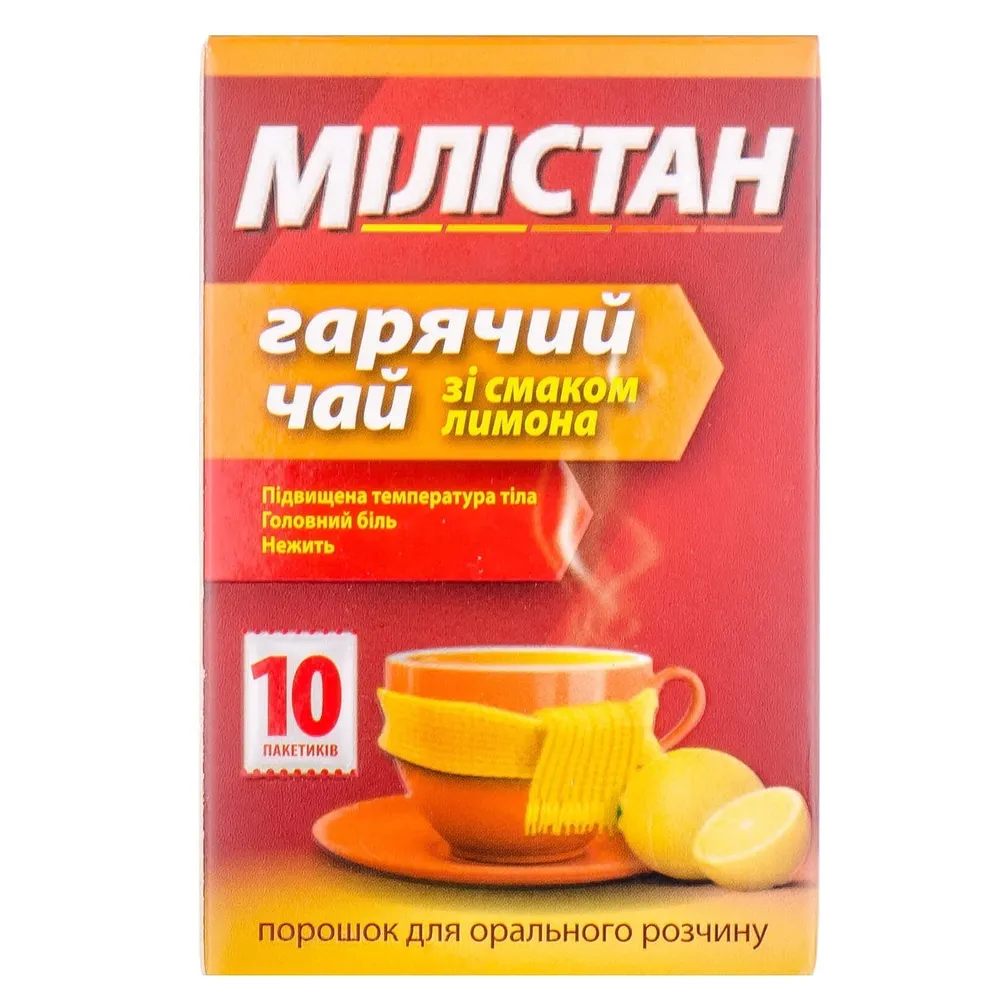
Table of Contents
INSTRUCTIONS FOR MEDICAL USE OF THE MEDICINAL PRODUCT MİLİSTAN HOT TEA WITH LEMON FLAVOR (MILISTAN HOT TEA WITH LEMON)
Composition:
Active substances: paracetamol, pheniramine maleate, phenylephrine hydrochloride, ascorbic acid;
1 sachet (6 g) contains: paracetamol 500 mg, pheniramine maleate 25 mg, phenylephrine hydrochloride 10 mg, ascorbic acid 200 mg;
Excipients: sucrose, anhydrous citric acid, tartaric acid, sodium citrate, quinoline yellow coloring agent (E 104), lemon essence, aspartame (E 951).
Pharmaceutical form. Effervescent powder for oral solution.
Main physicochemical properties: granular free-flowing powder consisting of a mixture of white, pale yellow and/or yellow granules of various sizes, with lemon flavor and lemon odor upon dissolution.
Pharmacotherapeutic group. Analgesics. Other analgesics and antipyretics. Anilides. Paracetamol combinations without psychotropic agents. ATC code N02BE51.
Pharmacological properties.
Pharmacodynamics.
The medicinal product is a combination of four components.
Paracetamol has analgesic, antipyretic, and weak anti-inflammatory effects. The mechanism of action is associated with inhibition of prostaglandin synthesis and influence on the thermoregulatory center in the hypothalamus.
Pheniramine maleate is an antiallergic agent, a histamine H1-receptor blocker. It reduces nasal congestion, nasal discharge, lacrimation, and sneezing.
Phenylephrine hydrochloride is a sympathomimetic amine that causes vasoconstriction by stimulating α-adrenergic receptors located on postcapillary vessels and cavernous-venous sinuses of the nasal mucosa. These receptors are stimulated directly by binding with phenylephrine or by binding with norepinephrine released from the sympathetic nerve in response to phenylephrine. Vasoconstriction reduces blood filling of the nasal mucosa and thereby leads to prolonged reduction of swelling. It exerts a slight stimulatory effect on the central nervous system.
Ascorbic acid (vitamin C) compensates for the increased demand of the body for vitamin C during respiratory infections and enhances nonspecific resistance of the body. It has antioxidant properties, participates in the regulation of redox processes and carbohydrate metabolism, and partially compensates for the need for vitamins B1, B2, A, E, folic acid, and pantothenic acid. It helps reduce adverse effects caused by paracetamol intake and prolongs its action (extends the elimination half-life).
Pharmacokinetics.
After oral administration, paracetamol is rapidly and almost completely absorbed from the gastrointestinal tract, primarily from the upper intestinal segments.
Maximum plasma concentration is reached within 30–60 minutes. Plasma protein binding is 25%. It crosses the placental barrier; a small amount passes into breast milk. 95% of paracetamol is metabolized in the liver to form glucuronide and sulfate conjugates. Depending on plasma concentration, it is partially deacetylated or hydroxylated. When administered in therapeutic doses, the elimination half-life is 1–4 hours. Duration of action is 3–4 hours. The main route of elimination is via urine (90–100% within 24 hours), as glucuronide conjugates (60%), sulfates (35%), or cysteine (3%); less than 5% is excreted unchanged.
Pheniramine maleate is well absorbed in the gastrointestinal tract. Maximum plasma concentration is achieved within 1–2.5 hours. It is metabolized in the liver via cytochrome P450 oxidation; the elimination half-life is 16–19 hours. Excretion occurs mainly via the kidneys. Approximately 70–83% of the orally administered dose is excreted in unchanged form or as metabolites in urine.
Phenylephrine hydrochloride is poorly absorbed from the gastrointestinal tract after oral administration and is characterized by low bioavailability. Its effect begins rapidly and lasts approximately 20 minutes. Phenylephrine hydrochloride undergoes biotransformation involving monoamine oxidase in the intestinal wall, as well as presystemic metabolism in the liver. It is excreted by the kidneys.
Ascorbic acid is well absorbed from the small intestine. Bioavailability is approximately 70%. It is primarily metabolized in the liver. It is excreted in the form of metabolites and partially unchanged, mainly via the kidneys in urine, as well as in feces and sweat, and passes into breast milk.
Clinical characteristics.
Indications.
Treatment of symptoms of cold and flu, inflammatory and allergic rhinitis, such as headache, fever, and runny nose.
Contraindications.
Hypersensitivity to the components of the drug; severe impairment of liver and/or kidney function; Dubin-Johnson syndrome, congenital hyperbilirubinemia; glucose-6-phosphate dehydrogenase deficiency; alcoholism; blood disorders; leukopenia; anemia; severe forms of arrhythmia, arterial hypertension, atherosclerosis, ischemic heart disease; hyperthyroidism; acute pancreatitis; prostate hypertrophy with urinary retention; bladder neck obstruction; pyloroduodenal obstruction; bronchial asthma; increased intraocular pressure, closed-angle glaucoma; thrombosis; thrombophlebitis; severe forms of diabetes mellitus; epilepsy; states of increased excitement; concomitant therapy with β-blockers, other sympathomimetics, appetite suppressants or stimulants, and amphetamine-like psychostimulants, tricyclic antidepressants; concomitant use with monoamine oxidase inhibitors (MAOIs) and within 2 weeks after discontinuation of MAOIs. Urolithiasis — if ascorbic acid is administered in doses exceeding 1 g per day. Oxaluria. Phenylketonuria. Pheochromocytoma; conditions associated with iron accumulation (hemochromatosis, thalassemia, and sideroblastic anemia).
Interaction with other medicinal products and other types of interactions.
Concomitant use with other medicinal products containing paracetamol or other active ingredients present in this drug should be avoided.
The absorption rate of paracetamol may be increased when used with metoclopramide and domperidone, and decreased — with cholestyramine. With prolonged concomitant use, the anticoagulant effect of coumarins (e.g., warfarin) is enhanced, increasing the risk of bleeding. Occasional use does not have this effect. Barbiturates reduce the antipyretic effect of paracetamol. Anticonvulsants (phenytoin, barbiturates, carbamazepine) that stimulate hepatic microsomal enzymes, as well as isoniazid, may enhance the hepatotoxicity of paracetamol. Paracetamol reduces the effectiveness of diuretics.
Concomitant use of paracetamol with barbiturates, phenytoin, carbamazepine, rifampicin, and other inducers of hepatic microsomal enzymes increases the toxic effects of the drugs on the liver. Paracetamol may reduce lamotrigine bioavailability, decreasing its effect due to induction of its hepatic metabolism.
Regular concomitant use of paracetamol with zidovudine may lead to neutropenia and increased risk of liver damage.
The analgesic effect of paracetamol is enhanced when combined with codeine, ascorbic acid, scopolamine, chlorphenamine, propyphenazone, and caffeine.
Concomitant use of paracetamol with zidovudine may lead to neutropenia.
Concomitant use of paracetamol with nonsteroidal anti-inflammatory drugs increases the risk of renal complications.
Concomitant use of paracetamol with hepatotoxic agents increases the toxic effects of the drugs on the liver.
Do not use concomitantly with alcohol.
Caution is advised when using paracetamol concomitantly with flucloxacillin, as co-administration is associated with metabolic acidosis with a high anion gap due to pyroglutamic acidosis**, particularly in patients with risk factors (see section "Special precautions").**
Oral ascorbic acid enhances the absorption of penicillin and iron; promotes intestinal absorption of aluminum, which should be considered when using antacids containing aluminum; reduces the effectiveness of heparin and indirect anticoagulants; increases the risk of crystalluria during salicylate therapy and the risk of glaucoma during glucocorticoid therapy; high doses reduce the effectiveness of tricyclic antidepressants. Antidepressants, antiparkinsonian agents, antipsychotics, and phenothiazine derivatives increase the risk of urinary retention, dry mouth, and constipation. Ascorbic acid should be taken only 2 hours after deferoxamine injection, as their concomitant use increases iron toxicity, especially in the myocardium. Long-term use of high doses during disulfiram therapy inhibits the disulfiram-alcohol reaction.
High doses of the drug reduce the effectiveness of tricyclic antidepressants and phenothiazine-derived neuroleptics, reduce tubular reabsorption of amphetamine, impair renal excretion of mexiletine, and affect vitamin B12 resorption.
Ascorbic acid increases the total clearance of ethanol.
The drug reduces the toxicity of sulfonamide drugs, reduces the effectiveness of heparin and indirect anticoagulants.
Ascorbic acid acts as a competitive inhibitor of sulfation of ethinylestradiol. It has been reported that intake of 1 g of ascorbic acid increases the bioavailability of ethinylestradiol by 60–70% in women receiving single oral doses, by 47% in women on long-term oral contraceptives, and by 21% in postmenopausal women using transdermal estradiol.
Quinolone derivatives, calcium chloride, salicylates, and corticosteroids, when used long-term, reduce the body's stores of ascorbic acid.
Absorption of ascorbic acid is reduced when used concomitantly with oral contraceptives, fruit or vegetable juices, and alkaline beverages.
Pheniramine enhances the anticholinergic effects of atropine, spasmolytics, tricyclic antidepressants, and antiparkinsonian agents. Concomitant use of pheniramine with sedatives, barbiturates, tranquilizers, neuroleptics, anesthetics, narcotic analgesics, and alcohol may significantly increase its depressant effects. Pheniramine maleate may also inhibit the action of anticoagulants.
Interaction of phenylephrine with MAO inhibitors causes a hypertensive effect; with tricyclic antidepressants (amitriptyline) — increases the risk of cardiovascular adverse effects; with digoxin and cardiac glycosides — leads to arrhythmias and infarction; concomitant use with halothane increases the risk of ventricular arrhythmia. Phenylephrine, when used with other sympathomimetics, increases the risk of cardiovascular adverse reactions, may reduce the effectiveness of β-blockers and other antihypertensive agents (reserpine, methyldopa), increasing the risk of arterial hypertension and cardiovascular side effects. The drug reduces the hypotensive effect of guanethidine, which in turn enhances the alpha-adrenergic stimulating activity of phenylephrine hydrochloride. Concomitant use of phenylephrine with digoxin and digitalis cardiac glycosides increases the risk of cardiac rhythm disturbances and infarction.
Phenylephrine may also cause adverse reactions when combined with indomethacin and bromocriptine (severe arterial hypertension). Rauwolfia alkaloids reduce the therapeutic effect of phenylephrine. Concomitant use of phenylephrine with ergot alkaloids (ergotamine and methysergide) may lead to ergotism.
The risk of urinary retention, dry mouth, and constipation increases when the drug is used concomitantly with antidepressants, antiparkinsonian agents, neuroleptics, and phenothiazine derivatives. Concurrent use of the drug with glucocorticoids increases the risk of glaucoma.
Special precautions for use.
Do not take the medicinal product if pain persists for more than ten days or if fever lasts for more than three days, unless otherwise directed by a physician. If pain or fever persists or worsens, or if new symptoms develop, consult your doctor.
This medicinal product is contraindicated for concomitant use with sedatives or hypnotics.
Do not exceed the recommended doses.
Do not use simultaneously with other medications intended for symptomatic treatment of colds and nasal congestion (vasoconstrictors, paracetamol-containing products). Use with caution in patients with Raynaud's disease, heart disorders, arterial hypertension, arrhythmias, bradycardia, thyroid disorders, liver or kidney disease, glaucoma, chronic lung diseases, prostate hypertrophy, urinary disorders, pheochromocytoma, diabetes mellitus, and in elderly individuals.
Use with caution in patients with acute hepatitis, chronic malnutrition, dehydration, productive cough, or in those with congenital prolonged QT interval or during prolonged use of drugs that may prolong the QT interval.
Before using paracetamol, consult a doctor if the patient is taking warfarin or similar agents with anticoagulant effects.
Serious skin reactions, such as acute generalized exanthematous pustulosis, Stevens–Johnson syndrome, and toxic epidermal necrolysis, have very rarely occurred in patients taking paracetamol. Patients should be informed about the signs of serious skin reactions. Discontinue use of the medicinal product at the first appearance of a skin rash or any other signs of hypersensitivity.
If the patient uses the product long-term as directed by a physician, monitoring of liver function and peripheral blood picture is necessary. Paracetamol overdose may cause liver failure, which could necessitate liver transplantation or result in death.
Patients who take analgesics daily for mild forms of arthritis should consult a doctor. If headache becomes persistent, medical advice should be sought.
When high doses are used or the product is used long-term, blood pressure and pancreatic function should be monitored.
The risk of hepatotoxicity is increased in individuals with alcoholic liver disease or those who abuse alcohol. During treatment, avoid consumption of alcoholic beverages, excessive intake of coffee, strong tea, other stimulant drinks, and use of medicinal products containing caffeine. This may cause sleep disturbances (may induce drowsiness), tremor, tension, irritability, discomfort behind the sternum due to palpitations, dizziness, or arrhythmia. Individuals with a history of chronic alcohol abuse have an increased risk of developing hepatotoxicity when using excessive amounts of paracetamol, although reports of such events are rare. Cases of hepatic dysfunction/failure have been reported in patients with reduced glutathione levels, such as those suffering from severe malnutrition, anorexia, low body mass index, or chronic alcohol dependence.
Metabolic acidosis with a high anion gap (high anion gap metabolic acidosis (HAGMA)) due to pyroglutamic acidosis has been reported in critically ill patients, such as those with severe renal failure or sepsis, or in patients with malnutrition and other sources of glutathione deficiency (e.g., chronic alcoholism), who were treated with paracetamol at therapeutic doses for prolonged periods or in combination with flucloxacillin. If HAGMA due to pyroglutamic acidosis is suspected, immediate discontinuation of paracetamol and careful monitoring are recommended. Measurement of urinary 5-oxoproline levels may be useful in identifying pyroglutamic acidosis as the underlying cause of HAGMA in patients with multiple risk factors.
In patients with severe infections such as sepsis, which are associated with reduced glutathione levels, the use of paracetamol increases the risk of metabolic acidosis. Symptoms of metabolic acidosis include deep, rapid, or labored breathing, nausea, vomiting, and loss of appetite. Seek immediate medical attention if these symptoms occur.
Paracetamol should be used with caution in patients with Raynaud's disease.
The medicinal product may affect laboratory test results for blood glucose and uric acid levels.
The product contains phenylephrine, which may provoke angina attacks.
When high doses are used or the product is used long-term, kidney function, blood pressure, and pancreatic function should be monitored. The medicinal product should be used with caution in patients with a history of kidney disease.
In patients with nephrolithiasis, the daily dose of ascorbic acid should not exceed 1 g. High doses of the medicinal product should not be prescribed to patients with increased blood coagulability.
Since ascorbic acid enhances iron absorption, its use at this dosage is contraindicated in patients with polycythemia, leukemia, hemochromatosis, thalassemia, or sideroblastic anemia. Patients with high iron levels in the body should use the medicinal product at the lowest possible doses.
Concomitant use of the medicinal product with alkaline drinks reduces the absorption of ascorbic acid; therefore, it should not be taken with alkaline mineral water. Absorption of ascorbic acid may also be impaired in intestinal dyskinesia, enteritis, and achylia.
As a reducing agent, ascorbic acid may interfere with laboratory test results, for example, in determining blood glucose, bilirubin, transaminase activity, and lactate dehydrogenase activity.
Since ascorbic acid has a mild stimulant effect, it is not recommended to take the medicinal product late in the day. Due to the stimulatory effect of ascorbic acid on corticosteroid hormone production, when using the product in high doses, kidney function and blood pressure should be monitored.
The medicinal product contains sucrose and should therefore be used with caution in patients with diabetes mellitus. Do not use in patients with fructose intolerance, glucose-galactose malabsorption, or sucrose-isomaltase deficiency.
If a patient has known sugar intolerances, they should consult a doctor before taking this medicinal product.
The medicinal product contains 330 mg/dose of sodium citrate. Caution is advised when administering to patients on a sodium-restricted diet.
Aspartame (E 951) is a phenylalanine derivative and poses a risk to patients with phenylketonuria.
If the patient's condition does not improve, medical advice should be sought.
Use during pregnancy or breastfeeding.
The medicinal product is contraindicated during pregnancy or breastfeeding. If use of the product is necessary, breastfeeding should be discontinued.
Paracetamol data
Standard studies using currently accepted standards for evaluating reproductive and ontogenetic toxicity are not available.
Extensive data from pregnant women do not indicate any teratogenic or fetal/neonatal toxicity. Epidemiological studies on the development of the nervous system in children exposed to paracetamol in utero have not yielded conclusive results.
Ability to affect reaction speed when driving or operating machinery.
Since the medicinal product may cause drowsiness, driving and operating complex machinery are not recommended during treatment.
Method of Administration and Dosage
The medicinal product should be taken by dissolving the contents of 1 sachet in a glass of hot boiled water (not boiling water) and taken while warm.
Children aged 12 years and older: 1 sachet twice daily.
Adults: 1 sachet 3–4 times daily.
Maximum duration of treatment – 5 days.
Children.
The medicinal product is contraindicated in children under 12 years of age.
Overdose.
Symptoms of overdose are determined by the pharmacological effects of the components of the medicinal product.
In case of paracetamol overdose, pallor, nausea, vomiting, and abdominal pain may appear within the first 24 hours. Toxic effects in adults may occur after ingestion of 10–15 g of paracetamol. The following symptoms may be observed: pallor of the skin, anorexia, nausea, vomiting, diarrhea, epigastric discomfort (0–24 hours); increased activity of hepatic transaminases and lactate dehydrogenase, elevated bilirubin levels, and decreased prothrombin levels (24–48 hours); prolonged prothrombin time; hepatotoxic effect characterized by general symptoms (pain, weakness, adynamia, increased sweating) and specific symptoms (hepatomegaly, jaundice, elevated hepatic enzyme activity). Hepatotoxicity may lead to hepatic necrosis and may be complicated by hepatic encephalopathy (impaired thinking, depression of higher nervous activity, excitement, stupor), liver pain, acute liver failure, DIC syndrome, hypoglycemia, hypophosphatemia, lactic acidosis, metabolic acidosis, cardiomyopathy, hypotension, gastrointestinal bleeding, arrhythmias, seizures, respiratory depression, coma, cerebral edema, hypocoagulation, collapse, and multiple organ failure. Rarely, liver dysfunction may develop rapidly and may be complicated by acute renal failure.
After ingestion of large doses, decreased appetite, disorientation, excitement, dizziness, sleep disturbances, cardiac arrhythmia, pancreatitis, bacterial infection, fungal infection, sepsis, and coagulopathy may occur. Immediate medical assistance is required in case of overdose. The patient should be taken to hospital immediately, even if early symptoms of overdose are absent. Symptoms may be limited to nausea and vomiting or may not reflect the severity of overdose or risk of organ damage. Activated charcoal may be beneficial if excessive paracetamol dose was taken within 1 hour. Plasma paracetamol concentration should be measured 4 hours or later after ingestion (earlier concentrations are unreliable). In the absence of vomiting, oral methionine may be used as an appropriate alternative in remote areas outside hospital settings. In isolated cases, acute renal failure with tubular necrosis has been reported, manifesting as lumbar pain, hematuria, proteinuria; nephrotoxicity (renal colic, interstitial nephritis).
In patients with risk factors [long-term treatment with carbamazepine, phenobarbital, phenytoin, primidone, rifampicin, St. John's wort, or other drugs inducing liver enzymes; regular consumption of excessive amounts of ethanol; glutathione deficiency (digestive disorders, cystic fibrosis, HIV infection, starvation, cachexia)], administration of 5 g or more of paracetamol may lead to liver damage.
Administration of 10 g or more of paracetamol to adults, especially with alcohol, and over 150 mg/kg body weight to children may result in hepatocellular necrosis leading to encephalopathy, hepatic coma, and fatal outcome. The first clinical signs of hepatic necrosis may appear 12–48 hours after overdose. Glucose metabolism disorders and metabolic acidosis may occur. With prolonged use of high doses, aplastic anemia, pancytopenia, agranulocytosis, neutropenia, leukopenia, and thrombocytopenia are possible.
In case of ascorbic acid overdose, nausea, vomiting, bloating and abdominal pain, itching, skin rashes, and increased excitability may occur. Doses exceeding 3 g may cause temporary osmotic diarrhea and gastrointestinal disturbances, impaired metabolism of zinc and copper, myocardial dystrophy, glucosuria, crystalluria, oxaluria, and nephrolithiasis. High-dose vitamin C causes diarrhea and may lead to hyperoxaluria. Moreover, large doses of vitamin C may cause hemolysis in patients with glucose-6-phosphate dehydrogenase (G6PD) deficiency.
In case of pheniramine maleate overdose, anticholinergic-like symptoms occur: decreased level of consciousness, anticholinergic syndrome (mydriasis, flushing, fever, dry mouth, urinary retention), photophobia, hyperthermia, intestinal atony. Central nervous system depression may lead to respiratory and cardiovascular system dysfunction (bradycardia, arterial hypotension, confusion, hallucinations, psychiatric disorders, arrhythmias, collapse).
In case of phenylephrine hydrochloride overdose, hyperhidrosis, psychomotor agitation or central nervous system depression, headache, dizziness, drowsiness, impaired consciousness, arrhythmias, tremor, hyperreflexia, seizures, nausea, vomiting, irritability, restlessness, and arterial hypertension may occur.
Treatment: symptomatic therapy. Gastric lavage should be performed within 6 hours after overdose; within the first 8 hours, oral methionine or intravenous cysteamine or N-acetylcysteine should be administered. In case of seizures, diazepam should be prescribed.
Adverse Reactions
Skin reactions: rash, pruritus, dermatitis, urticaria, erythema multiforme, eczema, Stevens-Johnson syndrome, Lyell's syndrome.
Immune system reactions: hyperemia, purpura, allergic dermatitis; bronchial obstruction, persistent erythema, acute generalized exanthematous pustulosis, toxic epidermal necrolysis; hypersensitivity reactions (anaphylaxis, anaphylactic shock, hypersensitivity reactions including mucosal rash, generalized rash, erythematous rash, angioneurotic edema, sensation of warmth). Allergic-type reactions, including asthma attacks, may occasionally occur in patients with hypersensitivity to acetylsalicylic acid and other NSAIDs.
Nervous system reactions: headache, dizziness, tremor, psychomotor agitation, disorientation, restlessness, nervousness, anxiety, irritability, sleep disturbances, insomnia, somnolence, confusion, hallucinations, depressive states, paresthesia, general weakness, fatigue, tinnitus; in isolated cases – coma, seizures, dyskinesia, behavioral changes.
Respiratory system reactions: pharyngitis, bronchospasm in patients sensitive to acetylsalicylic acid and other NSAIDs.
Eye disorders: eye pain and burning sensation, visual and accommodation disturbances, blurred vision, mydriasis, increased intraocular pressure, dry eyes, photophobia, acute angle-closure glaucoma (more frequently in patients with glaucoma).
Gastrointestinal system reactions: decreased appetite, gastrointestinal mucosa irritation, nausea, vomiting, heartburn, dry mouth, epigastric discomfort and pain, constipation, diarrhea, flatulence, anorexia, aphthae, hypersalivation, hemorrhages.
Hepatobiliary system reactions: liver function abnormalities, hypertransaminasemia (usually without jaundice), hepatonecrosis (with high-dose administration), hepatotoxic effects.
Endocrine system reactions: hypoglycemia up to hypoglycemic coma, damage to the islet apparatus of the pancreas (hyperglycemia, glucosuria), and impaired glycogen synthesis, potentially leading to diabetes mellitus.
Blood and lymphatic system reactions: anemia, including hemolytic anemia, sulfhemoglobinemia, and methemoglobinemia (cyanosis, dyspnea, chest pain), thrombocytopenia, bruising or bleeding, thrombocytosis, hyperprothrombinemia, erythrocytopenia, neutrophilic leukocytosis; in patients with glucose-6-phosphate dehydrogenase deficiency, hemolysis of erythrocytes may occur, leading to anemia, hemolytic anemia, methemoglobinemia, thrombocytopenia, aplastic anemia, pancytopenia, sulfhemoglobinemia, neutropenia, agranulocytosis, leukopenia.
Kidney and urinary system reactions: nephrotoxicity, interstitial nephritis, papillary necrosis, renal colic, dysuria, urinary retention and difficulty in urination, damage to the glomerular apparatus of the kidneys, crystalluria, formation of urate, cystine, and/or oxalate calculi in kidneys and urinary tract, renal failure.
Cardiovascular system reactions: arterial hypertension (especially in patients with pre-existing hypertension), tachycardia, bradycardia, arrhythmia, dyspnea, chest pain, palpitations, myocardial dystrophy.
Metabolic disturbances: disturbances in zinc and copper metabolism; frequency unknown – metabolic acidosis with high anion gap.
General disorders and administration site reactions: sleep disturbances, dryness in nose, mouth, or throat, somnolence, general weakness, increased sweating.
In most cases, the drug is well tolerated. Adverse effects related to the drug's components occur rarely, usually as a result of prolonged use at high doses.
Description of selected adverse reactions
Metabolic acidosis with high anion gap
Metabolic acidosis with high anion gap, resulting from pyroglutamic acidosis, has been observed in patients with risk factors who used paracetamol (see section "Special precautions"). Pyroglutamic acidosis may develop due to low glutathione levels in these patients.
Shelf life
2 years.
Storage conditions
Store at temperatures not exceeding 25°C, in the original packaging, in a place inaccessible to children.
Packaging
6 g per sachet. 10 sachets per cardboard box.
Prescription status
Over-the-counter (without prescription).
Manufacturer
IXCEL Laboratories Pvt. Ltd. / XL Laboratories Pvt. Ltd.
Manufacturer's address
E-1223, Phase-I, Extn. (Ghatal), RIICO Industrial Area, Bhiwadi, Dist. Alwar (Raj.), India / E-1223, Phase-I, Extn. (Ghatal), RIICO Industrial Area, Bhiwadi, Dist. Alwar (Raj.), India.
Marketing Authorization Holder
Mili Healthcare Limited.
Address of the Marketing Authorization Holder
Second Floor Office Suite, 4 Chartfield House, Castle Street, Taunton, Somerset, England, TA1 4AS, Great Britain / Second Floor Office Suite, 4 Chartfield House, Castle Street, Taunton, Somerset, England, TA1 4AS, Great Britain.