Mili nosik
Ukraine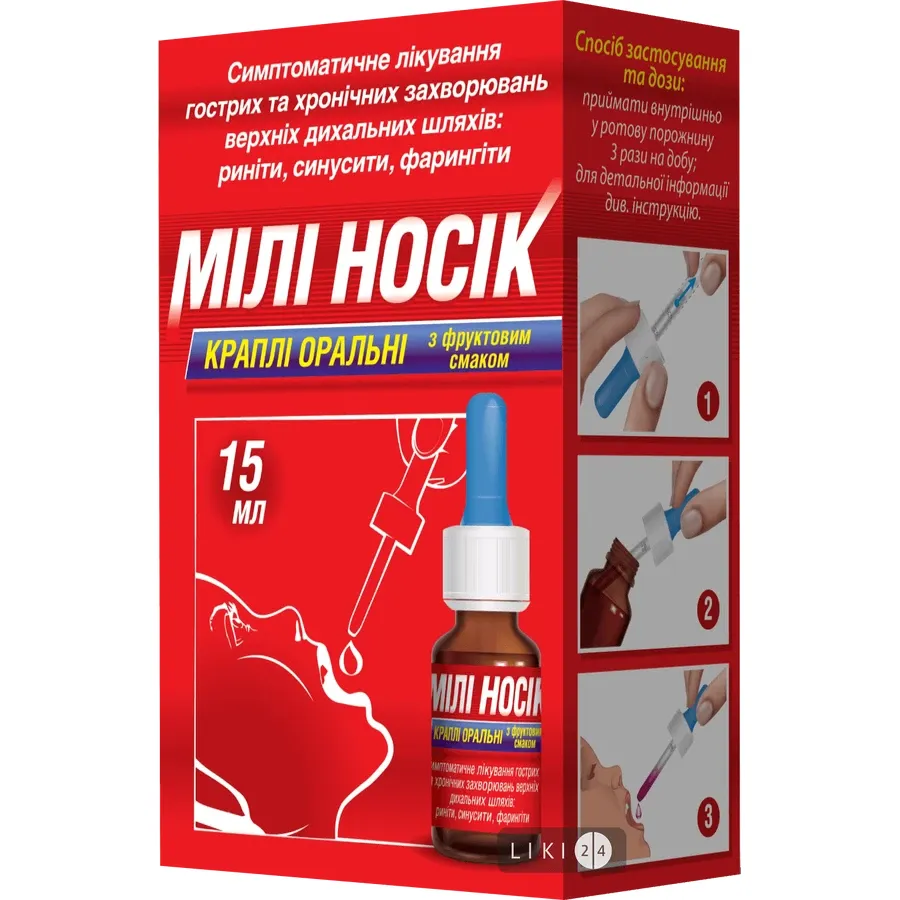
Table of Contents
INSTRUCTION for medical use of the medicinal product MILI NOSIK (MILI NOSIK)
Composition:
Active substances: chlorpheniramine maleate, phenylephrine hydrochloride;
1 ml contains 2 mg chlorpheniramine maleate, 2.5 mg phenylephrine hydrochloride;
Excipients: sucrose, benzoic acid (E 210), disodium edetate, sorbitol solution (E 420), propylene glycol, sodium hydroxide, raspberry flavor, colorant carmoisine (E 122), purified water.
Pharmaceutical form. Oral drops with fruit flavor.
Main physicochemical properties: clear liquid, from light pink to pink in color.
Pharmacotherapeutic group. Anti-edema agents for systemic use in nasal cavity pathology. ATC code R01BA53.
Pharmacological Properties
Pharmacodynamics
Phenylephrine is a sympathomimetic amine that causes vasoconstriction by stimulating α-adrenergic receptors located on postcapillary vessels and cavernous-venous sinuses of the nasal mucosa. Vasoconstriction reduces nasal mucosal blood flow and thereby produces a prolonged reduction in mucosal swelling.
Chlorpheniramine maleate is an H1-histamine receptor blocker. It exerts an antiallergic effect and reduces exudative manifestations. It has a moderately expressed sedative effect.
Pharmacokinetics
Phenylephrine is rapidly absorbed in the gastrointestinal tract. It is distributed into various tissues and fluids, metabolized by MAO in the intestinal wall and liver. It is excreted unchanged in the urine.
Chlorpheniramine maleate is well absorbed in the gastrointestinal tract. Maximum plasma concentration is reached within 1–4 hours after oral administration. It crosses the placental barrier and is excreted in breast milk. It binds well to plasma proteins, is completely metabolized in the body, and is primarily excreted in the urine as metabolites.
Clinical characteristics.
Indications.
Common cold accompanied by rhinorrhea, nasal congestion, lacrimation, and persistent sneezing.
Infectious and allergic rhinopharyngitis, pollinosis (hay fever);
symptomatic treatment of acute and chronic upper respiratory tract diseases: rhinitis, sinusitis, pharyngitis.
Contraindications.
Hypersensitivity to the components of the drug or to other antihistamines; severe cardiac conduction disorders, decompensated heart failure; arterial hypertension, marked atherosclerosis, severe coronary artery disease; epilepsy, pheochromocytoma, hyperthyroidism, closed-angle glaucoma, urethral and prostatic disorders with urinary retention, bladder neck obstruction; pyloroduodenal obstruction, renal failure, diabetes mellitus.
Do not use concomitantly with monoamine oxidase inhibitors (MAO inhibitors) or within 2 weeks after discontinuation of MAO inhibitors; also contraindicated during concurrent use of tricyclic antidepressants or ß-adrenergic blockers.
Interaction with other medicinal products and other forms of interaction.
Phenylephrine.
Phenylephrine hydrochloride should not be used with α-blockers, other antihypertensive agents, phenothiazine derivatives (e.g., promethazine), sympathomimetic bronchodilators, guanethidine, digitalis, Rauwolfia alkaloids, indomethacin, bromocriptine, methyldopa, glucocorticosteroids; appetite-suppressing agents, amphetamine-like psychostimulants, labor stimulants, anesthetics, ergot alkaloids, other central nervous system stimulants, theophylline.
Concomitant use of phenylephrine with other sympathomimetic agents or tricyclic antidepressants (e.g., amitriptyline) may increase the risk of cardiovascular adverse effects. Rauwolfia alkaloids reduce the therapeutic effect of phenylephrine hydrochloride.
Vasoconstrictive action of the drug may be enhanced when used concomitantly with labor stimulants, and arrhythmias may occur when used with anesthetics. Significant increase in arterial pressure may occur with intravenous administration of ergot alkaloids.
Atropine sulfate blocks the reflex bradycardia caused by phenylephrine and enhances the pressor response to phenylephrine. Concurrent use of phenylephrine with ß-adrenergic blockers and other antihypertensive drugs (e.g., debrisoquin, guanethidine, reserpine, methyldopa) may lead to arterial hypertension and excessive bradycardia with possible heart block. Use with caution with thyroid hormones and drugs affecting cardiac conduction (cardiac glycosides, antiarrhythmic drugs may increase the risk of arrhythmia or cardiac attack). Concomitant use with potassium-depleting agents, such as certain diuretics (e.g., furosemide), may enhance hypokalemia and reduce arterial sensitivity to vasoconstrictors such as phenylephrine.
Do not use concomitantly with other vasoconstrictive agents (regardless of the route of administration).
Concomitant use of phenylephrine and other sympathomimetics may lead to excessive stimulation of the central nervous system, resulting in nervousness, irritability, and insomnia. Seizure attacks are also possible. In addition, concomitant use of other sympathomimetics with phenylephrine may enhance the vasoconstrictive or cardiovascular effects of either agent.
Antidepressants, antiparkinsonian and antipsychotic agents, phenothiazine derivatives increase the risk of urinary retention, dry mouth, and constipation.
Concomitant use with ergot alkaloids (ergotamine, methysergide) increases the risk of ergotism.
Concomitant use of phenylephrine with linezolid is not recommended.
Chlorpheniramine.
The central depressive effect of chlorpheniramine maleate may be significantly enhanced by concomitant use with sedatives, tranquilizers, anesthetics, neuroleptics, MAO inhibitors, antiparkinsonian agents, barbiturates, tranquilizers, narcotic analgesics, and alcohol. Enhances the anticholinergic effects of atropine, spasmolytics, tricyclic antidepressants, and antiparkinsonian agents.
May reduce the effect of anticoagulants and interact with progesterone, reserpine, and thiazide diuretics. Concomitant use of oral contraceptives may reduce the efficacy of the antihistamine component of the drug.
Special precautions for use
The drug should be prescribed by a physician only after assessment of the risk/benefit ratio in the following conditions: arterial hypertension, ischemic heart disease, Raynaud's disease/syndrome, urinary disorders, increased intraocular pressure, prostate hypertrophy, pancreatitis.
Use with caution in patients with thyroid disorders, except for hyperthyroidism specified in the section "Contraindications", and in patients with glaucoma, except for closed-angle glaucoma specified in the section "Contraindications".
Aminophylline may cause disturbances of the central nervous system and, as a result, may lead to seizures. Phenylephrine, a component of the drug, may exert vasoconstrictive effects and may cause cardiovascular failure manifested by arterial hypotension. Therefore, the drug should be used with caution in patients over 70 years of age and in patients with cardiovascular diseases. During treatment with this drug, sedative/hypnotic medicinal products (particularly barbiturates) should not be used, as they may enhance the sedative effect of antihistamines (chlorpheniramine maleate). Use with caution in patients with hepatic or renal impairment.
If the disease is caused by a bacterial infection, concomitant treatment with antibiotics is recommended.
Do not exceed the recommended dose.
Alcohol consumption is prohibited during treatment with this drug!
Phenylephrine may cause a false positive result in doping control tests in athletes.
Do not use in patients with hereditary fructose intolerance, glucose-galactose malabsorption, or sucrase-isomaltase deficiency.
Use during pregnancy or breastfeeding.
The use of this drug is not recommended during pregnancy or breastfeeding.
Ability to affect reaction rate while driving or operating machinery.
Patients should avoid driving, working with machinery, and other potentially hazardous activities during treatment with this drug.
Dosage and Administration.
A graduated pipette with child-resistant protection is located inside the packaging.
Children aged 4 to 6 years – 1.0 ml;
Children aged 6 to 12 years – 1.5 ml;
Children aged 12 years and adults – dose is individually determined: 1.5–2 ml.
Administer orally into the oral cavity three times daily. Maximum duration of treatment: 4–5 days.
Children.
Do not use in children under 4 years of age.
Overdose.
Symptoms of phenylephrine overdose: in case of overdose, adverse reactions may intensify, especially with prolonged use.
Possible symptoms include cardiac arrhythmias, increased arterial pressure, arterial hypotension, chest pain and discomfort, palpitations, dyspnea, non-cardiogenic pulmonary edema, excitation, seizures, headache, tremor, sleep disturbances, restlessness, anxiety, nervousness, irritability, inappropriate behavior, psychosis with hallucinations, insomnia, weakness, anorexia, nausea, vomiting, oliguria, urinary retention, painful or difficult urination, facial flushing, cold sensation in extremities, paresthesia, pallor, piloerection, increased sweating, hyperglycemia, hypokalemia, peripheral vasoconstriction, reduced blood flow to vital organs, which may lead to impaired renal perfusion, metabolic acidosis, and increased cardiac workload due to elevated total peripheral resistance. Severe consequences of vasoconstriction are more likely in patients with hypovolemia and severe bradycardia.
In case of chlorpheniramine maleate overdose, anticholinergic-like symptoms may occur: mydriasis, photophobia, dryness of skin and mucous membranes, elevated body temperature, tachycardia, intestinal atony. Typically, initial symptoms include central nervous system excitation (psychomotor agitation, impaired motor coordination, hyperreflexia, seizures), followed by depression, drowsiness, impaired consciousness, accompanied by respiratory disorders and cardiovascular dysfunction (cardiac arrhythmias, extrasystoles, reduced pulse rate, decreased arterial pressure up to vascular collapse).
There is no specific antidote for phenylephrine poisoning.
Treatment. In case of overdose, symptomatic therapy is required; in severe arterial hypertension, α-adrenoblockers should be administered.
Adverse Reactions.
Cardiovascular system: arrhythmia, tachycardia, reflex bradycardia, increased blood pressure (especially in patients with arterial hypertension), sensation of facial flushing.
Gastrointestinal tract: nausea, vomiting, diarrhea, dyspepsia, flatulence, dry mouth, anorexia.
Urinary and reproductive system: urinary retention, difficulty in urination.
Nervous system: headache, dizziness, fear sensation, sleep disturbances, insomnia, drowsiness, anxiety, excitement, tremor, hallucinations, seizures, epileptic seizures, dyskinesia, coma, behavioral changes.
Hepatic and biliary system: biliary dyskinesia, hepatitis, jaundice.
Skin and appendages: skin rashes, pruritus, pallor, exfoliative dermatitis.
Eye disorders: dryness of ocular mucosa, decreased visual acuity, mydriasis, increased intraocular pressure.
Blood and lymphatic system disorders: hemolytic anemia, fluctuations in blood glucose levels.
Immune system disorders: hypersensitivity reactions, including angioedema, anaphylactic reactions.
Other: dry nose, weakness.
Shelf life.
3 years.
Storage conditions.
Store at a temperature not exceeding 25 °C in the original packaging and in a place inaccessible to children.
Packaging.
15 ml in a dark glass vial with a graduated pipette in a cardboard package.
Availability category.
Over-the-counter (without prescription).
Manufacturer.
Gracure Pharmaceuticals LTD.
Manufacturer's address.
E-1105, Industrial Area, Phase III, Bhiwadi, Alwar District, Rajasthan, 301019, India.
Marketing Authorization Holder.
Mili Healthcare Limited.
Address of the Marketing Authorization Holder.
Second Floor Office Suite, 4 Chartfield House, Castle Street, Taunton, Somerset, England, TA1 4AS, Great Britain.