Metroavin
Ukraine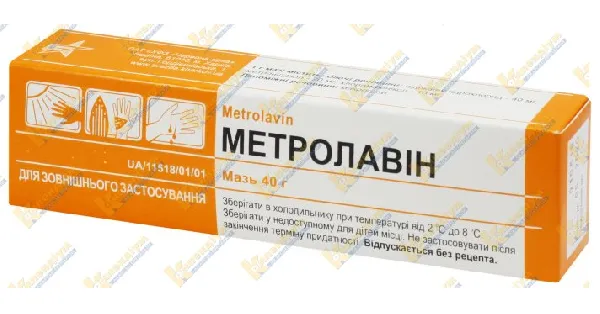
Table of Contents
INSTRUCTIONS FOR MEDICAL USE OF THE MEDICINAL PRODUCT METROLAVIN (Metrolavin)
Composition:
Active substances: 1 g of ointment contains: lidocaine hydrochloride – 40 mg, metronidazole – 20 mg, chloramphenicol – 10 mg;
Excipients: macrogols.
Pharmaceutical form. Ointment.
Main physicochemical properties: ointment from greyish-yellow to greenish-yellow in color.
Pharmacotherapeutic group.
Antibiotics and chemotherapeutic agents, combinations.
ATC code D06C.
Pharmacological Properties
Pharmacodynamics
Metrolavin ointment is a combination preparation exhibiting antimicrobial, local analgesic, and anti-inflammatory properties. The antimicrobial action is provided by metronidazole and chloramphenicol, which demonstrate a broad spectrum of antibacterial activity against aerobic and anaerobic microorganisms causing purulent-necrotic processes: Staphylococcus, Proteus, Pseudomonas aeruginosa, Escherichia coli, Klebsiella, Clostridium, Bacteroides, Prevotella, and Peptostreptococcus. Due to the local anesthetic lidocaine, the ointment exerts a pronounced and prolonged analgesic effect. Macrogols, serving as the base, enhance penetration of the active components into deeper skin layers and exhibit pronounced osmotic activity, promoting adsorption of purulent-necrotic material and exudate from the wound.
This combination of pharmacological properties ensures the therapeutic efficacy of Metrolavin ointment in purulent wounds and burns during phase I (purulent-necrotic phase) of the wound process, which is accompanied by pronounced infectious and inflammatory processes and pain.
Pharmacokinetics
Not studied.
Clinical characteristics.
Indications.
Treatment of purulent wounds and burns in the purulent-necrotic phase of the wound process caused by aerobic-anaerobic infection; carbuncles, furuncles, phlegmons in phase I of the wound process (first day after surgery).
Contraindications.
Hypersensitivity to other amide-type local anesthetics, to imidazole derivatives, parabens, and similar compounds; psoriasis, eczema, fungal skin infections, active herpes zoster, atopic dermatitis; phase II of the wound process (granulation and proliferation), phase III (epithelialization and scarring) of the wound process, hypersensitivity to any component of the medicinal product, pregnancy or breastfeeding period, children under 12 years of age.
Interaction with other medicinal products and other types of interactions.
-
Lidocaine hydrochloride. Under the influence of monoamine oxidase inhibitors, the local anesthetic effect of lidocaine may be enhanced. Use with caution in patients taking class I antiarrhythmic agents (e.g., tocainide, mexiletine), other local anesthetics, due to the risk of cumulative systemic effects.
-
Metronidazole. Interaction with other medicinal products is unlikely with topical use. Administration of metronidazole to patients receiving anticoagulants may lead to prolonged prothrombin formation time. Use with caution with phenobarbital, disulfiram, cimetidine, and alcohol.
-
Chloramphenicol. Combined use of chloramphenicol with erythromycin, oleandomycin, nystatin, and levorin increases antibacterial activity, whereas use with benzylpenicillin salts decreases it. Chloramphenicol is incompatible with cytostatics, sulfonamides, diphenyl, barbiturates, pyrazolone derivatives, and alcohol.
Special precautions for use
Metrolavin ointment should be administered with caution to patients with impaired hematopoiesis, and those with heart or liver diseases.
When applying the ointment to wounds with large surface areas or during prolonged use, monitoring of cardiac and liver function as well as hematological parameters is required, since systemic absorption of ointment components—metronidazole and chloramphenicol—may lead to disturbances in hematopoiesis, cardiac function, and liver function.
Use with caution in acute illnesses, debilitated patients, elderly patients, and in patients with renal insufficiency.
Avoid contact of the ointment with eyes. Do not apply to mucous membranes. The use of the drug may lead to skin sensitization, resulting in hypersensitivity reactions upon subsequent topical or systemic administration of this drug.
During treatment with this drug, direct exposure to sunlight should be avoided.
Use during pregnancy or breastfeeding
The drug is contraindicated during pregnancy or breastfeeding.
Ability to influence reaction rate when driving or operating machinery
Does not affect.
Dosage and Administration.
Apply Metrolavin ointment topically after primary surgical wound management, which includes removal of necrotic tissues and purulent exudate, followed by wound irrigation with an antiseptic solution. Apply the ointment directly to the affected area once daily or onto sterile gauze pads used to cover the wound surface, followed by application of a sterile dressing. Change the dressing once daily until complete debridement of the wound from purulent-necrotic material and until the beginning of granulation tissue formation.
For the treatment of skin burns complicated by purulent exudation, apply Metrolavin ointment after initial wound cleansing and toilet. The ointment may be applied directly to the burn wound, followed by application of a sterile dressing, or applied onto the dressing before covering the wound. Dressing changes should be performed every other day or once every 2–3 days, depending on the amount of purulent exudate, until complete wound debridement and initiation of granulation.
The maximum daily dose of ointment is 75 g for adults and 25 g for children aged 12 years and older. The duration of treatment depends on the severity of the condition and usually lasts 1–2 weeks. In cases of deep infection localization within soft tissues, the ointment should be used in combination with systemic antibacterial agents.
Children.
Do not use in children under 12 years of age.
Overdose.
Prolonged use or incorrect application, especially on damaged skin, may lead to increased plasma concentrations of lidocaine.
Adverse reactions.
Skin reactions: reactions at the application site, including irritation, itching, swelling at the site of ointment application, rash, burning sensation.
Immune system reactions: hypersensitivity reactions.
Myocardial metabolism disorders, increased transaminase levels, and blood dyscrasias.
Systemic adverse reactions are unlikely when used as directed, since systemic absorption of lidocaine is minimal. Systemic adverse reactions associated with lidocaine are similar in presentation to those seen with other amide-type local anesthetics. Systemic adverse effects of metronidazole are unlikely due to the very low concentrations achieved following topical application.
Shelf life. 2 years.
Do not use after the expiry date stated on the packaging.
Storage conditions.
Store in a refrigerator at a temperature of 2 °C to 8 °C.
Keep out of reach of children.
Packaging.
40 g of ointment in a tube № 1; in a cardboard pack.
Prescription status.
Over-the-counter.
Manufacturer.
JSC "CHIMFARMZAVOD "CHERVONA ZIRKA".
Manufacturer's address and location of its business activity.
1, Gordienkovskaya Street, Kharkiv, Kharkiv region, 61010, Ukraine.