Metamizole kalceks
Ukraine
Table of Contents
INSTRUCTIONS FOR MEDICAL USE OF THE MEDICINAL PRODUCT METAMIZOLE KALCEKS (METAMIZOLEKALCEKS)
Composition:
Active substance: metamizole sodium monohydrate;
1 ml of solution contains 500 mg of metamizole sodium monohydrate;
2 ml of solution (1 ampoule) contains 1000 mg of metamizole sodium monohydrate;
5 ml of solution (1 ampoule) contains 2500 mg of metamizole sodium monohydrate;
Excipients: hydrochloric acid, water for injections.
Pharmaceutical form. Injection solution.
Main physicochemical properties: clear, almost colorless to slightly brownish-yellow solution, practically free of particles.
Pharmacotherapeutic group. Analgesics and antipyretics. Pyrazolone derivatives. Metamizole sodium. ATC code N02B B02.
Pharmacological properties.
Pharmacodynamics.
Mechanism of action and pharmacodynamic effects
Metamizole is a pyrazolone derivative and a non-steroidal anti-inflammatory drug (NSAID) that exerts pronounced analgesic, antipyretic, and spasmolytic effects, as well as a weaker anti-inflammatory effect.
Metamizole inhibits the enzymes cyclooxygenase (COX-1 and COX-2), thereby inhibiting the synthesis of prostaglandins in both the peripheral and central nervous systems.
Metamizole stimulates the release of β-endorphins, reduces levels of endogenous pyrogens, and acts directly on the thermoregulatory center in the hypothalamus.
As with other non-steroidal anti-inflammatory drugs (NSAIDs), the antinociceptive effect of metamizole is considered to be centrally mediated. Similar to morphine, but in contrast to most aspirin-like drugs, metamizole acts directly on the transmission of pain signals.
There is also a hypothesis that the analgesic effect of metamizole is induced by its direct action on nerve receptors within the nociceptive system. Metamizole exerts a stronger analgesic effect than acetylsalicylic acid or paracetamol.
The antipyretic effect of metamizole is centrally mediated. Metamizole, possibly via active metabolites, inhibits prostaglandin synthesis, leading to a reduction in body temperature and, by analogy, to analgesia. It is believed that metamizole may also affect the inhibition of prostaglandin synthesis by crossing the blood-brain barrier.
The spasmolytic effect is based on metamizole's ability to inhibit intracellular release of Ca2+ ions. The inhibitory effect of metamizole on intracellular Ca2+ release is likely caused by inhibition of the inositol phosphate (IP) response in ATP LTK8 cells. The inhibitory effect of metamizole on IP accumulation may result from direct inhibition of phospholipase C (PLC). This may also be caused by impaired activation of PLC via a G-protein-coupled receptor (GPCR).
Pharmacokinetics.
Absorption
After intramuscular administration, the bioavailability of 4-methyl-amino-antipyrine (MAA) is approximately 87%. Following a single intramuscular dose of 1 g of metamizole, the maximum plasma concentration (Cmax) of MAA and 4-amino-antipyrine (AA) was 11.4 mg/L and 1.6 mg/L, respectively. The time to reach maximum plasma concentration (Tmax) was 1.7 and 5.5 hours, respectively.
Distribution
Plasma protein binding is approximately 58% for MAA, 48% for AA, 18% for 4-formylamino-antipyrine (FAA), and 14% for 4-acetamido-antipyrine (AAA).
The half-life of metamizole in plasma in vitro is approximately 16 minutes. After intravenous administration of metamizole, the mean volume of distribution of MAA is approximately 33.5 L. Metamizole crosses the blood-brain barrier and the placental barrier. Active metabolites are excreted into breast milk.
Biotransformation
Metamizole undergoes extensive biotransformation in the liver, and its main metabolites are pharmacologically active. Clinical efficacy is primarily provided by MAA and, to a lesser extent, by AA. Metabolites AAA and FAA are considered pharmacologically inactive.
Elimination
Metamizole is excreted in urine as metabolites. The main urinary metabolites are the inactive metabolites AAA and FAA. After intravenous administration, over 90% of the radioactively labeled dose is excreted in urine and less than 10% in feces. The elimination half-life of MAA is approximately 3 hours, and that of AA is approximately 6 hours.
Special patient groups
In elderly individuals, the area under the plasma concentration-time curve (AUC) is increased by 2 to 3 times. High doses of metamizole should be avoided in elderly patients.
Available data in patients with renal impairment indicate reduced elimination rates of certain metabolites (AAA and FAA) of metamizole. Therefore, high doses should be avoided in patients with impaired renal function.
In patients with hepatic impairment, the elimination half-life of the active metabolite MAA is increased approximately threefold. Lower doses of metamizole are recommended in patients with hepatic insufficiency.
Clinical characteristics.
Indications.
The medicinal product Metamizole Calces, solution for injection, is intended for short-term use:
- in cases of severe or prolonged pain when other therapeutic approaches have proven ineffective, such as:
- acute renal colic,
- headache,
- postoperative pain,
- other acute pain;
- in cases of severe or prolonged fever when other antipyretic agents are ineffective.
Metamizole should be used only when other analgesics and antipyretics are ineffective or when no alternative treatment option is available.
Parenteral administration is indicated only when oral administration is not feasible.
Contraindications.
- Hypersensitivity to the active substance, to other pyrazolone derivatives, or to any of the excipients of the medicinal product.
- History of agranulocytosis caused by metamizole, other pyrazolones, or pyrazolidines.
- History of severe allergic reaction (e.g., asthma attack, angioneurotic edema, or anaphylaxis) to acetylsalicylic acid, paracetamol, or other NSAIDs.
- Severe renal impairment (creatinine clearance < 30 ml/min).
- Severe hepatic impairment.
- Acute hepatic porphyria.
- Bone marrow dysfunction or hematopoietic system disorders.
- Congenital glucose-6-phosphate dehydrogenase deficiency (risk of hemolysis).
- Third trimester of pregnancy.
Interaction with other medicinal products and other forms of interaction.
- Enzyme inducers (e.g., glutethimide) may reduce the effect of metamizole.
- Oleandomycin: concomitant use with oleandomycin decreases its plasma concentration but increases the mean absorption time.
- Acetylsalicylic acid: the active metabolite of metamizole, 4-methyl-amino-antipyrine (MAA), reduces or completely prevents acetylsalicylic acid-induced inhibition of platelet aggregation, depending on concentration.
- Coumarin-type anticoagulants: metamizole reduces the activity of coumarin-type anticoagulants due to induction of liver enzymes.
- Alcohol: alcohol in combination with metamizole enhances the analgesic effect of metamizole.
Pharmacokinetic induction of enzyme metabolism
Metamizole may induce enzyme metabolism, including CYP2B6 and CYP3A4.
Concomitant use of metamizole with bupropion, efavirenz, methadone, valproate, cyclosporine, tacrolimus, or sertraline may lead to decreased plasma concentrations of these drugs, with a potential reduction in clinical efficacy. Therefore, caution is recommended when using metamizole concomitantly; clinical response and/or drug levels should be monitored if necessary.
Special precautions for use
Aggranulocytosis
Treatment with metamizole may cause agranulocytosis, which can lead to fatal outcomes (see section "Side effects"). Agranulocytosis may occur even after previous use of metamizole without adverse effects.
Metamizole-induced agranulocytosis is an idiosyncratic adverse reaction. Agranulocytosis is not dose-dependent and may occur at any time during treatment, as well as shortly after its discontinuation.
Patients should be informed of the necessity to discontinue treatment and immediately seek medical help if any symptoms indicating agranulocytosis appear (e.g., fever, chills, sore throat, and painful mucosal lesions, particularly in the mouth, nose, and throat, as well as in the genital or anal area).
If metamizole is used during fever, some symptoms of developing agranulocytosis may remain unnoticed. Similarly, symptoms may be masked in patients receiving antibiotic therapy.
In case of signs and symptoms suggestive of agranulocytosis, a complete blood count (including differential blood count) should be performed immediately, and treatment should be discontinued pending test results. If the diagnosis is confirmed, treatment must not be resumed (see section "Contraindications").
Metamizole should be used only when the benefit of treatment outweighs the potential risk of adverse effects or when no alternative medicinal product is available.
Anaphylactic shock
In rare cases, the use of metamizole may cause life-threatening reactions with potentially fatal outcomes—namely, anaphylactic shock (see also section "Side effects").
Anaphylactic/anaphylactoid reactions
Parenteral administration of metamizole has been associated with an increased risk of anaphylactic and anaphylactoid reactions (see also section "Side effects").
The risk of such reactions is significantly higher in patients with (see also section "Contraindications"):
- bronchial asthma, especially in combination with concomitant rhinosinusitis or nasal polyps;
- chronic urticaria;
- alcohol intolerance (these patients react to minimal amounts of alcohol with symptoms such as sneezing, lacrimation, and facial flushing, which may indicate undiagnosed analgesic-induced asthma syndrome);
- hypersensitivity to dyes (e.g., tartrazine) or preservatives (e.g., benzoates).
In these high-risk groups, metamizole should be used only when absolutely necessary, after careful assessment of the benefit-risk ratio, and under strict medical supervision.
Reduction in blood pressure
In some cases, administration of metamizole may cause hypotensive reactions (see also section "Side effects"). These reactions are dose-dependent and occur more frequently with parenteral than with oral administration.
The risk of hypotension is higher:
- if intravenous injection is administered too rapidly;
- in patients with hypotension, reduced fluid-electrolyte volume, or dehydration, as well as in patients with unstable hemodynamics or circulatory insufficiency (e.g., patients with myocardial infarction or polytrauma);
- in patients with high fever.
For these patients, the need for metamizole use must be carefully evaluated; metamizole should be administered under strict medical supervision with close monitoring of the patient's condition. Preventive measures (e.g., circulatory stabilization) may be required to reduce the risk of hypotension.
Severe skin reactions
Severe skin reactions, including Stevens-Johnson syndrome, toxic epidermal necrolysis, and drug-induced eosinophilia with systemic symptoms (DRESS syndrome), which may be life-threatening or fatal, have been reported during treatment with metamizole.
Patients should be informed about the signs and symptoms of skin reactions and monitored closely.
If signs or symptoms suggestive of these reactions occur, metamizole treatment should be discontinued and must never be restarted (see section "Contraindications").
Hemolytic anemia, aplastic anemia, toxic epidermal necrolysis, and pemphigus vulgaris have been reported in association with the use of metamizole (see section "Side effects").
Patients with severe ischemic heart disease or severe cerebral vascular stenosis should receive metamizole under careful monitoring of hemodynamic parameters.
Intravenous administration of metamizole should be performed slowly (see section "Dosage and administration") to avoid hypotension and to allow immediate discontinuation of the infusion if the first signs of an anaphylactic/anaphylactoid reaction occur.
The use of metamizole in patients with renal or hepatic impairment should be considered only after careful evaluation of the benefit-risk ratio. Appropriate precautions should be taken (see section "Dosage and administration"). Metamizole injections are contraindicated in patients with severe renal impairment (creatinine clearance < 30 mL/min) (see section "Contraindications").
Metamizole may trigger an acute attack of porphyria and is therefore contraindicated in patients with porphyria (see section "Contraindications").
Drug-induced liver injury
Cases of acute hepatitis, predominantly of hepatocellular type, have been reported in patients treated with metamizole, occurring from several days to several months after initiation of treatment. Signs and symptoms include elevated serum liver enzymes with or without jaundice, often in the context of hypersensitivity reactions to other drugs (e.g., skin rash, blood dyscrasias, fever, and eosinophilia) or in combination with features of autoimmune hepatitis. Most patients recover after discontinuation of metamizole; however, in isolated cases, progression to acute liver failure requiring liver transplantation has been reported.
The mechanism of metamizole-induced liver injury is not fully understood, but data suggest an immune-allergic mechanism.
Patients should consult their physician if symptoms suggestive of liver injury occur. In such patients, metamizole should be discontinued and liver function should be evaluated.
Metamizole should not be re-administered to patients who have experienced liver injury during previous treatment with metamizole, unless other causes of liver injury have been ruled out.
Use during pregnancy or breastfeeding
Pregnancy
Only limited data are available on the use of metamizole in pregnant women.
Based on published data from pregnant women exposed to metamizole in the first trimester (n = 568), no evidence of teratogenic or embryotoxic effects has been found. Single doses of metamizole in the first and second trimesters may be acceptable if no other treatment options are available. However, the use of metamizole during the first and second trimesters is generally not recommended. Use of the drug during the third trimester of pregnancy is associated with fetal toxicity (renal impairment and constriction of the ductus arteriosus), and is therefore contraindicated in the third trimester of pregnancy (see section "Contraindications").
If metamizole is inadvertently administered during the third trimester, ultrasound and echocardiographic monitoring of amniotic fluid and the ductus arteriosus should be performed.
Metamizole crosses the placental barrier.
In animal studies, metamizole caused reproductive toxicity but not teratogenicity.
Breastfeeding period
Metamizole metabolites are excreted in significant amounts in breast milk, and a risk to breastfed infants cannot be excluded. Therefore, repeated use of metamizole should be avoided during breastfeeding. In the case of a single dose of metamizole administered to a breastfeeding mother, it is recommended to express and discard breast milk for 48 hours after drug administration.
Ability to affect reaction speed when driving or operating machinery
The use of metamizole may cause drowsiness, fatigue, and hypotension. Patients are advised not to drive or operate machinery and should refrain from performing any tasks requiring attention and rapid reaction if any of the aforementioned symptoms occur.
Method of administration and dosage.
The medicinal product Metamizole Kalceks can be administered intravenously or intramuscularly.
Due to the risk of serious adverse reactions (see sections "Special precautions" and "Adverse reactions"), the injectable solution of metamizole should be administered under strict medical supervision and with emergency assistance readily available if necessary.
Dosage
The dosage is determined based on the intensity of pain or fever and individual sensitivity to the medicinal product Metamizole Kalceks. It is important to select the lowest dose that provides adequate control of pain and fever.
In children and adolescents under 14 years of age, the single dose is 8 to 16 mg of metamizole per kilogram of body weight. In children with fever, usually 10 mg of metamizole per kilogram of body weight is sufficient. For adults and adolescents aged 15 years and older (> 53 kg), a single dose of up to 1000 mg may be administered.
Based on the maximum daily dose, the single dose may be administered up to 4 times daily, with intervals of 6 to 8 hours.
Pronounced effect is expected within 30 minutes after parenteral administration.
Intravenous injection must be performed very slowly to reduce the risk of hypotensive reactions.
The table below provides the recommended single doses and maximum daily doses of the medicinal product according to body weight or age:
| Body weight |
Single dose |
Maximum daily dose |
|||
| kg |
Age |
ml |
mg |
ml |
mg |
| 5-8 |
3-11 months |
0.1-0.2 |
50-100 |
0.4-0.8 |
200-400 |
| 9-15 |
1-3 years |
0.2-0.5 |
100-250 |
0.8-2.0 |
400-1,000 |
| 16-23 |
4-6 years |
0.3-0.8 |
150-400 |
1.2-3.2 |
600-1,600 |
| 24-30 |
7-9 years |
0.4-1.0 |
200-500 |
1.6-4.0 |
800-2,000 |
| 31-45 |
10-12 years |
0.5-1.4 |
250-700 |
2.0-5.6 |
1,000-2,800 |
| 46-53 |
13-14 years |
0.8-1.8 |
400-900 |
3.2-7.2 |
1,600-3,600 |
| >53 |
≥15 years |
1.0-2.0* |
500-1,000* |
4.0-8.0* |
2,000-4,000* |
* If necessary, the single dose may be increased to 5 ml (corresponding to 2500 mg of metamizole), and the daily dose may be increased to 10 ml (equivalent to 5000 mg of metamizole).
Elderly and debilitated patients
Dosage should be reduced in elderly patients, debilitated patients, and patients with reduced creatinine clearance, as elimination of metamizole metabolites may be delayed.
Hepatic and/or renal impairment
Due to decreased elimination rate in hepatic or renal impairment, repeated high doses should be avoided. Dose reduction is not required for short-term use. There is currently insufficient experience with prolonged use of metamizole in patients with severe hepatic or renal impairment.
Treatment duration
Metamizole Kalceks is intended only for short-term use (see also section "Special precautions for use").
Instructions for use
Metamizole Kalceks may be mixed (used in combination) or diluted with 5% glucose solution, 0.9% sodium chloride solution, or Ringer's lactate solution.
Administer intravenously slowly (at a rate not exceeding 1 ml per minute). The patient should be in a supine position.
Intramuscular injection should be prepared as a solution close to body temperature.
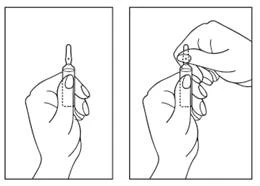
How to open the ampoule?
- Turn the ampoule with the coloured dot upwards. If there is any solution in the upper part of the ampoule, gently tap with a finger to ensure all solution flows into the lower part.
- Open the ampoule with both hands; hold the lower part of the ampoule in one hand and, with the other hand, snap off the top part in the direction away from the coloured dot (see illustrations below).
Any unused medicinal product or waste material should be disposed of in accordance with local requirements.
Overdose
Despite widespread use, data on metamizole overdose are limited.
Symptoms of overdose include nausea, vomiting, gastrointestinal disturbances, abdominal pain, dry mouth, fatigue, hypotension (which may occasionally lead to shock), and skin rash. Headache, weakness, urticaria, and fever may also occur.
Acute overdose may lead to impaired kidney function/acute renal failure (e.g., due to interstitial nephritis), central nervous system symptoms (dizziness, drowsiness, coma, seizures), and tachycardia.
Treatment
No specific antidote is known. Treatment is symptomatic.
The main metabolite (4-methyl-amino-antipyrine) can be removed by haemodialysis, haemofiltration, or haemoperfusion.
Adverse reactions
Adverse reactions are listed according to MedDRA system organ classes.
The following classification is used for frequency of occurrence:
very common (≥ 1/10),
common (≥ 1/100 to < 1/10),
uncommon (≥ 1/1,000 to < 1/100),
rare (≥ 1/10,000 to < 1/1,000),
very rare (< 1/10,000),
frequency not known (cannot be estimated based on available data).
Blood and lymphatic system disorders
Rare: leucopenia.
Very rare: agranulocytosis, thrombocytopenia.
Frequency not known: haemolytic anaemia, aplastic anaemia.
The risk of developing agranulocytosis cannot be predicted. It may occur even if metamizole has previously been used without complications. Agranulocytosis is life-threatening and may lead to fatal outcome (see also section "Special precautions for use").
Typical symptoms of agranulocytosis include fever, chills, sore throat, painful swallowing, oral ulcers, or other mucosal lesions (e.g. of the nose, genital organs, anus and rectum). In very rare cases, swollen lymph nodes may occur.
If any of these symptoms occur, metamizole must be immediately discontinued without waiting for laboratory test results.
Immune system disorders
Rare: anaphylactic/anaphylactoid reactions, anaphylactic shock (potentially fatal).
Such reactions may develop during metamizole injection, especially with intravenous administration, or within several hours after drug administration. Usually, these reactions occur within one hour after drug administration.
Mild to moderate allergic reactions typically affect the skin and mucous membranes and include itching, burning, redness, urticaria, or swelling. Less frequently, gastrointestinal disturbances may occur.
In more severe cases, symptoms may involve the entire body and may include angioedema, severe bronchospasm, dyspnoea, cardiac disturbances, hypotension, which in turn may lead to potentially fatal anaphylactic shock.
Metabolism and nutrition disorders
Acute episodes of porphyria have been reported after metamizole administration.
Nervous system disorders
Frequency not known: drowsiness, fatigue, headache.
Vascular disorders
Frequency not known: hypotension (see section "Special precautions for use").
The risk of hypotensive reaction increases if intravenous injection is administered too rapidly.
Respiratory, thoracic and mediastinal disorders
Cases of bronchospasm associated with metamizole use have been reported. Reports of dyspnoea and respiratory arrest have been received.
Gastrointestinal disorders
Frequency not known: nausea and vomiting, gastric irritation, dry mouth.
Hepatobiliary disorders
Frequency not known: drug-induced liver injury, including acute hepatitis, jaundice, elevated liver enzymes (see section "Special precautions for use").
Skin and subcutaneous tissue disorders
Severe skin reactions have been reported, including Stevens-Johnson syndrome, toxic epidermal necrolysis, and drug reaction with eosinophilia and systemic symptoms (DRESS), following metamizole use (see section "Special precautions for use").
Common: skin rash.
Frequency not known: diaphoresis, urticaria, drug-related rash, drug reaction with eosinophilia and systemic symptoms (DRESS). Cyanosis and cases of pemphigus vulgaris have been reported.
Renal and urinary disorders
Frequency not known: acute renal failure, acute interstitial nephritis.
General disorders and administration site conditions
Pain and local reactions at the injection site may occur.
Reporting suspected adverse reactions after medicine authorization is of great importance. It allows continuous monitoring of the benefit-risk balance of the medicine. Healthcare professionals, pharmacists, patients, or their legal representatives are encouraged to report all suspected adverse reactions and lack of efficacy through the Automated Pharmacovigilance Information System at the following link: https://aisf.dec.gov.ua.
Shelf life
3 years.
Do not use after the expiry date stated on the packaging.
Storage conditions
Store at a temperature not exceeding 25 °C.
Keep in the original packaging to protect from light. Do not freeze.
Keep out of the reach of children.
Incompatibilities
Metamizole must not be mixed (used in combination) with other medicinal products, as incompatibility may occur.
Packaging
2 ml or 5 ml in a type I hydrolytic class amber glass ampoule with a break point.
5 ampoules in a blister pack made of polyvinyl chloride film.
1 or 2 blister packs with the package leaflet in a cardboard carton.
Prescription status
Prescription only.
Manufacturer
Manufacturer responsible for batch release:
JSC "Kalceks".
Manufacturer's address and place of business
71E Krustpils Street, Riga, LV-1057, Latvia.
Marketing Authorisation Holder
JSC "Kalceks".
Address of the Marketing Authorisation Holder
71E Krustpils Street, Riga, LV-1057, Latvia.