Mekinist
Ukraine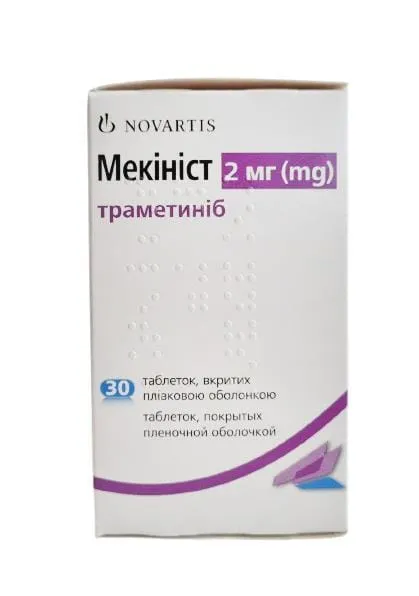
Table of Contents
INSTRUCTIONS FOR MEDICAL USE OF THE MEDICINAL PRODUCT MEKINIST (MEKINIST)
Composition:
Active substance: trametinib;
1 tablet contains:
film-coated tablets of 0.5 mg: trametinib dimethyl sulfoxide, equivalent to trametinib – 0.5 mg;
Excipients: mannitol, microcrystalline cellulose, hypromellose, sodium croscarmellose, magnesium stearate, sodium lauryl sulfate, colloidal silicon dioxide anhydrous, titanium dioxide (E 171), macrogol, iron oxide yellow (E 172);
film-coated tablets of 2 mg: trametinib dimethyl sulfoxide, equivalent to trametinib – 2 mg;
Excipients: mannitol, microcrystalline cellulose, hypromellose, sodium croscarmellose, magnesium stearate, sodium lauryl sulfate, colloidal silicon dioxide anhydrous, titanium dioxide (E 171), macrogol, polysorbate 80 (E 433), iron oxide red (E 172).
Pharmaceutical form. Film-coated tablets.
Main physicochemical properties:
film-coated tablets of 0.5 mg: yellow, oval-shaped, biconvex film-coated tablets with bevelled edges, without a score line, marked with "" on one side and TT on the other;
film-coated tablets of 2 mg: pink, round, biconvex film-coated tablets with bevelled edges, without a score line, marked with "" on one side and LL on the other.
Pharmacotherapeutic group. Antineoplastic agents. Protein kinase inhibitors. Mitogen-activated protein kinase (MEK) inhibitor. ATC code L01E E01.
Pharmacological properties.
Pharmacodynamics.
Mechanism of action
Trametinib is a reversible, highly selective, allosteric inhibitor of mitogen-activated extracellular signal-regulated kinase (MEK) 1 and 2 activation. MEK proteins are part of the extracellular signal-regulated kinase (ERK) signaling pathway. In melanoma and other cancers, this pathway is often activated by mutant BRAF gene variants, which in turn activate MEK. Trametinib inhibits MEK activation driven by the BRAF gene and suppresses MEK kinase activity. Trametinib inhibits the growth of melanoma cell lines harboring the BRAF gene mutation and demonstrates antitumor activity in animal models of melanoma with the BRAF V600 mutation.
Trametinib reduces levels of phosphorylated ERK in BRAF-mutant melanoma tumor cell lines and in melanoma xenograft models.
In patients with melanoma harboring BRAF and NRAS gene mutations, trametinib administration results in dose-dependent changes in tumor biomarkers, including suppression of phosphorylated ERK, inhibition of Ki67 (a tumor cell proliferation marker), and increased p27 (an apoptosis marker). Mean concentrations of trametinib observed after multiple dosing at 2 mg once daily exceed the preclinical target concentration throughout the 24-hour dosing interval, providing sustained inhibition of the MEK signaling pathway.
Combination with dabrafenib
Dabrafenib is a RAF kinase inhibitor. Oncogenic mutations in the BRAF gene lead to constitutive activation of the RAS/RAF/MEK/ERK pathway. Thus, both dabrafenib and trametinib inhibit two kinases within this signaling cascade. The combination of trametinib with dabrafenib demonstrates antitumor activity in BRAF V600-mutant melanoma cell lines in vitro and delays the development of resistance in vivo in BRAF V600-mutant melanoma xenografts.
Determining BRAF gene mutation status
Prior to initiating trametinib or trametinib in combination with dabrafenib, patients must have confirmed presence of the BRAF V600 mutation in melanoma, as determined by a validated test.
Adjuvant therapy of stage III melanoma
BRF115532 (COMBI-AD)
The efficacy and safety of trametinib in combination with dabrafenib were evaluated in a multicenter, randomized, double-blind, placebo-controlled study in patients with stage III cutaneous melanoma (stage IIIA [lymph node metastases > 1 mm], IIIB, or IIIC) with a BRAF V600 E/K mutation following complete resection.
A total of 870 patients were randomized to receive combination therapy (n = 438) or placebo (n = 432). The majority of patients were of Caucasian race (99%) and male (55%), with a median age of 51 years (18% ≥ 65 years). Patients with all stage III substages prior to resection were included; 18% of these patients had lymph node involvement detectable only microscopically and absence of ulceration of the primary tumor. Most patients had the BRAF V600E mutation (91%). At the time of the primary analysis, the median duration of follow-up (time from randomization to last contact or death) was 2.83 years in the dabrafenib plus trametinib combination group and 2.75 years in the placebo group.
Pharmacokinetics.
Absorption
After oral administration, the median time to peak plasma concentration of trametinib is 1.5 hours. The mean absolute bioavailability of a single 2 mg oral dose of trametinib tablets is 72% relative to an intravenous microdose. Increases in exposure (Cmax and AUC) after multiple dosing are dose-proportional. After administration of trametinib 2 mg once daily, geometric mean values of Cmax, AUC(0-t), and predose concentration were 22.2 ng/mL, 370 ng*h/mL, and 12.1 ng/mL, respectively. At steady state, the Cmax/Cmin ratio is low (1.8). Inter-patient variability is low (< 28%).
Trametinib accumulates with repeated dosing at 2 mg once daily, with a mean accumulation ratio of 6.0. Steady-state concentrations are reached by Day 15.
Following administration of a single dose of trametinib with a high-fat, high-calorie meal, Cmax and AUC were reduced by 70% and 24%, respectively, compared to fasting conditions (see sections “Dosage and administration” and “Interaction with other medicinal products and other forms of interaction”).
Distribution
Trametinib is 97.4% bound to human plasma proteins. The apparent volume of distribution, determined after intravenous administration of a 5 ng microdose, is approximately 1200 L.
Metabolism
In vitro and in vivo studies indicate that trametinib is primarily metabolized via deacetylation or a combination of deacetylation and monooxidation. The deacetylated metabolite is further metabolized via glucuronidation. Oxidation by CYP3A4 is not considered a major metabolic pathway. Deacetylation is mediated by carboxylesterases 1b, 1c, and 2, and possibly other hydrolytic isoenzymes.
After single or multiple doses of trametinib, the parent compound is the predominant circulating species in plasma.
Elimination
The terminal half-life is 127 hours (5.3 days) after a single dose of trametinib. Following intravenous administration, plasma clearance is 3.21 L/h.
After a single oral dose of radiolabeled trametinib as a solution, the total recovered dose over a 10-day collection period was low (< 50%) due to the prolonged half-life. Elimination occurs predominantly via feces (> 80% of recovered radioactivity) and to a lesser extent via urine (≤ 19%). Less than 0.1% of the dose excreted in urine was recovered as unchanged parent compound.
Pharmacokinetics in specific patient populations
Hepatic impairment
Population pharmacokinetic analysis and clinical pharmacology study data in patients with normal hepatic function or with mild, moderate, or severe elevations in bilirubin and/or AST (based on National Cancer Institute [NCI] classification) indicate that hepatic function does not significantly affect oral trametinib clearance.
Renal impairment
Clinically significant impact of renal impairment on trametinib pharmacokinetics is unlikely due to low renal excretion of trametinib. Trametinib pharmacokinetics were evaluated using population pharmacokinetic analysis from clinical trials involving 223 patients with mild renal impairment and 35 patients with moderate renal impairment. Neither mild nor moderate renal impairment affected trametinib exposure (< 6% in both groups). Data on the use of trametinib in patients with severe renal impairment are lacking (see section “Dosage and administration”).
Elderly patients
According to population pharmacokinetic analysis (patient age range 19–92 years), age does not have a clinically significant effect on trametinib pharmacokinetics. Safety data in patients aged ≥ 75 years are limited (see section “Adverse reactions”).
Race
The potential impact of race on trametinib pharmacokinetics has not been evaluated, as clinical studies included only Caucasian patients.
Pediatric population
No studies have been conducted to evaluate the pharmacokinetics of trametinib in the pediatric population.
Body weight and sex
Population pharmacokinetic analysis indicates that sex and body weight affect trametinib clearance after oral administration. Although females with lower body weight are expected to have higher exposure than males with higher body weight, this difference is likely not clinically significant, and dose adjustment is not required.
Interaction with other medicinal products
Effect of trametinib on enzymes metabolizing medicinal products and on transporters
In vitro and in vivo data indicate that trametinib is unlikely to affect the pharmacokinetics of other medicinal products. Based on in vitro studies, trametinib is not an inhibitor of CYP1A2, CYP2A6, CYP2B6, CYP2D6, or CYP3A4 enzymes. In vitro, trametinib has been shown to be an inhibitor of CYP2C8, CYP2C9, and CYP2C19 enzymes, an inducer of CYP3A4 isoenzyme, and an inhibitor of OAT1, OAT3, OST2, MATE1, OATP1B1, OATP1B3, P-gp, and BCRP transporters. However, considering the dose and clinical significance of systemic exposure relative to in vitro inhibition or induction potency, trametinib is not considered an inhibitor or inducer of these enzymes or transporters in vivo, although transient inhibition of BCRP substrates in the intestine may occur (see section “Interaction with other medicinal products and other forms of interaction”).
Effect of other medicinal products on trametinib
In vitro and in vivo data indicate that other medicinal products are unlikely to affect trametinib pharmacokinetics. Trametinib is not a substrate of CYP enzymes or of the transporters BCRP, OATP1B1, OATP1B3, OATP2B1, OST1, MRP2, or MATE1. In vitro, trametinib is a substrate of BSEP and the efflux transporter P-gp. Although inhibition of BSEP is unlikely to affect trametinib exposure, increased trametinib levels cannot be excluded with strong hepatic P-gp inhibition (see section “Interaction with other medicinal products and other forms of interaction”).
Effect of trametinib on other medicinal products
The effect of repeated trametinib administration on the steady-state pharmacokinetics of combined oral contraceptives, norethindrone, and ethinyl estradiol, was evaluated in a clinical study involving 19 female patients with cancer. Exposure to norethindrone increased by 20%, while ethinyl estradiol exposure was similar when co-administered with trametinib. Based on these results, loss of efficacy of hormonal contraceptives is not expected when used concomitantly with trametinib monotherapy.
Clinical characteristics.
Indications.
Melanoma
Trametinib as monotherapy or in combination with dabrafenib is indicated for the treatment of adult patients with unresectable or metastatic melanoma with BRAF V600 mutation (see sections "Special precautions for use" and "Pharmacodynamics").
Monotherapy with trametinib has not demonstrated clinical efficacy in patients who had disease progression during prior therapy with BRAF inhibitors (see section "Pharmacodynamics").
Adjuvant treatment of melanoma
Trametinib in combination with dabrafenib is indicated for adjuvant treatment of adult patients with stage III melanoma with BRAF V600 mutation following complete resection.
Non-small cell lung cancer
Trametinib in combination with dabrafenib is indicated for the treatment of adult patients with metastatic non-small cell lung cancer with BRAF V600 mutation.
Contraindications.
Hypersensitivity to the active substance or to any of the excipients.
Interaction with other medicinal products and other forms of interaction.
Effect of other medicinal products on trametinib
Since trametinib is predominantly metabolized via deacetylation mediated by hydrolytic enzymes (e.g. carboxylesterases), metabolic interactions with other drugs are unlikely to affect its pharmacokinetics (see section "Pharmacokinetics"). Drug interactions via these hydrolytic enzymes cannot be excluded and may influence trametinib exposure.
Trametinib is a substrate of the efflux transporter P-glycoprotein (P-gp) in vitro. Since strong inhibition of P-gp in the liver cannot be excluded and may lead to increased trametinib levels, concomitant use of trametinib with medicinal products that are potent P-gp inhibitors (such as verapamil, cyclosporine, ritonavir, quinidine, itraconazole) should be used with caution.
Effect of trametinib on other medicinal products
Based on in vitro and in vivo data, trametinib does not significantly affect the pharmacokinetics of other medicinal products via interactions with cytochrome P450 isoenzymes or transporters (see section "Pharmacokinetics").
Trametinib may cause transient inhibition of substrates of breast cancer resistance protein (BCRP) (e.g. pitavastatin) in the intestine, which can be minimized by separating the administration of pitavastatin and trametinib by two hours.
Based on clinical data, no loss of efficacy of hormonal contraceptives is expected when used concomitantly with trametinib monotherapy (see section "Pharmacokinetics").
Combination with dabrafenib
When trametinib is used in combination with dabrafenib, information regarding potential interactions should be obtained from the sections "Special precautions for use" and "Interaction with other medicinal products and other forms of interaction" of the package leaflet of the medicinal product containing dabrafenib.
Effect of food on trametinib
Trametinib as monotherapy or in combination with dabrafenib should be taken at least one hour before or two hours after a meal due to the effect of food on trametinib absorption (see sections "Dosage and administration" and "Pharmacokinetics").
Special precautions for use.
Prior to initiating treatment with trametinib in combination with dabrafenib, the summary of product characteristics for dabrafenib should be consulted.
Test to confirm BRAF V600 mutation
The efficacy and safety of trametinib have not been evaluated in patients with melanoma who are BRAF V600 mutation-negative.
Trametinib monotherapy compared with BRAF inhibitors
A comparative analysis of trametinib monotherapy versus monotherapy with BRAF inhibitors has not been conducted in a clinical trial involving patients with unresectable or metastatic BRAF V600 mutation-positive melanoma. Based on results from cross-trial comparisons, data on overall survival and progression-free survival suggest similar efficacy of trametinib and BRAF inhibitors. However, the overall response rate was lower in patients receiving trametinib compared to those receiving BRAF inhibitors.
Use of trametinib in combination with dabrafenib in patients with disease progression on prior BRAF inhibitor therapy
Limited data are available from patients who received the combination of trametinib with dabrafenib and had disease progression on prior BRAF inhibitor therapy. These data suggest that the efficacy of this combination may be lower in such patients (see section "Pharmacodynamics"). Therefore, alternative treatment options should be considered before initiating trametinib in combination with dabrafenib in patients previously treated with BRAF inhibitors. There are no data establishing the sequence of therapy after disease progression in patients previously treated with BRAF inhibitors.
Malignant neoplasms
New cases of cutaneous and non-cutaneous malignancies may occur during treatment with trametinib in combination with dabrafenib.
Cutaneous squamous cell carcinoma
Cutaneous squamous cell carcinoma (including keratoacanthoma) has been reported in patients receiving trametinib in combination with dabrafenib. Cutaneous squamous cell carcinoma can be managed with surgical excision; therefore, no modification of the treatment regimen is required.
New primary melanoma
Cases of new primary melanoma have been observed in patients receiving trametinib in combination with dabrafenib. New primary melanoma can be managed with surgical excision; therefore, no modification of the treatment regimen is required.
Non-cutaneous malignant neoplasms
Based on the mechanism of action, dabrafenib may increase the risk of non-cutaneous malignancies in the presence of RAS mutations. Information provided in the dabrafenib product information should be considered when using trametinib in combination with dabrafenib (see section "Special precautions for use"). Dose adjustment of trametinib when co-administered with dabrafenib is not required in patients with malignant tumors harboring RAS mutations.
Haemorrhage
Haemorrhage, including severe and fatal bleeding events, has been reported in patients receiving trametinib as monotherapy and in combination with dabrafenib (see section "Undesirable effects"). The risk of haemorrhage in patients with low platelet counts (< 75,000) has not been established, as such patients were excluded from clinical trials. The risk of bleeding may be increased when antiplatelet agents or anticoagulants are used concomitantly. Patients experiencing haemorrhage should be managed according to clinical indications.
Decreased left ventricular ejection fraction/left ventricular dysfunction
Decreased left ventricular ejection fraction has been reported with trametinib monotherapy and in combination with dabrafenib (see section "Undesirable effects"). In clinical trials, the median time to onset of left ventricular dysfunction, heart failure, or decreased left ventricular ejection fraction ranged from 2 to 5 months.
Trametinib should be used with caution in patients with conditions that may be associated with left ventricular dysfunction. Patients with left ventricular dysfunction, New York Heart Association (NYHA) Class II, III, or IV heart failure, acute coronary syndrome within the previous 6 months, clinically significant uncontrolled arrhythmias, or uncontrolled hypertension were excluded from clinical trials; therefore, the safety of trametinib in these populations is unknown. Left ventricular ejection fraction should be assessed in all patients prior to initiating trametinib. Reassessment should be performed one month after starting treatment and then approximately every 3 months during treatment.
In patients receiving trametinib in combination with dabrafenib, acute, severe left ventricular dysfunction due to myocarditis has been reported. Complete recovery has been observed after discontinuation of treatment. Myocarditis should be considered in patients who develop new or worsening cardiac symptoms.
Fever
Elevated body temperature has been observed in clinical trials with trametinib as monotherapy and in combination with dabrafenib (see section "Undesirable effects"). The frequency and severity of fever increase with combination therapy. In patients receiving trametinib in combination with dabrafenib, fever may be accompanied by chills, dehydration, and hypotension, which may sometimes lead to acute renal failure.
Treatment (trametinib monotherapy, or trametinib and dabrafenib in combination therapy) should be interrupted if the patient develops a temperature ≥ 38°C. In case of recurrence, therapy may also be interrupted at the first signs of pyrexia. Antipyretic agents such as ibuprofen or acetaminophen/paracetamol should be initiated. Oral corticosteroids should be considered if antipyretics are insufficient. Patients should be evaluated for signs and symptoms of infection. Treatment may be resumed after fever resolves. If fever is associated with other severe signs or symptoms, treatment should be resumed at a reduced dose after resolution of fever and according to clinical judgment (see section "Posology and method of administration").
Arterial hypertension
Elevated blood pressure has been observed in patients receiving trametinib monotherapy or in combination with dabrafenib, with or without pre-existing hypertension (see section "Undesirable effects"). Blood pressure should be measured at the start of treatment and monitored during therapy with trametinib. Hypertension should be managed with standard antihypertensive therapy as needed.
Interstitial lung disease/Pneumonitis
During phase III clinical trials, interstitial lung disease or pneumonitis developed in 2.4% (5/211) of patients receiving trametinib monotherapy; all five patients required hospitalization. The median time to onset of interstitial lung disease or pneumonitis was 160 days (range: 60 to 172 days). In studies MEK115306 and MEK116513, pneumonitis or interstitial lung disease occurred in < 1% (2/209) and 1% (4/350) of patients receiving trametinib in combination with dabrafenib, respectively (see section "Undesirable effects").
Trametinib should be avoided in patients with suspected interstitial lung disease or pneumonitis, including those with new or progressive pulmonary symptoms such as cough, dyspnoea, hypoxia, pleural effusion, or infiltrates on clinical evaluation. Trametinib treatment should be permanently discontinued in patients with treatment-related interstitial lung disease or pneumonitis (see section "Posology and method of administration"). If trametinib is used in combination with dabrafenib, dabrafenib therapy may be continued without dose adjustment.
Visual disturbances
Visual disturbances, including retinal pigment epithelial detachment and retinal vein occlusion, have been observed with trametinib monotherapy and in combination with dabrafenib. In clinical trials with trametinib, symptoms such as blurred vision, decreased visual acuity, and other ocular reactions have been reported (see section "Undesirable effects"). Cases of uveitis and iridocyclitis have been reported in clinical trials in patients receiving trametinib in combination with dabrafenib.
Trametinib is not recommended in patients with a history of retinal vein occlusion. The safety of trametinib in patients with risk factors for retinal vein occlusion, including uncontrolled glaucoma or ocular hypertension, uncontrolled hypertension, uncontrolled diabetes mellitus, or a history of hyperviscosity or hypercoagulability syndromes, has not been established.
If a patient reports new visual disturbances such as visual field constriction, blurred vision, or vision loss at any time during treatment with trametinib, an immediate ophthalmologic evaluation is recommended. In case of retinal pigment epithelial detachment, dose modification should be performed according to Table 3 (see section "Posology and method of administration"); in case of uveitis, recommendations in the dabrafenib product information should be considered. Trametinib treatment should be permanently discontinued in patients with retinal vein occlusion. When dabrafenib is administered in combination with trametinib, no dose adjustment is required. Dose adjustment of trametinib is not required in patients with retinal vein occlusion or retinal pigment epithelial detachment when trametinib is used in combination with dabrafenib. Dose adjustment of trametinib is not required in patients with uveitis when trametinib is used in combination with dabrafenib.
Rash
In monotherapy trials, rash was observed in approximately 60% of patients receiving trametinib, and in approximately 24% of patients receiving the combination of trametinib and dabrafenib (see section "Undesirable effects"). In most cases, rashes were of Grade 1 or 2 severity and did not require treatment discontinuation or dose reduction.
Rhabdomyolysis
Rhabdomyolysis has been reported in patients receiving trametinib monotherapy or in combination with dabrafenib (see section "Undesirable effects"). In some cases, patients were able to continue trametinib treatment. In more severe cases, hospitalization, interruption, or permanent discontinuation of trametinib or the combination of trametinib and dabrafenib was required. Symptoms of rhabdomyolysis should prompt appropriate clinical evaluation and management.
Renal failure
Cases of renal failure have been reported in clinical trials in patients receiving trametinib in combination with dabrafenib. See information provided in the dabrafenib product information (section "Special precautions for use").
Pancreatitis
Cases of pancreatitis have been reported in clinical trials in patients receiving trametinib in combination with dabrafenib. See information provided in the dabrafenib product information (section "Special precautions for use").
Hepatic function impairment
Hepatic adverse events have been reported in clinical trials with trametinib monotherapy and in combination with dabrafenib (see section "Undesirable effects"). It is recommended that liver function be monitored every four weeks for the first 6 months after initiation of trametinib treatment and thereafter as clinically indicated in patients receiving trametinib monotherapy or in combination with dabrafenib.
Since biotransformation and biliary excretion are the primary elimination pathways for trametinib, trametinib should be used with caution in patients with moderate or severe hepatic impairment (see sections "Posology and method of administration" and "Pharmacokinetics").
Deep vein thrombosis/Pulmonary embolism
Pulmonary embolism or deep vein thrombosis may occur during treatment with trametinib monotherapy or in combination with dabrafenib. Patients should seek immediate medical attention if they experience symptoms of pulmonary embolism or deep vein thrombosis, such as dyspnoea, chest pain, or limb swelling. In life-threatening pulmonary embolism, treatment with trametinib and dabrafenib should be discontinued.
Severe cutaneous adverse reactions
Cases of severe cutaneous adverse reactions (SCARs), including Stevens-Johnson syndrome, and drug hypersensitivity reactions with eosinophilia and systemic symptoms (DRESS syndrome), which may be life-threatening or fatal, have been reported during treatment with the dabrafenib/trametinib combination. Patients should be informed of the signs and symptoms of such reactions prior to initiating treatment, and closely monitored during therapy. If signs or symptoms suggestive of SCARs occur, dabrafenib and trametinib should be discontinued.
Gastrointestinal disorders
Cases of colitis and gastrointestinal perforation, including fatal cases, have been reported in patients receiving trametinib monotherapy and in combination with dabrafenib (see section "Undesirable effects"). Trametinib monotherapy and combination with dabrafenib should be used with caution in patients with risk factors for gastrointestinal perforation, including those with a history of diverticulitis, patients with gastric metastases, and patients receiving concomitant medications that may increase the risk of gastrointestinal perforation.
Sarcoidosis
Cases of sarcoidosis have been reported in patients receiving trametinib in combination with dabrafenib, predominantly affecting the skin, lungs, eyes, and lymph nodes. In most cases, treatment with trametinib and dabrafenib was continued. If sarcoidosis is diagnosed, appropriate treatment should be considered. It is important not to interpret sarcoidosis as disease progression.
Haemophagocytic lymphohistiocytosis
Cases of haemophagocytic lymphohistiocytosis (HLH) have been reported in the post-marketing period in patients receiving trametinib in combination with dabrafenib. Trametinib in combination with dabrafenib should be used with caution. If HLH is confirmed, trametinib and dabrafenib should be discontinued and appropriate treatment for HLH should be initiated.
Sodium content
This medicinal product contains less than 1 mmol sodium (23 mg) per film-coated tablet, i.e., essentially "sodium-free".
Use during pregnancy or breastfeeding
Females of reproductive potential/Contraception in females
Females of reproductive potential are advised to use highly effective contraception during treatment with trametinib and for 4 months after treatment.
The use of trametinib in combination with dabrafenib may reduce the efficacy of hormonal contraceptives; therefore, an alternative method of contraception, such as a barrier method, should be used. Information provided in the dabrafenib product information should be considered.
Pregnancy
Controlled clinical studies with trametinib in pregnant women have not been conducted. Animal studies have demonstrated reproductive toxicity. Trametinib is not recommended during pregnancy. If trametinib is used during pregnancy or if pregnancy occurs during treatment, the patient should be informed of the potential risk to the fetus.
Breastfeeding
There are no data on the excretion of trametinib in human milk. However, a risk to the breastfed infant cannot be excluded, as many medicinal products are excreted in breast milk. Trametinib should not be used in women who are breastfeeding. A decision should be made whether to discontinue breastfeeding or to discontinue trametinib therapy, taking into account the benefits of breastfeeding for the child and the benefits of therapy for the woman.
Fertility
Data on the effect of trametinib monotherapy or combination with dabrafenib on human fertility are lacking. Fertility studies in animals have not been conducted; however, adverse effects on female reproductive organs were observed in animal studies. Trametinib may have a negative effect on human fertility.
Males receiving trametinib in combination with dabrafenib
In animals receiving dabrafenib, effects on spermatogenesis were observed. Patients receiving trametinib in combination with dabrafenib should be informed of the potential risk of impaired spermatogenesis, which may be irreversible.
Ability to drive and use machines
Trametinib has a minor influence on the ability to drive and use machines. When assessing a patient's ability to perform tasks requiring decision-making, motor, and cognitive skills, the patient's clinical status and adverse reaction profile should be considered. Patients should be informed of the potential risk of fatigue, dizziness, and visual disturbances, which may affect such activities.
Administration and Dosage
Route of Administration
Trametinib is taken orally with a full glass of water. Trametinib tablets should not be chewed or crushed. Trametinib should be taken at least 1 hour before or 2 hours after eating.
It is recommended to take trametinib at the same time each day. When trametinib and dabrafenib are used in combination, the daily dose of trametinib should be taken at the same time as either the morning or evening dose of dabrafenib.
If a patient vomits after taking trametinib, they should not take an additional dose. Instead, they should take the next dose according to the regular schedule.
The information provided in the medical instructions for dabrafenib should be considered regarding its use in combination with trametinib.
Treatment with trametinib should be initiated and supervised by a physician experienced in the management of oncological diseases.
Prior to initiating trametinib treatment, the presence of a BRAF V600 mutation must be confirmed in patients using a validated test.
Dosing Regimen
The recommended dose of trametinib, both as monotherapy and in combination with dabrafenib, is 2 mg once daily. When trametinib is used in combination with dabrafenib, the latter should be administered at a dose of 150 mg twice daily.
Treatment Duration
Treatment with trametinib should be continued until disease progression or the development of unacceptable toxicity (see Table 2). In the adjuvant treatment setting for melanoma, patients should receive treatment for 12 months, provided there is no disease recurrence or unacceptable toxicity.
Dose Missed
If a dose of trametinib is missed, it should not be taken if less than 12 hours remain before the next scheduled dose.
If a dose of dabrafenib is missed when used in combination with trametinib, it should not be taken if less than 6 hours remain before the next scheduled dose.
Dose Adjustment
Dose reduction, treatment interruption, or discontinuation may be required due to adverse reactions (see Tables 1 and 2).
Dose adjustment is not recommended in the event of adverse reactions such as cutaneous squamous cell carcinoma or new primary melanoma (refer to the medical instructions for dabrafenib for additional information).
Table 1
Recommended dose reduction of the medicinal product
| Dose type |
Trametinib dose when used as monotherapy or in combination with dabrafenib |
Dabrafenib* when used only in combination with trametinib |
| Initial dose |
2 mg once daily |
150 mg twice daily |
| First dose reduction |
1.5 mg once daily |
100 mg twice daily |
| Second dose reduction |
1 mg once daily |
75 mg twice daily |
| Third dose reduction (only in combination therapy) |
1 mg once daily |
50 mg twice daily |
| Dose modifications of trametinib below 1 mg once daily are not recommended, either when used as monotherapy or in combination with dabrafenib. Dose modifications of dabrafenib below 50 mg twice daily are not recommended when used in combination with trametinib. |
||
| *For information on dabrafenib dosing regimen when used as monotherapy, refer to the dabrafenib product characteristics, dosing regimen, and administration instructions. |
||
Table 2
Dosing adjustment regimen depending on the severity of adverse events (excluding pyrexia)
| Severity of adverse reactions (according to CTCAE scale)* |
Recommendations for dose modification of trametinib when used as monotherapy or in combination with dabrafenib |
| Grade 1 or Grade 2 (tolerable) |
Continue treatment and monitor patient as clinically indicated. |
| Grade 2 (intolerable) or Grade 3 |
Withhold treatment until toxicity resolves to Grade 0–1, then resume at the next lower dose level. |
| Grade 4 |
Permanently discontinue treatment or withhold treatment until toxicity resolves to Grade 0–1, then resume at the next lower dose level. |
| * Intensity of clinical adverse reactions is assessed according to the Common Terminology Criteria for Adverse Events (CTCAE), version 4.0. |
|
If adverse reactions in an individual patient are effectively managed, re-escalation of doses may be considered using similar dose adjustment steps. The dose of trametinib must not exceed 2 mg once daily.
Pyrexia
If a patient develops a temperature ≥ 38 ºC, treatment (trametinib as monotherapy, as well as trametinib and dabrafenib in combination therapy) should be interrupted. In the case of recurrence, therapy may also be interrupted at the first signs of pyrexia. Antipyretic treatment with agents such as ibuprofen or acetaminophen/paracetamol should be initiated. Consideration should be given to the use of oral corticosteroids if antipyretics are insufficient. Patients should be evaluated for signs and symptoms of infection and treated as appropriate according to established medical practice guidelines (see section "Special precautions"). Treatment with trametinib or trametinib plus dabrafenib (in combination therapy) should be resumed if the patient is asymptomatic for at least 24 hours, either (1) at the same dose or (2) at a dose reduced by one dose level if pyrexia recurs and/or is accompanied by other severe symptoms, including dehydration, hypotension, or renal failure.
If toxicities related to treatment occur during treatment with trametinib in combination with dabrafenib, both drugs should be dose-reduced simultaneously, treatment should be temporarily interrupted, or the drugs should be permanently discontinued. Exceptions where dose adjustment of only one of the two drugs is required are described in detail below for specific adverse events such as fever, uveitis, RAS-mutant malignancies outside the skin (primarily associated with dabrafenib), reduced left ventricular ejection fraction, retinal vein occlusion, retinal pigment epithelial detachment, and interstitial lung disease/pneumonitis (primarily associated with trametinib).
Dose adjustment exceptions (when dose reduction applies to only one of the two drugs) for specific adverse reactions
Uveitis
Dose adjustment of the drug is not necessary in case of uveitis if ocular inflammation can be effectively controlled with topical ophthalmic agents. If topical agents do not alleviate symptoms of uveitis, interruption of dabrafenib should be considered until resolution of ocular inflammation, after which treatment with dabrafenib should be resumed at a dose reduced by one level. When trametinib is used in combination with dabrafenib, dose adjustment of trametinib is not required (see section "Special precautions").
RAS-mutant malignancies outside the skin
The benefits and risks should be carefully weighed before continuing treatment with dabrafenib in patients with RAS-mutant malignancies outside the skin. When trametinib is used in combination with dabrafenib, dose adjustment of trametinib is not required.
Reduced left ventricular ejection fraction/left ventricular dysfunction
Treatment with trametinib should be interrupted if a patient develops an asymptomatic absolute decrease in left ventricular ejection fraction of more than 10% from baseline and the ejection fraction value falls below the lower limit of normal (see section "Special precautions"). When trametinib is used in combination with dabrafenib, dose adjustment of dabrafenib is not required. If left ventricular ejection fraction recovers, treatment with trametinib may be resumed, but the dose should be reduced by one level and treatment should continue under close medical supervision (see section "Special precautions").
Treatment with trametinib should be indefinitely discontinued in patients with grade 3 or 4 left ventricular dysfunction or with clinically significant reduction in left ventricular ejection fraction that does not recover within 4 weeks (see section "Special precautions").
Retinal vein occlusion and retinal pigment epithelial detachment
If patients report new visual disturbances at any time during treatment with trametinib, such as decreased visual acuity, blurred vision, or vision loss, prompt ophthalmological evaluation is recommended. Patients diagnosed with retinal vein occlusion should permanently discontinue treatment with trametinib, both as monotherapy and in combination with dabrafenib. When trametinib is used in combination with dabrafenib, dose adjustment of dabrafenib is not required. If retinal pigment epithelial detachment is diagnosed, the trametinib dose adjustment scheme outlined in Table 3 below should be followed (see section "Special precautions").
Table 3
Recommended dose adjustments for trametinib in cases of retinal pigment epithelial detachment
| Retinal pigment epithelial detachment grade 1 |
Continue treatment with monitoring of the retina until symptoms resolve. If retinal pigment epithelial detachment progresses, follow the instructions below and withhold trametinib for a period of up to 3 weeks. |
| Retinal pigment epithelial detachment grade 2 and 3 |
Withhold trametinib for a period of up to 3 weeks. |
| Retinal pigment epithelial detachment grade 2 and 3 improving to grade 0 or 1 within 3 weeks |
Resume trametinib at a reduced dose (reduce by 0.5 mg) or discontinue trametinib in patients receiving trametinib 1 mg daily. |
| Retinal pigment epithelial detachment grade 2 and 3 without improvement to at least grade 1 within 3 weeks |
Permanently discontinue treatment with trametinib. |
Interstitial lung disease/Pneumonitis
Trametinib should be discontinued in patients suspected of having interstitial lung disease or pneumonitis, including patients with new or worsening pulmonary symptoms such as cough, dyspnea, hypoxia, pleural effusion, or infiltrates, pending clinical evaluation. Patients diagnosed with treatment-related interstitial lung disease or pneumonitis must permanently discontinue trametinib. When trametinib is used in combination with dabrafenib, dose adjustment of dabrafenib is not required in the event of interstitial lung disease or pneumonitis.
Patients with renal impairment
Dose adjustment is not required in patients with mild or moderate renal impairment (see section "Pharmacokinetics"). Data on the use of trametinib in patients with severe renal impairment are lacking; therefore, the potential need for initial dose adjustment cannot be established. Thus, trametinib should be used with caution in patients with severe renal impairment, either as monotherapy or in combination with dabrafenib.
Patients with hepatic impairment
Dose adjustment is not required in patients with mild hepatic impairment. Available clinical pharmacology data indicate limited impact of moderate and severe hepatic impairment on trametinib exposure (see section "Pharmacokinetics").
Trametinib monotherapy or combination with dabrafenib should be used with caution in patients with moderate or severe hepatic impairment.
Patients of non-European ancestry
Data on the safety and efficacy of trametinib in patients of non-European ancestry are lacking.
Elderly patients
No initial dose adjustment is required for patients aged > 65 years. However, more frequent dose adjustments may be needed in patients aged > 65 years (see Tables 1 and 2 above and section "Adverse Reactions").
Children
Safety and efficacy of trametinib in children and adolescents (aged < 18 years) have not been established. In juvenile animal studies, adverse reactions observed with trametinib were similar to those seen in adult animals.
Overdose
In clinical studies using trametinib monotherapy, one case of accidental overdose was reported, in which a patient received a single 4 mg dose. No adverse events were reported in this case. In clinical studies using trametinib in combination with dabrafenib, 11 patients reported trametinib overdose (4 mg); no serious adverse events were reported. There is no specific antidote for trametinib overdose. In the event of overdose, supportive care with appropriate monitoring should be administered as needed.
Adverse reactions.
Short description of safety profile
The safety of trametinib monotherapy was evaluated in 329 patients with unresectable or metastatic melanoma with BRAF V600 mutation who received the drug at a dose of 2 mg once daily. Of these, 211 patients received trametinib for the treatment of BRAF V600-mutant melanoma in the randomized, open-label phase III study MEK114267 (METRIC) (see section "Pharmacodynamics"). The most common adverse reactions (incidence ≥ 20%) observed with trametinib were rash, diarrhea, fatigue, peripheral edema, nausea, and acneiform dermatitis.
The safety of trametinib in combination with dabrafenib was evaluated in 1076 patients with unresectable or metastatic melanoma with BRAF V600 mutation, stage III melanoma with BRAF V600 mutation after complete resection (adjuvant treatment), and metastatic non-small cell lung cancer, who received combination therapy with trametinib 2 mg once daily and dabrafenib 150 mg twice daily. Of these patients, 559 received combination therapy for BRAF V600-mutant melanoma in two randomized phase III studies, MEK115306 (COMBI-d) and MEK116513 (COMBI-v), 435 received the combination for adjuvant treatment of stage III BRAF V600-mutant melanoma after complete resection in the randomized phase III study BRF115532 (COMBI-AD), and 82 patients received combination therapy for BRAF V600-mutant non-small cell lung cancer in the non-randomized, multi-cohort phase II study BRF113928 (see section "Pharmacodynamics"). The most common adverse reactions (incidence ≥ 20%) observed with trametinib in combination with dabrafenib were pyrexia, nausea, diarrhea, fatigue, chills, headache, vomiting, arthralgia, and rash.
List of adverse reactions
Adverse reactions associated with trametinib, reported during clinical trials and post-marketing surveillance, are listed below (for trametinib monotherapy – Table 4, for trametinib in combination with dabrafenib – Table 5).
The adverse reactions are listed below by MedDRA system organ class (SOC).
Adverse reactions are listed by frequency as follows:
Very common ≥ 1/10
Common ≥ 1/100 to < 1/10
Uncommon ≥ 1/1,000 to < 1/100
Rare ≥ 1/10,000 to < 1/1,000
Not known (cannot be estimated from available data)
The categories were determined based on the absolute frequency observed during clinical trials. Within each frequency grouping, adverse reactions are listed in order of decreasing severity.
Table 4
Adverse reactions with trametinib monotherapy
| System organ class |
Frequency (all grades) |
Adverse reactions |
| Infections and infestations |
Common |
Folliculitis |
| Paronychia |
||
| Cellulitis |
||
| Pustular rash |
||
| Blood and lymphatic system disorders |
Common |
Anemia |
| Immune system disorders |
Common |
Hypersensitivitya |
| Metabolism and nutrition disorders |
Common |
Dehydration |
| Eye disorders |
Common |
Blurred vision |
| Periocular edema |
||
| Visual disturbance |
||
| Uncommon |
Chorioretinopathy |
|
| Optic disc edema |
||
| Retinal detachment |
||
| Retinal vein occlusion |
||
| Cardiac disorders |
Common |
Left ventricular dysfunction |
| Decreased ejection fraction |
||
| Bradycardia |
||
| Uncommon |
Heart failure |
|
| Vascular disorders |
Very common |
Hypertension |
| Bleedingb |
||
| Common |
Lymphedema |
|
| Respiratory, thoracic and mediastinal disorders |
Very common |
Cough |
| Dyspnea |
||
| Common |
Pneumonitis |
|
| Uncommon |
Interstitial lung disease |
|
| Gastrointestinal disorders |
Very common |
Diarrhea |
| Nausea |
||
| Vomiting |
||
| Constipation |
||
| Abdominal pain |
||
| Dry mouth |
||
| Common |
Stomatitis |
|
| Uncommon |
Gastrointestinal perforation |
|
| Colitis |
||
| Skin and subcutaneous tissue disorders |
Very common |
Rash |
| Acneiform dermatitis |
||
| Dry skin |
||
| Pruritus |
||
| Alopecia |
||
| Common |
Erythema |
|
| Palmar-plantar erythrodysesthesia |
||
| Desquamation |
||
| Skin fissures |
||
| Musculoskeletal and connective tissue disorders |
Uncommon |
Rhabdomyolysis |
| General disorders and administration site conditions |
Very common |
Fatigue |
| Peripheral edema |
||
| Pyrexia |
||
| Common |
Facial swelling |
|
| Mucosal inflammation |
||
| Asthenia |
||
| Investigations |
Very common |
Increased aspartate aminotransferase levels |
| Common |
Increased alanine aminotransferase levels |
|
| Increased blood alkaline phosphatase levels |
||
| Increased blood creatine phosphokinase levels |
||
| a May present with symptoms such as fever, rash, elevated liver transaminase levels, and visual disturbances. b Includes, but is not limited to: epistaxis, hematochezia, gingival bleeding, hematuria, as well as rectal, hemorrhoidal, gastric, vaginal, conjunctival, intracranial, and postoperative bleeding. |
||
Table 5
Adverse reactions with the use of trametinib in combination with dabrafenib
| System organ class |
Frequency (all grades) |
Adverse reactions |
| Infections and infestations |
Very common |
Nasopharyngitis |
| Common |
Urinary tract infections |
|
| Cellulitis |
||
| Folliculitis |
||
| Paronychia |
||
| Pustular rash |
||
| Benign, malignant and unspecified neoplasms (including cysts and polyps) |
Common |
Squamous cell carcinoma of the skina |
| Papilloma b |
||
| Seborrheic keratosis |
||
| Uncommon |
New primary melanoma c |
|
| Acrochordon (skin tags) |
||
| Blood and lymphatic system disorders |
Common |
Neutropenia |
| Anemia |
||
| Thrombocytopenia |
||
| Leukopenia |
||
| Immune system disorders |
Uncommon |
Hypersensitivityd |
| Sarcoidosis |
||
| Rare |
Hemophagocytic lymphohistiocytosis |
|
| Metabolism and nutrition disorders |
Very common |
Decreased appetite |
| Common |
Dehydration |
|
| Hypokalemia |
||
| Hypophosphatemia |
||
| Hyperglycemia |
||
| Nervous system disorders |
Very common |
Headache |
| Dizziness |
||
| Eye disorders |
Common |
Blurred vision |
| Visual impairment |
||
| Uveitis |
||
| Uncommon |
Chorioretinopathy |
|
| Retinal detachment |
||
| Periorbital edema |
||
| Cardiac disorders |
Common |
Decreased ejection fraction |
| Uncommon |
Bradycardia |
|
| Not known |
Myocarditis |
|
| Vascular disorders |
Very common |
Hypertension |
| Bleedinge |
||
| Common |
Hypotension |
|
| Lymphedema |
||
| Respiratory, thoracic and mediastinal disorders |
Very common |
Cough |
| Common |
Dyspnea |
|
| Uncommon |
Pneumonitis |
|
| Gastrointestinal disorders |
Very common |
Abdominal painf |
| Constipation |
||
| Diarrhea |
||
| Nausea |
||
| Vomiting |
||
| Common |
Dry mouth |
|
| Stomatitis |
||
| Uncommon |
Pancreatitis |
|
| Colitis |
||
| Rare |
Gastrointestinal perforation |
|
| Skin and subcutaneous tissue disorders |
Very common |
Skin dryness |
| Pruritus |
||
| Rash |
||
| Erythemag |
||
| Common |
Acneiform dermatitis |
|
| Actinic keratosis |
||
| Night sweats |
||
| Hyperkeratosis |
||
| Alopecia |
||
| Palmar-plantar erythrodysesthesia |
||
| Skin lesions |
||
| Hyperhidrosis |
||
| Panniculitis |
||
| Skin fissures |
||
| Photosensitivity reactions |
||
| Not known |
Stevens-Johnson syndrome |
|
| Drug reaction with eosinophilia and systemic symptoms (DRESS) |
||
| Generalized exfoliative dermatitis |
||
| Musculoskeletal and connective tissue disorders |
Very common |
Arthralgia |
| Myalgia |
||
| Limb pain |
||
| Muscle spasms h |
||
| Renal and urinary disorders |
Uncommon |
Renal failure |
| Nephritis |
||
| General disorders and administration site conditions |
Very common |
Fatigue |
| Chills |
||
| Asthenia |
||
| Peripheral edema |
||
| Pyrexia |
||
| Influenza-like symptoms |
||
| Common |
Mucosal inflammation |
|
| Facial swelling |
||
| Investigations |
Very common |
Increased alanine aminotransferase |
| Increased aspartate aminotransferase |
||
| Common |
Increased alkaline phosphatase in blood |
|
| Increased gamma-glutamyltransferase |
||
| Increased blood creatine phosphokinase |
||
| a Squamous cell carcinoma of the skin includes: squamous cell carcinoma, cutaneous squamous cell carcinoma, squamous cell carcinoma in situ (Bowen's disease), and keratoacanthoma. b Papilloma, skin papilloma c Malignant melanoma, metastatic malignant melanoma, and stage III superficial spreading melanoma. d Includes drug hypersensitivity. e Bleeding at various sites, including intracranial hemorrhage and fatal bleeding. f Abdominal pain in upper and lower gastrointestinal tract. g Erythema, generalized erythema. h Muscle spasms, musculoskeletal stiffness. |
||
Description of individual adverse reactions
Malignant neoplasms
New malignant neoplasms, both cutaneous and non-cutaneous, may occur during treatment with trametinib in combination with dabrafenib. See information provided in the medical instructions for the medicinal product dabrafenib.
Bleeding
Bleeding, including severe and fatal bleeding, has been observed in patients receiving trametinib monotherapy and in combination with dabrafenib. Most bleeding events were mild. Fatal bleeding in the combined safety population of patients receiving trametinib in combination with dabrafenib was reported in < 1 % (8 out of 1076). The median time to first bleeding event during combination therapy with trametinib and dabrafenib was 94 days in phase III melanoma studies and 75 days in non-small cell lung cancer studies among patients who received prior anticancer therapy. The risk of bleeding may be increased when antiplatelet agents or anticoagulants are used concomitantly. Patients experiencing bleeding should be managed according to clinical indications (see section "Special precautions").
Reduced left ventricular ejection fraction/left ventricular dysfunction
Reports of reduced left ventricular ejection fraction have been received with trametinib monotherapy and combination therapy with dabrafenib. In clinical trials, the median time to onset of left ventricular dysfunction, heart failure, or reduced left ventricular ejection fraction ranged from 2 to 5 months. In the combined safety population receiving trametinib with dabrafenib, reduced left ventricular ejection fraction was reported in 6 % (65 out of 1076) of patients, with most cases being asymptomatic and reversible. Patients with left ventricular ejection fraction below the lower limit of normal were excluded from trametinib clinical trials. Trametinib should be used with caution in patients with conditions that may be associated with left ventricular dysfunction (see sections "Dosage and administration" and "Special precautions").
Fever
Elevated body temperature was observed in clinical trials with trametinib monotherapy and in combination with dabrafenib; however, the frequency and severity of fever increase with combination therapy. For more detailed information, see sections "Special precautions" and "Adverse reactions" in the medical instructions for the medicinal product dabrafenib.
Hepatic disorders
Hepatic adverse events have been reported in clinical trials with trametinib monotherapy and in combination with dabrafenib. The most common events included elevated alanine aminotransferase and aspartate aminotransferase levels, with most events being of grade 1 or 2 severity. With trametinib monotherapy, over 90 % of hepatic events occurred within the first 6 months of treatment. Liver function monitoring in clinical trials was performed every 4 weeks in patients receiving trametinib monotherapy or combination with dabrafenib. It is recommended to monitor liver function every 4 weeks for the first 6 months after initiation of trametinib therapy. Continued monitoring may be considered based on clinical need thereafter (see section "Special precautions").
Arterial hypertension
Episodes of increased blood pressure have been observed in patients receiving trametinib monotherapy or in combination with dabrafenib, both in patients with and without pre-existing arterial hypertension. Blood pressure should be measured at the start of treatment and monitored during therapy with trametinib, and hypertension should be managed with standard therapy as needed (see section "Special precautions").
Interstitial lung disease/pneumonitis
Interstitial lung disease or pneumonitis may develop in patients receiving trametinib or the combination of trametinib with dabrafenib. Trametinib should be withheld in patients suspected of having interstitial lung disease or pneumonitis, including those presenting with new or progressive pulmonary symptoms such as cough, dyspnea, hypoxia, pleural effusion, or infiltrates, pending clinical evaluation. Treatment should be permanently discontinued in patients diagnosed with treatment-related interstitial lung disease or pneumonitis (see sections "Dosage and administration" and "Special precautions").
Visual disturbances
Visual disturbances, including retinal pigment epithelial detachment and retinal vein occlusion, may occur during treatment with trametinib. In clinical trials with trametinib, symptoms such as blurred vision, decreased visual acuity, and other ocular reactions have been reported (see sections "Dosage and administration" and "Special precautions").
Rashes
Rashes were observed in approximately 60 % of patients receiving trametinib monotherapy and in approximately 24 % of patients receiving trametinib in combination with dabrafenib in the combined safety population. Most rashes were of grade 1 or 2 severity and did not require treatment discontinuation or dose reduction (see sections "Dosage and administration" and "Special precautions").
Rhabdomyolysis
Cases of rhabdomyolysis have been reported in patients receiving trametinib monotherapy or in combination with dabrafenib. Symptoms suggestive of rhabdomyolysis should prompt appropriate clinical evaluation and further management (see section "Special precautions").
Pancreatitis
Cases of pancreatitis have been reported in patients receiving trametinib in combination with dabrafenib. For more detailed information, refer to the medical instructions for the medicinal product dabrafenib.
Renal failure
Cases of renal failure have been reported in patients receiving trametinib in combination with dabrafenib. For more detailed information, refer to the medical instructions for the medicinal product dabrafenib.
Special patient populations
Elderly patients
In a phase III clinical trial of trametinib involving patients with unresectable or metastatic melanoma (n = 211), 49 patients (23 %) were ≥ 65 years of age, and 9 patients (4 %) were ≥ 75 years of age. The number of patients reporting adverse events and serious adverse events was similar between patients aged < 65 years and those aged ≥ 65 years. However, patients aged ≥ 65 years more frequently reported adverse events leading to complete drug discontinuation, dose reduction, or treatment interruption compared to patients aged < 65 years.
In the combined safety population receiving trametinib with dabrafenib (n = 1076), 265 patients (25 %) were ≥ 65 years of age, and 62 patients (6 %) were ≥ 75 years of age. The number of patients reporting adverse events was similar between patients aged < 65 years and those aged ≥ 65 years across all studies. However, patients aged ≥ 65 years reported more frequent serious adverse events and adverse events leading to complete drug discontinuation, dose reduction, or treatment interruption compared to patients aged < 65 years.
Renal impairment
Dose adjustment is not required in patients with mild or moderate renal impairment (see section "Pharmacokinetics"). Trametinib should be used with caution in patients with severe renal impairment (see sections "Dosage and administration" and "Special precautions").
Hepatic impairment
Dose adjustment is not required in patients with mild hepatic impairment (see section "Pharmacokinetics"). Trametinib should be used with caution in patients with moderate or severe hepatic impairment (see sections "Dosage and administration" and "Special precautions").
Use of trametinib in combination with dabrafenib in patients with brain metastases
The safety and efficacy of the combination of trametinib and dabrafenib were evaluated in a multicenter, open-label phase II study in patients with BRAF V600 mutation-positive melanoma with brain metastases. The safety profile observed in these patients was consistent with the integrated safety profile of the combination.
Reporting suspected adverse reactions
Reporting suspected adverse reactions after medicine authorization is important. It allows continuous monitoring of the benefit-risk balance of the medicine. Healthcare professionals and patients or their legal representatives should report any suspected adverse reactions and lack of efficacy through the automated pharmacovigilance information system at the following link: https://aisf.dec.gov.ua/.
Shelf life.
2 years.
Storage conditions.
Store in a refrigerator (at a temperature of 2 °C to 8 °C).
Store in the original packaging (tightly closed vial) to protect from light and moisture. Keep out of the reach of children.
Packaging. 30 tablets in a vial, 1 vial in a cardboard box.
Prescription category. Prescription only.
Manufacturer.
- Batch release:
Glaxo Wellcome S.A., Spain;
- Batch release
Novartis Pharmaceutical Manufacturing LLC, Slovenia
Manufacturer's location and address of place of business.
-
Avda. Extremadura, 3, Pol. Ind. Allendeduero, Aranda de Duero, Burgos, 09400, Spain.
-
Verovskova Ulica 57, Ljubljana, 1000, Slovenia.