Luteina
Ukraine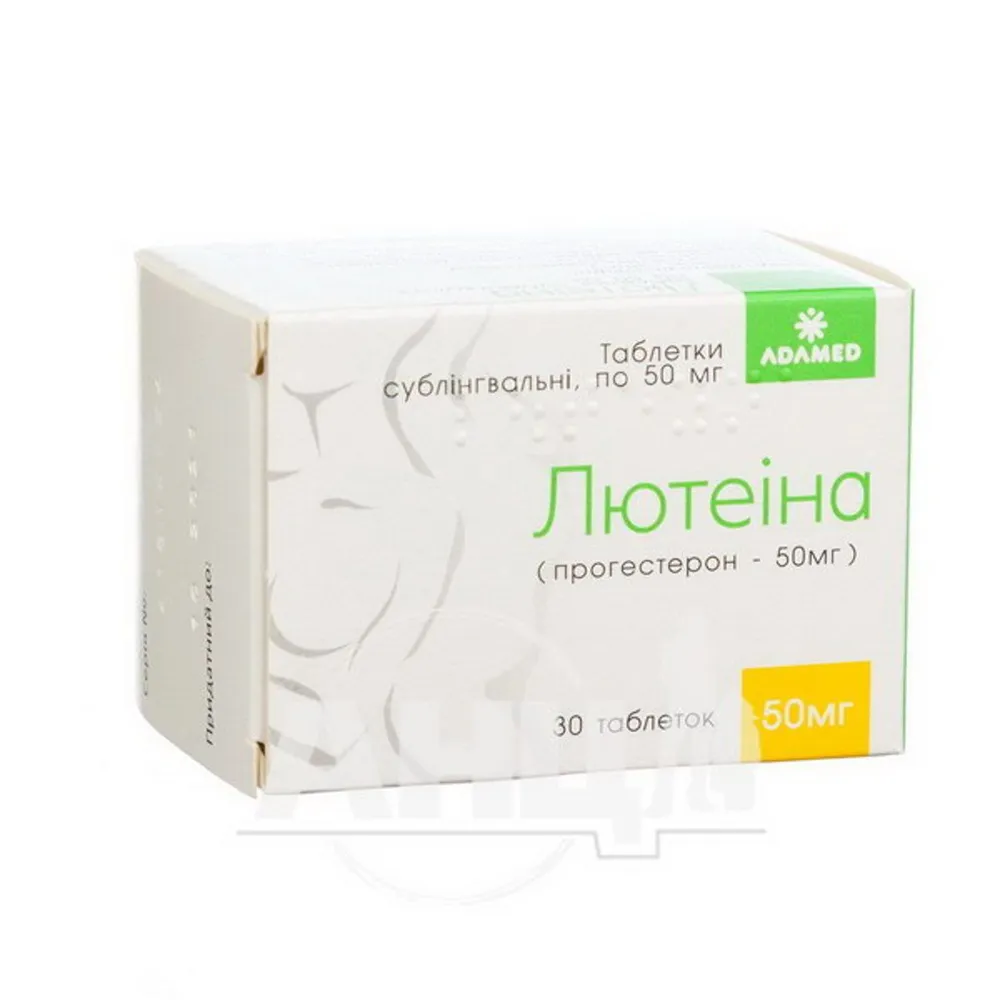
Table of Contents
I N S T R U C T I O N for medical use of the medicinal product LUTEINA (LUTEINA)
Composition:
Active substance: micronized progesterone;
1 tablet contains 50 mg of micronized progesterone;
Excipients: lactose monohydrate, potato starch, polyvinylpyrrolidone, ethylcellulose, talc, vanillin, magnesium stearate.
Pharmaceutical form. Sublingual tablets.
Main physicochemical properties: uncoated tablets, white in color, concave on one side and convex on the other, 9 mm ± 0.1 mm in diameter.
Pharmacotherapeutic group. Sex gland hormones and drugs used in pathologies of the reproductive system. Progestogens, pregnane derivatives. ATC code G03DA04.
Pharmacological Properties.
Pharmacodynamics. The progesterone in the drug Luteina is a synthetically obtained natural hormone of the ovarian corpus luteum. Under physiological conditions, progesterone is produced in the luteinized granulosa cells of the ovarian corpus luteum, in the syncytiotrophoblast of placental villi around weeks 14–18 of pregnancy, in the zona fasciculata and reticularis layers of the adrenal cortex, as well as in the central nervous system. The corpus luteum produces progesterone during the second phase of the menstrual cycle in increasing amounts, from 5 to 55 mg per day by days 20–22 of the cycle, decreasing by day 27 of the cycle. Progesterone secretion by the corpus luteum occurs in a pulsatile manner.
In the female body, progesterone acts via specific receptors located in the uterus, mammary glands, central nervous system, and pituitary gland. The human progesterone receptor has two isoforms: PR-A and PR-B (PR—progesterone receptor). PR-A can act either as a transcriptional inhibitor or activator, enabling tissue-specific actions. The most important effects of progesterone on reproductive organs include: facilitating ovulation through proteolysis of the Graafian follicle wall; inducing secretory transformation of the endometrium, enabling implantation of the fertilized ovum; inhibition of excessive endometrial hypertrophy under estrogen influence; cyclic changes in the epithelium of the fallopian tubes, cervix, and vagina. Progesterone acts synergistically with estrogens on the mammary gland, stimulating growth of glandular acini and ductal epithelium, and participating in the expression of receptors necessary for lactation. Progesterone is a hormone essential for maintaining pregnancy throughout its duration: it suppresses the uterine immune response to fetal antigens, serves as a substrate for fetal glucocorticoid and mineralocorticoid production, initiates labor, and suppresses spontaneous contractile activity of the pregnant uterus.
Other metabolic effects of progesterone include: elevation of body temperature, stimulation of respiration, reduction in plasma amino acid concentrations, increased glucagon concentration and reduced hypoglycemic effect of insulin, increased excretion of calcium and phosphorus, antiandrogenic activity through inhibition of 5-alpha-reductase (the enzyme converting testosterone into dihydrotestosterone) and androgen receptors, and diuretic action via blockade of aldosterone activity in the distal renal tubule.
Progesterone is synthesized from cholesterol, which in turn is derived from acetyl coenzyme A (acetyl-CoA), as well as from cholesterol originating in low-density lipoproteins (LDL). Within the inner mitochondrial membrane, cholesterol is converted into pregnenolone under the influence of LH (luteinizing hormone, lutropin), which is the immediate precursor of progesterone.
Pharmacokinetics.
Absorption. After sublingual administration, part of the progesterone is absorbed through the oral mucosa and avoids the first-pass effect. During the first hour after sublingual administration, serum progesterone concentrations are higher compared to oral administration. The portion of progesterone not absorbed through the oral mucosa passes through the gastrointestinal tract and undergoes first-pass metabolism.
Metabolism. Progesterone metabolism occurs primarily in the liver (approximately 90% of the hormone undergoes first-pass metabolism after oral administration, whereas the sublingually absorbed dose avoids first-pass metabolism). Metabolites in the form of pregnanediols and pregnanols are converted in the liver into glucuronides and sulfates. Progesterone metabolites excreted via the biliary tract may undergo further transformations through reduction, dehydroxylation, and epimerization. Metabolites are primarily eliminated via biliary and urinary excretion. Metabolites excreted via the biliary tract may be further transformed in the liver or excreted in feces.
Elimination. Approximately 96–99% of progesterone binds to plasma proteins: about 50–54% to albumin and 43–48% to transcortin (corticosteroid-binding globulin, CBG). Progesterone is well absorbed when administered sublingually. After sublingual administration of 100 mg progesterone, plasma hormone concentration reaches peak levels approximately within 1–4 hours; after 200 mg, peak levels occur approximately within 2–6 hours. The elimination half-life of sublingually administered progesterone (as well as orally administered) is approximately 6–7 hours.
After sublingual administration of 100 mg progesterone, plasma hormone concentration increases on average to 13.5 ng/mL.
The mid-luteal phase serum progesterone concentration required for secretory transformation of the endometrium is considered to be approximately 12–15 ng/mL. However, plasma progesterone concentration often does not correlate with the histological state of the endometrium. To diagnose luteal phase deficiency, in addition to measuring serum progesterone concentration, histopathological examination confirming a delay in endometrial maturation of at least 3 days relative to the expected cycle day is required. Also significant is a shortening of the luteal phase duration to less than 10 days.
Clinical characteristics.
Indications.
Treatment of endogenous progesterone deficiency in the form of menstrual cycle disorders, secondary amenorrhea, anovulatory cycles, premenstrual syndrome, functional uterine bleeding. In artificial insemination, infertility associated with luteal phase deficiency, recurrent miscarriage, and threat of spontaneous abortion in cases of progesterone deficiency, corpus luteum insufficiency, secondary amenorrhea, as well as for prevention of endometrial hyperplasia in women receiving estrogens (e.g., during hormone replacement therapy).
Contraindications.
Hypersensitivity to the components of the drug. Lactation period. Suspected or confirmed neoplasia of the breast or genital organs. Undetermined genital tract bleeding.
Severe liver function disorders. Cholestatic jaundice. Rotor syndrome and Dubin–Johnson syndrome. Venous thromboembolic disease (deep vein thrombophlebitis, pulmonary artery thromboembolism). Current or past arterial thromboembolic disorders (angina pectoris, myocardial infarction). Missed abortion, as well as presence of retained products of conception in the uterine cavity. Porphyria, intracerebral hemorrhage.
Interaction with other medicinal products and other types of interactions.
The metabolism of progesterone may be accelerated when used concomitantly with substances that enhance the activity of the cytochrome P450 enzyme, such as antiepileptic and antibacterial medicinal products, and herbal-based preparations. In vitro studies have shown that drugs which reduce cytochrome P450 activity (e.g., ketoconazole) may slow down progesterone metabolism. The clinical significance of this phenomenon is unknown. The use of progesterone may increase cyclosporine plasma concentration.
Some antibiotics (e.g., ampicillins, tetracyclines) may cause alterations in intestinal microflora, resulting in changes to the enterohepatic steroid cycle.
Potent inducers of hepatic enzymes, namely: barbiturates, antiepileptic agents (phenytoin), rifampicin, phenylbutazone, spironolactone, griseofulvin, nevirapine, efavirenz, carbamazepine, cause increased hepatic metabolism. Ritonavir and nelfinavir, known as potent inhibitors of cytochrome enzymes, demonstrate enzyme-inducing properties when used concomitantly with steroid hormones.
All progestins may reduce glucose tolerance, which may necessitate an increase in the daily dose of insulin and other antidiabetic agents in patients with diabetes mellitus.
Progesterone bioavailability may be reduced by smoking and increased by alcohol consumption.
No clinically significant interactions between progesterone and other drugs have been confirmed.
Special precautions for use.
A thorough gynecological examination, family history assessment, breast palpation, and cytological examination should be performed before initiating treatment.
In cases of uterine bleeding, a diagnostic evaluation must be performed prior to treatment initiation to exclude organic causes of bleeding.
Patients with a history of depression require special monitoring, as progesterone may exacerbate depressive symptoms. If severe depression occurs, the drug should be discontinued.
Use of the drug in premenopausal women may mask the onset of menopause.
The drug should not be used in patients with severe hepatic impairment. Patients with liver disease should be under medical supervision during treatment. Progesterone may reduce glucose tolerance in patients with diabetes mellitus or impaired glucose tolerance.
Luteina does not have contraceptive effects. When progesterone is used for reasons unrelated to infertility, concomitant use of contraceptive methods is recommended.
Extreme caution is required when prescribing to patients with a history of thromboembolic disorders: current or previous arterial or venous thromboembolic events, including deep vein thrombophlebitis, pulmonary embolism, angina pectoris, or myocardial infarction. Patients must remain under continuous medical supervision and undergo regular check-ups. Patients should be advised to promptly inform their physician of any changes in the breasts.
If treatment is initiated very early in the menstrual cycle, shortened cycles or breakthrough bleeding may occur.
The drug should not be prescribed in cases of uterine bleeding without prior clarification of the underlying cause, including endometrial examination.
Use with caution in patients with fluid retention (e.g., hypertension, cardiovascular, renal diseases), epilepsy, migraine, bronchial asthma, diabetes mellitus, or photosensitivity.
Prior to prescribing, careful evaluation is required in patients with a family history of neoplasms, or those with recurrent cholestasis, persistent pruritus during pregnancy, hepatic dysfunction, cardiac or renal insufficiency, fibrocystic mastopathy, epilepsy, asthma, otosclerosis, diabetes mellitus, multiple sclerosis, or systemic lupus erythematosus.
Due to the thromboembolic and metabolic risks that cannot be entirely excluded, treatment should be discontinued if any of the following occur:
-
Visual disturbances such as vision loss, diplopia, retinal vascular lesions, ptosis, or optic disc edema;
-
Venous thromboembolic or thrombotic complications, regardless of the affected site;
-
Severe headache or migraine.
In case of amenorrhea during treatment, pregnancy should be confirmed or excluded, as it may be the cause of amenorrhea.
More than half of early spontaneous abortions are due to genetic abnormalities. In addition, infectious conditions and mechanical disturbances may also cause early miscarriages; the only justified indication for progesterone use would be delayed expulsion of a nonviable fetus. Therefore, progesterone administration should only be prescribed by a physician when progesterone secretion is insufficient.
Prior to initiating treatment, the patient should undergo a thorough medical and gynecological examination, including vaginal and mammological examination and a Pap smear, taking into account the patient's history, contraindications, and precautions. Regular physician visits are recommended during treatment.
Women receiving hormone replacement therapy (HRT) should be carefully evaluated for all associated risks and benefits.
In postmenopausal women receiving or who have previously received HRT, there is a weak to moderate increase in the likelihood of breast cancer diagnosis. This may be related to earlier patient diagnosis, a true effect of HRT, or a combination of both. The risk of breast cancer diagnosis increases with duration of treatment and returns to baseline levels within 5 years after discontinuation of HRT. Breast cancer diagnosed in women receiving or recently receiving HRT tends to be less invasive than in untreated women. Physicians should discuss the increased risk of breast cancer with patients considering long-term hormone therapy, weighing the benefits of HRT.
The drug should not be taken with food and should be administered before bedtime. Concurrent food intake increases the drug's bioavailability.
Luteina contains lactose and therefore should not be administered to patients with hereditary galactose intolerance, lactase deficiency (Lapp type), or glucose–galactose malabsorption syndrome.
Use during pregnancy or breastfeeding.
Luteina may be used during the first trimester of pregnancy. The drug has no masculinizing, virilizing, corticosteroid, or anabolic effects. There is insufficient data on the use of progesterone during the second and third trimesters of pregnancy.
There are data suggesting a possible risk of hypospadias with the use of progestogens during pregnancy for the prevention of habitual or threatened miscarriage due to luteal phase deficiency; patients should be informed of this risk.
Progesterone passes into breast milk; therefore, the use of the drug during breastfeeding is contraindicated.
Ability to affect reaction speed when driving or operating machinery. Specific studies on the effect of progesterone on the ability to drive or operate machinery have not been conducted. However, since dizziness, drowsiness, and impaired concentration and attention may occur in isolated cases during progesterone use, drivers or machine operators should be warned of these potential adverse effects. Administration of tablets before bedtime may help avoid these undesirable effects.
Administration and Dosage
Dosages of Progesterone for each individual patient should be determined individually depending on the indications and therapeutic response.
In menstrual cycle disorders and premenstrual syndrome, administer 50 mg of progesterone sublingually 3–4 times daily. Treatment lasts for 3–6 consecutive cycles.
For prevention of endometrial hyperplasia (in hormone replacement therapy) in combination with estrogens, the usual regimen is 50 mg of progesterone administered sublingually 3–4 times daily. In prolonged intermittent regimens, the drug should be administered sublingually during the last 12–14 days of a 28-day cycle.
In prolonged continuous regimens, progesterone should be administered daily without interruption.
The dosage of progesterone should be adjusted according to the estrogen dose to ensure protection of the endometrium from the proliferative effects of estrogens.
For performing a progesterone challenge test in secondary amenorrhea, administer progesterone 50 mg sublingually 3–4 times daily. Menstruation should begin within 7–10 days after completion of treatment.
In the treatment of functional uterine bleeding, administer 50 mg of progesterone sublingually 3–4 times daily from day 15 to day 25 of the cycle. Treatment should be continued for 2–3 consecutive months.
In habitual miscarriage and threatened spontaneous abortion, as well as in anovulatory and induced cycles, administer 100 mg of progesterone sublingually 3–4 times daily.
In cases of habitual miscarriage, progesterone administration should begin during the cycle in which pregnancy is planned, even earlier (pre-gravidar preparation 3–4 months prior). Treatment should be continued continuously until approximately week 18–20 of pregnancy.
In in vitro fertilization (IVF) programs, administer 100–150 mg of progesterone sublingually 3–4 times daily.
Children. Not recommended for use in children.
Overdose. Symptoms of overdose most commonly include drowsiness, dizziness, nausea, and depression.
Symptoms usually resolve spontaneously after dose reduction.
In case of overdose, discontinue the drug and apply symptomatic treatment.
Adverse Reactions
When using Luteina, which contains progesterone identical to the endogenous hormone, adverse effects have been rarely observed, except for symptoms occurring in cases of overdose.
The adverse reactions listed below are systematized by organ systems and frequency of occurrence: very common (≥ 1/10), common (≥ 1/100 to < 1/10), uncommon (≥ 1/1,000 to < 1/100), rare (≥ 1/10,000 to < 1/1,000), very rare (< 1/10,000).
Central nervous system: uncommon: drowsiness, headache, dizziness.
Psychiatric disorders: uncommon: difficulty concentrating, anxiety, depression.
Reproductive system: rare: uterine bleeding, dysmenorrhea, spotting.
Skin and subcutaneous tissue: rare: anaphylactic reactions, skin redness, acne, allergic reactions.
Vascular system: rare: gingival bleeding, thrombosis, venous thromboembolism, pulmonary embolism.
Gastrointestinal system: uncommon: nausea; rare: dry mouth, gastrointestinal disturbances, vomiting, diarrhea, constipation.
Hepatobiliary disorders: rare: cholestatic jaundice.
Metabolism and nutrition disorders: rare: weight fluctuations.
Other disorders: fluid retention, hyperthermia.
Drowsiness and/or transient dizziness are particularly observed in cases of concomitant hypoestrogenism. Reducing the dose of the drug or increasing the estrogen dose promptly eliminates these symptoms without reducing the therapeutic effect.
If treatment is initiated too early in the menstrual cycle, especially before day 15, cycle shortening or breakthrough bleeding may occur.
Shelf life. 3 years.
Storage conditions. Store in the original packaging at a temperature below 25 °C. Keep out of the reach of children.
Packaging. 30 tablets in a plastic container with a lid featuring a tamper-evident seal and attached medical instruction leaflet.
30 tablets in a plastic container with a lid featuring a tamper-evident seal, placed in a cardboard box together with the medical instruction leaflet.
15 tablets in a blister pack; 2 blisters per cardboard box labeled in Ukrainian.
Prescription status. Prescription only.
Manufacturer. Adamed Pharma S.A., Poland.
Manufacturer's address and place of business.
5 J. Pilsudskiego Street, 95-200 Pabianice, Poland.