Loprax
Ukraine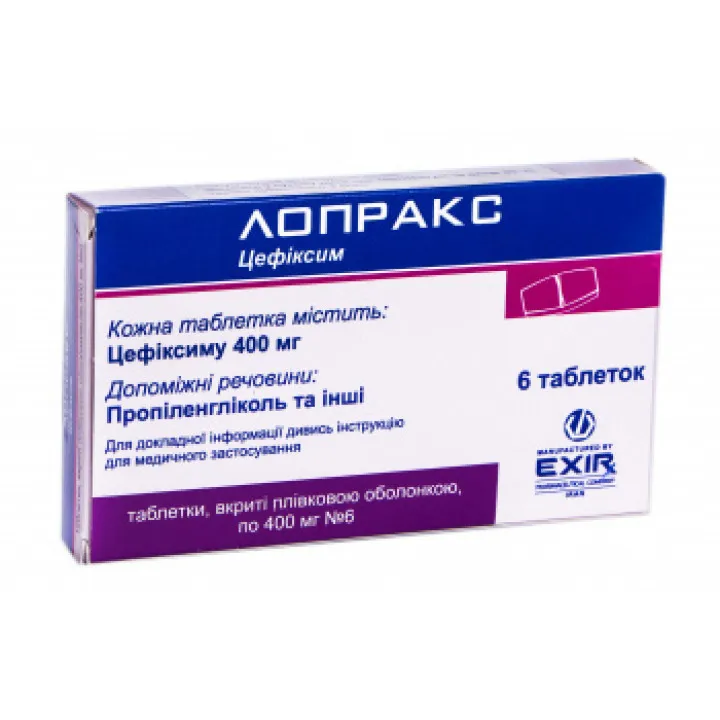
Table of Contents
INSTRUCTIONS FOR MEDICAL USE OF THE MEDICINAL PRODUCT LOPRAX (Loprax®)
Composition:
Active substance: cefixime;
1 tablet contains cefixime trihydrate in an amount equivalent to cefixime 400 mg;
Excipients: microcrystalline cellulose, calcium hydrogen phosphate, pregelatinized starch, magnesium stearate, hydroxypropylmethylcellulose, talc, titanium dioxide (E 171), propylene glycol, purified water.
Pharmaceutical form. Film-coated tablets.
Main physicochemical properties: elongated white tablets with a score line on one side, film-coated.
Pharmacotherapeutic group. Antimicrobial agents for systemic use. Other
beta-lactam antibiotics. Third-generation cephalosporins. Cefixime.
ATC code J01D D08.
Pharmacological Properties.
Pharmacodynamics.
Cefixime is a broad-spectrum oral third-generation cephalosporin with bactericidal activity against both gram-positive and gram-negative microorganisms. The bactericidal effect of cefixime is due to inhibition of microbial cell wall protein synthesis. Cefixime is highly resistant to the action of beta-lactamases, which allows it to remain active against many microorganisms resistant to penicillins and certain cephalosporins due to beta-lactamase production.
Cefixime is active against the following gram-positive and gram-negative microorganisms: Streptococcus pyogenes, Streptococcus pneumoniae, Streptococcus agalactiae; Haemophilus influenzae, Haemophilus parainfluenzae, Branhamella catarrhalis, Escherichia coli, Neisseria gonorrhoeae, Proteus mirabilis, Proteus vulgaris, other indole-positive Proteus strains, Klebsiella pneumoniae, Klebsiella oxytoca, Enterobacteriaceae, Pasteurella multocida, Providencia strains, Salmonella strains, Shigella strains, Citrobacter amalonaticus, Citrobacter diversus, Serratia marcescens.
In vitro, cefixime showed no activity against Pseudomonas strains, Streptococcus faecalis, Listeria monocytogenes, many Staphylococcus strains (both coagulase-producing and non-producing, including methicillin-resistant strains), Enterobacter strains, most Bacteroides fragilis strains, and Clostridium strains.
Pharmacokinetics.
Absorption. Cefixime is rapidly absorbed after oral administration, and its absorption is not affected by food intake. Absolute bioavailability ranges from 30% to 50%. Peak serum concentrations of 2.5–4.9 µg/mL are reached within 3–4 hours after a single 400 mg oral dose. There is no evidence of cefixime accumulation in serum or urine after repeated dosing. Cefixime is approximately 65% bound to serum proteins.
Elimination. Approximately 50% of the absorbed dose is excreted unchanged in urine within 24 hours. About 10% of the dose is excreted in bile. The serum half-life of cefixime is dose-dependent and ranges from 3 to 4 hours.
Clinical characteristics.
Indications.
Infections caused by microorganisms sensitive to the drug:
- acute and chronic bronchitis;
- acute pneumonia;
- otitis media;
- bacterial pharyngitis, tonsillitis, and sinusitis;
- uncomplicated bacterial urinary tract infections.
Contraindications.
- Hypersensitivity to cefixime or to any component of the drug;
- hypersensitivity to cephalosporins or penicillins;
- pediatric age under 12 years (for this dosage form and dosage);
- bronchial asthma or predisposition to allergies in medical history (e.g., urticaria or
skin rash);
- porphyria.
Interaction with other medicinal products and other types of interactions.
Probenecid (and other tubular secretion blockers) increases the maximum blood concentration of cefixime by slowing renal excretion of cefixime, which may lead to symptoms of overdose.
Salicylic acid increases the concentration of free cefixime by 50% due to displacement of cefixime from protein-binding sites; this effect is concentration-dependent.
Carbamazepine may cause an increase in cefixime plasma concentration; therefore, monitoring of its plasma levels is advisable.
Nifedipine increases the bioavailability of cefixime.
Furosemide and aminoglycosides increase the nephrotoxicity of the drug.
Potentially, similar to other antibiotics, administration of cefixime may lead to reduced reabsorption of estrogens and decreased effectiveness of combined oral contraceptives.
Coumarin-type anticoagulants.
Cefixime should be used with caution in patients receiving anticoagulant therapy, e.g., warfarin. Since cefixime may potentiate the effect of anticoagulants, prolongation of prothrombin time with or without clinical manifestations of bleeding may occur.
Other forms of interactions: administration of cephalosporins may lead to false-positive reactions when testing for glucose in urine using Benedict's or Fehling's solutions or with Clinistix tablets. During cefixime administration, a false-positive direct Coombs' test may occur.
Special precautions for use.
Encephalopathy
Beta-lactams, including cefixime, may increase the risk of encephalopathy (which may include seizures, confusion, impaired consciousness, and movement disorders) in patients, especially in cases of overdose and renal impairment.
Severe skin reactions
Serious skin adverse reactions, such as toxic epidermal necrolysis, Stevens-Johnson syndrome, and drug rash with eosinophilia and systemic symptoms (DRESS), have been reported in some patients receiving cefixime. In the event of severe skin adverse reactions, cefixime should be discontinued immediately, and appropriate treatment and/or preventive measures should be initiated.
Hypersensitivity reactions
Prior to administration of cefixime, patients' medical history should be carefully evaluated for hypersensitivity reactions to penicillins, cephalosporins, or other drugs.
Evidence of cross-allergic reactions between penicillins and cephalosporins has been demonstrated both in vivo (in the human body) and in vitro. Such cases are rare but may occur anaphylactically, particularly after parenteral administration.
Antibiotics should be administered cautiously to patients with a history of any type of hypersensitivity reaction, especially following drug administration. If an allergic reaction occurs, the drug should be discontinued immediately and appropriate therapy initiated.
Alteration of intestinal microflora
Prolonged use of antibacterial agents may lead to overgrowth of resistant microorganisms and disruption of normal intestinal microflora, potentially resulting in overgrowth of Clostridium difficile and development of pseudomembranous colitis. In mild cases of antibiotic-associated pseudomembranous colitis, discontinuation of the drug may be sufficient. If colitis symptoms persist after discontinuation, oral vancomycin—considered the drug of choice for pseudomembranous colitis—should be prescribed. Other causes of colitis must be ruled out.
Management of pseudomembranous colitis should include sigmoidoscopy, appropriate bacteriological testing, and administration of fluids, electrolytes, and protein supplements. Concomitant use of drugs that reduce intestinal peristalsis should be avoided. Caution is advised when prescribing broad-spectrum antibiotics to patients with a history of gastrointestinal disorders, particularly colitis.
Prolonged cefixime therapy may lead to overgrowth of Candida albicans and, consequently, oral mucosal candidiasis. Caution should be exercised when prescribing the drug to patients with a history of bleeding disorders, gastrointestinal diseases—especially ulcerative colitis, regional enteritis, or antibiotic-associated colitis—as well as hepatic impairment.
Laboratory test findings
With use of the medicinal product Loprax, reversible changes in liver, kidney, and blood parameters (thrombocytopenia, leukopenia, and eosinophilia) may occur. During prolonged treatment, blood counts, as well as liver and kidney function, should be monitored. It should be noted that cefixime may cause false-positive urine glucose test results and a positive Coombs' test.
Acute renal failure
Like other cephalosporins, cefixime may cause acute renal failure, including tubulointerstitial nephritis, as the underlying pathological condition responsible for the adverse reaction. If acute renal failure occurs, cefixime should be discontinued and appropriate therapy and/or measures initiated.
Renal impairment
The drug should be administered with caution to patients with renal impairment. Dose adjustment should be based on creatinine clearance.
For children with kidney disease, the recommended dose is 1.5–3 mg of the drug per kg of body weight per day.
Anemia
Cases of hemolytic anemia, including severe cases with fatal outcomes, have been reported following administration of cephalosporins. Recurrent episodes of hemolytic an armenia have also been documented in patients previously affected by hemolytic anemia after initial administration of cephalosporins, including cefixime.
In patients with group A beta-hemolytic streptococcal infections, the treatment course should last at least 10 days to prevent acute rheumatic fever or glomerulonephritis.
The drug may prolong prothrombin time; therefore, it should be used cautiously in patients receiving anticoagulant therapy.
If a patient has known intolerance to certain sugars, medical advice should be sought before taking this medicinal product.
When Loprax is used concomitantly with aminoglycosides, polymyxin B, colistin, or loop diuretics (furosemide, ethacrynic acid) in high doses, renal function should be closely monitored. After prolonged use of Loprax, hematopoietic function should be evaluated.
Cephalosporins increase alcohol toxicity; therefore, consumption of alcoholic beverages is not recommended during cefixime therapy.
Use during pregnancy or breastfeeding
Controlled clinical studies in pregnant women have not been conducted. The drug may be used during pregnancy only if clearly needed and if the expected benefit to the mother outweighs the potential risk to the fetus. The drug is not recommended during breastfeeding. Breastfeeding should be discontinued for the duration of treatment.
Ability to affect reaction speed when driving or operating machinery
There are no data on the effect of cefixime on the ability to drive or operate machinery. Patients should be informed about possible adverse reactions associated with cefixime use, such as headache, increased fatigue, and dizziness.
Method of Administration and Dosage.
The usual dose of cefixime for adults and children aged 12 years and older is 400 mg per day, taken once daily or as 200 mg twice daily at 12-hour intervals.
Geriatric patients: usual adult doses are recommended. Dose adjustment is required for patients with renal impairment.
Patients with renal impairment: patients with creatinine clearance of 60 mL/min or higher should receive the usual doses and dosing regimen.
For patients with creatinine clearance between 21 and 60 mL/min, 75% of the usual dose may be administered at the standard dosing interval. For patients with creatinine clearance less than 20 mL/min, 50% of the usual dose should be administered at the standard dosing interval.
The duration of treatment ranges from 3 days (for treatment of uncomplicated cystitis) to 10–14 days.
Children.
This medicinal product in this dosage form and strength is indicated for children aged 12 years and older.
Overdose.
There is a risk of encephalopathy when beta-lactam antibiotics, including cefixime, are used, particularly in cases of overdose and renal impairment.
In the event of overdose, symptoms such as dizziness, nausea, vomiting, diarrhea, and exacerbation of other adverse reactions may occur. There are no specific antidotes for cefixime overdose. Symptomatic and supportive therapy should be administered (e.g., gastric lavage to reduce drug absorption; detoxification therapy, enteral sorbents). Hemodialysis or peritoneal dialysis only minimally enhance the elimination of cefixime from the body.
Side effects
When cephalosporins are used, gastrointestinal disturbances are most commonly observed; hypersensitivity reactions occur less frequently.
Hypersensitivity reactions are more commonly observed in patients who have previously experienced hypersensitivity reactions and in patients with a history of allergies, hay fever, urticaria, or bronchial asthma with an allergic component.
Rare side effects observed during cefixime administration include:
Gastrointestinal system: dry mouth, glossitis, nausea, vomiting, heartburn, abdominal pain, diarrhea, digestive disturbances, candidiasis of the mucous membranes of the mouth and gastrointestinal tract, stomatitis, flatulence, gastric spasms, intestinal spasms, dysbacteriosis. Switching to a dosage of 200 mg twice daily may alleviate diarrhea. Severe, prolonged diarrhea is associated with the use of certain classes of antibiotics. In such cases, pseudomembranous colitis should be ruled out by colonoscopy. If this diagnosis is confirmed, all antibiotic therapy must be discontinued immediately and oral vancomycin should be initiated. Medicinal products that reduce intestinal peristalsis are contraindicated.
Immune system: hypersensitivity reactions, serum sickness-like reactions, anaphylactic shock, airway constriction due to laryngeal edema, drug fever.
Blood system: transient leukopenia, agranulocytosis, pancytopenia, transient neutropenia, granulocytopenia, thrombocytopenia, thrombocytosis, eosinophilia, hyper-eosinophilia, thrombophlebitis, purpura, hypoprothrombinemia. Hemolytic anemia has also been reported in patients receiving cephalosporins. Isolated cases of coagulation disorders and hypoprothrombinemia have been observed.
Liver: jaundice, transient elevation of transaminases (AST, ALT), alkaline phosphatase, total bilirubin; isolated cases of hepatitis, cholestasis.
Urinary system: transient increase in blood urea and creatinine levels, renal function impairment, hematuria, interstitial nephritis.
Respiratory system: dyspnea.
Skin: urticaria, skin rashes (enanthema, erythema, exanthema), pruritus, skin hyperemia, multiform erythema, Stevens-Johnson syndrome, toxic epidermal necrolysis, drug reaction with eosinophilia and systemic symptoms (DRESS syndrome).
Nervous system: headache, dizziness, dysphoria; convulsions have been reported during cephalosporin use, including cefixime (frequency unknown).
Beta-lactams, including cefixime, increase the risk of encephalopathy (which may include seizures, confusion, impaired consciousness, movement disorders) in patients, especially in cases of overdose and renal insufficiency (frequency unknown).
Ears and vestibular system: hearing loss.
General disorders: increased body temperature, facial swelling, palpitations, increased fatigue, hyperactivity, weakness, mucosal inflammation, enanthema, increased blood pressure, arthralgia.
Other: anorexia; Candida-induced vaginitis, genital pruritus.
Shelf life. 3 years.
Storage conditions. Store at temperatures not exceeding 30 °C in the original packaging. Keep out of reach of children.
Packaging: 2 blisters of 10 tablets each or 1 blister of 6 tablets in a cardboard box.
Prescription status. Prescription only.
Manufacturer.
Exir Pharmaceutical Company, Iran.
Manufacturer's address and location of business operations.
2nd km Ring Road, Boroujerd 69189, Iran.