Lincomycin hydrochloride
Ukraine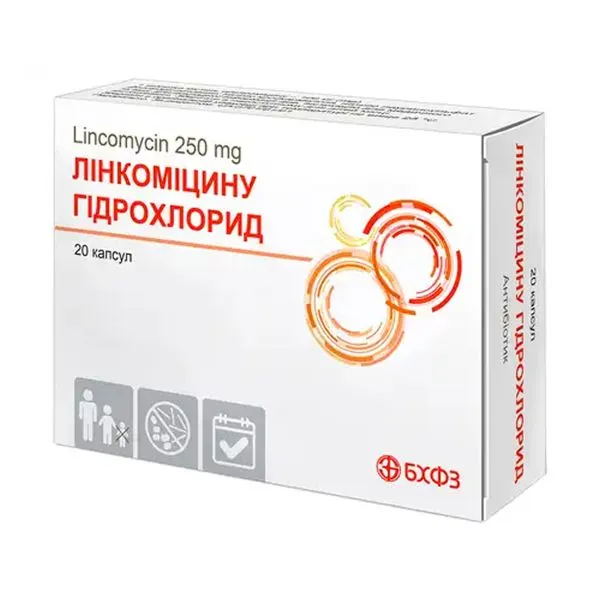
Table of Contents
INSTRUCTIONS FOR MEDICAL USE OF THE MEDICINAL PRODUCT LINCOMYCIN HYDROCHLORIDE
Composition:
Active substance: lincomycin hydrochloride;
1 capsule contains lincomycin hydrochloride equivalent to 100% lincomycin – 250 mg;
Excipients: pregelatinized starch, calcium stearate;
composition of gelatin capsule No. 1
cap: yellow FCF (E 110), quinoline yellow (E 104), titanium dioxide (E 171), gelatin;
body: titanium dioxide (E 171), gelatin.
Pharmaceutical form. Capsules.
Main physicochemical properties: hard capsules with white-colored body and yellow-colored cap. The contents of the capsules are white powder.
Pharmacotherapeutic group. Antibacterial agents for systemic use. Macrolides, lincosamides and streptogramins. Lincosamides. ATC code J01F F02.
Pharmacological Properties
Pharmacodynamics
Lincomycin is an antibiotic produced by Streptomyces lincolnensis or other actinomycetes and belongs to the group of lincosamides. Its mechanism of action is associated with inhibition of microbial protein synthesis due to formation of an irreversible bond with the 50S ribosomal subunits, disruption of peptidyl transferase activity, and inhibition of translocation and transpeptidation reactions. Lincomycin hydrochloride exerts a bacteriostatic and/or bactericidal effect depending on the drug concentration and microbial susceptibility. It is effective against anaerobic, non-spore-forming Gram-positive bacteria, including Actinomyces spp.; Propionibacterium spp. and Eubacterium spp.; anaerobic and microaerophilic cocci, including Peptococcus spp., Peptostreptococcus spp. and microaerophilic streptococci; aerobic Gram-positive cocci, including Staphylococcus spp.; Streptococcus spp. (except S. faecalis), including Streptococcus pneumoniae.
Moderately susceptible microorganisms include: anaerobic, non-spore-forming Gram-negative bacteria, including Bacteroides spp., Fusobacterium spp.; anaerobic, spore-forming Gram-positive bacteria, including Clostridium spp.
Resistant or poorly susceptible microorganisms include: Streptococcus faecalis, Neisseria spp., most strains of Haemophilus influenzae, Pseudomonas spp., and other Gram-negative microorganisms. Due to the low absorption of lincomycin from the gastrointestinal tract and the ability to achieve high inhibitory concentrations, the drug has proven highly effective in bacterial dysentery caused by Shigella.
Pharmacokinetics
After oral administration, lincomycin is rapidly absorbed from the gastrointestinal tract (approximately 20–33% of the administered dose) and distributed into various organs and tissues, including bone tissue. Maximum blood concentration is reached within 2–4 hours. When the antibiotic is administered after food intake, absorption is reduced by 50%. Concentrations in fetal blood, peritoneal and pleural fluids reach approximately 25–50% of blood levels, in breast milk – 50–100%, in bone tissue – about 40%, and in soft tissues – 75%. The drug poorly penetrates the blood-brain barrier, but penetration increases during meningitis (reaching up to 40% of blood levels). Lincomycin readily crosses the placenta. Metabolism of lincomycin hydrochloride occurs in the liver. Drug excretion depends on the route of administration. After oral administration, approximately 4% is excreted in urine and about 33% in feces. Drug concentration in bile is 10 times higher than in blood. The elimination half-life is 5.4 hours. Liver and kidney diseases significantly affect drug elimination.
Clinical characteristics.
Indications.
Lincomycin is indicated for the treatment of serious infections caused by gram-positive aerobic microorganisms sensitive to lincomycin, such as streptococci, pneumococci, and staphylococci, or by anaerobic bacteria sensitive to the drug:
- Upper respiratory tract infections: chronic sinusitis caused by anaerobic strains. Lincomycin may be used to treat selected cases of suppurative otitis media or as an adjunctive therapy in combination with an antibiotic effective against gram-negative aerobic pathogens. Infections caused by H. influenzae are not an indication for the use of this drug (see section "Pharmacodynamics").
- Lower respiratory tract infections, including infectious exacerbations of chronic bronchitis and infectious pneumonia.
- Serious skin and soft tissue infections caused by susceptible microorganisms when penicillin-group antibiotics are not indicated.
- Bone and joint infections, including osteomyelitis and septic arthritis.
- Septicemia and endocarditis. In individual cases of septicemia and/or endocarditis due to pathogens sensitive to lincomycin, a pronounced response to lincomycin therapy has been observed. However, bactericidal agents are often preferred for the treatment of such infections.
Contraindications.
- Hypersensitivity to lincomycin, clindamycin, or to any component of the drug;
- myasthenia gravis;
- active colitis;
- meningitis.
Interaction with other medicinal products and other types of interactions.
Penicillins, cephalosporins, chloramphenicol: possible antagonism of antimicrobial action.
Since antagonism between lincosamides and erythromycin, as well as macrolide compounds with a chemical structure similar to erythromycin, has been demonstrated in vitro, clinically significant interactions are possible. Therefore, concomitant use of macrolides or streptogramins with lincomycin is not recommended.
Aminoglycosides: possible synergistic effect.
Kaolin-pectin mixtures, antidiarrheal agents: bioavailability of lincomycin is reduced by 90%; therefore, these agents should be taken either 2 hours before or 3–4 hours after lincomycin administration.
Neostigmine, pyridostigmine: lincosamides counteract the effects of these anticholinesterase agents.
Muscle relaxants (including succinylcholine), inhaled anesthetics, opioid analgesics: lincosamides exhibit neuromuscular blocking properties and may thus potentiate neuromuscular blockade up to the development of apnea.
Estrogens: possible reduction in the contraceptive effect of estrogens. Although the risk is low, additional contraceptive methods are recommended during and for 7 days after discontinuation of lincosamide therapy.
Oral typhoid vaccine: antibacterial agents, including lincosamides, may reduce its therapeutic efficacy.
Concomitant use of antidiarrheal agents reduces the effect of lincomycin.
There is absolute cross-resistance of microorganisms to lincomycin and clindamycin.
Lincomycin is pharmaceutically incompatible with kanamycin, novobiocin, ampicillin, barbiturates, theophylline, calcium gluconate, heparin, and magnesium sulfate (this applies to parenteral forms of lincomycin).
Special precautions for use.
Microbiological studies should be conducted to identify causative pathogens and determine their sensitivity to lincomycin.
The efficacy of lincomycin has been demonstrated in the treatment of staphylococcal infections resistant to other antibiotics but sensitive to lincomycin. Strains of staphylococci resistant to lincomycin have been identified; therefore, during lincomycin therapy, bacteriological cultures and sensitivity testing of pathogens should be performed. Partial cross-resistance may occur when macrolides are used. If clinically indicated, the drug may be used concomitantly with other antibacterial agents.
To reduce the rate of emergence of drug-resistant bacteria and preserve the effectiveness of lincomycin and other antibacterial agents, lincomycin should be used only to treat or prevent infections that are proven or strongly suspected to be caused by susceptible bacteria. Bacteriological culture results and sensitivity data, if available, should be taken into account when selecting or modifying antibacterial therapy. In the absence of such data, empirical choice of therapy may be influenced by local epidemiological information and local patterns of bacterial susceptibility.
Lincomycin is not indicated for the treatment of minor bacterial infections or viral infections. Prescribing lincomycin in the absence of confirmed or highly suspected bacterial infection is unlikely to benefit the patient and increases the risk of development of drug-resistant bacteria.
Due to the risk of pseudomembranous colitis, the physician should evaluate the nature of the infection and consider the appropriateness of using less toxic alternative agents (e.g., erythromycin) before prescribing lincomycin.
Cases of diarrhea and pseudomembranous colitis associated with toxins A and B produced by Clostridioides difficile (C. difficile) (CDAD) have been reported with nearly all antibacterial agents, including lincosamides. The severity of symptoms may range from mild diarrhea to fatal colitis. Antibacterial therapy may suppress normal intestinal flora, leading to overgrowth of C. difficile.
C. difficile-associated diarrhea may present as mild watery diarrhea but can progress to severe persistent diarrhea, leukocytosis, fever, severe abdominal cramps, and passage of mucus and/or blood in stools. In mild cases of pseudomembranous colitis, discontinuation of the drug is usually sufficient. Moderate to severe pseudomembranous colitis requires treatment with fluid and electrolyte replacement, protein supplementation, and administration of antibacterial agents effective against C. difficile.
Treatment should be initiated immediately upon initial diagnosis of pseudomembranous colitis. Diagnosis is usually based on clinical symptoms, but may be confirmed by endoscopy or detection of C. difficile and its toxins in patient stool. Drugs that inhibit intestinal peristalsis should not be administered during treatment.
Without appropriate treatment, toxic megacolon, peritonitis, and shock may develop.
CDAD should be considered in all patients who develop diarrhea during or after antibiotic use. It should be noted that CDAD may occur up to 2 months after completion of antibacterial therapy. Colitis is most likely to develop in elderly or debilitated patients. If lincomycin is administered to such patients, careful monitoring of bowel movement frequency is required.
Strains of C. difficile that produce excess toxins are associated with increased morbidity and mortality, as such infections may be resistant to antibacterial therapy and often require colectomy.
Lincomycin should be used with caution in patients with gastrointestinal disorders, particularly those with a history of colitis.
Antibacterial agents may promote overgrowth of nonsusceptible microorganisms, including fungi, and lead to superinfection, which may require appropriate intervention depending on the clinical situation. If patients with pre-existing fungal infections require lincomycin therapy, concomitant antifungal treatment should be administered.
Serious hypersensitivity reactions, including anaphylactic reactions and severe skin adverse reactions such as Stevens-Johnson syndrome, toxic epidermal necrolysis, acute generalized exanthematous pustulosis, and erythema multiforme, have been reported in patients receiving lincomycin. If anaphylactic or severe skin reactions occur, the drug should be discontinued and appropriate treatment initiated. Severe anaphylactoid reactions require immediate intensive treatment with epinephrine, oxygen therapy, and intravenous corticosteroids. If indicated, airway patency should be restored, including by intubation if necessary.
Inadequacy of lincomycin for use in meningitis.
Although lincomycin crosses the blood-brain barrier, its concentration in cerebrospinal fluid may be insufficient for the treatment of meningitis. Therefore, the drug should not be used in such cases.
In rare cases, septicemia and/or endocarditis caused by susceptible microorganisms respond well to lincomycin therapy. However, bactericidal agents are generally preferred for these conditions.
Lincomycin should be used with caution in patients with severe hepatic or renal impairment associated with significant metabolic disturbances. Dosage adjustments are required for such patients (see section "Dosage and administration"), and serum levels of lincomycin should be monitored during high-dose therapy, as the elimination half-life may be prolonged by 2–3 times in these patient groups.
Liver and kidney function and blood counts should be monitored during prolonged lincomycin antibiotic therapy.
Lincomycin should be prescribed with caution to patients with bronchial asthma or other significant allergic conditions in their medical history.
Lincomycin can block neuromuscular transmission and may therefore potentiate the effects of other neuromuscular blocking agents. Thus, lincomycin should be used cautiously in patients receiving such agents.
Due to the presence of the dye tartrazine (E 110) in the formulation, the drug may cause allergic reactions, including bronchial asthma. The risk of allergy is higher in patients with hypersensitivity to acetylsalicylic acid.
Use during pregnancy or breastfeeding.
In humans, lincomycin crosses the placental barrier and is detectable in umbilical cord serum at levels of 25% of maternal serum concentrations. Significant accumulation of the drug in amniotic fluid does not occur. The safety of lincomycin use during pregnancy has not been established. In 302 children born to women who received lincomycin at various stages of pregnancy, no increased incidence of congenital anomalies or growth retardation was observed compared to the control group during the first 7 years of life. Lincomycin should not be used during pregnancy except when clearly needed. Lincomycin is excreted in breast milk at concentrations ranging from 0.5 to 2.4 µg/mL; therefore, considering the potential for serious adverse reactions in breastfed infants, a decision should be made whether to discontinue breastfeeding or discontinue the drug, taking into account the importance of the drug to the mother.
Ability to affect reaction speed when driving or operating machinery.
The drug has not been reported to affect reaction speed when driving or operating machinery; however, cases of dizziness have been reported.
Dosage and Administration.
Dosage and route of administration should be determined based on the severity of infection, patient's condition, and bacterial pathogen sensitivity. Duration of treatment is determined individually by the physician.
The drug should preferably be taken 1–2 hours before or 1–2 hours after a meal. Capsules should be taken with sufficient amount of water.
Adults
500 mg three to four times daily.
Children (from 6 years of age)
30–60 mg/kg/day, divided into 3 or 4 equal doses.
Patients with impaired renal and/or hepatic function
If lincomycin administration is necessary in patients with severe renal and/or hepatic impairment, the appropriate dose is 25–30% of the dose recommended for patients with normal renal/hepatic function.
Children.
This medicinal product in the given pharmaceutical form must not be administered to children under 6 years of age.
Overdose.
Symptoms: gastrointestinal disturbances may occur, including abdominal pain, nausea, vomiting, and diarrhea.
Treatment: induce vomiting or, if indicated, perform gastric lavage; administer symptomatic and supportive therapy. There is no specific antidote. Hemodialysis and peritoneal dialysis are ineffective.
Side effects.
- Gastrointestinal tract: nausea, vomiting, abdominal discomfort/pain, glossitis, stomatitis, heartburn, esophagitis/esophageal ulcers, persistent diarrhea, antibiotic-associated colitis, including pseudomembranous colitis, which may occur during or 2–3 weeks after antibiotic treatment (see section "Special precautions").
- Immune system: hypersensitivity reactions, including angioneurotic edema, serum sickness, anaphylaxis, e.g. anaphylactic shock; some of these occurred in patients with hypersensitivity to penicillin.
- Blood and lymphatic system: neutropenia, leukopenia, eosinophilia, agranulocytosis, thrombocytopenia/thrombocytopenic purpura; isolated cases of aplastic anemia and pancytopenia, in which the role of lincomycin as a causative factor could not be excluded.
- Skin and mucous membranes: rash, including maculopapular, skin hyperemia, urticaria, pruritus, vaginitis. In rare cases – multiform erythema, sometimes resembling Stevens-Johnson syndrome and associated with lincomycin administration, Stevens-Johnson syndrome, exfoliative and vesiculobullous dermatitis, toxic epidermal necrolysis, acute generalized exanthematous pustulosis (see section "Special precautions").
- Hepatobiliary system: changes in liver function test parameters (including elevated transaminase levels), jaundice.
- Urinary system: in rare cases – renal function impairment, evidenced by azotemia, oliguria and/or proteinuria, although a direct link between lincomycin and kidney damage has not been established.
- Effects due to biological activity: with prolonged use at high doses, superinfection may develop, including fungal infections (e.g. monilial infections).
- Other: dysgeusia, anal pruritus, tinnitus, weakness, dizziness, polyarthritis.
Shelf life. 3 years.
Do not use after the expiry date stated on the packaging.
Storage conditions.
Store in the original packaging at a temperature not exceeding 25 °C.
Keep out of reach of children.
Packaging.
10 capsules per blister, 2 blisters per carton.
Prescription category. Prescription only.
Manufacturer.
Public Joint-Stock Company "Scientific and Production Center "Borshchahivskiy Chemical and Pharmaceutical Plant".
Manufacturer's address and place of business.
17 Mиру Street, Kyiv, 03134, Ukraine.