Lincomycin-zdorovya
Ukraine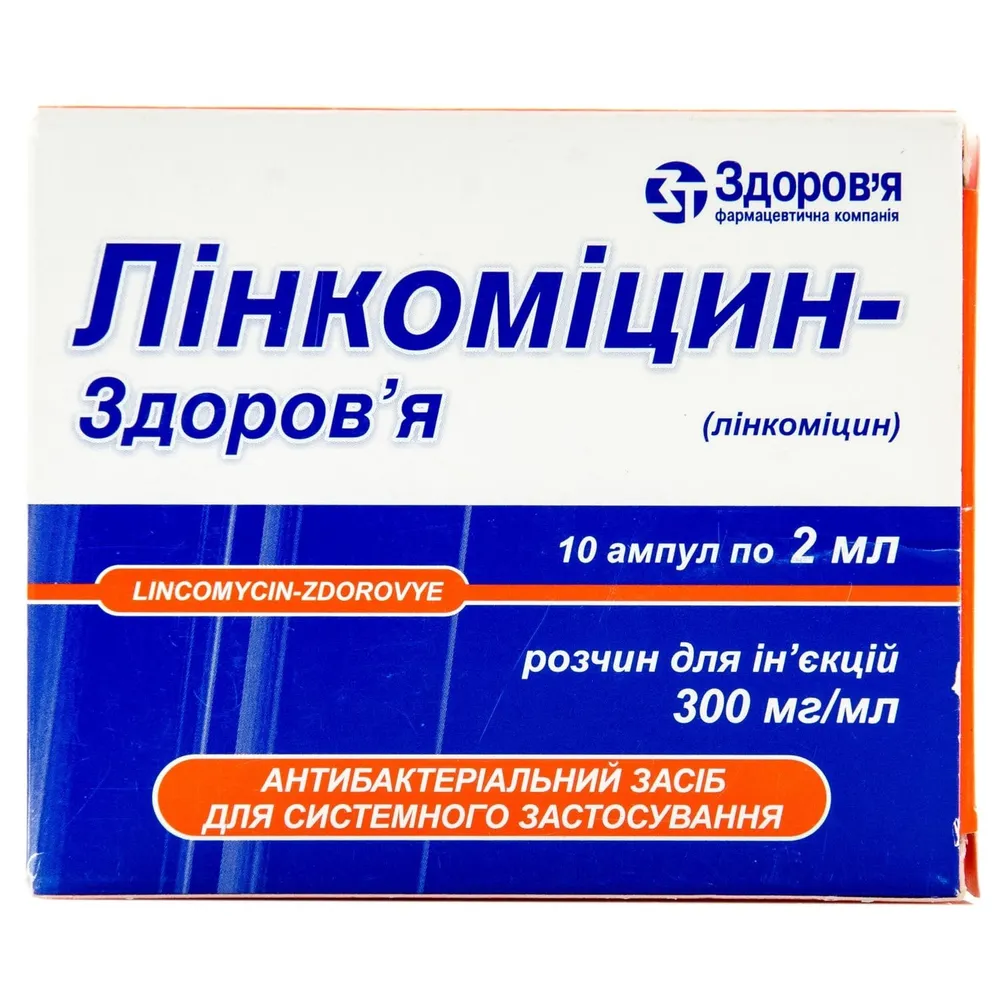
Table of Contents
INSTRUCTIONS FOR MEDICAL USE of the medicinal product LINCOSAMINE-ZDOROV'YA (LINCOMYCIN-ZDOROVYE)
Composition:
Active substance: lincomycin;
1 ml of solution contains lincomycin hydrochloride equivalent to 300 mg of lincomycin;
Excipients: disodium edetate, sodium hydroxide, water for injections.
Pharmaceutical form. Solution for injection.
Main physico-chemical properties: clear, colorless or slightly yellowish solution with a faint specific odor.
Pharmacotherapeutic group. Antibacterial agents for systemic use. Lincosamides. ATC code J01F F02.
Pharmacological Properties
Pharmacodynamics.
Depending on the susceptibility of microorganisms and the concentration of the antibiotic, lincomycin may exhibit either bacteriostatic or bactericidal activity. The in vitro spectrum of activity includes the following pathogens:
-
Susceptible microorganisms (minimum inhibitory concentration [MIC] ≤ 2 µg/mL):
- anaerobic gram-positive non-spore-forming bacteria, including Propionibacterium spp., Eubacterium spp., and Actinomyces spp.;
- anaerobic and microaerophilic gram-positive cocci, including Peptococcus spp., Peptostreptococcus spp., and microaerophilic streptococci;
- aerobic gram-positive microorganisms, including staphylococci, streptococci (except S. faecalis), and pneumococci.
-
Microorganisms with moderate susceptibility (MIC = 2–4 µg/mL):
- anaerobic gram-negative non-spore-forming bacteria, including Bacteroides spp., Fusobacterium spp.;
- anaerobic gram-positive spore-forming bacteria, including Clostridium spp.
-
Resistant microorganisms or those with low susceptibility (MIC ≥ 8 µg/mL), including Streptococcus faecalis, Neisseria, most strains of Haemophilus influenzae, Pseudomonas, and other gram-negative microorganisms.
Although Shigella species are in vitro resistant to lincomycin (MIC approximately 200–400 µg/mL), lincomycin is effective in treating this infection because very high concentrations of the drug are achieved in the intestine (approximately 3000–7000 µg/g of feces).
Cross-resistance of the dissociated type has been observed in vitro between lincomycin and clindamycin on one hand, and macrolides (erythromycin, oleandomycin, and spiramycin) on the other. Absolute cross-resistance exists between lincomycin and clindamycin. Resistance in staphylococci and streptococci most commonly arises due to methylation of specific nucleosides in the 23S ribosomal RNA subunit of the 50S ribosomal subunit, which may confer cross-resistance to macrolides and streptogramin B (MLSB phenotype). Macrolide-resistant isolates of these microorganisms should be tested for inducible resistance to lincomycin/clindamycin using the D-test or another suitable method. In in vitro and in vivo experiments, rapid development of microbial resistance to lincomycin has not been observed. In staphylococci, in vitro resistance to lincomycin or clindamycin develops slowly and gradually.
Pharmacokinetics.
Absorption. Intramuscular administration of a single 600 mg dose achieves a maximum serum concentration of 11.6 µg/mL within 60 minutes, with therapeutic concentrations maintained for 17–20 hours against most susceptible gram-positive strains. Intravenous infusion of 600 mg over 2 hours achieves a maximum serum concentration of 15.9 µg/mL, which remains therapeutic against most susceptible gram-positive strains for 14 hours.
Distribution. Direct and indirect evidence indicates that plasma protein binding decreases as serum concentration increases (saturable binding to plasma proteins).
Concentrations in fetal blood, peritoneal fluid, and pleural fluid may reach 25–50% of serum levels; in breast milk, concentrations range from 50–100%; in bone tissue, approximately 40%; and in surrounding soft tissues, about 75%.
However, lincomycin penetrates poorly into cerebrospinal fluid (CSF), achieving only 1–18% of serum levels. In cases of meningitis, CSF levels may reach up to 40% of serum concentrations.
Elimination. A significant portion of the drug is metabolized in the liver. Under normal conditions, the elimination half-life from serum is 5.4 ± 1 hour. However, this half-life may be prolonged in patients with impaired hepatic and/or renal function. Therefore, the necessity of reducing the dosing frequency of lincomycin in patients with hepatic and/or renal impairment should be considered.
Following intramuscular administration of 600 mg, urinary excretion of the drug ranges from 1.8–24.8% (average 17.3%). After intravenous administration of 600 mg over 2 hours, urinary excretion ranges from 4.9–30.3% (average 13.8%). The remainder of the drug is excreted as bacteriologically inactive metabolites. Hemodialysis and peritoneal dialysis do not affect the elimination of lincomycin from the blood.
Clinical characteristics.
Indications.
Treatment of severe infections caused by streptococcal, pneumococcal, and staphylococcal strains sensitive to lincomycin. This drug should be used in patients with penicillin allergy or in other patients for whom, in the physician’s opinion, penicillin use is inappropriate.
Contraindications.
The drug is contraindicated in patients who have previously shown hypersensitivity to lincomycin, clindamycin, or any other component of the drug.
Interaction with other medicinal products and other forms of interaction.
Lincomycin has the property of blocking neuromuscular transmission, which may potentiate the effect of other neuromuscular blocking agents; therefore, lincomycin should be administered with caution to patients receiving such drugs.
An antagonism between lincomycin and erythromycin has been demonstrated in vitro. Therefore, these two drugs should not be used concomitantly.
Special precautions for use.
Due to the risk of developing pseudomembranous colitis, before deciding to use lincomycin, the physician should evaluate the nature of the infection and assess the appropriateness of less toxic alternative agents (e.g., erythromycin).
If indicated, the drug may be used concomitantly with other antimicrobial agents.
Lincomycin is not indicated for the treatment of minor bacterial infections or viral infections.
Although lincomycin penetrates into cerebrospinal fluid (CSF), the concentration of lincomycin in CSF may be insufficient for the treatment of meningitis; therefore, the drug should not be prescribed in such cases.
Analysis of accumulated experience to date indicates that elderly patients with severe underlying diseases have a higher predisposition to diarrhea. If lincomycin is prescribed to patients in this group, changes in bowel frequency should be carefully monitored.
The drug should be used with caution in patients with a history of gastrointestinal disorders, particularly colitis.
Lincomycin should be used cautiously in patients with a history of bronchial asthma or severe allergies.
Certain infections may require incision and drainage or other indicated surgical procedures in addition to antibacterial therapy.
Use of lincomycin may lead to overgrowth of nonsusceptible organisms, including fungi. If superinfections occur, appropriate measures should be taken according to the clinical situation. If patients with pre-existing fungal infections require treatment with lincomycin, concomitant antifungal therapy should be administered.
In patients with severe renal impairment, the serum half-life of lincomycin may be prolonged compared to patients with normal renal function. In patients with hepatic impairment, the serum half-life may be doubled compared to patients with normal liver function.
Patients with severe renal and/or hepatic impairment should receive carefully adjusted doses, and serum levels of lincomycin should be monitored during high-dose therapy (see section «Dosage and administration»).
During prolonged treatment with lincomycin, periodic liver and kidney function tests and blood analyses should be performed.
Prescribing lincomycin in the absence of confirmed or highly suspected bacterial infection is unlikely to benefit the patient and increases the risk of developing antibiotic-resistant bacteria.
Antibiotic use is frequently associated with diarrhea, which usually resolves after discontinuation of antibiotic therapy. Occasionally, watery or bloody stools may develop in patients after initiation of antibiotic therapy, with or without abdominal cramps and fever, and may even occur two or more months after the last antibiotic dose. In such cases, patients should seek medical advice promptly.
Serious hypersensitivity reactions, including anaphylaxis and erythema multiforme, have been reported with the use of lincomycin. If allergic reactions to lincomycin occur, treatment with this drug should be discontinued (see section «Adverse reactions»).
Clostridium difficile-associated diarrhea (CDAD) has been linked to the use of nearly all antibacterial agents, including lincomycin, and ranges in severity from mild diarrhea to fatal colitis. Antibacterial therapy disrupts the normal flora of the colon, leading to overgrowth of Clostridium difficile.
Clostridium difficile produces toxins A and B, which contribute to the development of CDAD. Hyper-toxin-producing strains of Clostridium difficile are associated with increased morbidity and mortality, as this infection may be refractory to antibiotic therapy and may require colectomy. CDAD should be considered in patients who develop diarrhea after antibiotic use. A thorough patient history is essential, as cases of CDAD have been reported up to two months after antibiotic administration.
If CDAD is diagnosed or suspected, discontinuation of the current antibiotic therapy not directed against C. difficile may be necessary. Depending on clinical indications, appropriate management may include correction of fluid and electrolyte imbalances, protein supplementation, antibiotic therapy directed against C. difficile, and surgical evaluation.
This medicinal product contains less than 1 mmol (23 mg)/dose of sodium, i.e., essentially "sodium-free".
Use during pregnancy or breastfeeding.
Studies on the teratogenic potential of lincomycin in animals and adequate, well-controlled studies on the effects of lincomycin in pregnant women have not been conducted. Lincomycin should not be used during pregnancy except when treatment is absolutely necessary.
Lincomycin has been reported to be present in human breast milk at concentrations of 0.5 to 2.4 mcg/mL. Because of the potential for serious adverse reactions in nursing infants, a decision should be made whether to discontinue breastfeeding or to discontinue the drug, taking into account the importance of the drug to the mother.
Ability to affect reaction speed when driving or operating machinery. No specific effect on reaction speed when driving or operating machinery has been noted; however, isolated cases of dizziness have been reported.
Dosage and administration.
Lincomycin should not be administered intravenously as an undiluted bolus. Intravenous administration should be performed exclusively by infusion over a period of at least one hour.
If severe diarrhea develops during therapy, use of this antibacterial agent should be discontinued.
Adults.
A. Intramuscular administration.
Usual adult dosage:
- Severe infections: 600 mg intramuscularly every 24 hours.
- More severe infections: 600 mg intramuscularly every 12 hours (or more frequently), depending on the severity of the infection.
B. Intravenous administration.
Usual adult dosage:
- Severe infections: 600 mg to 1 g every 8–12 hours.
- For more severe infections, these doses may be increased.
- In life-threatening conditions, the daily intravenous dose may reach up to 8 g.
Children from 1 month of age.
A. Intramuscular administration
- Severe infections: 10 mg/kg as a single intramuscular injection every 24 hours.
- More severe infections: 10 mg/kg every 12 hours or more frequently.
B. Intravenous administration
From 10 to 20 mg/kg/day, depending on the severity of the infection, may be administered in several divided doses, according to the described dilution and infusion rate guidelines.
Dosing in patients with hepatic or renal impairment. In patients with hepatic or renal impairment, the serum half-life of lincomycin is prolonged, which warrants a reduced dosing frequency in such patients. If lincomycin therapy is necessary in patients with significant renal impairment, the appropriate dose should be 25% to 30% of the dose recommended for patients with normal renal function.
The duration of treatment is determined individually by the physician.
Infections caused by beta-hemolytic streptococci. Treatment should last at least 10 days.
Dilution and infusion rate.
The dose for infusion should be prepared as follows:
1 g of lincomycin should be diluted in no less than 100 mL of an appropriate diluent, and the infusion should last no less than 1 hour.
| Dose |
Solution volume for dilution |
Time |
| 600 mg |
100 ml |
1 hour |
| 1 g |
100 ml |
1 hour |
| 2 g |
200 ml |
2 hours |
| 3 g |
300 ml |
3 hours |
| 4 g |
400 ml |
4 hours |
The indicated doses may be repeated as needed, with the frequency of administration determined according to clinical requirements, provided that the daily dose does not exceed the maximum recommended dose of lincomycin, which is 8 g.
Note. Severe reactions involving the cardiovascular and pulmonary systems may occur if this drug is administered at higher than recommended concentrations or at a faster rate.
Children.
Do not use in premature infants and newborns.
Overdose.
In case of overdose, secondary gastrointestinal disturbances may occur, including abdominal pain, nausea, vomiting, and diarrhea. Severe cardiorespiratory reactions have been reported following too rapid intravenous administration of undiluted high doses. Such reactions have not occurred when the drug was diluted according to recommendations. Treatment of overdose may include gastric lavage or induction of vomiting.
Hemodialysis and peritoneal dialysis are ineffective for removing lincomycin from the blood.
Adverse Reactions.
Gastrointestinal disorders: persistent diarrhea, nausea, vomiting, stomatitis, glossitis, abdominal discomfort, anal pruritus.
Skin and subcutaneous tissue disorders: skin rash, urticaria, pruritus, Stevens-Johnson syndrome, erythema multiforme (see section "Special precautions for use"), bullous dermatitis, exfoliative dermatitis.
Infections and infestations: vaginal infections, pseudomembranous colitis, Clostridium difficile colitis (see section "Special precautions for use").
Blood and lymphatic system disorders: pancytopenia, agranulocytosis, aplastic anemia, leukopenia, neutropenia, thrombocytopenic purpura.
Immune system disorders: hypersensitivity reactions, including anaphylactic reactions (see section "Special precautions for use"), angioneurotic edema; serum sickness.
In the event of acute severe hypersensitivity reactions, administration of adrenaline and other emergency measures may be required (if clinically indicated), including oxygen therapy, intravenous fluids, antihistamines, corticosteroids, pressor amines, and restoration of airway patency.
Hepatobiliary disorders: jaundice and changes in liver function parameters, elevated transaminase levels.
Renal and urinary disorders: in some cases, impaired renal function, oliguria, proteinuria, azotemia have been observed.
Cardiac disorders: cases of cardiopulmonary arrest have been reported. Severe cardiopulmonary reactions were observed after administration of the drug at concentrations and infusion rates exceeding the recommended ones.
Vascular disorders: hypotension (see section "Dosage and administration"), thrombophlebitis following intravenous injection. The risk can be minimized by avoiding the use of indwelling intravenous catheters.
Ear and labyrinth disorders: in some cases, tinnitus and vertigo have been reported.
General disorders and administration site conditions: local irritation, pain, induration, and formation of sterile abscesses have been observed at the site of intramuscular injection.
Shelf life. 3 years.
Storage conditions. Store in the original packaging at a temperature not exceeding 25 °C.
Keep out of reach of children.
Incompatibility. The drug is physically incompatible with neomycin, kanamycin, and phenytoin.
Packaging. 1 ml or 2 ml in ampoules, № 5x2, № 10 in blister packs in a box; № 10 in a box.
Prescription category. Prescription only.
Manufacturer.
LIMITED LIABILITY COMPANY "CORPORATION "ZDOROVIYA".
Manufacturer's address and location of business activity. Ukraine, 61013, Kharkiv region, city of Kharkiv, Shevchenko Street, building 22.