Limenda
Ukraine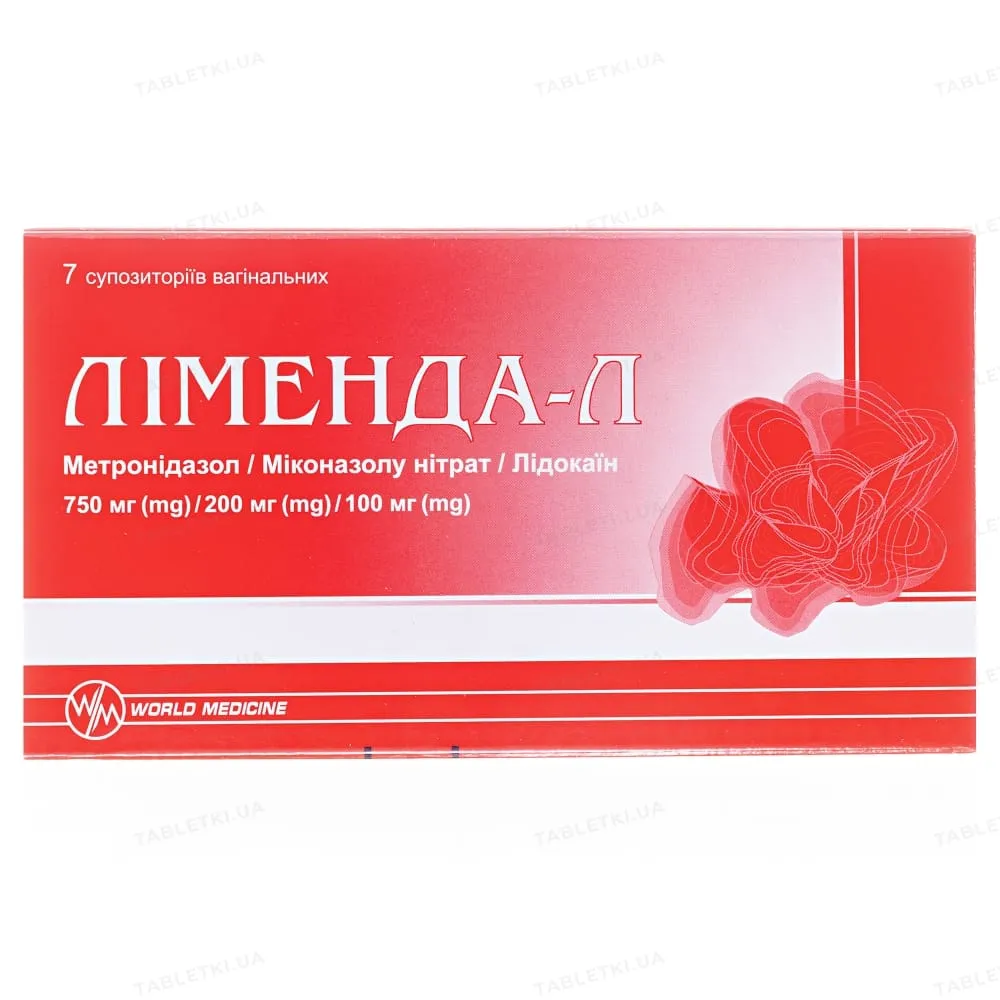
Table of Contents
INSTRUCTION FOR MEDICAL USE OF THE MEDICINAL PRODUCT LIMENDA (LIMENDA)
Composition:
Active substances: metronidazole, miconazole;
1 suppository contains 750 mg of metronidazole and 200 mg of miconazole nitrate;
Excipient: Witepsol S55.
Pharmaceutical form. Vaginal suppositories.
Main physicochemical properties: yellowish-white torpedo-shaped suppositories.
Pharmacotherapeutic group.
Antimicrobial, antiprotozoal, antifungal agents. ATC code G01AF20.
Pharmacological properties.
Pharmacodynamics.
The medicinal product contains miconazole with antifungal activity and metronidazole with antibacterial and antitrichomonal activity.
Miconazole is an antifungal agent; it has a broad spectrum of activity and is particularly effective against pathogenic fungi, including Candida albicans. In addition, it is effective against gram-positive bacteria. The mechanism of action of miconazole involves inhibition of ergosterol biosynthesis, damage to fungal cell membranes, disruption of membrane lipid composition and cell wall permeability, leading to fungal cell death. In Candida species, it alters cell permeability and inhibits glucose utilization in vitro.
Metronidazole is an antiprotozoal and antibacterial agent; it is effective against several infections caused by facultative aerobic bacteria, particularly Gardnerella vaginalis, protozoa such as Trichomonas vaginalis, and anaerobic bacteria, including anaerobic streptococci.
Miconazole nitrate and metronidazole do not exhibit synergistic or antagonistic effects.
The clinical cure rate achieved in an open, multicenter, uncontrolled clinical study evaluating the efficacy and safety of the metronidazole/miconazole combination after 7-day treatment of 104 patients with clinical/microbiological diagnosis of vaginitis was 96.6% for candidal vulvovaginitis, 98.1% for bacterial vaginosis, 97.3% for trichomonal vaginitis, and 98.5% for mixed vaginal infections. The microbiological cure rate was 89.8%, 96.2%, 100%, and 91.7% respectively for each type of infection.
In a randomized, open, comparative study assessing efficacy, safety, and tolerability of the metronidazole/miconazole combination, the clinical and microbiological cure rates were 84% and 76%, respectively.
Pharmacokinetics.
Absorption
Absorption of miconazole following intravaginal administration is very low (approximately 1.4% of the dose). After intravaginal administration, miconazole was not detected in plasma.
The bioavailability of metronidazole following intravaginal administration is 20% compared to oral administration. The steady-state plasma concentration of metronidazole ranged from 1.1 to 5 µg/mL after intravaginal administration at the daily dose.
Distribution
Plasma protein binding of miconazole is 90–93%. Its penetration into cerebrospinal fluid is low, but it is widely distributed in other tissues. The volume of distribution is 1400 L.
Metronidazole penetrates into tissues and body fluids, including bile, bones, mammary glands, breast milk, cerebral abscesses, cerebrospinal fluid, liver and hepatic abscesses, saliva, seminal fluid, and vaginal secretions, reaching concentrations similar to those in plasma. It crosses the placental barrier and rapidly enters the fetal circulation. Plasma protein binding is not more than 20%. The volume of distribution is 0.25–0.85 L/kg.
Metabolism
Miconazole is metabolized in the liver. Two inactive metabolites are identified: 2,4-dichlorophenyl-1H-imidazole ethanol and 2,4-dichloromandelic acid.
Metronidazole is metabolized in the liver via oxidation; the hydroxyl metabolite is active. The main metabolites of metronidazole, hydroxyl and acetic acid metabolites, are excreted in urine. The hydroxyl metabolite has 30% of the biological activity of metronidazole.
Elimination
The elimination half-life of miconazole is 24 hours. Less than 1% is excreted in urine. Approximately 50% is excreted in feces, usually in unchanged form.
The elimination half-life of metronidazole is 6–11 hours. Approximately 6–15% of the metronidazole dose is excreted in feces, 60–80% is excreted unchanged in urine, along with its metabolites. Approximately 20% of metronidazole is excreted in urine as unchanged substance.
Preclinical data
Results of standard preclinical studies on repeated-dose toxicity, genotoxicity, carcinogenicity, and reproductive toxicity do not indicate any specific risk for humans.
In a microbiological in vitro study, no synergistic or antagonistic interaction between the active substances of the medicinal product was observed against Candida albicans, Streptococcus (gram B by Lancefield), Gardnerella vaginalis, and Trichomonas vaginalis.
Preclinical studies of the combination of 750 mg metronidazole and 200 mg miconazole showed no enhancement or synergy of lethal or toxic effects of either component in female rats.
In a vaginal mucosa irritation study in female beagle dogs using the same drug combination, it was determined that the combination does not cause irritation of the vaginal mucosa and does not lead to clinical, biochemical, or hematological disturbances. No local or systemic toxic effects were observed in this study.
Clinical characteristics.
Indications.
- Candidal vulvovaginitis caused by Candida albicans;
- bacterial vaginosis caused by anaerobic bacteria and Gardnerella vaginalis;
- trichomonal vaginitis caused by Trichomonas vaginalis;
- mixed vaginal infections.
Contraindications.
- Hypersensitivity to the active substances and/or to excipients of the medicinal product.
- Consumption of alcoholic beverages during treatment or within 3 days after treatment.
- Use of disulfiram during treatment or within 2 weeks after treatment.
- Porphyria.
- Epilepsy.
- Severe impairment of liver function.
- Patients with Cockayne syndrome (see section "Adverse reactions").
Interaction with other medicinal products and other forms of interaction.
Interactions related to metronidazole
Alcoholic beverages: disulfiram-like reaction may occur. Alcohol should not be consumed during treatment and for 3 days after its completion.
Amiodarone: increased risk of cardiotoxicity (prolongation of QT interval, ventricular fibrillation, cardiac arrest).
Astemizole, terfenadine: reduced metabolism of these agents and increased their plasma concentrations.
Busulfan: increased busulfan plasma concentration and enhanced toxicity. If used concomitantly, prothrombin levels and INR (international normalized ratio) should be monitored more frequently during treatment and for 8 days after its completion.
Disulfiram: increased risk of central nervous system effects (e.g., psychotic reactions).
Carbamazepine: increased plasma concentration of carbamazepine.
Oral anticoagulants: enhanced anticoagulant effect and increased risk of bleeding.
Cimetidine: increased plasma concentration of metronidazole and increased risk of neurological adverse reactions.
Cyclosporine: increased risk of cyclosporine toxicity.
Lithium: increased plasma concentration of lithium and enhanced toxicity.
Phenytoin: increased plasma concentration of phenytoin and decreased plasma concentration of metronidazole.
Phenobarbital: decreased plasma concentration of metronidazole.
Fluorouracil: increased plasma concentration of fluorouracil and enhanced toxicity.
During metronidazole use, its influence on blood levels of liver enzymes, glucose (hexokinase method), theophylline, and procainamide has been observed.
Interactions related to miconazole
Acenocoumarol, anisindione, dicoumarol, phenidione, phenprocoumon, warfarin: increased risk of bleeding.
Astemizole, cisapride, and terfenadine: reduced metabolism of these agents and increased plasma concentrations.
Glimepiride: enhanced hypoglycemic effect.
Carbamazepine: reduced metabolism of carbamazepine.
Oxybutynin: increased plasma concentration of oxybutynin and enhanced effect (dry mouth, constipation, headache).
Oxycodone: increased plasma concentration of oxycodone and decreased plasma clearance.
Pimozide: increased risk of cardiotoxicity (prolongation of QT interval, ventricular fibrillation, cardiac arrest).
Solifenacin: increased bioavailability of solifenacin in individuals with deficient cytochrome P450 2D6 activity.
Trimethoprim: enhanced trimethoprim toxicity (bone marrow suppression, renal and hepatic dysfunction, gastric and intestinal ulceration).
Cyclosporine: increased risk of cyclosporine toxicity (renal dysfunction, cholestasis, paresthesia).
Fentanyl: enhanced or prolonged opioid effect (central nervous system depression, sedation, respiratory depression).
Phenytoin, fosphenytoin: increased risk of phenytoin toxicity (ataxia, hyperreflexia, nystagmus, tremor).
Special patient categories.
Interaction studies involving special patient groups have not been conducted.
Children.
Interaction studies involving children have not been conducted.
Special precautions for use.
Alcohol consumption
Patients should be warned not to consume alcohol during treatment and for 3 days after its completion due to the possibility of central nervous system reactions similar to those caused by disulfiram.
Prolonged use and use at high doses
Prolonged use and use at high doses of the medicinal product may cause peripheral neuropathy and seizures.
Concomitant use with other intravaginal products
The suppository base may adversely interact with rubber or latex, from which contraceptive diaphragms and condoms are made; therefore, their concomitant use with the medicinal product is not recommended.
Other intravaginal products (e.g., tampons, douching, or spermicides) should not be used simultaneously with the medicinal product.
Use in trichomonas vaginitis
Sexual partners of patients with trichomonas vaginitis should also undergo treatment.
Use in patients of different age groups
The medicinal product is not recommended for use in virgin patients.
Recommendations for use in elderly patients (aged 65 years and older) are the same as for other patients.
Risk of hypersensitivity reactions
Hypersensitivity reactions, including anaphylaxis and angioedema, may occur during use of the medicinal product. If hypersensitivity reactions occur, treatment should be discontinued.
Use in patients with hepatic impairment
In severe hepatic insufficiency, the clearance of metronidazole may be altered. Increased plasma levels of metronidazole may exacerbate symptoms of encephalopathy. Therefore, metronidazole should be used with caution in patients with hepatic encephalopathy. The daily dose of metronidazole in such patients should be reduced to one-third of the standard dose.
Use in patients with renal impairment
The dose of metronidazole should be reduced in patients with renal insufficiency.
Use during pregnancy or breastfeeding.
Use in women of reproductive age
Since the effects of the active substances of the medicinal product on the fetus and development of newborns have not been fully studied, women who need to use this medicinal product should avoid pregnancy by using an effective contraceptive method.
Pregnancy
Data from preclinical animal studies on pregnancy, embryonic development, fetal development, perinatal and/or postnatal development are insufficient. The potential risk in humans is unknown.
The medicinal product should not be used during the first trimester of pregnancy. During the second and third trimesters of pregnancy, the medicinal product may be used only if necessary and only if the physician determines that the benefit outweighs the risk.
Breastfeeding period
Breastfeeding should be discontinued during treatment with the medicinal product, as metronidazole, one of the active components, passes into breast milk. Breastfeeding may be resumed 1–2 days after completion of treatment.
Fertility
There is no evidence of harmful effects on fertility in humans or animals with the use of metronidazole or miconazole alone.
Ability to influence reaction speed when driving or operating machinery.
Systemic use of metronidazole may affect the ability to drive or operate machinery. Compared to systemic administration, vaginal administration results in significantly lower absorption of metronidazole. However, dizziness, ataxia, and psychoemotional disturbances may still occur. If such symptoms develop, driving or operating machinery is not recommended.
Method of Administration and Dosage
The medicinal product is intended for intravaginal administration. Do not swallow the suppositories or administer the medicinal product by any route other than that specified in the instructions for medical use.
Dosage
One vaginal suppository should be administered deeply into the vagina at night using the disposable applicators provided in the package, for 7 consecutive days.
In cases of recurrent infections or vaginitis resistant to other treatments, the medicinal product should be used at night for 14 consecutive days.
The medicinal product is not recommended during menstruation due to reduced efficacy and the potential for certain complications upon administration.
Dose adjustment is not required for elderly patients (aged 65 years and older).
Method of Administration
Hands should be thoroughly washed before administering the medicinal product.
Vaginal suppositories should be inserted in a lying position deeply into the vagina.
If possible, avoid assuming an upright position for at least half an hour after suppository insertion.
Hands should also be thoroughly washed after administration of the medicinal product.
Do not administer a double dose to compensate for a missed dose.
Children
The medicinal product is not recommended for use in children.
Overdose
There is no data on metronidazole overdose following vaginal administration. However, when administered intravaginally, metronidazole may be absorbed in amounts sufficient to cause systemic effects.
If a large amount of the medicinal product is accidentally ingested, gastric lavage should be performed as appropriate. Treatment is recommended if 12 g of metronidazole has been ingested. There is no specific antidote; symptomatic treatment is advised. Symptoms of metronidazole overdose may include: nausea, vomiting, abdominal pain, diarrhea, itching, metallic taste in the mouth, ataxia, vertigo, paresthesia, seizures, leukopenia, and darkening of urine.
Symptoms of miconazole overdose include: nausea, vomiting, inflammation of the throat and oral cavity, anorexia, headache, and diarrhea.
Side effects
The frequency of the side effects listed below is defined as follows: very common (≥1/10); common (≥1/100 to <1/10); uncommon (≥1/1,000 to <1/100); rare (≥1/10,000 to <1/1,000); very rare (<1/10,000); frequency not known (cannot be estimated from available data).
In individual cases, the following side effects may occur: hypersensitivity reactions (including skin rash) and abdominal pain, headache, itching, burning, and irritation of the vagina. The incidence of systemic side effects is very low due to the minimal systemic absorption of metronidazole following vaginal administration (2–12% of the plasma levels achieved with oral metronidazole). The other active ingredient, miconazole, may cause vaginal irritation (burning, itching), as with all other imidazole-derived antifungal agents administered vaginally (2–6%). In case of severe irritation, treatment should be discontinued.
Systemic side effects related to the active ingredients are listed below.
Blood and lymphatic system disorders:
Very rare – agranulocytosis, neutropenia, thrombocytopenia, pancytopenia; frequency not known – leukopenia.
Immune system disorders:
Rare – anaphylactic shock; frequency not known – hypersensitivity reactions, allergic reactions, angioedema, urticaria, fever.
Metabolism and nutrition disorders:
Frequency not known – anorexia.
Psychiatric disorders:
Very rare – disturbances of consciousness, including confusion and hallucinations; frequency not known – depression.
Nervous system disorders:
Common – dizziness, headache; very rare – encephalopathy (e.g., confusion, fever, photophobia, torticollis, hallucinations, paralysis, visual and motor disturbances) and subacute cerebellar syndrome (e.g., ataxia, dysarthria, gait disturbances, nystagmus, tremor), which may resolve after discontinuation of treatment; frequency not known – increased fatigue or weakness, seizures, peripheral neuropathy due to intensive and/or prolonged metronidazole therapy, aseptic meningitis.
Eye disorders:
Very rare – transient visual disturbances such as diplopia, myopia, blurred vision, decreased visual acuity, color vision changes; frequency not known – optic neuropathy/neuritis.
Gastrointestinal disorders:
Frequency not known – taste disturbances, oral mucositis, metallic taste, coated tongue, nausea, vomiting, constipation, gastrointestinal disturbances such as epigastric pain and diarrhea, dry mouth, decreased appetite, stomach pain, abdominal pain, and cramps.
Hepatobiliary disorders:
Very rare – increased levels of liver enzymes (AST, ALT, alkaline phosphatase), cholestatic or mixed hepatitis, and hepatocellular injury, sometimes with jaundice. Cases of liver failure requiring liver transplantation have been reported in patients treated with metronidazole and other antibiotics.
Cases of severe, irreversible hepatotoxicity/acute liver failure, including fatal cases with rapid onset after initiation of systemic metronidazole therapy, have been reported in patients with Cockayne syndrome (see section "Contraindications").
Skin and subcutaneous tissue disorders:
Very rare – skin rashes, pustular eruptions, flushing with hyperemia, pruritus; frequency not known – erythema multiforme, Stevens-Johnson syndrome, or toxic epidermal necrolysis.
Musculoskeletal and connective tissue disorders:
Very rare – myalgia, arthralgia.
Renal and urinary disorders:
Very rare – darkening of urine (due to metronidazole metabolism).
General disorders and administration site conditions:
Very common – vaginal discharge; common – vaginitis, vulvovaginal irritation, pelvic discomfort; uncommon – thirst; rare – vaginal burning, itching, irritation, rash; frequency not known – local irritation and hypersensitivity, contact dermatitis.
The aforementioned side effects are observed rarely due to the low systemic concentration of metronidazole following intravaginal administration.
Reporting suspected side effects.
Reporting of suspected side effects after medicine registration is very important. It allows continuous monitoring of the benefit-risk balance of the medicine. Healthcare professionals should report any suspected side effects through the national pharmacovigilance system.
Shelf life. 3 years.
Storage conditions.
Store at temperatures not exceeding 25 °C, protected from light and out of reach of children.
Packaging.
7 vaginal suppositories in a blister; 1 blister with 7 single-use applicators or 2 blisters with 14 single-use applicators in a cardboard box.
Prescription category.
Prescription only.
Manufacturer.
UORLД MEDICINE ILAC SAN. VE TIC. A.S. /
WORLD MEDICINE ILAC SAN. VE TIC. A.S.
Manufacturer's address and place of business.
COSB G.O. Pasa Mah. 6. Cad. No:30, Cerkezkoy/Tekirdag, Turkey.
Marketing Authorization Holder.
WORLD MEDICINE, LLC, Ukraine.