Lixarit
Ukraine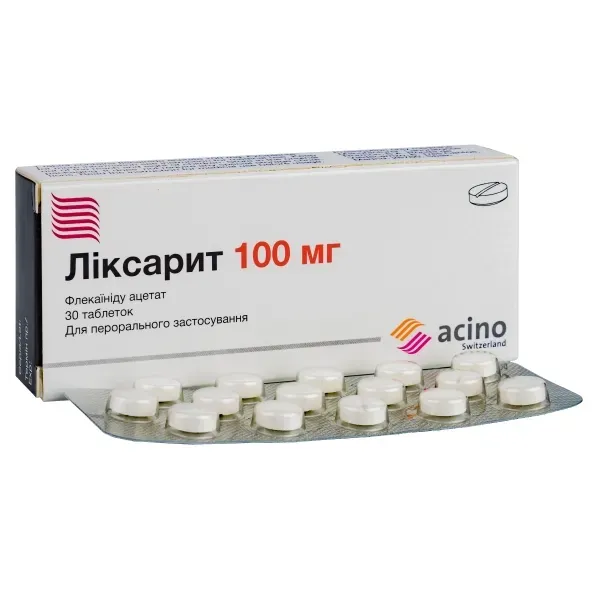
Table of Contents
INSTRUCTIONS FOR MEDICAL USE OF THE MEDICINAL PRODUCT LIXARIT (LIXARIT)
Composition:
Active substance: flecainide acetate;
1 tablet contains 100 mg of flecainide acetate;
Excipients: pregelatinized corn starch, sodium croscarmellose, microcrystalline cellulose, hydrogenated vegetable oil, magnesium stearate.
Pharmaceutical form. Tablets.
Main physicochemical properties: white or almost white, round, biconvex tablets with a division line and embossing with the letter "F" and the number "100".
Pharmacotherapeutic group. Medicinal products for the treatment of heart diseases. Class IC antiarrhythmic agents. Flecainide.
ATC code C01BC04.
Pharmacological Properties
Pharmacodynamics
Flecainide acetate is an antiarrhythmic agent belonging to class IC of the Vaughan Williams classification. Based on its electrophysiological properties, flecainide is a local anesthetic-type (class IC) antiarrhythmic compound and acts as a membrane stabilizer by inhibiting the rapid influx of Na+ during myocardial cell depolarization, without affecting the duration of the action potential. It suppresses conduction at both atrial and ventricular levels, although this effect is more pronounced at the level of the His bundle system and Purkinje fibers. In patients with functioning accessory conduction pathways, this results in prolonged refractory periods of the abnormal pathway in both anterograde and retrograde directions, although the increase is more pronounced for retrograde conduction.
Pharmacokinetics
Flecainide is absorbed by more than 90% following oral administration. Absorption is not affected by food or antacids. Flecainide undergoes no presystemic transformation (first-pass effect). Peak plasma levels are achieved within 3 hours, and after an oral dose of 200 mg, the maximum plasma concentration is 341 ng/mL. The mean volume of distribution is 8.3 L/kg, and plasma protein binding is low (approximately 40%).
The therapeutic plasma concentration range following oral doses of 200 to 500 mg of flecainide is 200 to 1000 ng/mL.
After repeated oral dosing in patients with ventricular extrasystoles, the plasma elimination half-life is 20 hours (ranging from 12 to 27 hours). Steady-state levels are reached within 3–5 days, and no drug accumulation in plasma occurs during prolonged therapy.
In healthy volunteers, approximately 30% of a single oral dose (ranging from 10 to 50%) is excreted unchanged in urine.
The two main metabolites of flecainide are meta-o-dealkylflecainide (active, but with 1/5 the potency) and meta-o-dealkylflecainide lactam (inactive). The isoenzyme CYP2D6 is involved in the metabolism of flecainide, but the role of its polymorphic activity is negligible after administration of therapeutic doses. Repeated administration of flecainide does not induce enzyme induction or accumulation.
Elimination of flecainide from plasma is significantly slower at alkaline urine pH (8 or higher).
Clinical Characteristics
Indications
For patients with supraventricular tachycardia without structural myocardial changes, the medicinal product Lixarit is indicated for:
- Prophylaxis of the following conditions:
- Paroxysmal supraventricular tachycardia (PSVT).
- Atrioventricular nodal reentrant tachycardia (AVNRT).
- Wolff–Parkinson–White syndrome and similar conditions caused by the presence of accessory conduction pathways or retrograde conduction.
- Paroxysmal atrial fibrillation, atrial flutter.
- Treatment of the following conditions:
- Atrial fibrillation associated with accessory conduction pathways (Wolff–Parkinson–White syndrome).
- Symptomatic paroxysmal supraventricular fibrillation/flutter, particularly paroxysmal atrial fibrillation – for restoration of sinus rhythm. Arrhythmias occurring for the first time respond more rapidly.
Flecainide for oral use is effective for cardioversion of this type of arrhythmia.
The medicinal product Lixarit is indicated for the treatment and prophylaxis of documented ventricular arrhythmias which, according to clinical assessment, may pose a life-threatening risk to the patient:
- Symptomatic ventricular extrasystoles and/or non-sustained ventricular tachycardia, resistant to other treatment methods, or in cases of intolerance or inability to undergo other forms of therapy.
- Symptomatic sustained ventricular tachycardia.
Contraindications
- Hypersensitivity to flecainide or to any of the excipients of the medicinal product.
- Heart failure, history of myocardial infarction with asymptomatic ventricular ectopy or asymptomatic non-sustained ventricular tachycardia.
- Cardiogenic shock.
- Long-standing atrial fibrillation in which no attempt has been made to restore sinus rhythm, as well as valvular heart disease with significant hemodynamic disturbances.
- Brugada syndrome.
- Flecainide should not be used in patients with sinus node dysfunction, atrial conduction disturbances, second- or third-degree atrioventricular block, bundle branch block, or distal conduction system block if cardiac pacing is not possible.
Interaction with other medicinal products and other forms of interaction
Class I antiarrhythmics. Flecainide should not be used concomitantly with Class I antiarrhythmics (see section "Contraindications").
Class II antiarrhythmics. The potential for enhanced negative inotropic effects should be considered when Class II antiarrhythmics such as beta-blockers are used concomitantly with flecainide.
Class III antiarrhythmics. When flecainide is used concomitantly with amiodarone, the usual dose of flecainide should be halved, and close monitoring of the patient should be ensured to detect adverse effects promptly. Monitoring of plasma drug concentration is also recommended.
Class IV antiarrhythmics. Concomitant use of flecainide with calcium channel blockers such as verapamil should be performed with caution.
Life-threatening or even fatal adverse effects may occur due to interactions leading to increased plasma concentrations of flecainide (see section "Adverse Reactions"). Flecainide metabolism is primarily mediated by the CYP2D6 isoenzyme. When used concomitantly with medicinal products that inhibit the activity of this isoenzyme (e.g., antidepressants, neuroleptics, propranolol, ritonavir, certain antihistamines) or enhance its activity (e.g., phenytoin, phenobarbital, carbamazepine), plasma concentrations of flecainide may increase or decrease, respectively.
Before initiating flecainide therapy, both hypokalemia and hyperkalemia or other electrolyte imbalances should be corrected. Hypokalemia may result from concomitant use of diuretics, corticosteroids, or laxatives.
Antihistamines. The risk of ventricular arrhythmia increases when used concomitantly with mizolastine and terfenadine. Concomitant use should be avoided.
Antiviral agents. Plasma concentrations of flecainide increase when used concomitantly with ritonavir (increasing the risk of ventricular arrhythmia); therefore, concomitant use should be avoided.
Antidepressants. Fluoxetine, paroxetine, and other antidepressants may increase plasma concentrations of flecainide; concomitant use with tricyclic antidepressants increases the risk of ventricular arrhythmia.
Antiepileptic agents. Some data from co-administration with enzyme inducers (phenytoin, phenobarbital, carbamazepine) indicate a 30% increase in the elimination rate of flecainide in patients.
Neuroleptics. Clozapine – increased risk of arrhythmia.
Antimalarial agents. Quinine may increase plasma concentrations of flecainide.
Antifungal agents. Terbinafine may increase plasma concentrations of flecainide due to inhibition of CYP2D6 isoenzyme activity.
H2-receptor antagonists, antihistamines (for treatment of gastric ulcers). The H2-receptor antagonist cimetidine inhibits the metabolic transformation of flecainide. In healthy volunteers receiving cimetidine (1 g daily) for one week, the AUC of flecainide increased by approximately 30%, and the elimination half-life increased by approximately 10%.
Smoking cessation aids. Concomitant use of bupropion (whose metabolism involves the CYP2D6 isoenzyme) and flecainide should be performed with caution, and treatment should be initiated at the lowest dose within the recommended range. If bupropion is prescribed while the patient is receiving flecainide, consideration should be given to reducing the dose of flecainide.
Cardiac glycosides. Flecainide may increase plasma digoxin levels by 15%. The clinical significance of this increase is unlikely if concentrations remain within the therapeutic range. It is recommended to measure digoxin plasma levels in patients receiving digitalis preparations, at least 6 hours after administration of any digoxin dose, both before and after initiation of flecainide.
Effect on laboratory test results
Patients should be informed that this medicinal product may cause changes in laboratory test results.
Special precautions for use
Flecainide for oral administration should be administered exclusively in a hospital setting or under direct specialist supervision to patients with:
- AV nodal reentrant tachycardia, arrhythmia associated with Wolff-Parkinson-White syndrome and similar disorders associated with the presence of accessory conduction pathways.
- Paroxysmal atrial fibrillation in the presence of unfavorable symptoms.
Initiation of treatment with flecainide in patients with ventricular arrhythmias should be started under hospital conditions.
It has been demonstrated that flecainide increases the risk of fatal outcomes in patients after myocardial infarction with asymptomatic ventricular arrhythmia.
The medicinal product should not be administered to patients who have recently experienced myocardial infarction.
Like other antiarrhythmic agents, flecainide may provoke worsening of arrhythmia; that is, it may cause arrhythmia of a more severe degree, increased frequency of arrhythmia episodes, or increased intensity of adverse symptoms (see section "Adverse reactions").
The use of flecainide should be avoided in therapy of patients with organic heart disease or left ventricular dysfunction (see section "Adverse reactions").
Flecainide should be used with caution in patients with acute atrial fibrillation following cardiac surgery.
Flecainide causes QT interval prolongation and QRS complex widening by 12–20%. The effect on the JT interval is negligible.
Brugada syndrome may occur in patients receiving flecainide. If ECG changes suggestive of Brugada syndrome are observed during flecainide therapy, discontinuation of treatment should be considered.
Since elimination of flecainide from plasma in patients with severe hepatic impairment may be substantially slower, flecainide should not be administered to such patients except when the expected benefit outweighs the potential risks. Therapeutic drug monitoring of plasma concentration is recommended.
Flecainide should be used with caution in patients with renal impairment (creatinine clearance ≤ 35 mL/min/1.73 m²), and therapeutic drug monitoring is recommended, as elevated plasma levels of flecainide may also result from renal impairment due to low flecainide clearance. Therapeutic drug monitoring of plasma concentration is recommended.
The elimination rate of flecainide from plasma may be reduced in elderly patients, which should be considered when adjusting the dosing regimen.
Electrolyte imbalances (e.g., hypokalemia and hyperkalemia) should be corrected prior to initiating flecainide therapy.
Severe bradycardia or significant hypotension should be corrected before starting flecainide therapy.
It is known that flecainide increases the endocardial threshold sensitivity to pacemaker signals, i.e., endocardial sensitivity to pacing is reduced. This effect is reversible and has a greater impact on acute rather than chronic pacing thresholds. Therefore, flecainide should be used with caution in patients with implanted permanent or temporary pacemakers and should not be administered to patients with a low pacing threshold or when using a non-programmable pacemaker in the absence of appropriate resuscitation equipment.
Difficulties with defibrillation have been observed in some patients. In most of these cases, patients had a history of heart disease with increased thickness of one of the myocardial walls, myocardial infarction, arteriosclerotic heart disease, and heart failure.
Use in pediatric practice
Flecainide is not recommended for use in children under 12 years of age due to insufficient data in this age group. Dairy products (milk, infant formula, and yogurts) may reduce flecainide absorption in children, particularly in neonates. Cases of flecainide toxicity have been reported in children with restricted milk intake and in neonates whose milk-based infant formula was replaced with glucose-containing formula.
As a drug with a narrow therapeutic index, flecainide requires caution and careful patient monitoring when switching to another medicinal product.
This medicinal product contains less than 1 mmol of sodium (23 mg) per 1 tablet, i.e., it is practically sodium-free.
Use during pregnancy or breastfeeding
Pregnancy
Data on the use of flecainide during pregnancy are lacking or limited. Reproductive toxicity studies in animals are insufficient. It is known that high doses of flecainide in animal studies caused certain fetal developmental abnormalities. The relevance of these findings to humans has not been established.
Flecainide crosses the placenta and reaches the fetal circulation when administered during pregnancy. Therefore, flecainide should be used in pregnancy only when the expected benefit to the mother outweighs the potential risk to the fetus.
Breastfeeding
Flecainide is excreted in breast milk. Plasma concentrations achieved in breastfed infants are 5–10 times lower than therapeutic levels. Although the risk of adverse effects in the breastfed infant is very low, flecainide should be used during lactation only if the benefit to the mother outweighs the risk to the infant.
Ability to affect reaction speed when driving or operating machinery
When driving vehicles or operating machinery, the possibility of dizziness and visual disturbances should be taken into account.
Method of Administration and Dosage
The drug is administered orally.
Initiation of therapy with flecainide should be performed under medical supervision with ECG monitoring.
Supraventricular Arrhythmia
The recommended initial dose is 50 mg every 12 hours. After 3–5 days of treatment, the dose may be increased by 50 mg every 12 hours every 3–5 days, depending on therapeutic response, up to a maximum dose of 300 mg per day.
For termination of paroxysmal atrial fibrillation and/or restoration of sinus rhythm, an oral dose of 300 mg (3 tablets) is prescribed.
Ventricular Arrhythmia
The recommended initial dose is 100 mg every 12 hours. After 3–5 days of treatment, the dose may be increased by 50 mg every 12 hours every 3–5 days, depending on therapeutic response, up to a maximum dose of 400 mg per day. During long-term use, the maintenance dose may be reduced to the minimum required to maintain sinus rhythm.
Special Patient Categories
Elderly Patients
The initial dose should not exceed 50 mg every 12 hours (100 mg/24 hours), as elimination may be reduced in elderly patients. The dose may be increased or decreased by 50 mg per day, bearing in mind that a minimum period of 4 to 5 days is required after each dose adjustment to achieve a new plasma concentration equilibrium. Clinical monitoring and ECG monitoring are required.
Patients with Symptoms Indicative of Heart Failure or with a History of Heart Failure
The medicinal product should be used with caution under clinical and electrocardiographic monitoring. The initial dose should not exceed 50 mg every 12 hours (100 mg/24 hours). The dose may be increased or decreased by 50 mg per day, bearing in mind that a minimum period of 4–5 days is required after each dose adjustment to achieve a new plasma concentration equilibrium.
Renal Impairment
In patients with severe renal impairment (creatinine clearance ≤ 35 mL/min/1.73 m²), the maximum initial dose should not exceed 50 mg every 12 hours (100 mg per day). The dose may be increased or decreased by 50 mg per day, bearing in mind that a minimum period of 4–5 days is required after each dose adjustment to achieve a new plasma concentration equilibrium. Clinical monitoring and ECG monitoring are required.
Plasma Concentration
The plasma concentration of flecainide should range from 0.2 to 1.0 µg/mL (200 to 1000 ng/mL). Plasma concentrations above 0.7–1.0 µg/mL (700–1000 ng/mL) may predispose to adverse effects, particularly cardiac effects. Monitoring of flecainide plasma levels is recommended in cases where impaired elimination pathways are expected: severe hepatic or renal impairment, as well as in patients with a history of heart failure or symptoms suggestive of heart failure.
Dosing in Renal Insufficiency
For patients with renal insufficiency (creatinine clearance less than 35 mL/min), the maximum initial dose should not exceed 100 mg per day (50 mg every 12 hours). These patients should have plasma flecainide levels monitored.
Patients Switching from Another Antiarrhythmic Agent to Flecainide
The pharmacokinetic properties of the antiarrhythmic agent and its potential interaction with flecainide should be considered. The need for hospitalization should be assessed, especially in cases where discontinuation of the antiarrhythmic agent may precipitate severe arrhythmias.
Children
Flecainide is not recommended for children under 12 years of age due to lack of adequate data on safety and efficacy.
Overdose
Flecainide overdose is life-threatening and requires immediate medical intervention. Increased sensitivity to the drug and elevated plasma concentrations above the therapeutic range may also result from interactions with other medicinal products. There is no known specific antidote. There is no known method for rapid removal of flecainide from the body. Dialysis or hemoperfusion is ineffective.
Supportive therapy is required; removal of any unabsorbed substance from the gastrointestinal tract is desirable. Intravenous administration of 8.4% sodium bicarbonate solution reduces flecainide activity. Subsequently, inotropic agents or cardiac stimulants such as dopamine, dobutamine, or isoproterenol may be used, along with mechanical ventilation and circulatory support measures (e.g., intra-aortic balloon counterpulsation). Temporary transvenous cardiac pacing should be considered in cases of conduction block. Given that the plasma elimination half-life is approximately 20 hours, supportive therapy measures should be maintained for a prolonged period.
Forced diuresis with urine alkalinization may theoretically enhance flecainide elimination.
In individual cases, intravenous lipid emulsion therapy and extracorporeal membrane oxygenation (ECMO) may be considered.
Adverse Reactions
Adverse events are classified by system organ classes and frequency. Frequency is defined as follows: very common (≥ 1/10), common (≥ 1/100 to < 1/10), uncommon (≥ 1/1000 to < 1/100), rare (≥ 1/10,000 to < 1/1000), very rare (< 1/10,000), frequency not known (cannot be estimated from available data).
Blood and lymphatic system disorders: uncommon − decreased erythrocyte count, decreased leukocyte count, decreased platelet count.
Immune system disorders: very rare − increased levels of antinuclear antibodies, associated or not associated with systemic inflammation.
Psychiatric disorders: rare − hallucinations, depression, confusion, anxiety, amnesia, insomnia.
Nervous system disorders: very common − dizziness, which usually resolves quickly; rare − paresthesia, ataxia, hypoaesthesia, hyperhidrosis, loss of consciousness, tremor, hot flushes, somnolence, headache, peripheral neuropathy, convulsions, dyskinesia.
Eye disorders: very common − visual disturbances such as diplopia and blurred vision; very rare − corneal precipitates.
Ear and labyrinth disorders: rare − tinnitus, vertigo-type dizziness.
Cardiac disorders: common − proarrhythmic effects (most likely in patients with organic heart disease); uncommon − in patients with atrial flutter, possible development of 1:1 AV conduction with increased heart rate; frequency not known − dose-dependent prolongation of PR and QRS intervals is possible.
Change in pacemaker signal sensitivity threshold.
Second- or third-degree atrioventricular (AV) block, cardiac arrest, bradycardia, heart failure/congestive heart failure, chest pain, arterial hypotension, myocardial infarction, palpitations, sinus node arrest, tachycardia (atrial and ventricular), ventricular fibrillation. Manifestation of symptoms of existing Brugada syndrome.
Respiratory system disorders: common − dyspnea; rare − pneumonitis; frequency not known − pulmonary fibrosis, interstitial lung disease.
Gastrointestinal disorders: uncommon − nausea, vomiting, constipation, abdominal pain, decreased appetite, diarrhea, dyspepsia, flatulence.
Hepatobiliary disorders: rare − increased liver enzymes, with or without jaundice; frequency not known − liver function abnormalities.
Skin and subcutaneous tissue disorders: uncommon − allergic dermatitis, including rash, alopecia; rare − severe urticaria; very rare − photosensitivity reaction.
Musculoskeletal and connective tissue disorders: frequency not known − arthralgia, myalgia.
General disorders and administration site conditions: common − asthenia, fatigue, fever, edema.
Metabolism and nutrition disorders: frequency not known − anorexia.
Reporting of suspected adverse reactions
Reporting suspected adverse reactions after medicinal product authorization is important. It allows continued monitoring of the benefit-risk balance of the medicinal product. Healthcare professionals and patients or their legal representatives should report all suspected adverse reactions and lack of efficacy via the Automated Pharmacovigilance Information System at: https://aisf.dec.gov.ua.
Shelf life
3 years.
Storage conditions
Store in the original packaging, out of reach of children. No special storage conditions required.
Packaging
15 tablets in a blister; 2 blisters in a cardboard pack.
Prescription status
Prescription only.
Manufacturer
Laboratorios Normon, S.A.
Manufacturer's address
Ronda de Valdecarrizo, 6, Tres Cantos, 28760 Madrid, Spain
Marketing Authorization Holder
ASINO UKRAINE LLC
Address of Marketing Authorization Holder
8 Vatslava Havela Boulevard, Kyiv, 03124, Ukraine
In case of adverse reactions or questions regarding the safety and efficacy of the medicinal product, please contact the Pharmacovigilance Department of ASINO UKRAINE LLC at: 8 Vatslava Havela Boulevard, Kyiv, 03124, Tel/Fax: +38 044 281 2333.