Chloramphenicol
Ukraine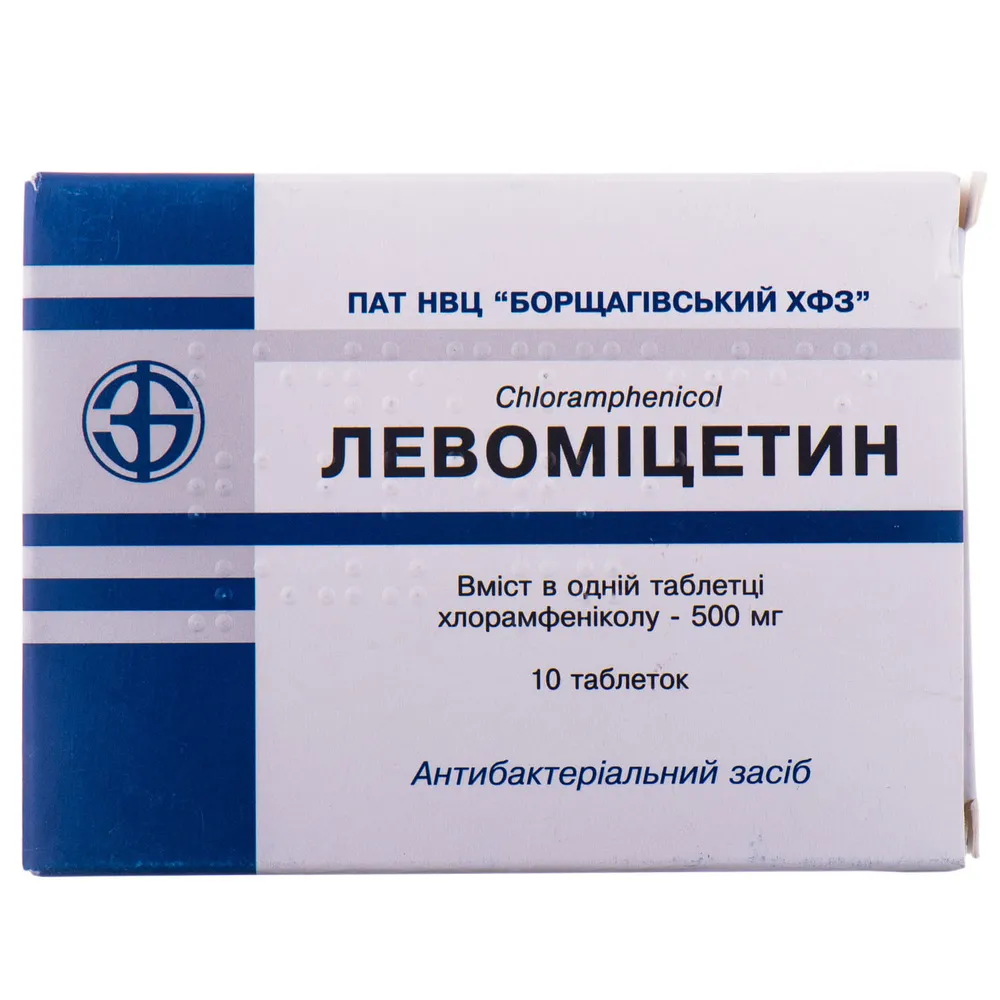
Table of Contents
INSTRUCTIONS for medical use of the medicinal product LEVOMYCETIN (LEVOMYCETIN)
Composition:
Active substance: chloramphenicol;
1 tablet contains chloramphenicol (calculated as 100% dry substance) – 500 mg;
Excipients: maize starch, microcrystalline cellulose, crospovidone, sodium croscarmellose, calcium stearate.
Pharmaceutical form. Tablets.
Main physicochemical properties: round-shaped tablets, white or white with a yellowish tint, with a flat surface, a score line and bevelled edges. Slight yellow specks may be present.
Pharmacotherapeutic group. Antibacterial agents for systemic use. Phenicol derivatives. Chloramphenicol. ATC code J01BA01.
Pharmacological Properties.
Pharmacodynamics.
Chloramphenicol is a broad-spectrum antibiotic with bacteriostatic activity. At high concentrations or against highly sensitive microorganisms, it may exhibit bactericidal effects. Being lipid-soluble, chloramphenicol penetrates bacterial cell membranes and reversibly binds to the 50S subunit of bacterial ribosomes, where it inhibits the transfer of amino acids to growing peptide chains (possibly due to inhibition of peptidyl transferase activity), thereby disrupting the formation of peptide bonds and subsequent protein synthesis.
Active against Escherichia coli, Shigella dysenteriae spp., Shigella flexneri spp., Shigella boydii spp., Shigella sonnei spp., Salmonella spp. (including Salmonella typhi), acts on Streptococcus spp. (including Streptococcus pneumoniae), Neisseria gonorrhoeae, Neisseria meningitidis, some strains of Proteus spp., and certain strains of Pseudomonas aeruginosa; active against Rickettsia spp., Treponema spp., Chlamydia spp. (including Chlamydia trachomatis).
Ineffective against Mycobacterium tuberculosis, pathogenic protozoa, and fungi.
Active against bacterial strains resistant to penicillin, tetracyclines, and sulfonamides. Microbial resistance develops slowly.
Due to its high toxicity, chloramphenicol is used to treat severe infections when less toxic antibacterial agents are ineffective or contraindicated.
Pharmacokinetics.
Rapidly and almost completely absorbed from the gastrointestinal tract. Oral bioavailability is approximately 80%. Time to reach maximum concentration – 1–3 hours. Therapeutic concentrations are maintained for 4–5 hours after administration. Protein binding is 45–50%. It penetrates well into body fluids and tissues, crosses the placenta, and is excreted in breast milk. The highest concentrations of chloramphenicol are found in the liver and kidneys. Up to 30% of the administered dose can be detected in bile. It crosses the blood-brain barrier effectively: maximum concentration in cerebrospinal fluid is observed 4–5 hours after a single oral dose. Metabolized in the liver, with 90% converted into inactive glucuronide conjugates. Chloramphenicol palmitate is hydrolyzed to the free form in the gastrointestinal tract prior to absorption. Chloramphenicol sodium succinate is hydrolyzed to the free form in blood plasma, liver, lungs, and kidneys. In fetuses and premature infants, the liver is insufficiently developed to conjugate chloramphenicol, leading to accumulation of toxic concentrations of the active form of the drug, which may result in the development of "gray syndrome." The drug is primarily excreted via the urine (mainly as inactive metabolites), partially via the intestine (1–3%).
The elimination half-life in adults with normal renal and hepatic function is 1.5–3.5 hours; in cases of impaired renal function – 3–4 hours; in severe hepatic impairment – 4.6–11 hours.
Clinical characteristics.
Indications.
Infectious and inflammatory diseases caused by microorganisms sensitive to the drug: typhoid fever, paratyphoid, shigellosis, brucellosis, salmonellosis, yersiniosis, tularemia, purulent peritonitis, bacterial meningitis, rickettsioses, chlamydiosis, biliary tract infections. The drug is indicated in cases of ineffectiveness of other antimicrobial agents due to the possibility of developing severe adverse effects.
Contraindications.
• Hypersensitivity to chloramphenicol, other phenicols (thiamphenicol, azidamphenicol), or to any component of the drug;
• blood disorders, including bone marrow suppression;
• severe impairment of liver and/or kidney function;
• glucose-6-phosphate dehydrogenase (G6PD) deficiency;
• skin diseases (psoriasis, eczema, fungal infections);
- porphyria.
Levomycetin should not be prescribed for acute respiratory diseases, tonsillitis, or for the prevention of bacterial infection.
Interaction with other medicinal products and other forms of interactions.
Alfetanil: prolonged use of chloramphenicol, which is a liver enzyme inhibitor, in the preoperative period or during surgery may reduce the plasma clearance of alfetanil and prolong its duration of action.
Medicinal products that suppress hematopoiesis (cytostatics, carbamazepine, phenylbutazone, penicillamine, certain antipsychotics, including clozapine, procainamide, reverse transcriptase inhibitors, propylthiouracil, sulfonamides, cimetidine, ristomycin), radiation therapy: possible enhancement of their myelosuppressive effects. Therefore, such combinations should be avoided.
Hypoglycemic agents (e.g., tolbutamide (butamide), chlorpropamide): possible potentiation of their hypoglycemic effect (due to inhibition of their metabolism in the liver and increased plasma concentration), requiring dose adjustment.
Phenobarbital, rifampicin, rifabutin: reduced plasma concentration of chloramphenicol due to accelerated hepatic metabolism.
Phenytoin: possible decrease or increase in plasma concentration of chloramphenicol.
Chloramphenicol's inhibition of the cytochrome P450 enzyme system may reduce hepatic metabolism of phenobarbital, phenytoin, dicoumarol, warfarin, and other drugs metabolized by this oxidase system, leading to delayed elimination, increased blood concentrations, and enhanced toxicity of these drugs.
Paracetamol (acetaminophen): possible increase in chloramphenicol toxicity due to prolonged elimination half-life and increased plasma concentration.
Calcineurin inhibitors (cyclosporine, tacrolimus): possible increase in their plasma levels. Plasma concentration monitoring of these drugs is recommended; dose adjustment may be necessary when used concomitantly with chloramphenicol.
Cyclophosphamide: prolonged elimination half-life of cyclophosphamide from 7.5 to 11.5 hours.
Cycloserine: enhanced neurotoxicity of chloramphenicol.
Estrogen-containing oral contraceptives: possible reduction in contraceptive efficacy and increased incidence of breakthrough bleeding. Therefore, non-hormonal contraceptive methods are recommended during treatment with chloramphenicol.
Penicillin, cephalosporins, macrolides (erythromycin, oleandomycin), lincosamides (clindamycin, lincomycin), polyene antibiotics (nystatin, levorin): mutual antagonism of antimicrobial activity, as chloramphenicol may displace these agents from binding sites or interfere with their binding to the 50S subunit of bacterial ribosomes; therefore, simultaneous use should be avoided.
Vitamin B12, iron preparations, folic acid: possible antagonism of vitamin B12-stimulated hemopoiesis, reduced efficacy of these agents.
Ethanol: development of a disulfiram-like reaction (skin flushing, tachycardia, nausea, vomiting, reflex cough, seizures).
Special precautions for use
Due to the possibility of developing severe hematopoietic organ damage caused by the toxic effect of the drug, peripheral blood counts should be monitored during treatment, and liver and kidney function should be closely observed.
If leukopenia, thrombocytopenia, anemia, or other pathological blood changes occur, chloramphenicol should be discontinued immediately. Although regular monitoring of peripheral blood composition during chloramphenicol therapy may detect early hematological changes (leukopenia, reticulocytopenia, or granulocytopenia) before they become irreversible, it does not eliminate the risk of developing aplastic anemia due to bone marrow suppression. Aplastic anemia, thrombocytopenia, and granulocytopenia typically manifest after completion of treatment. Therefore, symptoms such as skin pallor, sore throat, fever, unusual bleeding, or weakness—even if they occur several weeks or months after discontinuation of the drug—require immediate medical attention.
In patients previously treated with cytostatic agents or who have undergone radiation therapy, potential risks and expected benefits of chloramphenicol therapy should be carefully weighed due to the increased risk of severe adverse effects. Concomitant use of chloramphenicol with other drugs that may cause bone marrow suppression should be avoided. To enhance treatment safety, monitoring of plasma chloramphenicol concentration should be performed whenever possible. The therapeutic range is 5–15 μg/mL.
Antibacterial agents may lead to overgrowth of resistant microorganisms, including fungi, and result in superinfection, requiring appropriate intervention.
Antibacterial therapy may disrupt the normal flora of the large intestine and promote overgrowth of Clostridium difficile, whose toxins are the primary cause of pseudomembranous colitis. Pseudomembranous colitis may occur both during drug administration and up to 2 months after completion of antibacterial therapy. Cases of pseudomembranous colitis, ranging from mild to life-threatening, have been reported with nearly all antibacterial agents, including chloramphenicol. This diagnosis should be considered in any patient who develops diarrhea during or after antibiotic use.
Without appropriate treatment, toxic megacolon, peritonitis, and shock may develop. The risk of colitis is particularly high in elderly patients and those with compromised health.
Clinical experience has not revealed differences in response to chloramphenicol treatment among different age groups. However, due to age-related changes in kidney, liver, and cardiovascular function, the presence of comorbid conditions, and concomitant medication use, dosage selection for elderly patients should be cautious, typically starting at the lower end of the dosing range.
In patients with impaired liver and/or kidney function, serum levels of chloramphenicol may be elevated, increasing the risk of toxic reactions; therefore, dosage adjustments are necessary. Periodic measurement of drug concentration in blood, as well as monitoring of liver and kidney function, is advisable.
Chloramphenicol should be prescribed with caution in patients with a predisposition to allergic reactions and in those with cardiovascular diseases.
Chloramphenicol may interfere with the development of post-vaccination immunity; therefore, it should not be used during active immunization.
Concomitant ethanol intake may lead to a disulfiram-like reaction (skin hyperemia, tachycardia, nausea, vomiting, reflex coughing, seizures).
Uncontrolled prescription of chloramphenicol and its use in mild infections, acute respiratory illnesses, or as a prophylactic agent to prevent bacterial infections—especially in pediatric practice—is unacceptable.
Repeated courses of chloramphenicol therapy should be avoided. Treatment should last no longer than necessary to achieve therapeutic benefit, minimizing the risk of complications or disease recurrence.
Use during pregnancy or breastfeeding
The safety of chloramphenicol use during pregnancy has not been established; therefore, it is contraindicated during pregnancy.
Chloramphenicol passes into breast milk; therefore, breastfeeding should be discontinued during treatment with this drug.
Ability to affect reaction speed when operating vehicles or machinery
Until the individual patient's response to the drug is known, patients should refrain from driving vehicles or operating machinery, considering that neurological adverse effects may occur during treatment with Levomycetin.
Dosage and Administration
The drug should be taken orally, 30 minutes before meals; in cases of nausea or vomiting – 1 hour after meals. Dosage regimen should be individually determined depending on the severity of the disease and the patient's condition.
Adults: 250–500 mg 3–4 times daily. The daily dose is 2 g. In particularly severe infections (e.g., typhoid fever), under hospital conditions, the dose may be increased up to 4 g per day (maximum daily dose for adults), under strict monitoring of blood parameters and liver and kidney function.
Children:
- Aged 3 to 8 years: single dose of 125 mg;
- Aged 8 years and older: single dose of 250 mg.
Frequency: 3–4 times daily. If a 125 mg dose is required, a formulation of chloramphenicol with a lower content of active substance should be used.
The usual duration of treatment is 7–10 days. If necessary and provided the drug is well tolerated and no changes in peripheral blood composition occur, the treatment course may be extended up to 2 weeks.
Children.
This medicinal product in the given pharmaceutical form must not be used in children under 3 years of age.
Levomycetin should be prescribed to children aged 3 years and older with particular caution and only when no alternative therapy is available.
Considering the dosage strengths available, use in children aged 8 years and older is feasible.
Overdose.
Symptoms. Severe hematopoietic system complications are usually associated with prolonged administration of high doses (over 3 g per day): pale skin, sore throat and fever, unusual bleeding or bruising, unusual fatigue or weakness. Chloramphenicol blood levels exceeding 25 mcg/mL are considered toxic.
Other adverse reactions typical for chloramphenicol may also occur (see section "Adverse Reactions").
Particularly dangerous is the "gray syndrome", observed primarily in newborns (born to mothers who received chloramphenicol during labor or who themselves received chloramphenicol therapy within the first 48 hours of life), but may also occur in older children or particularly sensitive individuals in cases of overdose (abdominal distension, vomiting, respiratory distress with severe metabolic acidosis, bluish-gray skin color, hypothermia, decreased neurological responsiveness, myocardial conduction depression, cardiovascular collapse, coma, and fatal outcome).
"Gray syndrome" may also develop due to drug accumulation in cases of relative overdose (accumulation of chloramphenicol due to immature liver enzymes and its direct toxic effect on the myocardium) in patients with impaired liver or kidney function. "Gray syndrome" manifests at plasma chloramphenicol concentrations exceeding 50 mcg/mL.
Treatment. Discontinue the drug, gastric lavage, administration of enterosorbents (including activated charcoal), saline laxative, high cleansing enema, and symptomatic therapy. In severe cases – hemoadsorption.
Side effects.
The most severe adverse reactions are aplastic anemia, bone marrow suppression, and "gray syndrome".
Immune system: hypersensitivity reactions, including fever, itching, skin rashes (including macular and vesicular), dermatoses, anaphylactic reactions, including urticaria, angioneurotic edema. Cases of Jarisch-Herxheimer reaction (bacteriolysis reaction) have been reported during typhoid fever therapy (more commonly associated with parenteral forms of chloramphenicol).
Blood and lymphatic system: toxic effects on the hematopoietic system and bone marrow suppression (reticulocytopenia, thrombocytopenia, granulocytopenia, pancytopenia, erythrocytopenia, decreased hemoglobin levels, anemia). Rarely, in severe cases, hypoplastic anemia, aplastic anemia, thrombocytopenic purpura, agranulocytosis, leukopenia, and cytoplasmic vacuolization of early erythroid forms may develop.
Gastrointestinal tract: dyspeptic symptoms (bloating, nausea, vomiting); the likelihood of these reactions is reduced when the drug is taken 1 hour after food intake. Other gastrointestinal effects include diarrhea, dry mouth, stomatitis, glossitis, irritation of oral and pharyngeal mucous membranes, suppression of intestinal microflora, dysbiosis, enterocolitis.
Hepatobiliary system: liver function disorders.
Nervous system: headache, encephalopathy, psychomotor disturbances, mild depression, confusion, delirium. Prolonged use of high doses may lead to disturbances in taste sensation, decreased hearing and vision acuity, development of visual and auditory hallucinations, optic and peripheral neuritis (including paralysis of the eyeballs). If these symptoms occur, the drug must be discontinued immediately.
Other: superinfection (including fungal) may develop, dermatitis (including perianal dermatitis), hyperthermia, collapse (in children). Cases of paroxysmal nocturnal hemoglobinuria have been reported.
Shelf life. 3 years. Do not use after the expiry date stated on the packaging.
Storage conditions. In the original packaging at a temperature not exceeding 25 °C. Keep out of reach of children.
Packaging. 10 tablets in a blister; 1 blister per pack.
Prescription status. Prescription only.
Manufacturer.
Public Joint-Stock Company "Scientific and Production Center "Borshchahivskyy Chemical-Pharmaceutical Plant".
Manufacturer's address and place of business.
17 Myru Street, Kyiv, 03134, Ukraine.