Lenzetto®
Ukraine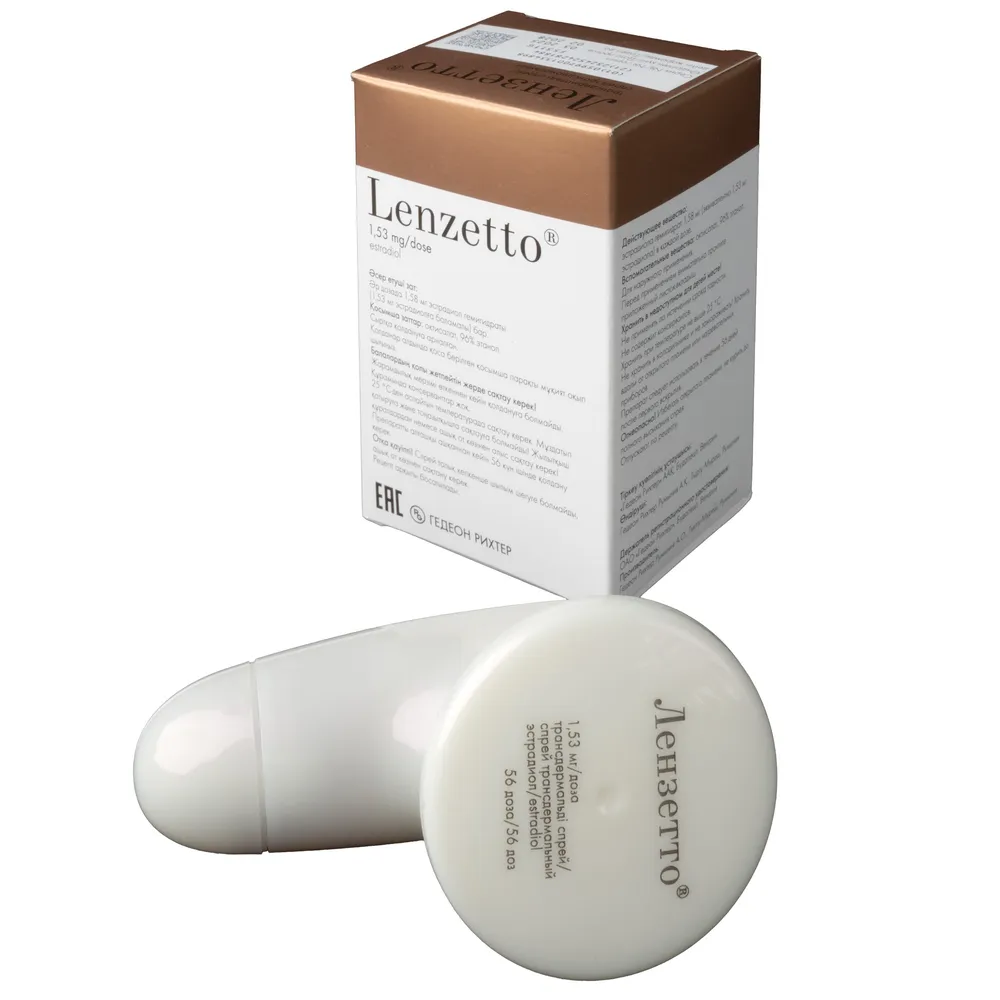
Table of Contents
INSTRUCTIONS FOR MEDICAL USE OF THE MEDICINAL PRODUCT LENSZETTO® (LENZETTO®)
Composition:
Active substance: estradiol;
One spray dose (90 µl) contains 1.53 mg of estradiol (as estradiol hemihydrate 1.58 mg);
Excipients: octisalate (2-ethylhexyl salicylate), ethanol 96%.
Pharmaceutical form. Transdermal spray, solution.
Main physico-chemical properties: clear, colorless or slightly yellow solution.
Pharmacotherapeutic group. Sex hormones and drugs used in disorders of the reproductive system. Estrogens. Simple natural and semi-synthetic estrogens. Estradiol.
ATC code G03CA03.
Pharmacological properties
Pharmacodynamics
Lenzetto® is a systemic estrogen replacement therapy preparation, which releases estradiol, the principal estrogen secreted by the ovaries. The active substance, synthetic 17β-estradiol, is chemically and biologically identical to endogenous human estradiol. It replaces estrogen deficiency in postmenopausal women and alleviates menopausal symptoms.
Pharmacokinetics
Absorption
When Lenzetto® is sprayed onto the skin, the average drying time is 90 seconds (median 67 seconds). In a multiple-dose study of Lenzetto®, postmenopausal women received treatment for 14 days with single, double, or triple applications (90 µl each) to the skin of the inner forearm. Serum estradiol concentrations reached steady state after 7–8 days of Lenzetto® administration.
Following morning administration within the therapeutic dose range, blood concentrations remained at a relatively stable level over 24 hours, with peak values occurring between 2 a.m. and 6 a.m.
In a clinical study, postmenopausal women received Lenzetto® treatment for 12 weeks with single, double, or triple applications (90 µl each) to the skin of the inner forearm. Serum estradiol concentrations were measured at weeks 4, 8, and 12. Estradiol exposure increased with dose (single, double, and triple application, respectively), although the increase in exposure was slightly less than proportional to the dose change.
Pharmacokinetic parameters of estradiol and estrone following single, double, and triple applications of Lenzetto® (90 µl each) were further evaluated in a clinical study. The results obtained are presented in Table 1.
Table 1. Pharmacokinetic parameter values on day 14 of treatment (not corrected for baseline values)
| Pharmacokinetic parameter1 |
Number of daily nebulizations of the medicinal product Lengetto® |
||
| 1 nebulization |
2 nebulizations |
3 nebulizations |
|
| Estradiol (pg/mL) |
|||
| Cmax |
31.2 |
46.1 |
48.4 |
| Estrone (pg/mL) |
|||
| Cmax |
47.1 |
58.4 |
67.4 |
| 1All values are presented as geometric means. |
|||
In a second pharmacokinetic study, serum estradiol concentrations were evaluated in 20 postmenopausal women who received three doses (90 µL each) of Lenzzetto® applied to the skin of the inner forearm for 18 days. In this study, application of a sunscreen one hour before administration of Lenzzetto® did not significantly affect the extent of estradiol absorption. When sunscreen was applied one hour after administration of Lenzzetto®, the extent of estradiol absorption decreased by approximately 10% (see section "Special instructions").
Results from studies assessing absorption depending on the application site show that estradiol absorption following application of Lenzzetto® to the skin of the thighs is comparable to absorption from the forearm skin surface, but lower than absorption following application to the abdominal skin.
Evaluation of estradiol transfer following administration of Lenzzetto®
In a clinical study, 20 postmenopausal women were treated with estradiol in the form of a transdermal spray, administered as three sprays of 90 µL (1.53 mg/dose) to the skin of the inner forearm once daily. Within this study, the risk of estradiol transfer through skin-to-skin contact was evaluated by having men touch the women’s forearms for 5 minutes on the inner forearm surface one hour after drug administration. No significant transfer of estradiol was observed during the study. There is no information available on the extent of estradiol transfer within one hour after administration (see section "Special instructions").
Elevated skin surface temperature
As part of bioavailability comparison studies, the effect of ambient temperature on the extent of estradiol absorption was evaluated in 24 postmenopausal women following two spray applications of the drug to the skin of the inner forearm. In this study, when ambient temperature was increased to 35°C for 4 hours, the rate and extent of estradiol absorption were comparable (differences within 10%) to values obtained at room temperature.
Women with overweight and obesity
A comparative bioavailability study was conducted to evaluate the effect of obesity on the extent of absorption after single-dose administration. The study compared the rate and extent of absorption of estradiol spray 1.53 mg/dose (90 µL) in obese women and women with normal body weight at normal temperature following two spray applications to the skin of the inner forearm. Based on geometric mean ratios of baseline-corrected levels of unconjugated estradiol and unconjugated estrone, the extent and rate of absorption were approximately 33–38% and 15–17% lower, respectively, while the median time to maximum concentration was reached 12–14 hours earlier. Based on baseline-corrected total estrone levels, the extent of absorption was approximately 7% lower and the rate approximately 22% higher in postmenopausal women with obesity. The Tmax value was 6 hours longer in postmenopausal women with obesity.
Distribution
Estrogens in the blood are primarily bound to sex hormone-binding globulin (SHBG) and albumin.
Metabolism
Estradiol is reversibly converted to estrone, and both compounds can be converted to estriol (the primary metabolite excreted in urine). Estrogens also undergo enterohepatic recirculation via sulfation and glucuronide conjugation in the liver, secretion of conjugates into bile into the small intestine, followed by hydrolysis in the gut and reabsorption. In postmenopausal women, a significant portion of circulating estrogens consists of sulfate conjugates, particularly estrone sulfate, which serves as a circulating reservoir for the formation of more active estrogens.
Elimination
Estradiol, estrone, and estriol are excreted in urine as sulfate and glucuronide conjugates. Serum concentrations of estradiol, estrone, and estrone sulfate return to baseline levels within more than one week after discontinuation of the drug, once steady state has been achieved.
Clinical characteristics.
Indications.
To be used for hormone replacement therapy (HRT) in the presence of estrogen deficiency symptoms in postmenopausal women (in women with absence of menstruation for at least 6 months or women with surgical menopause, with preserved or removed uterus).
Experience in treating women over 65 years of age is limited.
Contraindications.
- Diagnosed or suspected breast cancer, or history of such condition;
- established or suspected estrogen-dependent malignant neoplasms, or history thereof (including endometrial cancer);
- vaginal bleeding of unknown etiology;
- untreated endometrial hyperplasia;
- history or current venous thromboembolic disorders (deep vein thrombosis, pulmonary embolism);
- diagnosed thrombophilic disorders (e.g., protein C, protein S or antithrombin deficiency; see section "Special precautions");
- history or current arterial thromboembolic disorders (including angina pectoris, myocardial infarction);
- acute liver disease or history of liver disease if liver function tests have not normalized;
- porphyria;
- hypersensitivity to the active substance or to any of the excipients (see section "Composition").
Interaction with other medicinal products and other forms of interaction.
Metabolism of estrogens may increase when co-administered with substances that are inducers of drug-metabolizing enzymes, particularly cytochrome P450 enzymes, such as antiepileptic drugs (e.g., phenobarbital, phenytoin, carbamazepine) and antibiotics (e.g., rifampicin, rifabutin, nevirapine, efavirenz).
Ritonavir and nelfinavir, although known as potent inhibitors, have shown enzyme-inducing properties when co-administered with steroid hormones. Herbal preparations containing St. John's wort (Hypericum perforatum) may stimulate estrogen (and progestogen) metabolism.
Since transdermal administration avoids the "first-pass" liver effect, estrogens (and progestogens) used in hormone replacement therapy (HRT) are less affected by enzyme inducers compared to oral administration.
Clinically, increased metabolism of estrogens and progestogens may lead to reduced efficacy of the medicinal product and changes in uterine bleeding pattern.
Effect of estrogen-containing HRT on other medicinal products
Hormonal contraceptives containing estrogens have been shown to significantly reduce lamotrigine plasma concentrations when used concomitantly, due to induction of lamotrigine glucuronidation. This may reduce seizure control. Although the potential interaction between hormone replacement therapy and lamotrigine has not been specifically studied, a similar interaction is expected. Therefore, reduced seizure control is possible in women taking lamotrigine concomitantly with HRT.
Pharmacodynamic interactions
In clinical trials, when using a combination therapy for hepatitis C virus (HCV) treatment containing ombitasvir/paritaprevir/ritonavir with or without dasabuvir, elevations in alanine aminotransferase (ALT) levels exceeding five times the upper limit of normal (ULN) were observed significantly more frequently in women taking medicinal products containing ethinylestradiol, such as combined hormonal contraceptives (CHCs). In women taking estrogens other than ethinylestradiol, such as estradiol, the incidence of ALT elevation was similar to that in women not receiving any estrogens. However, due to the limited number of women taking non-ethinylestradiol estrogens, caution should be exercised when co-administering combination HCV therapy containing ombitasvir/paritaprevir/ritonavir with or without dasabuvir, as well as glecaprevir/pibrentasvir (see section "Special precautions").
Drug interaction studies with Lensetto® have not been conducted.
Special precautions for use.
For the treatment of postmenopausal symptoms, HRT should be prescribed only when symptoms significantly affect a woman's quality of life. In all cases, a careful benefit-risk assessment is required at least once a year. HRT should be continued only as long as benefits outweigh risks.
There are limited data on risks associated with HRT in the treatment of early menopause. Since the absolute risk in younger women is lower, the benefit-risk ratio may be more favorable for them compared to older women.
Medical examination / monitoring
Before initiating or resuming HRT, a complete medical and family history should be obtained, and a medical examination (including pelvic and breast examination) should be performed to identify possible contraindications and conditions requiring precautions. Periodic examinations are recommended during treatment, with frequency and type individually tailored for each patient. Women should inform their physician about changes in the breasts (see section "Breast cancer" below). Special screening procedures, including mammography, should be performed according to accepted guidelines, taking into account individual clinical indications.
Conditions requiring monitoring
Patients should be closely monitored by a physician if they currently have or have had in the past, or if there is exacerbation during pregnancy or previous hormonal therapy, any of the following conditions. It should be considered that treatment with Lengetto® may cause these conditions to recur or become more pronounced, particularly:
- leiomyoma (uterine fibroids) or endometriosis;
- risk factors for thromboembolic disorders (see below);
- risk factors for estrogen-dependent tumors, e.g., breast cancer in first-degree relatives;
- arterial hypertension;
- liver disease (including hepatocellular adenoma);
- diabetes mellitus with or without angiopathy;
- gallstone disease;
- migraine or (severe) headaches;
- systemic lupus erythematosus;
- history of endometrial hyperplasia (see below);
- epilepsy;
- bronchial asthma;
- otosclerosis.
Reasons for immediate discontinuation of therapy
Treatment should be discontinued if contraindications are detected or in the following conditions:
- jaundice or liver dysfunction;
- marked increase in blood pressure;
- onset of migraine-like headache;
- pregnancy.
Endometrial hyperplasia and cancer
In women with an intact uterus, the risk of endometrial hyperplasia and endometrial cancer increases with prolonged use of estrogens as monotherapy. Depending on duration of treatment and estrogen dose, the risk of endometrial cancer may be increased 2−12 times compared to women not receiving hormones (see section "Adverse reactions"). After discontinuation of therapy, the risk may remain elevated for at least 10 years.
The addition of progestogens cyclically for at least 12 days per 28-day cycle, or continuous combined estrogen-progestogen therapy, in women with an intact uterus prevents the increased risk associated with estrogen-only HRT.
The reduction in endometrial risk with the addition of progestogens during treatment with Lengetto® has not been studied.
Breakthrough bleeding and spotting may occur during the first few months of treatment. If breakthrough bleeding or spotting occurs after some time following the start of therapy or continues after discontinuation of treatment, an evaluation should be performed to determine the cause, which may include endometrial biopsy to exclude malignant endometrial neoplasia.
Estrogen stimulation in monotherapy may lead to premalignant or malignant transformation of residual endometriotic foci. Therefore, the need for additional progestogen in estrogen replacement regimens should be considered for women who underwent hysterectomy due to endometriosis if residual endometriotic foci remain.
Breast cancer
It is known that women taking estrogens in combination with progestogens or estrogens alone for HRT have an increased risk of breast cancer, which depends on the duration of HRT.
Combined estrogen-progestogen therapy
Results from the randomized placebo-controlled Women's Health Initiative (WHI) study, as well as meta-analyses of prospective epidemiological studies, showed an increased risk of breast cancer in women taking combined estrogen-progestogen HRT. A significant increase in risk was observed approximately 3 (1–4) years after starting treatment (see section "Adverse reactions").
Estrogen monotherapy
In the WHI study, no increased risk of breast cancer was observed in women with hysterectomy who received estrogen-only HRT. Most observational studies reported a slight increase in breast cancer risk, which was lower than in women receiving estrogen-progestogen therapy (see section "Adive reactions").
Results from a large meta-analysis showed that after discontinuation of treatment, the elevated risk decreases over time, and the time required to return to baseline levels depends on the prior duration of HRT. If HRT was used for more than 5 years, the risk may persist for 10 years or longer.
HRT, particularly combined estrogen-progestogen therapy, is associated with increased mammographic density, which may complicate radiological diagnosis of breast cancer.
Ovarian cancer
The incidence of ovarian cancer is much lower than that of breast cancer.
Epidemiological data from a large meta-analysis revealed a slightly increased risk in women taking either estrogen-only HRT or combined estrogen-progestogen HRT. This risk increases during 5 years of use and gradually decreases after stopping treatment.
Some other studies, including WHI, suggest that long-term use of combined HRT preparations may be associated with a similar or slightly lower risk (see section "Adverse reactions").
Venous thromboembolism (VTE)
- The risk of venous thromboembolism (VTE), i.e., deep vein thrombosis or pulmonary embolism, is increased 1.3−3 times with HRT. The likelihood of this complication is higher in the first year of HRT than in subsequent years (see section "Adverse reactions").
- Patients with diagnosed thrombophilic conditions have an increased risk of VTE. HRT may further increase this risk. Therefore, HRT is contraindicated in these patients (see section "Contraindications").
- Established risk factors for VTE include: use of estrogens, advanced age, major surgery, prolonged immobilization, obesity (body mass index > 30 kg/m²), pregnancy/postpartum period, systemic lupus erythematosus (SLE), and malignancies. There is no consensus on the possible role of varicose veins in VTE development.
Measures to prevent VTE should be taken in all patients in the postoperative period. If prolonged immobilization is expected after elective surgery, HRT should be temporarily discontinued 4−6 weeks before surgery. Treatment may be resumed only after full restoration of mobility.
- Women without personal history of VTE but with first-degree relatives who had thrombosis at a young age should be offered testing after detailed counseling about its limitations (screening detects only a portion of thrombophilic disorders).
HRT is contraindicated if a thrombophilic disorder not associated with thrombosis is detected in other family members or if it is a severe disorder (e.g., antithrombin deficiency, protein S or C deficiency, or combined disorders).
- When considering HRT prescription, a careful benefit-risk assessment is required in women on chronic anticoagulant therapy.
- If VTE develops after starting treatment, the drug should be discontinued. If the first possible symptoms of thromboembolism occur (e.g., painful swelling of the legs, sudden chest pain, dyspnea), the patient should seek immediate medical attention.
Ischemic heart disease (IHD)
Randomized controlled trials have not provided evidence that HRT (estrogen alone or in combination with progestogens) protects against myocardial infarction in women with or without IHD.
Combined estrogen-progestogen therapy
The relative risk of IHD slightly increases during treatment with combined HRT preparations. Since the baseline absolute risk of IHD largely depends on patient age, the incidence of additional IHD cases in women receiving combined HRT is very low in healthy women near menopause onset but increases with age.
Estrogen monotherapy
Randomized controlled trials did not show an increased risk of IHD in women after hysterectomy receiving estrogen-only HRT.
Ischemic stroke
The risk of ischemic stroke increases by 1.5 times with therapy using combined estrogen-progestogen preparations or estrogen alone. The relative risk does not depend on patient age or duration of menopause. However, since baseline stroke risk largely depends on age, the overall stroke risk in women taking HRT increases with age (see section "Adverse reactions").
Visual disturbances
Cases of retinal vascular thrombosis have been reported in women receiving estrogen therapy. The drug should be immediately discontinued if sudden complete or partial vision loss, sudden onset of proptosis, diplopia, or migraine is detected on clinical examination. Estrogen therapy should be completely discontinued if papilledema or retinal vascular damage is found.
Increased ALT levels
During clinical trials involving patients receiving antiviral drugs for hepatitis C virus (HCV) infection containing ombitasvir/paritaprevir/ritonavir with or without dasabuvir, ALT levels increased more than 5-fold. This occurred more frequently in women using drugs containing ethinylestradiol, such as COCs. Additionally, increased ALT levels were observed in patients receiving antiviral drugs containing glecaprevir/pibrentasvir if they were also using ethinylestradiol-containing drugs such as COCs. In women using estrogens other than ethinylestradiol, such as estradiol, the frequency of ALT elevation was similar to those not receiving any estrogens. However, due to the limited number of women using non-ethinylestradiol estrogens, caution should be exercised when co-administering combined regimens containing ombitasvir/paritaprevir/ritonavir with or without dasabuvir, or glecaprevir/pibrentasvir (see section "Interaction with other medicinal products and other forms of interaction").
Other conditions
Estrogens may cause fluid retention; therefore, patients with cardiac or renal insufficiency require close monitoring.
Exogenous estrogens may induce or exacerbate symptoms of hereditary or acquired angioedema.
Women with hypertriglyceridemia require careful monitoring during estrogen replacement or combined HRT, as estrogen use in hypertriglyceridemia has been associated with rare cases of marked increases in plasma triglyceride levels leading to pancreatitis.
Estrogens increase levels of thyroxine-binding globulin (TBG), resulting in elevated measured total levels of thyroid hormones in blood (by measuring protein-bound iodine, T4 by column chromatography or radioimmunoassay, or T3 by radioimmunoassay). Decreased resin uptake of T3 reflects increased TBG levels. Free T4 and free T3 concentrations remain unchanged. Levels of other plasma binding proteins may also increase, such as corticosteroid-binding globulin (CBG) and sex hormone-binding globulin (SHBG), leading to increased circulating levels of corticosteroids and sex hormones, respectively. Concentrations of free or biologically active hormones remain unchanged. Levels of other plasma proteins (angiotensinogen/renin substrate, alpha-1-antitrypsin, ceruloplasmin) may also increase.
HRT does not improve cognitive function. There is some evidence of an increased risk of dementia in women who initiated continuous combined HRT or estrogen-only HRT after age 65.
Application of sunscreen products to the skin
If sunscreen products are applied to the skin approximately one hour after application of Lengetto®, the absorption of estradiol may decrease by 10%. If sunscreen products are applied to the skin approximately one hour before application of Lengetto®, no effect on estradiol absorption was observed (see section "Pharmacokinetics").
Increased skin temperature
The effect of elevated ambient temperature on estradiol absorption during Lengetto® use was studied, with a 10% difference in absorption observed. This effect was not clinically significant with daily use of Lengetto® (see section "Pharmacokinetics"). However, Lengetto® should be used with caution in conditions of elevated ambient temperature (e.g., sauna, sunbathing).
Children
Potential exposure of children to estradiol
The estradiol-containing spray may accidentally enter a child's body through contact with the skin area where it was sprayed.
Post-marketing reports include cases of breast enlargement in prepubertal girls and premature sexual development and gynecomastia in prepubertal boys following unintentional secondary exposure to estradiol-containing spray. In most cases, symptoms resolved after cessation of estradiol exposure.
Patients should be instructed on the necessity of:
- avoiding contact of other individuals, especially children, with exposed skin areas, and covering the application site with clothing if necessary. In case of contact with a child's skin, wash immediately with water and soap;
- consulting a physician if a child potentially exposed to the estradiol-containing spray shows signs or symptoms such as breast enlargement or other sexual changes.
In case of unintentional secondary exposure to Lengetto®, the physician should investigate the causes of abnormal sexual development in the child. If breast changes occur due to unintentional exposure to Lengetto®, the physician should provide additional counseling to the woman on proper use and handling of Lengetto® when in contact with children. If safe use of Lengetto® cannot be ensured, discontinuation of the drug should be considered.
Excipients
This medicinal product contains 65.47 mg of ethanol (96% ethanol) per dose, equivalent to 72.74% w/v. This may cause a burning sensation at the application site.
Ethanol-containing liquids are flammable. During spray use, avoid contact with fire, open flames, do not smoke, and do not use devices such as hair dryers until the spray dose has completely dried on the skin.
Use during pregnancy or breastfeeding.
Pregnancy. The medicinal product Lengetto® is not indicated for use during pregnancy. If pregnancy occurs during treatment with Lengetto®, therapy should be discontinued immediately.
Results from most epidemiological studies conducted to date on accidental fetal exposure to estrogens indicate no teratogenic or fetotoxic effects.
Breastfeeding. The medicinal product Lengetto® is not indicated for use during breastfeeding.
Ability to affect reaction speed when driving or operating machinery.
Studies on the effect of the medicinal product on the ability to drive or operate machinery have not been conducted.
Method of Administration and Dosage.
Dosage
Lenzetto® is administered once daily as monotherapy or in a continuous sequential regimen (in combination with a progestogen).
One fixed dose of the spray is applied once daily (initial dose) to dry, intact skin of the inner forearm. The dose may be increased to two applications per day to the skin of the forearm, depending on the patient's clinical response. Dose escalation should be based on the severity of postmenopausal symptoms and may be considered no sooner than after 4 weeks of continuous treatment with Lenzetto®. The maximum daily dose is 3 applications (4.59 mg/day) to the skin of the forearm. The decision to increase the dose must be made by the physician. For patients experiencing difficulty applying the prescribed dose to separate areas of one forearm without overlapping, Lenzetto® may be applied to the corresponding areas of the other forearm or to the skin of the inner thigh. The total prescribed number of applications (doses) should be administered daily at the same time.
Treatment of postmenopausal symptoms should be initiated and continued at the lowest effective dose for the shortest duration (see section "Special Warnings and Precautions for Use").
If postmenopausal symptoms do not improve after dose escalation, the patient should revert to the previous dose.
Patients should undergo periodic clinical evaluations (e.g., every 3 or 6 months) to determine the continued need for treatment (see section "Special Warnings and Precautions for Use").
When prescribing an estrogen-containing medication to postmenopausal women with an intact uterus, concomitant progestogen therapy should be initiated to reduce the risk of endometrial cancer. Only progestogens approved for use in combined estrogen-progestogen therapy should be prescribed.
Women with an intact uterus
Women with an intact uterus should receive Lenzetto® in combination with a progestogen approved for estrogen-progestogen therapy, administered in a continuous sequential regimen with continuous estrogen use. The progestogen should be administered for at least 12–14 days within each 28-day cycle in a sequential dosing regimen.
Patients who have not previously received hormone replacement therapy (HRT), as well as those switching from other HRT regimens (cyclic, continuous, or continuous combined), should receive appropriate guidance on the correct initiation of treatment.
Breakthrough bleeding may occur during treatment with estrogen in combination with a progestogen. A new 28-day treatment cycle should begin without interruption in the administration of medications.
Women who have undergone hysterectomy
In women without a history of endometriosis, additional progestogen therapy is not recommended for those who have undergone hysterectomy.
Overweight and obesity
Limited data suggest that the extent of absorption of Lenzetto® may be reduced in women with overweight or obesity. Dose adjustment of Lenzetto® may be necessary during treatment. Any dose change should be discussed with the physician.
Before surgery
If surgery is planned, the patient should inform the surgeon that she is using Lenzetto®. Administration of Lenzetto® should be discontinued approximately 4–6 weeks before surgery to reduce the risk of thrombosis. With the physician's approval, treatment with Lenzetto® may be resumed after surgery.
Missed dose
If a woman forgets to apply the medication at her usual time, she should apply the spray as soon as she remembers and then continue with her regular dosing schedule the next day. If the next scheduled dose is approaching, the missed dose should not be applied; instead, wait until the next scheduled dose and apply it at the usual time. If one or more doses are missed, one priming spray should be administered (without removing the cap from the applicator) before applying the medication to the skin. Missing one or more doses increases the risk of breakthrough bleeding and spotting.
Method of administration
The bottle contains 56 doses of medication. One dose of the spray delivers 90 µL of solution. The number of doses administered should be recorded in the table on the carton packaging. The bottle should be discarded after 56 doses have been used, even if some solution remains.
The daily dose is one application of the fixed-dose spray to the inner surface of the forearm. If the prescribed daily dose is two or three fixed doses, they should be applied consecutively to adjacent areas of dry, healthy skin on the inner surface of the arm between the elbow and wrist (without overlapping), covering an area of approximately 20 cm². Allow approximately 2 minutes for the solution to dry completely. Lenzetto® should not be applied to damaged or irritated skin. Do not massage or rub Lenzetto® into the skin.
Elevated skin temperature
The effect of elevated ambient temperature on the absorption of Lenzetto® has been studied, and no clinically significant differences in absorption were observed. However, Lenzetto® should be used with caution in conditions of elevated ambient temperature (e.g., sauna, sunbathing).
Application of sunscreen to the skin
When sunscreen is applied to the site of medication application approximately one hour after Lenzetto® application, the absorption of estradiol may be reduced by 10%. In women who apply sunscreen one hour before applying Lenzetto®, no effect on the absorption of Lenzetto® was observed (see section "Pharmacokinetics").
How to use Lenzetto®
Before first use of a new applicator, press the button (activator) three times to prime the spray, spraying the solution into the cap without removing it from the applicator: Hold the container in an upright position as shown in Figure 1. Press the applicator button three times with the thumb or index finger. The spray is now ready for use.
DO NOT repeat this priming procedure before each application. This should only be done at the beginning of a new bottle. If you have missed one or more doses, prepare the applicator according to the instructions in the section "Missed dose."
Figure 1.
Ensure that you will be spraying the medication onto healthy, dry, and clean skin.
How to apply the daily dose
Figure 2.
To administer the daily dose, remove the cap from the applicator and, holding the container upright, direct the special conical dome opening toward the area of skin to be treated (Figure 2).
You may need to adjust your hand or press the conical dome opening more firmly to eliminate any gap between it and the skin.
Press the applicator button once. The button must always be pressed fully and held until released.
If a second spray is needed, move the conical dome opening of the bottle along the arm so that it is adjacent to the previously treated area of skin. Press the applicator button once.
If a third spray is needed, move the conical dome opening of the bottle again along the arm and press the applicator button once.
Figure 3.
If, during the second or third application, it is not possible to apply the spray to the inner surface of one forearm, you may spray it onto the inner surface of the other forearm. If you have difficulty positioning the conical dome opening on the inner forearm as shown in Figure 3, or if using the spray on the forearm is inconvenient, you may apply the medication to the inner surface of the thigh.
Figure 4.
After completing the application of Lenzetto®, always replace the cap on the applicator (Figure 4).
If you follow the instructions correctly, regardless of the shape or pattern of the spot left on the skin after application, the same amount of medication will be delivered with each use.
Do not apply Lenzetto® to the skin of the breasts or any area near the breasts.
After the spray has dried, women should cover the treated skin areas with clothing to prevent contact by others. The application sites should not be exposed to water for 60 minutes. Other individuals should avoid touching the application sites for 60 minutes after administration.
If the spray comes into contact with other skin areas (e.g., the hand), wash the area immediately with soap.
Patients should be advised that children should not come into contact with the area of the body where the spray containing estradiol was applied (see section "Special Warnings and Precautions for Use"). If a child touches the part of the arm where Lenzetto® was applied, the child's skin should be washed with soap as soon as possible.
Studies evaluating estradiol absorption at different application sites have shown that absorption after application of Lenzetto® to the inner forearm is similar to that after application to the inner thigh but lower than after application to the abdominal skin.
Children.
Lenzetto® is not indicated for use in children.
Overdose.
No serious effects have been reported after ingestion of high doses of estrogen-containing medications. In cases of estrogen overdose in women, symptoms may include nausea and vomiting, breast tenderness, dizziness, abdominal pain, drowsiness/fatigue, and withdrawal bleeding. Management of overdose consists of discontinuation of Lenzetto® and administration of appropriate symptomatic treatment.
Adverse reactions.
In a 12-week randomized, placebo-controlled study of Lenzetto® involving 454 women, 80–90% of patients randomized to receive the active substance received therapy for at least 70 days, and 75–85% of patients randomized to the placebo group received therapy for at least 70 days.
Adverse reactions are listed by system organ class and frequency according to MedDRA [Medical Dictionary for Regulatory Activities]: common (≥ 1/100 to < 1/10), uncommon (≥ 1/1,000 to < 1/100), rare (≥ 1/10,000 to < 1/1,000).
Table 2. Reported adverse reactions
| Organ systems |
Common (from ≥ 1/100 to < 1/10) |
Uncommon (from ≥ 1/1,000 to < 1/100) |
Rare (from ≥1/10,000 to < 1/1,000) |
| Immune system disorders |
Hypersensitivity reactions |
||
| Psychiatric disorders |
Depressed mood, insomnia |
Anxiety, decreased libido, increased libido |
|
| Nervous system disorders |
Headache |
Dizziness |
Migraine |
| Ear and labyrinth disorders |
Vertigo |
||
| Eye disorders |
Visual disturbance |
Intolerance to contact lenses |
|
| Cardiac disorders |
Palpitations |
||
| Vascular disorders |
Arterial hypertension |
||
| Gastrointestinal disorders |
Abdominal pain, nausea |
Diarrhea, dyspepsia |
Abdominal distension, vomiting |
| Skin and subcutaneous tissue disorders |
Rash, pruritus |
Nodular erythema, urticaria, skin irritation |
Hirsutism, acne |
| Musculoskeletal and connective tissue disorders |
Myalgia |
Muscle spasms |
|
| Reproductive system and breast disorders |
Breast pain, breast tenderness, uterine bleeding/vaginal bleeding including spotting, metrorrhagia |
Change in pigmentation of the breast area, nipple discharge, cervical polyp, endometrial hyperplasia, ovarian cysts, vaginitis |
Dysmenorrhea, premenstrual-like syndrome, breast enlargement |
| Investigations |
Weight increased, weight decreased |
Increased gamma-glutamyltransferase activity, increased blood cholesterol |
|
| General disorders and administration site conditions |
Edema, axillary pain |
Increased fatigue |
In addition, the following adverse reactions have been reported during post-marketing surveillance:
Disorders of the skin and subcutaneous tissue: alopecia, chloasma, skin discoloration.
Risk of breast cancer development
- Women who have used combined estrogen-progestogen preparations for more than 5 years have a two-fold higher risk of developing breast cancer.
- The increased risk of breast cancer in women taking estrogen alone (monotherapy) is lower than with combined estrogen-progestogen therapy.
- The level of risk depends on the duration of treatment (see section "Special precautions").
Estimates of absolute risk based on the largest randomized placebo-controlled trial (WHI) and the largest meta-analysis of prospective epidemiological studies are provided below.
Table 3. Largest meta-analysis of prospective epidemiological studies: expected additional risk of breast cancer after 5 years of treatment in women with a body mass index (BMI) of 27 (kg/m²)
| Woman's age at the start of HRT (years) |
Number of cases per 1000 women who never used HRT over 5 years (50–54 years)* |
Relative risk |
Additional number of cases per 1000 women receiving HRT after 5 years of treatment |
| Estrogen-only HRT |
|||
| 50 |
13.3 |
1.2 |
2.7 |
| Combined estrogen-progestagen therapy |
|||
| 50 |
13.3 |
1.6 |
8.0 |
| * Based on incidence rates in women with BMI 27 (kg/m²) in England in 2015. Note: Since breast cancer incidence varies across EU countries, the number of additional breast cancer cases also varies proportionally. |
|||
Table 4. Expected additional risk of breast cancer after 10 years of treatment in women with BMI 27 (kg/m²)
| Woman's age at start of HRT (years) |
Number of cases per 1000 women who never used HRT over 10 years (50–59 years)* |
Risk ratio |
Additional number of cases per 1000 women receiving HRT after 10 years of treatment |
| Estrogen-only HRT |
|||
| 50 |
26.6 |
1.3 |
7.1 |
| Combined estrogen-progestagen therapy |
|||
| 50 |
26.6 |
1.8 |
20.8 |
| * Based on incidence rates in women with BMI 27 (kg/m²) in England in 2015. |
|||
Table 5. WHI study in the USA: additional risk of breast cancer after 5 years of treatment
| Age range (years) |
Incidence per 1000 women taking placebo over 5 years |
Risk ratio and 95% CI |
Additional number of cases per 1000 women receiving HRT over 5 years (95% CI) |
| Estrogen-only therapy (CEE) |
|||
| 50−79 |
21 |
0.8 (0.7−1.0) |
-4 (-6–0)* |
| Estrogen and progestogen (CEE+MPA) ‡ |
|||
| 50−79 |
17 |
1.2 (1.0−1.5) |
+4 (0−9) |
| * Women in the WHI study with prior hysterectomy, in whom no increased risk of breast cancer was observed. ‡ When analysis was limited to women who had never received HRT prior to entering the study, no increased risk was observed during the first 5 years of treatment; after 5 years, the risk was higher than in women who had ever received HRT. CEE – conjugated equine estrogens MPA – medroxyprogesterone acetate |
|||
Endometrial cancer risk
Postmenopausal women with intact uterus
The risk of endometrial cancer is approximately 5 cases per 1000 women with intact uterus not receiving HRT.
Estrogen-only HRT is not recommended for women with intact uterus, as it increases the risk of endometrial cancer (see section "Special precautions for use").
Depending on the duration of estrogen monotherapy and estrogen dose, epidemiological studies have shown an increased risk of endometrial cancer ranging from 5 to 55 additional diagnosed cases per 1000 women aged 50–65 years.
Adding progestogens to estrogen monotherapy for at least 12 days per cycle can prevent this increased risk. In the MWS study, the use of combined (sequential or continuous) HRT for five years did not increase the risk of endometrial cancer (RR 1.0 [0.8–1.2]).
Ovarian cancer
The use of estrogen-only therapy or combined estrogen-progestogen therapy is associated with a slight increase in the risk of ovarian cancer (see section "Special precautions for use"). A meta-analysis of 52 epidemiological studies indicates an increased risk of ovarian cancer in women using HRT compared to women who have never used HRT (RR 1.43, 95% CI 1.31–1.56). For women aged 50 to 54 years using HRT for 5 years, this corresponds to approximately 1 additional case per 2000 women. Among women aged 50 to 54 years not using HRT, approximately 2 out of 2000 women were diagnosed with ovarian cancer over a 5-year period.
Risk of venous thromboembolism
HRT increases the relative risk of venous thromboembolism (VTE), i.e., deep vein thrombosis or pulmonary embolism, by 1.3–3 times. The likelihood of this complication is higher during the first year of HRT use (see section "Special precautions for use"). The results of the WHI study are presented below.
Table 6. WHI study: additional risk of VTE after 5 years of treatment
| Age range (years) |
Incidence per 1000 women taking placebo over 5 years |
Risk ratio and 95% CI |
Additional number of cases per 1000 women receiving HRT |
| Oral estrogen therapy* |
|||
| 50−59 |
7 |
1.2 (0.6−2.4) |
1 (-3−10) |
| Combined oral estrogen-progestogen therapy |
|||
| 50−59 |
4 |
2.3 (1.2−4.3) |
5 (1−13) |
| * Study in women with hysterectomy. |
|||
Risk of ischemic heart disease
The risk of ischemic heart disease is slightly increased in women who received combined HRT at the age of over 60 years (see section "Special precautions").
Risk of ischemic stroke
- The relative risk of ischemic stroke increases 1.5-fold with estrogen-only therapy and estrogen-progestogen therapy. The risk of hemorrhagic stroke is not increased with HRT.
- The relative risk does not depend on age or duration of therapy; however, since the baseline risk strongly depends on age, the overall risk of stroke in women taking HRT increases with age (see section "Special precautions").
Table 7. Combined WHI studies: additional risk of ischemic stroke* after 5 years of treatment
| Age range (years) |
Incidence per 1000 women taking placebo over 5 years |
Risk ratio and 95% CI |
Additional number of cases per 1000 women receiving HRT over 5 years |
| 50−59 |
8 |
1.3 (1.1−1.6) |
3 (1−5) |
* Differentiation between ischemic and hemorrhagic stroke was not performed.
Additional adverse reactions that have also been reported during estrogen and/or progestogen therapy: angioneurotic edema, anaphylactoid/anaphylactic reactions, glucose intolerance, depression, mood disturbances, irritability, exacerbation of chorea, exacerbation of epilepsy, dementia (see section "Special precautions for use"), exacerbation of bronchial asthma, cholestatic jaundice, increased risk of gallbladder disease, pancreatitis, increase in size of hepatic hemangioma, chloasma or melasma which may persist after discontinuation of the drug; erythema multiforme, hemorrhagic rash, alopecia, arthralgia, galactorrhea, cystic-fibrous changes in breast tissue, increase in size of uterine leiomyomas, changes in cervical mucus quantity, cervical erosion, vaginal candidiasis, hypocalcemia (previously identified pathology).
Reporting of suspected adverse reactions
Reporting suspected adverse reactions after marketing authorization of the medicinal product is important. It allows continuous monitoring of the benefit-risk balance of the medicinal product. Healthcare professionals and patients, as well as their legal representatives, should report all suspected adverse reactions and lack of efficacy via the Automated Pharmacovigilance Information System at the following link: https://aisf.dec.gov.ua.
Shelf life. 3 years.
Shelf life after first use – 56 days.
Storage conditions. Store at a temperature not exceeding 25 °C. Do not refrigerate or freeze! Keep out of reach of children.
After first use, store at a temperature not exceeding 25 °C. Do not refrigerate or freeze!
Flammable! Keep away from open flames and heating devices.
Packaging. 6.5 ml of solution (56 doses) in a glass bottle equipped with a metering pump with spray nozzle and activator, placed in an applicator with a conical dome-shaped opening closed with a cap containing an absorbent liner inside; 1 applicator in a cardboard box.
Prescription status. Prescription only.
Manufacturer. Gedeon Richter Romania S.R.L.
Manufacturer's address and location of manufacturing site.
99-105 Calea lui Cuza, Târgu-Mureș, Mureș County, 540306, Romania.