Larfiks
Ukraine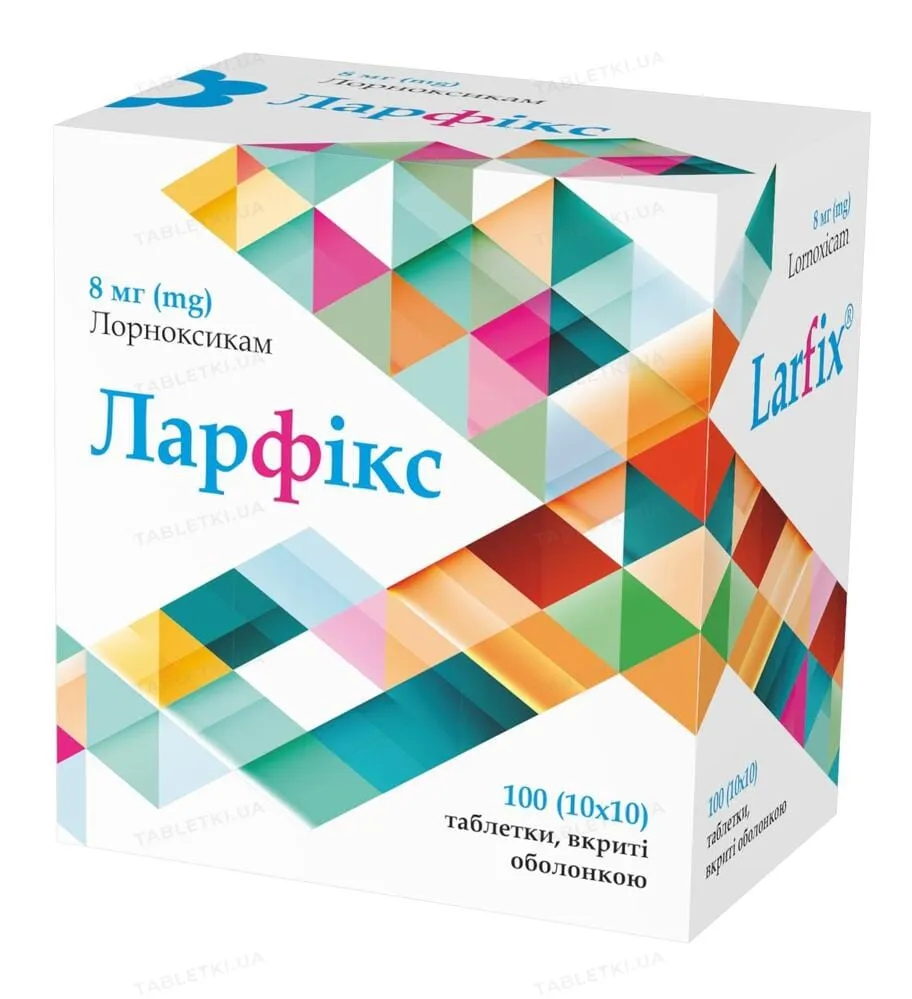
Table of Contents
- INSTRUCTIONS FOR MEDICAL USE OF THE MEDICINAL PRODUCT LARFIX (LARFIX®)
- Composition:
- Pharmacological properties.
- Clinical characteristics.
- Special precautions for use.
- Dosage and Administration
- Adverse Reactions
- Composition:
- Pharmacological Properties.
- Clinical characteristics.
- Special precautions for use.
- Dosage and Administration
- Side effects.
INSTRUCTIONS FOR MEDICAL USE OF THE MEDICINAL PRODUCT LARFIX (LARFIX®)
Composition:
Active substance: lornoxicam;
1 tablet contains 8 mg of lornoxicam;
Excipients: lactose monohydrate, microcrystalline cellulose, povidone, sodium croscarmellose, magnesium stearate, Opadry white 03F58750*.
*Opadry white 03F58750: talc, polyethylene glycol, hypromellose, titanium dioxide (E 171).
Pharmaceutical form. Film-coated tablets.
Main physicochemical properties: oval, elongated, white to yellowish film-coated tablets, embossed with "L8" on one side and smooth on the other.
Pharmacotherapeutic group. Non-steroidal anti-inflammatory and anti-rheumatic agents.
ATC code M01A C05.
Pharmacological properties.
Pharmacodynamics.
Lornoxicam is a non-steroidal anti-inflammatory drug (NSAID) with analgesic and anti-inflammatory properties and belongs to the oxicam class.
Mechanism of action. Lornoxicam inhibits the synthesis of prostaglandins (inhibition of the enzyme cyclooxygenase), leading to desensitization of peripheral nociceptors and inhibition of inflammation. A central effect on nociceptors, unrelated to anti-inflammatory activity, is also presumed. Lornoxicam does not affect vital parameters (e.g., body temperature, respiratory rate, heart rate, blood pressure, ECG, spirometry).
Due to local gastrointestinal irritation and systemic ulcerogenic effects associated with inhibition of prostaglandin (PG) synthesis, administration of lornoxicam, as with other NSAIDs, frequently leads to gastrointestinal complications.
Pharmacokinetics.
Absorption. Lornoxicam is rapidly and almost completely absorbed from the gastrointestinal tract. Maximum plasma concentration (Cmax) is reached within 1–2 hours after administration. Absolute bioavailability of lornoxicam is 90–100%. First-pass effect has not been observed. When lornoxicam is administered concomitantly with food, Cmax is reduced by approximately 30%, and Tmax increases from 1.5 to 2.3 hours. Absorption of lornoxicam (calculated as area under the plasma concentration-time curve [AUC]) may be reduced by up to 20%.
Distribution. In plasma, lornoxicam is present in unchanged form and as the inactive hydroxylated metabolite. Plasma protein binding of lornoxicam is 99% and is independent of its concentration. It is also detected in synovial fluid after repeated administration.
Biological transformation. Lornoxicam is actively metabolized in the liver via hydroxylation, initially to the inactive metabolite 5-hydroxylornoxicam. Lornoxicam undergoes biotransformation involving cytochrome CYP2C9. Due to genetic polymorphism, individuals with slow and extensive metabolism of this enzyme exist, which may result in a marked increase in plasma levels of lornoxicam in individuals with slow metabolism. The hydroxylated metabolite has no pharmacological activity. Lornoxicam is completely metabolized. Approximately ⅔ is excreted via the liver and ⅓ via the kidneys as inactive compound.
Lornoxicam did not cause induction of hepatic enzymes in preclinical studies. There is no evidence of accumulation of lornoxicam after repeated administration of recommended doses.
Elimination. The elimination half-life of the parent compound is 3–4 hours. After oral administration, approximately 50% is excreted in feces and 42% via kidneys, mainly as 5-hydroxylornoxicam. The elimination half-life of 5-hydroxylornoxicam is approximately 9 hours after parenteral administration of the drug once or twice daily. There is no evidence that elimination rate changes with repeated dosing.
Special patient populations.
In elderly patients (over 65 years of age), clearance is reduced by 30–40%. Apart from reduced clearance, there are no significant changes in the kinetic profile of lornoxicam in elderly patients.
There is no significant change in the kinetic profile of lornoxicam in patients with renal or hepatic impairment, except for accumulation in patients with chronic liver disease after 7 days of therapy with daily doses of 12 mg and 16 mg.
Clinical characteristics.
Indications.
- Short-term symptomatic treatment of mild to moderate acute pain in adults.
- Symptomatic treatment of pain and inflammation in osteoarthritis in adults.
- Symptomatic treatment of pain and inflammation in rheumatoid arthritis in adults.
Contraindications.
- Hypersensitivity to lornoxicam or to any component of the medicinal product.
- Thrombocytopenia.
- Hypersensitivity (symptoms resembling those seen in asthma, rhinitis, angioedema, or urticaria) to other NSAIDs, including acetylsalicylic acid.
- Severe heart failure.
- Gastrointestinal bleeding, cerebrovascular bleeding, or other bleeding.
- History of gastrointestinal bleeding or perforation related to previous NSAID therapy.
- Active recurrent peptic ulcer/gastrointestinal bleeding or history of recurrent peptic ulcer/gastrointestinal bleeding (two or more separate episodes of proven ulceration or bleeding).
- Severe hepatic impairment.
- Severe renal impairment (serum creatinine level > 700 µmol/L).
- Third trimester of pregnancy (see section "Use in pregnancy or lactation").
Interaction with other medicinal products and other forms of interaction.
When used concomitantly with lornoxicam:
Cytochrome P450 inhibitors: increased plasma concentration of lornoxicam, which may increase the risk of adverse effects of lornoxicam (no interactions were observed between lornoxicam and ranitidine or between lornoxicam and antacids).
Anticoagulants: NSAIDs may enhance the effect of anticoagulants such as warfarin (see section "Special precautions for use"). Close monitoring of the international normalized ratio (INR) is required.
Phenprocoumon: reduced effectiveness of phenprocoumon treatment.
Heparin: NSAIDs increase the risk of bleeding and development of spinal/epidural hematoma when used concomitantly with heparin during spinal or epidural anesthesia (see section "Special precautions for use").
ACE inhibitors: may reduce the effect of ACE inhibitors.
Diuretics: reduced diuretic and antihypertensive effect of loop, thiazide, and potassium-sparing diuretics (increased risk of hyperkalemia and nephrotoxicity).
Beta-blockers: reduced antihypertensive effect.
Angiotensin II receptor blockers: reduced antihypertensive effect.
Digoxin: reduced renal clearance of digoxin, increasing the risk of digoxin toxicity.
Corticosteroids: increased risk of gastrointestinal ulcers or bleeding (see section "Special precautions for use").
Quinolone antibiotics (e.g., levofloxacin, ofloxacin): increased risk of seizures.
Antiplatelet agents (e.g., clopidogrel): increased risk of bleeding (see section "Special precautions for use").
Other NSAIDs: increased risk of gastrointestinal bleeding or ulcers.
Methotrexate: increased methotrexate serum concentration, leading to increased toxicity. Close monitoring is required during concomitant use.
Selective serotonin reuptake inhibitors (SSRIs): increased risk of bleeding (see section "Special precautions for use").
Lithium preparations: NSAIDs reduce renal clearance of lithium, thus serum lithium concentration may exceed the toxic threshold. Serum lithium levels should be monitored, especially at the beginning of treatment, during dose adjustments, and upon discontinuation of treatment.
Cyclosporine: increased serum concentration of cyclosporine. Possible increase in cyclosporine nephrotoxicity due to effects mediated by renal prostaglandins. Renal function should be monitored during combination therapy.
Sulfonylurea derivatives (e.g., glibenclamide): increased risk of hypoglycemia.
Known inducers and inhibitors of CYP2C9 isoenzymes: lornoxicam (like other NSAIDs dependent on cytochrome P450 2C9 (CYP2C9 isoenzyme)) interacts with known inducers and inhibitors of CYP2C9 isoenzymes (see section "Biotransformation").
Tacrolimus: increased risk of nephrotoxicity due to reduced synthesis of prostacyclin in the kidneys. Renal function should be monitored during combination therapy (see section "Special precautions for use").
Pemetrexed: NSAIDs may reduce renal clearance of pemetrexed, thereby increasing renal and gastrointestinal toxicity and myelosuppression.
Since food intake slows the absorption of lornoxicam, LARFIX tablets should not be taken with food when rapid onset of therapeutic effect (pain relief) is required.
Food intake reduces absorption by approximately 20% and increases Tmax (see section "Pharmacological properties. Pharmacokinetics").
Special precautions for use.
Lornoxicam reduces platelet aggregation and prolongs bleeding time. Therefore, caution should be exercised when prescribing it to patients with an increased tendency to bleeding.
Lornoxicam should be prescribed only after careful assessment of the expected benefit of therapy and possible risk in the following patients:
- Patients with impaired renal function: lornoxicam should be used with caution in patients with mild (serum creatinine level 150–300 μmol/L) and moderate renal insufficiency (serum creatininе level 300–700 μmol/L) due to the important role of prostaglandins in maintaining renal blood flow (see section "Dosage and administration"). If renal function deteriorates, lornoxicam treatment should be discontinued.
- Patients after extensive surgical procedures, with heart failure, or those taking diuretics or agents that may cause renal damage require careful monitoring of renal function (see section "Interaction with other medicinal products and other forms of interaction").
- In patients with coagulation disorders, careful clinical examination and assessment of laboratory parameters (e.g., activated partial thromboplastin time) are recommended.
- In patients with hepatic insufficiency (e.g., liver cirrhosis), regular laboratory tests are recommended after administration of the drug at a dose of 12–16 mg per day due to the possible accumulation of lornoxicam in the body (increased AUC) (see section "Pharmacological properties. Pharmacokinetics"). However, no deviations in pharmacokinetic parameters in patients with hepatic insufficiency compared to healthy volunteers have been observed.
During long-term treatment (over 3 months) with NSAIDs, monitoring of renal and liver function and hematology is recommended.
Elderly patients (aged 65 years and older) are recommended to be monitored for renal and liver function and to use the drug with caution after surgical procedures.
Concomitant use of NSAIDs.
Avoid concomitant use of lornoxicam with other NSAIDs, including selective cyclooxygenase-2 inhibitors (see section "Interaction with other medicinal products and other forms of interaction").
Minimization of adverse reactions.
Adverse reactions can be minimized by taking the lowest effective dose for the shortest duration necessary to control disease symptoms (see section "Dosage and administration" and the gastrointestinal and cardiovascular risks described below).
Gastrointestinal bleeding, ulcers, and perforations.
During treatment with any NSAID, gastrointestinal bleeding, ulcers, or perforations may occur at any time during therapy (with or without warning symptoms or history of serious gastrointestinal disorders), which may be fatal.
The risk of gastrointestinal bleeding, ulcers, or perforations increases with higher NSAID doses, in patients with a history of ulcers, especially complicated by bleeding or perforation (see section "Contraindications"), and in elderly patients. These patient groups should start treatment with the lowest therapeutic doses (see section "Dosage and administration").
NSAIDs should be used with caution in treating the above-mentioned patient groups and patients who are concurrently taking low-dose acetylsalicylic acid or other drugs that increase the risk of gastrointestinal complications (see section "Interaction with other medicinal products and other forms of interaction"). For patients requiring such concomitant therapy, treatment may be conducted with simultaneous use of protective agents (e.g., misoprostol or proton pump inhibitors). Regular clinical monitoring is recommended.
Patients with a history of gastrointestinal toxicity, especially elderly patients, should report any unusual abdominal symptoms (particularly gastrointestinal bleeding) at the beginning of treatment.
The drug should be prescribed with particular caution to patients who are simultaneously using medicinal products that may increase the risk of ulceration or bleeding, such as oral corticosteroids, anticoagulants – warfarin, selective serotonin reuptake inhibitors, or antithrombotic agents – acetylsalicylic acid (see section "Interaction with other medicinal products and other forms of interaction").
If gastrointestinal bleeding or ulcers occur in patients taking lornoxicam, treatment should be discontinued.
NSAIDs should be used with caution in patients with a history of gastrointestinal disorders (ulcerative colitis, Crohn's disease), as their condition may worsen.
Elderly patients.
In elderly patients, the frequency of adverse reactions during NSAID use increases, particularly gastrointestinal bleeding and perforation, which may lead to fatal outcomes (see section "Contraindications").
Cardiovascular and cerebrovascular effects.
Patients with a history of arterial hypertension and/or mild to moderate congestive heart failure should be monitored, as NSAID therapy may be associated with fluid retention and edema.
Clinical studies and epidemiological data suggest that the use of some NSAIDs, particularly long-term therapy and high doses, may be associated with an increased risk of arterial thrombotic events (such as myocardial infarction or stroke). There is insufficient data to exclude such a risk with lornoxicam use.
Lornoxicam should be prescribed to patients with uncontrolled arterial hypertension, chronic heart failure, ischemic heart disease, peripheral arterial disease, and/or cerebrovascular disorders only after careful assessment of indications. Assessment is also required before prescribing long-term treatment to patients with risk factors for cardiovascular diseases (e.g., hypertension, hyperlipidemia, diabetes mellitus, smoking).
Concomitant treatment with NSAIDs and heparin increases the risk of spinal/epidural hematoma during spinal or epidural anesthesia (see section "Interaction with other medicinal products and other forms of interaction").
Skin disorders.
Very rarely, severe skin reactions occur during NSAID use, including exfoliative dermatitis, Stevens-Johnson syndrome, and toxic epidermal necrolysis, sometimes resulting in death (see section "Adverse reactions"). The risk of developing such reactions is highest at the beginning of treatment: in most cases, these reactions occur within the first month of taking the drug. Lornoxicam should be discontinued at the first signs of skin rash, mucosal lesions, or other signs of hypersensitivity.
Respiratory disorders.
Use with caution in patients with bronchial asthma or a history of this disease, as NSAIDs have been reported to provoke bronchospasm in such patients.
Systemic lupus erythematosus and mixed connective tissue disease.
Use with caution in patients with systemic lupus erythematosus and mixed connective tissue disease, as there may be an increased risk of developing aseptic meningitis.
Nephrotoxicity.
Concomitant treatment with NSAIDs and tacrolimus may increase the risk of nephrotoxicity due to reduced prostacyclin synthesis in the kidneys. Renal function should be carefully monitored during such combination therapy (see section "Interaction with other medicinal products and other forms of interaction").
Laboratory abnormalities.
Like other NSAIDs, lornoxicam may cause transient elevations in serum transaminases and bilirubin, as well as increased blood urea and creatinine concentrations, and other laboratory parameter deviations from normal. If laboratory abnormalities are significant and persist for a long time, treatment should be discontinued and appropriate investigations performed.
Fertility.
Lornoxicam, like other drugs that inhibit cyclooxygenase/prostaglandin synthesis, may impair fertility; therefore, it is not recommended for women trying to conceive. Women experiencing difficulty conceiving or undergoing infertility evaluation should discontinue lornoxicam (see section "Use during pregnancy or breastfeeding").
Chickenpox.
In cases of chickenpox, severe skin and soft tissue infections may develop. At this time, the influence of NSAIDs on worsening the course of such infectious diseases cannot be excluded. The use of lornoxicam should be avoided in the presence of chickenpox.
Excipients.
The medicinal product contains lactose. If a patient has a known intolerance to certain sugars, consultation with a physician is recommended before taking this medicinal product.
This medicinal product contains less than 1 mmol (23 mg)/dose of sodium, i.e., it is practically sodium-free.
Use during pregnancy or breastfeeding.
Pregnancy.
Lornoxicam is contraindicated during the third trimester of pregnancy (see section "Contraindications"). There are no clinical data on the use of lornoxicam during the first and second trimesters of pregnancy and during labor; therefore, the drug is not recommended for use during this period.
There are insufficient data on the use of lornoxicam in pregnant women. Animal studies have shown reproductive toxicity.
Inhibition of prostaglandin synthesis may adversely affect pregnancy and/or embryonic/fetal development. Epidemiological data indicate an increased risk of pregnancy loss and congenital heart defects with the use of prostaglandin synthesis inhibitors in early pregnancy. The risk increases with higher doses and longer duration of therapy. In animals, the use of prostaglandin synthesis inhibitors leads to increased pre- and post-implantation embryo/fetal loss and embryofetal lethality.
From the 20th week of pregnancy, the use of lornoxicam may cause oligohydramnios due to fetal renal dysfunction. This may occur soon after the start of treatment and is usually reversible after discontinuation. Additionally, there have been reports of arterial duct constriction after treatment in the second trimester, most of which resolved after discontinuation. Therefore, lornoxicam should not be prescribed during the first and second trimesters of pregnancy, except in cases of extreme necessity. If lornoxicam is used by a woman trying to conceive or during the first and second trimesters of pregnancy, the dose should be as low as possible and the duration of treatment as short as possible. Prenatal monitoring for oligohydramnios and arterial duct constriction should be considered after lornoxicam exposure for several days starting from the 20th gestational week. The use of the medicinal product Larfix should be discontinued if oligohydramnios or arterial duct constriction is detected.
During the third trimester of pregnancy, the use of any prostaglandin synthesis inhibitors may have the following effects on the fetus:
- Cardio-pulmonary toxicity (premature constriction/closure of the arterial duct and pulmonary hypertension);
- Renal dysfunction (see above).
The pregnant woman and the fetus near the end of pregnancy may be affected by the use of prostaglandin synthesis inhibitors as follows:
- Possible prolongation of bleeding time;
- Inhibition of uterine contractility, which may lead to delayed or prolonged labor.
Thus, the use of lornoxicam is contraindicated during the third trimester of pregnancy (see section "Contraindications").
Breastfeeding period.
There are no data on the excretion of lornoxicam into human breast milk. Relatively high concentrations of lornoxicam are excreted into the milk of lactating rats. Lornoxicam should not be used during breastfeeding.
Fertility.
The use of lornoxicam, like any drug that inhibits cyclooxygenase/prostaglandin synthesis, may impair fertility and is not recommended for women trying to conceive. For women experiencing difficulty conceiving or undergoing infertility evaluation, discontinuation of lornoxicam should be considered.
Ability to influence reaction speed when driving or operating machinery.
If dizziness and/or drowsiness occur after taking lornoxicam, driving or operating machinery should be avoided.
Dosage and Administration
The appropriate dosage regimen for all patients should be based on individual response to treatment. Adverse effects can be minimized by using the lowest effective dose for the shortest duration necessary to control symptoms (see section "Special Warnings and Precautions for Use").
Pain
The dose is 8–16 mg of lornoxicam per day, divided into 2–3 doses. The maximum recommended daily dose is 16 mg.
Osteoarthritis and Rheumatoid Arthritis
An initial daily dose of 12 mg of lornoxicam, divided into 2–3 doses, is recommended.
The maintenance dose should not exceed 16 mg per day.
The medicinal product Larfix, film-coated tablets, should be taken with sufficient amount of water.
Elderly patients (over 65 years of age) without hepatic or renal impairment do not require dose adjustment; however, lornoxicam should be used with caution in this patient population, as gastrointestinal adverse reactions are less well tolerated.
Renal impairment. In patients with mild to moderate renal impairment, the maximum recommended daily dose is 12 mg, divided into 2–3 doses. Lornoxicam is contraindicated in patients with severe renal function impairment (see section "Contraindications").
Hepatic impairment. In patients with moderate hepatic impairment, the maximum recommended daily dose is 12 mg, divided into 2–3 doses (see section "Special Warnings and Precautions for Use"). Lornoxicam is contraindicated in patients with severe hepatic impairment (see section "Contraindications").
Children.
Lornoxicam is not recommended for use in children under 18 years of age due to insufficient data on efficacy and safety.
Overdose.
Currently, there are no data on lornoxicam overdose that would allow determination of its consequences or suggest specific treatment. However, symptoms following overdose may include nausea, vomiting, and central nervous system symptoms (dizziness, visual disturbances). In severe cases, ataxia may occur, progressing to coma and seizures; hepatic and renal damage may develop; and a potential impairment of blood coagulation is possible.
In case of actual or suspected overdose, administration of the drug should be discontinued. Due to the short elimination half-life, lornoxicam is rapidly eliminated from the body. It is not dialyzable. There is currently no specific antidote. Standard emergency measures should be implemented. According to general principles, only the administration of activated charcoal immediately after lornoxicam overdose may reduce drug absorption. For treatment of gastrointestinal disorders, for example, a prostaglandin analogue or ranitidine may be used.
Adverse Reactions
The most common adverse reactions associated with NSAIDs involve the gastrointestinal tract. Peptic ulcers, gastrointestinal perforation, or gastrointestinal bleeding, sometimes fatal, may occur during NSAID therapy, particularly in elderly patients (see section "Special Warnings and Precautions for Use"). Nausea, vomiting, diarrhea, flatulence, constipation, dyspepsia, abdominal pain, melena, hematemesis, ulcerative stomatitis, and exacerbations of colitis and Crohn’s disease have been reported during NSAID treatment. Gastritis has been observed less frequently.
Approximately 20% of patients treated with lornoxicam may experience adverse events. The most commonly reported adverse effects are nausea, dyspepsia, digestive disturbances, abdominal pain, vomiting, and diarrhea. These symptoms were generally observed in less than 10% of patients participating in clinical studies.
Edema, arterial hypertension, and heart failure have been reported during NSAID therapy.
Clinical trials and epidemiological data suggest that the use of certain NSAIDs, particularly at high doses and during prolonged treatment, may be associated with an increased risk of arterial thrombotic events, such as myocardial infarction or stroke (see section "Special Warnings and Precautions for Use").
Rarely, serious skin and soft tissue infections have been reported during varicella (chickenpox) infection.
Undesirable effects are classified by frequency of occurrence as follows: very common (> 1/10); common (> 1/100, < 1/10); uncommon (> 1/1000, < 1/100); rare (> 1/10000, < 1/1000); very rare (< 1/10000), not known (cannot be estimated from available data).
Infections and infestations: rare – pharyngitis.
Blood and lymphatic system disorders: rare – anemia, thrombocytopenia, leukopenia, prolonged bleeding time; very rare – ecchymosis. NSAIDs can cause class-specific potentially serious hematological disorders such as neutropenia, agranulocytosis, aplastic anemia, and hemolytic anemia.
Immune system disorders: rare – hypersensitivity, including anaphylactoid reactions and anaphylaxis.
Metabolism and nutrition disorders: uncommon – loss of appetite, weight changes.
Psychiatric disorders: uncommon – insomnia, depression; rare – confusion, nervousness, agitation.
Nervous system disorders: common – mild and transient headache, dizziness; rare – somnolence, paresthesia, taste disturbances (dysgeusia), tremor, migraine; very rare – aseptic meningitis in patients with systemic lupus erythematosus (SLE) and mixed connective tissue disease (see section "Special Warnings and Precautions for Use").
Eye disorders: common – conjunctivitis; rare – visual disturbances.
Ear and labyrinth disorders: uncommon – vertigo, tinnitus.
Cardiac disorders: uncommon – palpitations, tachycardia, edema, heart failure, facial flushing (see section "Special Warnings and Precautions for Use"); rare – hypertension, hot flushes, hemorrhage, hematomas.
Vascular disorders: rare – hypertension, flushes, hemorrhage, hematomas.
Respiratory, thoracic and mediastinal disorders: uncommon – rhinitis; rare – dyspnea, cough, bronchospasm.
Gastrointestinal disorders: common – nausea, abdominal pain, dyspepsia, diarrhea, vomiting; uncommon – constipation, flatulence, belching, dry mouth, gastritis, gastric ulcer, upper abdominal pain, duodenal ulcer, oral mucosal ulcers; rare – melena, vomiting blood, stomatitis, esophagitis, gastroesophageal reflux, dysphagia, aphthous stomatitis, glossitis, peptic ulcer perforation, gastrointestinal bleeding.
Hepatobiliary disorders: uncommon – increased liver enzyme levels (ALT, AST); very rare – hepatotoxicity, which may lead to liver failure, hepatitis, jaundice, and cholestasis.
Skin and subcutaneous tissue disorders: uncommon – rash, pruritus, increased sweating, erythematous rash, urticaria, angioneurotic edema, alopecia; rare – dermatitis, eczema, purpura; very rare – edema and bullous reactions such as erythema multiforme, Stevens-Johnson syndrome, and toxic epidermal necrolysis.
Musculoskeletal and connective tissue disorders: uncommon – arthralgia; rare – bone pain, muscle spasms, myalgia.
Renal and urinary disorders: rare – nocturia, urinary disorders, increased blood urea nitrogen and creatinine levels; very rare – lornoxicam may cause acute renal failure in patients with renal conditions dependent on renal prostaglandins, which play an important role in maintaining renal blood flow (see section "Special Warnings and Precautions for Use"). Nephrotoxicity in various forms, including nephritis and nephrotic syndrome, is a class-specific effect of NSAIDs.
General disorders: uncommon – malaise, facial edema; rare – asthenia.
Reporting of suspected adverse reactions.
Reporting suspected adverse reactions after marketing authorization is important. It allows continued monitoring of the benefit-risk balance of the medicinal product. Healthcare professionals and patients are encouraged to report any suspected adverse reactions and lack of efficacy via the Automated Pharmacovigilance Information System at: https://aisf.dec.gov.ua.
Shelf life. 3 years.
Storage conditions.
Store at temperatures not exceeding 25 °C.
Keep out of reach and sight of children.
Packaging.
10 tablets per blister. 3 or 10 blisters per cardboard pack.
Prescription status.
Prescription only.
Manufacturer.
Kusum Healthcare Pvt Ltd.
Manufacturer's address and location of business activity.
SP-289 (A), RIICO Industrial area, Chopanki, Bhiwadi, Dist. Alwar (Rajasthan), India.
INSTRUCTIONS
for medical use of the medicinal product
LARFIX
(LARFIX®)
Composition:
Active substance: lornoxicam;
1 tablet contains 8 mg of lornoxicam;
Excipients: lactose monohydrate, microcrystalline cellulose, povidone, sodium croscarmellose, magnesium stearate, Opadry white 03F58750*.
*Opadry white 03F58750: talc, polyethylene glycol, hydroxypropylmethylcellulose, titanium dioxide (E 171).
Pharmaceutical form. Film-coated tablets.
Main physicochemical properties: oval, elongated film-coated tablets of white to yellowish color, marked with "L8" on one side and smooth on the other.
Pharmacotherapeutic group. Nonsteroidal anti-inflammatory and antirheumatic agents.
ATC code M01A C05.
Pharmacological Properties.
Pharmacodynamics.
Lornoxicam is a non-steroidal anti-inflammatory drug (NSAID) with analgesic and anti-inflammatory properties and belongs to the oxicam class.
Mechanism of action. Lornoxicam inhibits the synthesis of prostaglandins (inhibition of the enzyme cyclooxygenase), leading to desensitization of peripheral nociceptors and inhibition of inflammation. A central effect on nociceptors, unrelated to its anti-inflammatory action, is also presumed. Lornoxicam does not affect vital parameters (e.g., body temperature, respiratory rate, heart rate, blood pressure, ECG, spirometry).
Due to local irritation of the gastrointestinal tract and systemic ulcerogenic effects associated with inhibition of prostaglandin (PG) synthesis, administration of lornoxicam, as with other NSAIDs, frequently leads to gastrointestinal complications.
Pharmacokinetics.
Absorption. Lornoxicam is rapidly and almost completely absorbed from the gastrointestinal tract. Maximum plasma concentration (Cmax) is reached within 1–2 hours after administration. Absolute bioavailability of lornoxicam is 90–100%. First-pass effect is not observed. When lornoxicam is taken with food, Cmax decreases by approximately 30%, and Tmax increases from 1.5 to 2.3 hours. Absorption of lornoxicam (calculated based on the area under the plasma concentration-time curve [AUC]) may be reduced by up to 20%.
Distribution. In plasma, lornoxicam is present in unchanged form and as its inactive hydroxylated metabolite. Protein binding of lornoxicam to plasma proteins is 99% and independent of its concentration. It is also detected in synovial fluid after repeated administration.
Biological transformation. Lornoxicam is actively metabolized in the liver via hydroxylation, initially forming the inactive metabolite 5-hydroxy-lornoxicam. Lornoxicam undergoes biotransformation involving cytochrome CYP2C9. Due to genetic polymorphism, individuals may exhibit either slow or extensive metabolism of this enzyme, which may result in a marked increase in plasma levels of lornoxicam in individuals with slow metabolism. The hydroxylated metabolite has no pharmacological activity. Lornoxicam is completely metabolized. Approximately ⅔ is excreted via the liver and ⅓ via the kidneys as inactive compounds.
Lornoxicam did not cause induction of hepatic enzymes in preclinical studies. There are no data indicating accumulation of lornoxicam after repeated administration of recommended doses.
Elimination. The elimination half-life of the parent compound is 3–4 hours. After oral administration, approximately 50% is excreted in feces and 42% via kidneys, mainly as 5-hydroxy-lornoxicam. The elimination half-life of 5-hydroxy-lornoxicam is approximately 9 hours after parenteral administration of the drug once or twice daily. There is no evidence that elimination rate changes with repeated dosing.
Special patient populations.
In elderly patients (over 65 years of age), clearance is reduced by 30–40%. Apart from reduced clearance, there are no significant changes in the kinetic profile of lornoxicam in elderly patients.
There is no significant change in the kinetic profile of lornoxicam in patients with renal or hepatic impairment, except for accumulation observed in patients with chronic liver disease after 7 days of therapy with daily doses of 12 mg and 16 mg.
Clinical characteristics.
Indications.
- Short-term symptomatic treatment of mild to moderate acute pain in adults.
- Symptomatic treatment of pain and inflammation in osteoarthritis in adults.
- Symptomatic treatment of pain and inflammation in rheumatoid arthritis in adults.
Contraindications.
- Hypersensitivity to lornoxicam or to any of the excipients.
- Thrombocytopenia.
- Hypersensitivity (manifestations similar to asthma, rhinitis, angioedema or urticaria) to other NSAIDs, including acetylsalicylic acid.
- Severe heart failure.
- Gastrointestinal bleeding, cerebrovascular bleeding, or other bleeding.
- History of gastrointestinal bleeding or perforation associated with previous NSAID therapy.
- Active recurrent peptic ulcer/gastrointestinal bleeding or recurrent peptic ulcer/gastrointestinal bleeding in history (two or more distinct episodes of proven ulceration or bleeding).
- Severe hepatic impairment.
- Severe renal impairment (serum creatinine level > 700 µmol/L).
- Third trimester of pregnancy (see section "Use in pregnancy or lactation").
Interaction with other medicinal products and other forms of interaction.
When used concomitantly with lornoxicam:
Cimetidine: increases plasma concentration of lornoxicam, which may increase the risk of adverse effects of lornoxicam (no interactions between lornoxicam and ranitidine or between lornoxicam and antacids have been observed).
Anticoagulants: NSAIDs may enhance the effect of anticoagulants, such as warfarin (see section "Special precautions for use"). Careful monitoring of the international normalized ratio (INR) should be performed.
Phenprocoumon: reduced effectiveness of phenprocoumon treatment.
Heparin: NSAIDs increase the risk of bleeding and development of spinal/epidural hematoma when used concomitantly with heparin during spinal or epidural anesthesia (see section "Special precautions for use").
ACE inhibitors: may reduce the effect of ACE inhibitors.
Diuretics: reduced diuretic and antihypertensive effects of loop, thiazide, and potassium-sparing diuretics (increased risk of hyperkalemia and nephrotoxicity).
Beta-blockers: reduced antihypertensive effect.
Angiotensin II receptor blockers: reduced antihypertensive effect.
Digoxin: decreased renal clearance of digoxin, increasing the risk of digoxin toxicity.
Corticosteroids: increased risk of gastrointestinal ulcers or bleeding (see section "Special precautions for use").
Quinolone antibacterial agents (e.g., levofloxacin, ofloxacin): increased risk of seizures.
Antiplatelet agents (e.g., clopidogrel): increased risk of bleeding (see section "Special precautions for use").
Other NSAIDs: increased risk of gastrointestinal bleeding or ulcers.
Methotrexate: increased serum methotrexate concentration, leading to increased toxicity. Careful monitoring is required when used concomitantly.
Selective serotonin reuptake inhibitors (SSRIs): increased risk of bleeding (see section "Special precautions for use").
Lithium preparations: NSAIDs reduce renal clearance of lithium, thus serum lithium concentration may exceed the toxic threshold. Serum lithium levels should be monitored, especially at the beginning of treatment, during dose adjustments, and upon discontinuation of therapy.
Cyclosporine: increased serum cyclosporine concentration. Possible increase in cyclosporine nephrotoxicity due to effects mediated by renal prostaglandins. Renal function should be monitored during combination therapy.
Sulfonylurea derivatives (e.g., glibenclamide): increased risk of hypoglycemia.
Known inducers and inhibitors of CYP2C9 isoenzymes: lornoxicam (like other NSAIDs metabolized by cytochrome P450 2C9 (CYP2C9 isoenzyme)) interacts with known inducers and inhibitors of CYP2C9 isoenzymes (see section "Biotransformation").
Tacrolimus: increased risk of nephrotoxicity due to decreased renal prostacyclin synthesis. Renal function should be monitored during combination therapy (see section "Special precautions for use").
Pemetrexed: NSAIDs may reduce renal clearance of pemetrexed, resulting in increased renal and gastrointestinal toxicity and myelosuppression.
Since food intake slows the absorption of lornoxicam, Larfex tablets should not be taken with food when a rapid onset of therapeutic effect (pain relief) is required.
Food intake reduces absorption by approximately 20% and increases Tmax (see section "Pharmacological properties. Pharmacokinetics").
Special precautions for use.
Lornoxicam reduces platelet aggregation and prolongs bleeding time. Therefore, caution should be exercised when prescribing to patients with an increased tendency to bleeding.
Lornoxicam should be prescribed only after careful assessment of the expected benefit of therapy and possible risk to such patients:
- Patients with renal impairment: lornoxicam should be used with caution in patients with mild (serum creatinine level 150–300 µmol/L) and moderate renal insufficiency (serum creatinine level 300–700 µmol/L) due to the important role of prostaglandins in maintaining renal blood flow (see section "Dosage and administration"). If worsening of renal function occurs, lornoxicam treatment should be discontinued.
- Patients after extensive surgical procedures, with heart failure, or those taking diuretics or agents that may cause renal damage require careful monitoring of renal function (see section "Interaction with other medicinal products and other forms of interaction").
- In patients with coagulation disorders, careful clinical examination and laboratory parameter assessment (e.g., activated partial thromboplastin time) are recommended.
- In patients with hepatic insufficiency (e.g., liver cirrhosis), regular laboratory tests are recommended after administration of the drug at a dose of 12–16 mg/day due to the possibility of lornoxicam accumulation in the body (increased AUC) (see section "Pharmacological properties. Pharmacokinetics"). However, no deviations in pharmacokinetic parameters have been observed in patients with hepatic insufficiency compared to healthy volunteers.
During long-term treatment (over 3 months) with NSAIDs, regular monitoring of renal and liver function and hematology is recommended.
Elderly patients (aged 65 years and older) should be monitored for renal and liver function and should be treated with caution after surgical procedures.
Concomitant use of NSAIDs.
Concomitant administration of lornoxicam with other NSAIDs, including selective cyclooxygenase-2 inhibitors, should be avoided (see section "Interaction with other medicinal products and other forms of interaction").
Minimization of adverse reactions.
Adverse reactions can be minimized by using the lowest effective dose for the shortest duration necessary to control disease symptoms (see section "Dosage and administration" and the gastrointestinal and cardiovascular risks described below).
Gastrointestinal bleeding, ulcers, and perforations.
During treatment with any NSAID at any time, gastrointestinal bleeding, ulcers, or perforations may occur (with or without warning symptoms or history of serious gastrointestinal disorders), which may be fatal.
The risk of gastrointestinal bleeding, ulcers, or perforation increases with higher NSAID doses, in patients with a history of peptic ulcers, especially those complicated by bleeding or perforation (see section "Contraindications"), and in elderly patients. These patient groups should start treatment with the lowest therapeutic doses (see section "Dosage and administration").
NSAIDs should be used with caution in treating these patient groups and patients concurrently taking low-dose acetylsalicylic acid or other drugs that increase the risk of gastrointestinal complications (see section "Interaction with other medicinal products and other forms of interaction"). For patients requiring such concomitant therapy, treatment may be administered with concomitant use of protective agents (e.g., misoprostol or proton pump inhibitors). Regular clinical monitoring is recommended.
Patients with a history of gastrointestinal toxicity, especially elderly patients, should report any unusual abdominal symptoms (particularly gastrointestinal bleeding) at the beginning of treatment.
Particular caution should be exercised when prescribing the drug to patients who are concurrently using medicinal products that may increase the risk of ulceration or bleeding, such as oral corticosteroids, anticoagulants – warfarin, selective serotonin reuptake inhibitors, or antiplatelet agents – acetylsalicylic acid (see section "Interaction with other medicinal products and other forms of interaction").
If gastrointestinal bleeding or ulcers occur in patients taking lornoxicam, treatment must be discontinued.
NSAIDs should be used with caution in patients with a history of gastrointestinal disorders (ulcerative colitis, Crohn's disease), as their condition may worsen.
Elderly patients.
In elderly patients, the frequency of adverse reactions during NSAID use increases, particularly gastrointestinal bleeding and perforation, which may lead to fatal outcomes (see section "Contraindications").
Cardiovascular and cerebrovascular effects.
Patients with a history of arterial hypertension and/or mild to moderate congestive heart failure should be monitored, as NSAID therapy may be associated with fluid retention and edema.
Clinical studies and epidemiological data suggest that the use of certain NSAIDs, particularly long-term therapy and high doses, may be associated with an increased risk of arterial thrombotic events (such as myocardial infarction or stroke). There is insufficient data to exclude such a risk with lornoxicam use.
Lornoxicam should be prescribed to patients with uncontrolled arterial hypertension, chronic heart failure, ischemic heart disease, peripheral arterial disease, and/or cerebrovascular disorders only after careful assessment of indications. Assessment is also required before prescribing long-term treatment to patients with risk factors for cardiovascular diseases (e.g., hypertension, hyperlipidemia, diabetes, smoking).
Concomitant therapy with NSAIDs and heparin increases the risk of spinal/epidural hematoma during spinal or epidural anesthesia (see section "Interaction with other medicinal products and other forms of interaction").
Skin disorders.
Very rarely, severe skin reactions occur during NSAID use, including exfoliative dermatitis, Stevens-Johnson syndrome, and toxic epidermal necrolysis, sometimes resulting in fatalities (see section "Adverse reactions"). The risk of developing such reactions is highest at the beginning of treatment: most cases occur within the first month of drug use. Lornoxicam use should be discontinued at the first signs of skin rash, mucosal lesions, or other signs of hypersensitivity.
Respiratory disorders.
Use with caution in patients with bronchial asthma or a history of this condition, as NSAIDs have been reported to provoke bronchospasm in such patients.
Systemic lupus erythematosus and mixed connective tissue disease.
Use with caution in patients with systemic lupus erythematosus and mixed connective tissue disease, as the risk of developing aseptic meningitis may increase.
Nephrotoxicity.
Concomitant therapy with NSAIDs and tacrolimus may increase the risk of nephrotoxicity due to reduced prostacyclin synthesis in the kidneys. Renal function should be carefully monitored during such combination therapy (see section "Interaction with other medicinal products and other forms of interaction").
Laboratory abnormalities.
Like other NSAIDs, lornoxicam may cause transient elevations in serum transaminases and bilirubin, as well as increased blood urea and creatinine concentrations, and other laboratory parameter deviations from normal. If laboratory abnormalities are significant and persistent, treatment should be discontinued and appropriate investigations performed.
Fertility.
Lornoxicam, like other drugs that inhibit cyclooxygenase/prostaglandin synthesis, may impair fertility; therefore, it is not recommended for women trying to conceive. Women experiencing difficulties conceiving or undergoing infertility evaluation should discontinue lornoxicam use (see section "Use during pregnancy or breastfeeding").
Chickenpox.
In rare cases, severe skin and soft tissue infections may develop during chickenpox. At present, the influence of NSAIDs on worsening the course of such infections cannot be excluded. It is recommended to avoid the use of lornoxicam during active chickenpox.
Excipients.
The drug contains lactose. If a patient has established intolerance to certain sugars, they should consult a physician before taking this medicinal product.
This medicinal product contains less than 1 mmol (23 mg)/dose of sodium, i.e., practically sodium-free.
Use during pregnancy or breastfeeding.
Pregnancy.
Lornoxicam is contraindicated during the third trimester of pregnancy (see section "Contraindications"). There are no clinical data on the use of lornoxicam during the first and second trimesters of pregnancy and during labor; therefore, the drug is not recommended for use during this period.
There are insufficient data on the use of lornoxicam in pregnant women. Animal studies have shown reproductive toxicity.
Inhibition of prostaglandin synthesis may adversely affect pregnancy and/or embryonic/fetal development. Epidemiological data indicate an increased risk of miscarriage and cardiac malformations with the use of prostaglandin synthesis inhibitors during early pregnancy. The risk increases with higher doses and longer duration of therapy. In animals, prostaglandin synthesis inhibitors lead to increased pre- and post-implantation fetal loss and embryofetal mortality.
From the 20th week of pregnancy, the use of lornoxicam may cause oligohydramnios due to fetal renal dysfunction. This may occur soon after the start of treatment and is usually reversible upon discontinuation. Additionally, there are reports of arterial duct constriction after treatment during the second trimester, most of which resolved after treatment cessation. Therefore, lornoxicam should not be prescribed during the first and second trimesters of pregnancy except in cases of extreme necessity. If lornoxicam is used by a woman trying to conceive or during the first and second trimesters of pregnancy, the dose should be as low as possible, and the duration of treatment as short as possible. Prenatal monitoring for oligohydramnios and arterial duct constriction should be considered after lornoxicam exposure for several days starting from the 20th gestational week. The use of the medicinal product Larfix should be discontinued if oligohydramnios or arterial duct constriction is detected.
During the third trimester of pregnancy, the use of any prostaglandin synthesis inhibitors may have the following effects on the fetus:
- Cardio-pulmonary toxicity (premature constriction/closure of the arterial duct and pulmonary hypertension);
- Renal dysfunction (see above).
The mother and fetus near the end of pregnancy may be affected by the use of prostaglandin synthesis inhibitors as follows:
- Possible prolonged bleeding time;
- Inhibition of uterine contractility, which may lead to delayed or prolonged labor.
Thus, the use of lornoxicam is contraindicated during the third trimester of pregnancy (see section "Contraindications").
Breastfeeding period.
There are no data on the excretion of lornoxicam into human breast milk. High concentrations of lornoxicam are excreted into the milk of nursing rats. Lornoxicam should not be used during breastfeeding.
Fertility.
The use of lornoxicam, like any drug that inhibits cyclooxygenase/prostaglandin synthesis, may impair fertility and is not recommended for women trying to conceive. For women experiencing difficulties with conception or undergoing infertility evaluation, discontinuation of lornoxicam should be considered.
Ability to affect reaction speed when driving or operating machinery.
If dizziness and/or drowsiness occur after taking lornoxicam, driving or operating machinery should be avoided.
Dosage and Administration
The appropriate dosage regimen for all patients should be based on individual response to treatment. Adverse effects can be minimized by using the lowest effective dose for the shortest duration necessary to control symptoms (see section "Special Warnings and Precautions for Use").
Pain
Dose of 8–16 mg of lornoxicam per day, divided into 2–3 doses. The maximum recommended daily dose is 16 mg.
Osteoarthritis and rheumatoid arthritis
The recommended initial daily dose is 12 mg of lornoxicam, divided into 2–3 doses.
The maintenance dose should not exceed 16 mg per day.
The medicinal product Larfix, film-coated tablets, should be taken with sufficient amount of water.
Elderly patients (over 65 years of age) without impaired liver or kidney function do not require dose adjustment; however, lornoxicam should be used with caution in this patient group, as gastrointestinal adverse reactions are less well tolerated.
Renal impairment. In patients with mild to moderate renal impairment, the maximum recommended daily dose is 12 mg, divided into 2–3 doses. Lornoxicam is contraindicated in patients with severe renal impairment (see section "Contraindications").
Hepatic impairment. In patients with moderate hepatic impairment, the maximum recommended daily dose is 12 mg, divided into 2–3 doses (see section "Special Warnings and Precautions for Use"). Lornoxicam is contraindicated in patients with severe hepatic impairment (see section "Contraindications").
Children.
Lornoxicam is not recommended for use in children under 18 years of age due to insufficient data on efficacy and safety.
Overdose.
Currently, there are no data on lornoxicam overdose that would allow determination of its consequences or suggest specific treatment. However, symptoms that may occur following overdose include nausea, vomiting, and central nervous system symptoms (dizziness, visual disturbances). In severe cases, ataxia, progression to coma and convulsions, liver and kidney damage, and potentially impaired blood coagulation may occur.
In case of actual or suspected overdose, the drug should be discontinued. Due to the short half-life of lornoxicam, the drug is rapidly eliminated from the body. Lornoxicam is not dialyzable. There is no specific antidote available. Standard emergency measures should be implemented. According to general principles, administration of activated charcoal may reduce drug absorption only if administered immediately after lornoxicam overdose. For treatment of gastrointestinal disturbances, a prostaglandin analogue or ranitidine may be used, for example.
Side effects.
The most common adverse reactions associated with NSAIDs were related to the gastrointestinal tract. Peptic ulcers, gastrointestinal perforation, or gastrointestinal bleeding, sometimes fatal, may occur during treatment with NSAIDs, particularly in elderly patients (see section "Special precautions"). Nausea, vomiting, diarrhea, flatulence, constipation, dyspepsia, abdominal pain, melena, hematemesis, ulcerative stomatitis, and exacerbations of colitis and Crohn's disease have been reported during NSAID therapy. Gastritis has been observed less frequently.
It is estimated that adverse events may occur in approximately 20% of patients treated with lornoxicam. The most common adverse effects include nausea, dyspepsia, digestive disturbances, abdominal pain, vomiting, and diarrhea. These symptoms were generally observed in less than 10% of patients participating in clinical studies.
Edema, arterial hypertension, and heart failure have been reported during treatment with NSAIDs.
Clinical trials and epidemiological data suggest that the use of certain NSAIDs, particularly at high doses and with prolonged treatment, may be associated with an increased risk of arterial thrombotic events, such as myocardial infarction or stroke (see section "Special precautions").
Rarely, during varicella infection, serious skin and soft tissue infections have been reported.
Adverse effects are classified by frequency of occurrence as follows: very common (> 1/10); common (> 1/100, < 1/10); uncommon (> 1/1000, < 1/100); rare (> 1/10000, < 1/1000); very rare (< 1/10000); not known (frequency cannot be estimated from available data).
Infections and infestations: rare – pharyngitis.
Blood and lymphatic system disorders: rare – anemia, thrombocytopenia, leukopenia, prolonged bleeding time; very rare – ecchymosis. NSAIDs may cause potentially serious hematological disorders specific to this class of drugs, such as neutropenia, agranulocytosis, aplastic anemia, and hemolytic anemia.
Immune system disorders: rare – hypersensitivity, including anaphylactoid reactions and anaphylaxis.
Metabolism and nutrition disorders: uncommon – loss of appetite, weight changes.
Psychiatric disorders: uncommon – insomnia, depression; rare – confusion, nervousness, agitation.
Nervous system disorders: common – mild and transient headache, dizziness; rare – somnolence, paraesthesia, taste disturbances (dysgeusia), tremor, migraine; very rare – aseptic meningitis in patients with systemic lupus erythematosus (SLE) and mixed connective tissue disease (see section "Special precautions").
Eye disorders: common – conjunctivitis; rare – visual disturbances.
Ear and labyrinth disorders: uncommon – vertigo, tinnitus.
Cardiac disorders: uncommon – palpitations, tachycardia, edema, heart failure, facial flushing (see section "Special precautions"); rare – hypertension, hot flushes, hemorrhage, hematoma.
Respiratory, thoracic and mediastinal disorders: uncommon – rhinitis; rare – dyspnea, cough, bronchospasm.
Gastrointestinal disorders: common – nausea, abdominal pain, dyspepsia, diarrhea, vomiting; uncommon – constipation, flatulence, belching, dry mouth, gastritis, gastric ulcer, upper abdominal pain, duodenal ulcer, oral mucosal ulceration; rare – melena, vomiting blood, stomatitis, esophagitis, gastroesophageal reflux, dysphagia, aphthous stomatitis, glossitis, peptic ulcer perforation, gastrointestinal hemorrhage.
Hepatobiliary disorders: uncommon – increased liver enzyme levels (ALT, AST); very rare – hepatotoxicity, which may lead to liver failure, hepatitis, jaundice, cholestasis.
Skin and subcutaneous tissue disorders: uncommon – rash, pruritus, increased sweating, erythematous rash, urticaria, angioneurotic edema, alopecia; rare – dermatitis, eczema, purpura; very rare – swelling and bullous reactions such as erythema multiforme, Stevens-Johnson syndrome, toxic epidermal necrolysis.
Musculoskeletal and connective tissue disorders: uncommon – arthralgia; rare – bone pain, muscle spasms, myalgia.
Renal and urinary disorders: rare – nocturia, urinary disorders, increased blood urea nitrogen and creatinine levels; very rare – lornoxicam may cause acute renal failure in patients with renal conditions dependent on renal prostaglandins, which play an important role in maintaining renal blood flow (see section "Special precautions"). Nephrotoxicity in various forms, including nephritis and nephrotic syndrome, is an effect specific to NSAIDs.
General disorders: uncommon – malaise, facial edema; rare – asthenia.
Reporting suspected adverse reactions.
Reporting suspected adverse reactions after a medicinal product is authorized is important. It allows continued monitoring of the benefit-risk balance of the medicinal product. Healthcare professionals and patients are encouraged to report any suspected adverse reactions and lack of efficacy via the Automated Pharmacovigilance Information System at: https://aisf.dec.gov.ua.
Shelf life. 3 years.
Storage conditions.
Store at a temperature not exceeding 25 °C.
Keep out of reach and sight of children.
Packaging.
10 tablets per blister. 3 or 10 blisters per cardboard pack.
Prescription status.
Prescription only.
Manufacturer.
Kusum HealthCare Pvt Ltd.
Manufacturer's address and location of business activity.
Plot No. M-3, Indore Special Economic Zone, Phase-II, Pithampur, Distt. Dhar, Madhya Pradesh, Pin 454774, India.