Lanvis
Ukraine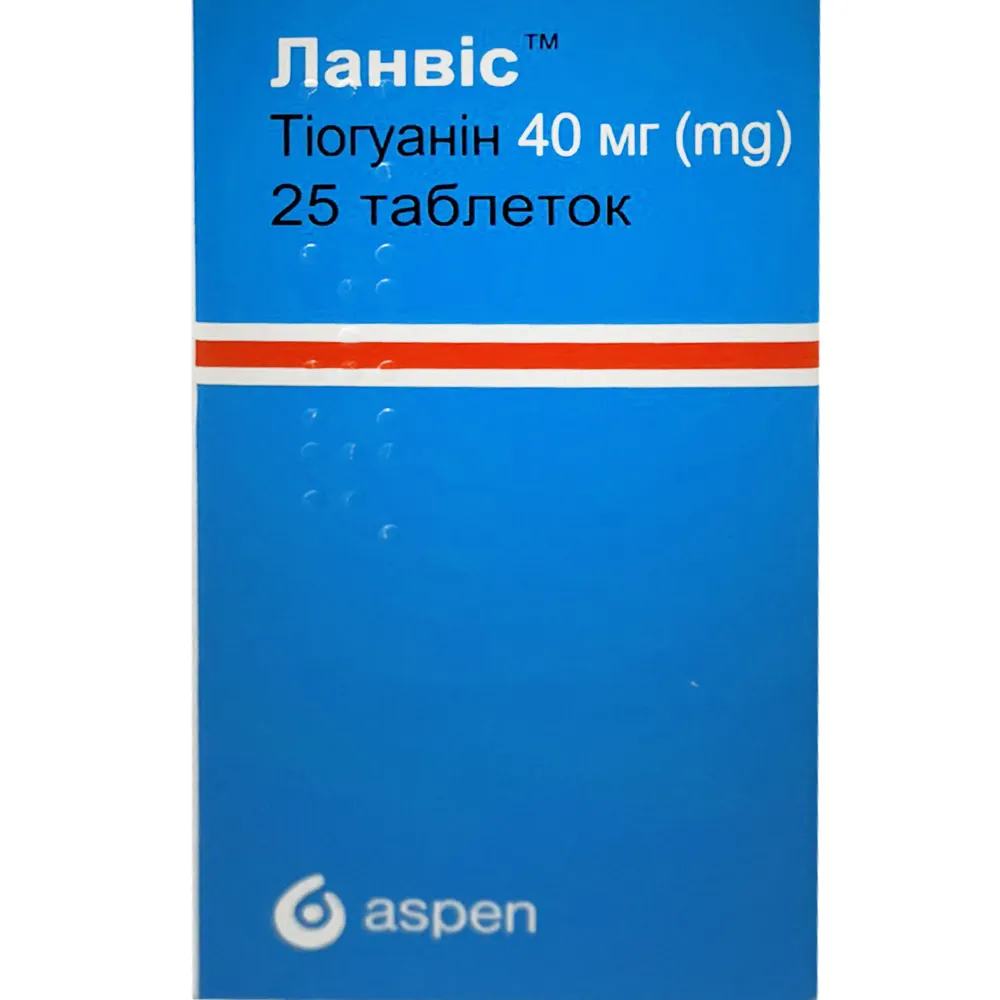
Table of Contents
INSTRUCTIONS FOR MEDICAL USE OF THE MEDICINAL PRODUCT LANVIS® (LANVIS®)
Composition:
Active substance: thioguanine;
1 tablet contains thioguanine 40 mg;
Excipients: lactose monohydrate, potato starch, acacia, stearic acid, magnesium stearate.
Pharmaceutical form. Tablets.
Main physico-chemical properties: round, biconvex tablets, white to almost white, with a score line and imprint «T40» on one side, without score line and imprint on the other side.
Pharmacotherapeutic group. Antineoplastic and immunomodulating agents. Antimetabolites. Purine analogues.
ATC code L01B B03.
Pharmacological properties.
Pharmacodynamics.
Mechanism of action
Thioguanine is a sulfhydryl analogue of guanine and acts as a purine antimetabolite. It is activated to its nucleotide, thioguanine acid. Thioguanine metabolites inhibit de novo purine synthesis and interconversion of purine nucleotides. Thioguanine is also incorporated into nucleic acids and DNA (deoxyribonucleic acid), which is considered to contribute to its cytotoxicity.
Pharmacodynamic effects
Cross-resistance generally exists between thioguanine and mercaptopurine; therefore, patients with tumors resistant to one agent are not expected to respond to the other.
Pharmacokinetics.
Absorption
Studies with radiolabeled thioguanine demonstrate that peak levels of total radioactivity in blood are reached approximately 8–10 hours after oral administration of the drug and then decline slowly. Subsequent studies using high-performance liquid chromatography (HPLC) have shown that 6-thioguanine is the predominant thiopurine present, at least during the first 8 hours after intravenous administration. Maximum plasma concentrations (61–118 nmol/mL) can be achieved after intravenous administration of 1–1.2 g of 6-thioguanine/m² body surface area. Plasma decay levels are biexponential, with initial and terminal half-lives of 3 and 5.9 hours, respectively.
After oral administration of the drug at a dose of 100 mg/m², maximum plasma concentration (as determined by high-performance liquid chromatography) is reached within 2–4 hours and ranges from 0.03 to 0.94 nmol/mL.
These levels are reduced when the drug is taken with food or if vomiting occurs.
Distribution
Limited data on the distribution of thioguanine in the human body are available in the scientific literature.
In children with acute lymphoblastic leukemia, 6-thioguanine penetrates into cerebrospinal fluid (CSF) after 24-hour continuous intravenous infusion at a dose of 20 mg/m²/hour.
Biotransformation
Thioguanine is extensively metabolized in vivo. Four different enzymes are responsible for thioguanine metabolism: hypoxanthine(guanine)phosphoribosyltransferase (HGPRT), which converts thioguanine into thioguanosine monophosphate (6-TGMP), subsequently metabolized by protein kinases into active forms—thioguanine nucleotides (6-TGN); thiopurine S-methyltransferase (TPMT), which converts thioguanine into 6-methylthioguanine (6-MTG, an inactive metabolite), and also converts 6-TGMP into 6-methyl-TGMP (an inactive metabolite); xanthine oxidase (XOD or XO); and aldehyde oxidase (AO), which also convert thioguanine into inactive metabolites. Thioguanine is initially deaminated by guanine deaminase (GDA) to form 6-thioxanthine (6-TX), which becomes a substrate for XOD, catalyzing the formation of 6-thiouric acid (6-TUA).
NUDT15 R139C variant (NUDT15 c.415C>T)
Recent studies have demonstrated a clear association between the NUDT15 variant «NUDT15 c.415C>T [p.Arg139Cys]» (also known as «NUDT15 R139C [rs116855232]»), which is linked to loss of NUDT15 enzyme function, and thiopurine-induced toxicity, manifested as leukopenia and alopecia. The frequency of the «NUDT15 c.415C>T» variant shows ethnic variability: 9.8% in patients of East Asian origin, 3.9% in Latin Americans, 0.2% in Europeans, and 0.0% in Africans, indicating an increased risk in patients of Asian ancestry. Compared to C-homozygous patients, patients homozygous for the NUDT15 variant (NUDT15, risk allele T) have a higher risk of developing thiopurine toxicity.
Reducing thiopurine doses in patients with NUDT15 variants reduces the risk of toxicity. Therefore, prior to initiating thiopurine therapy in all patients, including children, genotyping for NUDT15 should be performed (see section «Dosage and administration»). Prescribers are advised to determine the need for dose reduction based on the patient's response to treatment and genetic profile.
Patients with variants in both NUDT15 and TPMT enzymes have significantly lower thiopurine tolerance compared to patients carrying risk alleles in only one of these two genes.
The exact mechanism of thiopurine toxicity associated with NUDT15 has not been fully elucidated.
Clinical characteristics.
Indications.
Leukemia, mainly acute myeloblastic leukemia and acute lymphoblastic leukemia.
Contraindications.
Hypersensitivity to thioguanine and to any of the excipients of the medicinal product.
Due to the seriousness of the indications, there are no other absolute contraindications.
Special precautions.
The dividing mark on the tablet is intended for splitting the tablet to facilitate swallowing and not for dose division.
If it is necessary to split the tablet in half, precautions should be taken to avoid contaminating the hands or inhaling the drug. Pregnant healthcare workers should not handle cytotoxic substances.
Any unused medicinal products must be destroyed in accordance with the regulations for disposal of cytotoxic agents.
Interaction with other medicinal products and other forms of interaction.
Vaccines
Vaccination with live vaccines is not recommended in immunocompromised patients (see section "Special instructions for use").
Other myelotoxic agents or radiation therapy
When other myelotoxic agents or radiation therapy are used concomitantly, the risk of myelosuppression is increased.
Allopurinol
When allopurinol is used concomitantly to suppress uric acid formation, there is no need to reduce the dose of Lanvis® as is required when allopurinol is used concomitantly with mercaptopurine or azathioprine.
Aminosalicylate derivatives
Aminosalicylate derivatives (olsalazine, mesalazine or sulfasalazine) have been shown in vitro to inhibit the activity of the enzyme thiopurine-S-methyltransferase; therefore, they should be administered with caution in patients who are already receiving Lanvis® concomitantly (see section "Special instructions for use").
Special precautions for use.
Lanvis® is an active cytotoxic agent that should only be administered under the supervision of physicians experienced in the use of similar drugs.
Since vaccination with live vaccines may potentially lead to infectious complications in immunocompromised patients, such vaccination is not recommended. In any case, patients in remission should not receive live vaccines for at least 3 months after completion of chemotherapy.
Hepatic effects
Lanvis® is not recommended for use as maintenance therapy or during prolonged treatment courses due to the high risk of hepatotoxicity associated with endothelial damage (see sections "Dosage and administration" and "Adverse reactions"). Hepatotoxicity has frequently been observed when Lanvis® was used to treat pediatric patients with acute lymphoblastic leukemia and in other conditions involving prolonged use of thioguanine. The drug was administered as part of maintenance therapy or over long periods. Hepatotoxicity occurred somewhat more frequently in male patients. This adverse effect typically manifests as hepatic veno-occlusive disease (hyperbilirubinemia, hepatomegaly [tender to palpation], weight gain due to fluid retention, and ascites) and signs of portal hypertension (splenomegaly, thrombocytopenia, and esophageal varices). Histopathological findings associated with hepatotoxicity may include hepatosplenic sclerosis, nodular regenerative hyperplasia, peliosis hepatis, and perisinusoidal fibrosis. If symptoms of hepatotoxicity occur, treatment with Lanvis® should be discontinued, as signs of hepatotoxicity may resolve after drug withdrawal.
Monitoring
Patients undergoing therapy must be under continuous monitoring, including regular blood cell counts and weekly liver function tests. Early signs of hepatotoxicity include thrombocytopenia associated with portal hypertension, which does not correlate with the degree of neutropenia or splenomegaly. Cases of elevated liver enzymes have also been reported as manifestations of hepatotoxicity, although this is not always observed.
Hematological effects
Treatment with Lanvis® causes bone marrow suppression, leading to leukopenia and thrombocytopenia (see section "Hepatic effects"). Anemia is less commonly observed. With timely discontinuation of Lanvis®, bone marrow function recovers rapidly.
Thiopurine S-methyltransferase (TPMT) deficiency
Some patients with inherited deficiency of the enzyme thiopurine S-methyltransferase (TPMT) may exhibit increased individual sensitivity to the myelosuppressive effect of thioguanine, potentially resulting in rapid bone marrow suppression after initiation of Lanvis® therapy. This risk may be further increased by concomitant use of drugs that inhibit TPMT, such as olsalazine, mesalazine, or sulfasalazine. TPMT deficiency testing is available in some laboratories, but such testing does not always identify all patients at risk of severe toxicity; therefore, regular monitoring of blood cell counts is essential.
NUDT15 gene mutation
Patients with inherited NUDT15 gene mutations are at increased risk of developing severe thiopurine toxicity when treated with standard doses of thiopurine therapy, manifesting as early-onset leukopenia and alopecia, and typically require significant dose reductions. The risk is higher in patients of Asian descent due to the higher prevalence of this mutation in this population. The optimal starting dose for patients with heterozygous or homozygous NUDT15 deficiency has not yet been established. Genotypic and phenotypic testing for NUDT15 variants should be performed in all patients, including children, especially in populations of Asian descent, prior to initiating thiopurine therapy to reduce the risk of severe thiopurine-induced leukopenia and alopecia (see sections "Dosage and administration" and "Pharmacokinetics").
During remission induction in patients with acute myeloid leukemia, appropriate supportive care measures should be available due to the relatively common occurrence of bone marrow aplasia in these patients. Patients receiving myelosuppressive chemotherapy are particularly susceptible to various infections.
Patients treated with thioguanine in combination with other immunosuppressive or chemotherapeutic agents have shown increased susceptibility to viral, fungal, and bacterial infections, including severe or atypical infections. Infectious diseases and complications in such patients may be more severe than in patients not receiving these agents.
If infection occurs during treatment, appropriate measures should be taken, which may include antiviral and supportive therapy.
During remission induction, especially with rapid lysis of blood cells, appropriate preventive measures are necessary to avoid hyperuricemia and/or hyperuricosuria, as well as the risk of uric acid nephropathy (see section "Adverse reactions").
Monitoring
Since thioguanine is highly myelosuppressive, complete blood counts should be performed frequently during remission induction. Patients should be closely monitored throughout the treatment period.
Because white blood cell and platelet counts may continue to decline after drug discontinuation, treatment should be temporarily interrupted at the first signs of excessive reduction in these blood cell counts.
Lesch-Nyhan syndrome: Since hypoxanthine-guanine phosphoribosyltransferase is responsible for converting thioguanine, the active ingredient in Lanvis®, into its active metabolite, patients with deficiency of this enzyme—namely, those with Lesch-Nyhan syndrome—may be resistant to this drug. Resistance to azathioprine (Imuran®), which shares a similar active metabolite, has been observed in two children with Lesch-Nyhan syndrome.
UV radiation
Patients treated with Lanvis® are more sensitive to sunlight. Exposure to solar and ultraviolet radiation should be limited, and patients should be advised to wear protective clothing and use sunscreen with a high protection factor.
Lactose intolerance
Patients with lactose intolerance should be aware that Lanvis® contains a small amount of lactose. Patients with rare hereditary conditions such as galactose intolerance, Lapp lactase deficiency, or glucose-galactose malabsorption should not take this medication.
Cross-resistance
Cross-resistance between thioguanine and mercaptopurine is generally observed; therefore, patients whose tumors are resistant to one agent are unlikely to respond therapeutically to the other.
Mutagenicity and carcinogenicity
Thioguanine, due to its effects on DNA, is potentially mutagenic and carcinogenic.
Use during pregnancy or breastfeeding
Pregnancy
Lanvis®, like other cytotoxic agents, is potentially teratogenic. Use of Lanvis® during pregnancy, particularly during the first trimester, should be avoided. In each individual case, the benefit-risk ratio between potential fetal risk and expected benefit to the mother should be carefully evaluated.
As with other cytotoxic chemotherapeutic agents, both partners should be advised to use adequate contraceptive methods.
Breastfeeding
There are no reports of excretion of thioguanine or its metabolites in breast milk. However, it is generally considered that breastfeeding should be avoided in women taking Lanvis®.
Fertility
There have been isolated reports of congenital malformations in children born to women whose partners were treated with combinations of cytotoxic agents, including Lanvis®.
Ability to affect reaction speed when driving or operating machinery
There are no data on the effect of thioguanine on the ability to drive or operate machinery. Based on the pharmacological properties of the drug, a negative effect on this ability cannot be predicted.
Method of Administration and Dosage
The exact dosage and duration of treatment depend on the type and dosage of other cytotoxic agents used concomitantly with the medicinal product Lanvis®.
Absorption of Lanvis® after oral administration is variable, and plasma levels of the drug may be reduced due to vomiting or food intake.
Lanvis® may be used in short courses at any stage of therapy preceding maintenance treatment, namely during induction, consolidation, and intensification phases. However, its use during maintenance therapy or similar long-term treatment courses is not recommended due to the high risk of hepatotoxicity (see section "Special Warnings and Precautions for Use").
Adults
For adults, the usual dose is 60–200 mg/m² body surface area per day.
Elderly Patients
There are no specific dosage recommendations for elderly patients (see section "Patients with Renal and Hepatic Impairment" below).
In various combination chemotherapy regimens, Lanvis® should be administered to elderly patients with acute leukemia at the same doses as in younger patients.
Special Patient Groups
Patients with Renal and Hepatic Impairment
Dosage reduction should be considered in patients with renal or hepatic impairment.
Patients with TPMT Deficiency
Patients with inherited absence (low or no activity) of thiopurine S-methyltransferase (TPMT) are at increased risk of severe toxicity from thioguanine when treated with standard doses of Lanvis® and usually require a substantial dose reduction. The optimal initial dose for patients with homozygous TPMT deficiency has not been established (see sections "Special Warnings and Precautions for Use" and "Pharmacokinetics").
Most patients with heterozygous TPMT deficiency tolerate the recommended doses of Lanvis®, but some may require dose reduction. Tests for TPMT (genotypic or phenotypic) are available (see sections "Special Warnings and Precautions for Use" and "Pharmacokinetics"). Dosage reduction should also be considered in patients with impaired liver function.
Patients with NUDT15 Variant
Patients with inherited NUDT15 gene mutations are at increased risk of developing severe thiopurine toxicity—manifested as leukopenia and alopecia—when treated with standard doses of thiopurine therapy, and therefore usually require significant dose reduction. The risk is higher in patients of Asian ancestry due to the higher prevalence of this mutation in this population. The optimal initial dose for patients with heterozygous or homozygous NUDT15 deficiency has not yet been established.
In all patients, including children, especially in populations of Asian ancestry, testing for NUDT15 variants (genotypic or phenotypic) should be performed prior to initiating thiopurine therapy to reduce the risk of thiopurine-associated severe leukopenia and alopecia (see sections "Special Warnings and Precautions for Use" and "Pharmacokinetics").
Administration Method
The drug should be administered orally.
Children
For the pediatric population, the same dosing as for adults should be used, with dose adjustment according to body surface area.
Overdose
Symptoms
The main toxic effect targets the bone marrow. Hematological toxicity will be more profound in chronic overdose than after a single dose of Lanvis®.
Treatment
Due to the absence of an antidote, blood counts should be closely monitored, and general supportive therapy and blood transfusions should be administered as needed. Further management should be based on clinical indications or in accordance with recommendations from the national toxicology center, if available.
Adverse reactions.
Adverse reactions are grouped by frequency of occurrence: very common (> 1/10), common (> 1/100, < 1/10), uncommon (> 1/1000, < 1/100), rare (> 1/10000, < 1/1000), very rare (< 1/10000).
| System Organ Class |
Frequency |
Adverse Reactions |
| Blood and lymphatic system disorders |
Very common |
Bone marrow suppression (see section "Special precautions for use") |
| Gastrointestinal disorders |
Common |
Stomatitis, gastrointestinal disorders |
| Rare |
Necrotic colitis |
|
| Hepatobiliary disordersa |
Very common |
Hepatic veno-occlusive disease: hyperbilirubinemia, hepatomegaly, weight gain due to fluid retention and ascites. |
| Common |
Occlusive hepatic venous disorders in short-term cyclic therapy |
|
| Rare |
Liver necrosis |
|
| Metabolism and nutrition disorders |
Common |
Hyperuricemia (see section "Special precautions for use") |
| Renal and urinary disorders |
Common |
Hyperuricosuria and urate nephropathy (see section "Special precautions for use") |
See section «Description of specific adverse reactions» below.
Description of specific adverse reactions
Hepatobiliary system disorders
Hepatotoxicity in combination with vascular endothelial damage occurs very commonly during maintenance therapy or other similar long-term treatment with the medicinal product Lanvis®; therefore, the use of the drug in such cases is not recommended (see sections «Dosage and administration» and «Special precautions for use»).
This adverse effect usually manifests as hepatic veno-occlusive disease (hyperbilirubinemia, hepatomegaly (tender to palpation), weight gain due to fluid retention and ascites) and symptoms of portal hypertension (splenomegaly, thrombocytopenia and esophageal varices). There may also be increased levels of liver transaminases, alkaline phosphatase and gamma-glutamyl transferase, as well as development of jaundice. Histopathological findings of hepatotoxicity may include hepatportal sclerosis, nodular regenerative hyperplasia, peliosis hepatis and pericentral fibrosis.
Symptoms of hepatotoxicity resolve after discontinuation of treatment with the drug, whether after short-term or long-term therapy.
There have been isolated reports of centrilobular hepatic necrosis occurring in patients receiving combination chemotherapy, oral contraceptives, high doses of Lanvis® and consuming alcohol.
Rarely reported adverse effects: photosensitization, electrolyte imbalance, ataxia, rash, tinnitus, cardiovascular disorders, deafness and oculogyric crises.
Reporting of suspected adverse reactions
Reporting suspected adverse reactions after authorization of the medicinal product is important. It allows continued monitoring of the benefit-risk balance of the medicinal product. Healthcare professionals and patients, as well as their legal representatives, should report all suspected adverse reactions and lack of efficacy via the automated pharmacovigilance information system at the following link: https://aisf.dec.gov.ua.
Shelf life. 5 years.
Storage conditions.
Store in the original packaging at a temperature not exceeding 25 °C, in a place inaccessible to children.
Packaging. 25 tablets in a bottle; 1 bottle in a cardboard box.
Prescription status. Prescription only.
Marketing Authorization Holder. Aspen Pharma Trading Limited.
Address. 3016 Lake Drive, Citywest Business Campus, Dublin 24, Ireland.
Manufacturer. Excelsa GmbH & Co. KG.
Manufacturer's address and site of manufacturing operations.
Nürnberger Str. 12, 90537 Feucht, Germany.