Kuvan
Ukraine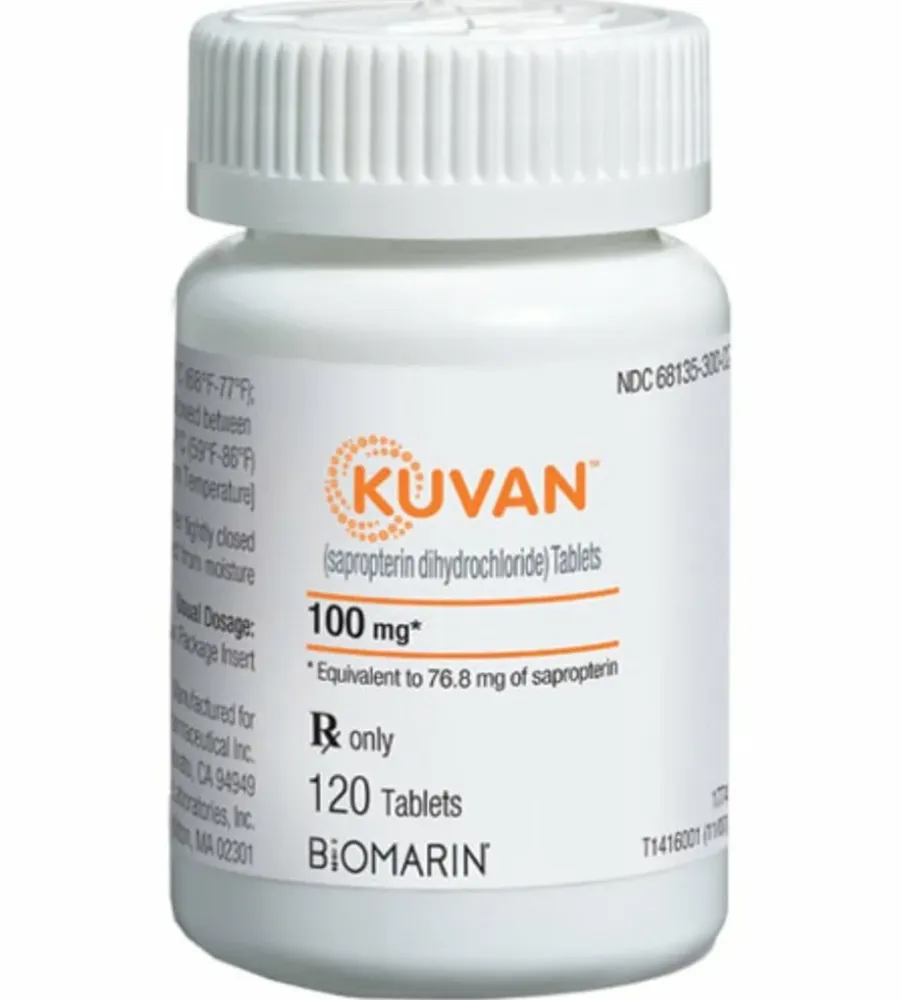
Table of Contents
INSTRUCTIONS FOR MEDICAL USE OF THE MEDICINAL PRODUCT KUVAN® (KUVAN®)
Composition:
Active substance: sapropterin dihydrochloride;
1 soluble tablet contains 100 mg of sapropterin dihydrochloride (equivalent to 77 mg of sapropterin);
Excipients: mannitol (E 421), calcium hydrogen phosphate anhydrous, crospovidone, ascorbic acid (E 300), sodium stearyl fumarate, riboflavin (E 101).
Pharmaceutical form. Soluble tablets.
Main physicochemical properties: round tablets ranging from almost white to light yellow in color, with uneven coloring and imprint "177" on one side.
Pharmacotherapeutic group. Agents affecting the digestive system and metabolism.
ATC code A16AX07.
Pharmacological Properties
Pharmacodynamics
Hyperphenylalaninemia (HPA) is defined as an abnormal increase in phenylalanine levels in the blood and is usually caused by autosomal recessive mutations in genes encoding the enzyme phenylalanine hydroxylase (in the case of phenylketonuria (PKU)) or enzymes involved in the biosynthesis and regeneration of 6R-tetrahydrobiopterin (6R-BH4) (in the case of tetrahydrobiopterin deficiency (BH4)). BH4 deficiency comprises a group of disorders resulting from mutations or deletions in genes encoding one of five enzymes involved in BH4 biosynthesis or recycling. In both cases, phenylalanine cannot be effectively converted into the amino acid tyrosine, leading to elevated blood phenylalanine levels.
Sapropterin is a synthetic analogue of the natural 6R-BH4, which in turn acts as a cofactor for phenylalanine, tyrosine, and tryptophan hydroxylases.
For patients with BH4-responsive PKU, Kuvan® is administered to enhance the activity of phenylalanine hydroxylase. Thus, the drug increases or restores oxidative metabolism of phenylalanine to a level sufficient to reduce or maintain blood phenylalanine concentrations, prevent or reduce further accumulation of phenylalanine, and increase dietary phenylalanine tolerance.
The purpose of administering Kuvan® to patients with BH4 deficiency is to replace deficient BH4 levels and thereby restore phenylalanine hydroxylase activity.
The safety, efficacy, and pharmacokinetics of Kuvan® in pediatric patients under 7 years of age were evaluated in two open-label studies.
The first study was a multicenter, open-label, randomized, controlled trial involving children up to 4 years of age with a confirmed diagnosis of PKU.
During the 26-week study period, 56 children with PKU up to 4 years of age were randomized in a 1:1 ratio to receive either Kuvan® at a dose of 10 mg/kg/day on a phenylalanine-restricted diet or a phenylalanine-restricted diet alone.
According to the study protocol, blood phenylalanine levels were to be maintained within the target range of ≥ 120 µmol/L to < 360 µmol/L with controlled dietary adherence throughout the 26-week study period. If phenylalanine tolerance did not increase by > 20% compared to baseline after approximately 4 weeks, the dose of Kuvan® was increased once to 20 mg/kg/day.
Results of this study demonstrated that daily administration of Kuvan® at 10 or 20 mg/kg/day on a phenylalanine-restricted diet led to a statistically significant improvement in dietary phenylalanine tolerance compared to dietary restriction alone, in order to maintain blood phenylalanine levels within the target range (≥ 120 to < 360 µmol/L). Adjusted mean dietary phenylalanine tolerance in the group receiving Kuvan® on a phenylalanine-restricted diet was 80.6 mg/kg/day, which was statistically significantly higher (p < 0.001) than the adjusted mean dietary phenylalanine tolerance in the group receiving only dietary therapy (50.1 mg/kg/day). During the extended clinical trial period, patients treated with Kuvan® on a phenylalanine-restricted diet showed stable dietary phenylalanine tolerance with a sustained therapeutic effect for over 3.5 years.
The second study was a multicenter, uncontrolled, open-label trial designed to evaluate the safety and impact of Kuvan® at a dose of 20 mg/kg/day on a phenylalanine-restricted diet on the preservation of neurocognitive function in children under 7 years of age at study entry diagnosed with PKU. Part 1 of the study (4 weeks) assessed patient response to Kuvan®; Part 2 (up to 7 years of follow-up) evaluated neurocognitive function using age-appropriate measures and monitored long-term safety in patients who responded to Kuvan® treatment. Patients with pre-existing neurocognitive impairment (IQ < 80) were not included in the study. Ninety-five patients were enrolled in Part 1 and 65 patients in Part 2, of whom 49 patients (75%) completed the study, with 27 patients (42%) showing combined full-scale IQ (FSIQ) scores at Year 7. Mean dietary control levels were maintained between 133 µmol/L and 375 µmol/L blood phenylalanine across all age groups at all time points. Baseline assessments on the Bayley-III scale (102, SD = 9.1, n = 26), WPPSI-III (98.8–100.4, SD = 14.0–15.4, n = 59), and WISC-IV (113, SD = 9.8, n = 4) were within the average range for the normative population.
In 62 patients who underwent at least two FSIQ assessments, the lower bound of the 95% confidence interval for the mean change over an average 2-year period was -1.6 points, which fell within the clinically expected variation of ±5 points. No additional adverse reactions were observed with long-term use of Kuvan® with a mean duration of 6.5 years in children under 7 years of age at study entry.
Pharmacokinetics
Sapropterin is absorbed after oral administration of the dissolved tablet, with maximum blood concentrations (Cmax) reached within 3–4 hours after dosing on an empty stomach. Food affects both the rate and extent of sapropterin absorption. Sapropterin absorption is higher after intake of a high-fat, high-calorie meal compared to fasting, resulting in an average increase in maximum blood concentration by 40–85% within 4–5 hours after administration.
Sapropterin dihydrochloride is primarily metabolized in the liver, forming dihydrobiopterin and biopterin. Since sapropterin dihydrochloride is a synthetic analogue of the natural 6R-BH4, it is reasonable to assume that its metabolism proceeds similarly, including the regeneration of 6R-BH4.
Population Pharmacokinetics
Population pharmacokinetic analysis of sapropterin use, including patients from birth to 49 years of age, showed that body weight is the only covariate significantly affecting clearance or volume of distribution.
Interaction with Other Medicinal Products
In vitro studies showed that sapropterin does not inhibit CYP1A2, CYP2B6, CYP2C8, CYP2C9, CYP2C19, CYP2D6, or CYP3A4/5, and does not induce CYP1A2, 2B6, or 3A4/5.
In vitro studies demonstrated a potential possibility that sapropterin dihydrochloride at therapeutic doses may inhibit P-glycoprotein (P-gp) and breast cancer resistance protein (BCRP) in the intestine. A higher concentration of Kuvan® in the intestine is required to inhibit BCRP than to inhibit P-gp, as the inhibitory effect in the intestine for BCRP (IC50 = 267 µM) is lower than for P-gp (IC50 = 158 µM).
In vivo studies
In healthy study participants, single-dose administration of Kuvan® at the maximum therapeutic dose of 20 mg/kg did not affect the pharmacokinetics of a single dose of digoxin (a P-gp substrate) administered concomitantly. Based on the results of in vitro and in vivo studies, it is unlikely that concomitant administration of Kuvan® will lead to increased systemic exposure of drugs that are BCRP substrates.
Preclinical Safety Data
Preclinical data from standard pharmacological safety studies (effects on CNS, respiratory, cardiovascular, and urogenital systems) and reproductive toxicity studies indicate no specific hazard for humans.
After long-term oral administration to rats, sapropterin dihydrochloride at doses equal to or slightly exceeding the maximum recommended human dose was associated with increased frequency of microscopic morphological changes in kidney tissue (basophilia of renal tubular cells).
Sapropterin showed weak mutagenicity in bacterial cells, and increased frequency of chromosomal aberrations was observed in Chinese hamster lung and ovary cells. However, no genotoxic effects of sapropterin were observed in in vitro studies on human lymphocytes or in in vivo micronucleus tests in mice. In a carcinogenicity study in mice following oral administration at doses up to 250 mg/kg/day (12.5–50 times the therapeutic dose range in humans), no oncogenic activity was observed.
In both pharmacological safety and repeat-dose toxicity studies, vomiting was observed. Vomiting is considered not to be related to the pH of the sapropterin-containing solution.
There was no clear evidence of teratogenic effects in rats and rabbits administered doses approximately 3–10 times the maximum recommended human dose, normalized to body surface area.
Clinical characteristics.
Indications.
- Treatment of hyperphenylalaninemia in adults and children of all age groups who have phenylketonuria and have been shown to be responsive to this treatment;
- treatment of hyperphenylalaninemia in adults and children of all age groups with tetrahydrobiopterin (BH4) deficiency who have been shown to be responsive to this treatment.
Contraindications.
Hypersensitivity to the active substance or to any of the excipients of the medicinal product.
Interaction with other medicinal products and other forms of interaction.
Although concomitant use with drugs that are inhibitors of dihydrofolate reductase (e.g., methotrexate, trimethoprim) has not been studied, such drugs may affect the metabolism of BH4. Therefore, when treating with Kuvan®, these drugs should be used with caution.
Since BH4 is a cofactor of nitric oxide synthase (NO synthase), Kuvan® should be used with caution when administered concomitantly with all drugs (including topical agents) that cause vasodilation by affecting the metabolism or action of nitric oxide (NO), including classical NO donors (e.g., trinitroglycerin, isosorbide dinitrate, sodium nitroprusside, molsidomine), phosphodiesterase type 5 (PDE-5) inhibitors, and minoxidil.
Kuvan® should be prescribed with caution to patients who are concurrently taking levodopa-containing drugs. In patients with BH4 deficiency, cases of onset or worsening of seizures, increased excitability, and irritability have been observed during concomitant use of levodopa.
Special precautions for use.
Dietary compliance
During treatment with Kuvan®, patients must adhere to a diet restricting phenylalanine intake and undergo regular clinical monitoring (such as monitoring blood levels of phenylalanine and tyrosine, dietary control, and psychomotor development).
Low blood levels of phenylalanine and tyrosine
Persistent or recurrent dysfunction of the phenylalanine-tyrosine-dihydroxy-L-phenylalanine (DOPA) metabolic pathway may lead to protein deficiency and insufficient synthesis of neurotransmitters in the body. Prolonged low blood levels of phenylalanine and tyrosine in infants have been associated with impaired neurological development. To ensure adequate control of blood phenylalanine and tyrosine levels and nutritional balance during treatment with Kuvan®, active monitoring of dietary phenylalanine intake and total protein consumption is required.
Health disorders
Patients should consult their physician during illness, as blood phenylalanine levels may increase under such conditions.
Seizures
Kuvan® should be prescribed with caution to patients concurrently receiving levodopa. When levodopa and sapropterin are used concomitantly in patients with BH4 deficiency, cases of seizures, seizure exacerbation, increased excitability, and irritability have been observed.
Discontinuation of treatment
Upon discontinuation of treatment, a rebound effect may occur, defined as an increase in blood phenylalanine levels above those observed prior to treatment initiation.
Sodium content
The medicinal product contains less than 1 mmol (23 mg) of sodium per tablet, i.e., essentially "sodium-free".
Gastritis and esophagitis
Gastritis and esophagitis have been reported as serious adverse reactions. Patients should be monitored for symptoms of these conditions.
Special safety precautions for handling and storage of the medicinal product
Disposal
Any unused medicinal product or waste material must be disposed of in accordance with local requirements.
Handling of the medicinal product
Patients should be advised not to swallow the plastic container with desiccant present in the bottle.
Use during pregnancy or breastfeeding.
Pregnancy
There are limited data on the use of Kuvan® during pregnancy. Animal studies have not shown any direct or indirect harmful effects of the drug on pregnancy, embryonic/fetal development, parturition, or postnatal development.
Data on the risk to pregnant women and the embryo/fetus related to the disease, obtained from an inter-laboratory study on maternal transmission of phenylketonuria, include information on a certain number of pregnancies and live births (from 300 to 1000) in women with PKU. Available data indicate that uncontrolled blood phenylalanine levels above 600 µmol/L result in a very high incidence of neurological and cardiac abnormalities, facial dysmorphism, and growth abnormalities. Therefore, blood phenylalanine levels in women should be strictly controlled before conception and throughout pregnancy to avoid harm to both mother and fetus. Dietary restriction of phenylalanine intake under medical supervision before conception and during pregnancy is the primary treatment measure for this patient group.
The use of Kuvan® should be considered only when strict dietary control fails to adequately reduce blood phenylalanine levels. The drug should be prescribed to pregnant women with caution.
Breastfeeding
Since it is unknown whether sapropterin or its metabolites are excreted in human breast milk, Kuvan® should not be used during breastfeeding.
Fertility
Preclinical animal studies showed no effect of sapropterin on fertility in males or females.
Ability to influence the speed of reaction when driving or operating machinery.
Kuvan® has no or negligible influence on the ability to drive or operate machinery.
Method of Administration and Dosage
Treatment with Kuvan® should be initiated and managed under the supervision of a physician experienced in the treatment of phenylketonuria (PKU) and tetrahydrobiopterin (BH4) deficiency.
During Kuvan® therapy, active monitoring of dietary phenylalanine intake and total protein consumption is necessary to ensure adequate control of blood phenylalanine levels and nutritional balance.
Since hyperphenylalaninemia (HPA) caused by PKU or BH4 deficiency is a chronic condition, Kuvan® is intended for long-term use once a response to treatment has been established.
PKU Therapy
For adults and children with PKU, the initial dose of the drug is 10 mg/kg body weight, taken once daily. The physician will subsequently adjust the dose within the range of 5 to 20 mg/kg/day to achieve and maintain adequate blood phenylalanine levels.
BH4 Deficiency Therapy
For adults and children with BH4 deficiency, Kuvan® should be initiated at a total daily dose of 2 to 5 mg/kg body weight. The dose may be increased up to a maximum of 20 mg/kg/day.
Dosage
Kuvan® tablets are available in a 100 mg strength. Therefore, the recommended daily dose of Kuvan®, calculated according to the patient's body weight, should be rounded to the nearest multiple of 100 mg. For example, a calculated dose of 401–450 mg should be rounded down to 400 mg (corresponding to 4 tablets), while a calculated dose of 451–499 mg should be rounded up to 500 mg (corresponding to 5 tablets).
Establishing Response to Treatment
To prevent irreversible neurological disorders in children and cognitive or psychiatric disorders in adults caused by persistently elevated blood phenylalanine levels, treatment with the drug should be initiated as early as possible.
Response to Kuvan® is determined by a reduction in blood phenylalanine levels. Blood phenylalanine levels should be measured before starting treatment and again after 1 week of treatment at the recommended initial dose. If an inadequate reduction in blood phenylalanine levels is observed, the dose may be increased weekly up to a maximum of 20 mg/kg/day, with weekly monitoring of blood phenylalanine levels for 1 month. During this period, dietary phenylalanine intake should be maintained at a constant level.
An adequate response to treatment is defined as a ≥ 30% reduction in blood phenylalanine levels or achieving a therapeutic blood phenylalanine level, as determined individually by the physician for each patient. Patients who do not achieve such a response within the 1-month testing period are considered non-responders and should not continue treatment with the drug.
Once a response to Kuvan® has been established, the dose may be adjusted within the range of 5 to 20 mg/kg/day based on the individual response to therapy.
Blood levels of phenylalanine and tyrosine, especially in children, should be monitored 1 to 2 weeks after each dose adjustment and frequently thereafter under physician supervision. Patients receiving Kuvan® must continue to adhere to a phenylalanine-restricted diet and undergo regular clinical evaluations (including monitoring of blood phenylalanine and tyrosine levels, nutritional intake, and psychomotor development).
Dose Adjustment
Kuvan® administration may lead to blood phenylalanine levels falling below the desired therapeutic range. To achieve and maintain target blood phenylalanine levels, the dose of sapropterin or dietary phenylalanine intake may need to be adjusted.
If Kuvan® treatment does not adequately control blood phenylalanine levels, patient adherence to the prescribed diet and treatment regimen should be verified before adjusting the Kuvan® dose.
Discontinuation of Kuvan® therapy should only be performed under physician supervision. Since blood phenylalanine levels may rise upon discontinuation, more frequent patient monitoring may be required. Dietary adjustments may also be necessary to maintain blood phenylalanine levels within the desired therapeutic range.
Method of Administration
Kuvan® tablets should be taken with food (to enhance absorption).
Patients with PKU should take one dose of Kuvan® daily at the same time each day, preferably in the morning.
For patients with BH4 deficiency, the total daily dose should be divided into 2 or 3 doses taken throughout the day.
Patients should be warned not to swallow the plastic container with the desiccant found inside the bottle.
The prescribed number of tablets should be placed in a glass or cup containing water and stirred until completely dissolved, which may take several minutes (crushing the tablets may speed up dissolution). The resulting solution may contain small visible particles that do not affect the drug's efficacy. The solution should be consumed within 15–20 minutes after preparation.
Adults
Place the prescribed number of tablets in a glass or cup containing 120–240 mL of water and stir until completely dissolved.
Pediatric Patients
Children with body weight greater than 20 kg
Place the prescribed number of tablets in a glass or cup containing 120 mL of water and stir until completely dissolved.
Children with body weight less than 20 kg
Special devices not included in the drug packaging are required for dosing in children weighing less than 20 kg (e.g., graduated medical cups with markings at 20, 40, 60, and 80 mL; 10 mL and 20 mL oral dosing syringes with 1 mL graduations).
Depending on the prescribed dose in mg/kg/day, dissolve the appropriate number of tablets in the volume of water specified in Tables 1–4 to calculate the volume of solution to administer according to the prescribed daily dose. The prescribed number of tablets for doses of 2, 5, 10, and 20 mg/kg/day should be placed in a graduated medical cup (with appropriate markings at 20, 40, 60, and 80 mL) containing the volume of water specified in Tables 1–4 and stirred until completely dissolved.
If only a portion of this solution is to be administered according to the prescribed daily dose, an oral dosing syringe should be used to withdraw the prescribed volume from the medical cup and transfer it to a glass or cup for administration. For infants unable to drink from a glass or cup, the solution corresponding to the prescribed daily dose can be administered orally using an oral dosing syringe. For volumes ≤ 10 mL, a 10 mL oral dosing syringe should be used; for volumes > 10 mL, a 20 mL oral dosing syringe should be used.
The tables below provide dosing information for children weighing less than 20 kg at doses of 2 mg/kg/day, 5 mg/kg/day, 10 mg/kg/day, and 20 mg/kg/day.
Table 1
Dosing for children with body weight up to 20 kg when administering a dose of 2 mg/kg/day
| Body weight (kg) |
Total dose (mg/day) |
Number of tablets to dissolve |
Volume for dissolution (ml) |
Volume of solution for administration (ml)* |
| 2 |
4 |
1 |
80 |
3 |
| 3 |
6 |
1 |
80 |
5 |
| 4 |
8 |
1 |
80 |
6 |
| 5 |
10 |
1 |
80 |
8 |
| 6 |
12 |
1 |
80 |
10 |
| 7 |
14 |
1 |
80 |
11 |
| 8 |
16 |
1 |
80 |
13 |
| 9 |
18 |
1 |
80 |
14 |
| 10 |
20 |
1 |
80 |
16 |
| 11 |
22 |
1 |
80 |
18 |
| 12 |
24 |
1 |
80 |
19 |
| 13 |
26 |
1 |
80 |
21 |
| 14 |
28 |
1 |
80 |
22 |
| 15 |
30 |
1 |
80 |
24 |
| 16 |
32 |
1 |
80 |
26 |
| 17 |
34 |
1 |
80 |
27 |
| 18 |
36 |
1 |
80 |
29 |
| 19 |
38 |
1 |
80 |
30 |
| 20 |
40 |
1 |
80 |
32 |
* Reflects the volume of the total daily dose.
Use the solution within 20 minutes after preparation, otherwise discard.
Table 2
Dosing for children with body weight up to 20 kg at a dose of 5 mg/kg per day
| Body weight (kg) |
Total dose (mg/day) |
Number of tablets to dissolve |
Volume for dissolution (ml) |
Volume of solution for administration (ml)* |
| 2 |
10 |
1 |
40 |
4 |
| 3 |
15 |
1 |
40 |
6 |
| 4 |
20 |
1 |
40 |
8 |
| 5 |
25 |
1 |
40 |
10 |
| 6 |
30 |
1 |
40 |
12 |
| 7 |
35 |
1 |
40 |
14 |
| 8 |
40 |
1 |
40 |
16 |
| 9 |
45 |
1 |
40 |
18 |
| 10 |
50 |
1 |
40 |
20 |
| 11 |
55 |
1 |
40 |
22 |
| 12 |
60 |
1 |
40 |
24 |
| 13 |
65 |
1 |
40 |
26 |
| 14 |
70 |
1 |
40 |
28 |
| 15 |
75 |
1 |
40 |
30 |
| 16 |
80 |
1 |
40 |
32 |
| 17 |
85 |
1 |
40 |
34 |
| 18 |
90 |
1 |
40 |
36 |
| 19 |
95 |
1 |
40 |
38 |
| 20 |
100 |
1 |
40 |
40 |
* Reflects the volume of the total daily dose.
Use the solution within 20 minutes after preparation; otherwise, discard.
Table 3
Dosage for children with body weight up to 20 kg when administering a dose of 10 mg/kg per day
| Body weight (kg) |
Total dose (mg/day) |
Number of tablets to dissolve |
Volume for dissolution (ml) |
Volume of solution for administration (ml)* |
| 2 |
20 |
1 |
20 |
4 |
| 3 |
30 |
1 |
20 |
6 |
| 4 |
40 |
1 |
20 |
8 |
| 5 |
50 |
1 |
20 |
10 |
| 6 |
60 |
1 |
20 |
12 |
| 7 |
70 |
1 |
20 |
14 |
| 8 |
80 |
1 |
20 |
16 |
| 9 |
90 |
1 |
20 |
18 |
| 10 |
100 |
1 |
20 |
20 |
| 11 |
110 |
2 |
40 |
22 |
| 12 |
120 |
2 |
40 |
24 |
| 13 |
130 |
2 |
40 |
26 |
| 14 |
140 |
2 |
40 |
28 |
| 15 |
150 |
2 |
40 |
30 |
| 16 |
160 |
2 |
40 |
32 |
| 17 |
170 |
2 |
40 |
34 |
| 18 |
180 |
2 |
40 |
36 |
| 19 |
190 |
2 |
40 |
38 |
| 20 |
200 |
2 |
40 |
40 |
* Reflects the volume of the total daily dose.
Discard the solution if it has not been used within 20 minutes after preparation.
Table 4
Dosing for children with body weight up to 20 kg when administering a dose of 20 mg/kg per day
| Body weight (kg) |
Total dose (mg/day) |
Number of tablets to dissolve |
Volume for dissolution (ml) |
Volume of solution for administration (ml)* |
| 2 |
40 |
1 |
20 |
8 |
| 3 |
60 |
1 |
20 |
12 |
| 4 |
80 |
1 |
20 |
16 |
| 5 |
100 |
1 |
20 |
20 |
| 6 |
120 |
2 |
40 |
24 |
| 7 |
140 |
2 |
40 |
28 |
| 8 |
160 |
2 |
40 |
32 |
| 9 |
180 |
2 |
40 |
36 |
| 10 |
200 |
2 |
40 |
40 |
| 11 |
220 |
3 |
60 |
44 |
| 12 |
240 |
3 |
60 |
48 |
| 13 |
260 |
3 |
60 |
52 |
| 14 |
280 |
3 |
60 |
56 |
| 15 |
300 |
3 |
60 |
60 |
| 16 |
320 |
4 |
80 |
64 |
| 17 |
340 |
4 |
80 |
68 |
| 18 |
360 |
4 |
80 |
72 |
| 19 |
380 |
4 |
80 |
76 |
| 20 |
400 |
4 |
80 |
80 |
* Reflects the volume of the total daily dose.
Discard the solution if it has not been used within 20 minutes after preparation.
To clean the oral dosing syringe, remove the plunger from the barrel. Wash both parts of the oral dosing syringe and the medicine cup with warm water and air-dry. After drying, reinsert the plunger into the barrel. Store the oral dosing syringe and medicine cup for subsequent use.
Specific patient groups
Elderly patients
The safety and efficacy of Kuvan® in patients aged over 65 years have not been established. Kuvan® should be administered with caution in elderly patients.
Patients with renal or hepatic impairment
The safety and efficacy of Kuvan® in patients with renal or hepatic impairment have not been established. The drug should be administered with caution in such patients.
Children
The drug is intended for use in children of all age groups. The same dosage should be used for treatment of adults and children.
Overdose
When sapropterin dihydrochloride was administered at doses higher than the maximum recommended dose of 20 mg/kg/day, cases of headache and dizziness were observed. In case of overdose, symptomatic treatment should be administered. In a study with a single supratherapeutic dose (100 mg/kg, five times the maximum recommended dose), shortening of the QT interval (-8.32 ms) was observed; these data should be taken into account when treating patients with pre-existing shortened QT interval (e.g., patients with inherited short QT syndrome).
Adverse Reactions
Overall Safety Profile
Adverse reactions were observed in approximately 35% of 579 patients aged 4 years and older who were treated with sapropterin dihydrochloride (at doses of 5 to 20 mg/kg/day) in clinical trials of Kuvan®. The most commonly reported adverse reactions were headache and rhinorrhea.
In subsequent clinical trials, adverse reactions were observed in approximately 30% of 27 children under 4 years of age treated with sapropterin dihydrochloride (at doses of 10 to 20 mg/kg/day). The most commonly reported adverse reactions were decreased amino acid levels (hypophenylalaninemia), vomiting, and rhinitis.
List of Adverse Reactions
The adverse reactions listed below were identified in pivotal clinical trials and during post-marketing use of Kuvan®. The frequency of these reactions is defined as follows: very common (≥ 1/10), common (≥ 1/100 to < 1/10), uncommon (≥ 1/1000 to < 1/100), rare (≥ 1/10,000 to < 1/1000), very rare (< 1/10,000), frequency not known (cannot be estimated from available data).
Immune System Disorders
Frequency not known: hypersensitivity reactions (including serious allergic reactions) and rash.
Metabolism and Nutrition Disorders
Common: hypophenylalaninemia.
Nervous System Disorders
Very common: headache.
Respiratory, Thoracic and Mediastinal Disorders
Very common: rhinorrhea.
Common: pharyngolaryngeal pain, nasal congestion, cough.
Gastrointestinal Disorders
Common: diarrhea, nausea, dyspepsia, vomiting, abdominal pain.
Frequency not known: gastritis, esophagitis.
Infections and Infestations
Common: pharyngitis.
Pediatric Patient Population
The frequency, type, and severity of adverse reactions in children were similar to those observed in adults.
Shelf Life. 3 years.
Storage Conditions. Store at a temperature not exceeding 25 °C.
Keep in a tightly closed container to protect from moisture.
Keep out of reach of children.
Packaging.
30 or 120 tablets in a polyethylene bottle closed with an aluminum membrane and child-resistant cap. Each bottle contains a small plastic container with a desiccant (silica gel). 1 bottle per cardboard box.
Prescription Category. Prescription only.
Manufacturer.
BioMarin International Limited.
Manufacturer's Address.
Shanbally, Ringaskiddy, Co. Cork, Ireland.