Kstandin
Ukraine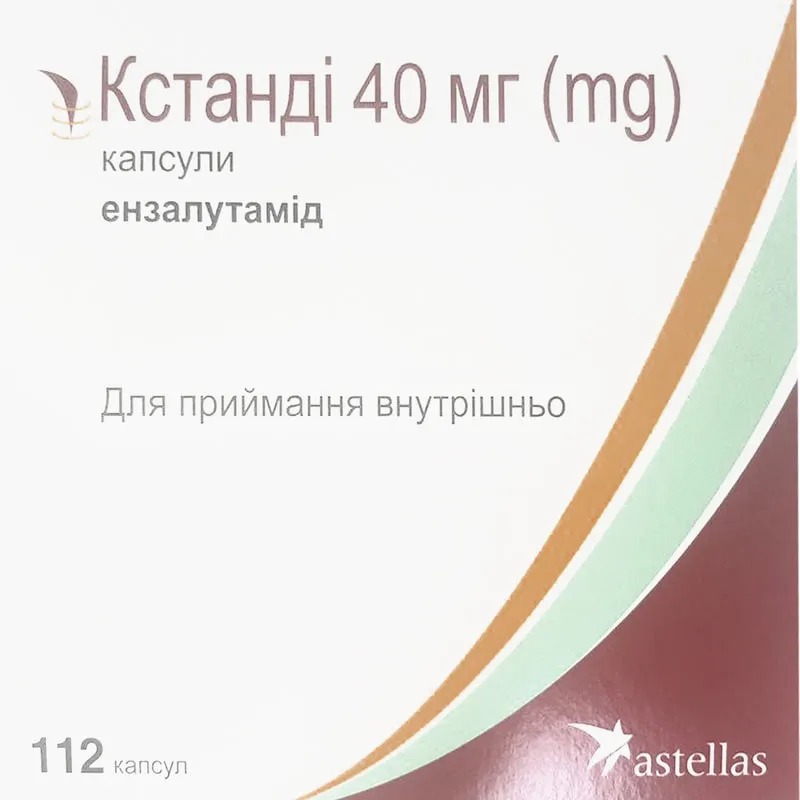
Table of Contents
I N S T R U C T I O N for medical use of the medicinal product XTANDI (XTANDI)
Composition:
Active substance: enzalutamide;
1 capsule contains 40 mg of enzalutamide;
Excipients: caprylocaproyl macrogol glycerides, butylated hydroxyanisole (E 320), butylated hydroxytoluene (E 321), capsule shell: gelatin, sorbitol-sorbitan solution, glycerol, titanium dioxide (E 171), printing ink.
Pharmaceutical form. Capsules.
Main physicochemical characteristics: soft, opaque, elongated-shaped capsules, white or almost white, marked with "ENZ" in black ink.
Pharmacotherapeutic group. Hormone antagonists and related agents, antiandrogens. ATC code L02BB04.
Pharmacological Properties.
Pharmacodynamics.
Mechanism of Action.
The development of prostate cancer depends on the presence of androgens and responds to the inhibition of androgen receptor activity in tumor cells. Despite low or very low levels of androgens in blood plasma, which are undetectable, androgen receptor activity in tumor cells continues to promote disease progression. Androgen receptor stimulation of tumor cell growth requires receptor translocation into the cell nucleus and binding to DNA. Enzalutamide is a potent androgen receptor inhibitor that blocks multiple steps in the androgen receptor signaling pathway. Enzalutamide competitively inhibits the binding of androgens to androgen receptors, suppresses nuclear translocation of activated receptors, and inhibits binding of activated androgen receptors to DNA, even under conditions of androgen receptor overexpression and in tumor cells resistant to antiandrogens. Treatment with enzalutamide suppresses prostate cancer cell growth and may induce cell death and tumor regression. In preclinical studies, enzalutamide lacked androgen receptor agonist activity.
Pharmacodynamic Properties.
In a phase 3 clinical study (AFFIRM) involving patients previously treated with docetaxel chemotherapy, at least a 50% reduction in prostate-specific antigen (PSA) levels from baseline was observed in 54% of patients receiving enzalutamide compared to 1.5% of patients receiving placebo.
In another phase 3 clinical trial (PREVAIL) involving patients who had not previously received chemotherapy, patients receiving enzalutamide demonstrated a significantly higher rate of PSA decline (defined as ≥ 50% reduction from baseline) compared to those receiving placebo: 78.0% vs. 3.5% (difference – 74.5%, p < 0.0001).
In a phase 2 clinical trial (TERRAIN) involving chemotherapy-naïve patients, patients receiving enzalutamide demonstrated a significantly higher rate of PSA decline (defined as ≥ 50% reduction from baseline) compared to those receiving bicalutamide: 82.1% vs. 20.9% (difference – 61.2%, p < 0.0001).
In a single-cohort study of patients (9785-CL-0410) who had previously received abiraterone (plus prednisone) for at least 24 weeks, ≥ 50% reduction in PSA levels from baseline was observed in 22.4% of patients. Based on prior chemotherapy history, the proportion of patients with ≥ 50% PSA reduction was 22.1% and 23.2% in the no prior chemotherapy and prior chemotherapy groups, respectively.
In the clinical study MDV3100-09 (STRIVE) involving patients with non-metastatic and metastatic castration-resistant prostate cancer (CRPC), a significantly higher confirmed response rate in total PSA (defined as ≥ 50% reduction from baseline) was demonstrated in the enzalutamide group compared to the bicalutamide group: 81.3% vs. 31.3%, respectively (difference = 50.0%, p < 0.0001).
In the clinical study MDV3100-14 (PROSPER) involving patients with non-metastatic CRPC, a significantly higher confirmed response rate in total PSA (defined as ≥ 50% reduction from baseline) was demonstrated in the enzalutamide group compared to the placebo group: 76.3% vs. 2.4%, respectively (difference – 73.9%, p < 0.0001).
Clinical Efficacy and Safety
The efficacy of enzalutamide was established in three randomized, placebo-controlled, multicenter phase 3 clinical studies [MDV3100-14 (PROSPER), CRPC2 (AFFIRM), MDV3100-03 (PREVAIL)] in patients with metastatic prostate cancer progressing despite androgen deprivation therapy (using a luteinizing hormone-releasing hormone (LHRH) analogue or after bilateral orchidectomy). The PREVAIL study included chemotherapy-naïve patients; the AFFIRM study included patients previously treated with docetaxel; the PROSPER study included patients with non-metastatic CRPC. Additionally, efficacy in patients with metastatic hormone-sensitive prostate cancer (mHSPC) was established in one randomized, placebo-controlled, multicenter phase 3 clinical study [9785-CL-0335 (ARCHES)]. All patients received an LHRH analogue or had undergone bilateral orchidectomy. In the investigational group, the medicinal product Kstandi was administered orally at a dose of 160 mg once daily. In the four clinical studies (ARCHES, PROSPER, AFFIRM, and PREVAIL), patients in the control group received placebo; concomitant prednisone use was allowed but not required (maximum permitted daily prednisone dose of 10 mg or equivalent).
Independent changes in PSA levels do not always determine clinical efficacy. Therefore, in the four studies, patients were advised to continue assigned therapy until symptoms meeting study discontinuation criteria occurred, as specified below for each study.
Study 9785-CL-0335 (ARCHES) (patients with mHSPC)
The ARCHES study included 1150 patients with mHSPC, randomized in a 1:1 ratio to receive enzalutamide plus ADT or placebo plus ADT (ADT defined as an LHRH analogue or bilateral orchidectomy). Patients received enzalutamide 160 mg once daily (N = 574) or placebo (N = 576).
Patients with metastatic prostate cancer confirmed by positive imaging findings (bone disease) or documented metastatic lesions identified by CT or MRI (for soft tissues) met inclusion criteria. Patients whose disease was limited to regional pelvic lymph nodes were excluded. Patients could receive up to 6 cycles of docetaxel therapy within 2 months from the first day of study drug administration, provided there were no signs of disease progression during or after completion of docetaxel therapy. Patients with known or suspected brain metastases or active leptomeningeal disease, or with a history of seizures or any condition predisposing to seizures, were excluded.
Demographic and baseline characteristics were well balanced between the two treatment groups. The median age at randomization was 70 years in both therapy groups. The majority of patients in the overall population were Caucasian (80.5%); 13.5% were Asian and 1.4% were Black. At study initiation, Eastern Cooperative Oncology Group performance status (ECOG PS) was 0 in 78% and 1 in 22% of patients. Participants were stratified by low or high disease burden and prior docetaxel therapy for prostate cancer. Thirty-seven percent of patients had low disease burden, and 63% had high disease burden. Eighty-two percent of patients had not received prior docetaxel therapy, 2% had received 1–5 cycles, and 16% had received 6 prior cycles. Concomitant docetaxel therapy was not permitted.
Radiographic progression-free survival (rPFS), based on independent central review, was the primary endpoint, defined as time from randomization to first objective evidence of radiographic disease progression or death (due to any cause from randomization up to 24 weeks after study drug discontinuation), whichever occurred first.
Enzalutamide demonstrated a statistically significant 61% reduction in the risk of rPFS compared to placebo [HR = 0.39 (95% CI: 0.30, 0.50); p < 0.0001]. Consistent rPFS results were observed in patients with high or low disease burden and in patients with or without prior docetaxel therapy. The median time to rPFS was not reached in the enzalutamide group and was 19.0 months (95% CI: 16.6, 22.2) in the placebo group.
Key secondary efficacy endpoints evaluated in the study included time to PSA progression, time to initiation of new antineoplastic therapy, proportion of undetectable PSA (reduction to < 0.2 µg/L), and objective response rate (RECIST 1.1 based on independent review). Statistically significant improvement was demonstrated for all these secondary endpoints in patients receiving enzalutamide compared to those receiving placebo.
Another key secondary efficacy endpoint evaluated in the study was overall survival. In a pre-specified interim analysis of overall survival conducted when 356 deaths were recorded, a statistically significant 34% reduction in the risk of death was demonstrated in the group of patients randomized to receive enzalutamide compared to the group randomized to receive placebo [HR = 0.66, (95% CI: 0.53; 0.81), p < 0.0001]. The median overall survival time was not reached in either treatment group. The estimated median follow-up time for all patients was 44.6 months.
Study MDV3100-14 (PROSPER) (patients with non-metastatic CRPC)
The PROSPER study included 1401 patients with non-metastatic CRPC at high risk of progression and asymptomatic, who continued androgen deprivation therapy (ADT; use of an LHRH analogue or prior bilateral orchidectomy). Patient eligibility required a PSA doubling time ≤ 10 months, PSA level ≥ 2 ng/mL, and confirmation of non-metastatic disease by centralized independent blinded assessment (CIBA).
Patients with mild to moderate heart failure (NYHA class I or II) and patients taking medications that lower the seizure threshold were allowed to participate. Patients with a history of seizures or conditions predisposing to seizures, or those who had previously received certain prostate cancer treatments (i.e., chemotherapy, ketoconazole, abiraterone acetate, aminoglutethimide, and/or enzalutamide) were excluded.
Patients were randomized 2:1 to receive enzalutamide 160 mg orally once daily (N = 933) or placebo (N = 468). Patients were stratified by prostate-specific antigen doubling time (PSADT) (< 6 months or ≥ 6 months) and use of bone-modifying agents (yes or no).
Demographic and baseline characteristics were well balanced between both groups. The median age at randomization was 74 years in the enzalutamide group and 73 years in the placebo group. The majority of patients (approximately 71%) in the study were Caucasian; 16% were Asian, 2% were Black. Eastern Cooperative Oncology Group (ECOG) performance status was 0 in 81% of patients and 1 in 19% of patients.
Metastasis-free survival (MFS) was the primary endpoint, defined as time from randomization to radiographic progression or death within 112 days after treatment discontinuation without evidence of radiographic progression, whichever occurred first. Key secondary endpoints evaluated in the study included time to PSA progression, time to initiation of new antineoplastic therapy (TNT), overall survival (OS). Additional secondary endpoints included time to initiation of cytotoxic chemotherapy and chemotherapy-free survival.
Enzalutamide demonstrated a statistically significant 71% relative risk reduction in radiographic progression or death compared to placebo [HR = 0.29 (95% CI: 0.24–0.35), p < 0.0001]. The median MFS was 36.6 months (95% CI: 33.1–NR) in the enzalutamide group and 14.7 months (95% CI: 14.2–15.0) in the placebo group.
Consistent MFS results were also observed across all pre-specified patient subgroups stratified by PSADT (< 6 months or ≥ 6 months), demographic region (North America, Europe, other regions), age (<75 or ≥75 years), and prior use of bone-modifying agents (yes or no).
The final analysis of overall survival, conducted after 466 deaths were recorded, showed a statistically significant improvement in overall survival in patients randomized to enzalutamide compared to those randomized to placebo, with a 26.6% reduction in the risk of death [hazard ratio (HR) = 0.734, (95% CI: 0.608; 0.885), p = 0.0011]. The median follow-up time was 48.6 and 47.2 months for the enzalutamide and placebo groups, respectively. Thirty-three percent of patients receiving enzalutamide and 65% of patients receiving placebo received at least one subsequent cycle of antineoplastic therapy, which may prolong overall survival.
Enzalutamide demonstrated a statistically significant 93% relative risk reduction in PSA progression compared to placebo [HR = 0.07 (95% CI: 0.05–0.08), p < 0.0001]. The median time to PSA progression was 37.2 months (95% CI: 33.1–NR) in the enzalutamide group and 3.9 months (95% CI: 3.8, 4.0) in the placebo group.
Enzalutamide demonstrated a statistically significant prolongation in time to initiation of new antineoplastic therapy compared to placebo [HR = 0.21 (95% CI: 0.17–0.26), p < 0.0001]. The median time to initiation of new antineoplastic therapy was 39.6 months (95% CI: 37.7–NR) in the enzalutamide group and 17.7 months (95% CI: 16.2–19.7) in the placebo group.
Study MDV3100-09 (STRIVE) (patients with non-metastatic/metastatic CRPC not previously treated with chemotherapy)
The STRIVE study included 396 patients with CRPC (non-metastatic or metastatic) who had confirmed (biochemical or radiological) disease progression despite initial androgen deprivation therapy; patients were randomized to receive either enzalutamide 160 mg once daily (N = 198) or bicalutamide 50 mg once daily (N = 198). PFS (progression-free survival) was established as the primary endpoint, defined as time from randomization to first objective evidence of progression based on radiological findings, PSA progression, or death during the study.
The median PFS was 19.4 months (95% CI: 16.5, not reached) in the enzalutamide group compared to 5.7 months (95% CI: 5.6, 8.1) in the bicalutamide group [HR = 0.24 (95% CI: 0.18, 0.32), p < 0.0001].
A significant advantage of enzalutamide over bicalutamide and consistent improvement in PFS were observed across all pre-specified patient subgroups. Among the subgroup of patients with non-metastatic CRPC (N = 139), PFS was recorded in 19 of 70 (27.1%) patients receiving enzalutamide and in 49 of 69 (71.0%) patients receiving bicalutamide (68 events total). The hazard ratio was 0.24 (95% CI: 0.14, 0.42), and the median PFS duration was not reached in the enzalutamide group versus 8.6 months in the bicalutamide group.
Study 9785-CL-0222 (TERRAIN) (patients with metastatic CRPC not previously treated with chemotherapy)
The TERRAIN study included 375 patients with metastatic CRPC who had not received chemotherapy or antiandrogen therapy. They were randomized to receive either enzalutamide 160 mg once daily (N = 184) or bicalutamide 50 mg once daily (N = 191). The median PFS was 15.7 months for patients receiving enzalutamide versus 5.8 months for patients receiving bicalutamide [HR = 0.44 (95% CI: 0.34, 0.57), p < 0.0001]. Progression-free survival was defined based on objective radiological evidence of disease progression assessed by independent central review of skeletal-related events, initiation of new antineoplastic therapy, or death from any cause, whichever occurred first. Consistent improvement in PFS was observed across all pre-specified patient subgroups.
Study MDV3100-03 (PREVAIL) (patients with CRPC not previously treated with chemotherapy)
A total of 1717 asymptomatic or mildly symptomatic patients who had not received chemotherapy were randomized 1:1 to receive enzalutamide 160 mg once daily (N = 872) or placebo once daily (N = 845). The study included patients with visceral disorders, with a history of mild to moderate heart failure [NYHA class I or II heart failure], and patients taking medications that may lower the seizure threshold. Patients with a history of seizures or conditions predisposing to seizures, and patients with moderate or severe pain due to prostate cancer were excluded. Treatment in the study continued until disease progression (radiographic progression, bone complications, or clinical progression) and initiation of cytotoxic therapy or another investigational drug, or until development of intolerable toxicity.
Demographic parameters and baseline disease characteristics were balanced between treatment groups. The median age was 71 years (42–93 years), and the racial distribution was: Caucasian 77%, Asian 10%, African American 2%, other or unspecified races 11%. ECOG performance status was 0 in 68% and 1 in 32% of patients.
At baseline, pain score was 0–1 (no symptoms) in 67% of patients and 2–3 (mild symptoms) in 32% of patients according to the Brief Pain Inventory (short form) (pain intensity over the past 24 hours on a scale from 0 to 10). Approximately 45% of patients had soft tissue disease at study initiation, and 12% had visceral (lung and/or liver) metastases. The co-primary efficacy endpoints were overall survival and radiographic progression-free survival (rPFS). In addition to primary endpoints, efficacy was assessed by time to initiation of cytotoxic chemotherapy, best overall response in soft tissues, time to first skeletal complication, PSA response (≥ 50% reduction from baseline), duration of PSA progression, and time to deterioration in FACT-P total score.
Radiographic progression was assessed by sequential imaging using PCWG2 criteria (for bone lesions) and/or RECIST v1.1 (for soft tissue involvement). Centralized assessment of radiographic progression was used for rPFS evaluation.
In an interim analysis of overall survival after 540 deaths, enzalutamide treatment demonstrated a statistically significant improvement in overall survival compared to placebo, with a 29.4% reduction in the risk of death [hazard ratio (HR) = 0.706 (95% CI: 0.60; 0.84), p < 0.0001]. An updated analysis was performed with 784 deaths.
Updated survival analysis results (median survival 35.3 and 31.3 months, respectively [HR = 0.77 (95% CI: 0.67; 0.88), p < 0.0002]) were consistent with interim analysis data (median survival 32.4 and 30.2 months, respectively [HR = 0.71 (95% CI: 0.60; 0.84), p < 0.00041]).
In the updated analysis, 52% of patients receiving enzalutamide and 81% of patients receiving placebo received treatment for metastatic castration-resistant prostate cancer, which may prolong overall survival.
The final 5-year analysis of the PREVAIL study showed that patients receiving enzalutamide maintained a statistically significant increase in overall survival (OS) compared to placebo group patients [HR = 0.835, (95% CI: 0.75, 0.93); p-value = 0.0008], despite 28% of placebo group patients switching to enzalutamide. The 5-year OS rate was 26% for the enzalutamide group compared to 21% for the placebo group.
In a planned rPFS analysis, a statistically significant improvement was observed in treatment groups with an 81.4% reduction in the risk of radiographic progression or death in the enzalutamide group [HR = 0.19 (95% CI: 0.15; 0.23), p < 0.0001]. Progression occurred in 118 (14%) patients receiving enzalutamide and in 321 (40%) patients receiving placebo. The median rPFS was not reached (95% CI: 3.7; 5.4) in the placebo group. Consistent improvement in rPFS was observed across all previously defined patient subgroups (e.g., age, baseline ECOG status, baseline PSA and LDH levels, Gleason score at diagnosis, visceral organ involvement at screening). In a planned rPFS analysis during follow-up, a statistically significant improvement was shown in treatment groups with a 69.3% reduced risk of radiographic progression or death in the enzalutamide group [HR = 0.31 (95% CI: 0.27; 0.35), p < 0.0001]. The median rPFS was 19.7 months in the enzalutamide group and 5.4 months in the placebo group.
In addition to co-primary efficacy endpoints, statistically significant improvement was observed in the following prospectively defined endpoints.
The median time to initiation of cytotoxic chemotherapy was 28.0 months for patients receiving enzalutamide and 10.8 months for patients receiving placebo [HR = 0.35; (95% CI: 0.30; 0.40), p < 0.0001].
Patients in the enzalutamide group with measurable disease at baseline and with objective response in soft tissues were 58.8% (95% CI: 53.8; 63.7) compared to 5% (95% CI: 3.0; 7.7) of patients receiving placebo. The absolute difference in objective response in soft tissues between enzalutamide and placebo groups was 53.9% [(95% CI: 48.5; 59.1), p < 0.0001]. Complete response was observed in 19.7% of patients receiving enzalutamide compared to 1.0% of patients receiving placebo, and partial response was observed in 39.1% of patients receiving enzalutamide versus 3.9% of patients receiving placebo.
Enzalutamide significantly reduced the risk of first skeletal complication by 28% [HR = 0.718 (95% CI: 0.61; 0.84), p < 0.0001]. Skeletal complications were defined as radiation therapy or surgery to bone due to prostate cancer, pathological bone fracture, spinal cord compression, or change in antineoplastic therapy to treat bone pain. The analysis included 587 skeletal complications, of which 389 (66.3%) were due to radiation therapy, 79 (13.5%) were spinal cord compression, 70 (11.9%) were pathological bone fractures, 45 (7.6%) were changes in antineoplastic therapy to treat bone pain, and 22 (3.7%) were bone surgery.
Patients receiving enzalutamide had a significantly higher PSA response (defined as ≥ 50% reduction from baseline) compared to patients receiving placebo: 78% vs. 3.5% (difference = 74.5%, p < 0.0001).
The median time to PSA progression according to PCWG2 criteria was 11.2 months in the enzalutamide group and 2.8 months in the placebo group [HR = 0.17 (95% CI: 0.15; 0.20), p < 0.0001].
Enzalutamide treatment reduced the risk of deterioration in FACT-P score by 37.5% compared to placebo (p < 0.001). The median time to deterioration in FACT-P score was 11.3 months in the enzalutamide group and 5.6 months in the placebo group.
Study CRPC2 (AFFIRM) (patients with metastatic prostate cancer previously treated with chemotherapy)
The efficacy and safety of enzalutamide in patients with metastatic castration-resistant prostate cancer previously treated with docetaxel and orchidectomy were evaluated in a randomized, placebo-controlled, multicenter phase 3 clinical study. 1199 patients were randomized 2:1 to receive enzalutamide 160 mg once daily (N = 800) or placebo once daily (N = 399). Patients could take prednisone, but it was not mandatory (maximum daily prednisolone or equivalent dose was 10 mg). Patients randomized to each group continued treatment until disease progression (radiographic progression or bone complication) and initiation of new systemic antineoplastic therapy or until development of intolerable toxicity or discontinuation.
Demographic parameters and baseline disease characteristics were balanced between treatment groups. The median age was 69 years (41–92 years), and the racial distribution was: 93% Caucasian, 4% African American, 1% Asian, and 2% other races. ECOG performance status was 0–1 in 91.5% of patients and 2 in 8.5% of patients; 28% of patients had a pain score ≥ 4 (patients reported increased pain over the past 24 hours, assessed over 7 days prior to randomization) on the Brief Pain Inventory (short form). Bone metastases were present in most patients (91%), and visceral involvement of lungs and/or liver was present in 23%. At study entry, 41% of patients had progression only by PSA level, while 59% had progression by radiological findings. At study entry, 51% of patients received bisphosphonates.
Patients with medical conditions predisposing to seizures were excluded from the AFFIRM study (see section "Adverse Reactions"), as were patients taking medications that lower the seizure threshold, and patients with clinically significant cardiovascular diseases such as uncontrolled hypertension, myocardial infarction or unstable angina in the past, heart failure (NYHA class III or IV without ejection fraction ≥ 45%), clinically significant ventricular arrhythmia, or AV block without a permanent pacemaker.
The protocol-specified interim analysis after 520 deaths showed a statistically significant advantage of enzalutamide use regarding overall survival. The study demonstrated a statistically significant clinical benefit for patients receiving enzalutamide compared to those receiving placebo (median survival time was 18.4 vs. 13.6 months, respectively), [HR = 0.63 (95% CI: 0.53; 0.75), p < 0.0001].
In addition to the observed improvement in overall survival, key secondary assessment criteria (PSA progression, radiographic progression-free survival, and time to first bone complication) favored enzalutamide, and statistically significant results were demonstrated by multiple testing.
Radiographic progression-free survival (investigator assessment using Response Evaluation Criteria in Solid Tumors (RECIST) version 1.1 for soft tissues or appearance of 2 or more bone lesions on bone scintigraphy) was 8.3 months in patients receiving enzalutamide and 2.9 months in patients receiving placebo [HR = 0.40 (95% CI: 0.35; 0.47), p < 0.0001]. The analysis included 216 deaths without documented disease progression and 645 cases of documented progression, of which 303 (47%) were soft tissue-related, 268 (42%) were due to progression of bone metastases, and 74 (11%) were related to both soft tissue and bone involvement.
Confirmed PSA reduction of 50% or 90% was observed in 54% and 24.8%, respectively, for patients receiving enzalutamide, and in 1.5% and 0.9%, respectively, for patients receiving placebo (p < 0.0001). The median time to PSA progression was 8.3 months in patients receiving enzalutamide and 3 months in patients receiving placebo [HR = 0.25 (95% CI: 0.20; 0.30), p < 0.0001].
The median time to first bone complication was 16.7 months in patients receiving enzalutamide and 13.3 months in patients receiving placebo [HR = 0.69 (95% CI: 0.57; 0.84), p < 0.0001].
Bone complications were defined as radiation therapy or surgical intervention to bone, pathological bone fracture, spinal cord compression, or change in antineoplastic therapy to treat bone pain. The analysis included 448 bone complications, of which 277 (62%) were bone radiation therapy, 95 (21%) were spinal cord compression, 47 (10%) were pathological bone fractures, 36 (8%) were changes in antineoplastic therapy to treat bone pain, and 7 (2%) were surgical interventions on bone.
Study 9785-CL-0410 (enzalutamide after abiraterone in patients with metastatic CRPC)
The study included 214 patients with progressive metastatic prostate cancer who received enzalutamide (160 mg once daily) after completing at least 24 weeks of treatment with abiraterone acetate plus prednisolone. The median radiographic progression-free survival (primary endpoint of the study) was 8.1 months (95% CI: 6.1; 8.3). The median OS was not reached. PSA response (defined as ≥ 50% reduction from baseline) was observed in 22.4% of patients (95% CI: 17.0; 28.6). For 69 patients who had previously received chemotherapy, the median radiographic progression-free survival was 7.9 months (95% CI: 5.5; 10.8). PSA response was observed in 23.2% of patients (95% CI: 13.9; 34.9). For 145 patients who had not previously received chemotherapy, the median radiographic progression-free survival was 8.1 months (95% CI: 5.7; 8.3). PSA response was observed in 22.1% of patients (95% CI: 15.6; 29.7).
Limited response to enzalutamide treatment after abiraterone was observed in some patients, although the reason for this is currently unknown. The study design did not allow identification of patients who might benefit from treatment or the optimal sequence of enzalutamide and abiraterone to achieve optimal outcomes.
Elderly Patients.
Of the 4403 patients who received enzalutamide in phase 3 studies, 3451 patients (78%) were aged 65 years or older, including 1540 patients (35%) aged over 75 years. No differences in safety and efficacy of enzalutamide use were observed between elderly and younger patients.
Pharmacokinetics.
Enzalutamide has poor water solubility. The solubility of this drug is enhanced by the use of caprylocaproyl macrogol glycerides and an emulsifier/surfactant. In preclinical studies, enzalutamide absorption was increased when dissolved in caprylocaproyl macroglycerides.
The pharmacokinetics of enzalutamide were studied in patients with prostate cancer and in healthy volunteers. The mean elimination half-life (T1/2) of enzalutamide in patients after a single oral dose is 5.8 days (range 2.8 to 10.2 days), and steady-state concentration is reached after approximately one month. With daily oral administration, enzalutamide accumulates approximately 8.3 times faster than with a single dose. Daily fluctuations in plasma concentration are minimal (peak-to-trough ratio 1.25). Enzalutamide is primarily eliminated via hepatic metabolism, forming an active metabolite that is as active as enzalutamide and circulates in plasma at approximately the same concentration as enzalutamide.
Absorption
Maximum plasma concentration (Cmax) of enzalutamide in patients was observed 1–2 hours after administration. Based on human mass balance studies, oral absorption of enzalutamide was estimated to be at least 84.2%. Enzalutamide is not a substrate of P-glycoprotein or breast cancer resistance protein (BCRP) efflux transporters. The steady-state mean (Cmax) of enzalutamide and its active metabolite is 16.6 µg/mL (coefficient of variation (CV) 23%) and 12.7 µg/mL (CV 30%), respectively.
Food intake does not significantly affect the extent of enzalutamide absorption. In clinical studies, the medicinal product Kstandi was administered regardless of food intake.
Distribution
The mean volume of distribution (V/F) of enzalutamide in patients after a single oral dose is 110 L (29% CV). The volume of distribution of enzalutamide is greater than the total body fluid volume, indicating active distribution into peripheral tissues. Animal studies (in rodents) showed that enzalutamide and its active metabolite can cross the blood-brain barrier.
Enzalutamide is 97–98% bound to plasma proteins, primarily albumin. The active metabolite is 95% bound to plasma proteins. In vitro studies showed no displacement of plasma protein binding between enzalutamide and other highly protein-bound drugs (warfarin, ibuprofen, and salicylic acid).
Metabolism
Enzalutamide is actively metabolized. Two major metabolites are present in human plasma: N-desmethylenzalutamide (active) and a carboxylic acid derivative (inactive). Enzalutamide is metabolized by CYP2C8 enzymes and to a lesser extent by CYP3A4/5, which play an important role in forming the active metabolite (see section "Interaction with other medicinal products and other forms of interaction"). In vitro studies show that N-desmethylenzalutamide is metabolized to the carboxylic acid metabolite by carboxylesterase 1, which also plays a minor role in enzalutamide metabolism to the carboxylic acid metabolite. N-desmethylenzalutamide is not metabolized by CYP enzymes in vitro.
In clinical use, enzalutamide is a strong inducer of CYP3A4 enzyme, a moderate inducer of CYP2C9 and CYP2C19 enzymes, and has no clinically significant effect on CYP2C8 enzyme (see section "Interaction with other medicinal products and other forms of interaction").
Elimination
The mean apparent clearance of enzalutamide in patients ranges from 0.520 to 0.564 L/h.
After oral administration of radiolabeled 14C-enzalutamide, 84.6% of the radioactive dose was excreted by day 77: 71% via kidneys (primarily as inactive metabolite with minimal amounts of enzalutamide and active metabolite) and 13.6% via the intestine (0.39% of the dose of enzalutamide unchanged).
In vitro laboratory data show that enzalutamide is not a substrate for OATP1B1, OATP1B3, or OST1 and N-desmethylenzalutamide is not a substrate for P-glycoprotein or BCRP.
In vitro laboratory studies show that enzalutamide and its major metabolites do not inhibit the following transporters at clinically relevant concentrations: OATP1B1, OATP1B3, OST2, or OAT1.
Linearity
No serious deviations from dose proportionality were observed in the dose range of 40 to 160 mg. Steady-state Cmin values of enzalutamide and its active metabolite in individual patients remained unchanged for over 1 year of continuous therapy, demonstrating time-linear pharmacokinetics after steady-state is achieved.
Renal Impairment
Studies on enzalutamide use in patients with renal impairment were not conducted. Patients with serum creatinine levels > 177 µmol/L (2 mg/dL) were excluded from clinical studies. According to population pharmacokinetic analysis, dose adjustment is not required for patients with creatinine clearance > 30 mL/min (using Cockcroft and Gault formula). The efficacy of enzalutamide has not been studied in patients with severe renal impairment (creatinine clearance < 30 mL/min) or end-stage renal disease; therefore, caution should be exercised when treating such patients. It is unlikely that enzalutamide will be significantly removed by intermittent hemodialysis or continuous ambulatory peritoneal dialysis.
Hepatic Impairment
Hepatic impairment does not significantly affect the concentration of enzalutamide or its active metabolite. However, the elimination half-life of the drug was twice as long in patients with severe hepatic impairment compared to healthy volunteers (10.4 days vs. 4.7 days), possibly due to increased tissue distribution.
The pharmacokinetics of enzalutamide were studied in patients with baseline mild (N = 6), moderate (N = 8), or severe (N = 8) hepatic impairment (Child-Pugh classes A, B, and C, respectively) and in 22 patients in the control group with normal liver function. After a single oral dose of enzalutamide 160 mg, AUC and Cmax values of enzalutamide in patients with mild hepatic impairment increased by 5% and 24%, respectively; AUC and Cmax values in patients with moderate impairment increased by 29% and decreased by 11%, respectively; AUC and Cmax values in patients with severe hepatic impairment increased by 5% and decreased by 41%, respectively, compared to the control group. AUC and Cmax of unbound enzalutamide and unbound active metabolites in patients with mild hepatic impairment increased by 14% and 19%, respectively; AUC and Cmax in patients with moderate hepatic impairment increased by 14% and decreased by 17%, respectively; AUC and Cmax in patients with severe hepatic impairment increased by 34% and decreased by 27%, respectively, compared to the control group.
Race
The majority of patients participating in controlled clinical studies (>75%) were Caucasian. Pharmacokinetic data from studies in Japanese and Chinese patients with prostate cancer showed no clinically significant differences between populations. Data are insufficient to assess potential pharmacokinetic differences of enzalutamide based on patient race.
Elderly Patients.
No clinically significant effect of age on the pharmacokinetics of enzalutamide was observed.
Clinical characteristics.
Indications.
The medicinal product Kstandi is indicated for the treatment of:
- metastatic hormone-sensitive prostate cancer (mHSPC) in adult men, in combination with androgen deprivation therapy;
- non-metastatic castration-resistant prostate cancer in adult men with a high risk of disease progression;
- metastatic castration-resistant prostate cancer in adult men who are asymptomatic or have mild symptoms following unsuccessful androgen deprivation therapy in the absence of clinical indications for chemotherapy;
- metastatic castration-resistant prostate cancer in adult men with disease progression during or after chemotherapy including docetaxel.
Contraindications.
Hypersensitivity to the active substance or to any of the excipients. Contraindicated in pregnant women and women who may become pregnant (see section "Use in pregnancy or breastfeeding").
Interaction with other medicinal products and other forms of interaction.
Medicinal products that may affect enzalutamide levels.
Inhibitors of CYP2C8
CYP2C8 plays an important role in the elimination of enzalutamide and in the formation of its active metabolite. Following oral administration of gemfibrozil, a strong CYP2C8 inhibitor (600 mg twice daily), in healthy male volunteers, the AUC of enzalutamide increased by 326%, while the Cmax of enzalutamide decreased by 18%. The AUC of unbound enzalutamide and unbound active metabolite increased by 77%, while the Cmax decreased by 19%. Concomitant use of enzalutamide with strong CYP2C8 inhibitors (e.g., gemfibrozil) should be avoided or used with caution. If a patient must receive a strong CYP2C8 inhibitor, the dose of enzalutamide should be reduced to 80 mg once daily (see section "Dosage and administration").
Inhibitors of CYP3A4
CYP3A4 plays a minor role in the metabolism of enzalutamide. Following oral administration of itraconazole, a strong CYP3A4 inhibitor (200 mg once daily), in healthy male volunteers, the AUC of enzalutamide increased by 41%, while Cmax remained unchanged. The AUC of unbound enzalutamide and unbound active metabolite increased by 27%, while Cmax remained unchanged. Dose adjustment is not required when Kstandi is used concomitantly with CYP3A4 inhibitors.
CYP2C8 and inducers of CYP3A4
Following oral administration of rifampicin, a moderate inducer of CYP2C8 and a strong inducer of CYP3A4 (600 mg once daily) in healthy men, the AUC of enzalutamide and its active metabolite decreased by 37%, while Cmax remained unchanged. Dose adjustment is not required when Kstandi is used concomitantly with CYP2C8 or CYP3A4 inducers.
Potential of enzalutamide to affect exposure to other medicinal products
Enzyme inducers.
Enzalutamide is a strong inducer of enzymes that increases the synthesis of many enzymes and transporters; therefore, interactions with numerous medicinal products that are substrates of these enzymes or transporters are expected. A reduction in plasma concentration may be substantial and lead to loss or reduction of clinical effect. There is also a risk of increased formation of active metabolites. Enzymes whose synthesis may be induced include CYP3A in the liver and intestine, CYP2B6, CYP2C9, CYP2C19, and uridine-5’-diphosphate glucuronosyltransferase (UGTs – glucuronide-conjugating enzymes). Some transporters may also be induced, such as multidrug resistance-associated protein 2 (MRP2) and organic anion-transporting polypeptide 1B1 (OATP1B1).
In vivo studies have shown that enzalutamide is a strong inducer of CYP3A4 and a moderate inducer of CYP2C9 and CYP2C19. Concomitant administration of enzalutamide (160 mg once daily) in patients with prostate cancer resulted in an 86% reduction in AUC of midazolam (a CYP3A4 substrate), a 56% reduction in AUC of S-warfarin (a CYP2C9 substrate), and a 70% reduction in AUC of omeprazole (a CYP2C19 substrate). Induction of UGT1A1 is also possible. In a clinical study in patients with metastatic castration-resistant prostate cancer, administration of Kstandi (160 mg once daily) had no clinically significant effect on the pharmacokinetics of intravenously administered docetaxel (75 mg/m² as infusion every 3 weeks). AUC of docetaxel decreased by 12% [geometric mean ratio (GMR) = 0.882 (90% CI: 0.767, 1.02)], while Cmax decreased by 4% [GMR = 0.963 (90% CI: 0.834, 1.11)].
Interactions are also expected with the following medicinal products that are eliminated via metabolism or active transport. Concomitant use of these medicinal products should be avoided or used with caution, especially when the therapeutic effect of these agents is critical and dose adjustment based on monitoring efficacy or blood concentration is difficult. The risk of liver injury after acetaminophen (paracetamol) use is considered higher in patients receiving concomitant enzyme inducers.
Medicinal products that may interact with the drug include the following groups:
- Analgesics (e.g., fentanyl, tramadol)
- Antibiotics (e.g., clarithromycin, doxycycline)
- Antineoplastic agents (e.g., cabazitaxel)
- Antiepileptic drugs (e.g., carbamazepine, clonazepam, phenytoin, primidone, valproic acid)
- Antipsychotic agents (e.g., haloperidol)
- Antithrombotic agents (e.g., acenocoumarol, warfarin, clopidogrel)
- Beta-blockers (e.g., bisoprolol, propranolol)
- Calcium channel blockers (e.g., diltiazem, felodipine, nicardipine, nifedipine, verapamil)
- Cardiac glycosides (e.g., digoxin)
- Corticosteroids (e.g., dexamethasone, prednisolone)
- Antiviral agents for HIV infection (e.g., indinavir, ritonavir)
- Sedative-hypnotics (e.g., diazepam, midazolam, zolpidem)
- Immunosuppressants (e.g., tacrolimus)
- Proton pump inhibitors (e.g., omeprazole)
- Statins metabolized by CYP3A4 (e.g., atorvastatin, simvastatin)
- Thyroid agents (e.g., levothyroxine)
The full enzyme-inducing properties of enzalutamide may become apparent approximately one month after initiation of treatment, following achievement of steady-state plasma concentrations of enzalutamide, although some induction effect may occur earlier. In patients receiving medicinal products that are substrates of CYP2B6, CYP3A4, CYP2C9, CYP2C19, or UGT1A1, a possible reduction in pharmacological effect (or increased effect in case of active metabolite formation) should be evaluated during the first month of enzalutamide treatment, and doses should be adjusted accordingly. Due to the long half-life of enzalutamide (5.8 days, see section "Dosage and administration"), the effect on enzymes may persist for one month or longer after discontinuation of enzalutamide. Dose reduction of concomitant medicinal products may be necessary upon discontinuation of enzalutamide.
Substrates of CYP1A2 and CYP2C8
Enzalutamide (160 mg once daily) does not cause clinically significant changes in AUC or Cmax of caffeine (a CYP1A2 substrate) or pioglitazone (a CYP2C8 substrate). The AUC of pioglitazone increases by 20%, while Cmax decreases by 18%. AUC and Cmax of caffeine decrease by 11% and 4%, respectively. Dose adjustment is not required when substrates of CYP1A2 or CYP2C8 are used concomitantly with Kstandi.
Substrates of P-glycoprotein
In vitro data indicate that enzalutamide may be an inhibitor of the efflux transporter P-glycoprotein. A moderate inhibitory effect of enzalutamide at steady state on P-glycoprotein was observed in a study involving patients with prostate cancer who received a single oral dose of the P-glycoprotein probe substrate digoxin before and concurrently with enzalutamide (concomitant administration followed by 160 mg enzalutamide once daily for at least 55 days). AUC and Cmax of digoxin increased by 33% and 17%, respectively. Medicinal products with a narrow therapeutic index that are P-glycoprotein substrates (e.g., colchicine, dabigatran etexilate, digoxin) should be used with caution when co-administered with Kstandi, and dose adjustment may be necessary to maintain optimal plasma concentrations.
Substrates of breast cancer resistance protein (BCRP)
At steady state, enzalutamide did not cause clinically significant changes in exposure to rosuvastatin, a probe substrate of breast cancer resistance protein (BCRP), in patients with prostate cancer who received a single oral dose of rosuvastatin before and concurrently with enzalutamide (concomitant administration followed by 160 mg enzalutamide once daily for at least 55 days). AUC of rosuvastatin decreased by 14%, while Cmax increased by 6%. Dose adjustment is not necessary when a BCRP substrate is used concomitantly with Kstandi.
Substrates of multidrug resistance-associated proteins 2 (MRP2), organic anion transporter 3 (OAT3), and organic cation transporter 1 (OCT1)
Based on in vitro laboratory data, inhibition of MRP2 (in the intestine), as well as organic anion transporter 3 (OAT3) and organic cation transporter 1 (OCT1) (systemic) cannot be excluded. Theoretical induction of these transporters is possible; the net effect is currently unknown.
Medicinal products that prolong QT interval
Since androgen deprivation therapy may prolong the QT interval, the risks of concomitant use of Kstandi with medicinal products that prolong the QT interval, as well as with agents associated with the risk of torsade de pointes arrhythmia, such as class IA antiarrhythmics (e.g., quinidine, disopyramide) or class III antiarrhythmics (e.g., amiodarone, sotalol, dofetilide, ibutilide), methadone, moxifloxacin, neuroleptics, etc., should be carefully evaluated (see section "Special precautions for use").
Effect of food on enzalutamide exposure.
Food intake has no clinically significant effect on the extent of enzalutamide absorption.
Special precautions for use.
Seizure risk.
The use of enzalutamide has been associated with cases of seizure occurrence (see section "Adverse reactions"). The decision regarding continuation of therapy in the event of seizures should be considered individually for each patient.
Posterior reversible encephalopathy syndrome (PRES).
Rare cases of posterior reversible encephalopathy syndrome (PRES) have been reported in patients treated with the medicinal product Xtandi (see section "Adverse reactions"). PRES is a rare, reversible neurological disorder characterized by rapidly developing symptoms such as seizures, headache, confusion, blindness, and other visual and neurological disturbances, with or without hypertension. Diagnosis of PRES should be confirmed by brain imaging, preferably MRI. Upon confirmed diagnosis, treatment with Xtandi should be discontinued.
Other primary malignant neoplasms.
Cases of other primary malignant neoplasms have been reported in clinical trials among patients receiving enzalutamide. In phase 3 clinical trials, the most frequently reported cases were bladder cancer (0.3%), adenocarcinoma of the colon (0.2%), transitional cell carcinoma (0.2%), and transitional cell carcinoma of the bladder (0.1%).
Patients should be advised to seek immediate medical attention if gastrointestinal bleeding, macroscopic hematuria, or other symptoms such as dysuria or urinary urgency occur during enzalutamide treatment.
Concomitant use with other medicinal products.
Enzalutamide is a strong inducer of enzymes and may lead to reduced efficacy of many commonly used medicinal products (see section "Interaction with other medicinal products and other forms of interaction"). Therefore, a review of concomitantly used medicinal products should be conducted prior to initiating enzalutamide therapy.
In general, concomitant use of enzalutamide with medicinal products that are sensitive substrates of key metabolizing enzymes or transporters should be avoided (see section "Interaction with other medicinal products and other forms of interaction"); if the therapeutic effect of such medicinal products is critical for the patient and dose adjustment based on efficacy monitoring or plasma concentration is difficult, these medicinal products should be avoided or used with caution.
Concomitant use of enzalutamide with warfarin and coumarin-like anticoagulants should be avoided. When Xtandi is used concomitantly with anticoagulants metabolized by CYP2C9 (such as warfarin or acenocoumarol), additional monitoring of the international normalized ratio (INR) is required (see section "Interaction with other medicinal products and other forms of interaction").
Renal impairment.
Caution should be exercised when administering enzalutamide to patients with severe renal impairment, as enzalutamide has not been studied in such patients.
Severe hepatic impairment.
In patients with severe hepatic impairment, an increased elimination half-life of the drug has been observed, possibly related to tissue distribution. The clinical significance of this observation is unknown. It may take longer to reach steady-state concentrations and maximal pharmacological effect, as well as longer time for the onset and decline of enzyme induction (see section "Interaction with other medicinal products and other forms of interaction").
Recent cardiovascular disease.
Phase 3 clinical trials did not include patients who had recently experienced myocardial infarction (within the last 6 months) or patients with unstable angina (within the last 3 months), patients with NYHA class III–IV heart failure, except for patients with left ventricular ejection fraction (LVEF) ≥ 45%, bradycardia, or uncontrolled hypertension. These factors should be taken into account when prescribing Xtandi to such patients.
Androgen deprivation therapy may prolong the QT interval.
In patients with prolonged QT interval or risk factors for QT prolongation, as well as in patients receiving concomitant therapy with medicinal products that predispose to QT prolongation (see section "Interaction with other medicinal products and other forms of interaction"), the physician should assess the benefit-risk ratio before prescribing Xtandi, including the potential risk of developing torsades de pointes ventricular tachycardia.
Concomitant use with chemotherapy.
The safety and efficacy of concomitant use of Xtandi with cytotoxic chemotherapy have not been evaluated. Concomitant use of enzalutamide has no clinically significant effect on the pharmacokinetics of intravenously administered docetaxel (see section "Interaction with other medicinal products and other forms of interaction"); however, an increased incidence of docetaxel-induced neutropenia cannot be excluded.
Excipients.
Xtandi contains 57.8 mg of sorbitol (E 420) per capsule. If you have been diagnosed with intolerance to certain sugars, consult your doctor before taking this medicinal product.
Hypersensitivity reactions.
Allergic reactions, including rash, facial swelling, tongue swelling, lip and throat swelling, have been observed during enzalutamide use (see section "Adverse reactions"). Serious skin reactions have been reported with enzalutamide use. Patients should be informed of these signs and symptoms when prescribing the drug, and skin reactions should be closely monitored.
Use during pregnancy or breastfeeding.
There are no data on the use of Xtandi in women during pregnancy; this medicinal product is not intended for use in women of reproductive age. The drug may cause harm to the unborn child or potentially lead to pregnancy loss if used by a pregnant woman.
Contraception for men and women
It is unknown whether enzalutamide or its metabolites are present in semen. If a patient has sexual intercourse with a pregnant woman, condoms should be used during enzalutamide treatment and for 3 months after discontinuation of enzalutamide. If a patient has sexual contact with a woman of reproductive potential, condoms and other effective contraceptive methods should be used during treatment and for 3 months after stopping enzalutamide. Animal studies indicate reproductive toxicity.
Pregnancy and lactation.
Enzalutamide is not used in women. Enzalutamide is contraindicated in pregnant women and women of reproductive age (see section "Contraindications"). It is unknown whether enzalutamide is present in human breast milk. However, enzalutamide and/or its metabolites are present in rat milk.
Fertility.
Animal studies have shown that enzalutamide affects the reproductive system in male rats and dogs.
Ability to drive and use machines.
No studies on the effect of enzalutamide on the ability to drive or operate machinery have been conducted. However, Xtandi may have a moderate influence on the ability to drive and operate machinery, as psychiatric and neurological adverse reactions, including seizures, have been reported (see section "Adverse reactions"). Patients should be informed about possible psychiatric or neurological adverse reactions that may occur while driving or operating machinery.
Method of Administration and Dosage
The recommended dose of enzalutamide is 160 mg (four 40 mg capsules) taken orally once daily.
Medical castration using a luteinizing hormone-releasing hormone (LHRH) agonist should be continued during treatment in patients who have not undergone surgical castration.
Xtandi is intended for oral administration. The soft capsules should not be chewed, dissolved, or opened; they should be swallowed whole with water. The capsules may be taken with or without food.
If a patient misses a dose of Xtandi at the usual time, the missed dose should be taken as soon as possible before the next scheduled dose. If a patient misses a dose for an entire day, treatment should be resumed the next day with the usual daily dose.
If a patient develops toxicity (grade III or higher) or serious adverse reactions, the drug should be discontinued for one week or until symptoms resolve (to grade II toxicity or lower), after which, if appropriate, treatment may be resumed at the same dose or at a reduced dose (120 mg or 80 mg).
Concomitant use with strong CYP2C8 enzyme inhibitors.
Concomitant use of strong CYP2C8 enzyme inhibitors should be avoided if possible. If a patient must take a strong CYP2C8 enzyme inhibitor concomitantly, the dose of enzalutamide should be reduced to 80 mg once daily. When discontinuation of the strong CYP2C8 enzyme inhibitor occurs, the enzalutamide dose should be returned to the dose used prior to initiating the strong CYP2C8 inhibitor (see section "Interaction with Other Medicinal Products and Other Forms of Interaction").
Elderly Patients.
No dose adjustment is required for elderly patients (see sections "Pharmacodynamics", "Pharmacokinetics").
Hepatic Impairment.
No dose adjustment is necessary for patients with mild, moderate, or severe hepatic impairment (Child–Pugh classes A, B, and C, respectively). Although prolonged elimination half-life of the drug has been observed in patients with severe hepatic impairment (see sections "Special Warnings and Precautions for Use", "Pharmacokinetic Properties").
Renal Impairment.
No dose adjustment is required for patients with mild or moderate renal impairment (see section "Pharmacokinetics"). Caution should be exercised in patients with severe renal impairment or end-stage renal disease (see section "Special Warnings and Precautions for Use").
Pediatric Population.
Enzalutamide is not indicated for use in children, as the approved therapeutic indications are limited to adult males with prostate cancer and mCRPC.
Route of Administration.
Xtandi is intended for oral administration. The soft capsules should not be chewed, dissolved, or opened; they should be swallowed whole with water. The capsules may be taken with or without food.
Overdose.
There is no specific antidote for enzalutamide. Enzalutamide treatment should be discontinued in the event of overdose, and appropriate supportive measures should be initiated, considering that the elimination half-life is 5.8 days. In patients, overdose may increase the risk of seizures.
Adverse reactions
The most common adverse reactions were asthenia/fatigue, hot flushes, hypertension, fractures, and falls. Other important adverse reactions included ischemic heart disease and seizures.
Seizures occurred in 0.5% of patients receiving enzalutamide, in 0.2% of patients receiving placebo, and in 0.3% of patients receiving bicalutamide.
Posterior reversible encephalopathy syndrome (PRES) has been rarely observed with enzalutamide treatment (see section "Special warnings and precautions").
The adverse reactions listed below are classified by frequency: very common (≥1/10); common (≥1/100 to <1/10); uncommon (≥1/1000 to <1/100); rare (≥1/10,000 to <1/1000); very rare (<1/10,000); not known (cannot be estimated from the available data). Adverse reactions within each frequency category are listed in order of decreasing severity.
Adverse reactions reported during clinical trials or post-marketing surveillance.
| System organ class according to MedDRA classification |
Frequency |
| Blood and lymphatic system disorders |
Uncommon: leucopenia, neutropenia Not known*: thrombocytopenia |
| Immune system disorders |
Not known*: facial swelling, tongue swelling, lip swelling, pharyngeal swelling |
| Psychiatric disorders |
Common: anxiety Uncommon: visual hallucinations |
| Nervous system disorders |
Common: headache, memory impairment, amnesia, attention disturbance, dysgeusia, restless legs syndrome Uncommon: cognitive disorders, seizures1 Not known*: posterior reversible encephalopathy syndrome |
| Cardiac disorders |
Common: ischaemic heart disease2 Not known*: QT interval prolongation (see sections "Special warnings and precautions for use", "Interaction with other medicinal products and other forms of interaction") |
| Vascular disorders |
Very common: flushing, hypertension |
| Gastrointestinal disorders |
Not known*: nausea, vomiting, diarrhoea |
| Skin and subcutaneous tissue disorders |
Common: dry skin, pruritus Not known*: erythema multiforme, rash |
| Musculoskeletal and connective tissue disorders |
Very common: fractures** Not known*: myalgia, muscle spasms, muscle weakness, back pain |
| Reproductive system and breast disorders |
Common: gynaecomastia |
| General disorders |
Very common: asthenia/fatigue |
| Injury, poisoning and procedural complications |
Very common: falls |
* Spontaneous cases from post-marketing surveillance.
1Based on assessment using the narrow SMQ term "Seizures", including seizures, generalized convulsions, complex partial seizures, partial seizures, and epileptic status. Includes rare cases of seizures with complications leading to death.
2Based on assessment using the narrow SMQ terms "Myocardial Infarction" and "Other forms of ischemic heart disease", including such defined terms used to describe adverse reactions observed in at least two patients in randomized placebo-controlled Phase 3 studies: angina pectoris, ischemic heart disease, myocardial infarction, acute myocardial infarction, acute coronary syndrome, unstable angina, myocardial ischemia, and coronary arteriosclerosis.
**Includes all cases described as bone fractures.
Description of selected adverse reactions
Seizures
During controlled clinical trials, seizures were observed in 24 (0.5%) of 4,403 patients receiving 160 mg of enzalutamide daily, in 4 (0.2%) of patients receiving placebo, and in one (0.3%) patient receiving bicalutamide. Dose is an important predictor of seizure risk, as indicated by non-clinical study data and dose-escalation studies. Patients with a history of seizures or risk factors for seizures were excluded from both trials. The single-arm clinical trial 9785-CL-0403 (UPWARD) evaluated the occurrence of seizures in patients with risk factors for seizures (1.6% had a history of seizures). Seizures occurred in 8 (2.2%) of 366 patients receiving enzalutamide. The median duration of treatment was 9.3 months.
The mechanism by which enzalutamide may lower the seizure threshold is unknown. In vitro study data suggest that enzalutamide and its active metabolites bind to and may inhibit the activity of gamma-aminobutyric acid (GABA) chloride channels.
Ischemic heart disease
In randomized placebo-controlled clinical trials, ischemic heart disease was reported in 3.9% of patients receiving enzalutamide plus androgen deprivation therapy, compared to 1.5% of patients receiving placebo plus androgen deprivation therapy. Ischemic heart disease occurred in 15 (0.4%) patients receiving enzalutamide and in 2 (0.1%) patients receiving placebo, with complications leading to fatal outcomes.
Reporting of suspected adverse reactions
Reporting suspected adverse reactions after a medicinal product is authorized is important. It allows continued monitoring of the benefit-risk balance of the medicinal product. Healthcare and pharmaceutical professionals, as well as patients or their legal representatives, should report all suspected adverse reactions and lack of efficacy via the Automated Pharmacovigilance Information System at: https://aisf.dec.gov.ua.
Shelf life. 3 years.
Storage conditions. Store at temperatures not exceeding 30 °C.
Packaging. 28 capsules in a blister; 1 blister in a cardboard box; 4 cardboard boxes in a cardboard carton.
Prescription status. Prescription only.
Manufacturer.
Delpharm Meppel B.V., the Netherlands / Delpharm Meppel B.V., the Netherlands.
Manufacturer's location and address of the site of manufacture.
Hogemaat 2, 7942 JG Meppel, the Netherlands / Hogemaat 2, 7942 JG Meppel, the Netherlands.
Marketing Authorization Holder.
Astellas Pharma Europe B.V., the Netherlands / Astellas Pharma Europe B.V., the Netherlands.
Address of the Marketing Authorization Holder.
Sylviusweg, 62, 2333 BE Leiden, the Netherlands / Sylviusweg, 62, 2333 BE Leiden, the Netherlands.