Xeljanz
Ukraine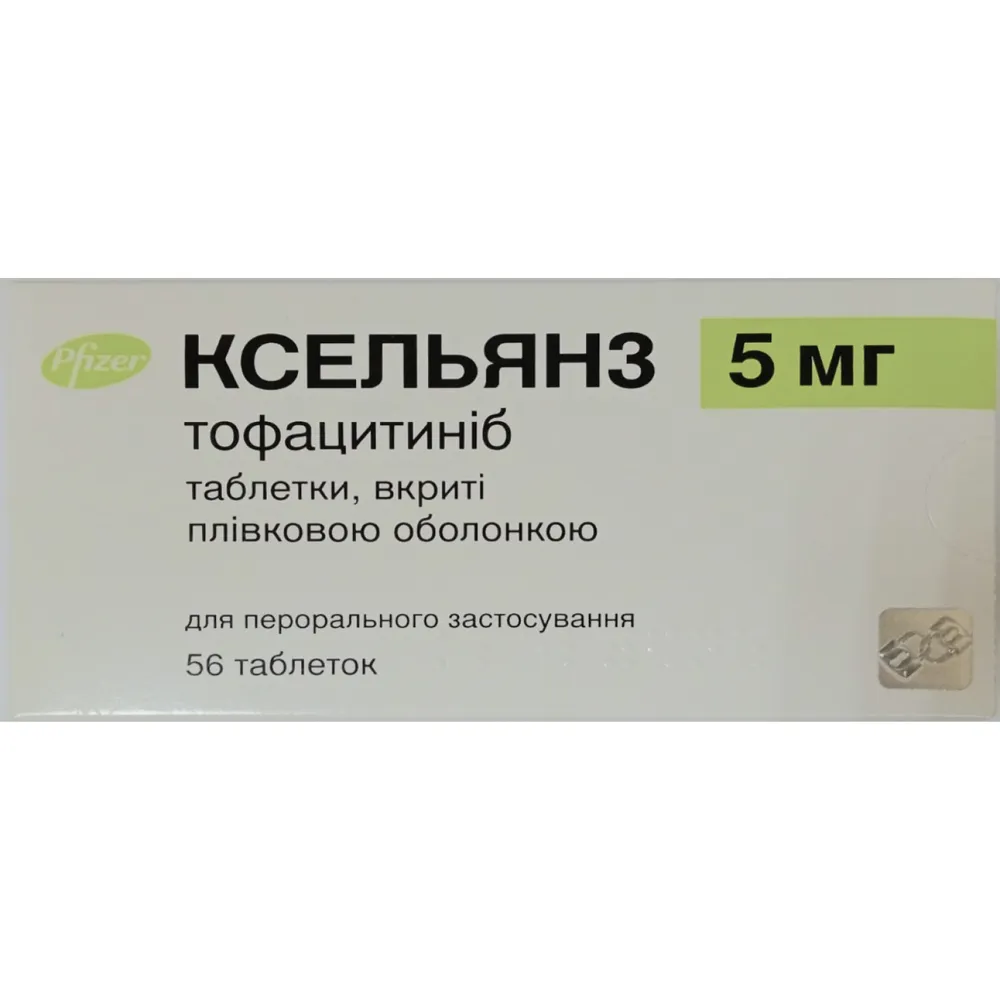
Table of Contents
INSTRUCTIONS FOR MEDICAL USE OF THE MEDICINAL PRODUCT XELJANZ
Composition:
Active substance: tofacitinib citrate;
One film-coated tablet contains tofacitinib citrate equivalent to 5 mg of tofacitinib;
Excipients: microcrystalline cellulose, lactose monohydrate, sodium croscarmellose, magnesium stearate, Opadry® II White 33G28523.
Pharmaceutical form. Film-coated tablets.
Main physicochemical properties: white, round, film-coated tablets, with "Pfizer" engraved on one side and "JKI 5" on the other.
Pharmacotherapeutic group.
Immunosuppressants. Janus kinase (JAK) inhibitors. ATC code L04AF01.
Pharmacological properties.
Pharmacodynamics.
Mechanism of action
Tofacitinib is a potent, selective inhibitor of the Janus kinase (JAK) family. In enzyme assays, tofacitinib has been shown to selectively inhibit JAK1, JAK2, JAK3, and to a lesser extent Tyk2, with high specificity. In contrast, other kinases in the human genome are not affected by tofacitinib. In human cells, tofacitinib predominantly suppresses signal transduction via heterodimeric cytokine receptors associated with JAK3 and/or JAK1, with functional selectivity over cytokine receptors that signal through JAK2 kinase pairs. Inhibition of JAK1 and JAK3 by tofacitinib attenuates signaling of interleukins (IL-2, -4, -6, -7, -9, -15, -21) and type I and II interferons, leading to modulation of immune and inflammatory responses.
Pharmacodynamic effects
In patients with rheumatoid arthritis (RA), treatment with tofacitinib for up to 6 months was associated with dose-dependent reductions in circulating CD16/56+ natural killer (NK) cells, with maximal reduction estimated to occur approximately 8–10 weeks after initiation of therapy. These changes typically resolved within 2–6 weeks after discontinuation of treatment. Tofacitinib therapy was associated with dose-dependent increases in B-cell counts. Changes in circulating T-lymphocyte counts and T-lymphocyte subsets (CD3+, CD4+, and CD8+) were minimal and inconsistent.
Following long-term therapy (median duration of tofacitinib treatment approximately 5 years), CD4+ and CD8+ cell counts were shown to decrease by 28% and 27%, respectively, from baseline levels. In contrast to the reduction observed after short-term dosing, CD16/56+ NK cell counts increased by 73% (median value) from baseline. CD19+ B-cell counts did not show further increases after long-term tofacitinib treatment. All these altered lymphocyte subset parameters returned to baseline levels after temporary interruption of therapy. There is no evidence of a causal relationship between lymphocyte subset counts and the occurrence of serious or opportunistic infections or herpes zoster (for information on monitoring absolute lymphocyte count, see section "Dosage and administration").
Changes in total serum levels of immunoglobulins IgG, IgM, and IgA during 6 months of tofacitinib dosing in patients with rheumatoid arthritis (RA) were small, dose-independent, and similar to those observed with placebo, indicating absence of systemic suppression of humoral immunity.
After tofacitinib treatment in patients with RA, a rapid reduction in serum C-reactive protein (CRP) levels was observed, which was sustained throughout the treatment period. CRP levels, which changed during treatment with Xeljanz, did not fully return to baseline within 2 weeks after discontinuation of therapy, indicating a longer duration of pharmacodynamic activity compared to the elimination half-life.
Pharmacokinetics.
The pharmacokinetic profile of tofacitinib is characterized by rapid absorption (maximum plasma concentration reached within 0.5–1 hour), rapid elimination (elimination half-life of ~3 hours), and dose-proportional increases in systemic exposure. Steady-state concentrations are achieved within 24–48 hours with minimal drug accumulation after twice-daily administration.
Absorption and distribution
Tofacitinib is well absorbed, with an oral bioavailability of 74%. Administration of tofacitinib with a high-fat meal did not alter AUC values, while Cmax values were reduced by 32%. In clinical studies, tofacitinib was administered regardless of food intake.
Following intravenous administration, the volume of distribution is 87 L. Approximately 40% of circulating tofacitinib is protein-bound. Tofacitinib binds predominantly to albumin and is unlikely to bind to α1-acid glycoprotein. Tofacitinib distributes evenly between erythrocytes and plasma.
Metabolism and elimination
The clearance mechanisms of tofacitinib are as follows: approximately 70% of the administered dose is metabolized in the liver and 30% is excreted unchanged by the kidneys. Tofacitinib metabolism is primarily mediated by the CYP3A4 isoenzyme, with minor contribution from CYP2C19. In a human study with radiolabeled tofacitinib, more than 65% of total circulating radioactivity was attributed to unchanged tofacitinib, and the remaining 35% to 8 metabolites, each accounting for less than 8% of total radioactivity. All metabolites were observed in animals and are predicted to have less than 10-fold potency compared to unchanged tofacitinib for JAK1/3 inhibition. No evidence of stereoinversion was observed in human samples. The pharmacological activity of tofacitinib is associated with the parent molecule. In vitro, tofacitinib is a substrate for the multidrug resistance gene-1 (MDR1), but not for breast cancer resistance protein (BCRP), organic anion transporting polypeptides (OATP1B1/1B3), or organic cation transporters (OCT1/2).
Pharmacokinetics in patients
The enzymatic activity of CYP isoenzymes is reduced in patients with RA due to chronic inflammation. In patients with RA, oral clearance of tofacitinib does not change over time, indicating that tofacitinib therapy does not normalize CYP isoenzyme activity.
Population pharmacokinetic (PK) analysis in patients with RA demonstrated that systemic exposure (AUC) of tofacitinib at the extremes of body weight range (40 kg; 140 kg) was similar (within 5%) to that in a patient weighing 70 kg. It is estimated that AUC values in elderly patients aged 80 years are less than 5% higher than in patients with a mean age of 55 years. In women, estimated AUC values were 7% lower than in men. Available data also indicate no significant differences in AUC values of tofacitinib among Caucasian, African, and Asian patients. A nearly linear relationship between body weight and volume of distribution was observed, resulting in higher maximum concentrations (Cmax) and lower trough concentrations (Cmin) in patients with lower body weight. However, this difference is not considered clinically significant. Inter-individual variability (coefficient of variation in percent) for tofacitinib AUC values was estimated at approximately 27%.
Results from population PK analyses in patients with active psoriatic arthritis, as well as moderate to severe ulcerative colitis or ankylosing spondylitis, were consistent with those in patients with RA.
Renal impairment
In patients with mild (creatinine clearance 50–80 mL/min), moderate (creatinine clearance 30–49 mL/min), and severe (creatinine clearance <30 mL/min) renal impairment, AUC values were 37%, 43%, and 123% higher, respectively, compared to patients with normal renal function (see section "Dosage and administration"). In patients with end-stage renal disease (ESRD), the impact of dialysis on total tofacitinib clearance was relatively small. After a single 10 mg dose, the mean AUC in patients with ESRD, based on concentrations measured on a non-dialysis day, was approximately 40% higher (90% CI: 1.5–95%) compared to patients with normal renal function. Tofacitinib has not been evaluated in clinical studies in patients with baseline creatinine clearance (calculated by the Cockcroft–Gault formula) less than 40 mL/min (see section "Dosage and administration").
Hepatic impairment
In patients with mild (Child–Pugh class A) and moderate (Child–Pugh class B) hepatic impairment, AUC values increased by 3% and 65%, respectively, compared to patients with normal liver function. Tofacitinib has not been evaluated in clinical studies in patients with severe (Child–Pugh class C) hepatic impairment (see sections "Dosage and administration" and "Special precautions") or in patients with positive screening tests for hepatitis B or hepatitis C.
Interactions
Tofacitinib is not an inhibitor or inducer of CYP isoenzymes (CYP1A2, CYP2B6, CYP2C8, CYP2C9, CYP2C19, CYP2D6, and CYP3A4) and is not an inhibitor of uridine diphosphate-glucuronosyltransferase (UGT) isoforms (UGT1A1, UGT1A4, UGT1A6, UGT1A9, and UGT2B7). Tofacitinib is not an inhibitor of MDR1, OATP1B1/1B3, OCT2, OAT1/3, or multidrug resistance protein at clinically relevant concentrations.
Pediatric patients
Pharmacokinetics in children with juvenile idiopathic arthritis
Population pharmacokinetic analysis data, based on results from administration of 5 mg tofacitinib tablets twice daily and body weight-based equivalent doses of tofacitinib oral solution twice daily, indicate that in patients with JIA, tofacitinib clearance and volume of distribution decrease with decreasing body weight. Available data suggest no clinically significant differences in tofacitinib exposure (AUC) based on age, race, sex, patient type, or baseline disease severity. Inter-individual variability (coefficient of variation, %) for AUC values was estimated at approximately 24%.
Clinical characteristics.
Indications.
Rheumatoid arthritis
Tofacitinib in combination with methotrexate (MTX) is indicated for the treatment of moderate to severe active rheumatoid arthritis (RA) in adult patients who have had an inadequate response to, or intolerance of, one or more disease-modifying antirheumatic drugs (DMARDs). Tofacitinib may be used as monotherapy in cases of MTX intolerance or when MTX treatment is considered inappropriate (see sections "Special warnings and precautions for use" and "Interaction with other medicinal products and other forms of interaction").
Psoriatic arthritis
Tofacitinib in combination with MTX is indicated for the treatment of active psoriatic arthritis (PsA) in adult patients who have had an inadequate response to, or intolerance of, prior therapy with disease-modifying antirheumatic drugs (DMARDs).
Ankylosing spondylitis
Tofacitinib is indicated for the treatment of adult patients with active ankylosing spondylitis (AS) who have not responded adequately to standard therapy.
Ulcerative colitis
Tofacitinib is indicated for the treatment of adult patients with moderately to severely active ulcerative colitis (UC) who have had an inadequate response to, lost response to, or are intolerant of conventional therapy or biologic agents.
Juvenile idiopathic arthritis (JIA)
Tofacitinib is indicated for the treatment of active polyarticular juvenile idiopathic arthritis (polyarthritis with positive [RF+] or negative [RF–] rheumatoid factor test and extended oligoarthritis) in pediatric patients with body weight ≥ 40 kg who have had an inadequate response to prior DMARD therapy.
Tofacitinib may be used in combination with MTX or as monotherapy in cases of MTX intolerance or when continuation of MTX is considered inappropriate.
Contraindications.
Hypersensitivity to the active substance or to any of the excipients listed in the section "Composition".
Active tuberculosis (TB), serious infections such as sepsis, or opportunistic infections (see section "Special warnings and precautions for use").
Severe hepatic impairment (see section "Posology and method of administration").
Pregnancy and lactation (see section "Use during pregnancy or breastfeeding").
Interaction with other medicinal products and other forms of interaction.
Potential of other medicinal products to affect the pharmacokinetics (PK) of tofacitinib
Since tofacitinib is metabolized by the CYP3A4 isoenzyme, interactions are likely with medicinal products that inhibit or induce CYP3A4. Exposure to tofacitinib increases when administered concomitantly with strong CYP3A4 inhibitors (e.g., ketoconazole) or when concomitant administration of one or more medicinal products (e.g., fluconazole) results in both moderate inhibition of CYP3A4 and strong inhibition of CYP2C19 (see section "Posology and method of administration").
Exposure to tofacitinib decreases when administered concomitantly with strong inducers of CYP enzymes (e.g., rifampicin). It is unlikely that CYP2C19 inhibitors alone or P-glycoprotein inhibitors will significantly alter the PK of tofacitinib.
Concomitant administration with ketoconazole (a strong CYP3A4 inhibitor), fluconazole (a moderate CYP3A4 and strong CYP2C19 inhibitor), tacrolimus (a moderate CYP3A4 inhibitor), and cyclosporine (a moderate CYP3A4 inhibitor) increased the AUC of tofacitinib, whereas rifampicin (a strong inducer of CYP enzymes) decreased the AUC of tofacitinib. Concomitant use of tofacitinib with strong inducers of CYP enzymes (e.g., rifampicin) may result in loss or reduction of clinical response. Concomitant use of strong CYP3A4 inducers with tofacitinib is not recommended. Concomitant administration with ketoconazole and fluconazole increased Cmax values of tofacitinib, whereas tacrolimus, cyclosporine, and rifampicin decreased Cmax values of tofacitinib. Concomitant administration with MTX at a dose of 15–25 mg once weekly did not affect the PK of tofacitinib in patients with RA (see Figure 1).
Figure 1. Effect of other medicinal products on the pharmacokinetics of tofacitinib
| 0 |
| 0.5 |
| 1 |
| 1.5 |
| 2 |
| 2.5 |
| Cmax |
| AUC |
| Cmax |
| AUC |
| Cmax |
| AUC |
| Cmax |
| AUC |
| Cmax |
| AUC |
| Cmax |
| AUC |
| Inhibitor CYP3A |
| Ketoconazole |
| Inhibitor of CYP3A and CYP2C19 |
| Fluconazole |
| CYP inducer |
| Rifampicin |
| Methotrexate |
| Tacrolimus |
| Cyclosporine |
| The dose of tofacitinib should be reduced with |
| The dose of tofacitinib should be reduced by |
| Efficacy may decrease |
| Dose adjustment is not required |
| Concomitant use of tofacitinib |
| concomitant use with tacrolimus should be avoided |
| Concomitant use of tofacitinib |
| avoid with cyclosporine |
| Ratio to control group |
| Concomitant |
| medicinal product |
| FC |
| Ratio and 90% CI |
| Recommendations |
Note: The control group refers to patients who received tofacitinib only.
- a The dose of tofacitinib should be reduced to 5 mg twice daily in patients who were receiving a dose of 10 mg twice daily. The dose of tofacitinib should be reduced to 5 mg once daily in patients who were receiving a dose of 5 mg twice daily (see section "Dosage and administration").
Potential of tofacitinib to influence the PK of other medicinal products
Concomitant administration of tofacitinib did not affect the PK of the oral contraceptives levonorgestrel and ethinylestradiol in healthy female volunteers.
In patients with RA, concomitant administration of tofacitinib with MTX at a dose of 15–25 mg once weekly reduced AUC and Cmax of MTX by 10% and 13%, respectively. The degree of reduction in MTX exposure does not require adjustment of the individually optimized MTX dose.
Pediatric population
Drug interaction studies have been conducted only in adult patients.
Special precautions for use.
The following patient groups should only receive tofacitinib if there are no suitable alternative treatment options:
- patients aged 65 years and older;
- patients with a history of atherosclerotic cardiovascular disease or other cardiovascular risk factors (e.g., current smoking or a history of long-term smoking);
- patients with risk factors for malignancy development (e.g., current or past history of malignancy).
Use in patients aged 65 years and older
Due to the increased risk of serious infections, myocardial infarction, malignancies, and all-cause mortality associated with tofacitinib use in patients aged 65 years and older, tofacitinib should be used in these patients only if there are no suitable alternative treatment options (see additional information below).
Use in combination with other medicinal products
The use of tofacitinib in combination with biologic agents such as tumour necrosis factor (TNF) antagonists, interleukin (IL)-1R antagonists, IL-6R antagonists, CD20 monoclonal antibodies, IL-17 antagonists, IL-12/IL-23 antagonists, anti-integrins, selective co-stimulation modulators, and potent immunosuppressants such as azathioprine, 6-mercaptopurine, cyclosporine, and tacrolimus has not been studied. Therefore, such combinations should be avoided due to the potential for enhanced immunosuppression and an increased risk of infections.
In clinical studies for the rheumatoid arthritis (RA) indication, a higher frequency of adverse reactions was observed with the combination of tofacitinib and MTX compared to tofacitinib monotherapy.
The use of tofacitinib in combination with phosphodiesterase 4 inhibitors has not been studied in clinical trials with tofacitinib.
Venous thromboembolism (VTE)
Serious VTE events, including pulmonary embolism (PE), some of which were fatal, and deep vein thrombosis (DVT), have been reported in patients receiving tofacitinib. In a randomized, post-marketing safety study in patients with rheumatoid arthritis aged 50 years or older with at least one additional cardiovascular risk factor, a dose-dependent increased risk of VTE was observed with tofacitinib compared to TNF inhibitors (see sections "Adverse reactions" and "Pharmacological properties").
In a retrospective exploratory analysis within this study involving patients with known VTE risk factors, VTE events occurred more frequently in patients receiving tofacitinib who had D-dimer levels ≥ 2 × upper limit of normal (ULN) at 12 months of therapy compared to patients with D-dimer levels < 2 × ULN; this trend was not observed in patients receiving TNF inhibitors. Interpretation is limited by the low number of VTE events and limited D-dimer assessments (measured only at baseline, 12 months, and study end). In patients without VTE during the study, mean D-dimer levels were significantly reduced at 12 months compared to baseline across all treatment groups. However, D-dimer levels ≥ 2 × ULN at 12 months were observed in approximately 30% of patients without subsequent VTE events, indicating limited specificity of the D-dimer test in this study.
Tofacitinib 10 mg twice daily for maintenance therapy is not recommended for patients with ulcerative colitis (UC) who have known VTE risk factors, serious cardiovascular events (MACE), or malignancy risk factors, except when no alternative treatment options are available (see section "Dosage and administration").
Tofacitinib should be used only if there are no suitable alternative treatment options in patients with cardiovascular disease risk factors or malignancy risk factors (see also this section "Serious cardiovascular events (MACE)" and "Malignancies").
Tofacitinib should be used with caution in patients with VTE risk factors other than MACE or malignancy risk factors. VTE risk factors other than MACE or malignancy risk factors include prior VTE events; at-risk populations include patients who have undergone major surgery or are immobilized; patients using combined hormonal contraceptives or hormone replacement therapy; and patients with inherited coagulation disorders. Patients should be periodically re-evaluated during tofacitinib therapy to assess VTE risk.
Patients with RA and known VTE risk factors should have a D-dimer test performed approximately 12 months after starting therapy. If the D-dimer test result is ≥ 2 × ULN, the decision to continue tofacitinib therapy should only be made after confirming that the clinical benefit outweighs the risks.
Patients with signs and symptoms suggestive of VTE should undergo immediate evaluation, and tofacitinib should be discontinued regardless of dose or indication if VTE is suspected.
Retinal vein thrombosis
Retinal vein thrombosis (RVT) has been reported in patients receiving tofacitinib (see section "Adverse reactions"). Patients should be advised to seek immediate medical attention if symptoms suggestive of RVT occur.
Serious infections
Serious and sometimes fatal infections caused by bacterial, mycobacterial, invasive fungal, viral, or other opportunistic pathogens have been reported in patients receiving tofacitinib therapy (see section "Adverse reactions"). The risk of opportunistic infections is higher in the Asian geographical region (see section "Adverse reactions"). Patients with rheumatoid arthritis receiving corticosteroids may be more susceptible to infections.
Tofacitinib therapy should not be initiated in patients with active infections, including localized infections.
The risks and benefits of using the medicinal product should be carefully considered before initiating therapy in patients:
- with recurrent infections;
- with a history of serious or opportunistic infections;
- who have lived in or travelled to areas endemic for fungal infections;
- with concomitant conditions that may predispose them to infections.
Patients should be closely monitored during and after tofacitinib therapy for early signs and symptoms of infection. If a patient develops a serious infection, opportunistic infection, or sepsis, therapy with this medicinal product should be temporarily suspended. A patient who develops a new infection while receiving tofacitinib should undergo immediate and complete diagnostic evaluation appropriate for immunocompromised patients, receive appropriate antimicrobial therapy, and be closely monitored.
Since the incidence of infections is increased in elderly patients and in patients with diabetes mellitus, the medicinal product should be used with caution in treating elderly patients and patients with diabetes (see section "Adverse reactions"). The use of tofacitinib in patients aged 65 years and older should only be considered if there are no suitable alternative treatment options.
The risk of infection may increase with the degree of lymphopenia; therefore, lymphocyte counts should be considered when assessing individual infection risk. Criteria for treatment interruption and monitoring in lymphopenia are provided in the section "Dosage and administration".
Tuberculosis
The risks and benefits of using the medicinal product should be carefully considered before initiating therapy in patients:
- who have been in contact with tuberculosis patients;
- who have lived in or travelled to areas endemic for tuberculosis.
Patients should be tested for latent or active tuberculosis infection before starting and during tofacitinib treatment (at intervals specified in relevant guidelines).
Patients with latent tuberculosis who test positive should receive standard anti-mycobacterial therapy prior to initiating tofacitinib.
Prophylactic anti-tuberculosis therapy should also be considered for patients with a negative tuberculosis test but with a history of latent or active tuberculosis without documented adequate treatment, or for patients with a negative test but with risk factors for tuberculosis infection. Consultation with a healthcare provider experienced in tuberculosis management is recommended to help determine the need for anti-tuberculosis therapy for each individual patient. Signs and symptoms of tuberculosis development should be closely monitored, especially in patients who tested negative for latent tuberculosis infection prior to starting therapy.
Reactivation of viral infection
Cases of viral infection reactivation, including herpes virus reactivation (e.g., herpes zoster), have been reported in patients receiving tofacitinib (see section "Adverse reactions"). The incidence of herpes zoster is increased in the following subgroups of patients receiving tofacitinib therapy:
- patients from Japan or Korea;
- patients with absolute lymphocyte count below 1000 cells/mm³ (see section "Dosage and administration");
- patients with long-standing rheumatoid arthritis who have previously received two or more biologic disease-modifying antirheumatic drugs (DMARDs);
- patients receiving tofacitinib 10 mg twice daily.
The effect of tofacitinib on reactivation of chronic viral hepatitis is unknown. Patients with positive screening tests for hepatitis B or C were excluded from clinical trials. Screening for viral hepatitis should be performed before and during tofacitinib therapy according to clinical guidelines.
Serious adverse cardiovascular events (including myocardial infarction)
Serious adverse cardiovascular events (major adverse cardiovascular events, MACE) have been observed in patients receiving tofacitinib.
In a randomized, post-marketing safety study in patients with rheumatoid arthritis aged 50 years or older with at least one additional cardiovascular risk factor, an increased incidence of myocardial infarction was observed with tofacitinib compared to TNF inhibitors (see section "Adverse reactions"). Tofacitinib should be used only if there are no suitable alternative treatment options in patients aged 65 years and older, patients who currently smoke or have a history of long-term smoking, and patients with a history of atherosclerotic cardiovascular disease or other cardiovascular risk factors.
Malignancies and lymphoproliferative disorders
Tofacitinib may affect the body's ability to prevent the development of malignancies.
In a randomized, post-marketing safety study in patients with rheumatoid arthritis aged 50 years or older with at least one additional cardiovascular risk factor, an increased incidence of malignancies, particularly non-melanoma skin cancer (NMSC), lung cancer, and lymphoma, was observed with tofacitinib compared to TNF inhibitors (see section "Adverse reactions").
NMSC, lung cancer, and lymphoma have also been observed in other clinical trials and in the post-marketing period in patients receiving tofacitinib.
Other malignancies have been observed in patients receiving tofacitinib in clinical trials and in the post-marketing period, including, among others, breast cancer, melanoma, prostate cancer, and pancreatic cancer.
Tofacitinib should be used only if there are no suitable alternative treatment options in patients aged 65 years and older, patients who currently smoke or have a history of long-term smoking, and patients with other malignancy risk factors (e.g., current or past history of malignancy, except successfully treated non-melanoma skin cancer). All patients, particularly those at increased risk of skin cancer, should undergo periodic skin examinations (see section "Adverse reactions").
Interstitial lung disease
This medicinal product should be used with caution in patients with a history of chronic lung disease, as they may be more susceptible to infections. Cases of interstitial lung disease (some fatal) have been reported in patients receiving tofacitinib in clinical trials for the RA indication and in the post-marketing period, although the role of Janus kinase (JAK) inhibition in these cases is unknown. Patients of Asian origin with RA are known to have a higher risk of interstitial lung disease; therefore, this medicinal product should be used with caution in such patients.
Gastrointestinal perforation
Cases of gastrointestinal perforation have been reported in clinical trials, although the role of JAK inhibition in these cases is unknown. Tofacitinib should be used with caution in patients who may have an increased risk of gastrointestinal perforation (e.g., patients with a history of diverticulitis; patients receiving concomitant corticosteroids and/or non-steroidal anti-inflammatory drugs). Patients who develop new gastrointestinal signs and symptoms should undergo immediate evaluation for early detection of gastrointestinal perforation.
Fractures
Fractures have been observed in patients receiving tofacitinib. Tofacitinib should be used with caution in patients with known risk factors for fractures, such as elderly individuals, women, and patients receiving corticosteroids, regardless of indication and dose.
Liver enzymes
Tofacitinib therapy has been associated with an increased frequency of elevated liver enzymes in some patients (see section "Adverse reactions"). The initiation of tofacitinib therapy should be carefully considered in patients with elevated alanine aminotransferase (ALT) or aspartate aminotransferase (AST) levels, particularly when concomitant potentially hepatotoxic medicinal products such as methotrexate are used. Routine monitoring of liver function biochemical parameters is recommended after starting therapy, and any observed elevation in liver enzymes should be promptly investigated to identify possible drug-induced liver injury. If drug-induced liver injury is suspected, tofacitinib should be discontinued until this diagnosis is excluded.
Hypersensitivity
Cases of hypersensitivity reactions associated with tofacitinib use have been reported in the post-marketing period. Allergic reactions included angioedema and urticaria; serious reactions occurred. Tofacitinib should be discontinued immediately in the event of any serious allergic or anaphylactic reaction.
Laboratory parameters
Lymphocytes
Tofacitinib therapy has been associated with an increased frequency of lymphopenia compared to placebo. Lymphocyte counts below 750 cells/mm³ were associated with an increased frequency of serious infections. It is recommended not to initiate or continue tofacitinib therapy in patients with confirmed absolute lymphocyte counts below 750 cells/mm³. Lymphocyte counts should be monitored at baseline and every 3 months thereafter. Dose adjustment recommendations based on lymphocyte count are provided in the section "Dosage and administration".
Neutrophils
Tofacitinib therapy has been associated with an increased frequency of neutropenia (neutrophil count below 2000 cells/mm³) compared to placebo. Initiation of tofacitinib therapy is not recommended in adult patients with absolute neutrophil count (ANC) below 1000 cells/mm³ and in paediatric patients with ANC below 1200 cells/mm³. ANC should be monitored at baseline, after 4–8 weeks of therapy, and every 3 months thereafter. Dose adjustment recommendations based on ANC are provided in the section "Dosage and administration".
Haemoglobin
Tofacitinib therapy has been associated with decreased haemoglobin levels. Initiation of tofacitinib therapy is not recommended in adult patients with haemoglobin levels below 9 g/dL and in paediatric patients with haemoglobin levels below 10 g/dL. Haemoglobin levels should be monitored at baseline, after 4–8 weeks of therapy, and every 3 months thereafter. Dose adjustment recommendations based on haemoglobin levels are provided in the section "Dosage and administration".
Lipid monitoring
Tofacitinib therapy has been associated with increased levels of lipids, such as total cholesterol, low-density lipoprotein cholesterol (LDL-C), and high-density lipoprotein cholesterol (HDL-C). The maximum effect is usually observed within 6 weeks of starting therapy. Lipid profile assessment should be performed 8 weeks after starting tofacitinib therapy. Treatment of hyperlipidaemia should be conducted according to clinical guidelines. Elevated total cholesterol and LDL-C levels associated with tofacitinib can be reduced to pre-treatment levels with the use of statins.
Hypoglycaemia in patients receiving diabetes treatment
Cases of hypoglycaemia have been reported after starting tofacitinib therapy in patients receiving antidiabetic medications. Dose adjustment of antidiabetic medications may be necessary if hypoglycaemia occurs.
Vaccination
All patients, particularly those with polyarticular juvenile idiopathic arthritis, should receive all recommended vaccinations according to current immunization guidelines before starting tofacitinib therapy. It is recommended not to use live vaccines concurrently with tofacitinib. The decision to use live vaccines before starting tofacitinib therapy should consider the patient's prior immunosuppression.
Prophylactic vaccination against herpes zoster should be considered according to vaccination guidelines. Particular attention should be given to patients with long-standing rheumatoid arthritis who have previously received two or more biologic DMARDs. If a decision is made to administer a live herpes zoster vaccine, it should only be given to patients with a documented history of varicella or those who are seropositive for varicella-zoster virus (VZV). If the history of varicella is uncertain or unreliable, testing for VZV antibodies is recommended.
Live vaccines should be administered at least 2 weeks, but preferably 4 weeks, before starting tofacitinib therapy, or according to current vaccination guidelines and vaccine compatibility with immunomodulatory medicinal products. Currently, there are no data on secondary transmission of infection from live vaccines to patients receiving tofacitinib.
Excipients
This medicinal product contains lactose. This medicinal product should not be used in patients with rare hereditary conditions such as galactose intolerance, total lactase deficiency, or glucose-galactose malabsorption syndrome.
This medicinal product contains less than 1 mmol (23 mg) of sodium per tablet, i.e., essentially "sodium-free".
Educational materials have been developed for physicians and patients to inform about the risks associated with tofacitinib use and to provide recommendations for risk reduction through appropriate monitoring and management.
An informational Patient Reminder Card, available at https://www.pfizer.ua/2216, is recommended to be completed and shown to the physician.
Use during pregnancy or breastfeeding.
Pregnancy
Standard and adequately controlled studies of tofacitinib use in pregnant women have not been conducted. Tofacitinib has been shown to cause teratogenic effects in rats and rabbits and to affect parturition and peri/postnatal offspring development.
As a precautionary measure, tofacitinib use during pregnancy is contraindicated (see section "Contraindications").
Women of childbearing potential / contraception in women
Women of childbearing potential should be advised to use effective contraception during tofacitinib therapy and for at least 4 weeks after the last dose.
Breastfeeding
It is unknown whether tofacitinib is excreted in human breast milk. A risk to the breastfed infant cannot be excluded. Tofacitinib was excreted in milk in rats during lactation. As a precautionary measure, tofacitinib use during breastfeeding is contraindicated (see section "Contraindications").
Fertility
Formal studies on the potential effect of this medicinal product on human fertility have not been conducted. In rats, tofacitinib caused impaired fertility in females but not in males.
Ability to influence the speed of reaction when driving or operating machinery.
Tofacitinib has no effect or almost no effect on the ability to drive and use machinery.
Method of Administration and Dosage
Treatment should be initiated and conducted under the supervision of a healthcare professional experienced in the diagnosis and management of diseases for which tofacitinib is indicated.
Dosage
Rheumatoid Arthritis and Psoriatic Arthritis
The recommended dose is one 5 mg film-coated tablet administered twice daily. This dose must not be exceeded.
No dose adjustment is required when used in combination with MTX.
Ankylosing Spondylitis
The recommended dose of tofacitinib is 5 mg twice daily.
Ulcerative Colitis
Induction Therapy
For induction of response, the recommended dose is 10 mg orally twice daily for 8 weeks.
In patients who have not achieved an adequate therapeutic response by week 8, the induction dose of 10 mg twice daily may be extended for an additional 8 weeks (i.e., up to 16 weeks total), followed by maintenance therapy with 5 mg twice daily. Induction therapy with tofacitinib should be discontinued in any patient who has not shown signs of a positive therapeutic effect by week 16.
Maintenance Therapy
The recommended dose of tofacitinib for maintenance therapy is 5 mg orally twice daily.
Tofacitinib 10 mg twice daily for maintenance therapy is not recommended in patients with UC who have known risk factors for venous thromboembolism (VTE), major adverse cardiovascular events (MACE), or malignancies, except when no alternative treatment options are available (see sections "Special Warnings and Precautions" and "Adverse Reactions").
For UC patients without increased risk of VTE, MACE, or malignancies (see section "Special Warnings and Precautions"), tofacitinib 10 mg orally twice daily may be considered if the patient has experienced a loss of response to tofacitinib 5 mg twice daily and has not responded to alternative therapies for ulcerative colitis, such as tumor necrosis factor inhibitors (TNF inhibitors). Tofacitinib 10 mg twice daily as maintenance therapy should be used for the shortest duration possible. The lowest effective dose required to maintain response should be used.
In patients who respond to tofacitinib therapy, corticosteroid doses may be tapered and/or corticosteroids may be discontinued according to standard treatment practices.
Reinitiation of Therapy in UC
If treatment has been interrupted, reinitiation of tofacitinib therapy may be considered. If loss of response has occurred, a repeat course of induction therapy with tofacitinib 10 mg twice daily may be considered. In clinical studies, treatment interruptions lasted up to 1 year. Efficacy may be regained after 8 weeks of therapy at a dose of 10 mg twice daily.
Polyarticular Juvenile Idiopathic Arthritis (Children with Body Weight ≥ 40 kg)
Tofacitinib may be used as monotherapy or in combination with MTX.
The recommended dose of tofacitinib in the form of film-coated tablets for pediatric patients with body weight ≥ 40 kg is 5 mg twice daily.
Pediatric patients with body weight < 40 kg should receive other formulations of tofacitinib (oral solution).
Temporary Interruption and Permanent Discontinuation in Adults and Children
If a patient develops a serious infection, tofacitinib therapy should be temporarily withheld until control of the infection is achieved.
Dose interruption may be necessary for the management of dose-dependent laboratory abnormalities, such as lymphopenia, neutropenia, and anemia. As shown in Tables 1, 2, and 3 below, recommendations for temporary interruption or permanent discontinuation of the drug depend on the severity of laboratory abnormalities (see section "Special Warnings and Precautions").
It is recommended not to initiate dosing in patients with an absolute lymphocyte count (ALC) below 750 cells/mm³.
Table 1. Low Absolute Lymphocyte Count
| Low absolute lymphocyte count (ALC) (see section "Special precautions for use") |
|
| Laboratory value (cells/mm³) |
Recommendations |
| ALC greater than or equal to 750 |
Dose should remain at the current level. |
| ALC 500–750 |
If there is a persistent decrease in ALC within this range (twice consecutively during routine testing), dose reduction or temporary discontinuation of therapy should be considered. For patients receiving tofacitinib 10 mg twice daily, the dose should be reduced to 5 mg tofacitinib twice daily. For patients receiving tofacitinib 5 mg twice daily, treatment should be interrupted. When ALC exceeds 750 cells/mm³, therapy may be resumed based on clinical assessment. |
| ALC less than 500 |
If this laboratory finding is confirmed by repeat testing performed within 7 days after the initial test, treatment with Xeljanz should be discontinued. |
It is recommended not to initiate therapy in adult patients with an absolute neutrophil count (ANC) of less than 1000 cells/mm³. It is recommended not to initiate therapy in pediatric patients with an ANC of less than 1200 cells/mm³.
Table 2. Low absolute neutrophil count
| Low absolute neutrophil count (ANC) (see section "Special precautions") |
|
| Laboratory value (cells/mm3) |
Recommendations |
| ANC above 1000 |
Dose should remain at the current level. |
| ANC 500–1000 |
If a sustained decrease in this parameter within the specified range is observed (twice consecutively during routine testing), the dose should be reduced or therapy interrupted. For patients receiving tofacitinib 10 mg twice daily, the dose should be reduced to 5 mg tofacitinib twice daily. For patients receiving tofacitinib 5 mg twice daily, treatment should be interrupted. When ANC exceeds 1000 cells, therapy may be resumed based on clinical assessment. |
| ANC less than 500 |
If this laboratory finding is confirmed by repeat testing performed within 7 days of the previous test, treatment with Xeljanz should be discontinued. |
It is recommended not to initiate therapy in adult patients with hemoglobin levels below 9 g/dl. It is recommended not to initiate therapy in children with hemoglobin levels below 10 g/dl.
Table 3. Low hemoglobin level
| Low hemoglobin levels (see section "Special Instructions") |
|
| Lab value (g/dL) |
Recommendations |
| Level decreases by no more than 2 g/dL and remains at least 9.0 g/dL |
Dose should remain at the current level. |
| Level decreases by more than 2 g/dL or falls below 8.0 g/dL (confirmed by repeat testing) |
Dosing should be suspended until hemoglobin levels normalize. |
Interactions
The total daily dose of tofacitinib should be reduced by half in patients receiving strong inhibitors of the cytochrome P450 (CYP) 3A4 isoenzyme (e.g., ketoconazole), as well as in patients receiving concomitant administration of one or more medicinal products causing both moderate inhibition of CYP3A4 and strong inhibition of CYP2C19 (e.g., fluconazole) (see section "Interaction with other medicinal products and other forms of interaction"), namely:
- The dose of tofacitinib should be reduced to 5 mg once daily in patients who are receiving a dose of 5 mg twice daily (this applies to both adults and children).
- The dose of tofacitinib should be reduced to 5 mg twice daily in patients who are receiving a dose of 10 mg twice daily (adult patients).
Applies to children only: Available data indicate that clinical improvement occurs within 18 weeks after initiation of tofacitinib therapy. For patients in whom no clinical improvement is observed during this period, the continuation of therapy should be reconsidered, with careful weighing of all benefits and risks.
Discontinuation of therapy in ankylosing spondylitis
Available data indicate that clinical improvement in AS occurs within 16 weeks after initiation of tofacitinib therapy. For patients in whom no clinical improvement is observed during this period, the continuation of therapy should be reconsidered, with careful weighing of all benefits and risks.
Special patient groups
Elderly patients
Dose adjustment is not required in patients aged 65 years and older. Data on the use of the medicinal product in patients over 75 years of age are currently limited. Recommendations for use in patients aged 65 years and older are provided in the section "Special precautions for use".
Hepatic impairment
Table 4. Dose adjustment in hepatic impairment
| Hepatic impairment category |
Classification |
Dose adjustment of tablets of various strengths in hepatic impairment |
| Mild impairment |
Child–Pugh class A |
No dose adjustment required. |
| Moderate impairment |
Child–Pugh class B |
The dose should be reduced to 5 mg once daily if the recommended dose with normal hepatic function is 5 mg twice daily. |
| Severe impairment |
Child–Pugh class C |
Tofacitinib is contraindicated in patients with severe hepatic impairment (see section "Contraindications"). |
Renal insufficiency
Table 5. Dose adjustment in renal insufficiency
| Renal impairment category |
Creatinine clearance |
Dosage adjustment of tablets of various strengths in renal impairment |
| Mild |
50–80 mL/min |
No dosage adjustment required. |
| Moderate |
30–49 mL/min |
No dosage adjustment required. |
| Severe (including patients undergoing hemodialysis) |
< 30 mL/min |
The dose should be reduced to 5 mg once daily if the recommended dose with normal renal function is 5 mg twice daily. |
Pediatric patients
The safety and efficacy of tofacitinib in children under 2 years of age with polyarticular juvenile idiopathic arthritis have not been evaluated. Data are lacking.
The safety and efficacy of tofacitinib in children under 18 years of age for other indications (e.g., ulcerative colitis) have not been evaluated. Data are lacking.
Administration method
For oral use.
Tofacitinib is administered orally with or without food.
For patients with swallowing difficulties, tofacitinib tablets may be crushed and administered with water.
Children.
The use of Xeljanz tablets 5 mg for the treatment of active polyarticular juvenile idiopathic arthritis (polyarthritis with positive [RF+] or negative [RF-] rheumatoid factor test result and extended oligoarthritis) is indicated only in pediatric patients with body weight ≥ 40 kg.
The safety and efficacy of the medicinal product in pediatric patients for indications other than active polyarticular juvenile idiopathic arthritis (polyarthritis with positive [RF+] or negative [RF-] rheumatoid factor test result and extended oligoarthritis) have not been established.
Overdose.
In the event of overdose, patients should be monitored for signs and symptoms of adverse reactions. There is no specific antidote for tofacitinib overdose. Symptomatic and supportive treatment is indicated.
Pharmacokinetic data following single doses up to 100 mg in healthy volunteers indicate that more than 95% of the administered dose is expected to be eliminated within 24 hours.
Adverse Reactions
Summary of Safety Profile
Rheumatoid Arthritis
The most common serious adverse reactions were serious infections (see section "Special Warnings and Precautions for Use"). In a long-term safety study across the entire population of patients indicated for this drug, the most frequently reported serious infections during tofacitinib treatment were pneumonia (1.7%), herpes zoster (0.6%), urinary tract infections (0.4%), cellulitis (0.4%), diverticulitis (0.3%), and appendicitis (0.2%). Opportunistic infections observed during tofacitinib therapy included tuberculosis and other mycobacterial infections, cryptococcosis, histoplasmosis, esophageal candidiasis, multidermatomal herpes zoster, cytomegalovirus infections, BK virus infections, and listeriosis. Some patients developed disseminated rather than localized forms of disease. Other serious infections not reported in clinical trials may also occur (e.g., coccidioidomycosis).
The most commonly reported adverse reactions during the first 3 months of therapy in placebo- or methotrexate-controlled double-blind studies were headache (3.9%), upper respiratory tract infections (3.8%), viral upper respiratory tract infections (3.3%), diarrhea (2.9%), nausea (2.7%), and hypertension (2.2%).
The proportion of patients who discontinued treatment due to adverse reactions during the first 3 months of therapy in placebo- or methotrexate-controlled double-blind studies was 3.8% among patients receiving tofacitinib. The most common infections leading to discontinuation within the first 3 months in controlled clinical trials were herpes zoster (0.19%) and pneumonia (0.15%).
Psoriatic Arthritis
Overall, the safety profile observed in patients with active PsA receiving tofacitinib was consistent with the safety profile observed in RA patients receiving tofacitinib.
Ankylosing Spondylitis
Overall, the safety profile observed in patients with active AS receiving tofacitinib was consistent with the safety profile observed in RA patients receiving tofacitinib.
Ulcerative Colitis
The most frequently reported adverse reactions in patients receiving tofacitinib 10 mg twice daily during induction therapy trials were headache, nasopharyngitis, nausea, and arthralgia.
In induction and maintenance therapy trials, the most common categories of serious adverse reactions in both tofacitinib and placebo treatment groups were gastrointestinal disorders and infections, with worsening of UC being the most frequent serious adverse reaction.
Overall, the safety profile observed in UC patients receiving tofacitinib was consistent with the safety profile of tofacitinib when used for RA.
List of Adverse Reactions
The adverse reactions listed below were observed in clinical trials in patients with RA, PsA, AS, and UC. Reactions are classified by system organ classes and standard frequency categories: very common (≥ 1/10), common (≥ 1/100 to < 1/10), uncommon (≥ 1/1,000 to < 1/100), rare (≥ 1/10,000 to < 1/1,000), very rare (< 1/10,000), or frequency not known (cannot be estimated from available data). Within each frequency group, adverse reactions are listed in order of decreasing severity.
Infections and infestations: common: pneumonia, influenza, herpes zoster, urinary tract infections, sinusitis, bronchitis, nasopharyngitis, pharyngitis; uncommon: tuberculosis, diverticulitis, pyelonephritis, cellulitis, herpes simplex, viral gastroenteritis, viral infection; rare: sepsis, urosepsis, disseminated tuberculosis, bacteremia, Pneumocystis jirovecii-induced pneumonia, pneumococcal pneumonia, bacterial pneumonia, cytomegalovirus infection, bacterial arthritis; very rare: central nervous system tuberculosis, cryptococcal meningitis, necrotizing fasciitis, encephalitis, staphylococcal bacteremia, infection caused by Mycobacterium avium complex, atypical mycobacterial infection.
Benign, malignant and unspecified neoplasms (including cysts and polyps): uncommon: lung cancer, non-melanoma skin cancer; rare: lymphoma.
Disorders of the blood and lymphatic system: common: lymphopenia, anemia; uncommon: leukopenia, neutropenia.
Immune system disorders: frequency not known: hypersensitivity*, angioedema*, urticaria*.
Metabolism and nutrition disorders: uncommon: dyslipidemia, hyperlipidemia, dehydration.
Psychiatric disorders: uncommon: insomnia.
Nervous system disorders: common: headache; uncommon: paresthesia.
Cardiac disorders: uncommon: myocardial infarction.
Vascular disorders: common: hypertension; uncommon: venous thromboembolism**.
Respiratory, thoracic and mediastinal disorders: common: cough; uncommon: dyspnea, nasal sinus edema.
Gastrointestinal disorders: common: abdominal pain, vomiting, diarrhea, nausea, gastritis, dyspepsia.
Hepatobiliary disorders: uncommon: hepatic steatosis, elevated liver enzymes, elevated transaminases, elevated gamma-glutamyl transferase; rare: abnormal liver function test.
Skin and subcutaneous tissue disorders: common: rash, acne; uncommon: erythema, pruritus.
Musculoskeletal and connective tissue disorders: common: arthralgia; uncommon: joint swelling, tendinitis; rare: musculoskeletal pain.
General disorders and administration site conditions: common: peripheral edema; uncommon: pyrexia, fatigue.
Investigations: common: increased blood creatine phosphokinase; uncommon: increased blood creatinine, increased blood cholesterol, increased LDL cholesterol, weight gain.
Injury, poisoning and procedural complications: uncommon: ligament sprain, muscle strain.
* Data from spontaneous reports.
** The term "venous thromboembolism" includes pulmonary embolism (PE), deep vein thrombosis (DVT), and retinal vein thrombosis.
Description of Selected Adverse Reactions
Venous Thromboembolism
Rheumatoid Arthritis
In a large (N = 4,362) randomized post-marketing safety study of RA patients aged 50 years and older with at least one additional cardiovascular risk factor, venous thromboembolism (VTE) occurred at a higher frequency and in a dose-dependent manner in patients receiving tofacitinib compared to those receiving TNF inhibitors. Most of these events were serious, and some were fatal. The incidence rate (with 95% CI) of pulmonary embolism (PE) in the tofacitinib 5 mg twice daily, tofacitinib 10 mg twice daily, and TNF inhibitor groups was 0.17 (0.08–0.33), 0.50 (0.32–0.74), and 0.06 (0.01–0.17) events per 100 patient-years, respectively. Compared to TNF inhibitors, the hazard ratio (HR) for PE was 2.93 (0.79–10.83) and 8.26 (2.49–27.43) for tofacitinib 5 mg twice daily and tofacitinib 10 mg twice daily, respectively. The majority (97%) of patients who experienced PE during tofacitinib treatment had VTE risk factors.
Ankylosing Spondylitis
Based on pooled data from phase 2 and phase 3 randomized controlled clinical trials, no cases of VTE were observed in 420 patients (233 patient-years of observation) receiving tofacitinib for up to 48 weeks.
Ulcerative Colitis
In an ongoing extension study for UC indication, cases of PE and DVT were observed in patients receiving tofacitinib 10 mg twice daily who had one or more concomitant VTE risk factors.
Infections in General
Rheumatoid Arthritis
In phase 3 controlled clinical trials, the incidence of infections during the 0–3 month period after initiation of therapy in the monotherapy groups receiving tofacitinib 5 mg twice daily (total 616 patients) and 10 mg twice daily (total 642 patients) was 16.2% (100 patients) and 17.9% (115 patients), respectively, compared to 18.9% (23 patients) in the placebo group (total 122 patients). In phase 3 controlled clinical trials with concomitant DMARD therapy, the incidence of infections during 0–3 months after initiation of therapy in the tofacitinib 5 mg twice daily (total 973 patients) and 10 mg twice daily (total 969 patients) plus DMARD groups was 21.3% (207 patients) and 21.8% (211 patients), respectively, compared to 18.4% (103 patients) in the placebo plus DMARD group (total 559 patients).
The most common infections were upper respiratory tract infections and nasopharyngitis (3.7% and 3.2%, respectively).
The overall incidence of infections in the long-term safety evaluation population, which included patients receiving tofacitinib for all approved indications (total 4,867 patients), was 46.1 patients with corresponding adverse reactions per 100 patient-years (43.8 and 47.2 patients with corresponding adverse reactions for the 5 mg and 10 mg twice daily dosing regimens, respectively). In patients (total 1,750) receiving the drug as monotherapy, the incidence rates of infections were 48.9 and 41.9 patients with corresponding reactions per 100 patient-years for the 5 mg and 10 mg twice daily regimens, respectively. For patients (total 3,117) receiving concomitant DMARD therapy, the incidence rates of infections were 41.0 and 50.3 patients with corresponding reactions per 100 patient-years for the 5 mg and 10 mg twice daily regimens, respectively.
Ankylosing Spondylitis
Based on pooled data from phase 2 and phase 3 clinical trials, during the placebo-controlled period of up to 16 weeks, the incidence of infections in the group receiving tofacitinib 5 mg twice daily (185 patients) was 27.6%, compared to 23.0% in the placebo group (187 patients). Based on pooled data from phase 2 and phase 3 clinical trials, in 316 patients receiving tofacitinib 5 mg twice daily for 48 weeks, the incidence of infections was 35.1%.
Ulcerative Colitis
In randomized 8-week phase 2 and phase 3 induction therapy trials, the proportion of patients experiencing infections was 21.1% (198 patients) in the group receiving tofacitinib 10 mg twice daily compared to 15.2% (43 patients) in the placebo group. In a randomized 52-week phase 3 maintenance therapy trial, the proportion of patients experiencing infections was 35.9% (71 patients) in the group receiving tofacitinib 5 mg twice daily and 39.8% (78 patients) in the group receiving tofacitinib 10 mg twice daily, compared to 24.2% (48 patients) in the placebo group.
Nasopharyngitis was the most frequently reported infection during the entire tofacitinib treatment period, occurring in 18.2% of patients (211 patients).
The overall incidence of infections during tofacitinib therapy in this study was 60.3 events per 100 patient-years (in 49.4% of patients; total 572 patients).
Serious Infections
Rheumatoid Arthritis
In 6-month and 24-month controlled clinical trials, the incidence of serious infections in the monotherapy group receiving tofacitinib 5 mg twice daily was 1.7 patients with corresponding events per 100 patient-years. In the monotherapy group receiving tofacitinib 10 mg twice daily, the incidence was 1.6 patients per 100 patient-years; in the placebo group, it was 0 events per 100 patient-years, and in the MTX group, it was 1.9 patients with corresponding events per 100 patient-years.
In trials lasting 6, 12, or 24 months, the incidence of serious infections in groups receiving tofacitinib 5 mg twice daily and 10 mg twice daily plus DMARD was 3.6 and 3.4 patients with corresponding events per 100 patient-years, respectively, compared to 1.7 patients with corresponding events per 100 patient-years in the placebo plus DMARD group.
In the long-term safety evaluation population, which included patients receiving tofacitinib for all approved indications, the overall incidence of serious infections was 2.4 and 3.0 patients with corresponding events per 100 patient-years for the tofacitinib 5 mg and 10 mg twice daily groups, respectively. The most common serious infections included pneumonia, herpes zoster, urinary tract infections, cellulitis, gastroenteritis, and diverticulitis. Cases of opportunistic infections were reported (see section "Special Warnings and Precautions for Use").
In a large (N = 4,362) randomized post-marketing safety study involving RA patients aged 50 years or older with at least one additional cardiovascular risk factor, a dose-dependent increase in serious infections was observed with tofacitinib compared to TNF inhibitors (see section "Special Warnings and Precautions for Use"). The incidence rate (with 95% CI) of serious infections in the tofacitinib 5 mg twice daily, tofacitinib 10 mg twice daily, and TNF inhibitor groups was 2.86 (2.41; 3.37), 3.64 (3.11; 4.23), and 2.44 (2.02; 2.92) events per 100 patient-years, respectively. The risk ratios for serious infections with tofacitinib 10 mg twice daily and tofacitinib 5 mg twice daily compared to TNF inhibitors were 1.17 (0.92; 1.50) and 1.48 (1.17; 1.87), respectively.
Ankylosing Spondylitis
Based on pooled data from phase 2 and phase 3 clinical trials, one case of serious infection (aseptic meningitis) was recorded among 316 patients receiving tofacitinib 5 mg twice daily for up to 48 weeks, corresponding to an incidence rate of 0.43 patients with corresponding events per 100 patient-years.
Ulcerative Colitis
The incidence and types of serious infections recorded in clinical trials for UC indication were generally similar to those reported in RA monotherapy trials.
Serious Infections in Elderly Patients
Among 4,271 patients enrolled in studies I–VI, a total of 608 RA patients were aged 65 years or older, including 85 patients aged 75 years or older. The incidence of serious infections in patients aged 65 years or older receiving tofacitinib was higher than in patients younger than 65 years (4.8 vs. 2.4 per 100 patient-years, respectively).
In a large (N = 4,362) randomized post-marketing safety study involving RA patients aged 50 years or older with at least one additional cardiovascular risk factor, an increased incidence of serious infections was observed in patients aged 65 years or older receiving tofacitinib 10 mg twice daily compared to those receiving TNF inhibitors or tofacitinib 5 mg twice daily (see section "Special Warnings and Precautions for Use"). The incidence rate (with 95% CI) of serious infections in patients aged 65 years or older in the tofacitinib 5 mg twice daily, tofacitinib 10 mg twice daily, and TNF inhibitor groups was 4.03 (3.02; 5.27), 5.85 (4.64; 7.30), and 3.73 (2.81; 4.85) events per 100 patient-years, respectively.
The risk ratios for serious infections in patients aged 65 years or older receiving tofacitinib 5 mg twice daily and tofacitinib 10 mg twice daily compared to TNF inhibitors were 1.08 (0.74; 1.58) and 1.55 (1.10; 2.19), respectively.
Serious Infections Observed in Post-Marketing Non-Interventional Safety Studies
Data from a post-marketing non-interventional safety study evaluating tofacitinib in RA patients from a registry (US Corrona) indicate a numerically higher incidence of serious infections with the 11 mg extended-release tablet once daily regimen compared to the 5 mg film-coated tablet twice daily regimen. The approximate incidence rate (95% CI) (i.e., unadjusted for age or sex) at 12 months after initiation of therapy was 3.45 (1.93; 5.69) and 2.78 (1.74; 4.21), and at 36 months was 4.71 (3.08; 6.91) and 2.79 (2.01; 3.77) patients with events per 100 patient-years in the groups receiving tofacitinib 11 mg extended-release tablet once daily and tofacitinib 5 mg film-coated tablet twice daily, respectively. The unadjusted risk ratio was 1.30 (95% CI: 0.67; 2.50) at 12 months and 1.93 (95% CI: 1.15; 3.24) at 36 months for tofacitinib 11 mg extended-release tablet once daily compared to tofacitinib 5 mg film-coated tablet twice daily. These findings are based on data from a small number of patients with events observed over relatively wide confidence intervals and a limited observation period.
Reactivation of Viral Infection
Patients of Japanese or Korean descent receiving tofacitinib, patients with long-standing RA who previously received two or more biological DMARDs, patients with absolute lymphocyte count (ALC) < 1,000 cells/mm³, or patients receiving tofacitinib 10 mg twice daily may have an increased risk of developing herpes zoster (see section "Special Warnings and Precautions for Use").
In a large (N = 4,362) randomized post-marketing safety study involving RA patients aged 50 years or older with at least one additional cardiovascular risk factor, an increased number of herpes zoster cases was observed in the tofacitinib group compared to the TNF inhibitor group. The incidence rate (95% CI) of herpes zoster in the tofacitinib 5 mg twice daily, tofacitinib 10 mg twice daily, and TNF inhibitor groups was 3.75 (3.22; 4.34), 3.94 (3.38; 4.57), and 1.18 (0.90; 1.52) events per 100 patient-years, respectively.
Laboratory Tests
Lymphocytes
In controlled clinical trials studying the RA indication, confirmed ALC reduction below 500 cells/mm³ occurred in 0.3% of patients, and ALC between 500 and 750 cells/mm³ in 1.9% of patients in the combined population receiving 5 mg twice daily and 10 mg twice daily doses.
In the long-term safety evaluation population of RA patients, confirmed ALC reduction below 500 cells/mm³ occurred in 1.3% of patients, and ALC between 500 and 750 cells/mm³ in 8.4% of patients in the combined population receiving 5 mg twice daily and 10 mg twice daily doses.
Confirmed ALC below 750 cells/mm³ was associated with an increased incidence of serious infections (see section "Special Warnings and Precautions for Use").
In clinical trials for the UC indication, changes in ALC observed during tofacitinib treatment were similar to those observed in clinical trials for the RA indication.
Neutrophils
In controlled clinical trials studying the RA indication, confirmed absolute neutrophil count (ANC) reduction below 1,000 cells/mm³ occurred in 0.08% of patients in the combined population receiving 5 mg twice daily and 10 mg twice daily doses. No confirmed ANC reduction below 500 cells/mm³ was observed in any treatment group. There was no clear association between neutropenia and the occurrence of serious infections.
In the long-term safety evaluation population of RA patients, the nature and frequency of confirmed ANC reduction remained at the same level observed in controlled clinical trials (see section "Special Warnings and Precautions for Use").
In clinical trials for the UC indication, changes in ANC observed during tofacitinib treatment were similar to those observed in clinical trials for the RA indication.
Platelets
In phase 3 controlled clinical trials (for RA, PsA, AS, UC indications), only patients with platelet counts ≥ 100,000 cells/mm³ were allowed to participate; therefore, there is currently no information on the use of tofacitinib in patients with platelet counts < 100,000 cells/mm³ prior to initiation of tofacitinib therapy.
Liver Enzymes
Confirmed cases of elevated liver enzymes to three times the upper limit of normal (3 × ULN) in RA patients were rare. In patients with elevated liver enzymes, changes in therapy (e.g., dose reduction of concomitant DMARD, temporary discontinuation or dose reduction of tofacitinib) helped reduce or normalize liver enzyme levels.
In the controlled part of a phase 3 monotherapy study in RA (0–3 months) (Study I), ALT elevation above 3 × ULN occurred in 1.65%, 0.41%, and 0% of patients receiving placebo, tofacitinib 5 mg, and tofacitinib 10 mg twice daily, respectively. In this study, AST elevation above 3 × ULN occurred in 1.65%, 0.41%, and 0% of patients receiving placebo, tofacitinib 5 mg, and tofacitinib 10 mg twice daily, respectively.
In a phase 3 monotherapy study in RA (0–24 months) (Study VI), ALT elevation above 3 × ULN occurred in 7.1%, 3.0%, and 3.0% of patients receiving MTX, tofacitinib 5 mg, and tofacitinib 10 mg twice daily, respectively. In this study, AST elevation above 3 × ULN occurred in 3.3%, 1.6%, and 1.5% of patients receiving MTX, tofacitinib 5 mg, and tofacitinib 10 mg twice daily, respectively.
In the controlled part of phase 3 trials in RA patients receiving concomitant DMARD therapy (0–3 months) (Studies II–V), ALT elevation above 3 × ULN occurred in 0.9%, 1.24%, and 1.14% of patients receiving placebo, tofacitinib 5 mg, and tofacitinib 10 mg twice daily, respectively. In these studies, AST elevation above 3 × ULN occurred in 0.72%, 0.5%, and 0.31% of patients receiving placebo, tofacitinib 5 mg, and tofacitinib 10 mg twice daily, respectively.
In long-term extension studies in RA patients on monotherapy, ALT elevation above 3 × ULN occurred in 1.1% and 1.4% of patients receiving tofacitinib 5 mg and 10 mg twice daily, respectively. AST elevation above 3 × ULN occurred in < 1.0% of patients in the tofacitinib 5 mg and 10 mg twice daily groups.
In long-term extension studies in RA patients receiving concomitant DMARD therapy, ALT elevation above 3 × ULN occurred in 1.8% and 1.6% of patients receiving tofacitinib 5 mg and 10 mg twice daily, respectively. AST elevation above 3 × ULN occurred in < 1.0% of patients in the tofacitinib 5 mg and 10 mg twice daily groups.
In a large (N = 4,362) randomized post-marketing safety study involving RA patients aged 50 years or older with at least one additional cardiovascular risk factor, ALT activity elevation to 3 × ULN or higher occurred in 6.01%, 6.54%, and 3.77% of patients receiving tofacitinib 5 mg twice daily, tofacitinib 10 mg twice daily, or TNF inhibitors, respectively. AST activity elevation to 3 × ULN or higher occurred in 3.21%, 4.57%, and 2.38% of patients receiving tofacitinib 5 mg twice daily, tofacitinib 10 mg twice daily, or TNF inhibitors, respectively.
In clinical trials for the UC indication, changes in liver enzyme levels observed during tofacitinib treatment were similar to those observed in clinical trials for the RA indication.
Lipids
In controlled double-blind clinical trials in RA, the first monitoring of increased lipid levels (total cholesterol, LDL cholesterol, HDL cholesterol, triglycerides) was performed one month after initiation of tofacitinib therapy. Increases were observed at this time point and remained stable thereafter.
Changes in lipid profile from baseline to study end (6–24 months) in controlled clinical trials in RA patients are summarized below.
- Mean LDL cholesterol level increased by 15% in the tofacitinib 5 mg twice daily group and by 20% in the tofacitinib 10 mg twice daily group during 12 months of therapy, and by 16% and 19% after 24 months of therapy, respectively.
- Mean HDL cholesterol level increased by 17% in the tofacitinib 5 mg twice daily group and by 18% in the tofacitinib 10 mg twice daily group during 12 months of therapy, and by 19% and 20% after 24 months of therapy, respectively.
After discontinuation of tofacitinib therapy, lipid levels returned to baseline.
The mean LDL cholesterol/HDL cholesterol ratio and apolipoprotein B (ApoB)/apolipoprotein A1 (ApoA1) ratio remained virtually unchanged in patients receiving tofacitinib.
In a controlled clinical trial studying the RA indication, elevated LDL cholesterol and ApoB levels decreased to pre-treatment levels in response to statin therapy.
In long-term safety evaluation populations of RA patients, increased lipid levels remained at the same level observed in controlled clinical trials.
Summarized below are changes in lipid profile from baseline to 24 months observed in a large (N = 4,362) randomized post-marketing safety study involving RA patients aged 50 years or older with at least one additional cardiovascular risk factor.
- Mean LDL cholesterol level increased by 13.80%, 17.04%, and 5.50% at month 12 in patients receiving tofacitinib 5 mg twice daily, tofacitinib 10 mg twice daily, or TNF inhibitors, respectively. At month 24, increases were 12.71%, 18.14%, and 3.64%, respectively.
- Mean HDL cholesterol level increased by 11.71%, 13.63%, and 2.82% at month 12 in patients receiving tofacitinib 5 mg twice daily, tofacitinib 10 mg twice daily, or TNF inhibitors, respectively. At month 24, increases were 11.58%, 13.54%, and 1.42%, respectively.
In clinical trials for the UC indication, changes in lipid levels observed during tofacitinib treatment were similar to those observed in clinical trials for the RA indication.
Myocardial Infarction
Rheumatoid Arthritis
In a large (N = 4,362) post-marketing randomized safety study involving RA patients aged 50 years or older with at least one additional cardiovascular risk factor, the incidence rate (95% CI) of non-fatal myocardial infarction in patients receiving tofacitinib 5 mg twice daily, tofacitinib 10 mg twice daily, or TNF inhibitors was 0.37 (0.22; 0.57), 0.33 (0.19; 0.53), and 0.16 (0.07; 0.31) patients with corresponding events per 100 patient-years, respectively. Several cases of fatal myocardial infarction were reported, with similar incidence rates in patients receiving tofacitinib and those receiving TNF inhibitors (see section "Special Warnings and Precautions for Use"). The study required observation of at least 1,500 patients for 3 years.
Malignant Neoplasms, excluding NMSC
Rheumatoid Arthritis
In a large (N = 4,362) post-marketing randomized safety study involving RA patients aged 50 years or older with at least one additional cardiovascular risk factor, the incidence rate (95% CI) of lung cancer in patients receiving tofacitinib 5 mg twice daily, tofacitinib 10 mg twice daily, or TNF inhibitors was 0.23 (0.12; 0.40), 0.32 (0.18; 0.51), and 0.13 (0.05; 0.26) patients with corresponding events per 100 patient-years, respectively (see section "Special Warnings and Precautions for Use"). The study required observation of at least 1,500 patients for 3 years.
The incidence rate (95% CI) of lymphoma during tofacitinib 5 mg twice daily, tofacitinib 10 mg twice daily, and TNF inhibitor therapy was 0.07 (0.02; 0.18), 0.11 (0.04; 0.24), and 0.02 (0.00; 0.10) patients with corresponding events per 100 patient-years, respectively (see section "Special Warnings and Precautions for Use").
Pediatric Patients
Polyarticular Juvenile Idiopathic Arthritis
Adverse reactions in JIA patients observed during tofacitinib clinical trials were consistent in type and frequency with those observed in adult RA patients, except for certain infections (influenza, pharyngitis, sinusitis, viral infection) and gastrointestinal or general disorders (abdominal pain, nausea, vomiting, pyrexia, headache, cough), which occurred more frequently in children with JIA. MTX was the most commonly used concomitant conventional synthetic DMARD (on day 1 of the study, 156 out of 157 patients receiving conventional synthetic DMARDs were taking MTX). There is currently insufficient data on the safety profile of tofacitinib when used concomitantly with other conventional synthetic DMARDs.
Infections
In the double-blind part of the phase 3 registration trial (JIA-I study), infections were the most frequently reported adverse reaction (44.3%). Infections were mostly mild or moderate in severity.
During the reporting period (up to 28 days after the last dose of study drug), 7 patients experienced serious infections during tofacitinib therapy in the combined safety evaluation population, corresponding to an incidence rate of 1.92 patients with corresponding events per 100 patient-years. Serious infections included pneumonia, epidural empyema (with sinusitis and subperiosteal abscess), pilonidal cyst, appendicitis, pyelonephritis caused by Escherichia coli, abscess of extremity, and urinary tract infections.
In the combined safety evaluation population, 3 patients had non-serious herpes zoster infections within the reporting window, corresponding to an incidence rate of 0.82 patients with corresponding events per 100 patient-years. One additional patient developed a serious herpes zoster infection outside the reporting window.
Hepatic Disorders
In the registration trial for JIA indication, only patients with AST and ALT levels less than 1.5 times the upper limit of normal were allowed to participate. In the combined safety evaluation population, 2 patients had ALT elevation ≥ 3 × ULN on 2 consecutive visits. Neither event met Hy's Law criteria. Both patients were receiving concomitant MTX therapy, and each event resolved after discontinuation of MTX and final discontinuation of tofacitinib therapy.
Laboratory Tests
Changes in laboratory test results in JIA patients observed in the clinical trial program were consistent with changes observed in adult RA patients. In the registration trial for JIA indication, only patients with platelet counts ≥ 100,000 cells/mm³ were allowed to participate; therefore, there is currently no available information on treatment of JIA patients with platelet counts < 100,000 cells/mm³ prior to initiation of tofacitinib therapy.
Reporting of Suspected Adverse Reactions
Reporting suspected adverse reactions after drug registration is important. It allows continued monitoring of the benefit-risk balance of the medicinal product. Healthcare professionals, pharmacists, patients, and their legal representatives should report all suspected adverse reactions and lack of efficacy through the automated pharmacovigilance information system at: https://aisf.dec.gov.ua.
Shelf Life. 3 years.
Storage Conditions.
Store below 30 °C.
Packaging.
Film-coated tablets, 5 mg, No. 14: cardboard box containing 1 blister; 14 tablets per blister;
film-coated tablets, 5 mg, No. 56: cardboard box containing 4 blisters; 14 tablets per blister.
Prescription Category. Prescription only.
Manufacturer.
Pfizer Manufacturing Deutschland GmbH.
Manufacturer's Location and Address of Business Premises.
Mooswaldallee 1, 79108 Freiburg Im Breisgau, Germany.