Xaltophy®
Ukraine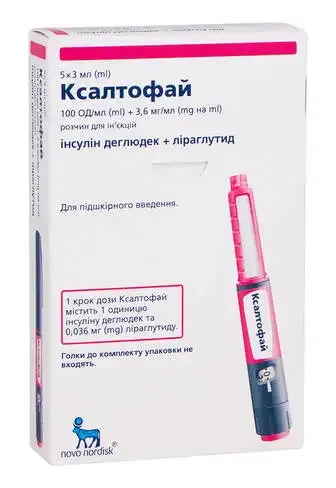
Table of Contents
INSTRUCTIONS FOR MEDICAL USE OF THE MEDICINAL PRODUCT Ksaltofai® (Xultophy®)
Composition:
Active substances: insulin degludec, liraglutide;
1 ml of solution contains 100 IU insulin degludec* and 3.6 mg liraglutide*.
1 pre-filled pen contains 3 ml, equivalent to 300 IU insulin degludec and 10.8 mg liraglutide;
Excipients: glycerol, phenol, zinc acetate, hydrochloric acid (for pH adjustment), sodium hydroxide (for pH adjustment), water for injections.
* Produced by recombinant DNA technology in Saccharomyces cerevisiae.
Pharmaceutical form. Solution for injection.
Main physicochemical properties: clear, colorless, isotonic solution.
Pharmacotherapeutic group. Medicinal products used in diabetes mellitus. Insulins and long-acting analogues for injection.
ATC code A10A E56.
Pharmacological Properties
Pharmacodynamics
Mechanism of action
Xultophy® is a combination medicinal product composed of insulin degludec and liraglutide, whose mechanisms of action complement each other, improving glycemic control.
Insulin degludec is a basal insulin which, after subcutaneous injection, forms a soluble multihexamer. This results in the formation of a depot from which insulin degludec is continuously and slowly absorbed into the bloodstream, leading to a smooth and stable glucose-lowering effect with low day-to-day variability in insulin action.
Insulin degludec specifically binds to the human insulin receptor, producing the same pharmacological effect as human insulin.
The glucose-lowering effect of insulin degludec involves promoting glucose uptake following insulin binding to receptors on muscle and fat cells, as well as simultaneously inhibiting glucose release from the liver.
Liraglutide is a glucagon-like peptide-1 (GLP-1) analogue with an amino acid sequence 97% homologous to human GLP-1, which binds to and activates the GLP-1 receptor (GLP-1R). The prolonged action of subcutaneously administered liraglutide is due to three mechanisms: self-association, which slows absorption; binding to blood albumin; and increased resistance to degradation by dipeptidyl peptidase-4 (DPP-4) and neutral endopeptidase (NEP), resulting in a prolonged elimination half-life of the drug from plasma.
The action of liraglutide occurs via its specific interaction with GLP-1 receptors and contributes to improved glycemic control by reducing fasting and postprandial blood glucose levels. Liraglutide stimulates insulin secretion and reduces inappropriately high glucagon secretion in a glucose-dependent manner. Thus, when blood glucose levels are high, insulin secretion is stimulated and glucagon secretion is suppressed. Conversely, during hypoglycemia, liraglutide reduces insulin secretion and does not interfere with glucagon secretion. Additionally, the mechanism of glucose reduction includes a modest delay in gastric emptying. Liraglutide reduces body weight and fat mass due to its ability to decrease hunger sensations and reduce energy intake.
GLP-1 is a physiological regulator of appetite and food intake, although the exact mechanism of its action has not yet been fully elucidated. In animal studies, peripheral administration of liraglutide resulted in uptake of the drug by specific areas of the brain involved in appetite regulation, where liraglutide, through specific activation of GLP-1R, enhanced satiety signals and reduced hunger signals, thereby promoting weight loss.
GLP-1 receptors are also present in specific areas of the heart, blood vessels, immune system, and kidneys. In experimental mouse models of atherosclerosis, liraglutide prevented further progression of aortic plaque and reduced the degree of inflammation within the plaque. Furthermore, liraglutide had beneficial effects on plasma lipids. However, liraglutide did not reduce the size of existing plaques.
Pharmacodynamic effects
Xultophy® has a stable pharmacodynamic profile with a duration of action resulting from the combined effects of insulin degludec and liraglutide, allowing once-daily administration at any time regardless of meals. Xultophy® improves glycemic control by providing sustained reduction in blood glucose levels both fasting and after all meals.
Postprandial glucose reduction was confirmed in a supplementary study during a 4-hour standardized meal test in patients with inadequate control on metformin monotherapy or in combination with pioglitazone. Xultophy® provided a greater reduction in plasma glucose levels after meals (mean level over 4 hours) compared to insulin degludec alone. The results with Xultophy® were comparable to those achieved with liraglutide.
Clinical efficacy and safety
The safety and efficacy of Xultophy® were evaluated in six randomized, parallel-group, phase 3 clinical trials involving different populations of patients with type 2 diabetes, depending on prior antidiabetic therapy. Comparator treatments included basal insulin, GLP-1 receptor agonists, placebo, and basal-bolus regimens. Trials lasted 26 weeks, with randomization of 199 to 833 patients to receive Xultophy®. One study was extended to 52 weeks. In all studies, the initial dose of Xultophy® was determined according to the instructions for medical use, and dose titration of Xultophy® was performed twice weekly (see Table 1). The same dose titration algorithm was applied for comparator basal insulins. In five trials, Xultophy® demonstrated clinically and statistically significant improvement in glycemic control compared to comparator treatments, as measured by glycated hemoglobin A1c (HbA1c) levels, while in one trial, similar HbA1c reduction was observed in both treatment groups.
Table 1
Dose titration of Xultophy®
| Plasma glucose level before breakfast* |
Dose adjustment (twice weekly) |
|
| mmol/L |
mg/dL |
Xaltophy® (dose steps) |
| < 4.0 |
< 72 |
˗2 |
| 4.0–5.0 |
72–90 |
0 |
| > 5.0 |
> 90 |
+2 |
* Glucose levels measured by the patient himself. During the study, the target level for the use of the medicinal product Xultophy® added to sulfonylurea drugs was 4.0–6.0 mmol/L.
Glycemic Control
Addition to Oral Antidiabetic Medicinal Products
Adding the medicinal product Xultophy® to metformin or to a combination of metformin and pioglitazone in a 26-week, randomized, open-label, controlled study enabled 60.4% of patients receiving Xultophy® to achieve the target HbA1c level of < 7% without confirmed episodes of hypoglycemia after 26 weeks of treatment. This proportion was significantly higher than with insulin degludec (40.9%; odds ratio [OR]: 2.28; p < 0.0001) and similar to that with liraglutide (57.7%; OR: 1.13; p = 0.3184).
Key results of the study are presented in Figure 1 and Table 2.
The rate of confirmed hypoglycemia events was lower with Xultophy® compared to insulin degludec, regardless of the degree of glycemic control (see Figure 1).
The rate of severe hypoglycemia events (defined as episodes requiring assistance from another person) per patient-year of exposure (percentage of patients) was 0.01 (2 out of 825 patients) with Xultophy®, 0.01 (2 out of 412 patients) with insulin degludec, and 0.00 (0 out of 412 patients) with liraglutide. The rate of nocturnal hypoglycemia was similar with Xultophy® and insulin degludec.
Overall, patients receiving Xultophy® experienced fewer gastrointestinal adverse effects compared to those receiving liraglutide. This may be due to the slower (compared to liraglutide monotherapy) dose escalation of liraglutide as a component of Xultophy® during the initial treatment period.
The efficacy and safety profile of Xultophy® remained stable over the 52-week treatment period. The reduction in HbA1c from baseline to week 52 was 1.84% with Xultophy®, with a calculated difference of -0.65% compared to liraglutide (p < 0.0001) and -0.46% compared to insulin degludec (p < 0.0001). Body weight decreased by 0.4 kg, with a calculated difference between Xultophy® and insulin degludec of -2.80 kg (p < 0.0001), and the rate of confirmed hypoglycemia remained at 1.8 events per patient-year of exposure, indicating a significantly lower overall risk of confirmed hypoglycemia compared to insulin degludec.
 |
|
|
|
IDegLira – Xultophy®; IDeg – insulin degludec; Lira – liraglutide; obs. rate – observed rate; PYE – patient-years of exposure.
Fig. 1. Mean HbA1c levels (%) over treatment weeks (left) and rate of confirmed hypoglycemic events per patient-year of exposure according to mean HbA1c levels (%) (right) in patients with type 2 diabetes with inadequate control on metformin monotherapy or in combination with pioglitazone.
The use of Xultophy® in combination with sulfonylurea or with the combination of sulfonylurea and metformin was studied in a randomized, placebo-controlled, double-blind trial lasting 26 weeks.
Key results of the study are presented in Figure 2 and Table 2.
|
|
IDegLira – Xultophy®, Placebo – placebo
Fig. 2. Mean HbA1c levels (in %) by weeks of treatment in patients with type 2 diabetes mellitus with inadequate control on sulfonylurea monotherapy or its combination with metformin.
The rate of severe hypoglycemia episodes per patient-year of exposure (percentage of patients) was 0.02 (2 out of 288 patients) with Xultophy® and 0.00 (0 out of 146 patients) with placebo.
Table 2
Results at 26 weeks. Addition to oral antidiabetic medicinal products
| Add-on to metformin ± pioglitazone |
Add-on to sulfonylurea ± metformin |
||||
| Xultophy® |
Insulin degludec |
Liraglutide |
Xultophy® |
Placebo |
|
| N |
833 |
413 |
414 |
289 |
146 |
| HbA1c, % Baseline → end of study |
8.3→6.4 |
8.3→6.9 |
8.3→7.0 |
7.9→6.4 |
7.9→7.4 |
| Mean change |
˗ 1.91 |
˗ 1.44 |
˗ 1.28 |
˗ 1.45 |
˗ 0.46 |
| Estimated difference |
˗ 0.47AB [˗ 0.58; ˗ 0.36] |
˗ 0.64AB [˗ 0.75; ˗ 0.53] |
˗ 1.02AB [˗ 1.18; ˗ 0.87] |
||
| Patients (%) achieving HbA1c < 7 % |
|||||
| All patients |
80.6 |
65.1 |
60.4 |
79.2 |
28.8 |
| Estimated odds ratio |
2.38B [1.78; 3.18] |
3.26B [2.45; 4.33] |
11.95B [7.22; 19.77] |
||
| Patients (%) achieving HbA1c ≤ 6.5 % |
|||||
| All patients |
69.7 |
47.5 |
41.1 |
64.0 |
12.3 |
| Estimated odds ratio |
2.82B [2.17; 3.67] |
3.98B [3.05; 5.18] |
16.36B [9.05; 29.56] |
||
| Rate of confirmed hypoglycemia* per patient-year of exposure (proportion of patients in %) |
1.80 (31.9 %) |
2.57 (38.6 %) |
0.22 (6.8 %) |
3.52 (41.7 %) |
1.35 (17.1 %) |
| Estimated rate ratio |
0.68AC [0.53; 0.87] |
7.61B [5.17; 11.21] |
3.74B [2.28; 6.13] |
||
| Body weight, kg Baseline → end of study |
87.2→86.7 |
87.4→89.0 |
87.4→84.4 |
87.2→87.7 |
89.3→88.3 |
| Mean change |
˗ 0.5 |
1.6 |
˗ 3.0 |
0.5 |
˗ 1.0 |
| Estimated difference |
˗ 2.22AB [˗ 2.64; ˗ 1.80] |
2.44B [2.02; 2.86] |
1.48B [0.90; 2.06] |
||
| FPG, mmol/L Baseline → end of study |
9.2→5.6 |
9.4→5.8 |
9.0→7.3 |
9.1→6.5 |
9.1→8.8 |
| Mean change |
˗ 3.62 |
˗ 3.61 |
˗ 1.75 |
˗ 2.60 |
˗ 0.31 |
| Estimated difference |
˗ 0.17 [˗ 0.41; 0.07] |
˗ 1.76B [˗ 2.0; ˗ 1.53] |
˗ 2.30B [˗ 2.72; ˗ 1.89] |
||
| Dose at end of study Insulin degludec, units |
38 |
53 |
- |
28 |
- |
| Liraglutide, mg |
1.4 |
- |
1.8 |
1.0 |
- |
| Estimated difference, insulin degludec dose |
˗ 14.90AB [˗ 17.14; |
- |
|||
Registered values at baseline, at the end of treatment, and their changes. The last observed values were carried forward. The 95% confidence interval is indicated in square brackets ([ ]).
* Confirmed hypoglycemia is defined as severe hypoglycemia (an episode requiring assistance from another person) and/or mild hypoglycemia (plasma glucose level < 3.1 mmol/L, irrespective of symptoms).
A Endpoints with demonstrated superiority of Xultophy® compared to the comparator drug.
B p < 0.0001.
C p < 0.05.
FPG – fasting plasma glucose.
Transition from GLP-1 receptor agonist therapy
A 26-week randomized, open-label study evaluated the switch from GLP-1 receptor agonist therapy to Xultophy® compared to continuing GLP-1 receptor agonist therapy (dose according to the instructions for medical use) in patients with type 2 diabetes mellitus and inadequate glycemic control on a GLP-1 receptor agonist and metformin (74.2%), or in combination with pioglitazone (2.5%), sulfonylurea (21.2%), or both (2.1%).
Key study results are presented in Figure 3 and Table 3.
|
|
IDegLira – Xultophy®; Unchanged GLP-1 RA – unchanged GLP-1 receptor agonist therapy.
Fig. 3. Mean HbA1c level (in %) by treatment week in patients with type 2 diabetes mellitus and inadequate glycemic control treated with GLP-1 receptor agonists.
The rate of severe hypoglycemia episodes per patient-year of exposure (percentage of patients) was 0.01 (1 out of 291 patients) with Xultophy® and 0.00 (none out of 199 patients) with GLP-1 receptor agonists.
Table 3
Results at 26 weeks. Transition from GLP-1 receptor agonist therapy
| Transition from GLP-1 receptor agonist therapy |
||
| Xultophy® |
GLP-1 receptor agonist |
|
| N |
292 |
146 |
| HbA1c, % |
||
| Baseline → end of study |
7.8 → 6.4 |
7.7 → 7.4 |
| Mean change |
˗1.3 |
˗0.3 |
| Estimated difference |
˗0.94AB[˗1.11; ˗0.78] |
|
| Patients (%) achieving HbA1c < 7 % |
||
| All patients |
75.3 |
35.6 |
| Estimated odds ratio |
6.84B [4.28; 10.94] |
|
| Patients (%) achieving HbA1c ≤ 6.5 % |
||
| All patients |
63.0 |
22.6 |
| Estimated odds ratio |
7.53B [4.58; 12.38] |
|
| Rate of confirmed hypoglycemia* episodes per patient-year exposure (proportion of patients in %) |
2.82 (32.0 %) |
0.12 (2.8 %) |
| Estimated ratio |
25.36B [10.63; 60.51] |
|
| Body weight, kg |
||
| Baseline → end of study |
95.6 → 97.5 |
95.5 → 94.7 |
| Mean change |
2.0 |
˗0.8 |
| Estimated difference |
2.89B [2.17; 3.62] |
|
| FPG, mmol/L |
||
| Baseline → end of study |
9.0 → 6.0 |
9.4 → 8.8 |
| Mean change |
˗2.98 |
˗0.60 |
| Estimated difference |
˗2.64B [˗3.03; ˗2.25] |
|
| Dose at end of study |
Dose of GLP-1 receptor agonist should have remained unchanged from baseline |
|
| Insulin degludec, units |
43 |
|
| Liraglutide, mg |
1.6 |
|
| Estimated difference, insulin degludec dose |
||
Registered values before treatment initiation, at the end of treatment, and their changes. The last recorded values were carried forward. The 95% confidence interval is indicated in square brackets ([ ]).
* Confirmed hypoglycemia is defined as severe hypoglycemia (an episode requiring assistance from another person) and/or mild hypoglycemia (plasma glucose level < 3.1 mmol/L, regardless of symptoms).
A Endpoints demonstrating the significant advantage of Xultophy® compared to the comparator drug; B p < 0.001.
Transition from basal insulin therapy
A 26-week study evaluated switching from insulin glargine (100 units/mL) therapy to treatment with Xultophy® compared to intensification of insulin glargine use in patients with inadequate glycemic control on insulin glargine (20–50 units) and metformin. The maximum permitted dose of Xultophy® used in this study was 50 dose steps, whereas the maximum dose of insulin glargine was not limited. A target HbA1c level of < 7% without confirmed episodes of hypoglycemia was achieved in 54.3% of patients receiving Xultophy® compared to 29.4% of patients receiving insulin glargine (odds ratio: 3.24; p < 0.001).
Key results of the study are presented in Figure 4 and Table 4.
| Time from randomization, weeks |
IDegLira – Xultophy®; IGlar – insulin glargine.
Fig. 4. Mean HbA1c levels (in %) by weeks of treatment in patients with type 2 diabetes mellitus and inadequate glycemic control receiving insulin glargine.
The rate of severe hypoglycemia episodes per patient-year of exposure (percentage of patients) was 0.00 (0 out of 278 patients) with Xultophy® and 0.01 (1 out of 279 patients) with insulin glargine. The rate of nocturnal hypoglycemia was significantly lower with Xultophy® compared to insulin glargine (treatment-dependent rate ratio: 0.17; p < 0.001).
A second randomized, double-blind, 26-week study evaluated patients with inadequate glycemic control on basal insulin (20–40 units) and either metformin monotherapy or metformin combined with sulfonylureas/meglitinides, comparing the switch from basal insulin to either Xultophy® or insulin degludec. Basal insulin and sulfonylureas/meglitinides were discontinued at randomization. The maximum permitted dose was 50 dose steps of Xultophy® and 50 units of insulin degludec. A target HbA1c level < 7% without confirmed hypoglycemic episodes was achieved in 48.7% of patients receiving Xultophy®. This proportion was significantly higher than with insulin degludec (15.6%; odds ratio: 5.57; p < 0.0001).
Key results of the study are presented in Figure 5 and Table 4.
IDegLira – Xultophy®; IDeg – insulin degludec.
Fig. 5. Mean HbA1c levels (in %) by weeks of treatment in patients with type 2 diabetes mellitus and inadequate glycemic control previously on basal insulin therapy.
The rate of severe hypoglycemia episodes per patient-year of exposure (percentage of patients) was 0.01 (1 out of 199 patients) with Xultophy® and 0.00 (0 out of 199 patients) with insulin degludec. The rate of nocturnal hypoglycemia was similar with Xultophy® and insulin degludec.
Table 4
Results after 26 weeks. Switch from basal insulin therapy
| Transition from insulin glargine (100 IU/mL) therapy |
Transition from basal insulin therapy [NPH insulin (neutral protamine Hagedorn), insulin detemir, insulin glargine] |
|||
| Xultophy® |
Insulin glargine, without dose limitation |
Xultophy® |
Insulin degludec, maximum allowed dose – 50 units |
|
| N |
278 |
279 |
199 |
199 |
| HbA1c, % |
||||
| Baseline → end of study |
8.4→6.6 |
8.2→7.1 |
8.7→6.9 |
8.8→8.0 |
| Mean change |
˗1.81 |
₋1.13 |
₋1.90 |
₋0.89 |
| Calculated difference |
₋0.59AB[₋0.74; ₋0.45] |
₋1.05AB[₋1.25; ₋0.84] |
||
| Patients (%) achieving HbA1c < 7% |
||||
| All patients |
71.6 |
47.0 |
60.3 |
23.1 |
| Calculated odds ratio |
3.45B [2.36; 5.05] |
5.44B [3.42; 8.66] |
||
| Patients (%) achieving HbA1c ≤ 6.5% |
||||
| All patients |
55.4 |
30.8 |
45.2 |
13.1 |
| Calculated odds ratio |
3.29B [2.27; 4.75] |
5.66B [3.37; 9.51] |
||
| Rate of confirmed hypoglycemia* per patient-year of exposure (percentage of patients) |
2.23 (28.4%) |
5.05 (49.1%) |
1.53 (24.1%) |
2.63 (24.6%) |
| Calculated rate ratio |
0.43AB [0.30; 0.61] |
0.66 [0.39; 1.13] |
||
| Body weight, kg |
||||
| Baseline → end of study |
88.3→86.9 |
87.3→89.1 |
95.4→92.7 |
93.5→93.5 |
| Mean change |
₋1.4 |
1.8 |
-2.7 |
0.0 |
| Calculated difference |
₋3.20AB [₋3.77; ₋2.64] |
₋2.51B [₋3.21; ₋1.82] |
||
| FPG, mmol/L |
||||
| Baseline → end of study |
8.9→6.1 |
8.9→6.1 |
9.7→6.2 |
9.6→7.0 |
| Mean change |
₋2.83 |
₋2.77 |
₋3.46 |
₋2.58 |
| Calculated difference |
₋0.01 [₋0.35; 0.33] |
₋0.73C [₋1.19; ₋0.27] |
||
| Dose at end of study |
||||
| Insulin, units |
41 |
66D |
45 |
45 |
| Liraglutide, mg |
1.5 |
- |
1.7 |
- |
| Calculated difference, basal insulin dose |
₋25.47B [₋28.90; 22.05] |
₋0.02 [₋1.88; 1.84] |
||
Registered values before treatment initiation, at the end of treatment, and their changes. The last recorded values were carried forward. The 95 % confidence interval is indicated in square brackets ([ ]).
* Confirmed hypoglycemia is defined as severe hypoglycemia (an episode requiring assistance from another person) and/or mild hypoglycemia (plasma glucose level < 3.1 mmol/L, regardless of symptoms).
A Endpoints with demonstrated superiority of Xultophy® compared to the comparator drug.
B p < 0.0001; C p < 0.05.
D The mean dose of insulin glargine used before the start of the study was 32 units.
Results from a 26-week study evaluating the use of Xultophy® compared to a basal-bolus insulin regimen (including basal insulin [insulin glargine 100 units/mL] in combination with bolus insulin [insulin aspart]) in patients with type 2 diabetes and inadequate glycemic control on insulin glargine and metformin demonstrated similar reductions in HbA1c levels in both treatment groups (mean values decreased from 8.2 % to 6.7 %). In both groups, 66–67 % of patients achieved an HbA1c level < 7 %. Compared to baseline, body weight decreased by an average of 0.9 kg with Xultophy® and increased by 2.6 kg with the basal-bolus insulin regimen, with a treatment difference of ₋3.57 kg (95 % CI: ₋4.19; ₋2.95). The percentage of patients experiencing severe hypoglycemia or confirmed symptomatic hypoglycemia was 19.8 % in the Xultophy® group and 52.6 % in the basal-bolus insulin group, with a calculated rate ratio of 0.11 (95 % CI: 0.08–0.17). The total daily insulin dose at the end of the study was 40 units in patients receiving Xultophy® and 84 units (52 units of basal insulin and 32 units of bolus insulin) in patients receiving the basal-bolus insulin regimen.
Cardiovascular safety
No cardiovascular outcome trials have been conducted with Xultophy®.
Liraglutide
The "Liraglutide Effect and Action in Diabetes: Evaluation of Cardiovascular Outcome Results" (LEADER) trial was a multicenter, placebo-controlled, double-blind clinical study. A total of 9340 patients were randomized to receive either liraglutide (4668 patients) or placebo (4672 patients), with both groups receiving standard care affecting HbA1c and cardiovascular (CV) risk factors. Information on primary outcomes or vital status at the end of the study was obtained for 99.7 % and 99.6 % of participants randomized to liraglutide and placebo, respectively. The duration of follow-up was at least 3.5 years and up to 5 years. The study cohort included patients aged ≥ 65 years (n = 4329) and ≥ 75 years (n = 836), and patients with mild (n = 3907), moderate (n = 1934), or severe (n = 224) renal impairment. The mean patient age was 64 years, and the mean BMI (body mass index) was 32.5 kg/m². The mean duration of diabetes was 12.8 years.
The primary endpoint was time from randomization to the first occurrence of a major adverse cardiovascular event (MACE), defined as cardiovascular death, non-fatal myocardial infarction, or non-fatal stroke. Liraglutide demonstrated superiority in preventing MACE compared to placebo (see Figure 6).
Figure 6. Diagram of data analysis for individual types of cardiovascular events. Patient population with complete data package for analysis.
When added to standard therapy, liraglutide resulted in a greater reduction in HbA1c from baseline to 36 months of treatment [₋1.16 % vs. ₋0.77 %; estimated treatment difference ₋0.40 % (₋0.45; ₋0.34)] compared to placebo.
Insulin degludec
The "DEVOTE" trial was a randomized, double-blind, event-driven clinical study of 2 years' duration, designed to compare the cardiovascular safety of insulin degludec versus insulin glargine (100 units/mL) in 7637 patients with type 2 diabetes at high cardiovascular risk.
The primary endpoint was time from randomization to the first occurrence of any of the three major adverse cardiovascular events (MACE), defined as death from cardiovascular causes, non-fatal myocardial infarction, or non-fatal stroke. This study was designed as a non-inferiority trial for MACE risk with insulin degludec compared to insulin glargine, using a pre-specified risk ratio (RR) margin of 1.3. Cardiovascular safety of insulin degludec was confirmed compared to insulin glargine [RR: 0.91 (0.78; 1.06)] (see Figure 7).
In both treatment groups, the HbA1c level at baseline was 8.4 %, and after 2 years was 7.5 % with both insulin degludec and insulin glargine.
N – number of patients with the first event confirmed by EAC occurring during the study.
% – percentage of patients with the first event confirmed by EAC of the total number of randomized patients.
EAC – Executive Adjudication Committee.
C-c – cardiovascular.
MI – myocardial infarction.
CI – 95 % confidence interval.
Figure 7. Diagram of data analysis for the composite MACE endpoint consisting of three components and individual cardiovascular endpoints in the DEVOTE trial.
Insulin secretion / beta-cell function
Compared to insulin degludec, Xultophy® improves beta-cell function, as indicated by measurements from the homeostasis model assessment of beta-cell function. Improved insulin secretion compared to insulin degludec was demonstrated after 52 weeks of treatment in 260 patients with type 2 diabetes in a study with standardized meals. Data beyond 52 weeks of treatment are not available.
Arterial blood pressure
In patients with inadequate glycemic control on metformin monotherapy or metformin in combination with pioglitazone, Xultophy® reduced mean systolic blood pressure by 1.8 mm Hg compared to a reduction of 0.7 mm Hg with insulin degludec and 2.7 mm Hg with liraglutide. In patients with inadequate control on sulfonylurea monotherapy or sulfonylurea in combination with metformin, the reduction was 3.5 mm Hg with Xultophy® and 3.2 mm Hg with placebo. The difference was not statistically significant. Across three studies in patients with inadequate glycemic control on basal insulin, systolic blood pressure decreased by 5.4 mm Hg with Xultophy® and by 1.7 mm Hg with insulin degludec, with a statistically significant estimated treatment difference of ₋3.71 mm Hg (p = 0.0028); systolic blood pressure decreased by 3.7 mm Hg with Xultophy® compared to 0.2 mm Hg with insulin glargine, with a statistically significant estimated treatment difference of ₋3.57 mm Hg (p < 0.001); and systolic blood pressure decreased by 4.5 mm Hg with Xultophy® compared to 1.16 mm Hg with insulin glargine 100 units/mL plus insulin aspart, with a statistically significant estimated treatment difference of ₋3.70 mm Hg (p = 0.0003).
Pharmacokinetics
Overall, the pharmacokinetics of insulin degludec and liraglutide when administered as Xultophy® are not clinically meaningfully different from those when administered as separate injections.
The information below describes the pharmacokinetic properties of Xultophy®; if not otherwise specified, the data presented were obtained from studies of insulin degludec or liraglutide administered separately.
Absorption
Total exposure to insulin degludec was similar after administration of Xultophy® and insulin degludec alone, while its Cmax was 12 % higher. Total exposure to liraglutide was similar after administration of Xultophy® and liraglutide alone, while its Cmax was 23 % lower. This difference is considered clinically insignificant, as the initial dose of Xultophy® and its adjustments are individually determined based on the patient's target blood glucose level.
Population pharmacokinetic analysis demonstrated that exposure to insulin degludec and liraglutide increased proportionally with the dose of Xultophy® across the entire dose range.
The pharmacokinetic profile of Xultophy® allows once-daily administration, with steady-state concentrations of insulin degludec and liraglutide achieved after 2–3 days of daily dosing.
Distribution
Insulin degludec and liraglutide are highly bound to plasma proteins (> 99 % and > 98 %, respectively).
Metabolism
Insulin degludec
Degradation of insulin degludec occurs similarly to that of human insulin; all metabolites formed are inactive.
Liraglutide
Within 24 hours after a single dose of [3H]-labeled liraglutide in healthy volunteers, unchanged liraglutide remained the main component in plasma. Two minor metabolites were detected in plasma (≤ 9 % and ≤ 5 % of total radioactive dose in plasma). Liraglutide is metabolized similarly to large proteins, and no single organ is the primary route of elimination.
Elimination
The elimination half-life of insulin degludec is approximately 25 hours, and that of liraglutide is approximately 13 hours.
Special patient populations
Elderly patients
Population pharmacokinetic analysis in adult patients up to 83 years of age receiving Xultophy® showed that patient age did not have a clinically significant effect on the pharmacokinetics of Xultophy®.
Gender
Population pharmacokinetic analysis showed that patient gender did not have a clinically significant effect on the pharmacokinetics of Xultophy®.
Ethnic origin
Population pharmacokinetic analysis in patients of Caucasian, African, Indian, Asian, and Hispanic ethnic groups showed that ethnic origin did not have a clinically significant effect on the pharmacokinetics of Xultophy®.
Renal impairment
Insulin degludec
No differences in the pharmacokinetics of insulin degludec were observed between healthy volunteers and patients with renal impairment.
Liraglutide
In patients with renal impairment, liraglutide exposure was lower compared to individuals with normal renal function. In patients with mild (creatinine clearance [CrCl] 50–80 mL/min), moderate (CrCl 30–50 mL/min), severe (CrCl < 30 mL/min) renal impairment, and end-stage renal disease requiring hemodialysis, liraglutide exposure was reduced by 33 %, 14 %, 27 %, and 26 %, respectively.
Additionally, in a 26-week clinical study in patients with type 2 diabetes and moderate renal impairment (CrCl 30–59 mL/min), liraglutide exposure was 26 % lower than in patients with type 2 diabetes and normal or mildly impaired renal function included in another study.
Hepatic impairment
Insulin degludec
No differences in the pharmacokinetics of insulin degludec were observed between healthy volunteers and patients with hepatic impairment.
Liraglutide
Liraglutide pharmacokinetics were evaluated in patients with varying degrees of hepatic impairment in a single-dose study. In patients with mild or moderate hepatic impairment, liraglutide exposure was 13–23 % lower than in healthy volunteers. In patients with severe hepatic impairment (> 9 points on the Child-Pugh scale), exposure was substantially lower (44 %).
Children
Studies of Xultophy® in children (under 18 years of age) have not been conducted.
Preclinical safety data
The preclinical development program for insulin degludec/liraglutide included core 90-day combined toxicity studies in a single relevant animal species (Wistar rats) to support the clinical development program of the drug. Local tolerability was assessed in rabbits and pigs.
Repeated-dose toxicity studies showed no safety concerns for humans based on preclinical safety data.
Local tissue reactions observed in two studies in rabbits and pigs were limited to mild inflammation at the injection site.
Carcinogenicity, mutagenicity, or fertility impairment studies with the combination of insulin degludec and liraglutide have not been conducted. The data provided below were obtained from studies with insulin degludec and liraglutide administered separately.
Insulin degludec
Preclinical studies on pharmacological safety, repeated-dose toxicity, potential carcinogenicity, and reproductive toxicity revealed no safety concerns for humans.
The mitogenic-to-metabolic activity ratio of insulin degludec is not different from that of human insulin.
Liraglutide
Preclinical studies on pharmacological safety, repeated-dose toxicity, and genotoxicity revealed no safety concerns for humans. In 2-year carcinogenicity studies in rats and mice, non-fatal C-cell tumors of the thyroid gland were observed. No no-observed-adverse-effect level was established in rats. These tumors were not observed in monkeys treated for 20 months. These findings in rodents are attributed to a non-genotoxic, species-specific mechanism involving GLP-1 receptors, to which rodents are particularly sensitive. The relevance of these findings to humans is likely low but cannot be entirely excluded. No other treatment-related tumors were identified.
Animal studies revealed no direct adverse effects on fertility; however, a slight increase in early embryonic mortality was observed at the highest doses. Administration of liraglutide during mid-pregnancy resulted in reduced body weight in female rats and delayed fetal development with unclear rib effects in rats and skeletal abnormalities in rabbits. In rats, delayed growth of offspring was observed at the highest liraglutide dose, persisting after weaning. It is unknown whether this growth delay in rat pups is due to reduced milk intake caused by direct GLP-1 effects or reduced milk production in mothers due to lower caloric intake.
Clinical characteristics
Indications
The medicinal product Xultophy® is indicated in adults with inadequately controlled type 2 diabetes mellitus for improving glycaemic control, as an adjunct to diet, physical exercise, and other oral antidiabetic medicinal products.
Contraindications
Hypersensitivity to the active substances or to any of the excipients listed in the excipient section.
Safety precautions
The pre-filled pen is intended for use with NovoTwist® or NovoFine® disposable needles up to 8 mm in length and 32G gauge.
The pre-filled pen is for individual patient use only.
Xultophy® must not be used if the solution is not clear and colourless.
Xultophy® must not be used if it has been frozen.
A new needle must be used for each injection. Reuse of needles is not permitted. After each injection, the patient must dispose of the used needle.
In case of needle blockage, the patient should follow the recommendations provided below.
Any unused medicinal product or waste material must be disposed of in accordance with local requirements.
See the detailed instructions for use of the medicinal product’s pen device accompanying the product.
Interaction with other medicinal products and other forms of interaction
Pharmacodynamic interactions
Studies on the interaction of Xultophy® with other medicinal products have not been conducted.
A number of substances may affect glucose metabolism and may require adjustment of the Xultophy® dose.
Substances that may reduce the requirement for Xultophy®: antidiabetic medicinal products, monoamine oxidase inhibitors (MAO inhibitors), beta-blockers, angiotensin-converting enzyme (ACE) inhibitors, salicylates, anabolic steroids, and sulphonamides.
Substances that may increase the requirement for Xultophy®: oral contraceptives, thiazides, glucocorticoids, thyroid hormones, sympathomimetics, growth hormones, and danazol.
Beta-blockers may mask the symptoms of hypoglycaemia.
Octreotide/lanreotide may either increase or decrease the requirement for Xultophy®.
Alcohol may potentiate or weaken the hypoglycaemic effect of Xultophy®.
Pharmacokinetic interactions
In vitro data indicate that the likelihood of pharmacokinetic interactions involving CYP metabolism or plasma protein binding is very low for both liraglutide and insulin degludec.
The slight delay in gastric emptying observed with liraglutide may affect the absorption of concomitantly administered oral medicinal products. However, drug interaction studies have not shown any clinically relevant delay in absorption.
Warfarin and other coumarin derivatives
Interaction studies have not been conducted. A clinically relevant interaction with poorly soluble active substances or substances with a narrow therapeutic index, such as warfarin, cannot be excluded. More frequent monitoring of the INR (International Normalized Ratio) is recommended in patients treated with warfarin or other coumarin derivatives after initiation of Xultophy® therapy.
Paracetamol
Liraglutide did not alter the overall exposure to paracetamol after a single 1000 mg dose. The Cmax (maximum concentration) of paracetamol was reduced by 31%, and the median tmax (time to reach maximum concentration) increased by 15 minutes. Dose adjustment of liraglutide is not required when co-administered with paracetamol.
Atorvastatin
Liraglutide did not cause any clinically significant change in the overall exposure to atorvastatin after a single 40 mg dose of atorvastatin. Therefore, dose adjustment of atorvastatin is not required when co-administered with liraglutide. When atorvastatin and liraglutide were administered together, the Cmax of atorvastatin decreased by 38%, and the median tmax increased from 1 hour to 3 hours.
Griseofulvin
Liraglutide did not cause any clinically significant change in the overall exposure to griseofulvin after a single 500 mg dose of griseofulvin. The Cmax of griseofulvin increased by 37%, while the median tmax remained unchanged. Dose adjustment of griseofulvin and other substances with low solubility and high permeability is not required.
Digoxin
Single-dose administration of 1 mg digoxin concomitantly with liraglutide resulted in a 16% reduction in AUC (area under the curve) of digoxin; Cmax decreased by 31%. The median time to reach maximum concentration (tmax) of digoxin increased from 1 hour to 1.5 hours. Thus, dose adjustment of digoxin is not required.
Lisinopril
Single-dose administration of 20 mg lisinopril concomitantly with liraglutide resulted in a 15% reduction in AUC of lisinopril; Cmax decreased by 27%. With liraglutide administration, the median tmax of lisinopril increased from 6 hours to 8 hours. Based on these results, dose adjustment of lisinopril is not required.
Oral contraceptives
Liraglutide caused a 12% and 13% reduction in Cmax of ethinylestradiol and levonorgestrel, respectively, after administration of a single dose of each of these oral contraceptives. Administration of liraglutide resulted in a 1.5-hour reduction in tmax of both substances. No clinically relevant effect on the overall exposure of either ethinylestradiol or levonorgestrel was observed. Therefore, the contraceptive effect is not expected to be impaired when oral contraceptives are used concomitantly with liraglutide.
Special precautions for use
Xultophy® should not be used in patients with type 1 diabetes mellitus or for the treatment of diabetic ketoacidosis.
Hypoglycemia
If the dose of Xultophy® is higher than required, hypoglycemia may develop. Skipping meals or unexpected strenuous physical activity may lead to hypoglycemia. When used concomitantly with sulfonylurea agents, the risk of hypoglycemia may be reduced by decreasing the dose of the sulfonylurea. The presence of concomitant renal, hepatic, or diseases affecting the adrenal glands, pituitary, or thyroid gland may require adjustment of the Xultophy® dosage. Patients with marked improvement in glycemic control (e.g., due to intensified therapy) may experience changes in the usual warning symptoms of hypoglycemia, and should be informed about this. In patients with long-standing diabetes, the usual warning symptoms of hypoglycemia (see section "Adverse reactions") may diminish or disappear. The prolonged action of Xultophy® may contribute to a prolonged duration required to resolve hypoglycemia.
Hyperglycemia
Administration of inadequate doses and/or discontinuation of antidiabetic therapy may lead to hyperglycemia and possibly to hyperosmolar coma. If treatment with Xultophy® is discontinued, instructions for alternative antidiabetic medications must be provided. Additionally, the occurrence of intercurrent illnesses, particularly infections, may lead to hyperglycemia and thus increase the need for antidiabetic therapy. The initial symptoms of hyperglycemia usually develop gradually over several hours or days. They include thirst, increased frequency of urination, nausea, vomiting, somnolence, skin flushing and dryness, dryness of the mouth, loss of appetite, and acetone breath odor.
In cases of severe hyperglycemia, the use of rapid-acting insulin should be considered. Without treatment, hyperglycemic symptoms may eventually lead to hyperosmolar coma and/or diabetic ketoacidosis, which may be life-threatening.
Skin and subcutaneous tissue disorders
Patients should be instructed on the necessity of regularly rotating injection sites to reduce the risk of lipodystrophy and cutaneous amyloidosis. Injecting insulin into areas with such reactions may result in delayed insulin absorption and impaired glycemic control. Cases of hypoglycemia have been reported after sudden switching of injection sites from affected to unaffected areas. Monitoring of blood glucose levels and dose adjustment of antidiabetic medications are recommended after changing injection sites from affected to unaffected areas.
Concomitant use of pioglitazone with insulin products
Cases of heart failure have been reported when pioglitazone was used in combination with insulin products, particularly in patients with risk factors for congestive heart failure. This should be considered when prescribing a combination of pioglitazone with Xultophy®. When using such combination therapy, patients should be monitored for signs and symptoms of heart failure, weight gain, and edema. If any deterioration in cardiac function occurs, pioglitazone treatment should be discontinued.
Visual disturbances
Intensification of insulin therapy, which is a component of Xultophy®, with rapid improvement in glycemic control may be accompanied by a transient worsening of diabetic retinopathy. However, long-term improvement in glycemic control reduces the risk of progression of diabetic retinopathy.
Antibody formation
The use of Xultophy® may lead to the formation of antibodies against insulin degludec and/or liraglutide. Rarely, the presence of such antibodies may require dose adjustment of Xultophy® to prevent hyper- or hypoglycemia. In a very small number of patients, treatment with Xultophy® has led to the formation of antibodies specific to insulin degludec, cross-reactive antibodies to human insulin, or antibodies to liraglutide. Antibody formation has not been associated with a reduction in the efficacy of Xultophy®.
Acute pancreatitis
Cases of acute pancreatitis have been observed during the use of GLP-1 receptor agonists, including liraglutide. Patients should be informed about the characteristic symptoms of acute pancreatitis. If pancreatitis is suspected, treatment with Xultophy® should be discontinued; if acute pancreatitis is confirmed, Xultophy® should not be restarted.
Thyroid-related adverse effects
During clinical trials with GLP-1 receptor agonists, including liraglutide, cases of thyroid-related adverse events (such as goiter) have been reported, particularly in patients with pre-existing thyroid disease. Therefore, Xultophy® should be used with caution in such patients.
Inflammatory bowel disease and diabetic gastroparesis
Experience with the use of Xultophy® in patients with inflammatory bowel disease or diabetic gastroparesis is lacking. Therefore, Xultophy® is not recommended in these patients.
Dehydration
During clinical trials with GLP-1 receptor agonists, including liraglutide (a component of Xultophy®), cases of signs and symptoms of dehydration, including renal dysfunction and acute renal failure, have been reported. Patients using Xultophy® should be informed about the risk of dehydration associated with gastrointestinal side effects and the need to take preventive measures against hypovolemia.
Prevention of medication errors
Patients should be instructed to always check the label on the pen device before each injection to avoid accidental confusion of Xultophy® with other injectable antidiabetic medications.
Patients should visually verify the dose setting on the pen device's dose counter. Therefore, the ability to read the numbers on the dose counter is a prerequisite for self-administration of Xultophy®. Visually impaired or blind patients should be instructed to always use the assistance of another person with normal vision who is trained in the use of insulin delivery devices.
To prevent dosing errors and potential overdose, patients and healthcare professionals must never use a syringe to withdraw medication from the prefilled pen cartridge.
In case of needle blockage, patients should follow the recommendations provided in the pen device's user manual.
Patient populations not covered by clinical studies
Studies on switching from basal insulin therapy at doses < 20 or > 50 units to Xultophy® have not been conducted.
Experience in treating patients with NYHA class IV heart failure is lacking; therefore, the use of Xultophy® in such patients is not recommended.
Xultophy® contains less than 1 mmol of sodium (23 mg) per dose and is therefore considered practically sodium-free.
Traceability
To improve traceability of biological medicinal products, the name and batch number of the administered product should be clearly documented.
Use during pregnancy or breastfeeding
Pregnancy
There is no clinical experience with the use of Xultophy®, insulin degludec, or liraglutide in pregnant women. If a patient intends to become pregnant or becomes pregnant, treatment with Xultophy® should be discontinued.
Reproductive toxicity studies in animals with insulin degludec showed no difference between insulin degludec and human insulin regarding embryotoxicity or teratogenicity. Animal studies with liraglutide have shown reproductive toxicity (see "Preclinical safety data" above). The potential risk for humans is unknown.
Breastfeeding
There is no clinical experience with the use of Xultophy® during breastfeeding. It is unknown whether insulin degludec or liraglutide passes into breast milk. Due to the lack of experience, Xultophy® should not be used during breastfeeding.
In rats, insulin degludec was excreted into milk at lower concentrations than in plasma. Animal studies demonstrated low transfer of liraglutide and structurally related metabolites into milk. Preclinical studies with liraglutide showed treatment-related slowing of neonatal growth in rat pups (see "Preclinical safety data" above).
Fertility
There is no clinical experience with the use of Xultophy® in fertility studies.
Animal studies with insulin degludec showed no adverse effects on fertility. Apart from a slight reduction in the number of live embryos, animal studies with liraglutide showed no evidence of harmful effects on fertility.
Ability to influence reaction speed when driving or operating machinery
During hypoglycemia, a patient's ability to concentrate and reaction speed may be impaired. This may be hazardous in situations where such abilities are particularly important (e.g., driving vehicles or operating machinery).
Patients should be advised to take certain precautions to prevent hypoglycemia while driving. This is especially important for patients who have reduced or absent awareness of hypoglycemia symptoms or who experience frequent episodes of hypoglycemia. In such cases, the appropriateness of driving should be reconsidered.
Method of Administration and Dosage
Dosage
The medicinal product Xultophy® is administered subcutaneously once daily. Xultophy® may be administered at any time of day, preferably at the same time each day.
The dose of Xultophy® should be individualized according to the patient's needs. It is recommended to optimize glycemic control by adjusting the dose based on fasting plasma glucose levels.
Dose adjustments may be necessary when there are changes in the patient’s level of physical activity, usual diet, or in the presence of concomitant illnesses.
Patients who have missed a scheduled dose should administer the injection as soon as they remember, then resume their usual once-daily regimen. The interval between injections must always be at least 8 hours. This also applies when administration at the same time of day is not possible.
Xultophy® is administered in dose steps. One dose step contains 1 unit of insulin degludec and 0.036 mg of liraglutide. The pre-filled pen allows administration of 1 to 50 dose steps in a single injection, with dose increments of one step at a time. The maximum daily dose of Xultophy® is 50 dose steps (50 units of insulin degludec and 1.8 mg of liraglutide). The dose counter on the pen displays the number of dose steps.
Addition to oral antidiabetic medicinal products
The recommended starting dose of Xultophy® is 10 dose steps (10 units of insulin degludec and 0.36 mg of liraglutide).
Xultophy® may be used in addition to currently prescribed oral antidiabetic medicinal products. When Xultophy® is used concomitantly with sulfonylureas, the dose of the sulfonylurea should be reduced (see section "Special Warnings and Precautions for Use").
Transition from GLP-1 receptor agonist therapy
Prior to initiating treatment with Xultophy®, GLP-1 receptor agonists should be discontinued. When transitioning from GLP-1 receptor agonist therapy, the recommended starting dose of Xultophy® is 16 dose steps (16 units of insulin degludec and 0.6 mg of liraglutide) (see section "Pharmacodynamics"). The recommended starting dose must not be exceeded. When transitioning from long-acting GLP-1 receptor agonists (e.g., administered once weekly), their prolonged effect should be taken into account. Treatment with Xultophy® should be initiated at the time when the next dose of the long-acting GLP-1 receptor agonist was scheduled. Close monitoring of blood glucose levels is recommended during this transition and for several weeks thereafter.
Transition from insulin therapy regimens containing basal insulin
Prior to initiating treatment with Xultophy®, any insulin therapy regimen should be discontinued. When transitioning from any insulin therapy regimen containing basal insulin, the recommended starting dose of Xultophy® is 16 dose steps (16 units of insulin degludec and 0.6 mg of liraglutide) (see sections "Special Warnings and Precautions for Use" and "Pharmacokinetics"). The recommended starting dose must not be exceeded, although in some cases the dose may be reduced to prevent hypoglycemia. Close monitoring of blood glucose levels is recommended during this transition and for several weeks thereafter.
Special patient populations
Elderly patients (≥ 65 years). Xultophy® may be used in elderly patients. More frequent monitoring of blood glucose levels and individual dose adjustments are recommended.
Renal impairment. Increased monitoring of blood glucose levels and individual dose adjustments are required when Xultophy® is used in patients with mild, moderate, or severe renal impairment. Xultophy® is not recommended in patients with end-stage renal disease (see sections "Pharmacodynamics" and "Pharmacokinetics").
Hepatic impairment. Xultophy® may be used in patients with mild or moderate hepatic impairment. Increased monitoring of blood glucose levels and individual dose adjustments are required.
Xultophy® is not recommended in patients with severe hepatic impairment due to the presence of liraglutide (see section "Pharmacokinetics").
Children. There are no data on the use of Xultophy® in children.
Method of administration
Xultophy® is intended for subcutaneous administration only. Xultophy® must not be administered intravenously or intramuscularly.
Xultophy® is administered subcutaneously by injection into the thigh, upper arm, or abdomen. To reduce the risk of lipodystrophy and cutaneous amyloidosis (see sections "Special Warnings and Precautions for Use" and "Undesirable Effects"), the injection site should be rotated regularly, even within the same body region. For further instructions on use, refer to the section "Special Precautions for Use".
Xultophy® must not be drawn into a syringe from the cartridge of the pre-filled pen (see section "Special Precautions for Use").
Patients should be instructed to always use a new needle. Reuse of insulin needles increases the risk of needle blockage, which may result in underdosing or overdosing. In case of needle blockage, patients should follow the recommendations provided in the pen user manual (see section "Special Precautions for Use").
Detailed information on clinical trial results of combination therapies, effects on glycemic control, and use in different patient populations is provided in the sections "Special Warnings and Precautions for Use", "Interaction with Other Medicinal Products and Other Forms of Interaction", and "Pharmacodynamics".
User instructions for the pre-filled pen with Xultophy® 100 IU/mL + 3.6 mg/mL solution for injection
Please read this instruction carefully before using your pre-filled pen with Xultophy®.
Do not use the pen until your doctor or nurse has trained you in its proper use.
Begin by checking the labeling on your pen to ensure it contains Xultophy® 100 IU/mL + 3.6 mg/mL, then carefully review the illustrations below to become familiar with the different parts of your pen and the needle.
If you are blind or visually impaired and cannot see the numbers on the dose counter, do not use this pen without assistance. Seek help from a person with normal vision who has been trained in the correct use of the pre-filled pen with Xultophy®.
Xultophy® is a medicinal product containing insulin degludec and liraglutide. Xultophy® is administered in "dose steps." One dose step contains 1 unit of insulin degludec and 0.036 mg of liraglutide.
Your pre-filled pen is equipped with a dose selector. It contains 3 mL of Xultophy® solution. The pen allows administration of the following doses:
- one dose step;
- up to a maximum of 50 dose steps (corresponding to 50 units of insulin degludec + 1.8 mg of liraglutide).
Your pen allows administration of doses in increments of one dose step at a time.
Do not recalculate your dose. The number of dose steps you select corresponds exactly to the number shown on the pen’s dose counter.
Your pen is designed to be used with NovoTwist® or NovoFine® disposable needles up to 8 mm in length and 32G in gauge. Needles are not included in the package.
Important!
Pay special attention to comments marked with this symbol, as they are essential for the safe use of the pen.
| |
|
This is especially important if you use more than one injectable medicine. Using the wrong medicine may harm your health.
|
|
|
|
|
|
|
|
|
|
A drop of solution may appear at the tip of the needle. This is normal, but you should still perform a flow check to ensure medicine is coming out of the pen. Do not attach a new needle to your pen until you are ready to inject.
This helps prevent needle clogging, contamination, infection, and incorrect dosing.
|
|
|
|
Gently tap the upper part of the pen several times to make all air bubbles rise to the top. |
|
The "0" mark should align exactly with the dose pointer. A drop of solution should appear at the needle tip. A small drop may remain at the needle tip, but it will not be injected. If no drop of solution appears at the needle tip, repeat steps 2A–2C up to six times. If no drop appears, replace the needle and repeat steps 2A–2C again. If no drop of solution appears at the needle tip, discard this pen and use a new one.
If no drop appears, you will not be able to inject the medicine, even if the dose counter moves. This may indicate that the needle is blocked or damaged.
|
|
The dose counter shows the dose in dose steps. If you set the wrong dose, you can turn the dose selector forward or backward until you select the correct dose. The maximum dose that can be set on the pen is 50 dose steps. The dose selector allows you to adjust the number of dose steps. Only the dose counter and dose pointer show the number of dose steps in your selected dose. You can set up to 50 dose steps per injection. If your pen contains fewer than 50 dose steps, the counter will stop at the number of remaining dose steps. When turning the dose selector forward or backward, or when the selected dose exceeds the remaining dose steps in the pen, you may hear different clicking sounds. Do not count the number of clicks.
Do not count the number of clicks from the pen. If you set and inject the wrong dose, your blood sugar level may become too high or too low. Do not rely on the pen scale markings, as they only show an approximate amount of solution remaining in your pen. |
|
| How much solution is left?
|
|
To do this, turn the dose selector to the stop of the dose counter. If the counter shows "50", there are at least 50 dose steps left in your pen. If it shows a number less than 50, that number is the exact amount of dose steps remaining.
If you are unsure, inject your full dose using a new pen. If you incorrectly split your required dose, you may inject too little or too much medicine. This may lead to high or low blood sugar levels. |
|
|
|
The "0" mark should align clearly with the dose pointer. You may hear or feel a click. |
|
|
|
If there is blood at the injection site, apply gentle pressure. Do not rub the area. After completing the injection, you may see a drop of solution at the needle tip. This is normal and does not affect the volume of the injected dose.
How to detect a blocked or damaged needle?
What to do with a blocked needle? Replace the needle as described in step 5 and repeat all steps starting from step 1, "Prepare your pen with a new needle." Make sure you set the full required dose. Never touch the dose counter during injection. This may interrupt the injection. |
|
|
|
|
|
Always dispose of the needle after each injection to ensure the use of a sharp needle and to prevent needle clogging. If the needle is blocked, you cannot inject the medicine at all. When the pen is empty, discard it after removing the needle, according to your doctor’s, nurse’s, pharmacist’s instructions, or local regulations.
This helps prevent needle clogging, contamination, infection, solution leakage, and incorrect dosing. |
|

 Always use a new needle for each injection.
|
|
|
| Caring for your pen
If it has fallen or you have any doubts about its function, attach a new needle and check the medicine flow from the pen before injecting.
|
Children
The medicinal product is not used in pediatric practice. There is no experience with the use of Xultophy® in children (under 18 years of age).
Overdose
Information regarding overdose with Xultophy® is limited.
If a patient receives a dose of Xultophy® higher than required, hypoglycemia may develop:
- mild hypoglycemia can be treated by oral administration of glucose or other sugar-containing products. Therefore, patients are advised to always carry sugar-containing products with them;
- in case of episodes of severe hypoglycemia, when the patient is unable to self-treat, treatment may include administration of glucagon intramuscularly, subcutaneously, or intranasally by a person who has received appropriate instruction, or intravenous administration of glucose by a healthcare professional. Intravenous glucose must also be administered if the patient does not respond to glucagon within 10–15 minutes. After recovery of consciousness, the patient should ingest oral carbohydrates to prevent recurrence of hypoglycemia.
Adverse Reactions
Approximately 1900 patients who received Xultophy® were enrolled in the clinical development program for Xultophy®.
The most commonly observed adverse reactions during treatment with Xultophy® were hypoglycemia and gastrointestinal adverse reactions (see below, "Description of selected adverse reactions").
The adverse reactions associated with the use of Xultophy® are listed below, organized by system organ class and frequency of occurrence. Frequency categories are defined as follows: very common (≥ 1/10); common (≥ 1/100 to < 1/10); uncommon (≥ 1/1000 to < 1/100); rare (≥ 1/10,000 to < 1/1000); very rare (< 1/10,000); not known (cannot be estimated from available data).
Table 5
Adverse reactions observed in phase 3 controlled trials
| MedDRA System Organ Classes |
Frequency of occurrence |
Adverse reaction |
| Immune system disorders |
Uncommon |
Urticaria |
| Uncommon |
Hypersensitivity |
|
| Not known |
Anaphylactic reaction |
|
| Metabolism and nutrition disorders |
Very common |
Hypoglycemia |
| Common |
Decreased appetite |
|
| Uncommon |
Dehydration |
|
| Nervous system disorders |
Common |
Dizziness |
| Uncommon |
Dysgeusia |
|
| Gastrointestinal disorders |
Common |
Nausea, diarrhea, vomiting, constipation, dyspepsia, gastritis, abdominal pain, gastroesophageal reflux disease, abdominal distension |
| Uncommon |
Belching, flatulence |
|
| Not known |
Pancreatitis (including necrotizing pancreatitis), |
|
| Hepatobiliary disorders |
Uncommon |
Cholelithiasis |
| Uncommon |
Cholecystitis |
|
| Skin and subcutaneous tissue disorders |
Uncommon |
Rash |
| Uncommon |
Pruritus |
|
| Uncommon |
Acquired lipodystrophy |
|
| Not known |
Skin amyloidosis† |
|
| General disorders and administration site conditions |
Common |
Injection site reaction |
| Not known |
Peripheral edema |
|
| Investigations |
Common |
Increased lipase levels |
| Common |
Increased amylase levels |
|
| Uncommon |
Increased heart rate |
† For adverse reactions known from post-marketing experience, see the section "Description of selected adverse reactions".
Description of selected adverse reactions
Hypoglycaemia
Hypoglycaemia may develop if the dose of Xultophy® is higher than required. Severe hypoglycaemia may lead to loss of consciousness and/or seizures and may cause temporary or permanent impairment of brain function or even death. Symptoms of hypoglycaemia usually occur suddenly. They may include cold sweat, pallor and cold skin, fatigue, nervousness or tremor, feeling of anxiety, unusual tiredness or weakness, confusion, difficulty in concentrating, drowsiness, excessive hunger, visual disturbances, headache, nausea, and palpitations. For frequency of hypoglycaemia, see section "Pharmacodynamics".
Allergic reactions
Allergic reactions have been reported during treatment with Xultophy®, manifesting as signs and symptoms such as urticaria (in 0.3% of patients treated with Xultophy®), rash (0.7%), pruritus (0.5%) and/or facial swelling (0.2%). During the post-marketing period of liraglutide use, several cases of anaphylactic reactions have been reported, accompanied by additional symptoms such as hypotension, palpitations, dyspnoea, and swelling. Anaphylactic reactions may be life-threatening.
Gastrointestinal adverse reactions
Gastrointestinal adverse reactions may occur more frequently at the beginning of treatment with Xultophy®. They usually diminish over a few days or weeks with continued treatment. Nausea was observed in 7.8% of patients, which was mostly transient. The proportion of patients reporting nausea at any time during treatment was less than 4% per week. Diarrhoea and vomiting were reported in 7.5% and 3.9% of patients, respectively. The frequency of nausea and diarrhoea was categorized as "common" with Xultophy® and "very common" with liraglutide. Additionally, constipation, dyspepsia, gastritis, abdominal pain, gastroesophageal reflux disease, abdominal distension, belching, flatulence, and decreased appetite were observed in nearly 3.6% of patients treated with Xultophy®.
Injection site reactions
Injection site reactions (including injection site haematoma, pain, haemorrhage, erythema, nodules, swelling, discoloration, pruritus, hyperaemia, and induration) were observed in 2.6% of patients receiving Xultophy®. These reactions were generally mild, transient, and usually resolved with continued treatment.
Skin and subcutaneous tissue disorders
Lipodystrophy (including lipohypertrophy, lipoatrophy) and cutaneous amyloidosis may occur at the injection site, delaying insulin absorption from the injection site. Regular rotation of the injection site within one injection area helps reduce the risk of or prevent such reactions (see section "Dosage and administration").
Increased heart rate
During clinical trials with Xultophy®, an increase in heart rate of 2–3 beats per minute was observed compared to baseline. In the LEADER trial with liraglutide (a component of Xultophy®), no long-term clinically significant impact of increased heart rate on the risk of cardiovascular events was observed (see section "Pharmacodynamics").
Reporting of adverse reactions and lack of drug efficacy
Reporting suspected adverse reactions after drug authorization is important. It allows continued monitoring of the benefit-risk balance of the drug. Healthcare professionals and patients or their legal representatives should report all suspected adverse reactions and lack of drug efficacy via the Automated Pharmacovigilance Information System at: https://aisf.dec.gov.ua.
Shelf life
2 years.
After first use, the medicinal product can be stored for 21 days at a temperature not exceeding 30 °C. The medicinal product must be discarded 21 days after first use.
Storage conditions
Before first use: Store in a refrigerator (at 2–8 °C). Do not store near the freezer compartment. Do not freeze. Protect from sunlight by storing the pen with the cap attached.
After first use: Store at a temperature not exceeding 30 °C or in a refrigerator (at 2–8 °C). Do not freeze. Protect from sunlight by storing the pen with the cap attached.
Storage conditions after first use are described in the section "Shelf life".
Incompatibilities
Addition of substances to Xultophy® may result in degradation of its active ingredients.
Xultophy® must not be added to infusion solutions.
This medicinal product must not be mixed with other medicinal products.
Packaging
3 ml solution in a cartridge (Type I glass) with a plunger (made of halobutyl) and stopper (made of halobutyl/polyisoprene), contained in a pre-filled multi-dose disposable pen in a cardboard box. Packs of 1, 3 or 5 pre-filled pens in a cardboard box.
Prescription status
Prescription only.
Manufacturer
A/S Novo Nordisk.
Manufacturer's address and location of operations
Novo Allé, Bagsværd, 2880, Denmark.