Xaloptic
Ukraine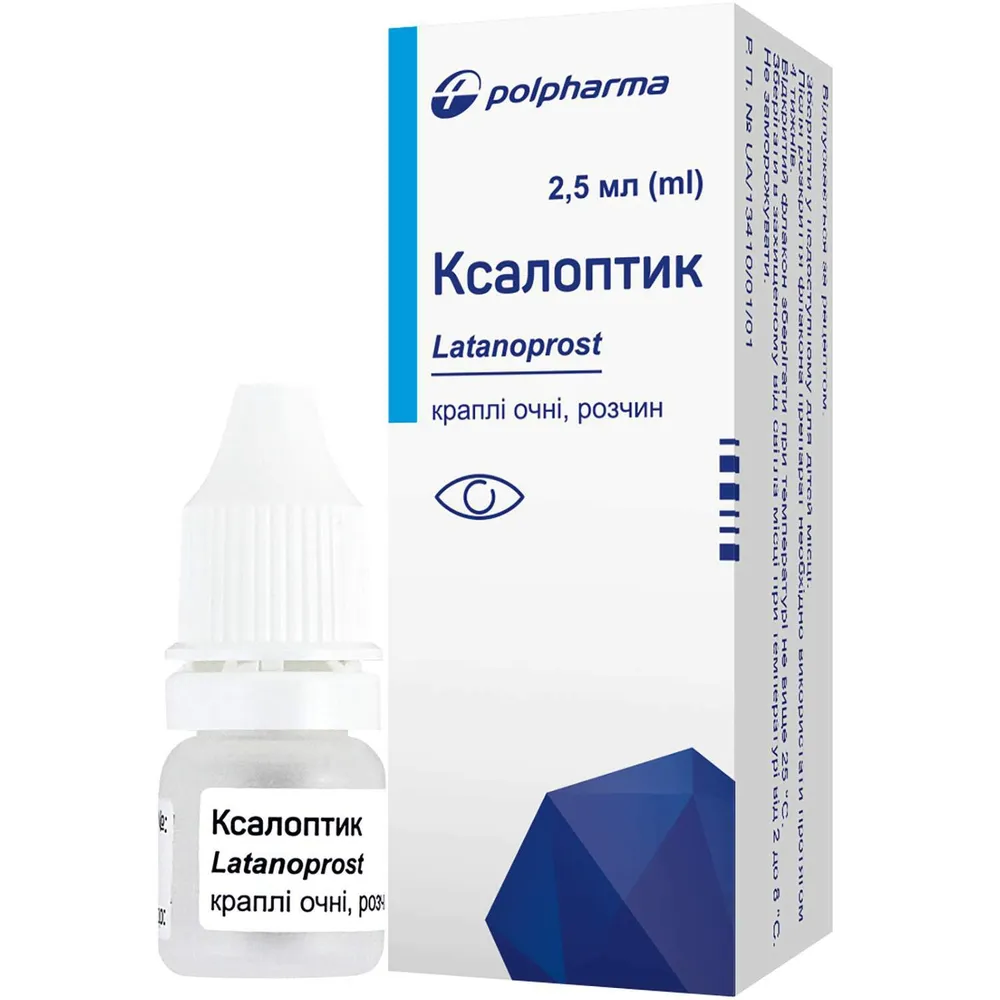
Table of Contents
INSTRUCTIONS FOR MEDICAL USE OF THE MEDICINAL PRODUCT KSALOPTIC (XALOPTIC)
Composition:
Active substance: latanoprost;
1 ml of solution contains 50 mcg of latanoprost;
Excipients: benzalkonium chloride; sodium dihydrogen phosphate monohydrate; disodium phosphate anhydrous; sodium chloride; water for injections.
Pharmaceutical form. Eye drops, solution.
Main physicochemical properties: clear, colorless liquid, practically free from foreign particles.
Pharmacotherapeutic group.
Antiglaucoma agents and miotics. Prostaglandin analogues.
ATC code S01E E01.
Pharmacological Properties.
Pharmacodynamics.
The active substance latanoprost, a prostaglandin F2α analogue, is a selective prostaglandin FP receptor agonist that reduces intraocular pressure (IOP) by increasing the outflow of aqueous humor. Reduction of IOP in humans begins approximately 3–4 hours after administration and reaches maximum effect at 8–12 hours. The pressure-lowering effect persists for at least 24 hours.
Studies indicate that the primary mechanism of action is increased uveoscleral outflow.
During short-term treatment, latanoprost did not cause leakage of fluorescein into the posterior segment of the eye in pseudophakic patients.
It has been established that, at clinical doses, latanoprost has no significant pharmacological effect on the cardiovascular and respiratory systems.
Children
The efficacy of latanoprost in pediatric patients aged ≤18 years was demonstrated in a 12-week, double-masked, clinical study comparing latanoprost with timolol in 107 patients diagnosed with elevated intraocular pressure or childhood glaucoma. In this study, neonates were required to have a gestational age of at least 36 weeks. Patients received either 0.005% latanoprost once daily or 0.5% timolol (or 0.25% at investigator’s discretion for patients under 3 years of age) twice daily. The primary efficacy endpoint was mean reduction in IOP from baseline at week 12. Mean IOP reductions were similar between the latanoprost and timolol treatment groups. Across all age subgroups studied (birth to 3 years, 3 to 12 years, and 12 to 18 years), mean IOP reductions at week 12 were comparable between latanoprost and timolol groups. However, efficacy data for latanoprost in the age group from birth to 3 years were based on only 13 patients, and no conclusive efficacy was demonstrated in the 4 patients who represented the birth to 1 year age subgroup in the clinical trial. Data on the use of the drug in preterm neonates (born before 36 weeks of gestation) are lacking.
IOP reduction outcomes in the subgroup of patients with primary congenital glaucoma (PCG)/infantile glaucoma were similar between those treated with latanoprost and those treated with timolol. Results in the non-PCG subgroup (i.e., patients with, for example, juvenile open-angle glaucoma, aphakic glaucoma) were similar to those in PCG patients.
The effect on IOP was evident after the first week of treatment (see table) and was maintained throughout the 12-week study period, as observed in adults.
Reduction of IOP (mmHg) at week 12 of the study according to treatment group and initial diagnosis
| Latano prost N=53 |
Timolol N=54 |
|||
| Mean baseline value (MBV) |
27.3 (0.75) |
27.8 (0.84) |
||
| Change at Week 12 compared to mean baseline value†(MBV) |
-7.18 (0.81) |
-5.72 (0.81) |
||
| p-value compared to timolol |
0.2056 |
|||
| PGV N=28 |
Non-PGV N=25 |
PGV N=26 |
Non-PGV N=28 |
|
| Mean baseline value (MBV) |
26.5 (0.72) |
28.2 (1.37) |
26.3 (0.95) |
29.1 (1.33) |
| Change at Week 12 compared to mean baseline value†(MBV) |
-5.90 (0.98) |
-8.66 (1.25) |
-5.34 (1.02) |
-6.02 (1.18) |
| p-value compared to timolol |
0.6957 |
0.1317 |
||
SE – standard error.
†Adjusted mean based on analysis of covariance (ANCOVA) model.
Pharmacokinetics.
Latanoprost is a prodrug in the form of an isopropyl ester, which is inactive per se but becomes biologically active after hydrolysis to latanoprost acid.
The prodrug is well absorbed through the cornea, and all of the drug reaching the aqueous humor of the eye is hydrolyzed during passage through the cornea.
Studies show that maximum drug concentration in the aqueous humor of humans is reached approximately 2 hours after topical administration. Latanoprost acid is practically not metabolized in the eye. The main metabolism occurs in the liver. The elimination half-life from blood plasma in humans is 17 minutes.
Children
An open-label pharmacokinetic study of latanoprost acid plasma concentrations was conducted in adult patients and pediatric patients (from neonates to children up to 18 years of age) with intraocular hypertension and glaucoma. Patients in all age groups received treatment with 0.005% latanoprost, one drop in each eye, for at least 2 weeks. Systemic exposure to latanoprost acid was approximately twice as high in patients aged 3 to <12 years and six times higher in children under 3 years of age compared to adult patients, yet a wide safety margin for systemic adverse effects was maintained. The median time to reach peak plasma concentration after dosing was 5 minutes across all age groups. The median plasma elimination half-life was short (less than 20 minutes) and similar in both pediatric and adult patients, indicating no accumulation of latanoprost acid in the systemic circulation at steady state.
Clinical characteristics.
Indications.
Reduction of elevated intraocular pressure in patients with open-angle glaucoma and ocular hypertension.
Reduction of elevated intraocular pressure in pediatric patients with ocular hypertension and pediatric glaucoma.
Contraindications.
Hypersensitivity to the active substance or to any of the excipients of the medicinal product.
Interaction with other medicinal products and other forms of interaction.
Comprehensive data on interactions with other medicinal products are lacking.
Paradoxical increase in IOP has been reported following concomitant ocular administration of two prostaglandin analogs. Therefore, concomitant use of two or more prostaglandins, prostaglandin analogs, or their derivatives is not recommended.
Latanoprost may be used concomitantly with other classes of ophthalmic medicinal products for topical administration intended for reduction of IOP. When more than one topical ophthalmic medicinal product is used, they should be administered at least five minutes apart.
Drug interaction studies have been conducted only in adult patients.
Special precautions for use.
Latanoprost may cause a gradual change in eye colour due to increased brown pigmentation of the iris. Before initiating treatment, patients should be informed about the possibility of a permanent change in eye colour. Treatment of only one eye may lead to irreversible heterochromia.
This change in eye colour is observed predominantly in patients with mixed-colour irises, i.e., blue-brown, grey-brown, yellow-brown, or green-brown eyes.
Colour change usually begins within the first 8 months of treatment, but in a small number of patients may occur later. Progression of iris pigmentation decreases over time and stabilizes after 5 years. The effect of increased pigmentation after 5 years of treatment has not been evaluated. In a 5-year safety study of latanoprost, increased iris pigmentation was recorded in 33% of patients (see section "Adverse reactions"). Changes in iris colour are mostly minor and often not clinically apparent. The incidence of cases in patients with mixed iris colour ranged from 7% to 85%, with patients having yellow-brown iris colour showing the highest frequency. Changes in eye colour were not observed in patients with uniformly blue eyes and were rare in patients with uniformly grey, green, or brown eyes.
The colour change occurs due to increased melanin content in the melanocytes of the iris stroma, not as a result of an increase in the number of melanocytes. Typically, brown pigmentation around the pupil spreads concentrically towards the periphery of the affected eye, but the entire iris or parts of it may become increasingly brown. After discontinuation of treatment, no further increase in brown iris pigmentation has been observed.
The use of the drug has not affected iris nevi or freckles. Pigment accumulation in the trabecular meshwork or elsewhere in the anterior chamber has not been observed. Increased iris pigmentation has no negative clinical consequences, and latanoprost treatment may be continued even if such pigmentation occurs. However, patients should be monitored regularly, and if the clinical situation requires, treatment with latanoprost should be discontinued.
Experience with the use of latanoprost is limited in chronic angle-closure glaucoma, open-angle glaucoma in pseudophakic patients, and pigmentary glaucoma. Currently, there are no data on the use of latanoprost in inflammatory or neovascular glaucoma or in inflammatory eye diseases. Latanoprost has no or minimal effect on the pupil, but data on the use of the drug during acute attacks of angle-closure glaucoma are lacking. Therefore, the drug should be used with caution in such conditions until more data become available.
Data from studies on the use of latanoprost before and after cataract surgery are limited. Latanoprost should be used with caution in such patients.
Latanoprost should be used with caution in patients with a history of herpetic keratitis, but its use should be avoided in cases of active herpetic keratitis caused by herpes simplex virus and in patients with a history of recurrent herpetic keratitis, especially if associated with prostaglandin analogues.
Cases of macular edema have been reported (see section "Adverse reactions"), primarily in aphakic patients, pseudophakic patients with posterior capsule rupture or anterior chamber lenses, and in patients with known risk factors for cystoid macular edema (such as diabetic retinopathy and retinal vein occlusion). Latanoprost should be used with caution in aphakic patients, pseudophakic patients with posterior capsule rupture or anterior chamber lenses, and in patients with known risk factors for cystoid macular edema.
Latanoprost may be used with caution in patients with known risk factors for the development of iritis/uveitis.
There is no experience with the use of the drug in patients with severe bronchial asthma, although some cases of asthma exacerbation and/or dyspnea have been reported during the post-marketing period. Until sufficient clinical experience is accumulated, the drug should be prescribed with caution to patients with bronchial asthma (see also section "Adverse reactions").
Changes in skin colour in the periorbital area have been observed, with most cases reported in Japanese patients. Current data suggest that skin pigmentation changes in the periorbital area are not permanent and in some cases resolved during continued treatment with Xalatan.
Latanoprost may gradually change the eyelashes and vellus hair around the treated eye and adjacent areas; these changes include increased length, thickness, pigmentation, and number of eyelashes or vellus hair, as well as misdirected eyelash growth. Changes in eyelashes are reversible and disappear after discontinuation of the drug.
Xalatan contains benzalkonium chloride, which is commonly used as a preservative in ophthalmic preparations. Reports have indicated that benzalkonium chloride may cause punctate keratopathy and/or toxic ulcerative keratopathy. It may also cause eye irritation and change the colour of soft contact lenses. Careful monitoring is required when Xalatan is used frequently or long-term in patients with dry eye or conditions involving corneal damage. Contact lenses may absorb benzalkonium chloride; therefore, they should be removed before applying Xalatan and may be reinserted 15 minutes later (see section "Dosage and administration").
Use during pregnancy or breastfeeding.
Pregnancy

The safety of this medicinal product for use in pregnant women has not been established. Its pharmacological action poses a potential risk to pregnancy, the fetus, or the newborn. Therefore, latanoprost should not be used during pregnancy.
Breastfeeding period
Latanoprost and its metabolites may pass into human breast milk; therefore, mothers who are breastfeeding should either discontinue treatment with Xalatan or discontinue breastfeeding.
Effect on ability to drive and use machines.
The use of eye drops, like other ophthalmic medicinal products, may cause temporary blurred vision. Until this effect subsides, patients should not drive or operate machinery.
Method of Administration and Dosage.
Recommended dose for adults (including elderly patients) is 1 drop in the affected eye once daily. The optimal effect is achieved when latanoprost is administered in the evening.
The dose of latanoprost should not exceed the recommended single dose, as more frequent administration has been shown to reduce the intraocular pressure (IOP)-lowering effect.
If a dose is missed, the next dose should be administered according to the regular schedule.
To minimize systemic absorption when administering eye drops, it is recommended to press the lacrimal sac at the inner canthus of the eye (nasolacrimal duct occlusion) for one minute immediately after instillation.
Contact lenses should be removed before instillation of the eye drops and may be reinserted 15 minutes after administration.
If multiple topical ophthalmic solutions are used, they should be administered with an interval of at least 5 minutes between each.
Children.
Xaloptic eye drops can be used in pediatric patients at the same dosage as in adults. Data on efficacy and safety of the drug in patients under 1 year of age are very limited (4 patients) (see section "Pharmacological Properties"). There are no available data on use in preterm infants (born before 36 weeks of gestation).
In children aged from birth to 3 years, primarily suffering from primary congenital glaucoma, surgical intervention (e.g., trabeculotomy/goniotomy) remains the first-line treatment.
Long-term safety of the drug in pediatric patients has not been established.
Overdose.
Other adverse reactions besides ocular irritation and conjunctival hyperemia are not known in case of latanoprost overdose.
The following information may be helpful in case of accidental ingestion of Xaloptic. One vial contains 125 mcg of latanoprost. More than 90% is metabolized during the first pass through the liver. Intravenous infusion of the drug at a dose of 3 mcg/kg in healthy volunteers did not cause any symptoms, whereas doses of 5.5–10 mcg/kg caused nausea, abdominal pain, dizziness, increased fatigue, hot flashes, and increased sweating.
However, topical ocular administration of latanoprost doses 7 times higher than the clinical dose of Xaloptic did not result in bronchospasm in patients with moderate bronchial asthma.
In case of latanoprost overdose, treatment should be symptomatic.
Adverse Reactions
Most adverse events are related to the eye. In an open-label 5-year study of latanoprost, iris pigmentation changes were observed in 33% of patients (see section "Special Warnings and Precautions for Use"). Other ocular adverse events are usually temporary and occur after drug administration.
Adverse events are categorized according to frequency as follows: very common (≥ 1/10), common (≥ 1/100, < 1/10), uncommon (≥ 1/1000, < 1/100), rare (≥ 1/10000, < 1/1000), very rare (< 1/10000), and frequency not known (cannot be estimated from available data).
Infectious and parasitic diseases
Rare: Herpetic keratitis.
Nervous system disorders
Uncommon: Headache, dizziness.
Eye disorders
Very common: Increased pigmentation of the iris; mild or moderate conjunctival hyperemia; eye irritation (burning sensation, sensation of "sand in the eye", itching, stinging, foreign body sensation); changes in eyelashes and vellus hair of the eyelids (increased length, thickness, pigmentation, and number of eyelashes) (the majority of cases were observed in Japanese patients).
Common: Punctate keratitis, mostly asymptomatic; blepharitis; eye pain; photophobia; conjunctivitis.
Uncommon: Eyelid edema; dry eye; keratitis; blurred vision; macular edema, including cystoid macular edema; uveitis.
Rare: Iritis; corneal edema; corneal erosion; periorbital edema; trichiasis (misdirected eyelash growth, sometimes causing eye irritation); distichiasis (an additional row of eyelashes near the meibomian gland orifices); iris cyst; local skin reaction on the eyelids; darkening of the palpebral skin of the eyelids; ocular conjunctival pseudopemphigoid.
Very rare: Periorbital changes and eyelid changes leading to deepening of the eyelid fold.
Cardiac disorders
Uncommon: Angina pectoris; tachycardia.
Very rare: Unstable angina.
Respiratory, thoracic and mediastinal disorders
Uncommon: Bronchial asthma; dyspnea.
Rare: Exacerbation of bronchial asthma.
Skin and subcutaneous tissue disorders
Uncommon: Skin rash.
Rare: Pruritus.
Musculoskeletal and connective tissue disorders
Uncommon: Myalgia; arthralgia.
General disorders and administration site conditions
Uncommon: Chest pain.
Very rare cases of corneal calcification associated with ophthalmic solutions containing phosphate have been reported in patients with significantly damaged corneas.
Gastrointestinal disorders:
Uncommon: Nausea, vomiting.
Children
In two short-term clinical studies (≤ 12 weeks) involving 93 pediatric patients (25 and 68), the safety profile of the drug was similar to that in adults, and no new adverse reactions were identified. Short-term safety profiles across different pediatric subgroups were also similar (see section "Pharmacological Properties"). In pediatric patients, the following adverse reactions were observed more frequently than in adults: nasopharyngitis and increased body temperature.
Shelf life. 3 years.
After first opening of the bottle – 4 weeks.
Storage conditions.
Store in a protected from light place at a temperature of 2 to 8 °C.
Do not freeze.
After opening the bottle, the product must be used within 4 weeks.
Store the opened bottle at a temperature not exceeding 25 °C.
Keep out of reach of children.
Packaging.
2.5 ml in a bottle with dropper and cap with tamper-evident ring; 1 bottle per cardboard box.
Prescription category.
Prescription only.
Manufacturers.
Taejoon Pharm. Co., Ltd / Taejoon Pharm. Co., Ltd
Pharmaceutical Works «POLPHARMA» S. A. / Pharmaceutical Works «POLPHARMA» S. A.
Responsible for batch release:
Pharmaceutical Works «POLPHARMA» S. A. / Pharmaceutical Works «POLPHARMA» S. A.
Manufacturing of the medicinal product, primary and secondary packaging, quality control, and batch release:
Farmigea S.p.A.
Farmigea S.p.A.
Manufacturer's address and place of business.
109-30, Gyeonggi-ro, Namsa-myeon, Cheoin-gu, Yongin-si, Gyeonggi-do, Korea /
109-30, Gyeonggi-ro, Namsa-myeon, Cheoin-gu, Yongin-si, Korea.
19, Pelplinska Str., 83-200 Starogard Gdanski, Poland /
ul. Pelplinska 19, 83-200 Starogard Gdanski, Poland.
Via Giovan Battista Oliva 6-8, Pisa, 56121, Italy