Corinfar uno 40
Ukraine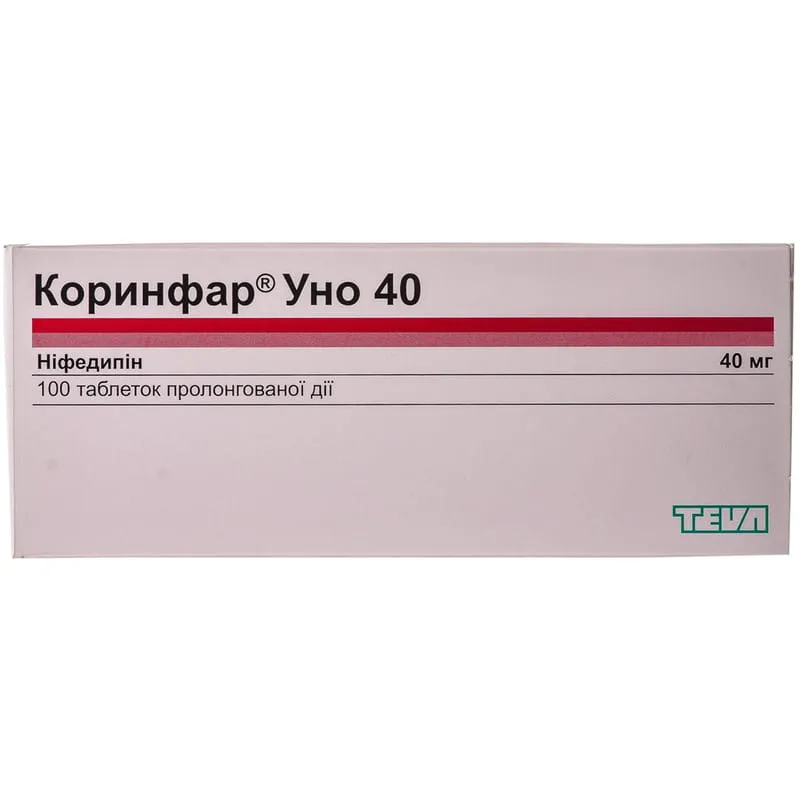
Table of Contents
INSTRUCTIONS FOR MEDICAL USE OF THE MEDICINAL PRODUCT CORINFAR® UNO 40 (CORINFAR® UNO 40)
Composition:
Active substance: nifedipine;
1 tablet contains 40 mg of nifedipine;
Excipients: microcrystalline cellulose, cellulose, lactose monohydrate, magnesium stearate, hypromellose, colloidal anhydrous silicon dioxide, macrogol, talc, iron oxide red (E 172), titanium dioxide (E 171).
Pharmaceutical form. Prolonged-release tablets.
Main physicochemical characteristics: red-brown, round, biconvex tablets, 7 mm in diameter, coated with a film coating.
Pharmacotherapeutic group. Selective calcium antagonists with predominant vascular effect. ATC code C08CA05.
Pharmacological Properties.
Pharmacodynamics.
Nifedipine is a calcium antagonist of the 1,4-dihydropyridine type. Calcium antagonists reduce the influx of calcium ions through voltage-gated "slow" calcium channels into cells. Nifedipine primarily affects smooth muscle cells of the coronary arteries and peripheral blood vessels, with virtually no effect on myocardium when administered at therapeutic doses.
Nifedipine reduces peripheral vascular resistance (afterload) and promotes dilation of coronary arteries, thereby improving blood flow.
At the beginning of therapy with calcium antagonists, reflex tachycardia and increased cardiac output may occur. However, this response is insufficient to compensate for the vasodilation.
With long-term nifedipine therapy, the initial increase in cardiac output returns to baseline levels. A pronounced reduction in arterial blood pressure with nifedipine is typically observed in patients with arterial hypertension.
Pharmacokinetics.
After oral administration on an empty stomach, nifedipine is rapidly and almost completely absorbed. Nifedipine undergoes a significant first-pass effect in the liver; systemic bioavailability after oral administration ranges between 50% and 70%. Maximum plasma and serum concentrations of nifedipine are reached approximately 30–85 minutes after administration of the prolonged-release tablet formulation. 95–98% of nifedipine is bound to plasma proteins (primarily albumin). The mean volume of distribution (Vss) of nifedipine ranges from 0.77 to 1.12 L/kg. After oral administration, nifedipine is almost completely metabolized in the liver, primarily via oxidative pathways; the metabolites are pharmacologically inactive.
The drug is almost completely eliminated from the body within 24 hours. Nifedipine is excreted primarily via the kidneys as metabolites, with only 5–15% excreted in bile and feces. Trace amounts of unchanged drug (less than 0.1%) are found in urine.
The elimination half-life is approximately 10 hours.
Accumulation of the drug in the body during long-term treatment with therapeutic doses has not been reported. In patients with impaired liver function, a clear prolongation of the elimination half-life of the active substance and a reduction in total plasma clearance are observed. In such cases, dosage reduction may be necessary.
Clinical characteristics.
Indications.
Essential hypertension.
Contraindications.
− Hypersensitivity to the active substance or to any component of the medicinal product;
− cardiogenic shock;
− unstable angina pectoris;
− acute myocardial infarction (within the first 4 weeks);
- acute angina attack;
− secondary prevention of myocardial infarction;
− malignant hypertension (safety of using the drug has not been studied);
− high-grade aortic stenosis;
− ileostomy or colostomy;
− concomitant use of rifampicin (due to inability to achieve effective plasma levels of nifedipine due to enzyme induction);
− pregnancy.
Interaction with other medicinal products and other forms of interaction.
Medicinal products affecting the efficacy of nifedipine
Nifedipine is metabolized via the cytochrome P450 3A4 system; therefore, medicinal products that inhibit or induce this enzyme system may alter the "first-pass" effect (after oral administration) or the clearance of nifedipine.
When using nifedipine together with the following medicinal products, the degree and duration of interaction should be taken into account.
Rifampicin
Rifampicin significantly induces the cytochrome P450 3A4 system. When used concomitantly with rifampicin, the bioavailability of nifedipine is substantially reduced, thus weakening its efficacy. Therefore, the concomitant use of nifedipine with rifampicin is contraindicated.
When using the following weak or moderate inhibitors of the cytochrome P450 3A4 system concomitantly, blood pressure should be monitored and, if necessary, the dose of nifedipine should be reduced.
Macrolide antibiotics (e.g., erythromycin)
No studies on the interaction between nifedipine and macrolide antibiotics have been conducted. Some macrolide antibiotics inhibit cytochrome P450 3A4-mediated metabolism of other drugs. Therefore, an increased plasma concentration of nifedipine cannot be excluded when both drugs are used concomitantly.
Azithromycin, structurally similar to macrolide antibiotics, does not inhibit CYP3A4.
HIV protease inhibitors (e.g., ritonavir)
Studies on the interaction between nifedipine and certain HIV protease inhibitors have not been conducted. It is known that drugs in this class inhibit the cytochrome P450 3A4 system. In addition, these drugs inhibit in vitro the cytochrome P450 3A4-mediated metabolism of nifedipine. When used concomitantly with nifedipine, a significant increase in nifedipine plasma concentration due to reduced first-pass metabolism and reduced elimination rate cannot be excluded.
Azole antifungals (e.g., ketoconazole)
No formal clinical study on the interaction between nifedipine and certain azole antifungals has been conducted. It is known that drugs in this class inhibit the cytochrome P450 3A4 system. When administered orally concomitantly with nifedipine, a significant increase in systemic bioavailability of nifedipine due to reduced first-pass metabolism cannot be excluded.
Fluoxetine
Studies on the interaction between nifedipine and fluoxetine have not been conducted. It is known that fluoxetine inhibits in vitro the cytochrome P450 3A4-mediated metabolism of nifedipine. When both drugs are used concomitantly, an increase in nifedipine plasma concentration cannot be excluded.
Nefazodone
Studies on the interaction between nifedipine and nefazodone have not been conducted. It is known that nefazodone inhibits in vitro the cytochrome P450 3A4-mediated metabolism of other drugs. When both drugs are used concomitantly, an increase in nifedipine plasma concentration cannot be excluded.
Quinupristin/dalfopristin
Concomitant use of quinupristin/dalfopristin and nifedipine may lead to increased plasma concentration of nifedipine.
Valproic acid
Studies on the interaction between nifedipine and valproic acid have not been conducted. It is known that valproic acid increases plasma concentrations of the structurally similar calcium channel blocker nimodipine due to enzyme inhibition. Therefore, an increase in nifedipine plasma concentration and enhanced efficacy cannot be excluded.
Cimetidine
Due to inhibition of cytochrome P450 3A4, cimetidine increases nifedipine plasma concentrations and may enhance the antihypertensive effect.
Tricyclic antidepressants, vasodilators
Combination of nifedipine with tricyclic antidepressants or vasodilators may lead to a possible enhancement of the hypotensive effect.
Additional studies
Cisapride
Concomitant use of cisapride and nifedipine may lead to increased plasma concentration of nifedipine.
Antiepileptic drugs inducing the cytochrome P450 3A4 system, such as phenytoin, carbamazepine, and phenobarbital
Phenytoin induces the cytochrome P450 3A4 system. When used concomitantly with phenytoin, the bioavailability of nifedipine is reduced and its efficacy weakened. When both drugs are used concomitantly, the clinical response to nifedipine therapy should be monitored and, if necessary, the dose of nifedipine should be increased. If the dose of nifedipine was increased during concomitant use, consideration should be given to reducing the nifedipine dose upon discontinuation of phenytoin.
Formal clinical studies on the interaction between nifedipine and carbamazepine or phenobarbital have not been conducted. It is known that both drugs reduce plasma concentrations of the structurally similar calcium channel blocker nimodipine due to enzyme induction. Therefore, a decrease in nifedipine plasma concentration and reduced efficacy cannot be excluded.
Diltiazem reduces the breakdown of nifedipine, which may necessitate dose reduction.
Effect of nifedipine on other medicinal products
Antihypertensive drugs
Nifedipine may enhance the antihypertensive effect of concomitantly administered antihypertensive drugs, such as:
- diuretics;
- β-adrenergic blockers;
- ACE inhibitors (angiotensin-converting enzyme);
- AT1-receptor antagonists;
- other calcium antagonists;
- α-adrenergic blockers;
- PDE-5 inhibitors (phosphodiesterase-5);
- α-methyldopa;
- magnesium sulfate.
Careful monitoring of the patient is required when nifedipine is used concomitantly with β-adrenergic blockers, as isolated cases of worsening heart failure have been reported.
Nitrates
Concomitant use of the medicinal product with nitrate drugs leads to enhanced effects on blood pressure and heart rate.
Digoxin, theophylline
Nifedipine causes an increase in plasma levels of digoxin and theophylline (symptoms of digoxin overdose should be considered; after measuring digoxin levels, dose reduction of the glycoside may be required). Close monitoring of the patient is necessary.
Quinidine
When nifedipine and quinidine are used concomitantly, decreased quinidine levels have been observed in individual cases, and upon discontinuation of nifedipine — a sharp increase in quinidine plasma concentration. Therefore, monitoring of quinidine plasma concentration is recommended when starting or stopping nifedipine, and the quinidine dose should be adjusted if necessary. Some authors have reported increased nifedipine plasma concentration when both drugs are used concomitantly, while others have not observed changes in nifedipine pharmacokinetics.
Therefore, blood pressure should be carefully monitored when quinidine is added to nifedipine therapy. If necessary, the dose of nifedipine should be reduced.
Tacrolimus
It is known that tacrolimus is metabolized via the cytochrome P450 3A4 system. Published data indicate that in some cases the dose of tacrolimus can be reduced when used concomitantly with nifedipine. When both drugs are used concomitantly, monitoring of tacrolimus plasma concentration is required, and consideration should be given to reducing the dose of tacrolimus if necessary.
When taken concomitantly with vincristine, reduced elimination of vincristine may occur, potentially intensifying its adverse reactions — dose reduction should be considered. When used concomitantly with cephalosporins, increased plasma levels of cephalosporins occur.
Interaction with food
Grapefruit juice
Grapefruit juice inhibits the cytochrome P450 3A4 system. Consumption of grapefruit juice during nifedipine therapy leads to increased drug plasma concentration and prolonged duration of action due to reduced first-pass metabolism or reduced clearance. As a result, the antihypertensive effect of the drug may be enhanced. This effect may persist for at least 3 days after the last intake of juice following regular consumption.
Therefore, grapefruit/grapefruit juice should be avoided during nifedipine therapy.
Pharmacokinetic interactions
Aymalin. Concomitant use of aymalin and nifedipine does not affect the pharmacokinetics of nifedipine.
Acetylsalicylic acid. Administration of 100 mg acetylsalicylic acid does not affect the pharmacokinetics of nifedipine. Concomitant use with nifedipine does not alter the effect of acetylsalicylic acid on platelet aggregation or bleeding time.
Benazepril. Concomitant use of benazepril and nifedipine does not affect the pharmacokinetics of nifedipine.
Debrisoquin. Concomitant use of nifedipine and debrisoquin does not affect the pharmacokinetics of nifedipine.
Talinolol. Concomitant use of nifedipine and talinolol does not affect the pharmacokinetics of nifedipine.
Irbesartan. Concomitant use of nifedipine and irbesartan does not affect the pharmacokinetics of irbesartan.
Candesartan cilexetil. Concomitant use of nifedipine and candesartan cilexetil does not affect the pharmacokinetics of either drug.
Orlistat. Concomitant use of nifedipine and orlistat does not affect the pharmacokinetics of nifedipine.
Omeprazole. Concomitant use of nifedipine and omeprazole does not affect the pharmacokinetics of nifedipine.
Pantoprazole. Concomitant use of nifedipine and pantoprazole does not affect the pharmacokinetics of nifedipine.
Ranitidine. Concomitant use of nifedipine and ranitidine does not affect the pharmacokinetics of nifedipine.
Rosiglitazone. Concomitant use of nifedipine and rosiglitazone does not affect the pharmacokinetics of nifedipine.
Triamterene hydrochloride. Concomitant use of nifedipine and triamterene hydrochloride does not affect the pharmacokinetics of nifedipine.
Other types of interaction
The use of nifedipine may lead to false-positive results in the spectrophotometric determination of vanillylmandelic acid concentration in urine (however, this effect is not observed when using high-performance liquid chromatography).
Special precautions for use.
Nifedipine should be administered with caution in patients with severe arterial hypotension (systolic pressure below 90 mm Hg) or severe heart failure.
There are no safety and efficacy data from well-controlled studies in pregnant women.
Animal studies have demonstrated various embryotoxic, placentotoxic, and fetotoxic effects when administered during and after the period of organogenesis.
Based on available clinical evidence, a specific prenatal risk has not been established. However, there have been reports of increased incidence of perinatal asphyxia, cesarean section deliveries, preterm births, and intrauterine growth retardation. It remains unclear whether these outcomes are due to the underlying hypertension, its treatment, or a specific effect of the drug.
Available information is insufficient to exclude serious adverse effects on the fetus or newborn. Therefore, any use of the drug during pregnancy requires careful assessment of the risk-benefit ratio of treatment. Therapy with this drug should be considered only if alternative treatments are not indicated or have proven ineffective.
When nifedipine is used concomitantly with intravenous magnesium sulfate, careful monitoring of arterial pressure is required due to the potential for significant hypotension, which may harm both mother and fetus.
Caution is necessary when administering the drug tablets to patients with significant gastrointestinal tract narrowing, due to the risk of obstructive symptoms. Very rarely, bezoar formation may occur, which could require surgical intervention.
Obstructive symptoms have been reported in isolated cases even in the absence of prior gastrointestinal disorders.
The drug must not be administered to patients with ileostomy (following proctocolectomy).
Administration of the medicinal product may lead to false-positive results in X-ray examinations using barium contrast medium (e.g., filling defects may be interpreted as polyps).
Patients with impaired liver function require close monitoring, and dose reduction may be necessary in severe cases.
Nifedipine is metabolized via the cytochrome P450 3A4 system; therefore, drugs that inhibit or induce this enzyme system may alter the first-pass metabolism or clearance of nifedipine.
Drugs that are weak or moderate inhibitors of the cytochrome P450 3A4 system and may increase plasma concentrations of nifedipine include, for example:
- macrolide antibiotics (e.g., erythromycin);
- anti-HIV protease inhibitors (e.g., ritonavir);
- azole antifungals (e.g., ketoconazole);
- antidepressants nefazodone and fluoxetine;
- quinupristin/dalfopristin;
- valproic acid;
- cimetidine.
When co-administering nifedipine with these drugs, arterial pressure should be monitored, and dose reduction of nifedipine should be considered if necessary.
Some in vitro experiments have shown an association between calcium antagonists, particularly nifedipine, and reversible biochemical changes in spermatozoa that impair their fertilizing capacity. If in vitro fertilization attempts fail without other explanation, calcium antagonists such as nifedipine may be considered as a possible contributing factor.
The drug should not be used if there is a history of ischemic pain following prior nifedipine administration. In patients with angina, the drug may provoke attacks, and their duration and intensity may increase, especially at the beginning of treatment.
Nifedipine-containing medicinal products must not be used in patients with unstable angina.
Particular caution is required when prescribing the drug to patients undergoing hemodialysis or those with malignant hypertension or hypovolemia, as vasodilation may cause a significant drop in arterial pressure.
Use of nifedipine in diabetic patients may necessitate adjustment of antidiabetic therapy.
The medicinal product contains lactose monohydrate. “Corinfar® Uno 40” must not be prescribed to patients with rare hereditary conditions such as galactose intolerance, Lapp lactase deficiency, or glucose-galactose malabsorption.
Use during pregnancy or breastfeeding.
Pregnancy
The use of nifedipine is contraindicated during pregnancy.
Use of nifedipine during pregnancy requires careful evaluation of the risk-benefit ratio. Treatment with this drug should be considered only if alternative therapies are not indicated or have proven ineffective. Data from studies on the use of the drug in pregnant women are lacking.
Animal studies have shown embryotoxicity, fetotoxicity, and teratogenicity of the drug.
Cases of perinatal asphyxia, complications of delivery requiring cesarean section, risk of preterm delivery, and intrauterine growth retardation have been reported. It is currently unknown whether these problems are caused by essential hypertension, antihypertensive therapy, or the effect of the specific medicinal product.
Acute pulmonary edema (especially in multiple pregnancies) has been reported following intravenous administration of calcium channel blockers, including nifedipine, for suppression of labor and/or when used concomitantly with β2-agonists.
Careful monitoring of arterial pressure is required when the drug is used concomitantly with intravenous magnesium sulfate due to the possibility of significant hypotension, which may harm both mother and fetus.
Breastfeeding
Nifedipine passes into breast milk (the concentration of nifedipine in breast milk is almost equal to that in maternal plasma). Therefore, if nifedipine therapy is necessary, breastfeeding should be discontinued.
Fertility
In isolated cases during in vitro fertilization, calcium antagonists such as nifedipine have been associated with reversible biochemical changes in the heads of spermatozoa, which may impair sperm function. If repeated in vitro fertilization attempts fail without other explanation, the effect of calcium antagonists such as nifedipine may be considered as a possible cause.
Ability to influence reaction speed when driving or operating machinery.
Nifedipine therapy requires continuous medical supervision. Due to possible individual sensitivity, some patients may experience impaired ability to drive or operate machinery. These warnings are particularly relevant during the initial phase of treatment, dose escalation, switching to another drug, or alcohol consumption.
Dosage and Administration
The dosage and duration of treatment are determined individually by a physician according to the severity of the disease and the patient's response to therapy.
Depending on the patient's condition, the dose should be gradually increased in each individual case until the optimal therapeutic effect is achieved.
Patients with severe cerebral circulation disorders (severe cerebrovascular disease) should be prescribed reduced doses of the drug.
Essential hypertension
The average daily dose is 1 tablet once daily (40 mg once daily).
Route of administration
The medicinal product should be taken orally in the morning, 30 minutes before breakfast, without chewing and with sufficient fluid (e.g., one glass of water). Tablets should be taken at the same time each day. Grapefruit juice should be avoided during treatment with this drug.
Concomitant food intake increases the bioavailability and maximum plasma concentrations of the active substance.
“Corinfar® Uno 40” tablets must not be divided, as the light-protective coating of the tablet will no longer be guaranteed after splitting.
The duration of treatment is determined by the physician.
Special patient groups
Children and adolescents. The safety and efficacy of nifedipine treatment in children (under 18 years of age) have not been established.
Elderly patients (˃ 65 years). Based on pharmacokinetic parameters, there is no need to adjust the dose in patients aged 65 years and older.
Hepatic impairment. Patients with impaired liver function may require careful monitoring and, in some cases, dose reduction.
Renal impairment. Based on pharmacokinetic parameters, there is no need to adjust the dose in patients with renal insufficiency.
Children.
The safety and efficacy of nifedipine in children (under 18 years of age) have not been established. The medicinal product must not be used in children.
Overdose.
Symptoms of acute intoxication: impaired consciousness, coma, arterial hypotension, tachycardia/bradycardia, hyperglycemia, metabolic acidosis, hypoxia, cardiogenic shock accompanied by pulmonary edema.
Treatment. The most important therapeutic measures are elimination of the drug from the body and restoration of cardiovascular stability.
After oral administration, complete gastric evacuation is recommended, if necessary in combination with lavage of the small intestine to prevent absorption of the active substance.
When using laxatives, it should be considered that calcium antagonists may reduce intestinal muscle tone up to intestinal atony. Since nifedipine is highly protein-bound in plasma and has a relatively small volume of distribution, hemodialysis is ineffective; however, plasmapheresis is recommended.
Bradycardia can be treated with β-sympathomimetics. In case of life-threatening bradycardia, artificial pacing is recommended.
Arterial hypotension resulting from cardiogenic shock and vasodilation can be managed with calcium preparations (10–20 mL of 10% calcium chloride or calcium gluconate solution administered slowly intravenously, repeated as needed). This may result in plasma calcium levels reaching the upper limit of normal or becoming slightly elevated. If calcium administration is insufficiently effective, dopamine, dobutamine, epinephrine, or norepinephrine should be considered. Doses of these agents should be titrated according to the therapeutic response. Additional fluid administration should be approached with extreme caution, as it may increase the risk of cardiac overload.
Side effects.
Blood and lymphatic system disorders: changes in blood count parameters, anemia, leukopenia, thrombocytopenia and thrombotic microangiopathy, agranulocytosis.
Immune system disorders: allergic reactions, allergic edema/angioedema (including laryngeal edema which may be life-threatening), pruritus, urticaria, rash, anaphylactic/anaphylactoid reaction, facial swelling.
Psychiatric disorders: anxiety, sleep disorders, mood changes, restlessness.
Metabolism and nutrition disorders: hyperglycemia.
Nervous system disorders: headache, especially at the beginning of treatment; dizziness, migraine, tremor, paresthesia, dysesthesia, hypesthesia, somnolence, weakness, vertigo.
Eye disorders: slight transient visual disturbances, visual impairment, eye pain.
Cardiovascular disorders: flushing, palpitations, tachycardia, edema (including peripheral edema), vasodilation, loss of consciousness, hypotension, myocardial infarction, chest pain (angina), erythromelalgia, especially at the beginning of treatment; thrombocytopenic purpura. At the beginning of therapy, patients with angina may experience an increase in frequency, duration, or severity of angina attacks.
Respiratory system disorders: epistaxis; nasal congestion; pulmonary edema (when used in pregnancy as a tocolytic agent); bronchial smooth muscle spasm, including life-threatening dyspnea, which resolves after discontinuation of treatment.
Gastrointestinal disorders: constipation, gastrointestinal dysfunction such as dyspepsia, diarrhea, abdominal pain, flatulence, nausea, vomiting, dry mouth, gingival hyperplasia, gastroesophageal sphincter insufficiency, bloating, belching, loss of appetite, gastrointestinal pain, bezoar, dysphagia, intestinal ulcer, intestinal obstruction.
Hepatobiliary disorders: transient increase in liver transaminase activity, jaundice, intrahepatic cholestasis.
Skin and subcutaneous tissue disorders: erythema, Mitchell's disease, especially at the beginning of treatment; skin hypersensitivity reactions such as pruritus, exanthema, skin and mucosal swelling, sweating, urticaria, photodermatitis, palpable purpura, exfoliative dermatitis, toxic epidermal necrolysis, photosensitivity reaction. With prolonged use of nifedipine, gingival hyperplasia may occur, which resolves completely after discontinuation of the drug.
Musculoskeletal and connective tissue disorders: myalgia, arthralgia, muscle cramps, joint swelling.
Renal and urinary disorders: transient decrease in renal function in patients with renal insufficiency; pollakiuria, polyuria, dysuria, nocturia, increased frequency of urination, increased daily urine output.
Reproductive system and breast disorders: gynecomastia (the process is reversible, symptoms resolve after discontinuation of nifedipine), erectile dysfunction.
General disorders: increased fatigue, malaise, feeling unwell, apathy, fever, non-specific pain, chills, cold sweat.
Shelf life. 3 years.
Storage conditions. The medicinal product does not require special storage conditions. Keep out of reach and sight of children.
Packaging.
10 tablets in a blister; 2, 5, or 10 blisters in a box.
Prescription category. Prescription only.
Manufacturer: Merckle GmbH.
Manufacturer's address and place of business:
Ludwig-Merckle-Strasse 3, 89143 Blaubeuren, Germany.