Coripren 20 mg/10 mg
Ukraine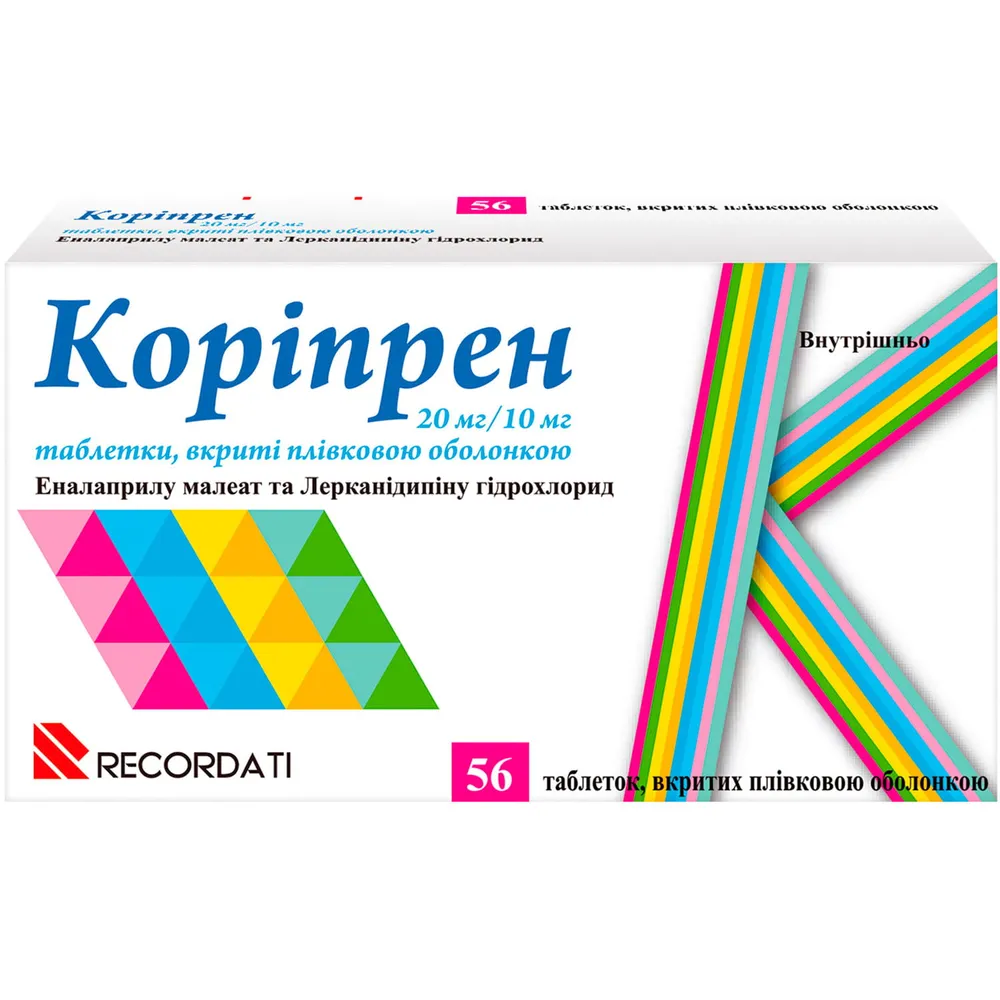
Table of Contents
INSTRUCTIONS FOR MEDICAL USE OF THE MEDICINAL PRODUCT CORIPREN 20 mg/10 mg (CORIPREN 20 mg/10 mg)
Composition:
Active substances: enalapril; lercanidipine;
One tablet contains enalapril maleate 20 mg (corresponds to enalapril 15.29 mg) and lercanidipine hydrochloride 10 mg (corresponds to lercanidipine 9.44 mg);
Excipients: lactose monohydrate, microcrystalline cellulose, sodium starch glycolate (type A), povidone (K 30), sodium bicarbonate, magnesium stearate;
coating: yellow coating agent 02F22330;
content of yellow coating agent 02F22330: hypromellose 5 cP (E 646), titanium dioxide (E 171), talc, macrogol 6000, quinoline yellow (E 104), iron oxide yellow (E 172).
Pharmaceutical form. Film-coated tablets.
Main physicochemical properties: yellow, round, biconvex, film-coated tablets.
Pharmacotherapeutic group.
ACE inhibitors and calcium channel blockers: enalapril and lercanidipine.
ATC code C09BB02.
Pharmacological properties.
Pharmacodynamics.
Coripren 20 mg/10 mg is a fixed-dose combination of an ACE inhibitor (enalapril 20 mg) and a calcium channel blocker (lercanidipine 10 mg), two antihypertensive agents with complementary mechanisms of action for controlling arterial pressure in patients with hypertension.
Clinical studies have demonstrated that systolic blood pressure reduction is greater with the fixed-dose combination of enalapril and lercanidipine than with monotherapy. The difference was 6.7 mm Hg.
Clinical studies have demonstrated that diastolic blood pressure reduction is greater with the fixed-dose combination of enalapril and lercanidipine than with monotherapy. The difference was 7.5 mm Hg.
Enalapril maleate is the maleic acid salt of enalapril, a derivative of two amino acids – L-alanine and L-pyrrolidine-α-carboxylic acid. Angiotensin-converting enzyme (ACE) is a peptidyl dipeptidase that catalyzes the conversion of angiotensin I into the vasoconstrictor agent angiotensin II. After absorption, enalapril is hydrolyzed to enalaprilat, which inhibits ACE. Inhibition of ACE leads to reduced plasma angiotensin II levels, resulting in increased plasma renin activity (due to removal of negative feedback on renin secretion) and reduced aldosterone secretion. Since ACE is identical to kininase II, enalapril may also inhibit the degradation of bradykinin, a potent vasodilator peptide. However, the role of this mechanism in the therapeutic effects of enalapril has not been fully elucidated.
Although the primary mechanism by which enalapril lowers blood pressure is considered to be suppression of the renin-angiotensin-aldosterone system, enalapril reduces blood pressure even in patients with low renin levels. Enalapril reduces arterial pressure without significantly increasing heart rate in hypertensive patients both in the supine and upright positions. Symptomatic postural hypotension is rare. In some patients, several weeks of treatment may be required to achieve optimal blood pressure control. Abrupt discontinuation of enalapril does not lead to rapid rebound hypertension.
Effective inhibition of ACE activity typically occurs within 2–4 hours after oral administration of a single dose of enalapril. The onset of the antihypertensive effect is generally observed within one hour, with maximal blood pressure reduction occurring 4–6 hours after administration. The duration of action is dose-dependent; however, at recommended doses, the hypotensive and hemodynamic effects last at least 24 hours.
In hemodynamic studies of patients with essential hypertension, blood pressure reduction was associated with decreased peripheral arterial resistance, increased cardiac output, and either no significant change or slight increase in heart rate.
After enalapril administration, renal blood flow increases, while glomerular filtration rate remains unchanged. Signs of sodium or water retention are not observed. However, in patients with low glomerular filtration rate prior to treatment, glomerular filtration rate typically increases.
In short-term studies of patients with diabetes and non-diabetic patients with kidney disease, administration of enalapril was associated with reduced albuminuria and decreased urinary excretion of IgG and total protein.
ACE inhibitors and angiotensin II receptor antagonists should not be used concomitantly in patients with diabetic nephropathy.
Lercanidipine is a dihydropyridine calcium antagonist that inhibits transmembrane calcium influx into cardiac and smooth muscle. Its antihypertensive mechanism is based on direct relaxation of vascular smooth muscle, thereby reducing total peripheral resistance. Despite its short elimination half-life, lercanidipine exerts a prolonged antihypertensive effect due to its high membrane partition coefficient and does not exhibit negative inotropic effects due to its high vascular selectivity.
Because the vasodilation produced by lercanidipine begins gradually, acute arterial hypotension with reflex tachycardia is rarely observed in hypertensive patients.
As with other asymmetric 1,4-dihydropyridines, the antihypertensive activity of lercanidipine is primarily due to its (S)-enantiomer.
Pharmacokinetics.
No pharmacokinetic interactions were observed when enalapril and lercanidipine were co-administered.
Pharmacokinetics of enalapril
Absorption. Enalapril is rapidly absorbed; peak serum concentration occurs within one hour. The extent of absorption of enalapril maleate after oral administration is approximately 60%. The presence of food in the gastrointestinal tract does not affect enalapril absorption.
Distribution. After absorption, enalapril is rapidly and extensively hydrolyzed to enalaprilat, the potent ACE inhibitor. Peak serum concentration of enalaprilat occurs 3–4 hours after oral administration of enalapril maleate. The effective half-life for accumulation of enalaprilat after multiple doses of enalapril is 11 hours. In individuals with normal renal function, steady-state plasma concentrations of enalaprilat are reached within 4 days of treatment.
Within the entire therapeutic concentration range, 60% of enalaprilat is protein-bound to plasma proteins.
Metabolism: Apart from conversion to enalaprilat, there is no evidence of significant metabolism of enalapril.
Elimination. Excretion of enalaprilat is primarily renal. The main urinary components are enalaprilat, accounting for approximately 40% of the dose, and unchanged enalapril (approximately 20%).
The elimination half-life (T1/2) of enalapril after repeated oral administration is 11 hours.
Renal impairment. Exposure to enalapril and enalaprilat is increased in patients with renal impairment. In patients with mild to moderate renal dysfunction (creatinine clearance 40–60 mL/min), the steady-state AUC of enalaprilat is approximately twice higher than in patients with normal renal function after a 5 mg once-daily dose. In patients with severe renal impairment (creatinine clearance ≤ 30 mL/min), the AUC is approximately 8 times higher. The effective elimination half-life of enalaprilat after multiple doses of enalapril is prolonged in such patients, and the time to reach steady-state concentration is increased.
Enalaprilat can be removed from the circulation by hemodialysis. The dialysis clearance of enalaprilat is 62 mL/min.
Pharmacokinetics of lercanidipine
Absorption. Lercanidipine is completely absorbed after oral administration, with peak plasma levels reached approximately 1.5–3 hours after dosing. The two enantiomers of lercanidipine show identical plasma concentration profiles: time to peak concentration is the same; both peak plasma concentration and AUC are on average 1.2 times higher for the (S)-enantiomer. The elimination half-lives of the two enantiomers are essentially identical. No interconversion of the two enantiomers is observed in vivo.
Due to extensive first-pass metabolism, the absolute oral bioavailability of lercanidipine taken after food is approximately 10%. However, bioavailability decreases to one-third of this value when administered to healthy volunteers on an empty stomach. Oral bioavailability of lercanidipine increases fourfold when administered no later than 2 hours after a high-fat meal. Therefore, the drug should be administered before meals.
Distribution. Distribution from plasma to tissues and organs is rapid and extensive.
Protein binding exceeds 98%. Since protein levels are reduced in patients with severe renal or hepatic dysfunction, the concentration of free lercanidipine fractions may be higher.
Metabolism. Lercanidipine is extensively metabolized by CYP3A4; no metabolites are detected in urine or feces. Lercanidipine is predominantly converted into inactive metabolites, with approximately 50% of the dose excreted in urine.
In vitro experiments with human liver microsomes showed that lercanidipine causes negligible inhibition of CYP3A4 and CYP2D6 at concentrations 160 and 40 times higher than the peak plasma level achieved after a 20 mg dose. Furthermore, human interaction studies have shown that lercanidipine does not alter plasma levels of midazolam (a typical CYP3A4 substrate) or metoprolol (a typical CYP2D6 substrate). Therefore, lercanidipine at therapeutic doses is not expected to inhibit the biotransformation of drugs metabolized by CYP3A4 or CYP2D6.
Elimination. Elimination is primarily via biotransformation.
The mean terminal elimination half-life is estimated to be 8–10 hours. Due to high affinity for lipid membranes, therapeutic activity lasts for 24 hours. No accumulation occurs after repeated dosing.
Linearity/non-linearity. After oral administration of lercanidipine, plasma levels are not directly proportional to dose (non-linear kinetics). After administration of 10, 20, or 40 mg, the ratios of peak plasma concentrations were 1:3:8, and the area under the plasma concentration–time curve (AUC) ratios were 1:4:18, indicating progressive saturation of the first-pass hepatic effect. Consequently, bioavailability increases with increasing dose.
Special patient populations. Pharmacokinetics of lercanidipine in elderly patients and in patients with mild to moderate renal or hepatic impairment have been shown to be similar to those in the general patient population. Patients with severe renal impairment or those dependent on dialysis demonstrated higher drug concentrations (approximately 70%). In patients with moderate to severe hepatic impairment, systemic bioavailability of lercanidipine is likely increased, as it is primarily metabolized in the liver.
Clinical characteristics.
Indications.
Essential arterial hypertension.
Contraindications.
- Hypersensitivity to any angiotensin-converting enzyme (ACE) inhibitor or dihydropyridine calcium channel blocker, or to any component of this medicinal product.
- History of angioedema associated with previous ACE inhibitor therapy.
- Hereditary or idiopathic angioedema.
- Pregnancy or planned pregnancy (see "Use in pregnancy or breastfeeding").
- Left ventricular outflow tract obstruction.
- Untreated congestive heart failure.
- Unstable angina or recent (within 1 month) myocardial infarction.
- Severe renal impairment (GFR <30 mL/min), including patients on dialysis.
- Severe hepatic impairment.
Concomitant use:
- Strong inhibitors of CYP3A4;
- Cyclosporine;
- Grapefruit or grapefruit juice.
- Concomitant use with sacubitril/valsartan therapy. Enalapril should not be used earlier than 36 hours after the last dose of sacubitril/valsartan.
- Concomitant use of Coripren 20 mg/10 mg with aliskiren-containing medicinal products in patients with diabetes or renal impairment (GFR < 60 mL/min/1.73 m²).
Interaction with other medicinal products and other forms of interaction.
The antihypertensive effect of Coripren may be potentiated by other medicinal products that lower blood pressure, such as diuretics, β-blockers, α-blockers, etc. In addition, the following interactions were observed with the use of one of the components of the combination medicinal product.
Enalapril maleate
Medicinal products increasing the risk of angioedema
Concomitant use of ACE inhibitors with sacubitril/valsartan is contraindicated, as it increases the risk of angioedema.
mTOR inhibitors
Concomitant use of ACE inhibitors with racetodril, mTOR inhibitors (e.g., sirolimus, everolimus, temsirolimus), and vildagliptin may lead to an increased risk of angioedema.
Dual blockade of the renin-angiotensin-aldosterone system (RAAS)
Clinical trial data have shown that dual blockade of the renin-angiotensin-aldosterone system (RAAS) by combined use of ACE inhibitors, angiotensin II receptor blockers, or aliskiren is associated with a higher incidence of adverse effects, including hypotension, hyperkalemia, and renal dysfunction (including acute renal failure), compared to use of a single agent acting on RAAS.
Potassium-sparing diuretics, potassium supplements, or potassium-containing salt substitutes
Serum potassium levels usually remain within normal limits; however, hyperkalemia may occur in some patients receiving enalapril. Potassium-sparing diuretics (e.g., spironolactone, eplerenone, triamterene, or amiloride), potassium supplements, or potassium-containing salt substitutes may lead to a significant increase in serum potassium levels. Caution is required when enalapril is used concomitantly with other agents that increase serum potassium levels, such as trimethoprim and co-trimoxazole (trimethoprim/sulfamethoxazole), since trimethoprim is known to act as a potassium-sparing diuretic similar to amiloride. Therefore, combination of enalapril with the above-mentioned medicinal products is not recommended. If concomitant use is indicated, caution and frequent monitoring of serum potassium levels are required.
Cyclosporine
Hyperkalemia may occur with concomitant use of ACE inhibitors and cyclosporine. Monitoring of serum potassium levels is recommended.
Heparin
Hyperkalemia may occur with concomitant use of ACE inhibitors and heparin. Monitoring of serum potassium levels is recommended.
Diuretics (thiazide or loop diuretics)
Initiating enalapril therapy with high doses of diuretics may lead to reduced blood volume and risk of hypotension. Hypotensive effects can be minimized by discontinuing the diuretic, increasing fluid or salt intake, or using low doses of enalapril.
Other antihypertensive agents
Concomitant use of these agents may enhance the antihypertensive effect of enalapril. Concomitant use with nitroglycerin and other nitrates or other vasodilators may lead to further reduction in blood pressure.
Lithium
Concomitant use of lithium-containing medicinal products with ACE inhibitors has been associated with reversible increases in serum lithium concentration and lithium toxicity. Concomitant use of thiazide diuretics with ACE inhibitors may increase lithium levels and the risk of lithium toxicity. Concomitant use of enalapril with lithium is not recommended, but if such combination is necessary, careful monitoring of serum lithium levels should be performed.
Tricyclic antidepressants / antipsychotics / anesthetics / narcotics
Concomitant use of certain anesthetics, tricyclic antidepressants, and antipsychotics with ACE inhibitors may lead to further reduction in blood pressure.
Nonsteroidal anti-inflammatory drugs (NSAIDs), including selective cyclooxygenase-2 (COX-2) inhibitors
Nonsteroidal anti-inflammatory drugs (NSAIDs), including selective cyclooxygenase-2 (COX-2) inhibitors, may reduce the effect of diuretics and other antihypertensive agents. Therefore, the antihypertensive effect of angiotensin II receptor antagonists or ACE inhibitors may be attenuated by NSAIDs, including selective COX-2 inhibitors.
Concomitant use of NSAIDs (including COX-2 inhibitors) and angiotensin II receptor antagonists or ACE inhibitors causes an additive effect on increasing serum potassium levels and may lead to worsening of renal function. These effects are usually reversible. Acute renal failure may rarely occur, especially in patients with impaired renal function (e.g., elderly patients or patients with signs of dehydration, including those due to diuretic therapy). Therefore, the combination of these medicinal products should be prescribed with particular caution in patients with impaired renal function. Patients should receive adequate fluid intake, and special attention should be paid to monitoring renal function after initiation of concomitant therapy and periodically during treatment.
Gold preparations
Rarely, patients receiving injectable gold-containing preparations (sodium aurothiomalate) and concomitant therapy with ACE inhibitors, including enalapril, have developed nitritoid reactions (symptoms include facial flushing, nausea, vomiting, and hypotension).
Sympathomimetics
Sympathomimetics may reduce the antihypertensive effects of ACE inhibitors.
Antidiabetic agents
Epidemiological studies have shown that concomitant use of ACE inhibitors and antidiabetic medicinal products (insulin, oral hypoglycemic agents) may enhance the glucose-lowering effect, with a risk of hypoglycemia. This phenomenon is more likely during the first weeks of combination therapy and in patients with renal impairment.
Alcohol
Alcohol enhances the antihypertensive effect of ACE inhibitors.
Acetylsalicylic acid, thrombolytics, and β-adrenoblockers
Enalapril can be safely taken concomitantly with acetylsalicylic acid (in cardiological doses), thrombolytics, and β-adrenoblockers.
Lercanidipine
Contraindicated concomitant use
CYP3A4 inhibitors
Lercanidipine is known to be metabolized by the CYP3A4 enzyme; therefore, concomitant use of CYP3A4 inhibitors and inducers may affect the metabolism and elimination of lercanidipine.
A drug interaction study with ketoconazole, a strong CYP3A4 inhibitor, demonstrated a marked increase in plasma levels of lercanidipine (15-fold increase in the area under the concentration-time curve (AUC) of the drug and 8-fold increase in Cmax of the eutomer S-lercanidipine).
Concomitant use of lercanidipine with strong CYP3A4 inhibitors (e.g., ketoconazole, itraconazole, ritonavir, erythromycin, troleandomycin) should be avoided.
Cyclosporine
Increased plasma concentrations of both agents were observed when lercanidipine and cyclosporine were used concomitantly. A study in healthy young volunteers showed no changes in lercanidipine plasma levels after cyclosporine administration 3 hours after lercanidipine, but the AUC of cyclosporine increased by 27%. However, concomitant use of lercanidipine with cyclosporine resulted in a 3-fold increase in lercanidipine plasma levels and a 21% increase in cyclosporine AUC.
Cyclosporine and lercanidipine should not be taken concomitantly (see section "Contraindications").
Grapefruit or grapefruit juice
As with other dihydropyridines, the metabolism of lercanidipine may be inhibited by grapefruit juice, leading to increased systemic availability and, consequently, enhanced antihypertensive effect.
Lercanidipine should not be taken with grapefruit or grapefruit juice (see section "Contraindications").
Not recommended for concomitant use
CYP3A4 inducers
Use of lercanidipine concomitantly with CYP3A4 inducers, such as anticonvulsants (e.g., phenytoin, carbamazepine) and rifampicin, requires caution, as the antihypertensive effect of lercanidipine may be reduced. Therefore, blood pressure should be monitored more frequently than usual.
Alcohol
Alcohol consumption should be avoided, as it may enhance the effect of antihypertensive vasodilators.
Precautions for use, including dose selection
CYP3A4 substrates
Concomitant use of lercanidipine with other CYP3A4 substrates, such as terfenadine, astemizole, class III antiarrhythmics (e.g., amiodarone, quinidine, sotalol), should be prescribed with caution.
Midazolam
In elderly volunteers, concomitant oral administration of 20 mg lercanidipine and midazolam resulted in enhanced absorption of lercanidipine (approximately 40%) and reduced absorption rate (Tmax increased from 1.75 to 3 hours). No changes in midazolam concentration were observed.
Metoprolol
When lercanidipine was used concomitantly with metoprolol—a beta-blocker primarily eliminated by the liver—bioavailability of metoprolol was unchanged, while bioavailability of lercanidipine decreased by 50%. This effect may be due to reduced hepatic blood flow caused by β-adrenoblockers and may therefore occur with other agents of this class. However, lercanidipine can be safely used concomitantly with β-adrenoblockers, although dose adjustment is required.
Digoxin
Concomitant use of 20 mg lercanidipine in patients on long-term treatment with beta-methyl-digoxin showed no signs of pharmacokinetic interaction. However, in healthy volunteers, a mean increase in digoxin Cmax by 33% was observed, while AUC and renal clearance were not significantly altered. When digoxin is used concomitantly, careful monitoring for clinical signs of digoxin toxicity is required.
Concomitant use with other medicinal products
Fluoxetine
A drug interaction study with fluoxetine (a CYP2D6 and CYP3A4 inhibitor) in healthy volunteers aged 65 ± 7 years (mean ± SD) showed no clinically significant changes in the pharmacokinetics of lercanidipine.
Cimetidine
Concomitant use of cimetidine at a dose of 800 mg per day did not cause significant changes in lercanidipine plasma levels, but caution should be exercised with higher doses, as bioavailability of lercanidipine and its antihypertensive effect may increase.
Simvastatin
When lercanidipine 20 mg was repeatedly administered concomitantly with simvastatin 40 mg, the AUC of lercanidipine was not significantly altered, while the AUC of simvastatin increased by 56% and that of its main active metabolite (β-hydroxy acid) by 28%. Such changes are unlikely to be clinically significant. No interaction is expected if lercanidipine is taken in the morning and simvastatin in the evening, as recommended for this medicinal product.
Warfarin
Concomitant use of 20 mg lercanidipine on an empty stomach in healthy volunteers did not alter the pharmacokinetics of warfarin.
Diuretics and ACE inhibitors
Lercanidipine has been safely used with diuretics and ACE inhibitors.
Other medicinal products affecting blood pressure
As with all antihypertensive agents, an enhanced antihypertensive effect may occur when lercanidipine is used concomitantly with other agents affecting blood pressure, such as alpha-blockers for urinary symptoms, tricyclic antidepressants, neuroleptics. A reduced antihypertensive effect may be observed with concomitant use of corticosteroids.
Children
Drug interaction studies have been conducted only in adults.
Special precautions for use.
Symptomatic hypotension.
Symptomatic hypotension is rare in patients with uncomplicated hypertension. In patients with arterial hypertension receiving enalapril, symptomatic hypotension occurs more frequently if they have reduced blood volume, for example, due to diuretic therapy, salt-free diet, dialysis, diarrhea, or vomiting. Symptomatic hypotension has been observed in patients with heart failure (with or without renal insufficiency). Symptomatic hypotension is likely in patients with severe heart failure, particularly when receiving high doses of loop diuretics, with hyponatremia, or with functional renal insufficiency. In such patients, therapy should be initiated under medical supervision, and patients must strictly adhere to the treatment regimen whenever the dose of enalapril and/or diuretics is changed. Similar precautions are necessary for patients with ischemic heart disease or cerebrovascular disorders, in whom excessive reduction in blood pressure may lead to myocardial infarction or stroke.
If arterial hypotension occurs, the patient should be placed in a supine position and, if necessary, isotonic saline solution should be administered intravenously by infusion. A transient hypotensive response is not a contraindication to further administration of the drug at an appropriate dose. Treatment may be continued without complications after blood pressure has increased due to restoration of fluid volume. In some patients with heart failure and normal or low blood pressure, additional reduction in systemic arterial pressure may occur during enalapril therapy. This effect may be anticipated and is generally not a reason to discontinue treatment. If arterial hypotension becomes symptomatic, dose reduction and/or discontinuation of diuretics and/or enalapril may be necessary.
Sinus node dysfunction.
Lercanidipine should be administered with caution to patients with sinus node dysfunction (unless a cardiac pacemaker is implanted).
Left ventricular dysfunction.
Although controlled hemodynamic studies have not shown worsening of ventricular function, the drug should be used cautiously in patients with left ventricular dysfunction.
Ischemic heart disease.
It is likely that the use of certain short-acting dihydropyridines may be associated with increased cardiovascular risk in patients with ischemic heart disease. Although lercanidipine is a prolonged-release formulation, it should be used cautiously in such patients. Rarely, the use of some dihydropyridines may cause precordial pain or angina. Very rarely, patients with pre-existing angina may experience increased frequency, duration, or severity of such episodes. Isolated cases of myocardial infarction have been reported.
Use in renal impairment.
Particular caution is required when prescribing enalapril to patients with mild or moderate renal impairment. Continuous monitoring of serum potassium and creatinine levels during enalapril therapy is part of medical care for these patients. Reports of renal failure associated with enalapril use have primarily involved patients with severe heart failure or underlying kidney disease, including renal artery stenosis. If diagnosed promptly and managed appropriately, enalapril-induced renal failure is usually reversible. In some patients with arterial hypertension and no prior kidney disease, combination therapy with enalapril and a diuretic may lead to increased blood urea and serum creatinine levels. Dose reduction of enalapril and/or discontinuation of the diuretic may be required. In such cases, the possibility of renal artery stenosis should be considered.
Renovascular hypertension.
Patients with bilateral renal artery stenosis or stenosis of the artery to a single functioning kidney are particularly susceptible to developing arterial hypotension or renal failure during therapy with ACE inhibitors. Renal function impairment may occur even with minimal changes in serum creatinine levels. In these patients, therapy should be initiated under close medical supervision, starting with low doses and cautious dose titration, with monitoring of renal function.
Kidney transplantation.
There is no experience with the use of lercanidipine or enalapril in patients who have recently undergone kidney transplantation. Therefore, treatment of these patients with Coripren is not recommended.
Hepatic insufficiency.
The antihypertensive effect of lercanidipine may be enhanced in patients with impaired liver function. Rarely, treatment with ACE inhibitors has been associated with a syndrome beginning with cholestatic jaundice or hepatitis and progressing to rapidly progressive necrotizing hepatitis, sometimes fatal. The mechanism of this syndrome is unknown. Patients who develop jaundice or marked elevation of liver enzymes during ACE inhibitor therapy should discontinue the ACE inhibitor and receive appropriate treatment.
Peritoneal dialysis.
Use of lercanidipine has been associated with turbidity of peritoneal exudate in patients undergoing peritoneal dialysis. Turbidity is due to increased triglyceride concentration in the peritoneal exudate. Although the mechanism is unknown, this effect tends to resolve shortly after discontinuation of lercanidipine. This association should be considered to avoid misdiagnosing peritoneal exudate turbidity as infectious peritonitis, leading to unnecessary hospitalization and empirical antibiotic use.
Neutropenia/agranulocytosis.
During treatment with ACE inhibitors, including enalapril, neutropenia/agranulocytosis, thrombocytopenia, and anemia have been observed in patients. In patients with normal renal function and no special risk factors, neutropenia occurs rarely. Enalapril should be used with particular caution in patients with vasculitis, those undergoing immunosuppressive therapy, those receiving allopurinol or procainamide, or those with multiple risk factors, especially if renal impairment is present. Some of these patients have experienced serious infections, which in rare cases did not respond to intensive antibiotic therapy. When using enalapril in such patients, regular monitoring of the white blood cell count is recommended, and patients should be instructed to report any signs of infection to their physician.
Hypersensitivity/angioedema.
Cases of angioedema (Quincke's edema) involving the face, extremities, lips, tongue, glottis, and/or larynx have been reported in patients receiving ACE inhibitors, including enalapril. This may occur at any time during treatment. In such cases, enalapril should be discontinued immediately. Patients should remain under close medical supervision until discharge from hospital to ensure complete resolution of symptoms. Even if only tongue swelling occurs without respiratory distress, prolonged observation may be required, as treatment with antihistamines and corticosteroids may be insufficient.
Very rarely, fatal outcomes from angioedema, including laryngeal or tongue edema, have been reported. Patients with swelling of the tongue, glottis, or larynx may experience airway obstruction, particularly if they have a history of airway surgery.
If swelling of the tongue, glottis, or larynx may lead to airway obstruction, immediate appropriate treatment is required, including subcutaneous administration of 1:1000 adrenaline solution (0.3 mL to 0.5 mL), and/or measures to secure airway patency. Reports indicate that the incidence of Quincke's edema in patients of non-Caucasian race receiving ACE inhibitors is significantly higher than in patients of other races. Patients with a history of angioedema unrelated to ACE inhibitor use may have a much higher risk of developing angioedema when receiving an ACE inhibitor.
Concomitant use of ACE inhibitors with sacubitril/valsartan is contraindicated due to increased risk of angioedema. Treatment with sacubitril/valsartan should not be initiated earlier than 36 hours after the last dose of enalapril. Treatment with enalapril should not be initiated earlier than 36 hours after the last dose of sacubitril/valsartan.
Concomitant use of ACE inhibitors, racecadotril, mTOR inhibitors (sirolimus, everolimus, temsirolimus), and vildagliptin may increase the risk of angioedema (e.g., airway or tongue swelling, with or without respiratory impairment). Patients already receiving ACE inhibitors should initiate treatment with racecadotril, mTOR inhibitors (sirolimus, everolimus, temsirolimus), and vildagliptin with caution.
Anaphylactoid reactions during desensitization to Hymenoptera venom.
Life-threatening anaphylactoid reactions rarely occur during desensitization therapy for insect venom and concomitant use of an ACE inhibitor. These reactions can be avoided by temporarily discontinuing the ACE inhibitor before each desensitization session.
Anaphylactoid reactions during LDL apheresis.
Life-threatening anaphylactoid reactions rarely occur during low-density lipoprotein (LDL) apheresis using dextran sulfate and concomitant use of an ACE inhibitor. These reactions can be avoided by temporarily discontinuing the ACE inhibitor before each apheresis session.
Hypoglycemia.
Careful monitoring of blood glucose levels is required during the first month of ACE inhibitor therapy in diabetic patients receiving oral hypoglycemic agents or insulin.
Cough.
Cough may occur with the use of ACE inhibitors. This cough is typically non-productive and persistent and resolves after discontinuation of therapy. ACE inhibitor-induced cough should also be considered in the differential diagnosis of cough.
Surgery/anesthesia.
During major surgery or anesthesia with agents that lower blood pressure, enalapril inhibits the formation of angiotensin II, which may lead to compensatory renin secretion. If arterial hypotension develops through this mechanism, it can be corrected by physical expansion of circulating blood volume.
Serum potassium.
ACE inhibitors may cause hyperkalemia, as their action suppresses aldosterone release. This effect is usually mild in patients with normal renal function. However, in patients with impaired renal function and/or those taking potassium supplements (including salt substitutes), potassium-sparing diuretics, trimethoprim, or cotrimoxazole (trimethoprim/sulfamethoxazole), and especially aldosterone antagonists or angiotensin receptor blockers, hyperkalemia may occur. Potassium-sparing diuretics and angiotensin receptor blockers should be used with caution in patients receiving ACE inhibitors, and serum potassium levels and renal function should be monitored.
Lithium.
Combination of lithium and enalapril is generally not recommended.
CYC3A4 inducers.
Inducers of CYP3A4, such as anticonvulsants (e.g., phenytoin, carbamazepine) and rifampicin, may reduce serum levels of lercanidipine, potentially resulting in lower than expected efficacy.
Ethnic differences.
As with other ACE inhibitors, enalapril is undoubtedly less effective in reducing blood pressure in patients of non-Caucasian race compared to patients of Caucasian race, likely due to lower plasma renin levels, which are often observed in non-Caucasian patients with arterial hypertension.
Alcohol.
Alcohol intake should be avoided, as this combination may potentiate the vasodilatory antihypertensive effects.
Lactose.
The medicinal product contains lactose. Coripren should not be administered to patients with hereditary galactose intolerance, lactase deficiency, or glucose-galactose malabsorption.
Use during pregnancy or breastfeeding.
Pregnancy.
Enalapril.
Use of ACE inhibitors (enalapril) is not recommended during the first trimester of pregnancy. Use of ACE inhibitors (enalapril) is contraindicated during the second and third trimesters of pregnancy.
Epidemiological data on teratogenic risk associated with ACE inhibitor use during the first trimester of pregnancy do not allow definitive conclusions; however, a slight increase in risk cannot be excluded. Pregnant patients should have their ACE inhibitor therapy replaced with alternative antihypertensive agents with an established safety profile during pregnancy, except when ACE inhibitor therapy is considered life-saving. When pregnancy is diagnosed, ACE inhibitor therapy should be discontinued immediately, and alternative therapy initiated if necessary.
It is known that ACE inhibitor use during the second and third trimesters of pregnancy is toxic to the human fetus (impaired renal function, oligohydramnios, delayed skull ossification) and to the newborn (renal failure, arterial hypotension, hyperkalemia). In the mother, oligohydramnios may occur, possibly as a manifestation of impaired fetal renal function, which may lead to limb contractures, craniofacial deformities, and pulmonary hypoplasia. If an ACE inhibitor is used during the second trimester of pregnancy, ultrasound examination should be performed to assess fetal renal function and skull ossification. Newborns whose mothers received ACE inhibitors should be monitored for arterial hypotension (see sections "Contraindications" and "Special precautions for use").
Lercanidipine.
Data on the use of lercanidipine in pregnant women are lacking.
Animal studies have not shown teratogenic effects of lercanidipine, although such effects have been observed with other dihydropyridine compounds.
Lercanidipine is not recommended for use in pregnant women or women of childbearing potential who are not using effective contraception.
Combination of enalapril and lercanidipine.
Data on the use of enalapril maleate/lercanidipine hydrochloride in pregnant women are insufficient or lacking. Animal studies on reproductive toxicity are inadequate.
Coripren should not be used in pregnant women or women planning to become pregnant. If pregnancy is confirmed during treatment with this product, its use should be discontinued immediately and replaced with another medicinal product approved for use during pregnancy.
Breastfeeding.
Enalapril.
Limited pharmacokinetic data show that enalapril is present in breast milk at very low concentrations (see section "Pharmacokinetics"). Although low concentrations of ACE inhibitors are not clinically significant, due to the hypothetical risk of adverse reactions in infants (effects on cardiovascular system and renal function) and due to insufficient clinical experience with Coripren, treatment with enalapril is not recommended in breastfeeding mothers of preterm infants or infants in the first weeks of life. Breastfeeding of older infants may be permitted only if absolutely necessary and under medical supervision for adverse reactions in the infant.
Lercanidipine.
Data on excretion of lercanidipine into breast milk are lacking, but risk to the infant cannot be excluded. Therefore, lercanidipine should not be used during breastfeeding.
Combination of enalapril and lercanidipine.
Coripren should not be used during breastfeeding.
Fertility.
Cases have been reported in which some patients receiving calcium channel blockers experienced reversible biochemical changes in the sperm head, potentially affecting fertilization. In repeated unsuccessful attempts at in vitro fertilization, and in the absence of other explanations, the possibility that calcium channel blockers may be the cause should be considered.
Ability to influence reaction speed when driving or operating machinery.
The effect of Coripren and its components on reaction speed when driving or operating machinery is negligible. However, the possible development of dizziness, asthenia, fatigue, and, rarely, somnolence should be taken into account.
Method of Administration and Dosage.
Patients whose blood pressure is not adequately controlled with 20 mg of enalapril as monotherapy may either increase the enalapril dose to continue monotherapy or switch to treatment with the fixed-dose combination medicinal product Coripren 20 mg/10 mg.
Individual dose titration may be recommended. Transition from monotherapy to a fixed-dose combination may also be considered if clinically appropriate.
The tablets are administered orally; the recommended dose is 1 tablet once daily.
The medicinal product should preferably be taken in the morning, at least 15 minutes before breakfast. This medicinal product should not be taken with grapefruit juice.
Elderly patients. Treatment of patients depends on renal function status.
Dosage in renal impairment: Coripren 20 mg/10 mg is contraindicated in patients with severe renal dysfunction (creatinine clearance < 30 mL/min) and in patients undergoing hemodialysis. Particular caution should be exercised when initiating treatment in patients with mild to moderate renal impairment.
Dosage in hepatic impairment. Coripren 20 mg/10 mg is contraindicated in patients with severe hepatic dysfunction. Particular caution should be exercised when initiating treatment in patients with mild to moderate hepatic impairment.
Children.
The efficacy and safety of Coripren for use in children have not been established. The product is not used in pediatric practice.
Overdose.
During the post-marketing period, cases of intentional overdose with enalapril/lercanidipine at doses ranging from 100 to 1000 mg for each of these drugs have been reported. Hospitalization was required in such cases. Reported symptoms (reduced systolic blood pressure, bradycardia, anxiety, somnolence, and flank pain) may also have been related to concomitant intake of high doses of other medications (e.g., beta-blockers).
Symptoms of enalapril and lercanidipine overdose. The most characteristic symptom of enalapril overdose is hypotension (occurring approximately 6 hours after drug intake) associated with blockade of the RAAS, and stupor. Symptoms related to ACE inhibitor overdose may include vascular shock, electrolyte imbalance, renal failure, hyperventilation, tachycardia, palpitations, bradycardia, dizziness, restlessness, and cough. Serum enalaprilat levels up to 100 and 200 times higher than usual have been observed after administration of therapeutic doses of enalapril at 300 mg and 440 mg, respectively.
As with other dihydropyridines, lercanidipine overdose may cause excessive peripheral vasodilation leading to marked hypotension and reflex tachycardia. However, with extremely high doses, peripheral selectivity may be lost, resulting in bradycardia. The most common adverse reactions associated with overdose were hypotension, dizziness, headache, and palpitations.
Treatment of enalapril and lercanidipine overdose. Recommended treatment for enalapril overdose is intravenous infusion of physiological saline solution. If hypotension occurs, the patient should be placed in a supine position with low elevation of the head. Intravenous administration of angiotensin II and/or catecholamines may be used. If the drug was taken recently, measures to eliminate enalapril maleate from the body should be taken (e.g., induction of emesis, gastric lavage, administration of adsorbents and sodium sulfate). Enalaprilat can be removed from the bloodstream by hemodialysis. Use of a cardiac pacemaker is indicated in cases of therapy-resistant bradycardia. Vital signs, serum electrolyte levels, and serum creatinine should be continuously monitored.
In cases of lercanidipine overdose with development of severe hypotension, bradycardia, and loss of consciousness, cardiovascular support with intravenous administration of atropine to prevent bradycardia may be beneficial.
Due to the prolonged pharmacological effect of lercanidipine, the patient who has taken an excessive dose should be monitored for at least 24 hours. There is no information on the effectiveness of dialysis. Because the drug is highly lipophilic, plasma lercanidipine levels are not informative regarding the degree of overdose. Dialysis is ineffective.
Adverse Reactions
The safety of Coripren was evaluated in five double-blind controlled clinical studies and in two long-term open-label extension phases. Overall, 1141 patients received the drug at doses of 10 mg/10 mg, 20 mg/10 mg, and 20 mg/20 mg. Adverse reactions observed during treatment with Coripren correspond to those known for the individual active substances of this drug. The most commonly occurring adverse reactions during treatment with Coripren are cough (4.03%), dizziness (1.67%), and headache (1.67%).
The table below presents the adverse reactions identified in clinical trials of the drug administered at doses of 10 mg/10 mg, 20 mg/10 mg, and 20 mg/20 mg, for which a causal relationship with drug administration has been established. Adverse reactions are listed by MedDRA System Organ Classes and according to the following frequency categories: very common (>1/10), common (≥1/100 to <1/10), uncommon (≥1/1000 to <1/100), rare (≥1/10,000 to <1/1000), very rare (<1/10,000), and not known (cannot be estimated from available data).
| From the blood and lymphatic system |
|
| Uncommon: |
Thrombocytopenia |
| Rare: |
Decreased hemoglobin levels |
| From the immune system |
|
| Rare: |
Hypersensitivity |
| From the metabolism and nutrition |
|
| Uncommon: |
Hyperkalemia |
| From the mental sphere |
|
| Uncommon: |
Anxiety |
| From the nervous system |
|
| Common: |
Dizziness, headache |
| Uncommon: |
Postural dizziness |
| From the ear and balance organs |
|
| Uncommon: |
Spatial disorientation (vertigo) |
| Rare: |
Tinnitus |
| From the heart |
|
| Uncommon: |
Tachycardia, palpitations |
| Vascular disorders |
|
| Uncommon: |
Hyperemia, hypotension |
| Rare: |
Vascular insufficiency |
| From the respiratory system, thoracic organs and mediastinum |
|
| Common: |
Cough |
| Rare: |
Dry throat, oropharyngeal pain |
| From the gastrointestinal tract |
|
| Uncommon: |
Abdominal pain, constipation, nausea |
| Rare: |
Dyspepsia, lip swelling, speech disorders, diarrhea, dry mouth, gingivitis |
| From the liver and biliary tract |
|
| Uncommon: |
Elevated ALT levels, elevated AST levels |
| From the skin and subcutaneous tissue |
|
| Uncommon: |
Redness of the skin |
| Rare: |
Angioedema, facial swelling, dermatitis, rash, urticaria |
| From the musculoskeletal system and connective tissue |
|
| Uncommon: |
Joint pain (arthralgia) |
| From the kidneys and urinary system |
|
| Uncommon: |
Increased urination (polyuria) |
| Rare: |
Nocturia, polyuria |
| From the genital organs and mammary glands |
|
| Rare: |
Erectile dysfunction |
| General complications and injection site reactions |
|
| Uncommon: |
Asthenia, fatigue, feeling of warmth, peripheral edema |
Adverse reactions reported in only one patient were classified as "rare".
Adverse reactions related to the individual active substances of the medicinal product.
Adverse reactions reported during use of either component (enalapril or lercanidipine) separately may potentially occur with the combined medicinal product, even if they were not observed in clinical trials or during the post-marketing period.
Enalapril
The following are adverse reactions associated with enalapril use.
Blood and lymphatic system disorders:
Uncommon: anaemia (including aplastic and haemolytic forms);
Rare: neutropenia, decreased haemoglobin, decreased haematocrit, thrombocytopenia, agranulocytosis, bone marrow suppression, pancytopenia, lymphadenopathy, autoimmune diseases.
Endocrine system disorders:
Not known: syndrome of inappropriate antidiuretic hormone secretion.
Metabolism and nutrition disorders:
Uncommon: hypoglycaemia.
Psychiatric disorders:
Common: depression;
Uncommon: confusion, nervousness;
Rare: abnormal dreams, sleep disturbances.
Nervous system disorders:
Very common: dizziness;
Common: headache, loss of consciousness, taste disturbances;
Uncommon: somnolence, paraesthesia, vertigo.
Eye disorders:
Very common: blurred vision.
Cardiac disorders:
Common: chest pain, arrhythmia, tachycardia;
Uncommon: palpitations, myocardial infarction or cerebrovascular accident*, likely due to severe arterial hypotension in high-risk patients (see section "Special precautions for use").
Vascular disorders:
Common: hypotension (including orthostatic hypotension);
Uncommon: flushing, orthostatic hypotension.
*The incidence was comparable to that in the placebo and active treatment control groups in clinical trials.
Respiratory, thoracic and mediastinal disorders:
Very common: cough;
Common: dyspnoea;
Uncommon: rhinorrhoea, sore throat and hoarseness, bronchospasm/asthma;
Rare: pulmonary infiltrates, rhinitis, allergic alveolitis/eosinophilic pneumonia.
Gastrointestinal disorders:
Very common: nausea;
Common: diarrhoea, abdominal pain;
Uncommon: intestinal obstruction, pancreatitis, vomiting, dyspepsia, constipation, anorexia, gastric irritation, dry mouth, peptic ulcer;
Rare: stomatitis/aphthous stomatitis, glossitis;
Very rare: angioneurotic oedema of the intestine.
Hepatobiliary disorders:
Rare: hepatic failure, hepatocellular or cholestatic hepatitis, hepatitis including necrosis, cholestasis (including jaundice).
Skin and subcutaneous tissue disorders:
Common: rash, hypersensitivity/angioedema of the face, extremities, lips, tongue, glottis and/or larynx;
Uncommon: hyperhidrosis, pruritus, urticaria, alopecia;
Rare: polymorphic erythema, Stevens-Johnson syndrome, exfoliative dermatitis, toxic epidermal necrolysis, pemphigus, erythroderma.
A symptomatic complex which may include some or all of the following symptoms: fever, serositis, vasculitis, myalgia/myositis, arthralgia/arthritis, presence of antinuclear antibodies (ANA), elevated erythrocyte sedimentation rate (ESR), eosinophilia and leukocytosis, rash, photosensitivity or other dermatological manifestations.
Renal and urinary disorders:
Uncommon: renal failure, renal impairment, proteinuria;
Rare: oliguria.
Musculoskeletal and connective tissue disorders:
Uncommon: muscle spasms.
Reproductive system and breast disorders:
Uncommon: impotence;
Rare: gynaecomastia.
General disorders:
Very common: asthenia;
Common: fatigue;
Uncommon: malaise, fever.
Laboratory test abnormalities:
Common: hyperkalaemia, increased creatinine levels;
Uncommon: increased blood urea, hyponatraemia;
Rare: increased liver enzymes, increased serum bilirubin levels.
Lercanidipine
The most frequently reported adverse reactions during clinical studies and post-marketing experience are headache, dizziness, peripheral oedema, tachycardia, palpitations and flushing.
Immune system disorders:
Rare: hypersensitivity.
Nervous system disorders:
Common: headache;
Uncommon: dizziness;
Rare: somnolence, loss of consciousness.
Cardiac disorders:
Common: tachycardia, palpitations;
Rare: angina pectoris.
Vascular disorders:
Common: flushing;
Uncommon: hypotension.
Gastrointestinal disorders:
Uncommon: nausea, dyspepsia, abdominal pain.
Skin and subcutaneous tissue disorders:
Uncommon: rash, pruritus;
Rare: urticaria;
Not known: angioedema1.
Musculoskeletal and connective tissue disorders:
Uncommon: myalgia.
Renal and urinary disorders:
Uncommon: polyuria;
Rare: pollakiuria.
General disorders:
Common: peripheral oedema;
Uncommon: asthenia, increased fatigue;
Rare: chest pain.
1Spontaneous reports of adverse reactions during the post-marketing period.
Some dihydropyridines may rarely cause precordial pain or angina. Very rarely, in patients with a history of angina, an increase in frequency, duration, and severity of attacks may occur. There have been reports of rare cases of myocardial infarction.
Lercanidipine does not affect blood glucose levels or serum lipid levels.
Shelf life.
2 years.
Storage conditions.
Store in the original packaging to protect from light and moisture at a temperature not exceeding 25 °C.
Keep out of reach and sight of children.
Packaging.
14 tablets in a blister pack. 1, 2 or 4 blisters in a cardboard box.
Prescription status.
Prescription only.
Manufacturer.
Recordati Industria Chimica e Farmaceutica S.p.A., Italy.
Recordati Industria Chimica e Farmaceutica S.p.A., Italy.
Address of the manufacturer and location of the site of activity.
Via M. Civitali 1, 20148 Milan, Italy.
Via M. Civitali 1, 20148 Milan, Italy.