Confundus®
Ukraine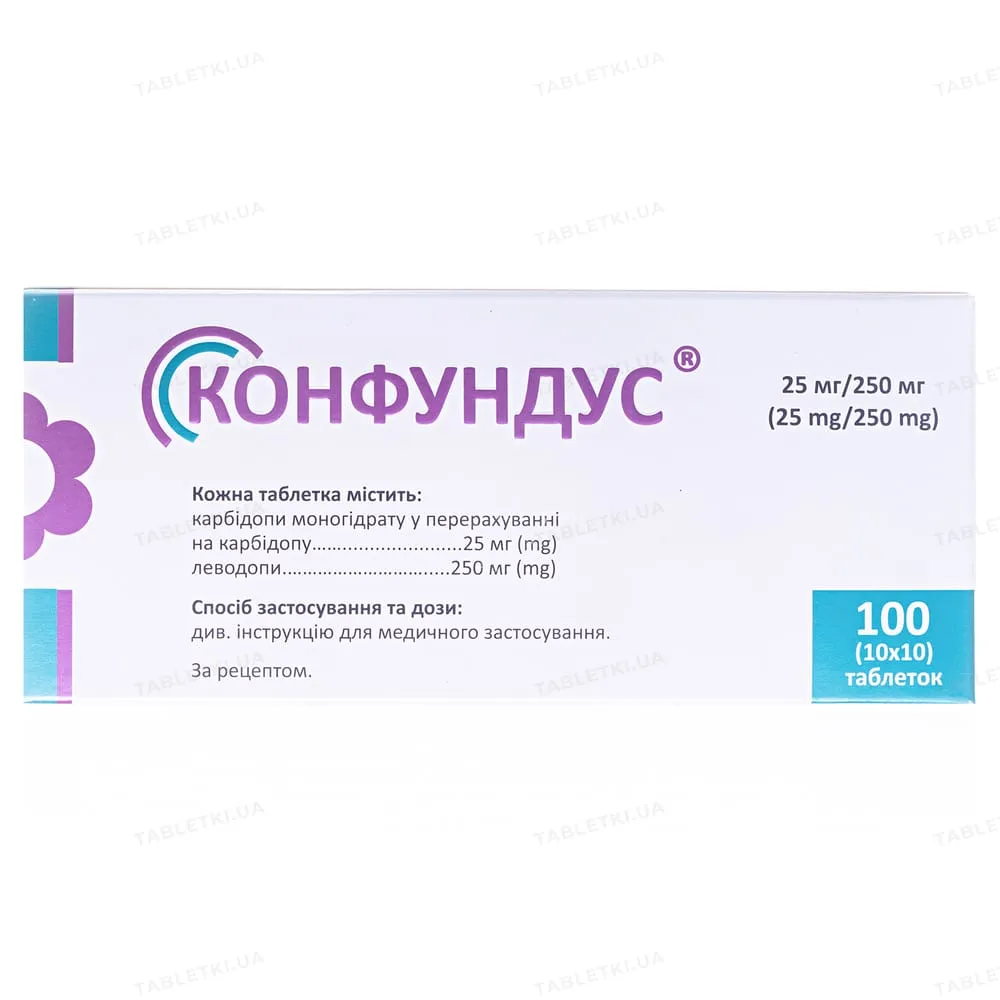
Table of Contents
- INSTRUCTIONS for medical use of the medicinal product CONFUNDUS® (CONFUNDUS®)
- Composition:
- Pharmacological properties.
- Clinical characteristics.
- Special precautions for use.
- Method of Administration and Dosage
- Adverse Reactions
- Composition:
- Pharmacological properties.
- Clinical characteristics.
- Special precautions for use.
- Method of Administration and Dosage
- Adverse Reactions
INSTRUCTIONS for medical use of the medicinal product CONFUNDUS® (CONFUNDUS®)
Composition:
Active substances: carbidopa, levodopa;
1 tablet contains 25 mg of carbidopa monohydrate calculated as carbidopa, 250 mg of levodopa;
Excipients: pregelatinized starch, microcrystalline cellulose, crospovidone, hydroxypropylcellulose, magnesium stearate.
Pharmaceutical form. Tablets.
Main physicochemical properties: flat butterfly-shaped tablets, white to almost white, with a deep score line on one side and a normal score line on the other side.
Pharmacotherapeutic group. Anti-parkinson drugs. Dopaminergic agents. DOPA and derivatives. Levodopa with a decarboxylase inhibitor. ATC code N04BA02.
Pharmacological properties.
Pharmacodynamics.
Confundus® is a combined antiparkinsonian agent containing the metabolic precursor of dopamine – levodopa, used as replacement therapy in Parkinson's disease/syndrome, and a peripheral dopa-decarboxylase inhibitor – carbidopa, which prevents the metabolism of levodopa to dopamine in the peripheral circulation, thereby increasing the amount of levodopa reaching the brain and being converted there into dopamine. This combination allows the use of lower doses of levodopa, thus reducing the frequency and severity of adverse reactions.
Administration of the carbidopa/levodopa combination helps alleviate many symptoms of Parkinson's disease/syndrome, particularly rigidity and bradykinesia. This combination is often effective against tremor, dysphagia, sialorrhea, and postural instability.
In cases where the clinical response to monotherapy with levodopa is fluctuating and objective and subjective symptoms of Parkinson's disease/syndrome are not uniformly controlled throughout the day, administration of carbidopa/levodopa usually reduces fluctuations in therapeutic effect.
By reducing some of the adverse reactions associated with levodopa alone, its use in combination with carbidopa enables a greater number of patients to achieve adequate symptom relief in Parkinson's disease/syndrome.
Pharmacokinetics.
After oral administration, levodopa is rapidly but variably absorbed from the gastrointestinal tract in the absence of a decarboxylase inhibitor. The plasma half-life is approximately 1 hour. Levodopa is metabolized primarily via decarboxylation to dopamine, part of which is converted to norepinephrine. About 30% is converted to 3-O-methyldopa, which has a half-life of 9 to 22 hours. Approximately 80% of levodopa is excreted in the urine within 24 hours, mainly as homovanillic acid and dihydroxyphenylacetic acid. Less than 1% is excreted unchanged.
Once in the bloodstream, levodopa competes with other neutral amino acids in crossing the blood-brain barrier. After entering striatal neurons, levodopa is decarboxylated to dopamine, stored, and released from presynaptic neurons. Since levodopa is rapidly decarboxylated in the gastrointestinal tract and liver, only a very small amount reaches the brain unchanged. Peripheral decarboxylation reduces the therapeutic efficacy of levodopa and is responsible for a significant number of its adverse effects. For this reason, levodopa is usually administered together with a peripheral decarboxylase inhibitor such as carbidopa to achieve the same therapeutic effect with lower doses.
After oral administration, carbidopa in the absence of levodopa is rapidly but incompletely absorbed from the gastrointestinal tract. Approximately 50% is found in the urine, of which about 3% of the administered drug is excreted unchanged.
Carbidopa does not cross the blood-brain barrier but passes through the placenta and is excreted in breast milk. Carbidopa is rapidly eliminated; within 7 hours, almost the entire drug is excreted unchanged in the urine.
Carbidopa inhibits the peripheral decarboxylation of levodopa to dopamine, but since it does not cross the blood-brain barrier, effective dopamine levels in the brain are achieved using lower doses of levodopa, thereby reducing the likelihood of peripheral adverse effects, particularly nausea, vomiting, and cardiac arrhythmias.
Clinical characteristics.
Indications.
- Parkinson's disease.
- Parkinsonism.
Contraindications.
- Hypersensitivity to the active substances or to any of the excipients of the medicinal product.
- Concomitant use of non-selective monoamine oxidase inhibitors (MAO) (these drugs should be discontinued at least two weeks before initiating treatment with Confundus®). The medicinal product may only be used with selective MAO-B inhibitors at recommended doses (e.g., selegiline hydrochloride) (see section "Interaction with other medicinal products and other forms of interaction").
- Closed-angle glaucoma.
- Suspicious (for melanoma) pigmented skin lesions or history of melanoma.
- Severe psychoses.
- Pregnancy.
- Breastfeeding.
Interaction with other medicinal products and other forms of interaction.
Caution is required when co-administering carbidopa/levodopa with the following medicinal products.
Antihypertensive agents
Postural hypotension may occur when carbidopa/levodopa is added to the treatment of patients receiving antihypertensive drugs. Dose adjustment of the antihypertensive agent may be necessary.
Antidepressants
Rarely, reactions including arterial hypertension and dyskinesia have been reported during concomitant use of tricyclic antidepressants (see section "Contraindications").
Anticholinergic agents
Anticholinergic agents may affect the absorption of the medicinal product and thus influence its therapeutic effect.
Iron
Studies have shown reduced bioavailability of carbidopa and/or levodopa when administered concomitantly with iron sulfate or iron gluconate.
Other medicinal products
To date, there have been no signs of interactions that would preclude the concomitant use of standard anti-Parkinson drugs.
Dopamine D2-receptor antagonists (e.g., phenothiazines, butyrophenones, risperidone) and isoniazid may reduce the therapeutic effect of levodopa. Close monitoring of patients is required for loss of anti-Parkinson effect of treatment.
It has been reported that phenytoin and papaverine may interfere with the beneficial effects of levodopa in Parkinson's disease. Patients receiving these drugs concomitantly with carbidopa/levodopa should be monitored for loss of therapeutic efficacy.
The use of carbidopa/levodopa with agents that deplete dopamine (e.g., tetrabenazine) or with other medicinal products that reduce monoamine levels is not recommended.
Concomitant use of selegiline with carbidopa/levodopa may lead to severe orthostatic hypotension not typical of treatment with levodopa/carbidopa alone (see section "Contraindications").
Since levodopa competes with certain amino acids, absorption of the medicinal product may be impaired in some patients on a high-protein diet.
The effect of concomitant use of antacids with carbidopa/levodopa on the bioavailability of levodopa has not been studied.
The medicinal product may be administered to patients with Parkinson's disease/syndrome who are taking vitamin preparations containing pyridoxine hydrochloride (vitamin B6).
Special precautions for use.
General
Carbidopa/levodopa is not recommended for the treatment of extrapyramidal reactions caused by medicinal products.
Carbidopa/levodopa should be used with caution in patients with bronchial asthma, cardiovascular disorders, pulmonary diseases, renal or hepatic impairment, endocrine disorders, or a history of peptic ulcer (due to the risk of upper gastrointestinal bleeding).
Treatment of patients with a history of seizures should be carried out with caution.
Since Confundus® contains levodopa, periodic monitoring of liver, kidney, cardiovascular function, and hematopoietic organs is recommended if long-term therapy is required.
Cardiac arrhythmias
Carbidopa/levodopa should be administered with caution to patients who have had myocardial infarction and have residual sinoatrial or ventricular arrhythmias. In such patients, cardiac function should be carefully monitored during the initial dose titration period.
Somnolence or sudden sleep episodes
The use of levodopa has been associated with episodes of somnolence or sudden onset of sleep. Very rarely, sudden episodes of sleep during daytime activities have been reported, sometimes occurring without awareness or warning signs. Patients should be informed about the possibility of such symptoms and advised to exercise caution when driving or operating machinery during treatment with levodopa. Patients who experience somnolence and/or sudden sleep episodes while on levodopa therapy should refrain from driving or operating machinery. Additionally, consideration should be given to reducing the dose or discontinuing treatment.
Dyskinesia
Dyskinesia may occur in patients previously treated with levodopa alone, as carbidopa allows more levodopa to reach the brain, resulting in increased dopamine formation. The presence of dyskinesia suggests the need for dose reduction.
Psychiatric disorders
All patients receiving carbidopa/levodopa therapy should be closely monitored for psychiatric changes, depression with suicidal ideation, and other serious manifestations of antisocial behavior. Patients with pre-existing psychosis should be treated with caution.
Since Confundus® contains levodopa, its use may cause involuntary movements and psychiatric disorders. Patients with a history of severe involuntary movements or psychotic episodes during levodopa therapy require special attention when switching to Confundus®. Since these reactions are believed to be related to increased dopamine levels in the brain due to levodopa therapy, treatment with Confundus® may provoke their recurrence.
Concomitant use of psychoactive drugs such as phenothiazines or butyrophenones should be done with caution, with careful monitoring for loss of anti-parkinsonian effect.
Malignant neuroleptic syndrome (MNS)
Cases of a syndrome resembling MNS have been reported, characterized by muscle rigidity, elevated body temperature, mental status changes, and increased serum creatine phosphokinase levels, following abrupt withdrawal of anti-parkinsonian medications. Therefore, patients should be closely monitored during any sudden dose reduction or discontinuation of Confundus®, especially those also receiving neuroleptics.
Dopamine dysregulation syndrome
Dopamine dysregulation syndrome (DDS) is an addictive disorder caused by excessive medication use in some patients treated with carbidopa/levodopa. Before initiating carbidopa/levodopa therapy, patients and caregivers should be informed about the potential risk of developing DDS (see section "Adverse reactions").
Impulse control disorders
Patients should be closely monitored for the development of impulse control disorders (ICD). Patients and caregivers should be informed about possible behavioral changes indicating ICD (pathological gambling, increased libido, hypersexuality, impulsive spending or shopping, binge eating, impulsive eating) associated with the use of dopamine agonists and/or other dopaminergic agents containing levodopa, including Confundus®. If such symptoms occur, the treatment regimen should be re-evaluated.
Glaucoma
Patients with chronic open-angle glaucoma should use carbidopa/levodopa with caution and under close monitoring of intraocular pressure before and during treatment.
Anesthesia
If general anesthesia is required, carbidopa/levodopa therapy may be continued as long as the patient is allowed to take oral fluids and medications. If therapy must be temporarily discontinued, carbidopa/levodopa may be restarted as soon as oral medications can be taken again, using the same daily dose as before.
Melanoma
Epidemiological studies have shown that patients with Parkinson’s disease have a higher risk of developing melanoma compared to the general population (approximately 2–6 times higher). It is unclear whether this risk is related to Parkinson’s disease itself or other factors, such as the use of anti-parkinsonian drugs. Therefore, during carbidopa/levodopa treatment, patients and caregivers are advised to perform regular skin examinations for melanoma. Periodic dermatological evaluation is considered the optimal approach.
Laboratory tests
During carbidopa/levodopa therapy, blood urea nitrogen, creatinine, and uric acid levels are generally lower than with levodopa monotherapy. Transient metabolic disturbances may include increased blood urea, alanine aminotransferase (ALT), aspartate aminotransferase (AST), lactate dehydrogenase (LDH), bilirubin, and alkaline phosphatase.
Decreased hemoglobin and hematocrit, increased blood glucose, and increased leukocytes, bacteria, and erythrocytes in urine have been reported.
Positive Coombs test results have been reported both with carbidopa/levodopa and with levodopa alone.
Carbidopa/levodopa may cause false-positive urine ketone test results when using test strips. This reaction is not altered by boiling urine samples. Glucose oxidase methods may yield false-negative results for glucosuria.
Use during pregnancy or breastfeeding
Pregnancy
Although the effect of carbidopa/levodopa on pregnancy is unknown, both levodopa and its combination with carbidopa have caused visceral and skeletal malformations in rabbits in experimental studies. Therefore, the use of Confundus® in women of reproductive potential should only be considered if the expected benefit outweighs the potential risk to the fetus.
Lactation
It is unknown whether carbidopa is excreted in human milk. In a case report involving a woman with Parkinson’s disease who was breastfeeding, levodopa was reported to be excreted in breast milk. Given that many drugs are excreted in breast milk and considering the potential for serious adverse reactions in infants, a decision should be made whether to discontinue Confundus® or to stop breastfeeding, taking into account the importance of the drug therapy for the mother.
Ability to affect reaction speed when driving or operating machinery
Since individual responses to carbidopa/levodopa may vary, certain adverse reactions during treatment with Confundus® may impair the ability to drive or operate machinery.
Patients who experience episodes of somnolence and/or sudden sleep during levodopa therapy should be advised to avoid driving or any other activities requiring full attention, as such episodes may place themselves and others at risk of injury, including fatal outcomes (e.g., when operating machinery). This precaution should continue until such episodes of somnolence and/or sudden sleep resolve (see section "Special precautions for use").
Method of Administration and Dosage
The medicinal product is intended for oral administration.
If the tablet breaks during removal from the packaging, it should be taken only if the entire dose can be administered. If this is not possible, the fragments of the tablet should be discarded and another tablet taken from the package. Administration of a partial dose may result in worsening of symptoms.
The optimal daily dose of carbidopa/levodopa must be determined individually for each patient through careful titration.
Confundus® contains carbidopa and levodopa in a ratio of 1:10 (25 mg/250 mg).
During dose adjustment, patients must be closely monitored. Involuntary movements, including blepharospasm, may be early signs of overdosage in some patients.
Patients who have not received levodopa
For patients initiating treatment with Confundus®, the initial dose of carbidopa/levodopa should be 12.5 mg/125 mg (½ tablet) once or twice daily.
If necessary, the dose of carbidopa/levodopa may be increased gradually by 12.5 mg/125 mg (½ tablet) daily or by 25 mg/250 mg (1 tablet) every other day until the optimal therapeutic effect is achieved.
The therapeutic effect of the medicinal product appears within one day, sometimes even after a single dose. The full effective dose is reached within seven days, compared to weeks or months when levodopa is used alone.
Patients previously receiving levodopa
Levodopa should be discontinued at least 12 hours (24 hours for sustained-release formulations) before starting therapy with Confundus®.
The daily dose of Confundus® should provide approximately 20% of the previous daily levodopa dose.
Initial dose
For patients receiving less than 1500 mg of levodopa per day, the initial daily dose should be 75–100 mg of carbidopa and 300–400 mg of levodopa, administered in 3–4 divided doses (using a carbidopa/levodopa 1:4 combination preparation).
For patients receiving more than 1500 mg of levodopa per day, the initial dose of Confundus® should be 1 tablet 3–4 times daily.
Maintenance dose. When using the combined medicinal product Confundus®, individual patient characteristics must be considered, and dosage may be gradually adjusted according to the therapeutic response.
If a higher amount of levodopa is required, the carbidopa/levodopa dose may be increased by increments of 12.5 mg/125 mg (½ tablet) daily or 25 mg/250 mg (1 tablet) every other day up to a maximum daily dose of 200 mg carbidopa and 2 g levodopa (8 tablets in 3–4 divided doses) for patients weighing 70 kg.
Patients receiving other decarboxylase inhibitors. When switching a patient from levodopa to the combined medicinal product Confundus® while concurrently receiving other decarboxylase inhibitors, administration of these inhibitors should be discontinued at least 12 hours before starting Confundus®. Treatment with Confundus® should begin at a dose corresponding to the amount of levodopa previously administered in the levodopa/decarboxylase inhibitor combination.
Patients receiving other antiparkinsonian medicinal products. Combination of Confundus® with monoamine oxidase-B (MAO-B) inhibitors may enhance efficacy in controlled cases of akinesia and/or dyskinesia.
For patients concurrently receiving other antiparkinsonian medicinal products with Confundus®, dose adjustments of these medicinal products may be necessary.
Elderly patients
The medicinal product may be administered to elderly patients.
Children
Safety and efficacy of the medicinal product in children have not been established; therefore, it is not recommended for use in patients under 18 years of age.
Overdose
Management of acute carbidopa/levodopa overdose is primarily the same as for acute levodopa overdose; however, administration of pyridoxine is ineffective in counteracting the effects of Confundus® components. The patient's ECG should be monitored for arrhythmias. If arrhythmias occur, appropriate antiarrhythmic agents should be administered. Concomitant intake of other medicinal products with carbidopa/levodopa should be considered. Experience with dialysis is lacking; therefore, its role in the treatment of carbidopa/levodopa overdose is unknown. When carbidopa is administered, the terminal half-life of levodopa is approximately two hours.
Adverse Reactions
Adverse reactions commonly observed during treatment with carbidopa/levodopa preparations are due to the central neuropharmacological activity of dopamine. These reactions usually diminish or disappear with dose reduction. The most frequent manifestations are dyskinesia, including choreiform, dystonic, and other involuntary movements, and nausea. Muscle cramps and blepharospasm may be early signs indicating that the dose should be reduced.
Infections and infestations: urinary tract infections (frequency: very common).
Immune system disorders: hypersensitivity reactions, including angioedema, urticaria, pruritus, Schönlein-Henoch disease.
Skin and subcutaneous tissue disorders: alopecia, rash, dark discoloration of sweat, erythema, hyperhidrosis, melanoma.
Blood and lymphatic system disorders: leukopenia, anemia, hemolytic anemia, thrombocytopenia, agranulocytosis.
Cardiovascular disorders: cardiac arrhythmias and/or palpitations, orthostatic effects including episodes of arterial hypotension, flushing, arterial hypertension, phlebitis, chest pain.
Respiratory system disorders: dyspnea, respiratory disorders, hoarseness.
Gastrointestinal disorders: vomiting, gastrointestinal hemorrhage, duodenal ulcer, diarrhea, dark discoloration of saliva, dyspepsia, dry mouth, bitter taste, hypersalivation, dysphagia, bruxism, hiccups, abdominal pain, constipation, flatulence, burning sensation of the tongue.
Renal and urinary disorders: dark-colored urine, urinary retention, urinary incontinence, priapism.
Eye disorders: diplopia, blurred vision, mydriasis, oculogyric crisis.
Metabolic and nutritional disorders: weight decrease or increase, edema.
Benign, malignant and unspecified neoplasms (including cysts and polyps): melanoma (see sections "Contraindications" and "Special Warnings and Precautions for Use").
Nervous system disorders: dyskinesia, including choreiform, dystonic, and other involuntary movements; blepharospasm, headache, syncope, neuroleptic malignant syndrome (see section "Contraindications"); episodes of bradykinesia ("on-off" phenomenon); dizziness; paresthesia; sleep disorders, including somnolence, excessive daytime sleepiness, and sudden sleep episodes; convulsions; asthenia, ataxia, freezing, increased hand tremor, muscle twitching, trismus, activation of latent Horner’s syndrome, insomnia, falls, gait disturbance, dopamine dysregulation syndrome1.
Psychiatric disorders: anorexia, dysphoria, episodes of psychosis (including delusions, hallucinations, and paranoid ideation); depression with or without suicidal tendencies; dementia; agitation; irritability, confusion; increased libido; decreased mental sharpness, disorientation, anxiety, euphoria, impulse control disorders2.
Other: general weakness, pathological fatigue.
1Dopamine dysregulation syndrome (DDS) is an addictive disorder that may occur in some patients treated with carbidopa/levodopa. Patients with this syndrome exhibit compulsive behavior involving misuse of dopaminergic agents at doses higher than those required for adequate control of motor symptoms, which in some cases may lead to the development of severe dyskinesia (see section "Special Warnings and Precautions for Use").
2Impulse control disorders
Pathological gambling, increased libido, hypersexuality, impulsive spending or shopping behavior, binge eating, and compulsive eating may occur during treatment with dopamine agonists and/or other dopamine-containing medications, including carbidopa and levodopa (see section "Special Warnings and Precautions for Use").
Reporting of suspected adverse reactions
Reporting suspected adverse reactions after medicine registration is important. It allows ongoing monitoring of the benefit-risk balance of the medicine. Healthcare professionals and patients or their legal representatives are encouraged to report all suspected adverse reactions and lack of efficacy via the Automated Pharmacovigilance Information System at: https://aisf.dec.gov.ua.
Shelf life.
2 years.
Storage conditions.
Store in the original packaging at a temperature not exceeding 25 °C.
Keep out of reach of children.
Packaging.
10 tablets in a blister; 10 blisters in a cardboard package.
Prescription status.
Prescription only.
Manufacturer.
LLC "GLEDFARM LTD".
Manufacturer's address and location of business activity.
54 Davydovskoho Hryhorii Street, Sumy, Sumy region, 40020, Ukraine.
INSTRUCTION
for medical use
CONFUNDUS®
(CONFUNDUS®)
Composition:
Active substances: carbidopa, levodopa;
1 tablet contains carbidopa monohydrate equivalent to carbidopa 25 mg, levodopa 250 mg;
Excipients: pregelatinized starch, microcrystalline cellulose, crospovidone, hydroxypropylcellulose, magnesium stearate.
Pharmaceutical form. Tablets.
Main physicochemical properties: flat butterfly-shaped tablets, white to almost white, with a deep score line on one side and a normal score line on the other side.
Pharmacotherapeutic group. Anti-parkinson agents. Dopaminergic agents. DOPA and derivatives. Levodopa with decarboxylase inhibitor. ATC code N04BA02.
Pharmacological properties.
Pharmacodynamics.
Confundus® is a combined antiparkinsonian agent containing levodopa, a metabolic precursor of dopamine used as replacement therapy in Parkinson's disease/syndrome, and carbidopa, a peripheral dopa-decarboxylase inhibitor that prevents the metabolism of levodopa to dopamine in the peripheral circulation, thereby increasing the amount of levodopa reaching the brain and converted there into dopamine. This combination allows for the use of lower doses of levodopa, reducing the frequency and severity of adverse reactions.
The use of carbidopa/levodopa combination helps alleviate many symptoms of Parkinson's disease/syndrome, particularly rigidity and bradykinesia. This combination is often effective against tremor, dysphagia, sialorrhea, and postural instability.
In cases where the clinical response to monotherapy with levodopa is variable and objective and subjective symptoms of Parkinson's disease/syndrome are not uniformly controlled throughout the day, administration of carbidopa/levodopa usually reduces fluctuations in therapeutic effect.
By reducing some of the adverse reactions associated with levodopa alone, its use in combination with carbidopa enables a greater number of patients to achieve adequate symptom relief in Parkinson's disease/syndrome.
Pharmacokinetics.
After oral administration, levodopa is rapidly but variably absorbed from the gastrointestinal tract in the absence of a decarboxylase inhibitor. The plasma half-life is approximately 1 hour. Levodopa is metabolized primarily by decarboxylation to dopamine, part of which is converted to noradrenaline. Up to 30% is converted to 3-O-methyldopa, which has a half-life of 9 to 22 hours. Approximately 80% of levodopa is excreted in urine within 24 hours, mainly as homovanillic acid and dihydroxyphenylacetic acid. Less than 1% is excreted unchanged.
Once in the bloodstream, levodopa competes with other neutral amino acids in crossing the blood-brain barrier. After levodopa enters striatal neurons, it is decarboxylated to dopamine, stored, and released from presynaptic neurons. Because levodopa is rapidly decarboxylated in the gastrointestinal tract and liver, only a very small amount reaches the brain unchanged. Peripheral decarboxylation reduces the therapeutic efficacy of levodopa and is responsible for a significant number of its adverse effects. For this reason, levodopa is usually administered together with a peripheral decarboxylase inhibitor such as carbidopa, to achieve the same therapeutic effect with lower doses.
After oral administration, carbidopa is rapidly but incompletely absorbed from the gastrointestinal tract in the absence of levodopa. Approximately 50% is recovered in urine, of which about 3% of the administered drug is excreted unchanged.
Carbidopa does not cross the blood-brain barrier, but it does cross the placenta and is excreted in breast milk. Carbidopa is rapidly eliminated; within 7 hours, almost the entire dose is excreted unchanged in urine.
Carbidopa inhibits the peripheral decarboxylation of levodopa to dopamine. Since it does not cross the blood-brain barrier, effective dopamine levels in the brain are achieved with lower doses of levodopa, thereby reducing the likelihood of peripheral adverse effects, particularly nausea, vomiting, and cardiac arrhythmias.
Clinical characteristics.
Indications.
- Parkinson's disease.
- Parkinsonism.
Contraindications.
- Hypersensitivity to the active substances or to any of the excipients of the medicinal product.
- Concomitant use of non-selective inhibitors of monoamine oxidase (MAO) (these medicinal products should be discontinued at least two weeks before starting treatment with Confundus®). The medicinal product may be used only with selective MAO-B inhibitors at recommended doses (e.g., selegiline hydrochloride) (see section "Interaction with other medicinal products and other forms of interaction**")**.
- Closed-angle glaucoma.
- Suspicious (for melanoma) pigmented skin lesions or history of melanoma.
- Severe psychoses.
- Pregnancy.
- Breastfeeding.
Interaction with other medicinal products and other forms of interaction.
Caution is required when administering carbidopa/levodopa concomitantly with the following medicinal products.
Antihypertensive agents
Postural hypotension may occur when carbidopa/levodopa is added to the treatment of patients receiving antihypertensive medicinal products. Dose adjustment of the antihypertensive agent may be required.
Antidepressants
Rare cases of reactions, including arterial hypertension and dyskinesia, have been reported with concomitant use of tricyclic antidepressants (see section "Contraindications").
Anticholinergic agents
Anticholinergic agents may influence the absorption of the medicinal product and, consequently, its therapeutic effect.
Iron
Studies have shown reduced bioavailability of carbidopa and/or levodopa when administered concomitantly with iron sulfate or iron gluconate.
Other medicinal products
To date, there have been no signs of interactions that would preclude the concomitant use of standard anti-Parkinson medicinal products.
Dopamine D2-receptor antagonists (e.g., phenothiazines, butyrophenones, risperidone) and isoniazid may reduce the therapeutic effect of levodopa. Careful monitoring of patients for loss of anti-Parkinson effect of treatment is required.
It has been reported that the use of phenytoin and papaverine may interfere with the beneficial effect of levodopa in Parkinson's disease. Patients receiving these medicinal products concomitantly with carbidopa/levodopa should be monitored for loss of therapeutic efficacy.
The use of carbidopa/levodopa with agents that deplete dopamine (e.g., tetrabenazine) or with other medicinal products that reduce monoamine levels is not recommended.
Concomitant use of selegiline with carbidopa/levodopa may lead to severe orthostatic hypotension not typical of treatment with levodopa/carbidopa alone (see section "Contraindications").
Since levodopa competes with certain amino acids, in some patients on a high-protein diet, absorption of the medicinal product may be impaired.
The effect of concomitant use of antacids with carbidopa/levodopa on the bioavailability of levodopa has not been studied.
The medicinal product may be administered to patients with Parkinson's disease/syndrome who are taking vitamin preparations containing pyridoxine hydrochloride (vitamin B6).
Special precautions for use.
General
Carbidopa/levodopa is not recommended for the treatment of extrapyramidal reactions caused by medicinal products.
Carbidopa/levodopa should be used with caution in patients with bronchial asthma, cardiovascular disorders, pulmonary, renal, or hepatic diseases, or a history of peptic ulcer (due to the risk of upper gastrointestinal bleeding).
Treatment of patients with a history of seizures should be conducted with caution.
Since the product Confundus® contains levodopa, periodic monitoring of liver, kidney, cardiovascular system, and haematopoietic organ function is recommended during long-term therapy.
Cardiac arrhythmias
Carbidopa/levodopa should be administered with caution to patients who have suffered myocardial infarction and have residual sinoatrial or ventricular arrhythmias. In such patients, cardiac function should be carefully monitored during the initial dose titration period.
Somnolence or sudden sleep episodes
The use of levodopa has been associated with episodes of somnolence or sudden onset of sleep. Very rarely, sudden episodes of sleep during daytime activities have been reported, sometimes occurring without awareness or warning signs. Patients should be informed about the possibility of such symptoms and advised to exercise caution when driving or operating machinery during levodopa therapy. Patients who experience somnolence and/or sudden sleep episodes while on levodopa therapy should refrain from driving or operating machinery. Additionally, dose reduction or discontinuation of treatment should be considered.
Dyskinesia
Dyskinesia may occur in patients previously treated with levodopa alone, as carbidopa allows more levodopa to reach the brain, resulting in increased dopamine formation. The presence of dyskinesia suggests the need for dose reduction.
Psychiatric disorders
All patients receiving carbidopa/levodopa therapy should be closely monitored for psychiatric changes, depression with suicidal ideation, and other serious manifestations of antisocial behaviour. Patients with pre-existing psychosis should be treated with caution.
Since Confundus® contains levodopa, its use may cause involuntary movements and psychiatric disorders. Patients with a history of severe involuntary movements or psychotic episodes during levodopa therapy require special attention when switching to Confundus®. It is believed that, since these reactions are related to increased dopamine levels in the brain due to levodopa therapy, treatment with Confundus® may provoke their recurrence.
Concomitant administration of psychoactive drugs such as phenothiazines or butyrophenones should be done with caution, with close monitoring for loss of anti-Parkinsonian effect.
Malignant neuroleptic syndrome (MNS)
Cases of a syndrome resembling MNS have been reported, with clinical features including muscle rigidity, elevated body temperature, mental status changes, and increased serum creatine phosphokinase levels, following abrupt withdrawal of anti-Parkinsonian medications. Therefore, careful monitoring of patients is required in case of any sudden dose reduction or discontinuation of Confundus®, particularly in patients also receiving neuroleptics.
Dopamine dysregulation syndrome (DDS)
Dopamine dysregulation syndrome (DDS) is an addictive disorder caused by excessive medication use in some patients treated with carbidopa/levodopa. Before initiating carbidopa/levodopa therapy, patients and caregivers should be informed about the potential risk of developing DDS (see section "Adverse reactions").
Impulse control disorders
Patients should be carefully monitored for the development of impulse control disorders (ICD). Patients and caregivers should be informed about possible behavioural changes indicating ICD (pathological gambling, increased libido, hypersexuality, impulsive spending or shopping, binge eating, impulsive eating) associated with the use of dopamine agonists and/or other dopaminergic agents containing levodopa, including Confundus®. If such symptoms occur, the treatment regimen should be re-evaluated.
Glaucoma
Carbidopa/levodopa should be used with caution in patients with chronic open-angle glaucoma, with careful monitoring of intraocular pressure before and during treatment.
Anaesthesia
If general anaesthesia is required, carbidopa/levodopa therapy may be continued as long as the patient is allowed to take fluids and oral medications. If therapy needs to be temporarily discontinued, carbidopa/levodopa administration may be resumed as soon as oral medications can be taken again, at the same daily dose as before.
Melanoma
Epidemiological studies have shown that patients with Parkinson's disease have a higher risk of melanoma compared to the general population (approximately 2–6 times higher). It is unclear whether this risk is related to Parkinson's disease itself or other factors, such as the use of anti-Parkinsonian drugs. Therefore, during carbidopa/levodopa treatment, patients and caregivers are advised to perform regular skin examinations for melanoma detection. Periodic dermatological evaluation is considered optimal.
Laboratory tests
During carbidopa/levodopa therapy, blood urea nitrogen, creatinine, and uric acid levels are generally lower than with levodopa monotherapy. Transient metabolic disturbances include increased blood urea, alanine aminotransferase (ALT), aspartate aminotransferase (AST), lactate dehydrogenase (LDH), bilirubin, and alkaline phosphatase.
Decreased haemoglobin and haematocrit, increased blood glucose, and increased numbers of leukocytes, bacteria, and erythrocytes in urine have been reported.
Positive Coombs test results have been reported both with carbidopa/levodopa and with levodopa alone.
Carbidopa/levodopa may cause false-positive ketone body reactions in urine when using test strips. This reaction is not altered by boiling urine samples. Glucose oxidase methods may yield false-negative results for glucosuria.
Use during pregnancy or breastfeeding.
Pregnancy
Although the effect of carbidopa/levodopa on pregnancy is unknown, both levodopa and its combination with carbidopa have caused visceral and skeletal malformations in rabbits in experimental studies. Therefore, the use of Confundus® in women of reproductive age should only be considered if the expected benefit outweighs the potential risk to the pregnancy.
Breastfeeding
It is unknown whether carbidopa is excreted in breast milk. In a case report involving a woman with Parkinson's disease who was breastfeeding, levodopa was reported to be excreted in breast milk. Given that many medicinal products are excreted in breast milk and considering the potential for serious adverse reactions in infants, a decision should be made whether to discontinue Confundus® or to stop breastfeeding, taking into account the importance of the therapy for the mother.
Ability to influence reaction speed when driving or operating machinery.
Since individual responses to carbidopa/levodopa may vary, certain adverse reactions during Confundus® therapy may affect the ability to drive or operate machinery.
Patients who experience episodes of somnolence and/or sudden sleep during levodopa treatment should be advised to avoid driving or any other activities requiring full attention, as such episodes may place both themselves and others at risk of injury, including fatal outcomes (e.g., when operating machinery). This precaution should continue until such episodes of somnolence and/or sudden sleep resolve (see section "Special precautions for use").
Method of Administration and Dosage
The medicinal product is intended for oral administration.
If a tablet breaks during removal from the packaging, it should only be used if the entire dose can be administered. If this is not possible, the fragments of the tablet should be discarded, and another tablet should be taken from the package. Administration of a partial dose may result in worsening of symptoms.
The optimal daily dose of carbidopa/levodopa must be determined individually for each patient through careful titration.
The medicinal product Confundus® contains carbidopa and levodopa in a ratio of 1:10 (25 mg/250 mg).
During dose adjustment, the patient must be under constant medical supervision. Involuntary movements, including blepharospasm, may be early signs of overdosage in some patients.
Patients who have not previously received levodopa
For patients initiating treatment with Confundus®, the initial dose of carbidopa/levodopa should be 12.5 mg/125 mg (½ tablet) once or twice daily.
If necessary, the dose of carbidopa/levodopa may be gradually increased by 12.5 mg/125 mg (½ tablet) daily or by 25 mg/250 mg (1 tablet) every other day until the optimal therapeutic effect is achieved.
The therapeutic effect of the medicinal product may appear within one day, sometimes even after a single dose. The full effective dose is typically reached within seven days, compared to weeks or months when levodopa is used alone.
Patients previously receiving levodopa
Levodopa therapy should be discontinued at least 12 hours (24 hours for sustained-release formulations) prior to initiating treatment with Confundus®.
The daily dose of Confundus® should provide approximately 20% of the previous daily levodopa dose.
Initial dose
For patients receiving less than 1500 mg of levodopa per day, the initial daily dose should be 75–100 mg carbidopa and 300–400 mg levodopa administered in 3–4 divided doses (using a carbidopa/levodopa 1:4 formulation).
For patients receiving more than 1500 mg of levodopa per day, the initial dose of Confundus® should be 1 tablet 3–4 times daily.
Maintenance dose. When using the combined medicinal product Confundus®, individual patient characteristics must be considered, and dosage may be gradually adjusted according to the therapeutic response.
If a higher amount of levodopa is required, the carbidopa/levodopa dose may be increased by increments of 12.5 mg/125 mg (½ tablet) daily or 25 mg/250 mg (1 tablet) every other day, up to a maximum daily dose of 200 mg carbidopa and 2 g levodopa (8 tablets in 3–4 divided doses) for patients weighing 70 kg.
Patients receiving other decarboxylase inhibitors. When switching a patient from levodopa to the combined medicinal product Confundus® while also receiving other decarboxylase inhibitors, these inhibitors should be discontinued at least 12 hours prior to initiating Confundus®. Treatment with Confundus® should be initiated at a dose equivalent to the levodopa content previously administered in the combination of levodopa/decarboxylase inhibitor.
Patients receiving other antiparkinsonian medicinal products. The combination of Confundus® with monoamine oxidase-B (MAO-B) inhibitors may enhance efficacy in controlled cases of akinesia and/or dyskinesia.
For patients concurrently receiving other antiparkinsonian medicinal products with Confundus®, dosage adjustments of these agents may be necessary.
Elderly patients
The medicinal product may be administered to elderly patients.
Children
The safety and efficacy of the medicinal product in children have not been established; therefore, it is not recommended for use in patients under 18 years of age.
Overdose
Management of acute carbidopa/levodopa overdose is primarily the same as for acute levodopa overdose; however, administration of pyridoxine is ineffective in counteracting the effects of Confundus®. Continuous ECG monitoring is required to detect arrhythmias. If arrhythmias occur, appropriate antiarrhythmic therapy should be administered. Concomitant intake of other medicinal products with carbidopa/levodopa should be considered. Experience with dialysis is lacking; therefore, its role in the treatment of carbidopa/levodopa overdose is unknown. When carbidopa is administered, the terminal half-life of levodopa is approximately two hours.
Adverse Reactions
Adverse reactions commonly observed during treatment with carbidopa/levodopa preparations are due to the central neuropharmacological activity of dopamine. These reactions usually diminish or disappear upon dose reduction. The most common manifestations are dyskinesia, including choreiform, dystonic, and other involuntary movements, and nausea. Muscle cramps and blepharospasm may be early signs indicating that the dose should be reduced.
Infections and infestations: urinary tract infections (frequency: very common).
Immune system disorders: hypersensitivity reactions, including angioedema, urticaria, pruritus, and Schönlein-Henoch disease.
Skin and subcutaneous tissue disorders: alopecia, rashes, dark discoloration of sweat, erythema, increased sweating, melanoma.
Blood and lymphatic system disorders: leukopenia, anemia, hemolytic anemia, thrombocytopenia, agranulocytosis.
Cardiac and vascular disorders: cardiac arrhythmias and/or palpitations, orthostatic effects, including episodes of arterial hypotension, flushing, arterial hypertension, phlebitis, chest pain.
Respiratory system disorders: dyspnea, respiratory disorders, hoarseness.
Gastrointestinal disorders: vomiting, gastrointestinal hemorrhage, duodenal ulcer, diarrhea, dark discoloration of saliva, dyspepsia, dry mouth, bitter taste, hypersalivation, dysphagia, bruxism, hiccups, abdominal pain, constipation, flatulence, burning sensation on the tongue.
Renal and urinary disorders: dark urine color, urinary retention, urinary incontinence, priapism.
Eye disorders: diplopia, blurred vision, pupillary dilation, oculogyric crisis.
Metabolic and nutritional disorders: weight loss or weight gain, edema.
Benign, malignant and unspecified neoplasms (including cysts and polyps): melanoma (see sections "Contraindications" and "Special precautions for use").
Nervous system disorders: dyskinesia, including choreiform, dystonic, and other involuntary movements; blepharospasm, headache, syncope, neuroleptic malignant syndrome (see section "Contraindications"); episodes of bradykinesia ("on-off" phenomenon); dizziness; paresthesia; sleep disorders, including somnolence, excessive daytime sleepiness, and sudden episodes of falling asleep; seizures; asthenia, ataxia, freezing, increased hand tremor, muscle twitching, trismus, activation of latent Horner's syndrome, insomnia, falls, gait disturbance, dopamine dysregulation syndrome1.
Psychiatric disorders: anorexia, dysphoria, episodes of psychosis (including delusions, hallucinations, and paranoid thoughts); depression with or without development of suicidal tendencies; dementia; agitation; irritability, confusion; increased libido; decreased mental sharpness, disorientation, anxiety, euphoria, impulse control disorders2.
Other: general weakness, pathological fatigue.
1Dopamine dysregulation syndrome (DDS) – an addictive disorder occurring in some patients treated with carbidopa/levodopa. Patients with this syndrome exhibit compulsive behavior involving misuse of dopaminergic agents at doses higher than those required for adequate control of motor symptoms, which in some cases may lead to severe dyskinesia (see section "Special precautions for use").
2Impulse control disorders
Pathological gambling, increased libido, hypersexuality, impulsive spending or shopping, binge eating, and impulsive eating may occur during treatment with dopamine agonists and/or other dopaminergic agents containing carbidopa and levodopa (see section "Special precautions for use").
Reporting suspected adverse reactions
Reporting of suspected adverse reactions after drug registration is important. It allows continuous monitoring of the benefit-risk balance of the medicinal product. Healthcare professionals, pharmacists, patients, and their legal representatives are encouraged to report all suspected adverse reactions and lack of efficacy through the Automated Pharmacovigilance Information System at the following link: https://aisf.dec.gov.ua.
Shelf life
2 years.
Storage conditions
Store in the original packaging at a temperature not exceeding 25 °C.
Keep out of reach and sight of children.
Packaging
10 tablets in a blister; 10 blisters in a cardboard package.
Prescription status
Prescription only.
Manufacturer
Kusum HealthCare Pvt Ltd
Manufacturer's address and place of business
SP-289 (A), RIICO Industrial Area, Chopanki, Bhiwadi, Dist. Alwar (Rajasthan), India