Combinel® duo
Ukraine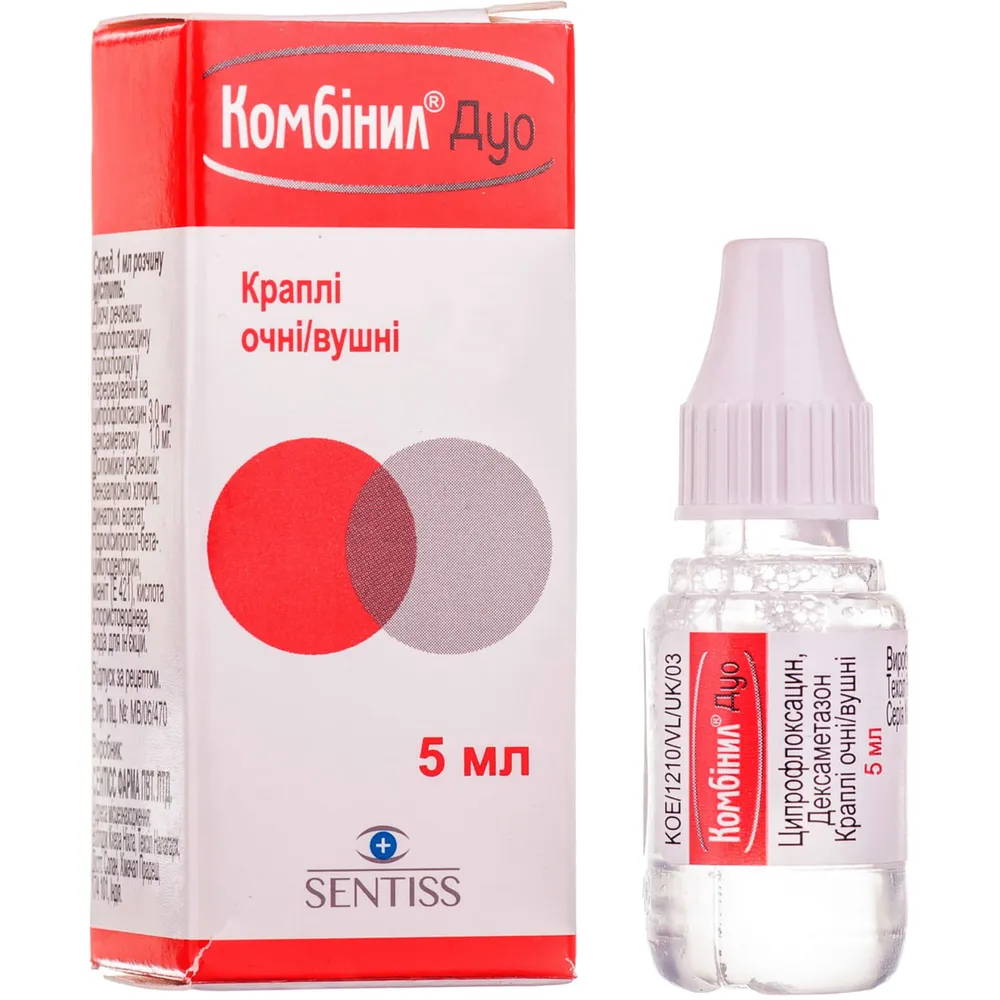
Table of Contents
INSTRUCTIONS FOR MEDICAL USE OF THE MEDICINAL PRODUCT KOMBINIL® DUO (KOMBINIL® DUO)
Composition:
Active substances: ciprofloxacin hydrochloride, dexamethasone;
1 ml contains ciprofloxacin hydrochloride equivalent to 3.0 mg of ciprofloxacin, dexamethasone — 1.0 mg;
Excipients: disodium edetate, benzalkonium chloride, mannitol (E 421), hydroxypropyl-beta-cyclodextrin, hydrochloric acid, water for injections.
Pharmaceutical form. Eye/ear drops.
Main physicochemical properties: clear, colorless or pale yellow liquid.
Pharmacotherapeutic group.
Combined preparations containing corticosteroids and antimicrobial agents. Dexamethasone and antimicrobial agents. ATC code S03C A01.
Pharmacological properties.
Pharmacodynamics.
- Ciprofloxacin. The active substance, ciprofloxacin hydrochloride, belongs to the class of quinolones. The bactericidal action of quinolones, which primarily affects bacterial DNA synthesis, is directed towards inhibition of DNA gyrase.
Ciprofloxacin demonstrates high in vitro activity against most Gram-negative microorganisms, including Pseudomonas aeruginosa. It is also effective against aerobic Gram-positive microorganisms such as staphylococci and streptococci.
Ciprofloxacin is active against:
aerobic Gram-positive microorganisms: Staphylococcus aureus (including methicillin-sensitive or methicillin-resistant strains), Staphylococcus epidermidis, Staphylococcus spp., other coagulase-negative Staphylococcus species, including S. haemolyticus and S. hominis, Corynebacterium spp., Streptococcus pneumoniae, Streptococcus group Viridans;
aerobic Gram-negative microorganisms: Acinetobacter spp., Haemophilus influenzae, Pseudomonas aeruginosa, Moraxella spp. (including M. catarrhalis).
Ciprofloxacin is active against pathogenic microorganisms isolated from patients with acute otitis media treated with tympanostomy tubes.
Due to its specific mechanism of action, there is no cross-resistance between ciprofloxacin and other antibacterial agents with different chemical structures, such as beta-lactam antibiotics, aminoglycosides, tetracyclines, macrolides and peptides, as well as sulfonamides, trimethoprim derivatives, and nitrofurans. Therefore, microorganisms resistant to these drugs may still be susceptible to ciprofloxacin.
- Dexamethasone. The general mechanism of the anti-inflammatory action of corticosteroids involves suppression of vascular adhesion molecules of endothelial cells, cyclooxygenase I or II, and cytokine release. As a result, the formation of inflammatory mediators is reduced, and adhesion of leukocytes to vascular endothelium is inhibited, thereby preventing their migration into inflamed ocular tissues.
Pharmacokinetics.
- Ciprofloxacin. After topical ocular (ocular) administration, ciprofloxacin is well absorbed. Systemic absorption of ciprofloxacin following ocular instillation is low.
Ciprofloxacin is rapidly distributed into body tissues, with tissue concentrations generally exceeding plasma concentrations. The steady-state volume of distribution is 1.7–2.71 L/kg. Plasma protein binding ranges from 16% to 43%. The elimination half-life of ciprofloxacin in plasma is 3–5 hours. 15–50% of the dose is excreted unchanged in urine, and 10–15% as metabolites within 24 hours. Approximately 20–40% of the dose is eliminated in feces as unchanged drug and metabolites over 5 days.
- Dexamethasone. After instillation into the eye, the drug penetrates well into the corneal epithelium and conjunctival cells. Therapeutic concentrations are achieved in the aqueous humor of the eye following instillation into the conjunctival sac. The maximum concentration of dexamethasone in intraocular fluid reaches approximately 30 ng/mL within 2 hours. Subsequently, the concentration declines with a half-life of 3 hours. Dexamethasone is eliminated from the body via metabolism. Approximately 60% of the dose is excreted in urine as 6-β-hydroxydexamethasone. Unchanged dexamethasone has not been detected in urine. The plasma half-life is relatively short – 3–4 hours. Dexamethasone is approximately 77–84% bound to serum albumin. Clearance ranges from 0.111 to 0.225 L/h/kg, and the volume of distribution ranges from 0.576 to 1.15 L/kg.
Clinical characteristics.
Indications.
Acute otitis externa, and acute otitis media with drainage through a tympanostomy tube, caused by bacterial strains sensitive to ciprofloxacin.
Inflammatory eye diseases in patients for whom corticosteroid therapy is indicated and who have a superficial bacterial infection caused by bacterial strains sensitive to ciprofloxacin.
Contraindications.
- Hypersensitivity to dexamethasone, ciprofloxacin, other fluoroquinolones, or any other component of the medicinal product;
- viral keratitis;
- herpes infection (dendritic keratitis, Herpes simplex);
- purulent infections of the ocular mucosa and eyelids;
- tuberculosis of the eyes or ears;
- smallpox, chickenpox, and other viral infections of the conjunctiva and cornea;
- vaccination;
- viral infections of the ear;
- fungal infections of the eye;
- acute untreated bacterial infections;
- mycobacterial infections of the eye.
Interaction with other medicinal products and other forms of interaction.
Since the medicinal product is applied locally, interaction with systemically administered drugs is unlikely.
However, interactions with systemically acting drugs cannot be excluded for ciprofloxacin:
- QT-prolonging drugs: ciprofloxacin, like other fluoroquinolones, should be administered with caution to patients receiving drugs that prolong the QT interval (e.g., class IA and III antiarrhythmics, tricyclic antidepressants, macrolides, antipsychotics) (see section "Special precautions for use").
- Chelate formation: concomitant administration of ciprofloxacin (orally) and medicinal products containing polyvalent cations or mineral supplements (e.g., calcium, magnesium, aluminium, iron), phosphate binders (e.g., sevelamer or lanthanum carbonate), sucralfate, or antacids, as well as formulations with high buffering capacity (such as didanosine tablets) containing magnesium, aluminium, or calcium, reduces absorption of ciprofloxacin. Therefore, ciprofloxacin should be taken either 1–2 hours before or at least 4 hours after administration of these agents. This restriction does not apply to antacids belonging to the class of H2-receptor blockers.
- Food and dairy products: dietary calcium has a minor effect on absorption. However, simultaneous intake of ciprofloxacin with dairy or mineral-enriched products (such as milk, yoghurt, or calcium-fortified orange juice) should be avoided, as absorption of ciprofloxacin may be reduced.
- Probenecid: probenecid affects renal secretion of ciprofloxacin. Concomitant administration of probenecid and ciprofloxacin leads to increased serum concentration of ciprofloxacin.
- Omeprazole: concomitant administration of ciprofloxacin and medicinal products containing omeprazole results in a slight reduction in Cmax and AUC of ciprofloxacin.
- Theophylline: concomitant use may increase serum theophylline concentration and prolong elimination half-life, thereby increasing the risk of theophylline-related adverse effects. In isolated cases, such adverse reactions may be life-threatening or fatal. Therefore, when ciprofloxacin and theophylline are used concomitantly, serum theophylline concentration should be monitored and the dose reduced if necessary.
- Caffeine, other xanthine derivatives: like all quinolones, ciprofloxacin may reduce the rate of caffeine metabolism, leading to decreased caffeine clearance and prolonged elimination half-life. Increased serum concentrations of these xanthine derivatives have been reported after concomitant administration of ciprofloxacin with caffeine or pentoxifylline (oxpentifylline).
- medicinal products containing polyvalent cations (magnesium, aluminium): magnesium- and aluminium-containing antacids, bismuth subsalicylate, sucralfate, and products containing calcium, iron, or zinc significantly reduce their absorption, and consequently lower their serum and urinary levels;
- pirenzepine: delays but does not reduce ciprofloxacin absorption;
- phenytoin: generally does not interact with ciprofloxacin, but there are isolated reports of reduced phenytoin levels in patients taking ciprofloxacin;
- sulfonylureas: may occasionally cause hypoglycemia when used concomitantly;
- methotrexate: concomitant use may reduce renal excretion of methotrexate, increasing the risk of enhanced toxicity;
- non-steroidal anti-inflammatory drugs (NSAIDs): concomitant use of high doses of NSAIDs (except acetylsalicylic acid) with quinolones may provoke seizures.
- Tizanidine: the medicinal product must not be used concomitantly with ciprofloxacin (see section "Contraindications"). In a clinical study involving healthy volunteers, concomitant administration of ciprofloxacin and tizanidine resulted in increased plasma concentration of tizanidine (Cmax increased by 7-fold, range 4–21; AUC increased by 10-fold, range 6–24). Increased tizanidine plasma concentration is associated with hypotensive and sedative adverse reactions.
- Cyclosporine: transient increases in serum creatinine have been observed with concomitant administration of ciprofloxacin and cyclosporine-containing medicinal products. Therefore, frequent monitoring (twice weekly) of serum creatinine concentration is required in these patients.
- Vitamin K antagonists: concomitant use of ciprofloxacin and vitamin K antagonists may enhance their anticoagulant effect. The degree of risk may vary depending on the underlying infection, age, and general condition of the patient, making it difficult to accurately assess the impact of ciprofloxacin on International Normalized Ratio (INR) elevation. Frequent monitoring of INR is recommended during and immediately after concomitant use of ciprofloxacin and vitamin K antagonists (e.g., warfarin, acenocoumarol, phenprocoumon, fluindione).
- Duloxetine: clinical studies have shown that concomitant use of duloxetine with strong CYP450 1A2 inhibitors, such as fluvoxamine, may increase AUC and Cmax of duloxetine. Despite the lack of clinical data on potential interaction with ciprofloxacin, similar effects may be expected when these agents are used concomitantly.
- Ropinirole: clinical studies have shown that concomitant use of ropinirole with ciprofloxacin, a moderate inhibitor of CYP450 1A2 isoenzyme, increases Cmax and AUC of ropinirole by 60% and 84%, respectively. Monitoring for ropinirole adverse effects and appropriate dose adjustment are recommended during and immediately after concomitant use with ciprofloxacin.
- Lidocaine: studies in healthy subjects have shown that concomitant use of ciprofloxacin, a moderate inhibitor of cytochrome P450 1A2 isoenzymes, and lidocaine-containing medicinal products reduces the clearance of intravenous lidocaine by 22%. Despite normal tolerability of lidocaine treatment, interaction with ciprofloxacin associated with adverse reactions cannot be ruled out when these agents are used concomitantly.
- Clozapine: after concomitant administration of 250 mg ciprofloxacin with clozapine for 7 days, serum concentrations of clozapine and N-desmethylclozapine were increased by 29% and 31%, respectively. Clinical monitoring and appropriate dose adjustment of clozapine are recommended during and immediately after concomitant use with ciprofloxacin.
- Sildenafil: Cmax and AUC of sildenafil increased approximately 2-fold in healthy volunteers after concomitant oral administration of 50 mg sildenafil and 500 mg ciprofloxacin. Therefore, caution should be exercised when co-prescribing ciprofloxacin with sildenafil, and the risk/benefit ratio should be considered.
- H2-receptor antagonists: do not affect the pharmacokinetics of ciprofloxacin.
- Metoclopramide: no interaction when used concomitantly.
Interactions with systemically acting drugs cannot be excluded for dexamethasone:
- aminoglutethimide: as an enzyme-inducing agent, enhances metabolism and clearance of steroids in the liver, thereby potentiating their effect;
- amphotericin B and other potassium-depleting agents: concomitant use may cause hypokalemia, cardiac fluid retention, and heart failure;
- macrolide antibiotics: cause significant reduction in corticosteroid clearance.
- Anticholinesterase agents: concomitant use of anticholinesterase agents and corticosteroids may cause severe weakness in patients with myasthenia gravis. If possible, anticholinesterase agents should be discontinued at least 24 hours before starting corticosteroid therapy.
- anticoagulants: concomitant use of corticosteroids with warfarin may reduce warfarin activity; therefore, anticoagulant effect should be monitored;
- hypoglycemic agents: since corticosteroids may increase blood glucose concentration, dose adjustment of antidiabetic agents may be required.
- cholestyramine: may increase corticosteroid clearance;
- cyclosporine: mutual potentiation of drug effects may cause seizures;
- digitalis glycosides: concomitant use may provoke increased arrhythmia and seizures;
- ephedrine: concomitant use with corticosteroids may enhance metabolism of the latter, leading to reduced blood concentration and, consequently, reduced corticosteroid activity;
- estrogens (including oral contraceptives): concomitant use reduces hepatic metabolism of corticosteroids, thereby enhancing their effect;
- inducers, inhibitors, and substrates of hepatic enzymes: barbiturates, phenytoin, carbamazepine, rifampicin, and other substances enhancing hepatic enzyme activity reduce corticosteroid levels in the body;
ketoconazole, macrolides (erythromycin) enhance corticosteroid effects;
dexamethasone reduces the activity of cytochrome CYP3A4; therefore, concomitant use of drugs metabolized by this cytochrome (indinavir, erythromycin) reduces their serum concentration; CYP3A4 inhibitors (including ritonavir and cobicistat) may reduce dexamethasone clearance and/or enhance adrenal suppression/Cushing's syndrome effects. Such combinations should be avoided unless the benefit outweighs the risk of increased systemic corticosteroid side effects; in such cases, careful monitoring of systemic corticosteroid effects is required.
non-steroidal anti-inflammatory drugs (NSAIDs): concomitant use increases the risk of gastrointestinal complications and hypoprothrombinemia; glucocorticoids may increase the requirement for salicylates due to increased plasma clearance of salicylate. Concomitant administration of locally applied steroids and locally applied NSAIDs increases the risk of corneal wound healing complications.
- Ketoconazole: ketoconazole is known to reduce metabolism of certain corticosteroids by up to 60%, leading to an increased risk of corticosteroid effects. Additionally, ketoconazole may inhibit adrenal steroid synthesis and may cause adrenal insufficiency during corticosteroid withdrawal.
- Phenytoin: post-marketing studies indicate fluctuations in phenytoin levels with concomitant use of dexamethasone, reducing seizure control efficacy.
- Antituberculosis drugs: serum concentration of isoniazid may be reduced; rifampicin reduces corticosteroid levels in the body;
- skin tests: corticosteroids may suppress response to skin tests;
- thalidomide: caution is required, as toxic epidermal necrolysis has been reported with concomitant use of thalidomide;
- vaccines: patients receiving corticosteroid therapy may exhibit reduced response to toxoids and live or inactivated vaccines due to suppressed antibody response. Corticosteroids may also enhance replication of certain organisms contained in live attenuated vaccines. Extreme caution is required when administering live virus vaccines to any patient receiving steroid therapy.
- Anticholinergic agents: prolonged use of dexamethasone with anticholinergic agents (especially atropine and chemically related compounds) increases intraocular pressure.
- Anti-glaucoma agents: dexamethasone should not be combined with drugs used for glaucoma, especially not for prolonged periods or in high doses—this may lead to increased intraocular pressure.
- Drugs affecting accommodation: concomitant use of dexamethasone with agents affecting ocular accommodation or pupil dilation increases the risk of elevated intraocular pressure (especially in patients predisposed to closed-angle glaucoma).
- Contact lenses: use of contact lenses increases the risk of infections.
- Phosphates: concomitant use with ophthalmic medicinal products containing phosphates increases the risk of deposits in the cornea or corneal clouding, especially in patients with compromised corneas.
If multiple locally applied ophthalmic medicinal products are required simultaneously, at least 5 minutes should be waited between applications. Ophthalmic ointments should be applied last.
Special precautions for use.
In acute purulent eye infections, corticosteroids may mask infectious processes or exacerbate them.
Special precautions related to ciprofloxacin.
Hypersensitivity to the drug.
Since a certain portion of the drug may enter systemic circulation following administration, severe hypersensitivity reactions (anaphylactic reactions) may occur in patients previously exposed to quinolones, including after the first dose.
Some reactions have been accompanied by cardiovascular collapse, loss of consciousness, paresthesia, swelling of the throat or face, dyspnea, urticaria, and pruritus. Severe anaphylactic reactions require immediate emergency treatment with epinephrine and other resuscitation measures, including oxygen therapy, intravenous infusions, intravenous administration of antihistamines, corticosteroids, vasoconstrictor amines, and mechanical ventilation as clinically indicated.
Photosensitivity.
Photosensitizing and phototoxic effects of moderate to severe degree have been reported during treatment with quinoline-class drugs, manifesting as severe sunburns in patients exposed to direct sunlight. Since a portion of the drug may enter systemic circulation and cause similar effects, excessive exposure to solar radiation should be avoided. If phototoxicity occurs, the drug should be discontinued.
Superinfection.
Prolonged use of ciprofloxacin, as with any other antibacterial agent, may lead to superinfection. The risk of drug entry into the nasopharynx during instillation should be considered, as it may promote the emergence and spread of bacterial resistance.
When administering into the ear, medical monitoring is required to allow timely implementation of additional therapeutic interventions.
When using other ophthalmic medicinal products concurrently, at least a 5-minute interval should be maintained between administrations. After instillation, gentle closure of the eyelids or nasolacrimal occlusion is recommended to reduce systemic absorption of drugs administered into the eye, thereby minimizing the risk of systemic adverse effects.
Alcohol.
Concomitant use of the drug with alcohol may intensify adverse reactions.
Ciprofloxacin should be discontinued at the first signs of skin rash or any other symptoms of hypersensitivity.
Musculoskeletal system.
Ciprofloxacin should generally not be used in patients with tendon disorders or a history of tendon disorders associated with quinolone use. Tendon inflammation and rupture may occur during systemic therapy with fluoroquinolones, including ciprofloxacin, particularly in elderly patients and in patients receiving concomitant corticosteroid therapy. If any signs of tendinitis (such as painful swelling or inflammation) occur, treatment with ophthalmic/otic drops should be discontinued. The affected limb should be kept at rest.
Ciprofloxacin should be used with caution in patients with myasthenia gravis, as it may exacerbate symptoms of this condition (see section "Adverse reactions").
Central nervous system.
Ciprofloxacin, like other quinolones, may induce seizures or lower the seizure threshold. Cases of epileptic status have been reported. Ciprofloxacin should be used with caution in patients with CNS disorders predisposing to seizures. If seizures occur, ciprofloxacin should be discontinued (see section "Adverse reactions"). Psychotic reactions may occur even after the first dose of ciprofloxacin. In isolated cases, depression or psychosis may progress to suicidal ideation or attempts, including suicide or attempted suicide. In such cases, ciprofloxacin should be discontinued.
Cases of peripheral neuropathy (based on neurological symptoms such as pain, burning, sensory disturbances, or muscle weakness, alone or in combination) have been reported in patients receiving ciprofloxacin. Ciprofloxacin should be discontinued in patients experiencing symptoms of neuropathy, including pain, burning, tingling, numbness, and/or weakness, to prevent irreversible conditions (see section "Adverse reactions").
Cardiac disorders.
Fluoroquinolones, including ciprofloxacin, should be used with caution in patients with known risk factors for QT interval prolongation, including:
- congenital long QT syndrome;
- concomitant use of drugs that may prolong the QT interval (e.g., class IA and III antiarrhythmics, tricyclic antidepressants, macrolides, neuroleptics);
- uncorrected electrolyte imbalances (e.g., hypokalemia, hypomagnesemia);
- presence of cardiac diseases (e.g., heart failure, myocardial infarction, bradycardia).
Elderly patients and women may be more sensitive to drugs that prolong the QTc interval. Therefore, fluoroquinolones, including ciprofloxacin, should be used with caution in these patient groups (see sections "Dosage and administration", "Interaction with other medicinal products and other forms of interaction", "Adverse reactions", "Overdose").
Hypoglycemia.
As with other quinolones, hypoglycemia has most frequently occurred in diabetic patients, particularly in the elderly. Close monitoring of blood glucose levels is recommended in all diabetic patients (see section "Adverse reactions").
Gastrointestinal tract.
The onset of severe and persistent diarrhea during or after treatment (even several weeks after treatment) may indicate antibiotic-associated colitis (potentially life-threatening with possible fatal outcome) and requires immediate treatment (see section "Adverse reactions"). In such cases, ciprofloxacin should be discontinued and appropriate therapy initiated. Medicinal products that inhibit peristalsis are contraindicated in this clinical situation.
Kidneys and urinary system.
Crystalluria associated with ciprofloxacin use has been reported (see section "Adverse reactions"). Patients receiving ciprofloxacin should maintain adequate fluid intake. Excessive alkalinity of urine should be avoided.
Renal function impairment.
Since ciprofloxacin is primarily excreted unchanged by the kidneys, dose adjustment is required in patients with impaired renal function as specified in the section "Dosage and administration" to avoid increased frequency of adverse reactions due to ciprofloxacin accumulation.
Hepatobiliary system.
Cases of hepatic necrosis and life-threatening liver failure have been reported during ciprofloxacin use (see section "Adverse reactions"). If any signs or symptoms of liver disease occur (such as anorexia, jaundice, dark urine, pruritus, or abdominal wall tension), treatment should be discontinued.
Glucose-6-phosphate dehydrogenase deficiency.
Hemolytic reactions have been reported in patients with glucose-6-phosphate dehydrogenase deficiency during ciprofloxacin use. Ciprofloxacin should be avoided in such patients unless the potential benefit outweighs the potential risk. In such cases, monitoring for possible hemolysis is recommended.
Resistance.
Resistant bacteria may be isolated during or after ciprofloxacin treatment, with or without clinically evident superinfection. There may be a certain risk of isolation of ciprofloxacin-resistant bacteria during prolonged treatment courses and in the treatment of nosocomial infections and/or infections caused by Staphylococcus and Pseudomonas species.
Cytochrome P450.
Ciprofloxacin inhibits CYP1A2 and may therefore increase serum concentrations of concurrently administered substances metabolized by this enzyme (e.g., theophylline, clozapine, olanzapine, ropinirole, tizanidine, duloxetine). Patients receiving these substances concomitantly with ciprofloxacin should be closely monitored for possible signs of overdose. Serum concentration monitoring (e.g., theophylline) may also be necessary (see section "Interaction with other medicinal products and other forms of interaction").
Effect on laboratory test results.
Ciprofloxacin may in vitro affect the results of Mycobacterium tuberculosis culture by inhibiting mycobacterial growth, potentially leading to false-negative culture results in patients receiving ciprofloxacin.
Special precautions related to dexamethasone.
- To prevent possible systemic absorption after instillation, the lacrimal sacs should be compressed with a finger for 2–3 minutes.
- Prolonged treatment with locally applied ophthalmic corticosteroids may lead to ocular hypertension and/or glaucoma with subsequent optic nerve damage, decreased visual acuity, and posterior subcapsular cataract formation. With prolonged use (10 days or more) of ocular corticosteroids, intraocular pressure should be monitored regularly and frequently (especially in patients who have previously experienced steroid-induced elevation of intraocular pressure, patients with pre-existing high intraocular pressure before starting steroids, and patients with glaucoma). This is particularly important in children, as the risk of corticosteroid-induced ocular hypertension is higher in this population. The risk of corticosteroid-induced elevation of intraocular pressure and/or cataract formation increases in predisposed patients (e.g., patients with diabetes mellitus).
- Local corticosteroid use should not exceed one week, except under careful supervision with regular intraocular pressure measurement.
- Due to possible systemic absorption of dexamethasone, Cushing's syndrome and/or adrenal suppression may occur, especially after prolonged continuous use of dexamethasone eye drops in predisposed patients, including children and patients taking CYP3A4 inhibitors (e.g., ritonavir, cobicistat). In such cases, treatment should be tapered off gradually.
- Corticosteroids may reduce resistance to bacterial, viral, or fungal infections and may mask clinical signs of infection, thereby interfering with the detection of antibiotic inefficacy. Fungal corneal infections are particularly prone to develop during prolonged steroid use. In patients with persistent corneal ulcers who are being or have been treated with corticosteroids, fungal infection should be ruled out. Treatment should be discontinued if fungal infection occurs.
- Topically applied ocular corticosteroids may delay corneal wound healing. Concomitant use of topical NSAIDs and corticosteroids may promote healing complications (see section "Interaction with other medicinal products and other forms of interaction").
- It is known that local corticosteroid use may lead to perforations in the presence of diseases causing thinning of the cornea or sclera.
- Visual disturbances may occur with both systemic and local corticosteroid use. If blurred vision or other visual disturbances occur, consultation with an ophthalmologist is recommended to determine possible causes, including cataract, glaucoma, or rare conditions such as central serous chorioretinopathy, which has been reported after systemic corticosteroid use.
- The drug should be used with special caution and only in combination with antiviral therapy when treating stromal keratitis or uveitis caused by herpes simplex. Ocular herpes simplex has occurred in patients receiving systemic or local corticosteroid therapy for other conditions. Corticosteroid use in the treatment of herpes simplex, except for epithelial keratitis caused by herpes simplex (in which corticosteroids are contraindicated), requires special caution; periodic biomicroscopy using a slit lamp is necessary.
- Additionally, the medicinal product contains benzalkonium chloride as a preservative, which may cause irritation and discoloration of soft contact lenses.
- Benzalkonium chloride may cause eye irritation, particularly in patients with dry eye symptoms or corneal diseases (the transparent anterior layer of the eye).
- Treatment should not be discontinued prematurely, as abrupt cessation of high-dose local steroid therapy may lead to rebound ocular inflammation.
- In acute purulent eye diseases, corticosteroids may mask infections or promote the spread of existing infection. If treatment lasts longer than 10 days, intraocular pressure should be monitored.
- During prolonged dexamethasone treatment, corneal status should be evaluated with a fluorescein test and intraocular pressure should be monitored. If the fluorescein test is positive or intraocular pressure is elevated, treatment with the drug should be discontinued.
- Cases of corneal calcification have been reported, requiring corneal transplantation to restore vision in patients receiving ophthalmic preparations containing phosphates. At the first signs of corneal calcification, the product should be discontinued and further treatment should be continued with phosphate-free preparations.
In patients with hypersensitivity, intraocular pressure may increase even after administration of standard doses. Recommended treatment duration should not be exceeded, except when the expected therapeutic benefit outweighs the risk; intraocular pressure should be monitored regularly.
Corticosteroids should not be used after uncomplicated removal of a foreign body from the eye or in the presence of infection or trauma limited to the corneal surface epithelium.
Patients with kidney or liver disease.
The use of the drug in ophthalmology/otorhinolaryngology has not been studied in patients with impaired liver or kidney function. However, since dexamethasone has low systemic absorption, dose adjustment is not necessary when using ophthalmic/otic drops.
To prevent contamination of the dropper tip and the drug, care should be taken not to touch the eyelids, adjacent areas, or other surfaces with the dropper tip.
Children.
Due to lack of safety data, the drug should not be used in children.
Use during pregnancy or breastfeeding.
The drug should not be prescribed during pregnancy or breastfeeding.
It is unknown whether ciprofloxacin and dexamethasone pass into breast milk following topical administration; therefore, breastfeeding should be discontinued if use of the drug is necessary.
Fertility.
Reproductive function studies conducted in rats and mice with ciprofloxacin at doses six times higher than the usual human daily oral dose revealed no evidence of impaired fertility or fetal harm. In rabbits, ciprofloxacin, like most antimicrobial agents, caused gastrointestinal disturbances at oral doses of 30 and 100 mg/kg/day, leading to maternal weight loss and increased pregnancy loss. Animal studies have shown effects on the male reproductive system. There are no adequate and well-controlled studies in pregnant women.
There are no data on the effect of topical ciprofloxacin and dexamethasone on female reproductive function.
There are no data on the effects of topical ciprofloxacin/dexamethasone combination on contraception in men and women.
Ability to affect reaction speed when driving or operating machinery.
Transient visual disturbances (loss of visual clarity, blurred vision) may occur during use of the medicinal product; therefore, driving and operating machinery should only be performed after visual clarity has been restored.
Method of Administration and Dosage
The drug should be administered as instillations to adult patients.
In ophthalmology: 1–2 drops into the conjunctival sac of one or both eyes every 6 hours. After 1–2 days of use, if necessary, the dose may be increased to 1–2 drops every 2 hours. After achieving the therapeutic effect, reduce the dose and frequency of administration. The treatment course usually lasts 7 days.
In otolaryngology: 4 drops into the affected ear twice daily. The daily dose is 8 drops into one ear canal, corresponding to 8 mg of dexamethasone and 24 mg of ciprofloxacin. The treatment course usually lasts 7 days.
The external auditory canal should be carefully cleaned. To avoid vestibular stimulation, it is recommended to administer the solution at room temperature or body temperature.
The patient should lie on the side opposite to the affected ear. It is advisable to remain in this position for 5–10 minutes. After local cleaning, a gauze or hygroscopic cotton pledget moistened with the solution may be inserted into the auditory canal for 1–2 days; however, it should be moistened to saturate with the drug twice daily.
Children
Due to lack of safety data, the drug should not be used in children.
Overdose
Symptoms: Exacerbation of adverse reaction symptoms (keratitis, erythema, eyelid edema, lacrimation).
Treatment: Discontinue the drug. Symptomatic therapy: if the drug has been administered into the eye(s), rinse thoroughly with a large amount of warm water; if the drug has been administered into the ear, the patient should tilt the head to the side and wait until the excess medication drains out of the ear.
Side effects.
Since this medicinal product is two-component, adverse reactions characteristic of both active substances may occur.
Adverse reactions caused by ciprofloxacin.
Infections and infestations: Hordeolum, rhinitis, exacerbation of corneal infectious diseases, reactivation or exacerbation of herpes simplex infection, oral moniliasis, candidiasis, fungal superinfections.
Blood and lymphatic system disorders: Eosinophilia, leukopenia, anemia, neutropenia, leukocytosis, thrombocytopenia, thrombocytosis, hemolytic anemia, agranulocytosis, pancytopenia (potentially life-threatening), bone marrow suppression (potentially life-threatening) (see section "Special precautions for use").
Immune system disorders: Hypersensitivity, allergic reactions, allergic/angioneurotic edema, anaphylactic reactions, anaphylactic shock (potentially life-threatening) (see section "Special precautions for use"), serum sickness-like reactions.
Metabolism and nutrition disorders: Decreased appetite, hyperglycemia, hypoglycemia (see section "Special precautions for use").
Psychiatric disorders: Psychomotor agitation/anxiety, confusion and disorientation, restlessness, pathological dreams, depression (with possible suicidal ideation/thoughts or suicide attempts/acts) (see section "Special precautions for use"), hallucinations, psychotic reactions (with possible suicidal ideation/thoughts or suicide attempts/acts) (see section "Special precautions for use").
Nervous system disorders: Dysgeusia, headache, tearfulness, dizziness, paresthesia (tingling) and dysesthesia, hypesthesia, tremor, seizures (including epileptic status, see section "Special precautions for use"), vertigo, sleep disturbances, migraine, coordination disorders, gait disturbances, olfactory disturbances, intracranial hypertension and pseudotumor cerebri, peripheral neuropathy and polyneuropathy (see section "Special precautions for use").
Eye disorders: Transient burning sensation in the eye, corneal deposits, eye discomfort, ocular hyperemia, keratopathy, corneal infiltrates, corneal pigmentation, photophobia, decreased visual acuity, eyelid edema, blurred vision, eye pain, dry eye, eye swelling, eye itching, foreign body sensation in the eye, increased lacrimation, eye discharge, scaling at the eyelid margins, eyelid desquamation, conjunctival edema, eyelid erythema, toxic ocular effects, punctate keratitis, keratitis, conjunctivitis, corneal function impairment, corneal epithelial defect, diplopia, ocular hypesthesia, asthenopia, eye irritation, eye inflammation, conjunctival hyperemia, color vision disturbances.
Ear and labyrinth disorders: Ear pain, ear fullness, otorrhea, ear itching, tinnitus, tympanostomy tube blockage, decreased hearing acuity, hearing loss/hearing impairment.
Cardiac disorders: Tachycardia, ventricular arrhythmia and torsades de pointes (mainly observed in patients with risk factors for QT interval prolongation), QT interval prolongation (see sections "Special precautions for use", "Overdose").
Vascular disorders: Vasodilation, arterial hypotension, syncope, vasculitis.
Respiratory, thoracic and mediastinal disorders: Nasal sinus hypersecretion, dyspnea (including asthmatic conditions).
Gastrointestinal disorders: Nausea, diarrhea, abdominal pain, in isolated cases antibiotic-associated colitis (very rarely – with potentially fatal outcome) (see section "Special precautions for use"), epigastric and intestinal pain, dyspepsia, flatulence (meteorism), pancreatitis.
Hepatobiliary disorders: Increased transaminase and bilirubin levels, liver function impairment, cholestatic jaundice, hepatitis, liver necrosis (rarely progressing to life-threatening liver failure) (see section "Special precautions for use").
Skin and subcutaneous tissue disorders: Rash, pruritus, urticaria, dermatitis, photosensitivity reactions (see section "Special precautions for use"), petechiae, erythema multiforme, nodular erythema, Stevens-Johnson syndrome (potentially life-threatening), toxic epidermal necrolysis (potentially life-threatening), acute generalized exanthematous pustulosis (AGEP).
Musculoskeletal and connective tissue disorders: Musculoskeletal pain (e.g., limb, lumbar, chest pain), myalgia, arthritis, increased muscle tone and muscle cramps, muscle weakness, tendinitis, tendon ruptures (predominantly Achilles tendons) (see section "Special precautions for use"), exacerbation of symptoms of myasthenia gravis (see section "Special precautions for use"), arthralgia.
Renal and urinary disorders: Renal function impairment, renal failure, hematuria, crystalluria (see section "Special precautions for use"), tubulointerstitial nephritis.
General disorders and administration site conditions: Hyperthermia, asthenia, fever, drug intolerance, edema, increased sweating (hyperhidrosis).
Investigations: Laboratory test abnormalities, increased alkaline phosphatase and amylase activity in blood, increased INR (in patients concurrently using vitamin K antagonists).
Very rarely, reactions such as (generalized) rash, toxic epidermolysis, exfoliative dermatitis, Stevens-Johnson syndrome, and urticaria have occurred with topical application of fluoroquinolones.
In isolated cases, signs of drug residue have been observed after ocular administration of ciprofloxacin.
Serious, and in some cases fatal (anaphylactic) hypersensitivity reactions, sometimes after the first dose, have been reported in patients receiving systemic quinolone therapy. Some reactions were accompanied by cardiovascular collapse, loss of consciousness, paresthesia, throat or facial swelling, dyspnea, urticaria, and pruritus.
Tendon ruptures of the shoulder, hand, Achilles tendon, or other tendons requiring surgical repair or leading to prolonged disability have been observed in patients receiving systemic fluoroquinolones. Studies and post-marketing experience with systemic fluoroquinolones indicate that the risk of such ruptures increases in patients receiving corticosteroids, particularly in elderly patients, and with high tendon stress, including the Achilles tendon. To date, clinical and post-marketing data have not demonstrated a clear association between the use of this drug and adverse reactions affecting the musculoskeletal and connective tissue.
In patients with corneal ulceration, a white precipitate (drug residue) in the eye has been observed with frequent use of the drug, which disappeared with continued administration.
The presence of precipitate does not require discontinuation of the drug and has no negative impact on the clinical recovery process.
Adverse reactions caused by dexamethasone.
The following adverse effects associated with treatment may occur: ocular hypertension, glaucoma with optic nerve damage, visual acuity impairment and visual field constriction, posterior subcapsular cataract formation, secondary ocular infection due to suppression of the body's response to infection, perforation of the globe, corneal thinning and/or perforation, delayed wound healing, local irritation and allergic reactions, ocular discomfort (especially with prolonged use) (see section "Special precautions for use").
The most common adverse effect observed during clinical trials was ocular discomfort.
Infections and infestations: Opportunistic infections, ocular infection (exacerbation or development of secondary infection).
Immune system disorders: Hypersensitivity, allergic reactions.
Nervous system disorders: Dysgeusia, dizziness, headache.
Endocrine disorders: Cushing's syndrome, adrenal suppression (see section "Special precautions for use").
Eye disorders: Ocular discomfort, burning, stinging, keratitis, conjunctivitis, dry keratoconjunctivitis, corneal pigmentation, photophobia, blurred vision, eye itching, foreign body sensation in the eyes, increased lacrimation, unusual sensation in the eyes, scaling at the eyelid margins, eye irritation, eye hyperemia, delayed corneal wound healing, increased intraocular pressure, decreased visual acuity, corneal erosion, eyelid ptosis, eye pain, mydriasis, corneal thinning, corneal perforation, optic nerve changes, posterior subcapsular cataract, visual acuity disturbances and visual field constriction (blurred vision, vision loss), steroid-induced uveitis, corneal calcification, crystalline keratopathy.
Description of some adverse reactions.
Increased intraocular pressure, glaucoma, and cataract may occur. Prolonged use of corticosteroids may lead to ocular hypertension/glaucoma (especially in patients who previously experienced elevated intraocular pressure after steroid use, patients with high intraocular pressure before steroid use, and patients with glaucoma), as well as cataract development. Children and elderly people are particularly sensitive to steroid-induced intraocular pressure elevation.
Increased intraocular pressure with topical corticosteroid treatment usually occurs within 2 weeks of therapy.
Patients with diabetes mellitus are prone to develop subcapsular cataracts with local steroid use.
Discomfort, irritation, burning, stinging, itching, and blurred vision may occur immediately after drug application. These symptoms are usually mild and transient and have no consequences.
In conditions causing corneal thinning, local steroid use may in some cases lead to perforation.
With frequent instillation, systemic absorption may occur, leading to associated adrenal cortex suppression. Isolated cases of corneal calcification have been reported with use of ophthalmic drops containing phosphates in some patients with significant corneal damage.
Shelf life. 3 years.
Shelf life after opening the bottle – 45 days.
Storage conditions.
Store at 15 °C to 25 °C in a light-protected place.
Keep out of reach of children. Do not freeze!
Packaging.
5 ml in a polyethylene dropper bottle with a scarifier cap; 1 dropper bottle per cardboard box.
5 ml in a polyethylene bottle with a dropper stopper and cap; 1 bottle per cardboard box.
Prescription category. Prescription only.
Manufacturer.
SENTISS PHARMA PVT. LTD. / SENTISS PHARMA PVT. LTD.
Manufacturer's address and place of business.
Village Khera Nihla, Tehsil Nalagarh, Distt. Solan, Himachal Pradesh, 174 101, India /
Village Khera Nihla, Tehsil Nalagarh, Distt. Solan, Himachal Pradesh, 174 101, India.
Marketing authorization holder.
SENTISS PHARMA PVT. LTD., India / SENTISS PHARMA PVT. LTD.
Address of the marketing authorization holder.
212/D-1, Ashirwad Commercial Complex, Green Park, New Delhi, 110016, India /
212/D-1, Ashirwad Commercial Complex, Green Park, New Delhi, 110016, India.