Colchivin
Ukraine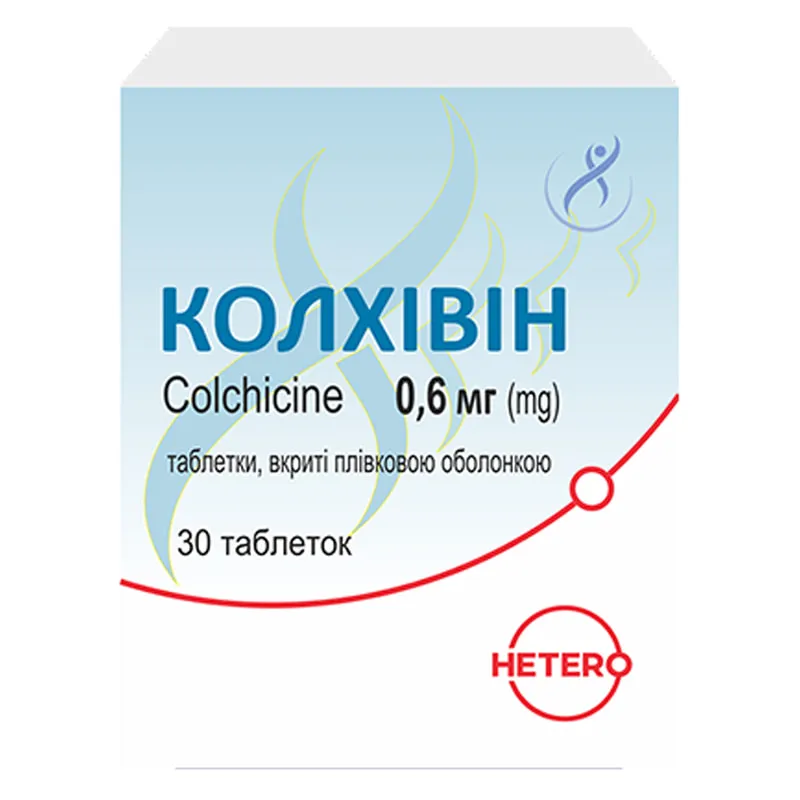
Table of Contents
INSTRUCTIONS FOR MEDICAL USE OF THE MEDICINAL PRODUCT KOLKHIVIN (COLCHIVIN)
Composition:
Active substance: colchicine;
1 tablet contains colchicine 0.6 mg;
Excipients: lactose monohydrate, microcrystalline cellulose, pregelatinized starch, sodium starch glycolate (type A), magnesium stearate, Opadry II Purple 40L500002 (hypromellose, polidextrose, titanium dioxide (E 171), triacetin, indigo carmine aluminum lake (E 132), allura red AC aluminum lake (E 129), polyethylene glycol (E 1521), carnauba wax).
Pharmaceutical form. Film-coated tablets.
Main physicochemical properties: film-coated tablets, purple in color, capsule-shaped, with beveled edges, biconvex, marked with "H" on one side and "C2" with a break line on the other side; "C" and "2" are separated by a line.
Pharmacotherapeutic group. Medicinal products used in the treatment of gout that do not affect uric acid metabolism. ATC code M04A C01.
Pharmacological properties.
Pharmacodynamics.
The mechanism of action of colchicine is not fully understood; however, evidence suggests that colchicine may interfere with intracellular assembly of the inflammasome complex present in neutrophils and monocytes, which mediates activation of interleukin-1β. Additionally, colchicine disrupts cytoskeletal functions by inhibiting the polymerization of β-tubulin into microtubules, thereby preventing activation, degranulation, and migration of neutrophils, which are believed to mediate some symptoms of gout.
Pharmacokinetics.
Absorption. In healthy adult volunteers, colchicine was absorbed following oral administration, reaching a mean maximum concentration of 2.5 ng/mL (range 1.1–4.4 ng/mL) within 1–2 hours (range 0.5–3 hours) after a single dose administered in the fasting state.
Following oral administration of 1.8 mg colchicine within one hour to healthy young volunteers under fasting conditions, colchicine was readily absorbed, achieving a mean maximum plasma concentration of 6.2 ng/mL at a mean time of 1.81 hours (range 1.0–2.5 hours). After administration of a non-recommended high-dose regimen (4.8 mg over 6 hours), the mean maximum plasma concentration was 6.8 ng/mL, reached at a mean time of 4.47 hours (range 3.1–7.5 hours). After 10 days of dosing at 0.6 mg twice daily, the maximum concentration (Cmax) ranged from 3.1 to 3.6 ng/mL (range 1.6–6.0 ng/mL), observed at 1.3–1.4 hours (range 0.5–3 hours) after dose administration. Absolute bioavailability is approximately 45%.
Administration of colchicine with food does not affect the rate of absorption but reduces the extent of absorption by approximately 15%. This is not considered clinically significant.
Distribution. The mean apparent volume of distribution in healthy young volunteers is approximately 5 to 8 L/kg. Plasma protein binding of colchicine is low (39 ± 5%). Colchicine binds primarily to albumin, independent of concentration. Colchicine crosses the placenta (fetal plasma levels have been shown to be approximately 15% of maternal concentrations). Colchicine is also distributed into breast milk at concentrations similar to those found in maternal serum.
Metabolism. Colchicine undergoes demethylation to two primary metabolites, 2-O-demethylcolchicine (2-DMC) and 3-O-demethylcolchicine (3-DMC), and one minor metabolite, 10-O-demethylcolchicine (also known as colchicein). In vitro studies using human liver microsomes have shown that CYP3A4 is involved in the metabolism of colchicine to 2-DMC and 3-DMC. Plasma levels of these metabolites are minimal (less than 5% of the parent drug).
Excretion. In healthy volunteers (n = 12), 40 to 65% of a 1 mg oral dose of colchicine is excreted unchanged in urine. Enterohepatic recirculation and biliary excretion are also believed to play a role in colchicine elimination. After repeated oral administration of colchicine (0.6 mg twice daily), the mean elimination half-life in young healthy volunteers (mean age 25–28 years) ranges from 26.6 to 31.2 hours. Colchicine is a substrate of P-glycoprotein (P-gp). Colchicine is not removed by hemodialysis.
Special patient populations
There is no significant difference between men and women in the pharmacokinetic profile of colchicine.
Pediatric patients
The pharmacokinetics of colchicine have not been evaluated in pediatric patients.
Elderly patients
A published report described the pharmacokinetics of a 1 mg oral colchicine tablet in four elderly women compared to six young healthy men. The mean age of the four elderly women was 83 years (range 75–93 years), mean body weight was 47 kg (range 38–61 kg), and mean creatinine clearance was 46 mL/min (range 25–75 mL/min). The mean maximum plasma concentration and area under the concentration-time curve (AUC) of colchicine were twice as high in elderly patients compared to young healthy men.
A pharmacokinetic study using a single oral dose of 0.6 mg colchicine tablet was conducted in young healthy volunteers (n = 20) aged 18–30 years and elderly subjects (n = 18) aged 60–70 years. The elderly group had a mean age of 62 years and mean age (± SD) of 62.83 ± 2.83 years. A statistically significant difference in creatinine clearance (mean ± SD) was observed between the two age groups (132.56 ± 23.16 mL/min in young vs. 87.02 ± 17.92 mL/min in elderly, respectively). The following pharmacokinetic parameter values (mean ± SD) were observed for colchicine in young and elderly subjects, respectively: AUC0-inf (ng·h/mL) 22.39 ± 6.95 and 25.01 ± 6.92; maximum concentration (Cmax) (ng/mL) 2.61 ± 0.71 and 2.56 ± 0.97; time to maximum concentration (Tmax) (h) 1.38 ± 0.42 and 1.25 ± 0.43; apparent elimination half-life (h) 24.92 ± 5.34 and 30.06 ± 10.78; clearance (mL/min) 0.0321 ± 0.0091 and 0.0292 ± 0.0071.
Clinical trials of colchicine for the prevention and treatment of gout flares and for the treatment of familial Mediterranean fever (FMF) have not included sufficient numbers of patients aged 65 years and older to determine whether they respond differently from younger patients. Doses for elderly patients with gout should be selected cautiously, considering the higher likelihood of decreased renal function, presence of comorbid conditions, or concomitant medication use in this population.
Renal impairment
The pharmacokinetics of colchicine in patients with mild to moderate renal impairment are not well characterized. A published report described the disposition of colchicine (1 mg) in young adult men and women with FMF who had either normal renal function or end-stage renal disease requiring dialysis. Patients with end-stage renal failure had a 75% lower colchicine clearance (0.17 vs. 0.73 L/h/kg) and a prolonged plasma elimination half-life (18.8 vs. 4.4 hours) compared to FMF patients with normal renal function.
Hepatic impairment
Published reports on the pharmacokinetics of intravenously administered colchicine in patients with severe chronic liver disease, including alcoholic or primary biliary cirrhosis, and normal renal function show wide interpatient variability. In some patients with mild to moderate cirrhosis, colchicine clearance is significantly reduced and the plasma elimination half-life prolonged compared to healthy volunteers. No consistent trends were observed in patients with primary biliary cirrhosis. There are no pharmacokinetic data available for patients with severe hepatic impairment (Child-Pugh class C).
Clinical characteristics.
Indications.
- Prophylaxis and treatment of gout attacks in adults.
Colchivin is indicated for the prophylaxis of gout attacks.
Colchivin is indicated for the treatment of acute gout attacks at the first signs of an attack.
- Familial Mediterranean fever (FMF) in adults and children aged 4 years and older.
Colchivin is prescribed to adults and children aged 4 years and older for the treatment of FMF.
Contraindications.
Hypersensitivity to the active substance or to any of the excipients.
The medicinal product Colchivin should not be administered to patients with renal or hepatic impairment concomitantly with P-gp or strong CYP3A4 inhibitors (including protease inhibitors, except fosamprenavir). Administration of colchicine at therapeutic doses to such patients may be life-threatening and result in fatal toxicity.
Interaction with other medicinal products and other types of interactions.
Colchicine is a substrate of the efflux transporter P-gp. Among cytochrome P450 enzymes, CYP3A4 is primarily involved in colchicine metabolism. If colchicine is administered together with drugs that inhibit P-gp, most of which also inhibit CYP3A4, an increase in colchicine concentration is likely. Fatal drug interactions have been reported.
The physician must ensure that colchicine can be safely administered to the patient. Careful monitoring of the patient is required during treatment. If early signs and symptoms of toxicity related to increased colchicine exposure due to drug interaction occur, Colchivin administration should be discontinued immediately.
Table 1 provides information on strong and moderate CYP3A4 inhibitors and P-gp inhibitors.
Table 1
Interaction of colchicine with certain medicinal products when no alternative is available*
| Medicinal product |
Known or expected outcome |
Clinical comment |
| Strong CYP3A4 † inhibitors |
||
| Atazanavir Clarithromycin Darunavir/Ritonavir‡ Indinavir Itraconazole Ketoconazole Lopinavir/Ritonavir‡ Nefazodone Nelfinavir Ritonavir Saquinavir Telithromycin Tipranavir/Ritonavir ‡ |
Significant increase in plasma colchicine levels*; fatal colchicine toxicity has been reported when clarithromycin, a strong CYP3A4 inhibitor, was co-administered. Similarly, a significant increase in plasma colchicine levels is expected when colchicine is used with other strong CYP3A4 inhibitors. |
Dose adjustment is required (see section "Dosage and administration") |
| Moderate CYP3A4 inhibitors |
||
| Amprenavir‡ Aprepitant Diltiazem Erythromycin Fluconazole Fosamprenavir‡ (prodrug of Amprenavir) Grapefruit juice Verapamil |
A significant increase in colchicine plasma concentration is expected. Neuromuscular toxicity has been reported with concomitant use of colchicine and diltiazem or verapamil. |
Dose adjustment is required (see section "Dosage and administration") |
| P-gp † inhibitors |
||
| Cyclosporine Ranolazine |
Significant increase in plasma colchicine levels*; fatal colchicine toxicity has been observed with cyclosporine, a P-gp inhibitor. Similarly, a significant increase in plasma colchicine levels is anticipated when colchicine is used with other P-gp inhibitors. |
Dose adjustment is required (see section "Dosage and administration") |
* Based on the degree of impact on plasma colchicine concentration.
† Patients with renal or hepatic impairment should not receive Colchivin concomitantly with strong CYP3A4 or P-gp inhibitors (see section "Contraindications").
‡ When used in combination with ritonavir, see "Dosing recommendations for strong CYP3A4 inhibitors" (see section "Contraindications").
Patients with renal or hepatic impairment should not be prescribed colchicine together with the following protease inhibitors: atazanavir sulfate, darunavir, fosamprenavir with ritonavir, fosamprenavir, indinavir, lopinavir/ritonavir, nelfinavir mesylate, ritonavir, saquinavir mesylate, tipranavir. For dosage adjustment of tablets when coadministered with protease inhibitors, see section "Administration and dosage".
Table 2 provides recommendations resulting from other potentially significant drug interactions.
Table 2
Other potentially significant drug interactions
| Concomitant drug class or food |
Known or expected outcome |
Clinical comment |
| HMG-CoA reductase inhibitors: atorvastatin, fluvastatin, lovastatin, pravastatin, simvastatin |
Pharmacokinetic and/or pharmacodynamic interaction: adding one drug to a stable long-term regimen of the other has led to myopathy and rhabdomyolysis (including fatal outcomes) |
The potential benefits and risks should be carefully weighed, and patients should be closely monitored for any signs or symptoms of muscle pain, tenderness, or weakness, especially during initial therapy; monitoring of creatine phosphokinase (CPK) does not necessarily prevent the occurrence of severe myopathy. |
| Other lipid-lowering agents: fibrates, gemfibrozil |
||
| Digitalis glycosides: digoxin |
P-gp substrate; rhabdomyolysis reported |
In vitro interactions
In vitro studies using human liver microsomes have shown that colchicine is not an inhibitor or inducer of the activity of CYP1A2, CYP2A6, CYP2B6, CYP2C8, CYP2C9, CYP2C19, CYP2D6, CYP2E1, or CYP3A4.
In vivo interactions
The effects of co-administration of other drugs with colchicine on Cmax, AUC, and minimum concentration (Cmin) are summarized in Table 3 (Effect of other drugs on colchicine) and Table 4 (Effect of colchicine on other drugs).
Table 3
Drug interactions: Pharmacokinetic parameters of Colchicine upon concomitant administration with medicinal products
| Concomitant medicinal product |
Dose of concomitant medicinal product (mg) |
Colchicine dose (mg) |
% change in colchicine concentration from baseline (range: min–max) |
|
| Cmax |
AUC0-t |
|||
| Cyclosporine |
100 mg, single dose |
0.6 mg, single dose |
270.0 (62.0 – 606.9) |
259.0 (75.8 – 511.9) |
| Clarithromycin |
250 mg twice daily, 7 days |
0.6 mg, single dose |
227.2 (65.7 – 591.1) |
281.5 (88.7 – 851.6) |
| Ketoconazole |
200 mg twice daily, 5 days |
0.6 mg, single dose |
101.7 (19.6 – 219.0) |
212.2 (76.7 – 419.6) |
| Ritonavir |
100 mg twice daily, 5 days |
0.6 mg, single dose |
184.4 (79.2 – 447.4) |
296.0 (53.8 – 924.4) |
| Verapamil |
240 mg daily, 5 days |
0.6 mg, single dose |
40.1 (-47.1 – 149.5) |
103.3 (-9.8 – 217.2) |
| Diltiazem |
240 mg daily, 7 days |
0.6 mg, single dose |
44.2 (-46.0 – 318.3) |
93.4 (-30.2 – 338.6) |
| Azithromycin |
500 mg × 1 day, then 250 mg × 4 days |
0.6 mg, single dose |
21.6 (-41.7 – 222.0) |
57.1 (-24.3 – 241.1) |
| Grapefruit juice |
240 ml twice daily, 4 days |
0.6 mg, single dose |
-2.55 (-53.4 – 55.0) |
-2.36 (-46.4 – 62.2) |
Estrogen-containing oral contraceptives. In healthy female volunteers who received ethinyl estradiol and norethindrone administered simultaneously with colchicine (0.6 mg twice daily for 14 days), the hormone concentrations were unchanged.
In healthy volunteers who received theophylline administered simultaneously with colchicine (0.6 mg twice daily for 14 days), theophylline concentrations were unchanged.
Table 4
Interaction with medicinal products: pharmacokinetic parameters of the medicinal product administered simultaneously with Colchicine tablets
| Concomitant medicinal product |
Dose of concomitant medicinal product |
Colchicine dose (mg) |
% change in medicinal product concentration from baseline (range: min–max) |
|
| Cmax |
AUC0–t |
|||
| Theophylline |
300 mg (elixir), single dose |
0.6 mg twice daily for 14 days |
1.6 (–30.4 – 23.1) |
1.6 (–28.5 – 27.1) |
| Ethinylestradiol |
21-day cycle (active treatment) + 7 days placebo |
0.6 mg twice daily for 14 days |
–6.7 (–40.3 – 44.7) |
–3.0† (–25.3 – 24.9) |
| Norethindrone |
0.94 (–37.3 – 59.4) |
–1.6† (–32.0 – 33.7) |
||
- Conducted in healthy adult women.
† AUCτ.
Special precautions for use.
Fatal overdose
Cases of overdose (both accidental and intentional) leading to fatal outcomes have been reported in adults and children treated with colchicine (see section "Overdose"). The product Colchivin should be stored out of reach of children.
Blood dyscrasias
Myelosuppression, leukopenia, granulocytopenia, thrombocytopenia, pancytopenia, and aplastic anemia have been reported during colchicine therapy at therapeutic doses.
Drug interactions
Colchicine is a substrate of P-gp and CYP3A4. Life-threatening and fatal interactions have been reported in patients receiving colchicine concomitantly with P-gp and strong CYP3A4 inhibitors. In patients with normal renal and hepatic function who require concomitant treatment with a P-gp or strong CYP3A4 inhibitor, dose reduction or discontinuation of Colchivin may be necessary (see section "Interaction with other medicinal products and other forms of interaction"). Concomitant use of Colchivin with P-gp or strong CYP3A4 inhibitors (including protease inhibitors, except fosamprenavir) is contraindicated in patients with renal or hepatic impairment (see section "Contraindications").
Neuromuscular toxicity
Colchicine-induced neuromuscular toxicity and rhabdomyolysis have been reported during long-term treatment at therapeutic doses. Patients with renal impairment and elderly patients, even those with normal renal and hepatic function, are at increased risk. Concomitant use of Colchivin with atorvastatin, simvastatin, pravastatin, fluvastatin, lovastatin, gemfibrozil, fenofibrate, fenofibric acid, or bezafibrate (all associated with myotoxicity) or cyclosporine may increase the risk of myopathy (see section "Interaction with other medicinal products and other forms of interaction"). Symptoms usually resolve within one week to several months after discontinuation of colchicine.
Use in children
The safety and efficacy of colchicine in children of any age with FMF have been evaluated in uncontrolled studies. No adverse effects on growth were observed in children with FMF receiving long-term colchicine therapy. The safety and efficacy of colchicine in pediatric patients with gout have not been established.
Use in elderly patients
Clinical studies of colchicine for the prevention and treatment of gout attacks and treatment of FMF have not included sufficient numbers of patients aged 65 years and older to determine whether they respond differently from younger patients. However, dosage should be selected with caution in elderly patients with gout, considering the higher prevalence of reduced renal function, comorbid conditions, or concomitant medications (see sections "Pharmacological properties" and "Method of administration and dosage").
Renal impairment
Colchicine is predominantly excreted in urine in healthy volunteers. Colchicine clearance is reduced in patients with renal impairment. Total body clearance of colchicine is reduced by 75% in patients with end-stage renal disease on dialysis.
Prevention of gout attacks
For prevention of gout attacks in patients with mild (estimated creatinine clearance (CrCl) 50–80 mL/min) to moderate (CrCl 30–50 mL/min) renal impairment, dose adjustment is not required, but patients should be closely monitored for colchicine-related adverse effects. However, in patients with severe renal impairment, the initial dose should be 0.3 mg once daily, and any dose increase should be carefully monitored. For prevention of gout attacks in patients on dialysis, the initial dose of Colchivin should be 0.3 mg administered twice weekly under close monitoring.
Treatment of gout attacks
For treatment of gout attacks in patients with mild (CrCl 50–80 mL/min) and moderate (CrCl 30–50 mL/min) renal impairment, dose adjustment is not required, but patients should be closely monitored for colchicine-related adverse reactions. In patients with severe renal impairment, the dose for treatment of gout attacks does not need to be adjusted; however, treatment courses should not be repeated more frequently than once every two weeks. For patients requiring repeated treatment courses, alternative therapy should be considered. In patients on dialysis, the recommended total dose for treatment of a gout attack should be reduced to a single dose of 0.6 mg (1 tablet). For these patients, treatment courses should not be repeated more frequently than once every two weeks.
Familial Mediterranean fever (FMF)
Although the pharmacokinetics of colchicine in patients with mild (CrCl 50–80 mL/min) and moderate (CrCl 30–50 mL/min) renal impairment are not known, these patients should be closely monitored for colchicine-related adverse effects. Dose reduction may be necessary. In patients with severe renal insufficiency (CrCl < 30 mL/min) and end-stage renal disease requiring dialysis, treatment with Colchivin may be initiated at a dose of 0.3 mg once daily. Any dose increase should be continuously monitored for colchicine-related adverse reactions.
Hepatic impairment
Colchicine clearance may be significantly reduced and its plasma half-life prolonged in patients with chronic hepatic impairment compared to healthy volunteers.
Prevention of gout attacks
For prevention of gout attacks in patients with mild to moderate hepatic impairment, dose adjustment is not required, but patients should be closely monitored for colchicine-related adverse effects. Dose reduction should be considered in patients with severe hepatic impairment.
Treatment of gout attacks
For treatment of gout attacks in patients with mild to moderate hepatic impairment, the recommended dose of colchicine does not need to be adjusted, but patients should be closely monitored for colchicine-related adverse effects.
For treatment of gout attacks in patients with severe hepatic impairment, the recommended dose of colchicine does not need to be adjusted, but treatment courses should not be repeated more frequently than once every two weeks. For patients requiring repeated treatment courses, alternative therapy should be considered.
Familial Mediterranean fever (FMF)
In patients with severe hepatic disease, dose reduction under close monitoring should be considered (see sections "Pharmacological properties" and "Method of administration and dosage").
Excipients
Colchivin contains lactose; therefore, this medicinal product is contraindicated in patients with rare hereditary conditions of galactose intolerance, Lapp lactase deficiency, or glucose-galactose malabsorption.
Use during pregnancy or breastfeeding
Pregnancy
Available data from published literature on colchicine use during pregnancy over several decades have not identified any risk associated with the medicinal product for major congenital malformations, miscarriage, or adverse outcomes for mother and fetus. Colchicine crosses the human placenta. Although reproductive and developmental studies in animals treated with colchicine have not been conducted, published animal studies indicate that colchicine causes embryofetal toxicity, teratogenicity, and altered postnatal development at exposures within or above the clinical therapeutic range.
The estimated background risk of major congenital malformations and miscarriage in the indicated population is unknown.
Available data from published observational studies, case series, and case reports over several decades do not suggest an increased risk of major congenital malformations or miscarriage in pregnant women with rheumatic diseases (rheumatoid arthritis, Behçet’s disease, or FMF) who received colchicine at therapeutic doses during pregnancy. Limitations of these data include lack of randomization and inability to control for underlying maternal conditions and concomitant medication use.
Given published studies indicating embryofetal toxicity, teratogenicity, and altered postnatal development at exposures within or above the clinical therapeutic range, colchicine use during pregnancy is not recommended.
Breastfeeding
Colchicine is excreted in breast milk. No adverse effects have been reported in infants breastfed by mothers receiving colchicine. There are no data on the effect of colchicine on breast milk production. The decision to breastfeed should consider the benefits of breastfeeding for the child's development and health, the mother's clinical need for colchicine, and any potential adverse effects of colchicine on the breastfed child or the mother's underlying condition.
In clinical trials, no adverse effects were reported in 149 breastfed infants. In a prospective observational cohort study, no gastrointestinal or other symptoms were observed in 38 infants exposed to colchicine.
Given the limited number of studies on colchicine use during breastfeeding and its potential impact on infant health, its use during this period should be considered only if the potential benefit justifies the potential risk to the infant.
Fertility
Studies have shown that colchicine-induced infertility in men is rare and may be reversible. A case report indicated that azoospermia resolved after discontinuation of therapy. Case reports and epidemiological studies in women treated with colchicine have not established a clear association between colchicine use and female infertility. However, since untreated progression of FMF may lead to infertility, the use of colchicine should be weighed against the potential risk.
Ability to influence the speed of reactions when driving or operating machinery
There is no detailed information on the effect of colchicine on the ability to drive vehicles or operate machinery; however, somnolence and dizziness should be considered as possible adverse effects.
Method of Administration and Dosage
Long-term use of colchicine has been established in FMF and for the prophylaxis of gout attacks; however, the safety and efficacy of repeated treatment for gout have not been evaluated. Dosing regimens of Colchivin vary depending on the indication and should be individualized.
The recommended dose of the medicinal product Colchivin depends on the patient's age, renal function, hepatic function, and concomitant use of other medicinal products.
Colchivin is administered orally, independent of food intake.
Colchivin is not an analgesic and therefore should not be used for the treatment of pain from other causes.
Acute gout attacks
Prophylaxis of gout attacks
The recommended dose of Colchivin for prophylaxis of gout attacks in adults and adolescents aged 16 years and older is 0.6 mg once or twice daily.
The maximum recommended dose for prophylaxis of gout attacks is 1.2 mg per day.
An increase in gout attacks may occur after initiation of therapy that lowers serum uric acid levels, including pegloticase, febuxostat, and allopurinol, due to changes in serum uric acid levels leading to mobilization of urates from tissue deposits. The medicinal product Colchivin is recommended at the beginning of prophylactic therapy for gout attacks when initiating uric acid-lowering therapy. Prophylactic treatment may be beneficial for at least the first six months of uric acid-lowering therapy.
Treatment of acute gout attacks
The recommended dose of Colchivin for treatment of an acute gout attack is 1.2 mg (2 tablets) at the first sign of an attack, followed by 0.6 mg (1 tablet) one hour later. Higher doses have not shown greater efficacy. The maximum recommended dose for treatment of an acute gout attack is 1.8 mg within one hour. Colchivin may be taken to treat an acute gout attack during prophylactic therapy, with doses not exceeding 1.2 mg (2 tablets) at the first sign of an attack, followed by 0.6 mg (1 tablet) one hour later. A 12-hour interval should be observed before resuming the prophylactic dose.
Familial Mediterranean Fever (FMF)
The recommended dose of Colchivin in adults with FMF is 1.2 mg to 2.4 mg per day. The dose of Colchivin should be increased, if necessary, in increments of 0.3 mg per day to achieve disease control and tolerability, up to the maximum recommended daily dose. If intolerable adverse effects occur, the dose should be reduced in decrements of 0.3 mg per day. The total daily dose of Colchivin may be administered in one or two divided doses.
Recommended dosage for pediatric patients
Prophylaxis and treatment of gout attacks
Colchivin is not recommended for use in pediatric patients for prophylaxis or treatment of gout attacks.
Familial Mediterranean Fever (FMF)
The recommended dosage of Colchivin for FMF in pediatric patients aged 4 years and older depends on age. The following daily doses may be administered as a single dose or divided into two doses:
- Children aged 4 to 6 years: 0.3 mg to 1.8 mg per day.
- Children aged 6 to 12 years: 0.9 mg to 1.8 mg per day.
- Adolescents aged 12 years and older: 1.2 mg to 2.4 mg per day.
Dose adjustment for concomitant use of interacting medicinal products
Concomitant therapy
Co-administration of Colchivin with medicinal products known to inhibit CYP3A4 and/or P-gp increases the risk of colchicine-induced toxic effects. If patients are currently using or have recently discontinued any of the medicinal products listed in Table 5 within the past 14 days, dose adjustments should be made as specified in Table 5 (see section "Interaction with other medicinal products and other forms of interaction").
Table 5
Colchicine dose adjustment for concomitant administration with interacting medicinal products when no alternative is available*
| Medicinal product |
Gout attacks |
CVS |
|||||
| Prophylaxis |
Treatment |
||||||
| Initial prescribed dose |
Adjusted dose |
Initial prescribed dose |
Adjusted dose |
Initial prescribed dose |
Adjusted dose |
||
| Strong CYP3A4 inhibitors† |
|||||||
| Atazanavir Clarithromycin Darunavir/ Ritonavir‡ Indinavir Itraconazole Ketoconazole Lopinavir/ Ritonavir‡ Nefazodone Nelfinavir Ritonavir Saquinavir Telithromycin Tipranavir/ Ritonavir ‡ |
0.6 mg twice daily 0.6 mg once daily |
0.3 mg once daily 0.3 mg every other day |
1.2 mg (2 tablets), then 0.6 mg (1 tablet) after 1 hour. Dose may be repeated no sooner than after 3 days. |
0.6 mg (1 tablet) × 1 dose, then 0.3 mg (1/2 tablet) after 1 hour. Dose may be repeated no sooner than after 3 days. |
Maximum daily dose 1.2–2.4 mg |
Maximum daily dose 0.6 mg (can be taken as 0.3 mg twice daily) |
|
| Moderate CYP3A4 inhibitors |
|||||||
| Amprenavir‡ Aprepitant Diltiazem Erythromycin Fluconazole Fosamprenavir‡ (prodrug of Amprenavir) Grapefruit juice Verapamil |
0.6 mg twice daily 0.6 mg once daily |
0.3 mg twice daily or 0.6 mg once daily 0.3 mg once daily |
1.2 mg (2 tablets), then 0.6 mg (1 tablet) after 1 hour. Dose may be repeated no sooner than after 3 days. |
1.2 mg (2 tablets) × 1 dose. Dose may be repeated no sooner than after 3 days. |
Maximum daily dose 1.2–2.4 mg |
Maximum daily dose 1.2 mg (can be taken as 0.6 mg twice daily) |
|
| P-gp inhibitors† |
|||||||
| Cyclosporine Ranolazine |
0.6 mg twice daily 0.6 mg once daily |
0.3 mg once daily 0.3 mg every other day |
1.2 mg (2 tablets), then 0.6 mg (1 tablet) after 1 hour. Dose may be repeated no sooner than after 3 days. |
0.6 mg (1 tablet) × 1 dose. Dose may be repeated no sooner than after 3 days. |
Maximum daily dose 1.2–2.4 mg |
Maximum daily dose 0.6 mg (can be taken as 0.3 mg twice daily) |
|
* Based on the extent of effect on plasma colchicine concentration.
† Colchicine should not be administered concomitantly with strong CYP3A4 or P-gp inhibitors in patients with renal or hepatic impairment (see section "Contraindications").
‡ When used in combination with ritonavir, see "Dosage recommendations for strong CYP3A4 inhibitors" (see section "Contraindications").
Table 6
Dosage adjustment of colchicine tablets for concomitant administration with protease inhibitors
| Protease inhibitor |
Gout attack prophylaxis |
Gout attack treatment |
SSL treatment |
|
| Initial dose |
Adjusted dose |
|||
| Atazanavir sulfate |
0.6 mg twice daily 0.6 mg once daily |
0.3 mg once daily 0.3 mg every other day |
0.6 mg (1 tablet) × 1 dose, then 0.3 mg (1/2 tablet) after 1 hour. Repeat dose no sooner than after 3 days. |
Maximum daily dose 0.6 mg (can be taken as 0.3 mg twice daily) |
| Darunavir |
0.6 mg twice daily 0.6 mg once daily |
0.3 mg once daily 0.3 mg every other day |
0.6 mg (1 tablet) × 1 dose, then 0.3 mg (1/2 tablet) after 1 hour. Repeat dose no sooner than after 3 days. |
Maximum daily dose 0.6 mg (can be taken as 0.3 mg twice daily) |
| Fosamprenavir with ritonavir |
0.6 mg twice daily 0.6 mg once daily |
0.3 mg once daily 0.3 mg every other day |
0.6 mg (1 tablet) × 1 dose, then 0.3 mg (1/2 tablet) after 1 hour. Repeat dose no sooner than after 3 days. |
Maximum daily dose 0.6 mg (can be taken as 0.3 mg twice daily) |
| Fosamprenavir |
0.6 mg twice daily 0.6 mg once daily |
0.3 mg twice daily or 0.6 mg once daily 0.3 mg once daily |
1.2 mg (2 tablets) × 1 dose. Repeat dose no sooner than after 3 days. |
Maximum daily dose 1.2 mg (can be taken as 0.6 mg twice daily) |
| Indinavir |
0.6 mg twice daily 0.6 mg once daily |
0.3 mg once daily 0.3 mg every other day |
0.6 mg (1 tablet) × 1 dose, then 0.3 mg (1/2 tablet) after 1 hour. Repeat dose no sooner than after 3 days. |
Maximum daily dose 0.6 mg (can be taken as 0.3 mg twice daily) |
| Lopinavir/Ritonavir |
0.6 mg twice daily 0.6 mg once daily |
0.3 mg once daily 0.3 mg every other day |
0.6 mg (1 tablet) × 1 dose, then 0.3 mg (1/2 tablet) after 1 hour. Repeat dose no sooner than after 3 days. |
Maximum daily dose 0.6 mg (can be taken as 0.3 mg twice daily) |
| Nelfinavir mesylate |
0.6 mg twice daily 0.6 mg once daily |
0.3 mg once daily 0.3 mg every other day |
0.6 mg (1 tablet) × 1 dose, then 0.3 mg (1/2 tablet) after 1 hour. Repeat dose no sooner than after 3 days. |
Maximum daily dose 0.6 mg (can be taken as 0.3 mg twice daily) |
| Ritonavir |
0.6 mg twice daily 0.6 mg once daily |
0.3 mg once daily 0.3 mg every other day |
0.6 mg (1 tablet) × 1 dose, then 0.3 mg (1/2 tablet) after 1 hour. Repeat dose no sooner than after 3 days. |
Maximum daily dose 0.6 mg (can be taken as 0.3 mg twice daily) |
| Saquinavir mesylate |
0.6 mg twice daily 0.6 mg once daily |
0.3 mg once daily 0.3 mg every other day |
0.6 mg (1 tablet) × 1 dose, then 0.3 mg (1/2 tablet) after 1 hour. Repeat dose no sooner than after 3 days. |
Maximum daily dose 0.6 mg (can be taken as 0.3 mg twice daily) |
| Tipranavir |
0.6 mg twice daily 0.6 mg once daily |
0.3 mg once daily 0.3 mg every other day |
0.6 mg (1 tablet) × 1 dose, then 0.3 mg (1/2 tablet) after 1 hour. Repeat dose no sooner than after 3 days. |
Maximum daily dose 0.6 mg (can be taken as 0.3 mg twice daily) |
Concomitant use of Colchivin tablets for the treatment of gout attacks is not recommended in patients receiving prophylactic doses of Colchivin tablets and CYP3A4 inhibitors.
Dose adjustment in renal impairment
Colchicine dosing should be individualized according to the patient's renal function (see section "Special patient populations").
Clcr in mL/min can be estimated based on serum creatinine level (mg/dL) using the following formula:
| Clcr = |
[140 – age (years) x body weight (kg)] |
| ---------------------------------------------------------------------------------------------------------------_____________________________________________________________________________________________________________________________________--------------------------------------------------------------------------------------------------------------------------------------------------------------------------------------------------------------------------------------------------------------------------------------------------------------------------------------------------------------------------------------------------------------------------------------------------------------------------------------- |
|
| 72 x serum creatinine (mg/dL) x 0.85 for women |
Acute gout attacks
Prophylaxis of gout attacks
Dose adjustment of the recommended dose is not required for prophylaxis of gout attacks in patients with mild (calculated Clcr 50 – 80 mL/min) to moderate (Clcr 30 – 50 mL/min) renal impairment, but patients should be carefully monitored for colchicine side effects. For patients with severe renal impairment, the initial dose of the drug should be 0.3 mg per day, and any dose increase must be closely monitored. For prophylaxis of gout flares in patients undergoing dialysis, the initial dose should be 0.3 mg administered twice weekly under close monitoring (see section "Pharmacological properties").
Treatment of gout attacks
Dose adjustment of the recommended dose is not required for treatment of gout attacks in patients with mild (Clcr 50 – 80 mL/min) to moderate (Clcr 30 – 50 mL/min) renal impairment, but patients should be closely monitored for colchicine adverse reactions. Dose adjustment is not required for patients with severe renal impairment for treatment of gout attacks; however, treatment courses should not be repeated more frequently than once every two weeks. For patients requiring repeated treatment courses for gout flares, alternative therapy should be considered. For patients undergoing dialysis, the total recommended dose for treatment of gout flare should be reduced to a single dose of 0.6 mg (1 tablet). For these patients, treatment courses should not be repeated more frequently than once every two weeks (see section "Pharmacological properties").
The use of Colchivin for treatment of gout attacks is not recommended in patients with renal impairment who are already receiving Colchivin for prophylaxis of gout attacks.
Familial Mediterranean fever
Extreme caution should be exercised when dosing the drug in patients with moderate to severe renal impairment and in patients undergoing dialysis. Dose reduction is required in these patients (see section "Pharmacological properties"). Patients with mild (Clcr 50 – 80 mL/min) and moderate (Clcr 30 – 50 mL/min) renal impairment should be carefully monitored for colchicine side effects. Dose reduction may be necessary. In patients with severe renal impairment (Clcr < 30 mL/min), treatment should be initiated at a dose of 0.3 mg per day, and any dose increase should be performed under continuous monitoring for adverse effects of colchicine. For patients undergoing dialysis, the total recommended initial dose of Colchivin should be 0.3 mg (half a tablet) per day. Dose escalation may be considered under close monitoring. Any dose increase should be performed under continuous monitoring for colchicine side effects (see section "Pharmacological properties").
Dose modification in hepatic impairment
Acute gout attacks
Prophylaxis of gout attacks
Dose adjustment of the recommended dose is not required for prophylaxis of gout attacks in patients with mild to moderate hepatic impairment; however, patients should carefully monitor for colchicine side effects. Dose reduction should be considered for prophylaxis of gout attacks in patients with severe hepatic impairment.
Treatment of gout attacks
Dose adjustment of the recommended dose is not required for treatment of gout attacks in patients with mild to moderate hepatic impairment; however, patients should be closely monitored for colchicine side effects. For treatment of gout attacks in patients with severe hepatic impairment, dose adjustment is not required, but treatment courses should not be repeated more frequently than once every two weeks. In patients requiring repeated treatment courses for gout attacks, alternative therapy should be considered.
The use of Colchivin for treatment of gout attacks is not recommended in patients with hepatic impairment who are already receiving Colchivin for prophylaxis.
Familial Mediterranean fever
Patients with mild to moderate hepatic impairment should be closely monitored for colchicine side effects. Dose reduction should be considered in patients with severe hepatic impairment.
Children
Colchivin is not recommended for use in pediatric patients for prophylaxis or treatment of gout attacks. The safety and efficacy of colchicine in pediatric patients with gout have not been established.
The recommended dosing of Colchivin for familial Mediterranean fever in pediatric patients aged 4 years and older depends on age.
Overdose
The exact dose of colchicine causing significant toxicity is unknown. Fatal cases have been reported after ingestion of as little as 7 mg over four days, while other patients have survived after ingesting more than 60 mg. A review of 150 patients with colchicine overdose showed that those who ingested less than 0.5 mg/kg survived and typically experienced milder toxic effects such as gastrointestinal symptoms, whereas those who ingested 0.5–0.8 mg/kg experienced more severe reactions, including myelosuppression. In patients who ingested more than 0.8 mg/kg of the drug, 100% mortality was observed.
The first stage of acute colchicine toxicity usually begins within 24 hours after oral ingestion and includes gastrointestinal symptoms such as abdominal pain, nausea, vomiting, diarrhea, and significant fluid loss leading to dehydration. Peripheral leukocytosis may also occur. Life-threatening complications occur in the second stage, which develops 24–72 hours after drug ingestion and is associated with multi-organ failure and its consequences. Death usually results from respiratory depression and cardiovascular failure. If the patient survives, recovery from multi-organ injury may be accompanied by rebound leukocytosis and alopecia, which typically begin approximately one week after initial drug ingestion.
Treatment of colchicine poisoning should begin with gastric lavage and measures to prevent shock. Otherwise, treatment is symptomatic and supportive. No specific antidote is known. Colchicine is not effectively removed by dialysis.
Adverse Reactions
Prophylaxis of gout attacks
In clinical trials of colchicine for the prophylaxis of gout, diarrhea was the most commonly reported adverse reaction.
Treatment of gout attacks
The most commonly reported adverse reactions in the clinical study of colchicine for the treatment of gout attacks were diarrhea and pharyngolaryngeal pain.
Familial Mediterranean fever
Gastrointestinal adverse reactions are the most common adverse reactions observed in patients initiating colchicine tablets. These usually occur within 24 hours and are observed in patients receiving therapeutic doses of the drug. Typical symptoms include cramps, nausea, diarrhea, abdominal pain, and vomiting. These symptoms should be considered dose-limiting if severe, as they may be harbingers of more significant toxicity.
Post-marketing experience
Serious toxic manifestations associated with colchicine include myelosuppression, disseminated intravascular coagulation, and damage to renal, hepatic, vascular, and central nervous system cells. These are most frequently observed in cases of excessive accumulation or overdose.
The following adverse reactions have been identified during post-approval use of colchicine. These are generally reversible upon temporary discontinuation of treatment or dose reduction of colchicine. Because these reactions are reported voluntarily from an undefined population size, it is not always possible to reliably estimate their frequency or establish a causal relationship to drug exposure.
Nervous system: sensory-motor neuropathy.
Skin: alopecia, maculopapular rash, purpura, rash.
Gastrointestinal system: abdominal cramps, abdominal pain, diarrhea, lactose intolerance, nausea, vomiting.
Hematologic: leukopenia, granulocytopenia, thrombocytopenia, pancytopenia, aplastic anemia.
Hepatobiliary: increased levels of AST, ALT.
Musculoskeletal system: myopathy, increased creatine phosphokinase levels, myotonia, muscle weakness, muscle pain, rhabdomyolysis.
Reproductive system: azoospermia, oligospermia.
Reporting of adverse reactions
Reporting of adverse reactions after drug registration is of great importance. It enables ongoing monitoring of the benefit-risk balance of the medicinal product. Healthcare and pharmacy professionals, as well as patients or their legal representatives, should report all suspected adverse reactions and lack of efficacy via the Automated Pharmacovigilance Information System at the following link: https://aisf.dec.gov.ua.
Shelf life. 2 years.
Storage conditions.
Store in the original tightly closed container at a temperature not exceeding 25 ºC, in a place inaccessible to children.
Packaging. 30 tablets per container; 1 container per cardboard box.
Prescription category. Prescription only.
Manufacturer. Hetero Labs Limited.
Manufacturer's address and location of operations.
Unit-V, Block V and V-A, TSIIC - Formulation SEZ, S. Nos 439, 440, 441 & 458, Polepally Village, Jadcherla Mandal, Telangana State, 509301, India.