Colchicum-dispert
Ukraine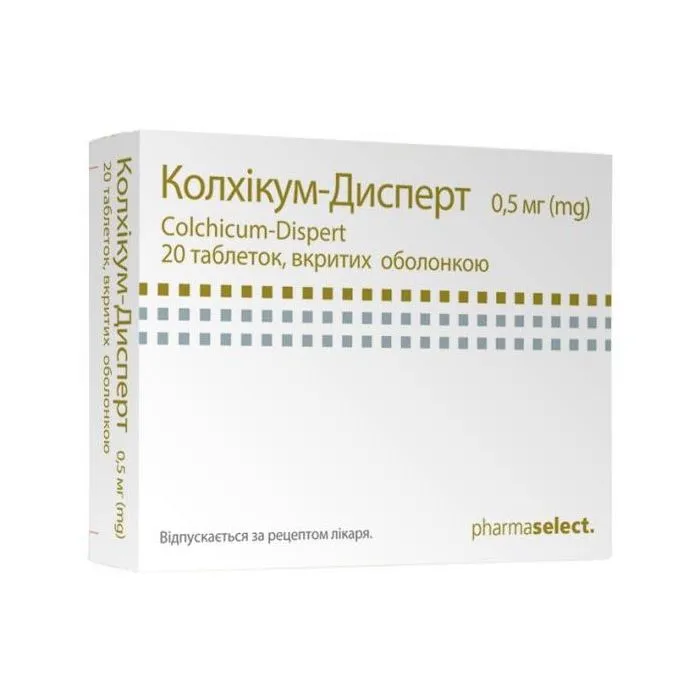
Table of Contents
INSTRUCTIONS FOR MEDICAL USE OF THE MEDICINAL PRODUCT Colchicum-Dispert (Colchicum-Dispert)
Composition:
Active substance: colchicine;
One coated tablet contains: 0.52–2.42 mg of extract from seeds of Colchicum autumnale (autumn crocus) (50–150:1), extraction solvent methylene chloride, corresponding to 0.5 mg of total alkaloids calculated as colchicine;
Excipients: lactose monohydrate; microcrystalline cellulose; magnesium stearate; talc; copovidone; stearic acid 50; corn starch;
Coating: talc, povidone K 29, titanium dioxide (E 171), polyethylene glycol 6000, light magnesium oxide, acacia, sucrose, shellac, sodium croscarmellose, Opalux AS 250000 (sucrose, Ponceau 4R (E 124), Quinoline Yellow (E 104), titanium dioxide (E 171), povidone), carnauba wax.
Pharmaceutical form.
Coated tablets.
Main physicochemical properties: dark red, round, coated tablet.
Pharmacotherapeutic group.
Agents used in the treatment of gout which do not affect uric acid metabolism.
ATC code M04A C01.
Pharmacological properties.
Pharmacodynamics.
Colchicine binds to microtubules at the interphase stage of cell division, inhibiting microtubule polymerization and thereby preventing the formation of the cytoskeletal structure, reducing motility and causing intracellular lysosomal degranulation. Thus, colchicine simultaneously acts as a toxin and reduces the release of lysosomes, chemotactic agents, and lactic acid.
By acting on leukocytes, colchicine suppresses phagocytosis of uric acid crystals. It disrupts the leukocyte cell membrane and reduces their mobilization, migration, and adhesive capacity. Colchicine reduces the invasion of new granulocytes and interferes with cell division and migration.
Colchicine does not affect the concentration of uric acid in blood and tissues.
Pharmacokinetics.
Absorption
Colchicine is rapidly and effectively absorbed in the gastrointestinal tract. Approximately 60 minutes after administration of 2 coated tablets (containing a total of 2×0.5 mg alkaloids, 2×0.38 mg colchicine), a peak plasma colchicine level of 4.2 ng/mL was recorded.
Distribution
Oral bioavailability of colchicine ranges from 25% to 50%. In plasma, colchicine is weakly or moderately bound to proteins (30–50%) and, after reabsorption, is rapidly cleared from plasma and distributed into various tissues.
Colchicine is rapidly distributed into peripheral blood leukocytes, and its concentration in these cells may exceed plasma levels within 72 hours (within 15 minutes, the concentration is five times higher than in plasma). It has been established that colchicine exerts a beneficial effect in the treatment of acute gout by acting on polymorphonuclear leukocytes. Colchicine predominantly accumulates in leukocytes, which explains its beneficial effect in gouty arthritis due to inhibition of granulocyte migration into the inflamed site.
Metabolism and excretion
Colchicine is partially acetylated in the liver and slowly metabolized in other tissues.
Elimination of the drug and its metabolites occurs predominantly via feces; only 10–20% is excreted in urine. The percentage excreted in urine may be higher in patients with impaired liver function. Due to the high tissue concentration of colchicine, only about 10% of a single dose is eliminated within 24 hours. Excretion of colchicine may continue for >10 days after treatment.
After oral administration of colchicine at a dose of 1 mg, the mean elimination half-life was 4.4 hours in patients with normal renal function and 18.8 hours in patients with renal dysfunction.
Clinical characteristics.
Indications.
Adults
- Treatment of acute gout attacks;
- Prophylaxis of gout attacks;
- Treatment of pericarditis and prevention of recurrent pericarditis;
- Behçet's disease.
Adults, children and adolescents
- For familial Mediterranean fever, to prevent attacks and to prevent amyloidosis.
Contraindications.
Hypersensitivity to colchicine or to any of the excipients.
Colchicine should be avoided in patients with renal or hepatic impairment who are also receiving P-glycoprotein inhibitors or strong CYP3A4 inhibitors due to increased risk of adverse effects of colchicine. Life-threatening and fatal colchicine toxicity has been reported in such patients even when therapeutic doses were used.
The drug is contraindicated in patients undergoing dialysis.
Interaction with other medicinal products and other forms of interactions.
Colchicine may impair absorption of vitamin B12.
Colchicine is a substrate of CYP3A4 and the P-glycoprotein transporter.
In the presence of CYP3A4 or P-glycoprotein inhibitors, colchicine blood concentrations may increase.
Concomitant use of colchicine with cyclosporine, HMG-CoA reductase inhibitors (statins), fibrates, ketoconazole, certain anti-HIV drugs, macrolide antibiotics, cimetidine, verapamil, diltiazem, ranolazine, digoxin, large quantities of grapefruit juice (1000 mL/day), and other inhibitors of CYP3A4 or P-glycoprotein, especially in patients with renal impairment, may lead to bone marrow suppression, agranulocytosis, neuromyopathy, myopathy or rhabdomyolysis, and other adverse effects, as well as to high, potentially life-threatening serum colchicine levels.
Life-threatening and fatal drug interactions have been reported in patients receiving colchicine in combination with strong P-glycoprotein and CYP3A4 inhibitors.
If concomitant treatment with a P-glycoprotein inhibitor or a strong CYP3A4 inhibitor is necessary, dose adjustment of colchicine may be required in patients with normal renal or hepatic function. Concomitant use of such inhibitors with colchicine should be avoided in patients with renal or hepatic impairment (see section "Contraindications").
Concomitant administration of colchicine with atorvastatin, simvastatin, pravastatin, fluvastatin, gemfibrozil, or fibrates (associated with myotoxicity) and cyclosporine may result in myopathy. Symptoms usually resolve after discontinuation within a period ranging from 1 week to several months.
Concomitant use of colchicine and erythromycin/clarithromycin is contraindicated.
Increased plasma levels of colchicine have been reported with single doses of ketoconazole, ritonavir, verapamil, and diltiazem.
Special precautions for use.
Colchicine is potentially toxic, therefore it is important not to exceed the dose prescribed by a healthcare professional with appropriate knowledge and experience.
Patients with renal impairment and cardiovascular diseases.
In patients with impaired renal function, bone marrow disorders, agranulocytosis, neuromyopathy, myopathy, and rhabdomyolysis may occur.
Extreme caution is required in patients with more severe circulatory and renal disorders (dehydration, blood pressure changes, impaired renal function).
Patients with gastrointestinal disorders.
In patients with gastrointestinal disorders, symptoms may be exacerbated due to the antimicrotubular action of colchicine, which can lead to diarrhea, nausea, vomiting, and stomach pain.
Treatment of acute gout attacks in patients with impaired renal function.
For treatment of gout attacks in patients with mild (creatinine clearance 50–80 mL/min) or moderate (creatinine clearance 30–50 mL/min) renal impairment, the drug should be used with caution. In patients with moderate renal impairment, the dose should be reduced or the dosing interval prolonged. Treatment of such patients should be conducted under close monitoring to avoid adverse effects.
In patients with severe renal impairment (creatinine clearance less than 30 mL/min), the initial dose should be 1 tablet (0.5 mg) daily. Dose escalation should be performed under close monitoring to avoid adverse effects. Although dose adjustment is not required for treatment of gout attacks, treatment courses should not be repeated more frequently than once every 2 weeks in patients with severe renal impairment. For patients with gout attacks requiring repeated treatment courses, alternative therapies should be considered.
Colchicine treatment is contraindicated in patients undergoing dialysis (see section "Contraindications").
Treatment of acute gout attacks in patients with hepatic impairment.
For treatment of gout attacks in patients with mild or moderate hepatic impairment, dose adjustment is not recommended, but careful monitoring for adverse effects is required. In patients with severe hepatic impairment, dose reduction should be considered.
Treatment of elderly patients.
Colchicum-Dyspert should be used with caution in elderly patients.
Dosage selection in elderly patients should be cautious, taking into account the increased likelihood of decreased renal or hepatic function and concomitant medication use.
The product contains excipients in the composition of Opalux AS 250000, which may cause allergic reactions, including asthma, in patients sensitive to these substances.
Patients with such rare hereditary conditions as galactose intolerance, Lapp lactase deficiency, or glucose-galactose malabsorption should not take this medication.
Allergic reactions are more frequently observed in patients with hypersensitivity to acetylsalicylic acid.
The medicinal product must be stored out of reach of others, both before and after use.
Use during pregnancy or breastfeeding.
Pregnancy
The effect of the drug has not been studied in the treatment of gout attacks in pregnant women; however, published data from several studies have not demonstrated evidence of increased risk of miscarriage, stillbirth, or teratogenic effects in pregnant women who used colchicine for the treatment of familial Mediterranean fever. Published animal studies on reproductive and developmental effects indicate that colchicine causes embryofetal toxicity, teratogenicity, and altered postnatal development at exposures achieved following administration of the drug at the indicated therapeutic or higher doses.
Colchicine may be used during pregnancy only if clearly needed and when alternative, safer medications are not available.
Breastfeeding
Colchicine is excreted in breast milk.
Physicochemical and available pharmacodynamic/toxicological data on colchicine indicate excretion of colchicine into breast milk and potential risk to the infant; therefore, risk to the breastfed infant cannot be excluded.
Colchicum-Dyspert should not be used during breastfeeding.
Fertility
Published non-clinical study data show that colchicine-induced disruption of microtubule formation affects meiosis and mitosis.
Colchicine use causes morphological abnormalities of spermatozoa and reduced sperm count in men, as well as interference with sperm penetration, the second meiotic division, and oocyte cell division in women taking colchicine.
Although infertility in men due to colchicine use is rare, cases of azoospermia after discontinuation of the drug have been reported.
Case reports and epidemiological studies in women treated with colchicine have not established a clear association between colchicine use and female infertility.
Ability to influence reaction speed when driving or operating machinery.
Studies on the effect on the ability to drive or operate machinery have not been conducted.
Method of Administration and Dosage.
Tablets should be swallowed whole with sufficient liquid, regardless of food intake.
Treatment of acute gout attacks should be initiated as soon as possible (within the first 12 hours from the onset of gout attack). The expected effect will occur within 12 hours.
Initially, take 2 tablets (1 mg of the drug), then after 1 hour take 1 tablet (0.5 mg of the drug). After this, do not take tablets for the next 12 hours.
If necessary, after 12 hours the dose may be repeated. The maximum daily dose is 1 tablet (0.5 mg of the drug) every 8 hours until symptoms improve.
The treatment course should be completed after symptom relief or after taking 12 tablets (6 mg). During the treatment course, no more than 12 tablets (6 mg) should be taken.
Repeat treatment courses should not be started earlier than 3 days (72 hours) after completion of the previous course.
Prevention of gout attacks: adults should take 1–2 tablets (0.5–1 mg of the drug) per day for no longer than 6 months. Individual treatment duration should be determined after evaluating factors such as frequency of flare-ups, disease duration, and presence and size of tophi.
Treatment of familial Mediterranean fever.
The drug may be taken as a single dose or divided into several doses exceeding 1 mg per day, administered twice daily.
Colchicine dosage should be gradually increased up to a maximum of 3 mg per day to control disease progression when there is no response to standard dosing. Daily dose increases should be performed under careful monitoring to avoid adverse effects. Careful monitoring is required in patients with renal or hepatic impairment. For such patients, the initial dose should be reduced by 50%.
Adults: take 2–6 tablets (1–3 mg of the drug) per day. Most patients require 1–1.5 mg per day, but some patients may require dosing of 2.0 mg or more.
Children: colchicine may be administered only as prescribed by a physician under medical supervision.
Recommended colchicine dosage for children is:
- 1 tablet (0.5 mg of the drug) per day for children under 5 years of age;
- 1–2 tablets (0.5–1 mg of the drug) per day for children aged 5 to 10 years;
- 2–3 tablets (1–1.5 mg of the drug) per day for children aged 10 years and older.
Children with amyloid nephropathy may require higher daily doses: 3 to 4 tablets (1.5–2 mg of the drug) per day.
Treatment of acute and recurrent pericarditis.
The recommended daily dose of colchicine in acute and recurrent pericarditis is 1–2 tablets (0.5 mg–1 mg) per day.
In most clinical studies, the administered colchicine dose is 2 tablets (1 mg).
Behçet’s disease.
The recommended colchicine dose is 2–4 tablets (1–2 mg of the drug) per day.
Renal impairment
Use with caution in patients with mild renal impairment. In patients with moderate renal impairment, dosage should be reduced or the dosing interval extended. Such patients should be carefully monitored for colchicine adverse effects. For information on treatment of patients with severe renal impairment, see section "Contraindications".
Hepatic impairment
Use with caution in patients with mild to moderate hepatic impairment. Such patients should be carefully monitored for colchicine adverse effects. For patients with severe hepatic impairment, see section "Contraindications".
Special patient groups
Concomitant use of colchicine with certain drugs, particularly inhibitors of cytochrome P450 3A4 (CYP3A4)/P-glycoprotein, increases the risk of colchicine toxicity. If a patient is receiving concomitant therapy with a moderate or strong CYP3A4 inhibitor or P-glycoprotein inhibitor, the maximum recommended oral colchicine dose should be reduced and careful monitoring for adverse effects is required.
Children
The drug is not recommended for children under 4 years of age due to insufficient data on use.
Overdose.
Overdose and disregard of recommendations regarding drug interactions may lead to poisoning, which is accompanied by severe pain and may result in a fatal outcome.
Colchicine has a narrow therapeutic range and is extremely toxic in overdose. Patients with renal or hepatic impairment, gastrointestinal or cardiac disorders, and elderly patients are at particular risk of toxicity. Patients who have overdosed on colchicine, even in the absence of early symptoms, should immediately undergo medical evaluation.
Acute intoxication may occur after ingestion of approximately 20 mg (40 tablets) of colchicine in adults and 5 mg (10 tablets) in children. Chronic intoxication may develop after repeated doses in patients with gout following ingestion of 10 mg or more over several days.
Since colchicine inhibits mitosis, organs with higher proliferation rates are more severely affected.
Symptoms
The exact dose of colchicine causing significant toxicity is unknown. Fatal cases have been reported after colchicine administration of 7 mg over 4 days, while other patients survived after ingesting more than 60 mg. A review of 150 patients after colchicine overdose revealed that those who ingested less than 0.5 mg/kg survived and tended to have milder toxicity, manifested by gastrointestinal disturbances, whereas those who ingested 0.5–0.8 mg/kg experienced more serious reactions such as myelosuppression. A 100% mortality rate was observed in those who ingested more than 0.8 mg/kg.
The first stage of acute colchicine poisoning begins within 24 hours after ingestion and includes gastrointestinal disturbances such as dehydration, abdominal pain, hemorrhagic gastroenteritis, hypovolemia, diarrhea, nausea, and vomiting, accompanied by electrolyte imbalance, leukocytosis, and hypotension in severe cases.
The second stage, with life-threatening complications, occurring 24 to 72 hours after ingestion, may include symptoms such as multiorgan failure, acute renal failure, confusion, coma, peripheral motor and sensory neuropathy, myocardial depression, pancytopenia, arrhythmia, respiratory failure, and coagulopathy.
Death may result from respiratory and cardiovascular failure.
If the patient survives, recovery of damaged organs may be accompanied by rebound leukocytosis and alopecia, beginning approximately 1 week after the initial overdose.
Treatment
No antidote exists.
In case of colchicine overdose, gastric lavage should be performed, preferably within 60 minutes, along with administration of activated charcoal. Diarrhea should not be treated, as bowel movements are the primary route of colchicine elimination.
In adults, vomiting may be induced, for example, with warm hypertonic sodium chloride solution (2–3 teaspoons per glass) or apomorphine (0.1–0.15 mg/kg body weight).
In children under 6 years of age, 1 tablespoon of syrup of ipecac in 100–200 ml of juice is used to induce vomiting, followed by gastric lavage and repeated or continuous administration of activated charcoal.
Hemodialysis is ineffective (due to large volume of distribution).
Treatment is primarily symptomatic and supportive (respiratory monitoring, maintenance of blood pressure and circulation, correction of fluid and electrolyte balance). Careful analgesia with analgesics may be required, as well as optional use of atropine, benzodiazepines, papaverine, or tanalbine if seizures occur. Digoxin may be prescribed to support cardiac function.
Prophylactic antibiotic therapy is recommended. Dexamethasone is indicated for elevated cerebrospinal fluid pressure. Lumbar puncture may also be necessary. Use of an oxygen respirator or mechanical ventilation may be required.
Opiates should not be used!
Hemodynamic, cardiac, and respiratory parameters, as well as blood electrolyte levels, should be carefully monitored and controlled.
Side effects
The most common side effects observed in patients initiating colchicine treatment, both with short-term and long-term use, are gastrointestinal reactions such as diarrhea, which typically manifest within 24 hours. Typical symptoms include cramps, nausea, diarrhea, abdominal pain, and vomiting. In the event of severe adverse reactions, the dose should be reduced, as this may lead to increased toxicity. To minimize gastrointestinal adverse reactions during an acute gout attack, the dose should be reduced.
Adverse reactions are categorized below according to their frequency of occurrence: very common (≥ 1/10), common (≥ 1/100, < 1/10), uncommon (≥ 1/1,000, < 1/100), rare (≥ 1/10,000, < 1/1,000), very rare (< 1/10,000), and not known (cannot be estimated from available data).
The known adverse reactions of colchicine listed below are generally reversible after temporary discontinuation of treatment.
| From blood and lymphatic system |
uncommon |
bone marrow depression |
| leukopenia |
||
| pancytopenia |
||
| neutropenia |
||
| thrombocytopenia |
||
| granulocytopenia |
||
| aplastic or hemolytic anemia |
||
| rare |
agranulocytosis |
|
| thrombocytosis |
||
| From gastrointestinal tract |
common |
nausea |
| vomiting |
||
| diarrhea |
||
| abdominal cramps |
||
| abdominal pain |
||
| From nervous system |
very rare |
neuropathy |
| dizziness |
||
| increased sensitivity |
||
| From hepatobiliary system |
uncommon |
elevated aspartate aminotransferase (AST) levels |
| frequency unknown |
elevated alanine aminotransferase (ALT) levels hepatotoxicity |
|
| From skin and subcutaneous tissue |
rare |
alopecia |
| nail damage |
||
| urticaria |
||
| maculopapular rash |
||
| purpura |
||
| skin rashes |
||
| erythema |
||
| pruritus |
||
| From musculoskeletal and connective tissue |
uncommon |
myopathy |
| elevated creatine phosphokinase levels |
||
| myotonia |
||
| muscle weakness |
||
| muscle pain |
||
| rhabdomyolysis |
||
| From reproductive system |
rare |
azoospermia |
| oligospermia |
||
| From renal and urinary system |
uncommon |
renal failure |
Shelf life.
5 years.
Storage conditions.
Store at a temperature not exceeding 25 °C in a light-protected place.
Keep out of reach of children.
Packaging.
20 tablets in a blister; 1 blister in a cardboard box.
25 tablets in a blister; 1 or 2 blisters in a cardboard box.
Prescription status.
Prescription only.
Manufacturer.
Pharmaselect International Beteiligungs GmbH.
Manufacturer's address.
Ernst-Melchior-Gasse 20, 1020 Vienna, Austria.