Cocarnit
Ukraine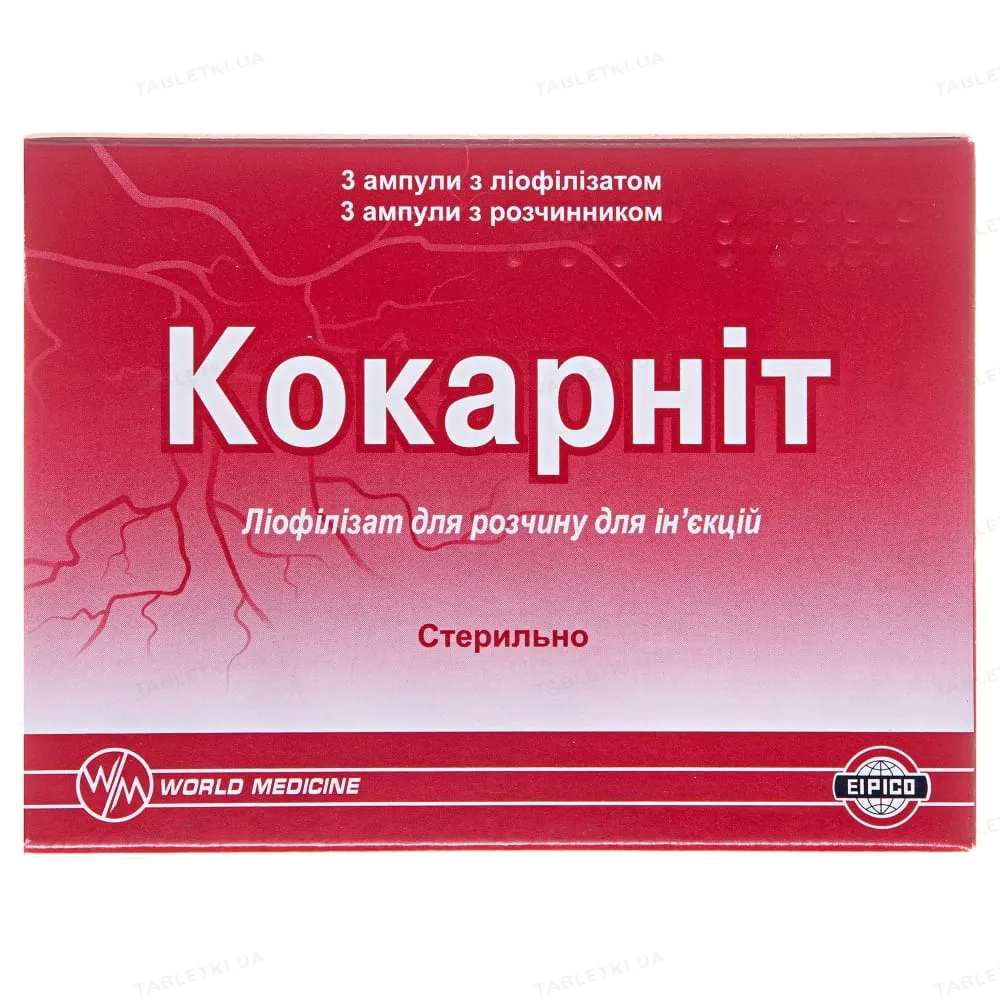
Table of Contents
INSTRUCTIONS for medical use of the medicinal product COCARNT (COCARNIT)
Composition:
Active substances: for the drug – nicotinamide, cocarboxylase, cyanocobalamin, disodium adenosine triphosphate trihydrate; for the solvent – lidocaine hydrochloride.
1 vial of the drug contains: nicotinamide 20 mg, cocarboxylase 50 mg, cyanocobalamin 0.5 mg, disodium adenosine triphosphate trihydrate 10 mg;
Excipients: glycine, methylparahydroxybenzoate (E 218), propylparahydroxybenzoate (E 216);
1 ampoule of solvent (2 ml of 0.5% solution) contains lidocaine hydrochloride 10 mg;
Excipient: water for injections.
Pharmaceutical form.
Drug – lyophilisate for solution for injection.
Solvent – solution for injection.
Main physicochemical properties:
medicinal product – pink lyophilisate;
solvent – clear, colorless solution.
Pharmacotherapeutic group.
Vitamins in combination with other substances. ATC code A11JC.
Pharmacological Properties
Pharmacodynamics
The medicinal product is a complex of metabolic substances and vitamins.
Nicotinamide – one of the forms of vitamin PP – participates in cellular redox processes, improves carbohydrate and nitrogen metabolism, normalizes lipid metabolism, and reduces the level of atherogenic lipoproteins in the blood.
Cocarboxylase – a coenzyme formed in the body from thiamine (vitamin B1) supplied from outside. It plays an important role in carbohydrate metabolism and is a component of the enzyme carboxylase, which catalyzes carboxylation and decarboxylation of α-keto acids. It indirectly promotes the synthesis of nucleic acids, proteins, and lipids. It reduces levels of lactic and pyruvic acids in the body and enhances glucose utilization. It improves trophism of nervous tissue.
Cyanocobalamin (vitamin B12) is converted in the body into its active form – adenosylcobalamin or cobamide – which has high biological activity. It enhances protein synthesis and promotes its accumulation in the body. It activates carbohydrate and lipid metabolism. It reduces blood cholesterol levels and prevents fatty infiltration of the liver. It is essential for normal functioning of hematopoietic organs, promotes accumulation in erythrocytes of compounds containing sulfhydryl groups, thereby increasing their resistance to hemolysis. It enhances tissue regenerative capacity. It exerts a positive effect on liver and nervous system function.
Disodium adenosine triphosphate trihydrate is a derivative of adenosine. It stimulates metabolic processes. It exerts hypotensive and antiarrhythmic effects, as well as vasodilatory action, including on the coronary arteries.
Pharmacokinetics
The pharmacokinetics of the medicinal product have not been studied.
Clinical characteristics.
Indications.
As part of complex therapy:
- neuritis, neuropathy (including in diabetes mellitus);
- neuralgia of various origins;
- myalgia, ischialgia;
- lumbago, radiculitis;
- bursitis, tendinitis;
- ischemic heart disease (I–II functional class according to NYHA);
- myocarditis;
- cardiomyopathy.
Contraindications.
- Hypersensitivity to active substances or to other components of the medicinal product;
- cardiogenic shock and other types of shock; decompensated heart failure; QT interval prolongation syndrome; severe forms of bradyarrhythmias; second- or third-degree atrioventricular block (AV block); acute myocardial infarction; arterial hypotension; severe forms of arterial hypertension; hemorrhagic stroke; sudden decrease in peripheral vascular resistance in medical history, hypercoagulability (including in acute thrombosis);
- inflammatory lung diseases; obstructive diseases of the bronchopulmonary system; severe forms of bronchial asthma;
- hyperkalemia, hypermagnesemia;
- erythremia, erythrocytosis;
- neoplasms, except cases associated with megaloblastic anemia and vitamin B12 deficiency;
- peptic ulcer of the stomach and duodenum in the stage of exacerbation;
- gout; hyperuricemia;
- decompensated diabetes mellitus;
- severe hepatic insufficiency (including cirrhosis).
Additional contraindications for the solvent – 0.5% lidocaine hydrochloride solution:
-
hypersensitivity to other amide-type local anesthetics;
-
sinus node weakness syndrome; Wolff–Parkinson–White syndrome; Adams–Stokes syndrome; high functional class (III–IV functional class according to NYHA) exertional angina;
-
history of epileptiform seizures associated with lidocaine hydrochloride administration;
-
myasthenia;
-
hypovolemia;
-
porphyria;
-
severe renal insufficiency.
Interaction with other medicinal products and other types of interactions.
Nicotinamide
Anticoagulants, acetylsalicylic acid – increased risk of hemorrhage development. Caution should be exercised when used concomitantly.
Antihypertensive agents – enhanced hypotensive effect. Caution should be exercised when used concomitantly.
Antibiotics – possible enhancement of nicotinamide-induced hyperemia.
Lovastatin, pravastatin – concomitant use with nicotinamide is not recommended due to increased risk of adverse reactions. Cases of rhabdomyolysis have been reported with concomitant use of nicotinamide and lovastatin.
Neomycin, barbiturates, antituberculosis agents, sulfonamides – reduced toxicity of the latter and prevention of neomycin-induced reduction in cholesterol and high-density lipoprotein concentrations.
Oral contraceptives, isoniazid – possible increased need for nicotinamide (due to slowed conversion of tryptophan to nicotinic acid).
Probenecid – reduced effect of the latter.
Ciprofibrate – concomitant use with nicotinamide is not recommended.
Fibrinolytic agents, spasmolytics, cardiac glycosides – enhanced effect of the latter.
Nicotinamide enhances the hepatotoxic effect of alcohol.
Cocarboxylase
Cardiac glycosides – enhanced cardiotonic effect of cardiac glycosides.
Cyanocobalamin
Agents increasing blood coagulation – concomitant use with nicotinamide is not recommended.
Oral contraceptives – reduced plasma concentration of cyanocobalamin.
Thiamine – increased risk of thiamine-induced allergic reactions.
Chloramphenicol – reduced hematopoietic response to the medicinal product.
Antimetabolites and most antibiotics alter the results of microbiological assays of cyanocobalamin.
Disodium adenosine triphosphate trihydrate
β-Adrenergic blockers, nitrates – enhanced antianginal effect.
Dipyridamole – enhanced effect of the latter, particularly its vasodilatory effect.
Potassium-sparing diuretics, potassium preparations, ACE inhibitors – increased risk of hyperkalemia.
Carbamazepine – enhanced effect of adenosine (including development of blockades).
Xanthinol nicotinate – reduced effect of adenosine.
Purine derivatives (caffeine and theophylline) – some antagonism with adenosine is observed.
Magnesium preparations – increased risk of hypermagnesemia.
Cardiac glycosides – increased risk of cardiovascular adverse reactions. The product must not be administered in high doses concomitantly with cardiac glycosides.
Lidocaine hydrochloride
Amtriptyline, bupivacaine, disopyramide, imipramine, nortriptyline, pethidine, quinidine, chlorpromazine – reduced plasma concentration of lidocaine.
Antiarrhythmic agents (including amiodarone, verapamil, quinidine, disopyramide, ajmaline) – enhanced cardiodepressive effect (due to QT interval prolongation) and, in very rare cases, possible development of atrioventricular block or ventricular fibrillation. Concomitant use with amiodarone may also lead to seizures.
Anticoagulants (including ardeparin, dalteparin, danaparoid, enoxaparin, heparin, warfarin) – increased risk of bleeding.
Acetazolamide, thiazide and loop diuretics – reduced effect of lidocaine (due to hypokalemia).
Barbiturates (phenobarbital), anticonvulsants – increased metabolism and reduced plasma concentration of lidocaine, as well as enhanced cardiodepressive effect.
β-Adrenergic blockers – slowed metabolism and enhanced effects (including toxic effects) of lidocaine, particularly increased risk of bradycardia and arterial hypotension. When used concomitantly, the dose of lidocaine should be reduced.
Vasoconstrictors (epinephrine, methoxamine, phenylephrine) – possible delayed absorption and prolonged effect of lidocaine.
Glucagon, isadrine – increased lidocaine clearance.
Guanadrel, guanethidine, mecamylamine, trimethaphan – increased risk of pronounced arterial hypotension and bradycardia during spinal and epidural anesthesia.
Anesthetic agents (hexobarbital, sodium thiopental intravenously), ethanol – enhanced respiratory depressant effect.
Agents causing neuromuscular blockade – enhanced effect of such agents (due to reduced nerve impulse conduction).
Monoamine oxidase inhibitors (furazolidone, procarbazine, selegiline) – increased risk of arterial hypotension. Parenteral lidocaine should not be used during treatment with MAO inhibitors.
Curare-like agents – deepened muscle relaxation (up to paralysis of respiratory muscles).
Mexiletine, norepinephrine – enhanced toxicity of lidocaine (due to reduced clearance and hepatic blood flow).
Midazolam – increased plasma concentration of lidocaine.
Narcotic analgesics (morphine) – enhanced analgesic effect of such agents, but also enhanced respiratory depression.
Novocaine, novocainamide, procainamide – central nervous system (CNS) excitation, delirium, hallucinations.
Polymyxin B – respiratory function should be monitored when used concomitantly.
Prenylamine – increased risk of ventricular arrhythmia of the "torsades de pointes" type.
Propafenone – increased duration and severity of CNS-related adverse effects.
Rifampicin – reduced plasma concentration of the latter.
Sedatives and hypnotics – enhanced CNS depressant effect.
Cardiac glycosides – reduced cardiotonic effect of cardiac glycosides. In the setting of glycoside intoxication, lidocaine may exacerbate the severity of AV block.
Cimetidine – reduced metabolism (reduced hepatic clearance due to inhibition of microsomal oxidation) and increased plasma concentration of lidocaine, as well as enhanced toxic effects.
Special precautions for use.
The medicinal product should be used with caution in patients with bradycardia, first-degree atrioventricular block, incomplete atrioventricular block, intraventricular conduction disturbances, predisposition to arterial hypotension, moderate heart failure, moderate hepatic and renal dysfunction, respiratory function impairment, predisposition to bronchospasm, genetic predisposition to malignant hyperthermia, hyperacid gastritis, gastric and duodenal ulcer disease (outside of exacerbation phase), glaucoma, epilepsy, after cardiac surgery, in alcohol abusers, in patients receiving nitrates, calcium channel antagonists, β-adrenoreceptor blockers, as well as in debilitated and elderly patients.
Caution should be exercised and coagulation parameters should be monitored during use of the medicinal product in patients with predisposition to thrombosis and in those with angina pectoris.
Intramuscular administration of lidocaine may increase creatinine concentration, which could lead to misdiagnosis of acute myocardial infarction.
Before administering the medicinal product to patients with heart disease, plasma potassium levels should be normalized, as hypokalemia reduces the effectiveness of lidocaine.
Use of the medicinal product may increase insulin requirements in patients with diabetes mellitus. The medicinal product is not suitable for correcting dyslipidemia in patients with diabetes mellitus.
During treatment with the medicinal product, peripheral blood parameters, liver function, plasma glucose and uric acid levels should be monitored. With prolonged use, plasma potassium and magnesium levels should also be monitored.
ECG monitoring is required during treatment with the medicinal product. If sinus dysfunction, PQ interval prolongation, QRS complex widening, or arrhythmia occurs, the dose should be reduced or treatment discontinued.
In case of tendency to develop leukocytosis or erythrocytosis, the dose of the medicinal product should be reduced or its use temporarily suspended.
During treatment with the medicinal product, consumption of products containing caffeine (coffee, tea, and other beverages) should be limited.
Since prolonged use of the medicinal product may lead to hepatic fatty degeneration, methionine-rich foods should be included in the patient's diet, or methionine and other lipotropic agents should be prescribed for its prevention.
The medicinal product contains methylparahydroxybenzoate (E 218) and propylparahydroxybenzoate (E 216), which may cause allergic reactions (possibly delayed), and in individual cases – bronchospasm.
Use during pregnancy or breastfeeding.
The medicinal product should not be used during pregnancy. Breastfeeding should be discontinued during treatment with the medicinal product.
Ability to affect reaction speed when driving or operating machinery.
If dizziness or decreased arterial pressure occurs during treatment with the medicinal product, driving or operating machinery should be avoided.
Method of Administration and Dosage.
The medicinal product is intended for intramuscular administration.
After reconstitution with the solvent, administer 1–2 vials once daily by intramuscular injection. Lidocaine hydrochloride solution supplied in the package should be used as the solvent. The risk of developing local reactions such as pain and swelling increases if injection site is treated with disinfectant solutions containing heavy metals.
Administration of lidocaine hydrochloride solution must be performed only by healthcare professionals.
The solution should be used immediately after preparation. The color of the prepared solution should be red. Do not use the solution if its color has changed.
Duration of treatment with the medicinal product and repetition of treatment courses depend on the course and severity of the disease.
Children.
There is no experience with the use of this medicinal product in children; therefore, it is not recommended for use in this patient population.
Overdose.
Symptoms: dizziness, weakness, tremor, ventricular arrhythmias; visual disturbances; tonic-clonic seizures; syncope associated with sudden drop in arterial blood pressure; collapse; congestive heart failure, pulmonary edema; hypercoagulation, thrombosis of peripheral vessels; coma; asphyxia; apnea or exacerbation of adverse reactions.
Treatment: discontinue administration of the drug, oxygen therapy, anticonvulsant agents, vasopressors (norepinephrine, mesaton), anticholinergics, symptomatic therapy. Antagonists of adenosine are xanthines (euphyllin, theophylline). The patient should be placed in a horizontal position; ensure access to fresh air, oxygen supply, and/or artificial ventilation if needed. CNS-related symptoms should be managed with short-acting benzodiazepines/barbiturates. For correction of bradycardia and conduction disturbances, administer atropine (0.5–1 mg intravenously); in case of arterial hypotension, use sympathomimetics in combination with β-adrenergic receptor agonists. In case of cardiac arrest, immediate resuscitation measures are indicated. Endotracheal intubation and artificial ventilation of the lungs may be performed. Dialysis is ineffective in the acute phase of overdose. There is no specific antidote.
Adverse reactions.
Blood and lymphatic system disorders: hypercoagulation.
Immune system disorders: hypersensitivity reactions, including anaphylactic shock and anaphylactoid reactions, edema, including Quincke's edema.
Nervous system disorders: headache, dizziness, transient loss of consciousness, drowsiness, feeling of pressure in the head, phobias, nervous excitement, paresthesia.
Eye disorders: blurred vision, macular edema.
Cardiac disorders: tachycardia, chest pain, arrhythmia, bradycardia, discomfort in the chest, palpitations, disturbances of AV conduction (AV block), asystole.
Vascular disorders: arterial hypertension, arterial hypotension, flushing, coronary artery spasm which may lead to myocardial infarction.
Respiratory, thoracic and mediastinal disorders: dyspnea, bronchospasm.
Gastrointestinal disorders: nausea, metallic taste in the mouth, increased gastrointestinal motility, loose stools.
Skin and subcutaneous tissue disorders: facial hyperemia, acrocyanosis, itching, skin rashes, urticaria, acne, bullous rashes, allergic dermatitis, exfoliative dermatitis, dryness of the skin and ocular mucous membranes, acanthosis.
Renal and urinary disorders: increased diuresis.
General disorders and administration site conditions: changes at the injection site, including pain, hyperemia, itching, swelling, induration, and necrosis at the injection site; weakness, malaise, chills, fever, feeling of warmth, increased sweating, pain in the arms, back, neck, purine metabolism disturbances.
Additional adverse reactions possible with the solvent (0.5% lidocaine hydrochloride solution):
Nervous system disorders: motor restlessness, euphoria, drowsiness, sleep disturbances, tremor, trismus, seizures (risk of development increased in hypercapnia and acidosis), motor block, sensory disturbances, anxiety, confusion, coma.
Eye disorders: nystagmus, diplopia, photophobia, reversible blindness, conjunctivitis, flickering "floaters" before the eyes.
Ear and labyrinth disorders: hearing disturbances, tinnitus, hyperacusis.
Respiratory, thoracic and mediastinal disorders: rhinitis, paralysis of respiratory muscles, respiratory paralysis.
Gastrointestinal disorders: vomiting, epigastric discomfort.
General disorders: weakness, malignant hyperthermia, sensation of warmth, cold or numbness in the extremities.
With prolonged and uncontrolled use – hyperkalemia, hypermagnesemia.
Reporting suspected adverse reactions
Reporting suspected adverse reactions after marketing authorization is important. It allows continuous monitoring of the benefit-risk balance of the medicinal product. Healthcare professionals are urged to report any suspected adverse reactions via the national pharmacovigilance system.
Shelf life.
Cocarnit – 3 years.
Storage conditions.
Store at temperatures not exceeding 25 °C, protected from light and out of reach of children.
Packaging.
3 amber glass vials containing lyophilisate and 3 brown glass ampoules containing solvent in a blister pack. 1 blister pack in a cardboard box.
Prescription status.
Prescription only.
Manufacturer.
UORLID MEDICINE ILAC SAN. VE TIDJ. A.S., Turkey /
WORLD MEDICINE ILAC SAN. VE TIC. A.S., Turkey.
Manufacturer's address and location of operations.
COSB G.O.Pasa Mah. 6. Cad. No:30, Cerkezkoy/Tekirdag, Turkey.
Marketing Authorization Holder.
LLC "WORLD MEDICINE", Ukraine /
WORLD MEDICINE, LLC, Ukraine.