Codesan ic
Ukraine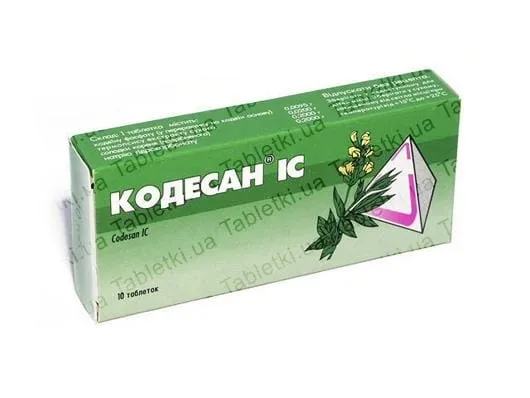
Instructions for Use
INSTRUCTION FOR MEDICAL USE OF THE MEDICINAL PRODUCT KODESAN® IS (CODESAN IS)
Composition:
One tablet contains codeine phosphate hemihydrate (calculated as codeine base) 9.5 mg, dry extract of thermopsis herb (Herba Thermopsidis Lanceolatae) (1.23:1.0, extraction solvent: 25% ethanol) 20 mg, licorice root (Liquiritiae radix) (powdered) 200 mg, sodium bicarbonate 200 mg;
Excipients: colloidal anhydrous silicon dioxide, sodium croscarmellose, microcrystalline cellulose, gelatin, calcium stearate.
Pharmaceutical form. Tablets.
Main physicochemical properties: yellow or brown tablets with specks, flat cylindrical in shape, bevelled edges; the trade mark of the manufacturer is imprinted on one side of the tablet, a line on the other side.
Pharmacotherapeutic group.
Combined preparations containing antitussives and expectorants. Opium derivatives and expectorants. ATC code R05FA02.
Pharmacological Properties
Pharmacodynamics
A combination medicinal product, whose action is determined by the effects of its components.
Codeine is a centrally-acting antitussive agent – a phenanthrene series alkaloid; belongs to the group of narcotic analgesics and is an opioid receptor agonist. It reduces excitability of the cough center and interrupts reflexes that provoke prolonged coughing. It exerts analgesic and sedative effects. Compared to morphine, it suppresses respiration to a lesser extent and less frequently causes miosis, nausea, and constipation. In small doses, it does not cause depression of the respiratory center, does not impair ciliary epithelium function, and does not reduce bronchial secretion. It enhances the effects of analgesics, hypnotics, and sedatives. At therapeutic concentrations, codeine may cause skin flushing and a sensation of warmth, accompanied by increased sweating and itching. Frequent unjustified use of codeine, as well as administration in high doses, promotes the occurrence of adverse reactions from the gastrointestinal tract.
Thermopsis extract contains resins, mucilage, essential oils, saponins, ascorbic acid, and biologically active alkaloids: thermopsin, cytisine, pachycarpine, anagyrine, and homothermopsine. Components of thermopsis extract stimulate the respiratory center and excite the vomiting center, exerting a pronounced expectorant effect manifested by increased secretory function of bronchial glands, enhanced activity of ciliated epithelium, accelerated evacuation of secretions, and increased tone of bronchial smooth muscles due to a central vagotropic effect. Essential oils and other substances contained in thermopsis extract, when excreted through the respiratory tract, stimulate increased secretion from bronchial glands and liquefy sputum.
Liquorice root exerts expectorant, anti-inflammatory, and spasmolytic effects. The expectorant properties are due to the presence of glycyrrhizin, which stimulates the activity of ciliated epithelium in the trachea and bronchi and enhances the secretory function of mucous membranes of the upper respiratory tract. Liquorice root exerts spasmolytic effects on smooth muscles due to flavonoid compounds, among which liquiritoside is considered the most active. The anti-inflammatory effect of liquorice preparations consists in suppressing inflammatory reactions caused by histamine, serotonin, and bradykinin, and is due to the formation of glycyrrhizic acid upon hydrolysis of glycyrrhizin, which exerts a corticosteroid-like effect.
Sodium bicarbonate stimulates secretion in bronchial glands and enhances the motor function of ciliated epithelium and bronchioles. It shifts the pH of bronchial mucus toward alkaline, directly liquefies (hydrates) sputum, promotes mucus evacuation from the airways during coughing, and reduces the cough reflex. When administered orally, sodium bicarbonate may exert an antacid effect. It should be noted that neutralization of hydrochloric acid leads to the release of carbonic acid, which stimulates receptors in the gastric mucosa, thereby enhancing gastrin secretion and subsequently causing secondary increase in hydrochloric acid secretion.
Pharmacokinetics
Codeine and other components of the medicinal product are well absorbed in the gastrointestinal tract. After oral administration, maximum plasma concentration of codeine is reached within 1 hour. Due to its lipophilicity, codeine rapidly penetrates the blood-brain barrier, accumulates in adipose tissue, and to a lesser extent in tissues with high perfusion rates (lungs, liver, kidneys, and spleen). The elimination half-life from plasma is 3–4 hours. It is metabolized in the liver via O- and N-demethylation, forming morphine and norcodeine. Codeine and its metabolites are excreted by the kidneys, predominantly as conjugates with glucuronic acid. Most excretion products are eliminated in urine within 6 hours, and up to 86% of the dose is excreted from the body within 24 hours. Approximately 70% of the dose is excreted as free codeine, 10% as free and conjugated morphine, and another 10% as free or conjugated norcodeine. Only trace amounts of excretion products are found in feces.
The remaining components of the medicinal product are eliminated from the body via the kidneys and through the respiratory tract with bronchial secretions.
Maximum effect of the medicinal product occurs 30–60 minutes after oral administration and lasts for 2–6 hours.
Clinical characteristics.
Indications.
Cough associated with diseases of the lungs and respiratory tract.
Contraindications.
Hypersensitivity to codeine or other opioid analgesics, or to any component of the medicinal product; acute respiratory depression, respiratory insufficiency, obstructive respiratory diseases, bronchial asthma (opioids should not be used during an asthma attack), hemoptysis, organic heart diseases (myocarditis, pericarditis, myocardial infarction), arterial hypertension, pronounced arterial hypotension, arrhythmias, epilepsy; cranial trauma or conditions associated with increased intracranial pressure (in addition to the risk of respiratory depression and elevated intracranial pressure, codeine may affect pupillary response and other vital signs during neurological assessment); postoperative period after biliary tract surgery, active peptic ulcer of the stomach and duodenum; conditions in which inhibition of peristalsis should be avoided or in which abdominal distension develops, risk of paralytic intestinal obstruction; severe liver and kidney diseases with impaired function; hypokalemia, severe obesity, alcohol intoxication, alcoholism.
The use of this medicinal product is contraindicated in the following patient groups:
- children under 12 years of age;
- children aged 12 to 18 years with compromised respiratory function;
- women during pregnancy or breastfeeding;
- patients of any age who are ultra-rapid metabolizers via CYP2D6 enzyme activity.
Do not use concomitantly with monoamine oxidase inhibitors (MAOIs) or within 2 weeks after discontinuation of MAOIs.
Interaction with other medicinal products and other forms of interaction.
Adsorbents, astringents, and coating agents may reduce the absorption of the drug's components in the gastrointestinal tract.
Antidepressants: tricyclic antidepressants may enhance the depressant effects of opioid analgesics.
The use of monoamine oxidase inhibitors (MAOIs) in combination with pethidine has been associated with severe excitation/depression of the central nervous system (including arterial hypertension/hypotension). Although such effects have not been documented with codeine, such an interaction cannot be ruled out. Therefore, codeine must not be used concurrently with MAOIs or within 2 weeks after discontinuation of MAOIs.
Alcohol: possible enhancement of hypotensive and sedative effects of alcohol, as well as increased respiratory depression caused by alcohol.
Anesthetics, sodium oxybate: possible enhancement of central nervous system depression and/or respiratory depression, and/or arterial hypotension.
Neuroleptics: enhanced sedative and hypotensive effects.
Anxiolytics and hypnotics: enhanced sedative effect, increased risk of respiratory depression.
Antihistamines: concomitant use of codeine and sedative antihistamines may lead to enhanced central nervous system depression and/or respiratory depression, and/or arterial hypotension.
Antihypertensive agents: enhanced hypotensive effect.
Anticholinergics (e.g., atropine): increased risk of severe constipation, which may lead to paralytic intestinal obstruction and/or urinary retention.
Antiarrhythmic agents: codeine delays the absorption of mexiletine. When codeine is used concomitantly with quinidine, the pharmacological effect of codeine is likely to be significantly reduced due to quinidine’s negative effect on its metabolism.
Cisapride, metoclopramide, domperidone: codeine antagonizes the effects of cisapride, metoclopramide, and domperidone on gastrointestinal motility.
Antidiarrheal agents: increased risk of severe constipation.
Non-opioid analgesics: enhanced analgesic effect.
Opioid antagonists (e.g., buprenorphine, naltrexone, naloxone): possible precipitation of withdrawal syndrome.
Chloramphenicol: increased plasma concentration of codeine due to inhibition of its metabolism.
Ciprofloxacin: opioids reduce the plasma concentration of ciprofloxacin.
Ritonavir: possible increase in plasma levels of opioid analgesics (including codeine).
Anti-ulcer drugs: cimetidine may inhibit codeine metabolism, leading to increased plasma concentration.
Effect on diagnostic procedures: opioid use may interfere with gastric emptying studies, as opioids delay gastric emptying, and hepatobiliary imaging using Technetium Tc 99m Disofenin, as opioid therapy may cause Oddi’s sphincter constriction and increased pressure in the biliary tract.
Concomitant use of the medicinal product Codesan® IS with bronchodilators and antibacterial agents in the treatment of colds associated with productive cough and difficult-to-expectorate sputum is rational.
The use of licorice root preparations in combination with cardiac glycosides, antiarrhythmic agents (quinidine), thiazide and loop diuretics, adrenocorticosteroids, and laxatives may potentiate hypokalemia.
Special precautions for use
The medicinal product should not be used for prolonged periods due to the risk of developing codeine dependence.
The medicinal product should be used with caution in patients with impaired renal or hepatic function (see section "Contraindications"), a history of drug abuse, and in debilitated patients, patients with arterial hypotension (see section "Contraindications"), hypothyroidism, prostatic hypertrophy, adrenal insufficiency (e.g., Addison's disease), renal insufficiency (see section "Contraindications"), inflammatory bowel disorders (codeine reduces peristalsis, increases intestinal tone and segmentation, and may increase intracolonic pressure) (see section "Contraindications"), urethral stricture, seizure disorders, myasthenia gravis, or patients in shock. In elderly patients, metabolism and elimination of codeine may be slower, so a reduced codeine dose may be advisable. The medicinal product should be used with caution in patients who have recently undergone gastrointestinal surgery (due to possible reduction in gastrointestinal motility) or urinary tract surgery (such patients are more prone to urinary retention caused directly by urethral sphincter spasm and constipation due to codeine use). The medicinal product should be used with caution in patients with phaeochromocytoma (opioids may stimulate catecholamine release by inducing endogenous histamine release). Patients with biliary tract disorders (particularly those with cholelithiasis) should avoid the use of opioid analgesics or use them in combination with spasmolytics.
The use of pethidine and possibly other opioid analgesics in patients taking monoamine oxidase inhibitors (MAO inhibitors) may result in very severe reactions, sometimes even fatal. If the use of codeine in patients taking MAO inhibitors is essential, MAO inhibitors should be discontinued at least two weeks prior to starting codeine therapy (see sections "Contraindications", "Interaction with other medicinal products and other forms of interaction").
In patients who may have physical dependence, discontinuation of treatment should be performed gradually to avoid precipitating withdrawal symptoms.
Metabolism mediated by CYP2D6
Codeine is converted in the liver to its active metabolite – morphine – by the CYP2D6 enzyme. If a patient has a deficiency of this enzyme or lacks CYP2D6 entirely, adequate therapeutic effect will not be achieved. It has been established that up to 7% of the Caucasian population may have this CYP2D6 metabolic characteristic. However, if a patient is an ultra-rapid metabolizer via CYP2D6, there is an increased risk of adverse effects – symptoms of opioid toxicity – even when standard doses are administered. In such patients, rapid conversion of codeine to morphine leads to higher serum morphine levels than expected.
General symptoms of opioid toxicity include: confusion, drowsiness, shallow breathing, pinpoint pupils, nausea, vomiting, constipation, and loss of appetite. In severe cases, symptoms of circulatory and respiratory depression may occur, which can be life-threatening and, very rarely, fatal.
Data on the prevalence of ultra-rapid metabolizers via CYP2D6 in different populations are provided below:
| Population |
Prevalence, % |
| Africans/Ethiopians |
29 |
| African Americans |
3.4–6.5 |
| Mongoloids |
1.2–2 |
| Caucasians |
3.6–6.5 |
| Greeks |
6 |
| Hungarians |
1.9 |
| North Europeans |
1–2 |
Children with compromised respiratory function
Codeine is contraindicated in children whose respiratory function may be compromised by neuromuscular disorders, severe cardiac or respiratory diseases, upper respiratory tract infections or lung infections, multiple trauma, or major surgical procedures. These factors may exacerbate symptoms of morphine toxicity.
Opioid analgesics reduce salivation, which may contribute to the development of dental caries and candidiasis of the oral mucosa.
The use of codeine requires regular medical assessment of the benefit-risk ratio.
To facilitate the liquefaction and expectoration of mucus, it is recommended to consume large amounts of warm fluids.
Alcohol consumption is strictly prohibited during treatment with this medicinal product.
Use during pregnancy or breastfeeding
Pregnancy
The use of this medicinal product during pregnancy is contraindicated.
There have been reports suggesting a possible association between congenital respiratory and cardiac malformations in infants and codeine use during the first trimester of pregnancy. Prolonged use of codeine during pregnancy may lead to physical dependence in the fetus, resulting in neonatal abstinence syndrome. Codeine use during labor may depress respiration in the newborn. Opioid analgesics may cause gastric stasis during labor, increasing the risk of aspiration pneumonia in the mother.
Breastfeeding
The use of this medicinal product during breastfeeding is contraindicated.
When used at standard therapeutic doses, codeine and its active metabolite may be present in breast milk at very low concentrations, which are unlikely to have a negative effect on the infant. However, if the patient is an ultra-rapid metabolizer via CYP2D6, higher levels of morphine may accumulate in breast milk. In very rare cases, this may lead to potentially life-threatening opioid toxicity symptoms in the breastfed infant.
Ability to affect reaction speed when driving or operating machinery
During treatment with this medicinal product, patients should refrain from driving or operating machinery due to the possible occurrence of effects such as confusion, drowsiness, dizziness, hallucinations, visual disturbances, or seizures. The effects of alcohol are potentiated by opioid analgesics.
Dosage and Administration
The medicinal product is taken orally.
For adults and children aged 12 years and older: 1 tablet 2–3 times daily. The treatment duration is 5 days; in exceptional cases, upon a physician's recommendation, the treatment period may be extended.
Children.
The use of this medicinal product is contraindicated in children under 12 years of age due to the risk of developing serious and life-threatening adverse reactions caused by variable and unpredictable conversion of codeine into morphine in this age group (see section "Contraindications").
Codeine must not be used in children aged 12 to 18 years with compromised respiratory function due to the risk of serious and life-threatening adverse reactions (see sections "Contraindications", "Special Warnings and Precautions for Use").
Codeine must not be used in children aged 12 to 18 years who are ultra-rapid metabolizers via CYP2D6 (see sections "Contraindications", "Special Warnings and Precautions for Use").
Overdose.
Symptoms: nausea, vomiting, constipation, headache, difficulty in urination, impaired ocular movement coordination, miosis (pupillary constriction), arrhythmia, bradycardia.
Treatment: gastric lavage followed by administration of activated charcoal, administration of analeptics, atropine, and naloxone—the competitive antagonist of codeine (in a hospital setting).
Codeine overdose. Severe central nervous system depression, including respiratory depression, may occur when codeine is used concomitantly with other sedative agents (including alcohol) or when the dose of codeine is significantly exceeded. The classic clinical triad of opioid overdose includes coma, pinpoint pupils, and respiratory depression (which may lead to cyanosis), followed by pupillary dilation upon the development of hypoxia. Other symptoms of opioid overdose include hypothermia, slow or labored breathing, seizures (especially in children), severe dizziness, pronounced drowsiness, marked weakness, nervousness or restlessness, emotional agitation, hallucinations, confusion, arterial hypotension and tachycardia (less common), bradycardia, circulatory failure. Dyspnea, apnea, collapse, and urinary retention may also occur; pulmonary edema is rare. Signs of histamine release may be observed. Cases of rhabdomyolysis progressing to renal failure have been reported following opioid overdose.
Overdose effects are potentiated by concomitant intake of alcohol and psychotropic agents.
Treatment: general symptomatic and supportive measures, including measures to support the respiratory center and monitoring of vital signs until the patient's condition stabilizes.
Administration of activated charcoal is advisable if less than 1 hour has passed since ingestion of codeine in adults at doses exceeding 350 mg or in children at doses exceeding 5 mg/kg body weight. Naloxone should be administered in cases of coma or respiratory depression. Naloxone is a competitive antagonist with a short elimination half-life; therefore, repeated administration of high doses may be required in patients with severe poisoning. The patient should be monitored for at least 4 hours after naloxone administration, or for 8 hours if a prolonged-release naloxone preparation has been used.
Symptoms of licorice root overdose: overdose or prolonged use (more than 2 months) may cause disturbances in water-electrolyte balance, potentially leading to hypokalemic myopathy and myoglobinuria.
Symptoms of thermopsis and sodium bicarbonate overdose: in severe poisoning, disturbances in consciousness, agitation, hallucinations, and seizures may occur.
Adverse reactions.
Nervous system disorders: drowsiness, headache, dizziness, seizures (especially in infants and children), increased intracranial pressure, development of tolerance or dependence.
Eye disorders: miosis, blurred vision, visual disturbances (including blurred outlines or double vision), photophobia, narrowed pupils.
Ear and labyrinth disorders: vertigo.
Psychiatric disorders: sedation, depression, hallucinations, nightmares, restlessness, confusion, sudden mood swings, euphoria, dysphoria.
Cardiovascular disorders: arrhythmias (tachycardia or bradycardia), palpitations, arterial hypertension, orthostatic hypotension, arterial hypotension (with large doses), facial flushing.
Respiratory system disorders: dyspnea, respiratory depression (with large doses), bronchospasm.
Gastrointestinal disorders: epigastric pain, nausea, vomiting, constipation, dyspepsia, dry mouth, stomach spasms, pancreatitis.
Hepatobiliary disorders: biliary tract spasm, which may be associated with changes in liver enzyme levels.
Endocrine disorders: hyperglycemia.
Metabolism and nutrition disorders: anorexia.
Skin and subcutaneous tissue disorders: increased sweating; allergic reactions, including rash, urticaria, pruritus, skin hyperemia, facial swelling.
Musculoskeletal and connective tissue disorders: uncontrolled muscle movements, muscle rigidity (with large doses).
Renal and urinary disorders: urinary tract spasm, difficulty in urination, urinary retention, dysuria, antidiuretic effect.
Reproductive system disorders: sexual dysfunction, erectile dysfunction, decreased libido and potency.
Immune system disorders: maculopapular rash (considered a symptom of hypersensitivity syndrome associated with oral codeine use), dyspnea, fever, splenomegaly, lymphadenopathy.
Other: hypokalemia, malaise, increased fatigue, hypothermia.
Tolerance and some of the most common adverse effects—drowsiness, nausea, vomiting, confusion—usually develop with prolonged use of codeine.
Regular long-term use of codeine leads to development of dependence and tolerance, as well as emergence of restlessness and irritability after discontinuation of treatment. It should be remembered that tolerance decreases rapidly after stopping codeine, so re-administration of a previously tolerated dose may be fatal.
Withdrawal syndrome: sudden discontinuation of codeine therapy may cause withdrawal syndrome. Possible symptoms include: insomnia, restlessness, irritability, anxiety, depression, weakness, loss of appetite, nausea, vomiting, diarrhea, excessive sweating, dehydration, lacrimation, rhinorrhea, sneezing, yawning, piloerection, fever, mydriasis, tremor, muscle spasms, increased heart rate, increased respiratory rate, elevated blood pressure.
Shelf life. 4 years.
Storage conditions.
Store in the original packaging at a temperature not exceeding 25 °C.
Keep out of reach of children.
Packaging.
10 tablets per blister pack; 1 blister pack per carton.
Prescription status. Prescription only.
Manufacturer.
Limited liability company "INTERKHIM".
Manufacturer's address and place of business.
40-A, 21st km of Starokyivska Road, Odesa, Ukraine, 65025.
Frequently Asked Questions
What is Codesan ic prescribed for?
The drug is prescribed for the treatment of cough in lung and respiratory tract diseases.
How should Codesan ic be taken correctly?
Adults and children aged 12 years and older should take 1 tablet 2–3 times a day. Usually, treatment lasts for 5 days, but this period may be extended upon a doctor's recommendation.
Who should not take this drug?
The drug is contraindicated in children under 12 years of age, pregnant women, and breastfeeding women. It should also not be used in cases of asthma, respiratory failure, heart disease, gastric ulcer, severe liver or kidney disease, or in a state of alcohol intoxication.
What are the possible side effects of Codesan ic?
Possible side effects include drowsiness, headache, dizziness, nausea, vomiting, constipation, vision changes (blurring, double vision), mood changes, palpitations, allergic reactions (rash, itching), and others.
Can alcohol be consumed during treatment?
No, consuming alcohol is prohibited while taking the drug, as it may enhance the depressive effect on respiration and the sedative effect.
How does the drug interact with other medicines?
The drug may enhance the effects of antidepressants, hypnotics, antihistamines, and sedatives. It must not be taken together with MAO inhibitors (or within 2 weeks after discontinuing them). It may also reduce the effectiveness of certain antibacterial and anti-diarrheal drugs.
Does the drug affect the ability to drive a vehicle?
Yes, due to potential drowsiness, dizziness, vision disturbances, or confusion, one should refrain from driving cars or other vehicles during treatment.
Similar Medications
-
Codepsin
Form: tablets
Active substance Dosage terpin hydrate 250 mg sodium bicarbonate 250 mg codeine 8 mg Manufacturer: Farmas Start LLC
-
Codeterep
Form: tablets
Active substance Dosage codeine 4 mg terpin hydrate 125 mg sodium bicarbonate 125 mg Manufacturer: LLC "Kharkiv Pharmaceutical Enterprise "Zdorovya Narodu"
-
Codeterp
Form: tablets
Active substance Dosage codeine 8 mg terpin hydrate 250 mg sodium bicarbonate 250 mg Manufacturer: LLC "Kharkiv Pharmaceutical Enterprise "Zdorovya Narodu"
-
Codterpin ic®
Form: tablets
Active substance Dosage codeine 8 mg terpin hydrate 250 mg sodium bicarbonate 250 mg
This page has been machine-translated and may contain inaccuracies. The original data is available in the manufacturing country's language.
Last data check: July 21, 2026 · Data source: Державний реєстр лікарських засобів України