Clevazol®
Ukraine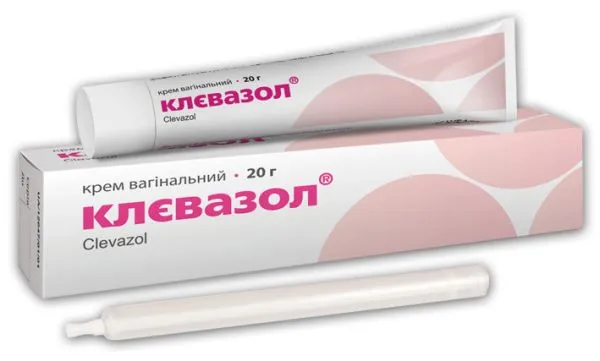
Table of Contents
INSTRUCTION FOR MEDICAL USE OF THE MEDICINAL PRODUCT KLEVACOL® (CLEVAZOL)
Composition:
Active substances: clindamycin, miconazole;
1 g of cream contains: clindamycin phosphate equivalent to clindamycin 20 mg, miconazole nitrate equivalent to miconazole 20 mg;
Excipients: phenoxyethanol and ethylhexylglycerin equivalent to phenoxyethanol, propylene glycol, isopropyl myristate, cetylstearyl alcohol, polyethylene glycol (macrogol) cetylstearyl ether, hydroxypropyl starch phosphate, poloxamer, sodium hydroxide, purified water.
Pharmaceutical form. Vaginal cream.
Main physicochemical properties: white or almost white cream. It should be homogeneous in appearance.
Pharmacotherapeutic group. Antimicrobial and antiseptic agents used in gynecology. Combinations of imidazole derivatives. ATC code G01AF20.
Pharmacological properties.
Pharmacodynamics.
Clindamycin phosphate is an ester of clindamycin or 7-(S)-chlorolincomycin, a semi-synthetic antibiotic. This antibiotic binds predominantly to the 50S ribosomal subunit and affects the initiation of the protein chain. Although clindamycin phosphate is inactive in vitro, it is rapidly hydrolyzed in vivo to form clindamycin, which possesses antibacterial activity.
Clindamycin is active in vitro against microorganisms causing bacterial vaginosis, including Gardnerella vaginalis, Mobiluncus mulieris, Mobiluncus curtisii, Mycoplasma hominis, and anaerobes (species of Peptostreptococcus and Bacteroides).
Miconazole nitrate is a topical broad-spectrum antifungal and antibacterial agent of the imidazole group. Miconazole inhibits ergosterol biosynthesis and alters the lipid composition of the cell membrane, leading to fungal cell death. It exerts a fungicidal effect on dermatophytes (Trichophyton rubrum, Trichophyton mentagrophytes, Epidermophyton floccosum, Microsporum canis), yeasts and yeast-like fungi (Candida albicans, Candida glabrata, and other Candida species), as well as other pathogenic fungi (Malassezia furfur, Aspergillus niger, Penicillium crustaceum). Miconazole nitrate also exhibits antibacterial activity, which is more pronounced against gram-positive bacteria.
Pharmacokinetics.
After intravaginal administration once daily of 100 mg clindamycin phosphate at a concentration equivalent to 20 mg clindamycin per 1 g of cream, the mean maximum serum concentration of clindamycin reaches approximately 20 ng/mL (range: 3 to 93 ng/mL). Nearly 3% (range: 0.1 to 7.0%) of the administered dose is systemically absorbed. According to other pharmacokinetic studies on systemic absorption of clindamycin (based on AUC), in healthy volunteer patients receiving 1 suppository containing clindamycin phosphate once daily, compared to the same dose of clindamycin as a vaginal cream, systemic absorption after cream administration was approximately 7 times lower than after suppository administration: mean values for AUC and Cmax for the vaginal cream were 0.4 μg•h/mL (range: 0.13 to 1.16 μg•h/mL) and 0.02 μg/mL (range: 0.01 to 0.07 μg/mL), respectively. After intravaginal administration of 100 mg clindamycin phosphate (20 mg/g), approximately 4% of clindamycin is absorbed. Following intravaginal administration, miconazole nitrate is absorbed in negligible amounts (approximately 1.4% of the dose). Miconazole nitrate is not detectable in blood plasma after intravaginal administration. Excretion of miconazole after systemic administration occurs in urine as metabolites.
Clinical characteristics.
Indications.
Mixed (bacterial and fungal) vulvovaginal infections, secondary and superinfections caused by microorganisms sensitive to the drug.
Contraindications.
Hypersensitivity to clindamycin phosphate or lincomycin, miconazole nitrate, or to any component of the drug.
The drug is contraindicated in patients with regional enteritis, ulcerative colitis, and in patients with a history of antibiotic-associated colitis.
Interaction with other medicinal products and other forms of interaction.
Cross-resistance between clindamycin and lincomycin has been demonstrated. An antagonistic effect between clindamycin and erythromycin has been demonstrated in vitro.
Caution is advised when clindamycin is used concomitantly with agents that block neuromuscular transmission, due to the potential for enhanced and prolonged myoplegia.
In patients who received clindamycin in combination with vitamin K antagonists (e.g., warfarin, acenocoumarol, and phenindione), an increase in coagulation test parameters [prothrombin time / international normalized ratio (INR)] and/or bleeding time has been observed. Therefore, in patients receiving treatment with vitamin K antagonists, coagulation parameters should be monitored frequently.
An interaction of miconazole with cytochrome P450 isoenzymes CYP2C9 and CYP3A4 has been reported. Miconazole potentiates the effect of oral anticoagulants (e.g., warfarin) and other drugs undergoing biotransformation by CYP2C9 enzymes (e.g., oral hypoglycemic agents and phenytoin) and CYP3A4 enzymes (e.g., HMG-CoA reductase inhibitors — simvastatin, lovastatin; calcium channel blockers — dihydropyridines, verapamil). Therefore, treatment with miconazole-containing products should be administered under physician supervision. When used concomitantly with anticoagulants, monitoring of prothrombin index is required.
During treatment with this medicinal product, other vaginal medicinal products should not be used simultaneously.
The use of Klevazol® reduces the reliability of mechanical contraception (latex-containing devices: condoms, vaginal diaphragms).
Special precautions for use.
Prior to initiating treatment with the medicinal product, laboratory testing for other infectious agents may be necessary, including Trichomonas vaginalis, Chlamydia trachomatis, and gonococci.
Symptoms indicative of pseudomembranous colitis may occur during or after antimicrobial therapy. Cases of pseudomembranous colitis have been reported with nearly all antibacterial agents, and severity may range from mild to life-threatening. Therefore, this possibility should be considered in patients who develop diarrhea following antibacterial therapy. After discontinuation of the medicinal product, symptoms of mild gastrointestinal disturbances may resolve.
If pseudomembranous colitis occurs, the drug should be discontinued immediately. Appropriate antibacterial therapy should be initiated. Antiperistaltic agents are contraindicated in this case.
The medicinal product should be prescribed with caution in patients with inflammatory bowel disease, including Crohn’s disease.
Rare cases of acute kidney injury, including acute renal failure, may occur. Therefore, monitoring of renal function should be considered in patients receiving prolonged therapy, especially in those with pre-existing renal impairment or those taking concomitant nephrotoxic agents (see section "Adverse reactions").
Concomitant use of Klevazol® with other intravaginal products (such as tampons or douching solutions) is not recommended.
Contact of the medicinal product with the eyes or oral cavity should be avoided.
Douching, use of tampons, and products with acidic pH (e.g., soaps) should be avoided during treatment, as they may reduce the efficacy of the medicinal product. Patients should be advised to abstain from sexual intercourse during treatment.
The cream contains ingredients that may damage latex or rubber products such as condoms or vaginal diaphragms. Therefore, such products should not be used during treatment with this medicinal product.
It is not recommended to use such contraceptive devices within 72 hours after treatment with the medicinal product, as their contraceptive effectiveness and protection against sexually transmitted infections, including HIV/AIDS, may be reduced.
If marked irritation of the vaginal mucosa or acute pain occurs, the patient should immediately consult a physician.
Propylene glycol may cause skin irritation.
Cetostearyl alcohol may cause local skin reactions (e.g., contact dermatitis).
In case of allergic reaction, the medicinal product should be discontinued.
Improper use of the medicinal product may lead to microbial resistance and enhanced microbial growth.
Use during pregnancy or breastfeeding.
Pregnancy
Klevazol®, vaginal cream, is contraindicated during the first trimester of pregnancy.
There are no well-controlled studies on the use of this medicinal product in pregnant women.
In preclinical studies, intravaginal administration of Klevazol® cream did not show teratogenic or embryotoxic effects.
Clinical data on the use of one of the components of the medicinal product – clindamycin phosphate – in the form of vaginal cream during the second trimester of pregnancy did not result in an increased frequency of congenital anomalies.
According to FDA classification, miconazole nitrate is categorized as Category C regarding teratogenic potential. No embryotoxic, fetotoxic, or teratogenic effects of miconazole were demonstrated in animal studies following intravenous administration in preclinical trials.
However, clinical studies on the use of miconazole during pregnancy are lacking.
Considering the preclinical data on Klevazol® cream and clinical data on its components, Klevazol® cream may be used during the second and third trimesters of pregnancy under medical supervision when, in the physician’s judgment, the potential benefits of treatment outweigh the possible risks to the fetus.
Breastfeeding period
It is unknown whether miconazole and clindamycin pass into human breast milk following administration of Klevazol® vaginal cream. However, clindamycin has been reported to appear in breast milk after oral or parenteral administration. Nevertheless, a careful benefit-risk assessment should be performed when prescribing intravaginal Klevazol® cream during breastfeeding.
Ability to affect reaction rate while driving or operating machinery.
Data are lacking.
Method of administration and dosage.
The recommended dose is one full applicator (5 g of cream, corresponding to 100 mg of miconazole nitrate and 100 mg of clindamycin). The cream should be administered intravaginally, preferably before bedtime, for 7 consecutive days.
Instructions for the use of the applicator:
|
- Slowly press the plunger to squeeze the cream out of the applicator.
- Remove the empty applicator from the sheath and discard it.
Children.
The safety and efficacy of the drug in children have not been established. There is no experience with the use of the drug in children.
Overdose.
When administered intravaginally, the drug cannot be absorbed in quantities sufficient to cause systemic adverse effects. However, following accidental oral ingestion, effects comparable to therapeutic concentrations of clindamycin after systemic administration may occur; that is, the drug may be absorbed in amounts sufficient to produce systemic effects. In case of overdose, general symptomatic and supportive measures should be applied as needed.
Adverse Reactions
Immune system disorders: hypersensitivity, allergic reactions including urticaria, anaphylactoid reactions; drug reaction with eosinophilia and systemic symptoms (DRESS syndrome).
General disorders and administration site conditions: generalized pain, fever.
At the site of administration: burning sensation, itching, pain at the application site, localized swelling (vaginitis).
Reproductive system and breast disorders: vulvovaginal irritation, menstrual cycle disturbances, uterine bleeding, vaginal discharge, endometriosis, pelvic pain.
Gastrointestinal disorders: localized lower abdominal pain, spasmodic abdominal pain, generalized abdominal pain, bad taste in mouth, heartburn, bloating, diarrhea, nausea, vomiting, flatulence, dyspepsia, constipation, pseudomembranous colitis.
Skin and subcutaneous tissue disorders: erythema, rash, itching (not at the site of drug application), maculopapular rash, and acute generalized exanthematous pustulosis.
Renal and urinary disorders: dysuria, urinary tract infections, glucosuria, proteinuria, acute kidney injury.
Musculoskeletal and connective tissue disorders: back pain, polyarthritis.
Infections and infestations: vaginal infections, bacterial infections, Clostridioides difficile-induced colitis.
Central nervous system disorders: dizziness, headache, dysgeusia.
Klevazol® vaginal cream has minimal systemic absorption; therefore, the likelihood of systemic adverse reactions is extremely low.
The following adverse reactions have been reported with systemic use of clindamycin, one of the components of the medicinal product.
Endocrine system disorders: hyperthyroidism.
Respiratory, thoracic and mediastinal disorders: epistaxis, upper respiratory tract infections.
Blood and lymphatic system disorders: transient neutropenia (leukopenia), agranulocytosis, thrombocytopenia.
Skin and subcutaneous tissue disorders: Stevens-Johnson syndrome-like erythema multiforme, toxic epidermal necrolysis.
Hepatobiliary disorders: jaundice.
Ear and labyrinth disorders: vertigo.
Pregnancy, puerperium and perinatal conditions: pathological labor.
Laboratory test results: microbiological test abnormal.
Reporting of suspected adverse reactions
Reporting suspected adverse reactions after the medicinal product is authorized is important. It allows continued monitoring of the benefit-risk balance of the medicinal product. Healthcare professionals should report any suspected adverse reactions.
Shelf life. 2 years.
The product should not be used after the expiry date stated on the packaging.
Storage conditions.
Store in the original packaging at a temperature not exceeding 25°C.
Do not freeze. Keep out of reach of children.
Packaging.
20 g in tubes; 1 tube and 3 applicators in a carton.
Prescription category.
Prescription only.
Manufacturer. JSC "FITOFARM".
Manufacturer's address and place of business.
2 Sybirtseva Street, Bakhmut, Donetsk region, 84500, Ukraine.
Marketing authorization holder. JSC "FITOFARM".
Address of the marketing authorization holder.
7, Verkhovnoyi Rady Avenue, Kyiv, 02100, Ukraine, floor 3, room 18.