Clovask
Ukraine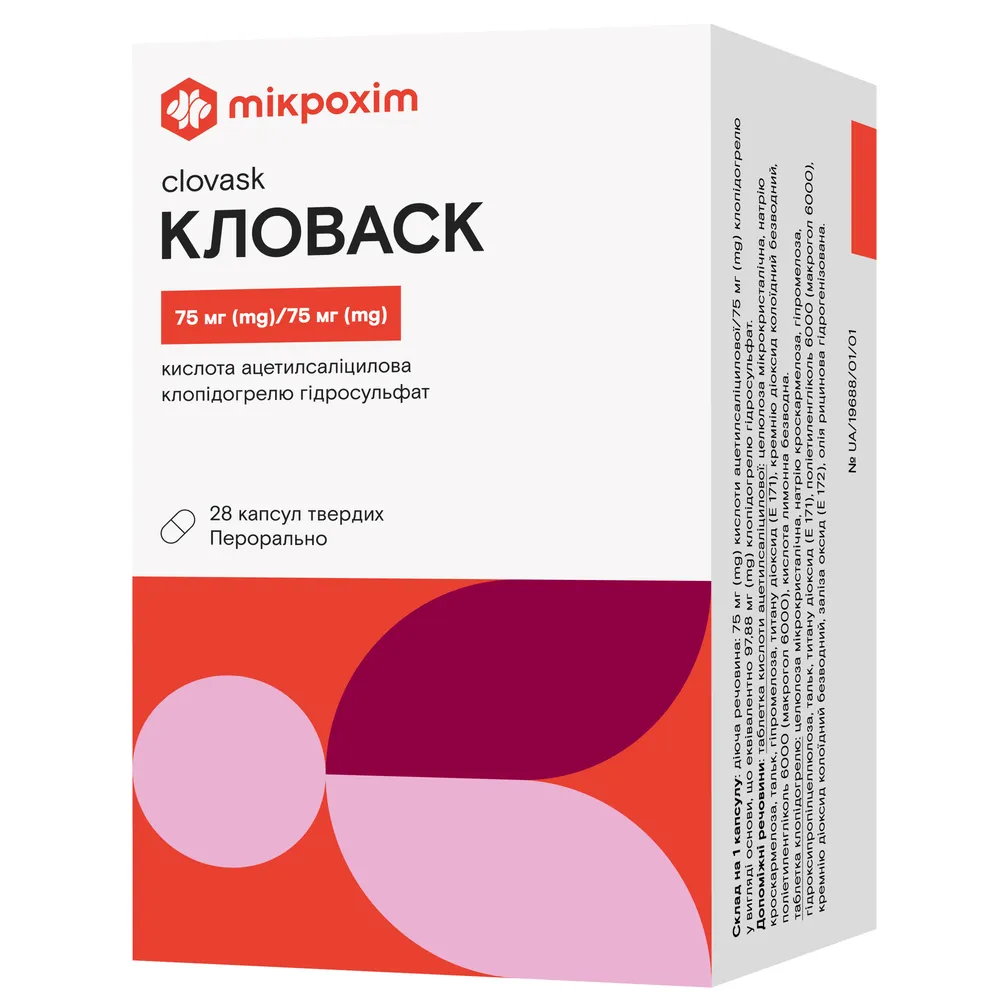
Table of Contents
- INSTRUCTIONS FOR MEDICAL USE OF THE MEDICINAL PRODUCT CLOVASK
- Composition:
- Pharmacological Properties
- Clinical characteristics.
- Special precautions for use.
- Method of Administration and Dosage
- Adverse Reactions.
- Composition:
- Pharmacological Properties.
- Clinical characteristics.
- Special precautions for use.
- Method of Administration and Dosage
- Adverse reactions.
INSTRUCTIONS FOR MEDICAL USE OF THE MEDICINAL PRODUCT CLOVASK
Composition:
Active substances: acetylsalicylic acid, clopidogrel;
1 capsule contains 75 mg of acetylsalicylic acid and 75 mg of clopidogrel (as clopidogrel hydrogen sulfate);
Excipients:
for acetylsalicylic acid tablets: microcrystalline cellulose, sodium croscarmellose, talc, hypromellose, titanium dioxide (E 171), colloidal anhydrous silicon dioxide, polyethylene glycol 6000 (macrogol 6000), anhydrous citric acid;
for clopidogrel tablets: microcrystalline cellulose, sodium croscarmellose, hypromellose, hydroxypropylcellulose, talc, titanium dioxide (E 171), polyethylene glycol 6000 (macrogol 6000), colloidal anhydrous silicon dioxide, iron oxide (E 172), hydrogenated castor oil;
Capsule (shell and cap): gelatin, water, titanium dioxide (E 171).
Pharmaceutical form. Hard capsules.
Main physicochemical properties: opaque, hard gelatin capsules, white or almost white, containing one film-coated tablet of acetylsalicylic acid, white or almost white, and two film-coated tablets of clopidogrel, yellow-brown in color.
Pharmacotherapeutic group.
Antithrombotic agents. Antiplatelet agents, excluding heparin. Combinations. ATC code B01A C30.
Pharmacological Properties
Pharmacodynamics
Mechanism of Action
Clopidogrel belongs to the class of prodrugs; one of its metabolites is an inhibitor of platelet aggregation. The metabolism of clopidogrel via the cytochrome CYP450 enzyme system is required for the formation of the active metabolite that inhibits platelet aggregation. The active metabolite of clopidogrel selectively inhibits the binding of adenosine diphosphate (ADP) to the P2Y12 receptor on the platelet surface and subsequent ADP-mediated activation of the glycoprotein IIb/IIIa complex, thereby suppressing platelet aggregation. Due to the irreversible binding, platelets exposed to clopidogrel remain affected for their entire lifespan (approximately 7–10 days). Normal platelet function recovers at a rate consistent with platelet turnover. Platelet aggregation induced by agonists other than ADP is also inhibited through blockade of ADP-mediated amplification of platelet activation, since ADP is released during activation.
Since the active metabolite is formed via the cytochrome CYP450 enzyme system, and some of these enzymes are polymorphic or can be inhibited by other medicinal products, adequate platelet inhibition does not occur in all patients.
Pharmacodynamic Effects
Repeated administration of clopidogrel at a dose of 75 mg per day significantly inhibits ADP-induced platelet aggregation from the first day of treatment. This effect gradually increases and reaches a steady state by day 3–7. At steady state, the average level of platelet inhibition observed with the 75 mg daily dose ranges from 40% to 60%. Platelet aggregation and bleeding time gradually return to baseline levels within approximately 5 days after discontinuation.
Acetylsalicylic acid inhibits platelet aggregation by irreversibly inhibiting cyclooxygenase-mediated prostaglandin synthesis, thereby suppressing the formation of thromboxane A2, which induces platelet aggregation and vasoconstriction. This effect persists for the entire lifespan of the platelet.
Pharmacokinetics
Acetylsalicylic Acid
Absorption
After absorption, acetylsalicylic acid is rapidly hydrolyzed to salicylic acid. Peak plasma concentrations of salicylic acid are reached within 1 hour after administration. Consequently, plasma concentrations of acetylsalicylic acid are below the limit of quantification within 1.5–3 hours after dosing.
Distribution
Acetylsalicylic acid binds poorly to plasma proteins and has a low volume of distribution (10 L). Its metabolite, salicylic acid, rapidly binds to plasma proteins, but binding is concentration-dependent (non-linear). At low concentrations (< 100 μg/mL), approximately 90% of salicylic acid is bound to albumin. Salicylic acid readily penetrates all body tissues and fluids, including the central nervous system, breast milk, and fetal tissues.
Metabolism and Elimination
Acetylsalicylic acid is rapidly hydrolyzed to salicylic acid, which has a half-life of 0.3–0.4 hours at acetylsalicylic acid doses of 75–100 mg. Salicylic acid is primarily conjugated in the liver, forming salicyluric acid, phenolic glucuronide, acyl glucuronide, and several minor metabolites. The plasma half-life of salicylic acid in the KLOVASK medicinal product is approximately 2 hours. Salicylate metabolism is saturable; total body clearance decreases at high serum concentrations due to the liver's limited capacity to form both salicyluric acid and phenolic glucuronide. Following toxic doses (10–20 g), the plasma half-life may exceed 20 hours. At high doses of acetylsalicylic acid, elimination of salicylic acid follows zero-order kinetics (i.e., elimination rate is constant relative to plasma concentration), resulting in an effective half-life of 6 hours or more. Renal excretion of unchanged active substance depends on urine pH. When urine pH exceeds 6.5, renal clearance of free salicylate increases from 5% to 80%. After therapeutic doses, approximately 10% is excreted in urine as salicylic acid, 75% as salicyluric acid, 10% as phenolic glucuronide, and 5% as acyl glucuronide of salicylic acid.
Given the pharmacokinetic and metabolic characteristics of both compounds, clinically significant pharmacokinetic interactions are unlikely.
Clopidogrel
Absorption
After single and repeated oral administration of 75 mg clopidogrel daily, clopidogrel is rapidly absorbed. The mean peak plasma concentration of unchanged clopidogrel (approximately 2.2–2.5 ng/mL after a single 75 mg oral dose) is reached about 45 minutes after administration. Absorption is at least 50%, based on the amount of clopidogrel metabolites excreted in urine.
Distribution
In vitro, clopidogrel and its main circulating (inactive) metabolite reversibly bind to human plasma proteins (98% and 94%, respectively). Binding is non-saturable in vitro over a wide concentration range.
Metabolism
Clopidogrel is extensively metabolized in the liver. In vitro and in vivo, clopidogrel metabolism occurs via two main pathways: the first involves esterases followed by hydrolysis into an inactive carboxylic acid derivative metabolite (accounting for 85% of circulating metabolites); the second involves various cytochrome P450 enzymes. Initially, the intermediate metabolite 2-oxo-clopidogrel is formed during clopidogrel metabolism. Further metabolism of 2-oxo-clopidogrel leads to the formation of the active metabolite, a thiol derivative of clopidogrel. In vitro, this metabolic pathway is mediated by CYP3A4, CYP2C19, CYP1A2, and CYP2B6 isoenzymes. The active thiol metabolite, isolated in vitro, rapidly and irreversibly binds to platelet receptors, thereby inhibiting platelet aggregation.
After a single 300 mg loading dose of clopidogrel, the Cmax of the active metabolite is approximately twice as high as after 4 days of maintenance therapy with 75 mg. Cmax is reached approximately 30–60 minutes after administration.
Elimination
Within 120 hours after oral administration of radiolabeled 14C-clopidogrel in humans, approximately 50% of the dose was excreted in urine and about 46% in feces. After a single 75 mg oral dose, the elimination half-life was approximately 6 hours. The half-life of the main circulating (inactive) metabolite was 8 hours after single or repeated administration.
Pharmacogenetics
Clopidogrel is activated by several polymorphic CYP450 isoenzymes. CYP2C19 is involved in the formation of both the active metabolite and the intermediate metabolite 2-oxo-clopidogrel. Based on ex vivo platelet aggregation measurements, the pharmacokinetic parameters and antithrombotic effect of the active metabolite of clopidogrel vary according to the CYP2C19 genotype.
The CYP2C19*1 allele corresponds to fully functional metabolism, whereas the CYP2C19*2 and CYP2C19*3 alleles are associated with reduced metabolism. The CYP2C19*2 and CYP2C19*3 alleles account for 85% of reduced-function alleles in Caucasians and 99% in Asians. Other alleles associated with reduced metabolism include CYP2C19*4, *5, *6, *7, and *8, but these are less common in the general population.
Patients with reduced metabolism carry two loss-of-function alleles, as defined above. According to published data, CYP2C19 poor metabolizer genotypes occur in approximately 2% of Caucasians, 4% of African Americans, and 14% of Chinese individuals. Genetic tests for determining the CYP2C19 genotype are currently available.
Special Patient Groups
Data on pharmacokinetic parameters of the active metabolite of clopidogrel in these patient groups are lacking.
Renal Impairment
After repeated administration of 75 mg clopidogrel daily in patients with severe renal disease (creatinine clearance 5–15 mL/min), inhibition of ADP-induced platelet aggregation was lower (25%) compared to healthy volunteers, although the prolongation of bleeding time was similar to that observed in healthy volunteers receiving 75 mg clopidogrel daily. Additionally, clinical tolerability was satisfactory in all patients.
Hepatic Impairment
After repeated administration of 75 mg clopidogrel daily for 10 days in patients with severe hepatic impairment, inhibition of ADP-induced platelet aggregation was similar to that observed in healthy volunteers. The mean increase in bleeding time was also comparable between the two groups.
Racial Groups
The prevalence of CYP2C19 alleles leading to moderate or marked reduction in CYP2C19-mediated metabolism varies by race/ethnicity (see section "Pharmacogenetics"). Limited published data are available in patients of Asian origin to assess the clinical significance of CYP2C19 genotyping for clinical outcomes.
Clinical characteristics.
Indications.
Secondary prevention of atherothrombotic complications in adults who are already taking clopidogrel and acetylsalicylic acid.
CLOVASQ is a fixed-dose combination medicinal product for continuation of therapy in cases of:
- Acute coronary syndrome without ST-segment elevation (unstable angina or myocardial infarction without pathological Q wave on ECG), including patients who have undergone stent placement during percutaneous coronary intervention;
- Acute ST-elevation myocardial infarction in patients receiving medical treatment, when thrombolysis is feasible.
Contraindications.
- Hypersensitivity to the active substances or to any of the excipients of the medicinal product;
- severe hepatic impairment;
- acute pathological bleeding, such as peptic ulcer bleeding or intracranial hemorrhage;
- hypersensitivity to nonsteroidal anti-inflammatory drugs (NSAIDs), bronchial asthma, rhinitis, nasal polyps. Mastocytosis, when administration of acetylsalicylic acid may provoke severe hypersensitivity reactions (including circulatory shock with flushing, arterial hypotension, tachycardia, and vomiting);
- severe renal impairment (creatinine clearance < 30 mL/min);
- acute peptic ulcers;
- hemorrhagic diathesis;
- severe heart failure;
- concomitant use of acetylsalicylic acid and methotrexate at doses of 15 mg/week or higher (due to increased hematological toxicity of methotrexate, resulting from reduced renal clearance of methotrexate by anti-inflammatory agents and displacement of methotrexate from plasma protein binding by salicylates);
- third trimester of pregnancy (see section "Use in pregnancy or lactation").
Interaction with other medicinal products and other types of interactions.
Medicinal products associated with bleeding risk
There is an increased risk of bleeding due to potential additive synergy. Medicinal products whose concomitant use is associated with bleeding risk should be prescribed with caution (see section "Special precautions").
Oral anticoagulants
Concomitant use of CLOVASQ with oral anticoagulants is not recommended, as it may enhance bleeding intensity (see section "Special precautions"). Although administration of clopidogrel at a dose of 75 mg/day in patients receiving long-term warfarin therapy did not alter the pharmacokinetics of S-warfarin or the international normalized ratio (INR), concomitant use of clopidogrel and warfarin increases the risk of bleeding due to the independent effects of these agents on hemostasis.
Glycoprotein IIb/IIIa inhibitors
CLOVASQ should be used with caution in patients concurrently receiving glycoprotein IIb/IIIa inhibitors (see section "Special precautions").
Heparin
In a clinical study conducted in healthy volunteers, clopidogrel did not require adjustment of heparin dose and did not alter the effect of heparin on coagulation. Concomitant administration of heparin does not influence the inhibitory effect of clopidogrel on platelet aggregation. A pharmacodynamic interaction between CLOVASQ and heparin is possible, which may increase the risk of bleeding. Therefore, concomitant use requires caution (see section "Special precautions").
Thrombolytics
The safety of concomitant use of clopidogrel, fibrin-specific or non-fibrin-specific thrombolytic agents, and heparins was evaluated in patients with acute myocardial infarction. The frequency of clinically significant bleeding was similar to that observed with concomitant use of thrombolytic agents and heparin with acetylsalicylic acid (see section "Adverse reactions"). The safety of concomitant use of the combination acetylsalicylic acid/clopidogrel with other thrombolytic agents has not been officially established, and such combination requires caution (see section "Adverse reactions").
NSAIDs
In a clinical study involving healthy volunteers, concomitant administration of clopidogrel and naproxen increased occult gastrointestinal (GI) blood loss. Therefore, concomitant use with NSAIDs, including COX-2 inhibitors, is not recommended (see section "Special precautions"). Concomitant use of high-dose salicylates with NSAIDs (due to synergistic effects) increases the risk of ulceration and gastrointestinal bleeding.
Experimental data indicate that ibuprofen may inhibit the effect of low-dose acetylsalicylic acid on platelet aggregation when both are administered simultaneously. In one study, a single 400 mg dose of ibuprofen administered within 8 hours before or 30 minutes after a dose of immediate-release acetylsalicylic acid (81 mg) resulted in reduced effect of acetylsalicylic acid on thromboxane formation or platelet aggregation. However, limitations of these data and statistical uncertainty regarding extrapolation of ex vivo data to clinical situations indicate that definitive conclusions about regular ibuprofen use cannot be made; clinically significant effects are unlikely with occasional ibuprofen use.
Selective serotonin reuptake inhibitors (SSRIs)
SSRIs affect platelet activation and increase the risk of bleeding; therefore, concomitant use of SSRIs with clopidogrel should be done with caution.
Metamizole
When used concomitantly with acetylsalicylic acid, metamizole may reduce the effect of acetylsalicylic acid on platelet aggregation. Therefore, this combination should be prescribed with caution to patients receiving low-dose acetylsalicylic acid for cardioprotective purposes.
Other medicinal products used concomitantly with clopidogrel
Inducers of CYP2C19
Since the metabolism of clopidogrel to its active metabolite occurs partially via CYP2C19, use of medicinal products that inhibit the activity of this enzyme is likely to result in reduced levels of the active metabolite of clopidogrel. The clinical significance of this interaction is not established.
Rifampicin is a potent inducer of CYP2C19, leading to both increased levels of the active metabolite of clopidogrel and enhanced platelet inhibition, which may particularly increase the risk of bleeding. As a precautionary measure, concomitant use of potent inducers of CYP2C19 should be avoided (see section "Special precautions").
Inhibitors of CYP2C19
Since the metabolism of clopidogrel to its active metabolite occurs partially via CYP2C19, use of medicinal products that inhibit the activity of this enzyme is likely to result in reduced levels of the active metabolite of clopidogrel. The clinical significance of this interaction is not established. Concomitant use of medicinal products that strongly or moderately inhibit CYP2C19 activity should be avoided (see sections "Pharmacokinetics" and "Special precautions").
Medicinal products that are strong or moderate inhibitors of CYP2C19 include omeprazole and esomeprazole, fluvoxamine, fluoxetine, moclobemide, voriconazole, fluconazole, ticlopidine, carbamazepine, efavirenz.
Proton pump inhibitors (PPIs)
Administration of omeprazole 80 mg once daily, given either simultaneously with clopidogrel or with a 12-hour interval between the two drugs, reduced exposure to the active metabolite by 45% (after loading dose) and by 40% (during maintenance dosing). This reduction in exposure was accompanied by a 39% reduction in platelet aggregation inhibition (after loading dose) and 21% (during maintenance dosing). Esomeprazole is expected to interact similarly with clopidogrel.
Observational and clinical studies have yielded conflicting data regarding the clinical significance of this pharmacokinetic/pharmacodynamic interaction in terms of risk of serious cardiovascular events. As a precautionary measure, concomitant use of omeprazole or esomeprazole is recommended to be avoided (see section "Special precautions").
With pantoprazole or lansoprazole, a less pronounced reduction in exposure to clopidogrel's metabolite was observed.
During concomitant treatment with pantoprazole 80 mg once daily, plasma concentrations of the active metabolite decreased by 20% (after loading dose) and by 14% (during maintenance dosing). This was accompanied by a 15% and 11% reduction in platelet aggregation inhibition, respectively. These results suggest that clopidogrel can be used concomitantly with pantoprazole.
Currently, there is no evidence that other medicinal products reducing gastric acidity, such as histamine H2-receptor blockers (except cimetidine, which is a CYP2C19 inhibitor) or antacids, affect the antiplatelet activity of clopidogrel.
Boosted antiretroviral therapy
In HIV patients receiving boosted antiretroviral therapy (ART), there is a high risk of vascular events.
Markedly reduced platelet inhibition was observed in HIV patients receiving ART boosted with ritonavir or cobicistat. Although the clinical significance of these data is uncertain, spontaneous reports have been received about HIV-infected patients receiving ritonavir-boosted ART who experienced recurrent occlusive events after stent placement or thrombotic events despite high-dose clopidogrel regimens. Concomitant use of clopidogrel and ritonavir may result in reduced mean platelet inhibition.
Therefore, concomitant use of clopidogrel with boosted ART should be avoided.
Other medicinal products
No clinically significant pharmacodynamic interaction was observed during concomitant administration of clopidogrel with atenolol, nifedipine, or both atenolol and nifedipine. Furthermore, concomitant use of phenobarbital or estrogen has no significant effect on the pharmacodynamic activity of clopidogrel.
Pharmacokinetic parameters of digoxin or theophylline were not altered when administered concomitantly with clopidogrel. Antacid agents did not reduce clopidogrel absorption.
Data obtained from human liver microsome studies indicate that the carboxylic acid metabolite of clopidogrel may inhibit the activity of cytochrome P450 2C9. This may potentially lead to increased plasma concentrations of certain medicinal products metabolized by cytochrome P450 2C9, such as phenytoin and tolbutamide, as well as NSAIDs. Data from the CAPIRI study indicate that concomitant use of phenytoin and tolbutamide with clopidogrel is safe.
Medicinal products that are substrates of CYP2C8
In a study in healthy volunteers, administration of clopidogrel led to increased exposure to repaglinide. In vitro studies showed increased repaglinide exposure due to inhibition of CYP2C8 by the glucuronide metabolite of clopidogrel. Due to the risk of increased plasma concentrations, clopidogrel should be prescribed with caution concomitantly with medicinal products primarily eliminated via CYP2C8 metabolism (e.g., repaglinide, paclitaxel) (see section "Special precautions").
Rosuvastatin
It has been shown that clopidogrel increases exposure to rosuvastatin in patients by 1.4-fold (AUC) without affecting Cmax after repeated administration of clopidogrel 75 mg.
Other medicinal products used concomitantly with acetylsalicylic acid
Uricosuric agents (benzobromarone, probenecid, sulfinpyrazone) should be used with caution, as acetylsalicylic acid may reduce the efficacy of uricosuric agents by competitive excretion of uric acid.
Methotrexate
Due to the presence of acetylsalicylic acid in CLOVASQ, concomitant use of methotrexate at doses exceeding 20 mg/week requires caution due to the potential for inhibition of renal clearance of methotrexate, which may lead to myelotoxicity.
Tenofovir
Concomitant use of tenofovir disoproxil fumarate and NSAIDs may increase the risk of renal impairment.
Valproic acid
Concomitant use of salicylates and valproic acid may lead to reduced protein binding and inhibition of metabolism of the latter, resulting in increased levels of total and free valproic acid in serum. When used concomitantly with valproic acid, acetylsalicylic acid displaces it from plasma protein binding, increasing its toxicity.
Varicella vaccine
Salicylates are not recommended for patients within six weeks after varicella vaccination. Cases of Reye's syndrome have occurred following administration of salicylates during varicella infection.
Acetazolamide
Salicylates should be used with caution concomitantly with acetazolamide due to increased risk of metabolic acidosis.
Concomitant use of high-dose acetylsalicylic acid and antidiabetic sulfonylurea derivatives enhances the hypoglycemic effect of the latter due to displacement of protein-bound sulfonylurea by acetylsalicylic acid.
Concomitant use of acetylsalicylic acid and digoxin increases digoxin plasma concentration due to reduced renal excretion.
Systemic glucocorticoids (including hydrocortisone used for replacement therapy in Addison's disease) reduce blood levels of salicylates and increase the risk of overdose.
Angiotensin-converting enzyme (ACE) inhibitors in combination with high-dose acetylsalicylic acid cause reduced glomerular filtration due to inhibition of vasodilatory effects of prostaglandins and reduced antihypertensive effect.
Nicorandil
Patients concurrently using nicorandil and NSAIDs, particularly acetylsalicylic acid and lysine acetylsalicylate, have an increased risk of severe complications such as gastrointestinal ulcers, perforation, and gastrointestinal bleeding (see section "Special precautions").
Other interactions with acetylsalicylic acid
Interactions have also been reported with medicinal products used concomitantly with acetylsalicylic acid at higher (anti-inflammatory) doses: ACE inhibitors, acetazolamide, anticonvulsants (phenytoin and valproic acid), beta-blockers, diuretics, and oral hypoglycemic agents.
Alcohol
Alcohol promotes damage to the gastrointestinal mucosa and prolongs bleeding time due to synergism between acetylsalicylic acid and alcohol. Patients should be informed about the risk of gastrointestinal mucosal damage and bleeding when using the medicinal product concomitantly with alcohol, especially if alcohol consumption is chronic or substantial (see section "Special precautions").
Diuretics in combination with high-dose acetylsalicylic acid reduce glomerular filtration by decreasing renal prostaglandin synthesis.
Other interactions with clopidogrel and acetylsalicylic acid
More than 30,000 patients participated in clinical trials of the combination of clopidogrel with acetylsalicylic acid at maintenance doses not exceeding 325 mg, receiving various concomitant medicinal products, including diuretics, beta-adrenergic blockers, ACE inhibitors, calcium antagonists, cholesterol-lowering agents, coronary vasodilators, antidiabetic agents (including insulin), antiepileptic agents, and glycoprotein IIb/IIIa receptor antagonists, without signs of clinically significant adverse interactions.
In addition to the information on interactions with specific medicinal products listed above, there are no data on interactions between the combination acetylsalicylic acid/clopidogrel and some commonly used medicinal products prescribed to patients with atherothrombotic disease, as studies have not been conducted.
As with other oral P2Y12 inhibitors, concomitant administration of opioid agonists may delay and reduce clopidogrel absorption, likely due to slowed gastric emptying. The clinical significance is unknown. Consideration should be given to the use of parenteral antithrombotic agents in patients with acute coronary syndrome who require concomitant administration of morphine or other opioid agonists.
Special precautions for use.
- Bleeding and hematological disorders *
Due to the risk of bleeding and hematological adverse reactions, if clinical symptoms associated with bleeding occur during treatment, urgent blood testing and/or monitoring of other relevant parameters should be performed (see section "Adverse reactions"). Since the medicinal product CLOVASK is an antiplatelet agent containing two active substances, it should be used with caution in patients who have an increased risk of bleeding related to trauma, surgery, or other pathological conditions, as well as when used in combination therapy with other NSAIDs, including COX-2 inhibitors, heparin, glycoprotein IIb/IIIa inhibitors, SSRIs, potent CYP2C19 inducers, thrombolytics, or other medicinal products that increase the risk of bleeding, such as pentoxifylline (see section "Interaction with other medicinal products and other forms of interaction"). Close monitoring of patients is required to detect any signs of bleeding, including occult bleeding, especially during the first weeks of treatment and/or after invasive cardiological procedures or surgery. Concomitant use of CLOVASK with oral anticoagulants is not recommended, as this may increase the severity of bleeding (see section "Interaction with other medicinal products and other forms of interaction").
Before any planned surgery, and before starting any new medicinal product, patients should inform physicians, including dentists, about taking CLOVASK. In case of planned elective surgery, the necessity of dual antiplatelet therapy should be reconsidered in favor of using a single antiplatelet agent. If antiplatelet therapy needs to be temporarily discontinued, CLOVASK should be discontinued 7 days prior to surgery.
CLOVASK prolongs bleeding time; it should be used with caution in patients with lesions that increase susceptibility to bleeding (particularly gastrointestinal and intraocular).
Patients should also be warned about a possible prolonged time required to stop bleeding when taking CLOVASK, and about the necessity to inform their physician of any unusual bleeding (in terms of location or duration).
- Thrombotic thrombocytopenic purpura (TTP) *
Very rare cases of TTP have been reported during clopidogrel therapy, sometimes even after short-term use. This condition is characterized by thrombocytopenia and microangiopathic hemolytic anemia, accompanied by neurological symptoms, renal dysfunction, or fever. TTP may be life-threatening and requires immediate therapeutic intervention, including plasmapheresis.
- Acquired hemophilia *
Cases of acquired hemophilia have been reported after clopidogrel use. In case of confirmed isolated prolongation of activated partial thromboplastin time (aPTT), with or without bleeding, the diagnosis of acquired hemophilia should be considered. Patients with confirmed diagnosis of acquired hemophilia should be under physician supervision and receive appropriate treatment; clopidogrel use should be discontinued in such patients.
- Recent transient ischemic attack or stroke *
It has been demonstrated that the use of clopidogrel in combination with acetylsalicylic acid in patients who recently experienced a transient ischemic attack or stroke and have a high risk of recurrent ischemic events increases the risk of severe bleeding. Therefore, additional use of this combination should be approached with caution, except in cases where a beneficial effect has been proven.
- Cytochrome P450 2C19 (CYP2C19) *
Pharmacogenetics
In patients with slow CYP2C19 metabolism, administration of clopidogrel at recommended doses results in lower levels of the active metabolite and reduced effect on platelet function. Tests are available to determine the patient's CYP2C19 genotype.
Since the metabolism of clopidogrel to its active metabolite is partially mediated by CYP2C19, concomitant use of medicinal products that inhibit the activity of this enzyme is likely to reduce the levels of the active metabolite of clopidogrel. The clinical significance of this interaction is not fully established. Concomitant use of medicinal products that inhibit CYP2C19 activity should be avoided (see sections "Pharmacokinetics" and "Interaction with other medicinal products and other forms of interaction").
It is likely that the use of medicinal products that induce CYP2C19 activity will increase the levels of the active metabolite of clopidogrel and may increase the risk of bleeding. As a precaution, concomitant use of potent CYP2C19 inducers should be avoided (see section "Adverse reactions").
- CYP2C8 substrates *
Cautious co-administration of clopidogrel with medicinal products that are substrates of CYP2C8 is required (see section "Interaction with other medicinal products and other forms of interaction").
- Cross-reactivity among thienopyridines *
Patients should be screened for history of hypersensitivity to other thienopyridines (such as ticlopidine, prasugrel), as cross-reactivity among thienopyridines has been reported (see section "Adverse reactions"). Use of thienopyridines may lead to mild to severe allergic reactions, such as rash, Quincke's edema, or hematological reactions (thrombocytopenia and neutropenia). Patients with a history of allergic or hematological reactions to one thienopyridine may have an increased risk of developing the same or another reaction to another thienopyridine. Monitoring for cross-reactivity is recommended.
-
Acetylsalicylic acid should be used with caution: *
-
in patients with a history of bronchial asthma or allergic reactions, as they may increase the risk of hypersensitivity reactions;
-
in patients with gout, as acetylsalicylic acid, even at low doses, may increase uric acid concentration;
-
in children (under 18 years of age), due to a possible association between acetylsalicylic acid use and Reye's syndrome. Reye's syndrome is a very rare, potentially life-threatening condition;
-
in patients with glucose-6-phosphate dehydrogenase (G6PD) deficiency due to the risk of hemolysis (see section "Adverse reactions"); in such cases, this medicinal product should be used under strict medical supervision;
-
in patients who abuse alcohol. Alcohol may increase the risk of gastrointestinal (GI) injury when taking acetylsalicylic acid. Patients should be advised about the risk of GI injury and bleeding when consuming alcohol during treatment with clopidogrel and acetylsalicylic acid, especially if alcohol consumption is chronic or heavy (see section "Interaction with other medicinal products and other forms of interaction").
-
Gastrointestinal disorders *
CLOVASK should be used with caution in patients with a history of peptic ulcer, gastroduodenal bleeding, or other symptoms of upper gastrointestinal disorders, as these may be consequences of gastric ulceration, which could lead to gastric bleeding. Adverse effects related to the gastrointestinal tract, including stomach pain, heartburn, nausea, vomiting, and gastrointestinal bleeding, may occur. Although other upper gastrointestinal symptoms such as dyspepsia are common and may occur at any time during treatment, physicians should remain vigilant for signs of ulcer development and bleeding, even in the absence of prior gastrointestinal symptoms. Patients should be informed about gastrointestinal adverse effects and measures to be taken if they occur.
In patients who are concurrently taking nicorandil and NSAIDs, particularly acetylsalicylic acid and lysine acetylsalicylate (LAS), there is an increased risk of severe complications such as peptic ulcer, perforation, and gastrointestinal bleeding (see section "Interaction with other medicinal products and other forms of interaction").
- Excipients *
This medicinal product also contains hydrogenated castor oil, which may cause gastrointestinal discomfort and diarrhea.
- Special precautions for disposal *
Any unused medicinal product or waste material should be disposed of in accordance with local requirements.
- Use during pregnancy or breastfeeding *
Pregnancy
Clinical data on the use of the combination acetylsalicylic acid/clopidogrel during pregnancy are lacking. CLOVASK should not be used during the first and second trimesters of pregnancy, except when the woman's clinical condition requires treatment with the combination acetylsalicylic acid/clopidogrel.
Due to the presence of acetylsalicylic acid in CLOVASK, its use during the third trimester of pregnancy is contraindicated.
Clopidogrel
Since clinical data on the use of clopidogrel during pregnancy are currently lacking, as a precaution, clopidogrel should preferably not be used during pregnancy.
Animal studies have not revealed any direct or indirect harmful effects of the drug on pregnancy, embryonic/fetal development, parturition, or postnatal development.
Acetylsalicylic acid
- Low doses (up to 100 mg/day) *
Clinical trial data confirm that doses up to 100 mg/day for limited use in obstetrics, which requires specialized monitoring, are safe.
- Doses of 100–500 mg/day *
Clinical experience with doses exceeding 100 mg/day up to 500 mg/day is limited. Therefore, recommendations for doses equal to or exceeding 500 mg/day also apply to this dose range.
- Doses equal to or exceeding 500 mg/day *
Inhibition of prostaglandin synthesis may have adverse effects on pregnancy and/or embryonic/fetal development. Epidemiological data suggest an increased risk of miscarriage, congenital heart defects, and gastroschisis after use of prostaglandin synthesis inhibitors in early pregnancy. The absolute risk of congenital heart defects increased from less than 1% to approximately 1.5%. The risk is considered to increase with dose and duration of treatment. In animal studies, administration of prostaglandin synthesis inhibitors resulted in reproductive toxicity. Unless clearly necessary, acetylsalicylic acid should not be prescribed until the 24th week of amenorrhea (5th month of pregnancy). If acetylsalicylic acid is used by a woman trying to conceive or before the 24th week of amenorrhea (5th month of pregnancy), the lowest possible dose should be prescribed for the shortest possible duration.
Starting from the 6th month of pregnancy, all prostaglandin synthesis inhibitors may cause the following effects:
in the fetus:
- pulmonary and cardiac toxicity (with premature closure of arterial ducts and pulmonary hypertension);
- impaired renal function, which may progress to renal failure with oligohydramnios;
in the woman and the fetus at the end of pregnancy:
- possible prolonged bleeding time, anti-aggregatory effect, which may occur even at very low doses;
- inhibition of uterine contractions, leading to delayed or prolonged labor.
Breastfeeding
It is unknown whether clopidogrel passes into breast milk.
It has been established that acetylsalicylic acid passes into breast milk in limited amounts. Breastfeeding should be discontinued during treatment with CLOVASK.
Fertility
Data on the effect of the combination acetylsalicylic acid/clopidogrel on fertility are lacking.
Animal studies have shown that clopidogrel does not alter fertility.
It is unknown whether acetylsalicylic acid affects fertility.
- Ability to influence reaction speed when driving or operating machinery *
The medicinal product CLOVASK has no effect or negligible effect on the ability to drive or operate machinery.
Method of Administration and Dosage
Method of Administration
The medicinal product is intended for oral administration. It can be administered independently of food intake.
Dosage
Adults and Elderly Patients
KLOVASK, a fixed-dose combination medicinal product, is used after treatment with clopidogrel and acetylsalicylic acid has been initiated as separate agents. KLOVASK should be administered once daily.
Patients with Acute Coronary Syndrome without ST-segment Elevation (Unstable Angina or Non–Q-wave Myocardial Infarction)
The optimal duration of treatment has not been formally established. Clinical trial data support treatment for up to 12 months, with the maximum beneficial effect observed at 3 months (see section "Pharmacological Properties"). If treatment with KLOVASK is discontinued, patients may benefit from continuing therapy with a single antiplatelet agent.
Patients with Acute ST-segment Elevation Myocardial Infarction
Treatment should be initiated as early as possible after symptom onset and continued for at least 4 weeks. The benefits of using the combination of acetylsalicylic acid and clopidogrel for more than 4 weeks in this condition have not been studied (see section "Pharmacological Properties"). If treatment with KLOVASK is discontinued, patients may benefit from continuing therapy with a single antiplatelet agent.
If a dose is missed:
- If less than 12 hours have passed since the missed dose was due, the patient should take the missed dose immediately and take the next dose at the usual time;
- If more than 12 hours have passed, the patient should take the next dose at the usual scheduled time, without doubling the dose.
Pharmacogenetics
Reduced CYP2C19-mediated metabolism leads to diminished clopidogrel effect. The optimal dosing regimen for patients with reduced metabolism has not been established (see section "Pharmacokinetics").
Renal Impairment
KLOVASK is contraindicated in patients with severe renal impairment (see section "Contraindications"). Therapeutic experience with the combination of acetylsalicylic acid/clopidogrel in patients with mild or moderate renal impairment is limited (see section "Special Warnings and Precautions for Use"). Therefore, KLOVASK should be administered with caution in such patients.
Hepatic Impairment
KLOVASK is contraindicated in patients with severe hepatic impairment (see section "Contraindications"). Therapeutic experience in patients with moderate liver disease and potential for hemorrhagic diathesis is limited (see section "Special Warnings and Precautions for Use"). Therefore, KLOVASK should be administered with caution in such patients.
Children
Safety and efficacy of the combination acetylsalicylic acid/clopidogrel in children (under 18 years of age) have not been established. KLOVASK is not recommended for use in this patient group.
Overdose
Acetylsalicylic Acid
Symptoms of mild intoxication include dizziness, headache, tinnitus, confusion, and gastrointestinal symptoms (nausea, vomiting, and epigastric pain).
In severe intoxication, a serious disturbance of acid-base balance occurs. Initial hyperventilation leads to respiratory alkalosis. Over time, due to respiratory center depression, respiratory acidosis develops. Additionally, metabolic acidosis occurs due to the presence of salicylates. Since infants and young children often present to physicians at the late stage of intoxication, they are usually already in a state of acidosis.
Other symptoms may include hyperthermia and sweating, leading to dehydration, restlessness, seizures, hallucinations, and hypoglycemia. Central nervous system depression may lead to coma, cardiovascular collapse, and respiratory arrest. The lethal dose of acetylsalicylic acid is 25–30 g. A plasma salicylate concentration exceeding 300 mg/L (1.67 mmol/L) indicates intoxication.
Overdose with the fixed-dose combination medicinal product containing acetylsalicylic acid/clopidogrel may result in enhanced bleeding and further hemorrhagic complications due to the pharmacological activity of both clopidogrel and acetylsalicylic acid.
Non-cardiogenic pulmonary edema may develop in cases of acute or chronic acetylsalicylic acid overdose (see section "Adverse Reactions").
In case of ingestion of a toxic dose, hospitalization is required. In cases of moderate intoxication, vomiting should be induced; if unsuccessful, gastric lavage is indicated. Activated charcoal (adsorbent) and sodium sulfate (purgative) should then be administered. Urinary alkalinization is indicated (250 mmol sodium bicarbonate over 3 hours) with monitoring of urine pH. In cases of severe intoxication, hemodialysis should be performed. Other signs of intoxication should be treated symptomatically.
Clopidogrel
Overdose with clopidogrel may lead to prolonged bleeding time and bleeding complications. Appropriate therapy should be administered in case of bleeding.
No antidote for the pharmacological activity of clopidogrel has been identified. If rapid correction of prolonged bleeding time is required, platelet transfusion may be effective.
Adverse Reactions.
Short description of safety profile
The safety profile of clopidogrel has been evaluated in more than 42,000 patients participating in clinical trials, including over 30,000 patients receiving clopidogrel and acetylsalicylic acid concomitantly, and over 9,000 patients treated for 1 year or longer. Clinically significant adverse reactions observed in 4 major studies — CAPRIE (a study comparing clopidogrel monotherapy with acetylsalicylic acid), and CURE, CLARITY, and COMMIT (studies comparing combination therapy with clopidogrel and acetylsalicylic acid versus acetylsalicylic acid monotherapy) — are presented below. Overall, clopidogrel at a dose of 75 mg/day was similar to acetylsalicylic acid at a dose of 325 mg/day in the CAPRIE study, regardless of age, gender, or race. In addition to the experience accumulated in clinical trials, there have been spontaneous reports of adverse reactions.
Bleeding is the most commonly reported adverse reaction both during clinical trials and in the post-marketing period, primarily during the first month of treatment.
In the CAPRIE study, the overall incidence of bleeding in patients receiving either clopidogrel or acetylsalicylic acid was 9.3%. The incidence of serious bleeding events was similar with both clopidogrel and acetylsalicylic acid.
In the CURE study, no excess of major bleeding was observed with the combination of acetylsalicylic acid/clopidogrel administered within 7 days after coronary artery bypass grafting in patients who discontinued therapy more than 5 days prior to surgery. In patients who continued therapy within 5 days after bypass surgery, the event rate was 9.6% in the acetylsalicylic acid/clopidogrel group and 6.3% in the placebo/acetylsalicylic acid group.
In the CLARITY study, an overall increase in bleeding events was observed in the clopidogrel and acetylsalicylic acid group compared to the group receiving acetylsalicylic acid as monotherapy. The frequency of major bleeding events was similar in both groups. These data are consistent across patient subgroups defined at study entry and according to the type of fibrinolytic or heparin therapy.
In the COMMIT study, the overall frequency of non-cerebral major bleeding or cerebral hemorrhage was low and similar in both groups.
The following data refer to adverse reactions occurring during clopidogrel monotherapy, acetylsalicylic acid monotherapy, or during combination therapy with acetylsalicylic acid/clopidogrel in clinical trials or reported spontaneously.
Adverse reactions are classified according to the MedDRA standardized medical terminology system organ classes, with the following frequency categories: common (≥ 1/100 to < 1/10); uncommon (≥ 1/1000 to < 1/100); rare (≥ 1/10000 to < 1/1000); very rare (< 1/10000); frequency not known (cannot be estimated from available data). Within each organ system class, adverse reactions are listed in order of decreasing severity.
Blood and lymphatic system disorders: uncommon – thrombocytopenia, leukopenia, eosinophilia; rare – neutropenia, including severe neutropenia; very rare – thrombotic thrombocytopenic purpura (TTP) (see section "Special precautions for use"), aplastic anemia, pancytopenia, agranulocytosis, severe thrombocytopenia, acquired hemophilia A, granulocytopenia, anemia; frequency not known – bone marrow dyscrasia*, bicytopenia*, hemolytic anemia in patients with glucose-6-phosphate dehydrogenase deficiency* (see section "Special precautions for use").
Cardiac disorders: frequency not known – Kounis syndrome (vasospastic allergic angina/allergic myocardial infarction) in the context of hypersensitivity reaction to acetylsalicylic acid* or clopidogrel**.
Immune system disorders: very rare – serum sickness, anaphylactoid reactions, cross-sensitivity among thienopyridines (e.g., ticlopidine, prasugrel) (see section "Special precautions for use")**; frequency not known – anaphylactic shock*, exacerbation of allergic symptoms of food allergy*, insulin autoimmune syndrome which may lead to severe hypoglycemia, particularly in patients with human leukocyte antigen subtype DRA4 (more common in Japanese)**.
Metabolism and nutrition disorders: frequency not known – hypoglycemia*, gout* (see section "Special precautions for use").
Psychiatric disorders: very rare – hallucinations, confusion.
Nervous system disorders: uncommon – intracranial hemorrhage (some reported cases were fatal), headache, paresthesia, dizziness; very rare – taste disturbances, ageusia.
Eye disorders: uncommon – ocular hemorrhage (conjunctival, ocular, retinal).
Ear and labyrinth disorders: rare – vertigo; frequency not known – hearing loss*, tinnitus*.
Vascular disorders: common – hematomas; very rare – serious hemorrhages, surgical wound bleeding, vasculitis; very rare – hypotension; frequency not known – Henoch-Schönlein purpura*.
Respiratory, thoracic and mediastinal disorders: common – epistaxis; very rare – respiratory tract hemorrhage (hemoptysis, pulmonary hemorrhage), bronchospasm, interstitial pneumonitis, eosinophilic pneumonia; frequency not known – non-cardiogenic pulmonary edema with long-term use and in the context of hypersensitivity to acetylsalicylic acid*.
Gastrointestinal disorders: common – gastrointestinal hemorrhage, diarrhea, abdominal pain, dyspepsia; uncommon – gastric and duodenal ulcer, gastritis, vomiting, nausea, constipation, abdominal distension; rare – retroperitoneal hemorrhage; very rare – fatal gastrointestinal and retroperitoneal hemorrhage, pancreatitis, colitis (including ulcerative or lymphocytic colitis), stomatitis; frequency not known – upper gastrointestinal disorders (esophagitis, esophageal ulcer, perforation, erosive gastritis, erosive duodenitis, gastroduodenal ulcer/perforation)*, lower gastrointestinal disorders (small intestine ulcer (jejunum and ileum) and large intestine (colon and rectum), colitis and intestinal perforation)*, upper gastrointestinal symptoms*, such as stomach pain (see section "Special precautions for use"), gastrointestinal reactions associated with acetylsalicylic acid use may occur with or without bleeding and may develop during treatment with any dose of acetylsalicylic acid, in patients with or without prior symptoms or history of serious gastrointestinal events*, acute pancreatitis in the context of hypersensitivity reaction to acetylsalicylic acid*.
Hepatobiliary disorders: very rare – acute liver failure, hepatitis, liver function test abnormalities; frequency not known – hepatic injury, predominantly hepatocellular*, increased liver enzyme levels*, chronic hepatitis*.
Skin and subcutaneous tissue disorders: common – bruising; uncommon – rash, pruritus, skin hemorrhage (purpura); very rare – bullous dermatitis (toxic epidermal necrolysis, Stevens-Johnson syndrome, erythema multiforme), acute generalized exanthematous pustulosis, angioedema, drug hypersensitivity syndrome, drug reaction with eosinophilia and systemic symptoms (DRESS syndrome), erythematous or exfoliative rash, urticaria, eczema, lichen planus; frequency not known – fixed drug eruption*.
Musculoskeletal and connective tissue disorders: very rare – musculoskeletal hemorrhage (hemarthrosis), arthritis, arthralgia, myalgia.
Renal and urinary disorders: uncommon – hematuria; very rare – glomerulonephritis, increased blood creatinine levels; frequency not known – renal failure*, acute renal failure (particularly in patients with renal impairment, heart failure, nephrotic syndrome, or concomitant diuretic use)*.
General disorders and administration site conditions: common – puncture site bleeding; very rare – fever; frequency not known – edema*.
Laboratory investigations: uncommon – prolonged bleeding time, decreased neutrophil count, decreased platelet count.
Reproductive system and breast disorders: rare – gynecomastia.
* "Frequency not known" corresponds to information reported in published data on ASA.
** Information regarding clopidogrel with frequency "frequency not known".
Reporting suspected adverse reactions after medicine authorization is important. It allows continuous monitoring of the benefit-risk balance of the medicine. Healthcare professionals and patients, or their legal representatives, should report all suspected adverse reactions and lack of efficacy via the Automated Pharmacovigilance Information System at: https://aisf.dec.gov.ua/.
Report a suspected adverse reaction to the medicine by calling +38(050) 309-83-54 (24/7).
Shelf life.
2 years.
Storage conditions.
Store at temperatures not exceeding 25 °C in the original packaging.
Keep out of reach of children.
Packaging.
7 capsules in a blister, 4 blisters in a cardboard box.
Or 7 capsules in a blister, 8 blisters in a cardboard box.
Or 28 capsules in a bottle, 1 bottle in a cardboard box.
Prescription status.
Prescription only.
Manufacturer.
LLC NPF "MIKROKHIM" (production unit)
Manufacturer's address and location of business activity.
Ukraine, 93400, Luhansk region, Severodonetsk, Promyslova St., 24-V
INSTRUCTION
for medical use of the medicinal product
CLOVASK
(CLOVASK)
Composition:
Active substances: acetylsalicylic acid, clopidogrel;
1 capsule contains 75 mg of acetylsalicylic acid and 75 mg of clopidogrel (as clopidogrel hydrogen sulfate);
Excipients:
for acetylsalicylic acid tablets: microcrystalline cellulose, sodium croscarmellose, talc, hypromellose, titanium dioxide (E 171), colloidal anhydrous silicon dioxide, polyethylene glycol 6000 (macrogol 6000), anhydrous citric acid;
for clopidogrel tablets: microcrystalline cellulose, sodium croscarmellose, hypromellose, hydroxypropylcellulose, talc, titanium dioxide (E 171), polyethylene glycol 6000 (macrogol 6000), colloidal anhydrous silicon dioxide, iron oxide (E 172), hydrogenated castor oil;
Capsule (shell and cap): gelatin, water, titanium dioxide (E 171).
Pharmaceutical form. Hard capsules.
Main physicochemical properties: opaque, hard gelatin capsules, white or almost white, containing one film-coated tablet of acetylsalicylic acid, white or almost white, and two film-coated tablets of clopidogrel, yellowish-brown in colour.
Pharmacotherapeutic group.
Antithrombotic agents. Antiplatelet agents, excluding heparin. Combinations. ATC code B01AC30.
Pharmacological Properties.
Pharmacodynamics.
Mechanism of Action
Clopidogrel belongs to the class of prodrugs; one of its metabolites is an inhibitor of platelet aggregation. The formation of the active metabolite, which inhibits platelet aggregation, requires metabolism of clopidogrel via the cytochrome CYP450 enzyme system. The active metabolite of clopidogrel selectively inhibits the binding of adenosine diphosphate (ADP) to the P2Y12 receptor on the platelet surface and the subsequent ADP-mediated activation of the glycoprotein IIb/IIIa complex, thereby suppressing platelet aggregation. Due to the irreversible nature of binding, platelets exposed to clopidogrel remain affected throughout their lifespan (approximately 7–10 days). Normal platelet function recovers at a rate consistent with platelet turnover. Platelet aggregation induced by agonists other than ADP is also inhibited by blocking the amplification of platelet activation via released ADP.
Since the active metabolite is formed via cytochrome CYP450 enzymes, and some of these enzymes are polymorphic or inhibited by other medicinal products, adequate platelet inhibition does not occur in all patients.
Pharmacodynamic Effects
Repeated administration of clopidogrel at a dose of 75 mg daily significantly inhibits ADP-induced platelet aggregation from the first day of treatment; this effect gradually increases and reaches a steady state by day 3–7. At steady state, the average level of platelet inhibition observed with the 75 mg daily dose ranged from 40 to 60%. Platelet aggregation and bleeding time gradually return to baseline levels within approximately 5 days.
Acetylsalicylic acid inhibits platelet aggregation by irreversibly inhibiting cyclooxygenase prostaglandins, thereby suppressing the formation of thromboxane A2, which induces platelet aggregation and vasoconstriction. This effect lasts for the entire lifespan of the platelet.
Pharmacokinetics.
Acetylsalicylic Acid
Absorption
After absorption, acetylsalicylic acid is rapidly hydrolyzed to salicylic acid. Peak plasma concentrations of salicylic acid are reached within 1 hour after administration. Consequently, plasma levels of acetylsalicylic acid fall below the limit of detection within 1.5–3 hours after dosing.
Distribution
Acetylsalicylic acid is poorly bound to plasma proteins and has a low volume of distribution (10 L). Its metabolite, salicylic acid, binds rapidly and extensively to plasma proteins, but binding is concentration-dependent (nonlinear). At low concentrations (< 100 µg/mL), approximately 90% of salicylic acid is bound to albumin. Salicylic acid readily penetrates all body tissues and fluids, including the central nervous system, breast milk, and fetal tissues.
Metabolism and Elimination
Acetylsalicylic acid is rapidly converted by hydrolysis to salicylic acid, which has a half-life of 0.3–0.4 hours at acetylsalicylic acid doses of 75–100 mg. Salicylic acid is primarily conjugated in the liver, forming salicyluric acid, phenolic glucuronide, acyl glucuronide, and several minor metabolites. The plasma half-life of salicylic acid in the KLOVASK medicinal product is approximately 2 hours. Salicylate metabolism is saturable; total body clearance decreases at high serum concentrations due to the liver's limited capacity to form both salicyluric acid and phenolic glucuronide. After toxic doses (10–20 g), the plasma half-life may exceed 20 hours. At high doses of acetylsalicylic acid, elimination of salicylic acid follows zero-order kinetics (i.e., elimination rate is constant relative to plasma concentration), with an actual half-life of 6 hours or more. Renal excretion of unchanged active substance depends on urine pH. When urine pH exceeds 6.5, renal clearance of free salicylate increases from 5% to 80%. After therapeutic doses, approximately 10% is excreted in urine as salicylic acid, 75% as salicyluric acid, 10% as phenolic glucuronide, and 5% as acyl glucuronide of salicylic acid.
Given the pharmacokinetic and metabolic characteristics of both compounds, clinically significant pharmacokinetic interactions are unlikely.
Clopidogrel
Absorption
After single and repeated oral administration of 75 mg daily, clopidogrel is rapidly absorbed. The mean peak plasma concentration of unchanged clopidogrel (approximately 2.2–2.5 ng/mL after a single 75 mg oral dose) is reached about 45 minutes after administration. Absorption is at least 50%, based on the amount of clopidogrel metabolites excreted in urine.
Distribution
In vitro, clopidogrel and its main circulating (inactive) metabolite are reversibly bound to human plasma proteins (98% and 94%, respectively). Binding is nonsaturable in vitro over a wide concentration range.
Metabolism
Clopidogrel is extensively metabolized in the liver. In vitro and in vivo, clopidogrel metabolism occurs via two main pathways: the first, mediated by esterases, leads to hydrolysis into an inactive metabolite, a carboxylic acid derivative (85% of circulating metabolites); the second involves various cytochrome P450 enzymes. Initially, metabolism of clopidogrel produces an intermediate metabolite, 2-oxo-clopidogrel. Further metabolism of 2-oxo-clopidogrel yields the active metabolite, a thiol derivative of clopidogrel. In vitro, this metabolic pathway is mediated by the isoenzymes CYP3A4, CYP2C19, CYP1A2, and CYP2B6. The active thiol metabolite, identified in vitro, binds rapidly and irreversibly to platelet receptors, thereby inhibiting platelet aggregation.
After a single 300 mg loading dose of clopidogrel, the Cmax of the active metabolite is approximately twice that observed after 4 days of maintenance therapy with 75 mg. Cmax is reached approximately 30–60 minutes after administration.
Elimination
Within 120 hours after oral administration of radiolabeled 14C-clopidogrel in humans, approximately 50% was excreted in urine and 46% in feces. After a single 75 mg oral dose, the elimination half-life was approximately 6 hours. The half-life of the main circulating (inactive) metabolite was 8 hours after single or repeated administration.
Pharmacogenetics
Clopidogrel is activated by several polymorphic CYP450 isoenzymes. CYP2C19 is involved in the formation of both the active metabolite and the intermediate metabolite 2-oxo-clopidogrel. Based on ex vivo platelet aggregation measurements, pharmacokinetic parameters and the antithrombotic effect of the active metabolite of clopidogrel vary according to the CYP2C19 genotype.
The CYP2C19*1 allele corresponds to fully functional metabolism, whereas the CYP2C19*2 and CYP2C19*3 alleles are associated with reduced metabolism. The CYP2C19*2 and CYP2C19*3 alleles account for 85% of reduced-function alleles in Caucasian populations and 99% in Asian populations. Other alleles associated with reduced metabolism include CYP2C19*4, *5, *6, *7, and *8, although these are less common in the general population.
Patients with reduced metabolism have two non-functional alleles, as defined above. According to published data, CYP2C19 poor metabolizer genotypes occur in approximately 2% of Caucasians, 4% of African Americans, and 14% of Chinese individuals. Genetic tests for determining CYP2C19 genotype are currently available.
Special Patient Groups
Pharmacokinetic data on the active metabolite of clopidogrel in these patient groups are lacking.
Renal Impairment
After repeated administration of 75 mg clopidogrel daily in patients with severe renal disease (creatinine clearance of 5–15 mL/min), inhibition of ADP-induced platelet aggregation was lower (25%) compared to healthy volunteers, although the prolongation of bleeding time was similar to that observed in healthy volunteers receiving 75 mg clopidogrel daily. Additionally, clinical tolerability was satisfactory in all patients.
Hepatic Impairment
After repeated administration of 75 mg clopidogrel daily for 10 days in patients with severe hepatic impairment, inhibition of ADP-induced platelet aggregation was similar to that observed in healthy volunteers. The mean increase in bleeding time was also comparable between the two groups.
Race
The prevalence of CYP2C19 alleles leading to moderate or marked reduction in CYP2C19-mediated metabolism varies by race/ethnicity (see section "Pharmacogenetics"). Limited published data are available for patients of Asian origin to assess the clinical significance of CYP2C19 genotyping for clinical outcomes.
Clinical characteristics.
Indications.
Secondary prevention of atherothrombotic complications in adults already taking clopidogrel and acetylsalicylic acid.
CLOVASQ is a fixed-dose combination medicinal product for continuation of therapy in cases of:
- Acute coronary syndrome without ST-segment elevation (unstable angina or myocardial infarction without pathological Q wave on ECG), including patients who have undergone stenting during percutaneous coronary intervention;
- Acute ST-segment elevation myocardial infarction in patients receiving medical treatment, with the possibility of thrombolytic therapy.
Contraindications.
- Hypersensitivity to the active substances or to any of the excipients of the medicinal product;
- severe hepatic impairment;
- acute pathological bleeding, such as peptic ulcer bleeding or intracranial hemorrhage;
- hypersensitivity to nonsteroidal anti-inflammatory drugs (NSAIDs), bronchial asthma, rhinitis, nasal polyps. Mastocytosis, when administration of acetylsalicylic acid may provoke severe hypersensitivity reactions (including circulatory shock with flushing, arterial hypotension, tachycardia, and vomiting);
- severe renal impairment (creatinine clearance < 30 mL/min);
- acute peptic ulcers;
- hemorrhagic diathesis;
- severe heart failure;
- concomitant use of acetylsalicylic acid and methotrexate at doses of 15 mg/week or higher (due to increased hematological toxicity of methotrexate, resulting from reduced renal clearance of methotrexate by anti-inflammatory agents and displacement of methotrexate from plasma protein binding by salicylates);
- third trimester of pregnancy (see section "Use during pregnancy or lactation").
Interaction with other medicinal products and other types of interactions.
Medicinal products associated with bleeding risk
There is an increased risk of bleeding due to potential additive synergy. Medicinal products whose concomitant use is associated with bleeding risk should be prescribed with caution (see section "Special precautions for use").
Oral anticoagulants
Concomitant use of CLOVASQ with oral anticoagulants is not recommended, as this may enhance bleeding intensity (see section "Special precautions for use"). Although administration of clopidogrel at a dose of 75 mg/day in patients receiving long-term warfarin therapy did not alter the pharmacokinetics of S-warfarin or the international normalized ratio (INR), concomitant use of clopidogrel and warfarin increases the risk of bleeding due to the independent effects of these agents on hemostasis.
Glycoprotein IIb/IIIa receptor inhibitors
CLOVASQ should be used with caution in patients concurrently receiving glycoprotein IIb/IIIa receptor inhibitors (see section "Special precautions for use").
Heparin
In a clinical study involving healthy volunteers, clopidogrel did not require adjustment of heparin dosage and did not alter heparin's effect on coagulation. Concomitant use of heparin does not affect the inhibitory effect of clopidogrel on platelet aggregation. A pharmacodynamic interaction between CLOVASQ and heparin is possible, which may increase the risk of bleeding. Therefore, concomitant use requires caution (see section "Special precautions for use").
Thrombolytics
The safety of concomitant use of clopidogrel with fibrin-specific or non-fibrin-specific thrombolytic agents and heparins was evaluated in patients with acute myocardial infarction. The frequency of clinically significant bleeding was similar to that observed with concomitant use of thrombolytic agents and heparin with acetylsalicylic acid (see section "Adverse reactions"). The safety of concomitant use of the combination acetylsalicylic acid/clopidogrel with other thrombolytic agents has not been officially established; such combination requires caution (see section "Adverse reactions").
NSAIDs
In a clinical study involving healthy volunteers, concomitant use of clopidogrel and naproxen increased occult gastrointestinal (GI) blood loss. Therefore, concomitant use with NSAIDs, including COX-2 inhibitors, is not recommended (see section "Special precautions for use"). Concomitant use of high-dose salicylates with NSAIDs (due to synergistic effects) increases the risk of ulcers and gastrointestinal bleeding.
Experimental data indicate that ibuprofen may inhibit the effect of low-dose acetylsalicylic acid on platelet aggregation when administered simultaneously. In one study, when a single 400 mg dose of ibuprofen was administered 8 hours before or 30 minutes after administration of immediate-release acetylsalicylic acid (81 mg), a reduction in the effect of acetylsalicylic acid on thromboxane formation or platelet aggregation was observed. However, limitations of these data and statistical uncertainty regarding extrapolation of ex vivo data to clinical situations indicate that definitive conclusions cannot be drawn regarding regular use of ibuprofen; the likelihood of clinically significant effects with occasional use of ibuprofen is low.
Selective serotonin reuptake inhibitors (SSRIs)
SSRIs affect platelet activation and increase the risk of bleeding; therefore, concomitant use of SSRIs with clopidogrel should be done with caution.
Metamizole
When used concomitantly with acetylsalicylic acid, metamizole may reduce the effect of acetylsalicylic acid on platelet aggregation. Therefore, this combination should be prescribed with caution to patients taking low-dose acetylsalicylic acid for cardioprotective purposes.
Other medicinal products used concomitantly with clopidogrel
Inducers of CYP2C19
Since clopidogrel metabolism into its active metabolite occurs partially via CYP2C19, use of medicinal products that induce this enzyme's activity is likely to lead to increased levels of the active metabolite of clopidogrel and enhanced platelet inhibition, potentially increasing bleeding risk. Rifampicin, a potent inducer of CYP2C19, increases both the level of the active metabolite of clopidogrel and platelet inhibition, which may particularly increase bleeding risk. As a precautionary measure, concomitant use of potent inducers of CYP2C19 should be avoided (see section "Special precautions for use").
Inhibitors of CYP2C19
Since clopidogrel metabolism into its active metabolite occurs partially via CYP2C19, use of medicinal products that inhibit this enzyme's activity is likely to result in reduced levels of the active metabolite of clopidogrel. The clinical significance of this interaction is not established. Concomitant use of medicinal products that strongly or moderately inhibit CYP2C19 activity should be avoided (see sections "Pharmacokinetics" and "Special precautions for use").
Medicinal products that are strong or moderate inhibitors of CYP2C19 include omeprazole and esomeprazole, fluvoxamine, fluoxetine, moclobemide, voriconazole, fluconazole, ticlopidine, carbamazepine, efavirenz.
Proton pump inhibitors (PPIs)
Administration of omeprazole 80 mg once daily, given either simultaneously with clopidogrel or with a 12-hour interval between the two drugs, reduced exposure to the active metabolite by 45% (after loading dose) and by 40% (during maintenance dosing). This reduction in exposure was associated with a 39% reduction in platelet aggregation inhibition (after loading dose) and 21% (during maintenance dosing). Esomeprazole is expected to have a similar interaction with clopidogrel.
Observational and clinical studies have yielded conflicting data regarding the clinical significance of this pharmacokinetic/pharmacodynamic interaction for the risk of serious cardiovascular events. As a precautionary measure, concomitant use of omeprazole or esomeprazole is recommended to be avoided (see section "Special precautions for use").
With pantoprazole or lansoprazole, a less pronounced reduction in exposure to the clopidogrel metabolite was observed.
During concomitant treatment with pantoprazole 80 mg once daily, plasma concentrations of the active metabolite decreased by 20% (after loading dose) and by 14% (during maintenance dosing). This was associated with a 15% and 11% reduction in platelet aggregation inhibition, respectively. These results suggest that clopidogrel may be used concomitantly with pantoprazole.
Currently, there is no evidence that other medicinal products reducing gastric acidity, such as histamine H2-receptor blockers (except cimetidine, which is a CYP2C19 inhibitor) or antacids, affect the antiplatelet activity of clopidogrel.
Boosted antiretroviral therapy (ART)
In HIV patients receiving boosted antiretroviral therapy (ART), there is a high risk of vascular events.
Markedly reduced platelet inhibition was observed in HIV patients receiving ART boosted with ritonavir or cobicistat. Although the clinical significance of these data is uncertain, spontaneous reports have been received of HIV-infected patients receiving ritonavir-boosted ART who experienced recurrent occlusive events after stent placement or thrombotic events despite receiving high-dose clopidogrel. Concomitant use of clopidogrel and ritonavir may result in reduced average platelet inhibition.
Therefore, concomitant use of clopidogrel with boosted ART should be avoided.
Other medicinal products
No clinically significant pharmacodynamic interaction was observed during concomitant use of clopidogrel with atenolol, nifedipine, or both atenolol and nifedipine. Furthermore, concomitant use of phenobarbital or estrogen has no significant effect on the pharmacodynamic activity of clopidogrel.
Pharmacokinetic parameters of digoxin or theophylline were not altered when used concomitantly with clopidogrel. Antacid agents did not reduce clopidogrel absorption.
Data obtained from human liver microsome studies indicate that the carboxylic metabolite of clopidogrel may inhibit the activity of cytochrome P450 2C9. This may potentially lead to increased plasma concentrations of certain medicinal products metabolized by cytochrome P450 2C9, such as phenytoin, tolbutamide, and NSAIDs. Data from the CAPRIE study indicate that concomitant use of phenytoin and tolbutamide with clopidogrel is safe.
Medicinal products that are substrates of CYP2C8
In a study in healthy volunteers, administration of clopidogrel led to increased exposure to repaglinide. In vitro studies showed increased repaglinide exposure due to inhibition of CYP2C8 by the glucuronide metabolite of clopidogrel. Due to the risk of increased plasma concentrations, clopidogrel should be used concomitantly with caution with medicinal products primarily eliminated via CYP2C8 metabolism (e.g., repaglinide, paclitaxel) (see section "Special precautions for use").
Rosuvastatin
Clopidogrel has been shown to increase rosuvastatin exposure in patients by 1.4-fold (AUC) without affecting Cmax after repeated administration of clopidogrel 75 mg.
Other medicinal products used concomitantly with acetylsalicylic acid
Uricosuric agents (benzbromarone, probenecid, sulfinpyrazone) should be used with caution, as acetylsalicylic acid may reduce their effectiveness by competitive excretion of uric acid.
Metotrexate
Due to the presence of acetylsalicylic acid in CLOVASQ, concomitant use of methotrexate at doses exceeding 20 mg/week requires caution due to the potential for reduced renal clearance of methotrexate, which may lead to myelotoxicity.
Tenofovir
Concomitant use of tenofovir disoproxil fumarate and NSAIDs may increase the risk of renal impairment.
Valproic acid
Concomitant use of salicylates and valproic acid may lead to reduced protein binding of the latter and inhibition of its metabolism, resulting in increased levels of total and free valproic acid in serum. When used concomitantly with valproic acid, acetylsalicylic acid displaces it from plasma protein binding, increasing its toxicity.
Varicella vaccine
Salicylates are not recommended for patients within six weeks after varicella vaccination. Cases of Reye's syndrome have occurred following salicylate administration during varicella infection.
Acetazolamide
Salicylates should be used with caution concomitantly with acetazolamide due to increased risk of metabolic acidosis.
Concomitant use of high-dose acetylsalicylic acid and sulfonylurea antidiabetic agents enhances the hypoglycemic effect of the latter due to displacement of protein-bound sulfonylurea by acetylsalicylic acid.
Concomitant use of acetylsalicylic acid with digoxin increases its plasma concentration due to reduced renal excretion.
Systemic glucocorticoids (including hydrocortisone used for replacement therapy in Addison's disease) reduce salicylate blood levels and increase the risk of overdose.
Angiotensin-converting enzyme (ACE) inhibitors in combination with high-dose acetylsalicylic acid cause reduced glomerular filtration due to inhibition of vasodilatory prostaglandin effects and reduced antihypertensive effect.
Nicorandil
Patients concurrently using nicorandil and NSAIDs, particularly acetylsalicylic acid and lysine acetylsalicylate, have an increased risk of severe complications such as gastrointestinal ulcers, perforation, and gastrointestinal bleeding (see section "Special precautions for use").
Other interactions with acetylsalicylic acid
Interactions have also been reported with the following medicinal products used concomitantly with acetylsalicylic acid at higher (anti-inflammatory) doses: ACE inhibitors, acetazolamide, anticonvulsants (phenytoin and valproic acid), beta-blockers, diuretics, and oral hypoglycemic agents.
Alcohol
Alcohol promotes gastrointestinal mucosal damage and prolongs bleeding time due to synergism between acetylsalicylic acid and alcohol. Patients should be informed of the risk of gastrointestinal mucosal damage and bleeding when using the medicinal product concomitantly with alcohol, especially if alcohol consumption is chronic or substantial (see section "Special precautions for use").
Diuretics in combination with high-dose acetylsalicylic acid reduce glomerular filtration due to decreased renal prostaglandin synthesis.
Other interactions with clopidogrel and acetylsalicylic acid
More than 30,000 patients participated in clinical trials of the combination of clopidogrel with acetylsalicylic acid at maintenance doses not exceeding 325 mg, receiving various concomitant medicinal products, including diuretics, beta-adrenergic blockers, ACE inhibitors, calcium antagonists, cholesterol-lowering agents, coronary vasodilators, antidiabetic agents (including insulin), antiepileptic agents, and glycoprotein IIb/IIIa receptor antagonists, without evidence of clinically significant adverse interactions.
In addition to the information on interactions with specific medicinal products provided above, data on interactions between the combination acetylsalicylic acid/clopidogrel and some commonly used medicinal products prescribed to patients with atherothrombotic disease are lacking, as studies have not been conducted.
As with other oral P2Y12 inhibitors, concomitant administration of opioid agonists may delay and reduce clopidogrel absorption, likely due to delayed gastric emptying. The clinical significance is unknown. Consideration should be given to the use of parenteral antithrombotic agents in patients with acute coronary syndrome who require concomitant administration of morphine or other opioid agonists.
Special precautions for use.
Bleeding and hematological disorders
Due to the risk of bleeding and hematological adverse reactions, if clinical symptoms associated with bleeding occur during treatment, a complete blood count should be performed urgently and/or other appropriate parameters monitored (see section "Adverse reactions"). Since the medicinal product CLOVASK is an antiplatelet agent containing two active substances, it should be used with caution in patients who have an increased risk of bleeding related to trauma, surgical procedures, or other pathological conditions, as well as when used concomitantly with other NSAIDs, including COX-2 inhibitors, heparin, glycoprotein IIb/IIIa inhibitors, SSRIs, potent inducers of CYP2C19, thrombolytics, or other medicinal products that increase the risk of bleeding, such as pentoxifylline (see section "Interaction with other medicinal products and other forms of interaction"). Careful monitoring of patients is required to detect any signs of bleeding, including occult bleeding, particularly during the first weeks of treatment and/or after invasive cardiovascular procedures or surgery. Concomitant use of CLOVASK with oral anticoagulants is not recommended, as this may increase the intensity of bleeding (see section "Interaction with other medicinal products and other forms of interaction").
Before any planned surgery, and before starting any new medicinal product, patients should inform their physicians, including dentists, about taking CLOVASK. For planned surgical procedures, the necessity of dual antiplatelet therapy should be re-evaluated in favor of using a single antiplatelet agent. In case of temporary discontinuation of antiplatelet therapy, CLOVASK should be discontinued 7 days prior to surgery.
CLOVASK prolongs bleeding time; it should be used with caution in patients with lesions that increase the predisposition to bleeding (particularly gastrointestinal and intraocular bleeding).
Patients should also be informed about the possible prolongation of bleeding time when using CLOVASK, and the necessity to inform their physician about any unusual bleeding (in terms of location or duration).
Thrombotic thrombocytopenic purpura (TTP)
Very rare cases of TTP have been reported with clopidogrel use, sometimes even after short-term treatment. TTP is characterized by thrombocytopenia and microangiopathic hemolytic anemia, often associated with neurological symptoms, renal dysfunction, or fever. TTP may be life-threatening and requires immediate therapeutic measures, including plasmapheresis.
Acquired hemophilia
Cases of acquired hemophilia have been reported following clopidogrel use. In case of confirmed isolated prolongation of activated partial thromboplastin time (aPTT), with or without bleeding, the diagnosis of acquired hemophilia should be considered. Patients with confirmed diagnosis of acquired hemophilia should be under medical supervision and receive appropriate treatment; clopidogrel should be discontinued in such patients.
Recent transient ischemic attack or stroke
The use of clopidogrel in combination with acetylsalicylic acid in patients who have recently experienced a transient ischemic attack or stroke and who are at high risk of recurrent ischemic events has been shown to increase the risk of major bleeding. Therefore, additional use of this combination should be approached with caution, except in cases where a favorable benefit has been demonstrated.
Cytochrome P450 2C19 (CYP2C19)
Pharmacogenetics
In patients who are poor metabolizers of CYP2C19, administration of clopidogrel at recommended doses results in lower levels of the active metabolite and reduced antiplatelet effect. Tests are available to determine the patient's CYP2C19 genotype.
Since the metabolism of clopidogrel to its active metabolite is partially mediated by CYP2C19, concomitant use of medicinal products that inhibit this enzyme is likely to reduce the concentration of the active metabolite of clopidogrel. The clinical significance of this interaction has not been established. Concomitant use of medicinal products that inhibit CYP2C19 activity should be avoided (see sections "Pharmacokinetics" and "Interaction with other medicinal products and other forms of interaction").
It is likely that the use of medicinal products that induce CYP2C19 activity will increase the levels of the active metabolite of clopidogrel and may increase the risk of bleeding. As a precaution, concomitant use of potent inducers of CYP2C19 should be avoided (see section "Adverse reactions").
CYP2C8 substrates
Clopidogrel should be used with caution when administered concomitantly with medicinal products that are substrates of CYP2C8 (see section "Interaction with other medicinal products and other forms of interaction").
Cross-reactivity among thienopyridines
Patients should be screened for a history of hypersensitivity to other thienopyridines (such as ticlopidine, prasugrel), as cross-reactivity among thienopyridines has been reported (see section "Adverse reactions"). Use of thienopyridines may lead to mild to severe allergic reactions, such as rash, Quincke's edema, or hematological reactions (thrombocytopenia and neutropenia). Patients with a history of allergic or hematological reactions to one thienopyridine may have an increased risk of similar or other reactions to another thienopyridine. Monitoring for cross-reactivity is recommended.
Acetylsalicylic acid should be used with caution:
- in patients with a history of bronchial asthma or allergic reactions, as it may increase the risk of hypersensitivity reactions;
- in patients with gout, as acetylsalicylic acid, even at low doses, may increase uric acid concentration;
- in children (under 18 years of age), due to a possible association between acetylsalicylic acid use and Reye's syndrome. Reye's syndrome is a very rare, potentially life-threatening condition;
- in patients with glucose-6-phosphate dehydrogenase (G6PD) deficiency due to the risk of hemolysis (see section "Adverse reactions"); in such cases, this medicinal product should be used under strict medical supervision;
- in patients who abuse alcohol. Alcohol may increase the risk of gastrointestinal (GI) injury associated with acetylsalicylic acid use. Patients should be advised about the risk of GI injury and bleeding when consuming alcohol during treatment with clopidogrel and acetylsalicylic acid, especially if alcohol consumption is chronic or heavy (see section "Interaction with other medicinal products and other forms of interaction").
Gastrointestinal disorders
CLOVASK should be used with caution in patients with a history of peptic ulcer, gastroduodenal bleeding, or other symptoms of upper gastrointestinal disorders, as these may be consequences of gastric ulceration, which could lead to gastrointestinal bleeding. Adverse effects related to the gastrointestinal tract may occur, including abdominal pain, heartburn, nausea, vomiting, and gastrointestinal bleeding. Although other upper gastrointestinal symptoms such as dyspepsia are common and may occur at any time during treatment, physicians should remain vigilant for signs of ulceration and bleeding, even in the absence of prior gastrointestinal symptoms. Patients should be informed about gastrointestinal adverse effects and the measures to be taken if they occur.
Patients who are taking nicorandil concomitantly with NSAIDs, particularly acetylsalicylic acid and lysine acetylsalicylate (LAS), have an increased risk of severe complications such as peptic ulcer, perforation, and gastrointestinal bleeding (see section "Interaction with other medicinal products and other forms of interaction").
Excipients
This medicinal product also contains hydrogenated castor oil, which may cause gastrointestinal discomfort and diarrhea.
Special precautions for disposal
Any unused medicinal product or waste material should be disposed of in accordance with local requirements.
Use during pregnancy or breastfeeding
Pregnancy
Clinical data on the use of the combination acetylsalicylic acid/clopidogrel during pregnancy are lacking. CLOVASK should not be used during the first and second trimesters of pregnancy, except when the woman's clinical condition requires treatment with the combination acetylsalicylic acid/clopidogrel.
Due to the presence of acetylsalicylic acid in CLOVASK, its use during the third trimester of pregnancy is contraindicated.
Clopidogrel
As clinical data on the use of clopidogrel during pregnancy are currently unavailable, as a precautionary measure, clopidogrel should preferably not be used during pregnancy.
Animal studies have not shown any direct or indirect harmful effects of clopidogrel on pregnancy, embryonal/fetal development, parturition, or postnatal development.
Acetylsalicylic acid
Low doses (up to 100 mg/day)
Clinical data confirm that doses up to 100 mg/day, used for limited indications in obstetrics requiring specialized monitoring, are safe.
Doses 100–500 mg/day
Clinical experience with doses exceeding 100 mg/day up to 500 mg/day is limited. Therefore, recommendations for doses equal to or exceeding 500 mg/day also apply to this dose range.
Doses equal to or exceeding 500 mg/day
Inhibition of prostaglandin synthesis may have adverse effects on pregnancy and/or embryonal/fetal development. Epidemiological data suggest an increased risk of miscarriage, congenital heart defects, and gastroschisis following the use of prostaglandin synthesis inhibitors in early pregnancy. The absolute risk of congenital heart defects increased from less than 1% to approximately 1.5%. The risk is considered to increase with dose and duration of treatment. In animal studies, administration of prostaglandin synthesis inhibitors resulted in reproductive toxicity. Unless clearly necessary, acetylsalicylic acid should not be prescribed until week 24 of amenorrhea (5th month of pregnancy). If acetylsalicylic acid is used by a woman trying to conceive or before week 24 of amenorrhea (5th month of pregnancy), the lowest possible dose for the shortest possible duration should be prescribed.
From the 6th month of pregnancy, all prostaglandin synthesis inhibitors may cause in the fetus:
- pulmonary and cardiac toxicity (with premature closure of arterial ducts and pulmonary hypertension);
- impaired renal function, which may progress to renal failure with oligohydramnios;
in the woman and fetus at the end of pregnancy:
- possible prolongation of bleeding time, anti-aggregatory effect, which may occur even at very low doses;
- inhibition of uterine contractions, leading to delayed or prolonged labor.
Breastfeeding
It is unknown whether clopidogrel passes into breast milk.
It has been established that acetylsalicylic acid passes into breast milk in limited amounts. Breastfeeding should be discontinued during treatment with CLOVASK.
Fertility
Data on the effect of the combination acetylsalicylic acid/clopidogrel on fertility are lacking.
Animal studies have shown that clopidogrel does not affect fertility.
It is unknown whether acetylsalicylic acid affects fertility.
Ability to affect reaction rate while driving or operating machinery
CLOVASK has no or negligible effect on the ability to drive or operate machinery.
Method of Administration and Dosage
Method of Administration
The medicinal product is intended for oral administration. It can be taken independently of food intake.
Dosage
Adults and Elderly Patients
KLOVASK, a fixed-dose combination medicinal product, should be used after treatment with clopidogrel and acetylsalicylic acid as separate agents has been initiated. KLOVASK is administered once daily.
Patients with Acute Coronary Syndrome without ST-segment Elevation (Unstable Angina or Non–Q-wave Myocardial Infarction)
The optimal duration of treatment has not been formally established. Clinical trial data support the use of the drug for up to 12 months, with the maximum beneficial effect observed after 3 months (see section "Pharmacological Properties"). If treatment with KLOVASK is discontinued, it may be beneficial for patients to continue therapy with a single antiplatelet agent.
Patients with Acute ST-segment Elevation Myocardial Infarction
Treatment should be initiated as early as possible after symptom onset and continued for at least 4 weeks. The benefits of using the combination of acetylsalicylic acid and clopidogrel for more than 4 weeks in such cases have not been studied (see section "Pharmacological Properties"). If treatment with KLOVASK is discontinued, it may be beneficial for patients to continue therapy with a single antiplatelet agent.
If a dose is missed:
- If less than 12 hours have passed since the missed dose was due, the patient should take the missed dose immediately and take the next dose at the usual time;
- If more than 12 hours have passed, the patient should take the next dose at the usual scheduled time, without doubling the dose.
Pharmacogenetics
Reduced CYP2C19-mediated metabolism leads to diminished clopidogrel effect. The optimal dosing regimen for patients with reduced metabolism has not been established (see section "Pharmacokinetics").
Renal Impairment
KLOVASK is contraindicated in patients with severe renal impairment (see section "Contraindications"). Therapeutic experience with the combination of acetylsalicylic acid/clopidogrel in patients with mild or moderate renal impairment is limited (see section "Special Warnings and Precautions for Use"). Therefore, KLOVASK should be used with caution in such patients.
Hepatic Impairment
KLOVASK is contraindicated in patients with severe hepatic impairment (see section "Contraindications"). Therapeutic experience in patients with moderate liver disease and potential for hemorrhagic diathesis is limited (see section "Special Warnings and Precautions for Use"). Therefore, KLOVASK should be used with caution in such patients.
Children
The safety and efficacy of the combination acetylsalicylic acid/clopidogrel in children (under 18 years of age) have not been established. KLOVASK is not recommended for use in this patient group.
Overdose
Acetylsalicylic Acid
Symptoms of mild intoxication include dizziness, headache, tinnitus, confusion, and gastrointestinal symptoms (nausea, vomiting, and epigastric pain).
In severe intoxication, a significant disturbance of acid-base balance occurs. Initial hyperventilation leads to respiratory alkalosis. Over time, due to respiratory center depression, respiratory acidosis develops. Additionally, metabolic acidosis occurs due to the presence of salicylates. Since infants and young children often present to physicians at the late stage of intoxication, they usually already exhibit acidosis.
Other possible symptoms include hyperthermia and sweating, leading to dehydration, restlessness, seizures, hallucinations, and hypoglycemia. Central nervous system depression may progress to coma, cardiovascular collapse, and respiratory arrest. The lethal dose of acetylsalicylic acid is 25–30 g. A plasma salicylate concentration exceeding 300 mg/L (1.67 mmol/L) indicates intoxication.
Overdose with the fixed-dose combination medicinal product acetylsalicylic acid/clopidogrel may result in enhanced bleeding and further hemorrhagic complications due to the pharmacological activity of both clopidogrel and acetylsalicylic acid.
Acute and chronic overdose with acetylsalicylic acid may lead to non-cardiogenic pulmonary edema (see section "Adverse Reactions").
In case of ingestion of a toxic dose, hospitalization is required. In cases of moderate intoxication, vomiting should be induced; if unsuccessful, gastric lavage is indicated. Subsequently, activated charcoal (adsorbent) and sodium sulfate (purgative) should be administered. Urinary alkalinization is recommended (250 mmol sodium bicarbonate over 3 hours) with monitoring of urine pH. In cases of severe intoxication, hemodialysis should be performed. Other signs of intoxication should be treated symptomatically.
Clopidogrel
Overdose with clopidogrel may lead to prolonged bleeding time and bleeding complications. Appropriate therapy should be administered in case of bleeding.
No antidote for the pharmacological activity of clopidogrel has been identified. If rapid correction of prolonged bleeding time is required, platelet transfusion may be effective.
Adverse reactions.
Short description of safety profile
The safety profile of clopidogrel has been evaluated in more than 42,000 patients who participated in clinical trials, including over 30,000 patients receiving clopidogrel and acetylsalicylic acid concomitantly, and over 9,000 patients treated for 1 year or longer. Clinically significant adverse reactions observed in 4 large studies — the CAPRIE study (which compared clopidogrel monotherapy with acetylsalicylic acid) and the CURE, CLARITY, and COMMIT studies (which compared combination therapy with clopidogrel and acetylsalicylic acid versus acetylsalicylic acid monotherapy) — are listed below. Overall, clopidogrel at a dose of 75 mg/day was similar to acetylsalicylic acid at a dose of 325 mg/day in the CAPRIE study, regardless of age, gender, and race. In addition to the experience accumulated in clinical trials, there have been spontaneous reports of adverse reactions.
Bleeding is the most commonly reported adverse reaction both during clinical trials and in the post-marketing period, primarily during the first month of treatment.
In the CAPRIE study, the overall incidence of bleeding in patients receiving either clopidogrel or acetylsalicylic acid was 9.3%. The incidence of major bleeding events was similar with both clopidogrel and acetylsalicylic acid.
In the CURE study, no excess of major bleeding was observed with the combination of acetylsalicylic acid/clopidogrel administered within 7 days after coronary artery bypass grafting in patients who discontinued therapy more than 5 days before surgery. In patients who continued therapy within 5 days after bypass surgery, the incidence of bleeding events was 9.6% in the acetylsalicylic acid/clopidogrel group and 6.3% in the placebo/acetylsalicylic acid group.
In the CLARITY study, an overall increase in bleeding events was observed in the clopidogrel and acetylsalicylic acid group compared to the acetylsalicylic acid monotherapy group. The incidence of major bleeding was similar in both groups. These data were consistent across patient subgroups defined at study entry and according to the type of fibrinolytic or heparin therapy.
In the COMMIT study, the overall incidence of non-cerebral major bleeding or cerebral bleeding was low and similar in both groups.
The following data refer to adverse reactions occurring during clopidogrel monotherapy, acetylsalicylic acid monotherapy, or combination therapy with acetylsalicylic acid/clopidogrel during clinical trials or reported spontaneously.
Adverse reactions are classified according to the MedDRA standardized medical terminology system organ class, with the following frequency categories: common (≥ 1/100 to < 1/10); uncommon (≥ 1/1,000 to < 1/100); rare (≥ 1/10,000 to < 1/1,000); very rare (< 1/10,000); frequency not known (cannot be estimated from available data). Within each organ system class, adverse reactions are listed in order of decreasing severity.
Blood and lymphatic system disorders:
Uncommon – thrombocytopenia, leukopenia, eosinophilia;
Rare – neutropenia, including severe neutropenia;
Very rare – thrombotic thrombocytopenic purpura (TTP) (see section "Special precautions for use"), aplastic anemia, pancytopenia, agranulocytosis, severe thrombocytopenia, acquired hemophilia A, granulocytopenia, anemia;
Frequency not known – bone marrow hematopoiesis disorders*, bicytopenia*, hemolytic anemia in patients with glucose-6-phosphate dehydrogenase deficiency* (see section "Special precautions for use").
Cardiac disorders:
Frequency not known – Kounis syndrome (vasospastic allergic angina/allergic myocardial infarction) in the context of hypersensitivity reaction to acetylsalicylic acid* or clopidogrel**.
Immune system disorders:
Very rare – serum sickness, anaphylactoid reactions, cross-hypersensitivity among thienopyridines (e.g., ticlopidine, prasugrel) (see section "Special precautions for use")**;
Frequency not known – anaphylactic shock*, exacerbation of allergic symptoms of food allergy*, insulin autoimmune syndrome potentially leading to severe hypoglycemia, particularly in patients with human leukocyte antigen subtype DRA4 (more common in Japanese)**.
Metabolism and nutrition disorders:
Frequency not known – hypoglycemia*, gout* (see section "Special precautions for use").
Nervous system disorders:
Uncommon – intracranial hemorrhage (some reported cases were fatal), headache, paresthesia, dizziness;
Very rare – taste disturbance, ageusia.
Eye disorders:
Uncommon – ocular hemorrhage (conjunctival, ocular, retinal).
Ear and labyrinth disorders:
Rare – vertigo;
Frequency not known – hearing loss*, tinnitus*.
Vascular disorders:
Common – hematomas;
Very rare – serious hemorrhages, surgical wound bleeding, vasculitis;
Very rare – hypotension;
Frequency not known – Henoch-Schönlein purpura*.
Respiratory, thoracic and mediastinal disorders:
Common – epistaxis;
Very rare – respiratory tract hemorrhage (hemoptysis, pulmonary hemorrhage), bronchospasm, interstitial pneumonia, eosinophilic pneumonia;
Frequency not known – non-cardiogenic pulmonary edema with long-term use and in the context of hypersensitivity to acetylsalicylic acid*.
Gastrointestinal disorders:
Common – gastrointestinal hemorrhage, diarrhea, abdominal pain, dyspepsia;
Uncommon – gastric and duodenal ulcer, gastritis, vomiting, nausea, constipation, abdominal distension;
Rare – retroperitoneal hemorrhage;
Very rare – fatal gastrointestinal and retroperitoneal hemorrhage, pancreatitis, colitis (including ulcerative or lymphocytic), stomatitis;
Frequency not known – disorders of the upper gastrointestinal tract (esophagitis, esophageal ulcer, perforation, erosive gastritis, erosive duodenitis, gastroduodenal ulcer/perforation)*, disorders of the lower gastrointestinal tract (small intestine ulcer (jejunum and ileum) and large intestine (colon and rectum), colitis and intestinal perforation)*, upper gastrointestinal symptoms*, such as stomach pain (see section "Special precautions for use"). Gastrointestinal reactions associated with acetylsalicylic acid may occur with or without bleeding and may arise during treatment with any dose of acetylsalicylic acid, both in patients with or without prior symptoms or serious gastrointestinal events in history*. Acute pancreatitis in the context of hypersensitivity reaction to acetylsalicylic acid*.
Hepatobiliary disorders:
Very rare – acute liver failure, hepatitis, liver function test abnormalities;
Frequency not known – liver injury, predominantly hepatocellular*, increased liver enzyme levels*, chronic hepatitis*.
Skin and subcutaneous tissue disorders:
Common – bruising;
Uncommon – rash, pruritus, skin hemorrhage (purpura);
Very rare – bullous dermatitis (toxic epidermal necrolysis, Stevens-Johnson syndrome, erythema multiforme), acute generalized exanthematous pustulosis, angioneurotic edema, drug hypersensitivity syndrome, drug reaction with eosinophilia and systemic symptoms (DRESS syndrome), erythematous or exfoliative rash, urticaria, eczema, lichen planus;
Frequency not known – fixed drug eruption*.
Musculoskeletal and connective tissue disorders:
Very rare – musculoskeletal hemorrhage (hemarthrosis), arthritis, arthralgia, myalgia.
Renal and urinary disorders:
Uncommon – hematuria;
Very rare – glomerulonephritis, increased blood creatinine levels;
Frequency not known – renal failure*, acute renal failure (particularly in patients with renal impairment, heart failure, nephrotic syndrome, or concomitant diuretic use)*.
General disorders and administration site conditions:
Common – bleeding at puncture site;
Very rare – fever;
Frequency not known – edema*.
Laboratory investigations:
Uncommon – prolonged bleeding time, decreased neutrophil count, decreased platelet count.
Reproductive system and breast disorders:
Rare – gynecomastia.
* "Frequency not known" corresponds to information reported in published data on acetylsalicylic acid (ASA).
** Information regarding clopidogrel with frequency "frequency not known".
Reporting of adverse reactions after drug authorization is of great importance. It allows continuous monitoring of the benefit-risk ratio of the drug. Healthcare professionals, pharmacists, patients, and their legal representatives should report all suspected adverse reactions and lack of efficacy via the Automated Pharmacovigilance Information System at: https://aisf.dec.gov.ua/.
To report an adverse event during drug use, call +38(050) 309-83-54 (24/7).
Shelf life.
2 years.
Storage conditions.
Store at temperatures not exceeding 25 °C in the original packaging.
Keep out of reach of children.
Packaging.
7 capsules in a blister, 4 blisters in a cardboard box.
Or 7 capsules in a blister, 8 blisters in a cardboard box.
Or 28 capsules in a bottle, 1 bottle in a cardboard box.
Prescription status.
Prescription only.
Manufacturer.
LLC "MICROCHEM" (responsible for batch release, excluding batch control/testing).
JSC "Farmak" (responsible for manufacturing and batch control/testing, excluding batch release).
Manufacturer's location and address of operations.
Ukraine, 01013, Kyiv, Budynstustriyi St., 5.
Ukraine, 04080, Kyiv, Kyrylivska St., 74.