Clotrimazole
Ukraine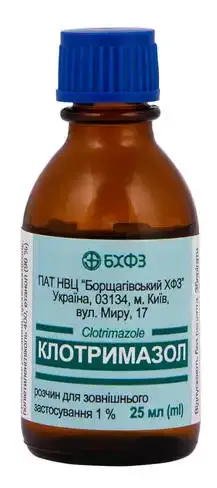
INSTRUCTION |
CLOTRIMAZOLE |
Composition:active substance: clotrimazole; 1 ml of the preparation contains clotrimazole (calculated as 100 % dry substance) – 10 mg; excipients: propylene glycol, polyethylene glycol 400, ethanol 96 %. |
| Pharmaceutical form. Topical solution. |
| Main physicochemical properties: clear, colourless or almost colourless liquid with a slightly yellowish tint. |
| Pharmacotherapeutic group. Antifungal agents for topical use. Imidazole and triazole derivatives. ATC Code D01A C01. Pharmacological properties.Pharmacodynamics. |
| Clotrimazole is an imidazole derivative and a broad-spectrum antifungal agent. Its mechanism of action involves inhibition of ergosterol synthesis, which is essential for fungal cell membrane formation, leading to disruption of membrane permeability and subsequent cell destruction. In addition, clotrimazole inhibits peroxidase activity, which further facilitates accumulation of hydrogen peroxide within the fungal cell. Hydrogen peroxide concentration increases to toxic levels, resulting in further cell destruction. Clotrimazole has a broad spectrum of activity: effective against dermatophytes and yeasts; exerts antibacterial effects against causative agents of erythrasma, staphylococci (Staphylococcus spp.) and streptococci (Streptococcus spp.). Pharmacokinetics. When applied to the skin, it penetrates into the stratum corneum and accumulates there. After topical application, only a negligible amount of the drug is absorbed through the skin. It is practically not absorbed into systemic circulation. Clinical characteristics.Indications.
|
| Contraindications. Hypersensitivity to clotrimazole and/or to any other component of the preparation. Interaction with other medicinal products and other forms of interaction. Clotrimazole inhibits the action of other topical antifungal agents, particularly amphotericin, nystatin and natamycin. The antimicrobial effect of clotrimazole is enhanced by high concentrations of propyl parahydroxybenzoate. Dexamethasone in high doses inhibits the antifungal action of clotrimazole. |
Special precautions.Clotrimazole should be used with caution if allergic reactions to any other antifungal agents have previously occurred. If irritation or other signs of hypersensitivity occur, the use of the preparation must be discontinued. The preparation must not be used in ophthalmology. Contact of the preparation with eyes should be avoided. If contact occurs, rinse eyes thoroughly with plenty of water. Do not swallow the preparation! During treatment, it is not recommended to wear clothing or footwear that do not allow air and moisture to pass through. After application, the treated area should not be covered or occlusive (airtight) dressings applied. If no improvement is observed, microbiological testing should be performed to confirm the diagnosis and rule out other causes of the disease. The preparation should be used for the entire duration of treatment, even if symptoms disappear earlier. Adherence to these recommendations helps prevent reinfection (recurrence of the disease). The preparation contains propylene glycol, which may cause skin irritation (contact dermatitis). Use during pregnancy or breastfeeding. Clinical studies on the effect of clotrimazole on fertility in women have not been conducted; however, animal studies have not shown any effect of clotrimazole on fertility. Clinical data on the use of clotrimazole during pregnancy are limited. Animal studies have not revealed any direct or indirect harmful effects in terms of reproductive toxicity. As a precautionary measure, it is advisable to avoid using clotrimazole during the first trimester of pregnancy. During treatment with clotrimazole, breastfeeding should be discontinued. Ability to affect reaction rate while driving or operating machinery. No effect. |
Method of administration and dosage.Before application, wash the skin with warm soapy water, especially between the toes, and dry thoroughly. Apply clotrimazole to affected areas 2-3 times daily and rub in gently. The amount of clotrimazole should be sufficient for even coverage of the entire affected area. For tinea pedis, application of the preparation after each washing is recommended. For treatment of fungal infections of the oral cavity, apply 10-20 drops (0.5-1 ml) of the solution to affected mucosal areas using a cotton swab or applicator 3-4 times daily. After application, it is recommended not to eat or drink for 1 hour. Treatment duration is: tinea infections – 3-4 weeks; erythrasma – 2-4 weeks; pityriasis versicolor – 1-3 weeks. Children. Since experience with use in children is lacking, the preparation is not recommended for treatment of this patient group. |
| Overdose. When used according to instructions, overdose is unlikely. Symptoms: no risk of acute intoxication, as overdose is unlikely after single topical application (application over large skin areas under conditions favouring increased absorption), or after accidental oral ingestion. If a large amount of the preparation is ingested, gastric lavage may rarely be required if a life-threatening dose was ingested within the previous hour or if visible symptoms of overdose are present: nausea, vomiting, abdominal pain, liver dysfunction. Treatment: no specific antidote exists. Discontinue use of the preparation. Gastric lavage should only be performed if adequate airway protection is ensured. Symptomatic therapy. |
Adverse reactions.Immune system. Allergic reactions, including anaphylactic/anaphylactoid reactions (anaphylactic shock, angioneurotic edema, arterial hypotension, loss of consciousness, dyspnea, urticaria). Skin and subcutaneous tissue. Redness, blistering, peeling, burning/heat sensation, stinging, local swelling, itching, rash, general irritation, pain/discomfort, dryness sensation; allergic contact dermatitis. Appearance of these symptoms requires discontinuation of treatment with the preparation. |
| Shelf life. 3 years. |
| Storage conditions. Store in a place protected from light at a temperature not exceeding 25 °C. Keep out of reach of children. Packaging. 25 ml in a bottle, 25 ml in a bottle and carton. |
| Category of release. Over-the-counter. |
| Manufacturer. Public Joint-Stock Company "Scientific and Production Center "Borshchagov Chemical and Pharmaceutical Plant". Manufacturer's name and address of place of business. Ukraine, 03134, Kyiv, Myru St., 17. |
| INSTRUCTIONS for medical use of medicinal product CLOTRIMAZOLE (CLOTRIMAZOLE) |
| Composition: Active ingredient: clotrimazole; 1 ml of the preparation contains clotrimazole (calculated as 100% dry substance) – 10 mg; Excipients: propylene glycol, polyethylene glycol 400, ethanol 96%. |
| Pharmaceutical form. Topical solution. Main physicochemical properties: transparent, colorless or almost colorless liquid with a slightly yellowish tint. |
| Pharmacotherapeutic group. Antifungal agents for local application. Imidazole and triazole derivatives. ATC code D01A C01. |
| Pharmacological properties. Pharmacodynamics. Clotrimazole is an imidazole derivative with broad-spectrum antifungal activity. Its mechanism of action involves inhibition of ergosterol synthesis, which is essential for fungal cell membrane formation, leading to disruption of membrane permeability and subsequent cell destruction. Additionally, clotrimazole inhibits peroxidase activity, which further facilitates accumulation of hydrogen peroxide within the fungal cell. The concentration of hydrogen peroxide increases to toxic levels, resulting in cell destruction. Clotrimazole has a broad spectrum of activity: it is effective against dermatophytes and yeast fungi; it also exhibits antibacterial activity against causative agents of erythrasma, staphylococci (Staphylococcus spp.), and streptococci (Streptococcus spp.). Pharmacokinetics. When applied to the skin, it penetrates into the stratum corneum and accumulates there. After topical application, only a negligible amount is absorbed through the skin. It is practically not absorbed into systemic circulation. Clinical characteristics. Indications.
|
| Contraindications. Increased sensitivity to clotrimazole and/or other components of the preparation. |
| Interaction with other medicinal products and other types of interactions. Clotrimazole inhibits the action of other topical antifungal agents, particularly amphotericin, nystatin, and natamycin. The antimicrobial effect of clotrimazole is enhanced by high concentrations of propyl paraben. Dexamethasone, in high doses, inhibits the antifungal action of clotrimazole. |
| Special precautions. Clotrimazole should be used with caution if allergic reactions to other antifungal agents were observed previously. If irritation or other manifestations of hypersensitivity occur, the use of the preparation must be discontinued. The preparation must not be used in ophthalmology. Contact of the preparation with eyes should be avoided. If contact occurs, eyes should be rinsed thoroughly with large amounts of water. Do not swallow the preparation! During treatment, wearing non-breathable clothing and footwear is not recommended. After application, the treated area should not be covered or occlusive (airtight) dressings applied. If no therapeutic effect is observed, microbiological examination should be performed to confirm the diagnosis and rule out other causes of the disease. The preparation should be used for the entire duration of treatment, even if symptoms disappear earlier. Compliance with these recommendations will help prevent reinfection (recurrence of the disease). The preparation contains propylene glycol, which may cause skin irritation (contact dermatitis). Use during pregnancy or breastfeeding. Clinical studies on the effect of clotrimazole on female fertility have not been conducted; however, animal studies did not reveal any effect of clotrimazole on fertility. The number of studies using clotrimazole during pregnancy is limited. Animal studies did not show direct or indirect harmful effects in terms of reproductive toxicity. As a precautionary measure, it is advisable to avoid using clotrimazole during the first trimester of pregnancy. During treatment with clotrimazole, breastfeeding should be discontinued. Ability to affect reaction rate when driving or operating machinery. Does not affect. |
| Method of administration and dosage. Before application, wash the skin with warm soapy water, especially interdigital areas, and dry thoroughly. Apply clotrimazole to affected areas 2–3 times daily and gently rub in. The amount of clotrimazole should be sufficient to evenly cover the entire affected area. For tinea pedis, the preparation is recommended after each washing. For treatment of fungal lesions of the oral cavity, apply 10–20 drops (0.5–1 ml) of the solution to affected mucosal areas using a cotton swab or applicator stick 3–4 times daily. After application, food and drinks should not be consumed for 1 hour. Treatment duration: Tinea infections – 3–4 weeks; Erythrasma – 2–4 weeks; Pityriasis versicolor – 1–3 weeks. |
| Children. Since experience with use in children is lacking, the preparation is not recommended for treatment in this patient group. Overdose. When used according to instructions, overdose is unlikely. Symptoms: no risk of acute intoxication, since overdose is unlikely after single topical application (use over large skin areas under conditions favoring increased absorption), or after accidental oral ingestion. Rarely, ingestion of a large amount of the preparation may require gastric lavage, if a life-threatening dose was ingested within the previous hour or if visible symptoms of overdose are present: nausea, vomiting, abdominal pain, liver dysfunction. Treatment: no specific antidote exists. Discontinue use of the preparation. Gastric lavage should only be performed if adequate airway protection is ensured. Symptomatic therapy. |
| Adverse reactions. Immune system. Allergic reactions, including anaphylactic/anaphylactoid reactions (anaphylactic shock, angioedema, arterial hypotension, fainting, dyspnea, urticaria). Skin and subcutaneous tissue. Redness, blistering, peeling, burning/heat sensation, tingling, local swelling, pruritus, rash, general irritation, pain/discomfort, dryness sensation; allergic contact dermatitis. The appearance of these symptoms requires discontinuation of treatment with the preparation. |
| Shelf life. 3 years. |
| Storage conditions. Store in a light-protected place at a temperature not exceeding 25 °C. Keep out of reach of children. Packaging. 25 ml in a bottle, 25 ml in a bottle and carton. |
| Prescription status. Over-the-counter. |
| Manufacturer. Public Joint-Stock Company "Scientific Production Center "Borshchagovskiy Chemical-Pharmaceutical Plant". Manufacturer's address and location of operations. 17 Myra Street, Kyiv, 03134, Ukraine. |