Clotrimazole
Ukraine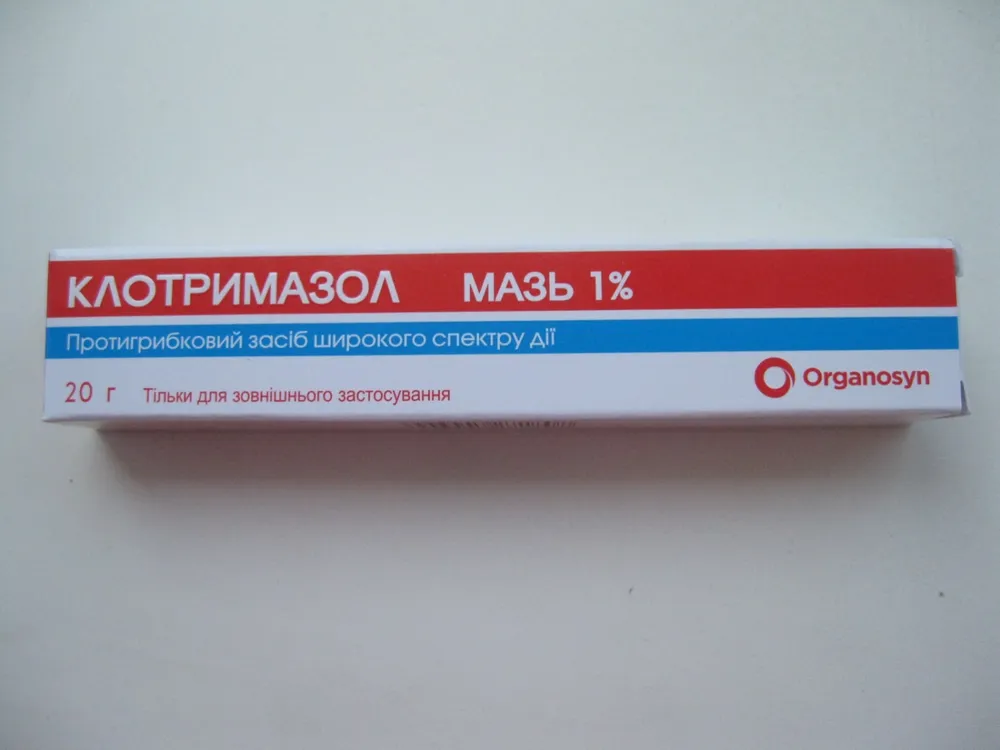
Table of Contents
INSTRUCTIONS FOR MEDICAL USE OF THE MEDICINAL PRODUCT CLOTRIMAZOLE (CLOTRIMAZOLE)
Composition:
Active substance: clotrimazole;
1 g of cream contains clotrimazole (calculated as 100 % dry substance) 10 mg;
Excipients: propylene glycol, polyethylene glycol 400, poloxamer 338, cetostearyl alcohol, cetostearyl polyethylene glycol ether.
Pharmaceutical form. Cream.
Main physicochemical properties: white cream of homogeneous consistency with a weak specific odor.
Pharmacotherapeutic group. Antifungal agents for topical use. Imidazole and triazole derivatives. Clotrimazole. ATC code D01AC01.
Pharmacological properties.
Pharmacodynamics.
An antifungal agent of the imidazole derivatives group for topical use.
The mechanism of action of clotrimazole involves inhibition of synthesis of nucleic acids, proteins, and ergosterol in fungal cells, leading to damage of the cell membrane and subsequent death of fungal cells. Active against pathogenic dermatophytes (Trichophyton spp., Epidermophyton floccosum, Microsporum spp.); yeasts and molds (Candida spp., Torulopsis spp., genus Rhodotorula); causative agents of pityriasis versicolor (Malassezia furfur) and erythrasma (Corynebacterium minutissimum); and gram-positive microorganisms (Staphylococcus spp., Streptococcus spp.).
The drug exhibits fungistatic activity and, against dermatophytes and Candida species, fungicidal effects.
Pharmacokinetics.
The drug has high penetrating ability. When applied topically, the concentration of the drug in the epidermis is higher than in the dermis and subcutaneous tissue. It is practically not absorbed into the systemic circulation.
Clinical characteristics.
Indications.
- Fungal skin infections caused by dermatophytes, yeasts, molds, and other pathogens sensitive to clotrimazole.
- Skin infections caused by Malassezia furfur (pityriasis versicolor) and Corynebacterium minutissimum (erythrasma).
Contraindications.
Hypersensitivity to clotrimazole, cetostearyl alcohol, or to any other component of the drug.
Do not use for treatment of nails or skin infections of the scalp.
Interaction with other medicinal products and other forms of interaction.
The drug may reduce the effect of other topical antifungal agents, including amphotericin, nystatin, and natamycin.
Dexamethasone in high doses inhibits the antifungal activity of the drug.
Topical application of high concentrations of propyl hydroxybenzoate enhances the antifungal activity of the drug.
Special precautions for use.
The product contains cetylstearyl alcohol, which may cause local skin reactions (e.g., contact dermatitis), and propylene glycol, which may cause skin irritation. In such cases, it is recommended to use other dosage forms of the drug that do not contain these components.
The product must not be used in ophthalmology. Contact of the product with eyes should be avoided. If contact occurs, rinse eyes thoroughly with plenty of water. The product must not be swallowed.
During treatment, it is not recommended to wear clothing or footwear that does not allow air and moisture to pass through. After application, the treated area should not be covered or covered with an occlusive (impermeable) dressing.
The product should be used for the entire prescribed duration of treatment, even if acute symptoms of the disease disappear earlier. Compliance with these recommendations will help prevent reinfection.
If irritation or other signs of hypersensitivity occur, the use of the product should be discontinued.
Use during pregnancy or breastfeeding.
Clinical studies on the effects of clotrimazole on fertility in women have not been conducted; however, animal studies have not shown any effect of clotrimazole on fertility.
The number of studies on the use of clotrimazole during pregnancy is limited. Animal studies have not revealed any direct or indirect adverse effects in terms of reproductive toxicity. As a precautionary measure, it is advisable to avoid using clotrimazole during the first trimester of pregnancy.
The product should not be applied to the breasts during breastfeeding.
Breastfeeding should be discontinued during treatment with clotrimazole.
Ability to influence reaction rate when driving or operating machinery.
No effect.
Method of Administration and Dosage
Before applying the ointment, affected skin areas should be previously cleaned (using soap with a neutral pH) and thoroughly dried. Feet should be washed with warm water and soap; the ointment should be thoroughly rubbed in, especially between the toes.
Apply a thin layer of the medication 1–3 times daily to affected skin areas and gently rub in, including a small area of surrounding healthy skin. The single dose, calculated for an area the size of the palm, corresponds to a 5 mm strip of ointment.
The total duration of treatment is:
- Dermatomycoses – 3–4 weeks;
- Erythrasma – 2–4 weeks;
- Tinea versicolor – 1–3 weeks.
If you miss a scheduled application, apply the medication as soon as you remember. However, if it is almost time for the next dose, skip the missed dose and resume your regular schedule.
Depending on the nature and severity of the condition, the physician may prescribe an individualized dosing regimen, method of application, and duration of treatment.
To ensure reliable elimination of the causative agent, treatment should be continued for approximately 2 weeks after the disappearance of subjective symptoms, depending on clinical presentation.
The patient should consult a physician for repeat microbiological testing and therapy adjustment if there is no clinical improvement within 4 weeks after initiation of treatment.
Children
There is no experience with the use of this medication in children.
Overdose
When used as directed in the section "Method of Administration and Dosage," only a negligible amount of the active substance (clotrimazole) is absorbed into the body. Therefore, the likelihood of systemic effects (effects on other organs) is extremely low.
In case of accidental ingestion of a large amount of the medication, symptoms such as dizziness, nausea, vomiting, abdominal pain, and liver dysfunction may occur.
Treatment: Discontinue use of the medication, perform gastric lavage, and administer symptomatic therapy as needed.
Side effects.
Immune system: allergic reactions, including anaphylactic/anaphylactoid reactions (anaphylactic shock, angioneurotic edema, fainting, arterial hypotension, dyspnea, and urticaria).
Skin and subcutaneous tissue: redness (erythema), blistering, peeling, burning sensation/heat, tingling, local swelling, itching, rash, general irritation, pain/discomfort, dryness sensation, allergic contact dermatitis.
Allergic skin reactions may occur in patients with hypersensitivity to cetostearyl alcohol and propylene glycol.
The appearance of these symptoms requires discontinuation of treatment with the drug.
Shelf life. 2 years.
Storage conditions.
In the original packaging at a temperature not exceeding 25 °C; do not freeze.
Keep out of reach of children.
Packaging. 25 g in a tube in a carton.
Supply category. Over-the-counter (without prescription).
Manufacturer.
Public joint-stock company "Scientific and Production Center "Borshchahivskiy Chemical and Pharmaceutical Plant".
Manufacturer's address and place of business.
17 Miru Street, Kyiv, 03134, Ukraine.