Clotrimazole
Ukraine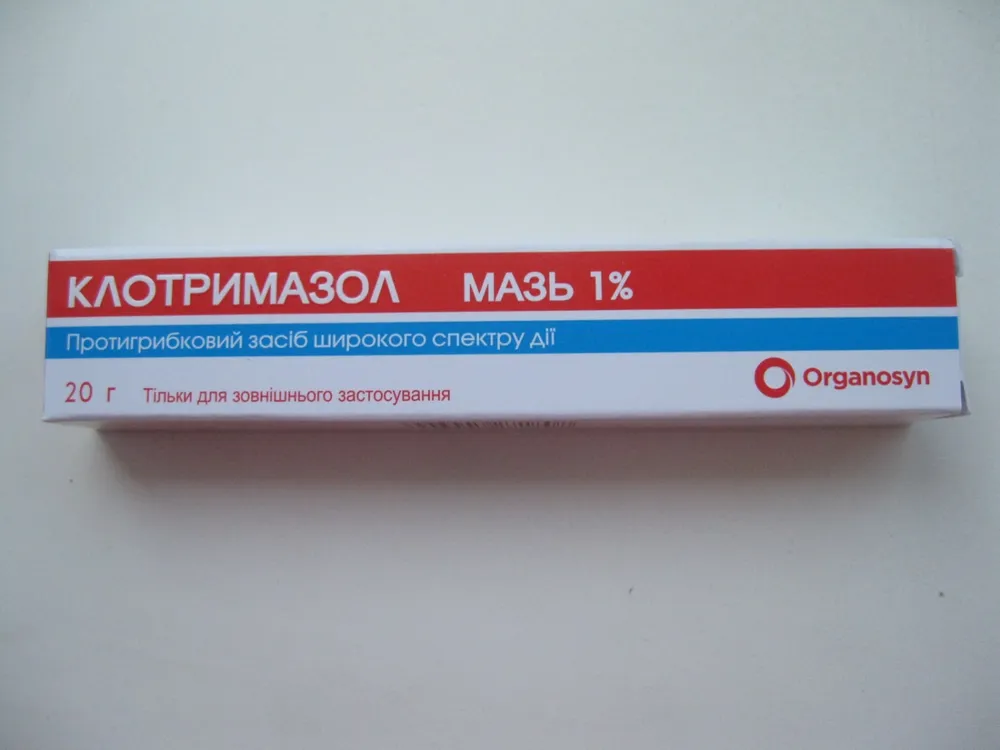
Table of Contents
INSTRUCTIONS FOR MEDICAL USE OF THE MEDICINAL PRODUCT CLOTRIMAZOLE (CLOTRIMAZOLE)
Composition:
Active substance: clotrimazole;
1 g of cream contains 10 mg of clotrimazole;
Excipients: macrogol cetostearyl ether, cetostearyl alcohol, white soft paraffin, mineral oil, propylene glycol, chlorocresol, disodium hydrogen phosphate dihydrate, flavour (Creamatest P3078), purified water.
Pharmaceutical form. Cream.
Main physicochemical properties: soft white cream.
Pharmacotherapeutic group. ATC code.
Antifungal agents for topical use. Imidazole and triazole derivatives. Clotrimazole. ATC code D01AC01.
Pharmacological properties.
Pharmacodynamics.
The antifungal mechanism of action of clotrimazole is associated with inhibition of ergosterol synthesis, leading to structural and functional damage of the fungal cytoplasmic membrane.
Clotrimazole exhibits a broad spectrum of antifungal activity in vitro and in vivo, including activity against dermatophytes, blastomycetes, hyphomycetes, and dimorphic fungi.
In experimental studies, minimum inhibitory concentrations ranged from 0.062 to 4 (-8) µg/mL of substrate. The mechanism of action of clotrimazole involves primarily fungistatic or fungicidal activity, depending on the concentration of clotrimazole at the site of infection. Effects in vitro are limited to action on proliferating fungal elements; fungal spores exhibit low susceptibility. The mechanism of action consists of inhibition of ergoster combustible synthesis, resulting in disruption and impaired function of the fungal cytoplasmic membrane.
In addition to antifungal activity, clotrimazole also acts against gram-positive microorganisms (Streptococci/Staphylococci/Gardnerella vaginalis) and gram-negative microorganisms (Bacteroides). It does not affect lactobacilli. Besides its antifungal effect, clotrimazole in vitro inhibits the multiplication of corynebacteria and gram-positive cocci, except enterococci, at concentrations of 0.5–10 µg/mL of substrate, and acts against trichomonads at a concentration of 100 µg/mL.
Resistance to clotrimazole is considered favorable in initially resistant strains of susceptible fungal species and occurs rarely. Secondary resistance develops in initially susceptible fungal species after treatment, which is observed extremely rarely.
Pharmacokinetics.
Pharmacokinetic studies have shown that after application of the cream to intact skin or skin with signs of inflammation, clotrimazole enters the human systemic circulation in minimal amounts. Peak serum concentrations of clotrimazole were below the limit of detection (0.001 µg/mL); therefore, the likelihood of systemic effects or adverse reactions with topical use of clotrimazole is very low.
Clinical characteristics.
Indications.
- Fungal infections of the skin and mucous membranes caused by dermatophytes, yeasts, molds, and other pathogens sensitive to clotrimazole.
- Skin infections caused by Malassezia furfur (pityriasis versicolor) and Corynebacterium minutissimum (erythrasma).
- Candidal vulvitis and candidal balanitis.
Contraindications.
Hypersensitivity to clotrimazole or to any of the other components of the medicinal product.
Interaction with other medicinal products and other forms of interaction.
Interactions with other medicinal products are unknown. Due to low systemic absorption following topical application, the risk of developing interactions is unlikely.
When Clotrimazole ointment is used concomitantly with latex products (e.g., condoms and diaphragms), the functional integrity of these products may be reduced due to excipients contained in the preparation (particularly stearates), which in turn may affect the safety of such products. Patients are advised to use alternative methods of contraception for at least 5 days after application of this medicinal product.
Special precautions for use.
All potentially infected areas should be treated simultaneously.
The medicinal product contains cetylstearyl alcohol and propylene glycol, which may cause local skin reactions (e.g., contact dermatitis) and skin irritation, as well as chlorocresol, which may cause allergic reactions. In such cases, it is recommended to use dosage forms that do not contain this component (solution or spray) instead of the cream.
This medicinal product contains benzyl alcohol and therefore should not be used in premature infants and newborns. Benzyl alcohol may cause allergic reactions and mild irritation at the site of application.
During treatment with this medicinal product, sexual contact should be avoided, as the infection may be transmitted to the partner. When Clotrimazole cream is used concomitantly with latex products (e.g., condoms and diaphragms), the functional integrity of these products may be reduced due to excipients contained in Clotrimazole cream (particularly stearates), which may consequently affect the safety of these products. This effect is temporary and occurs only during the period of treatment. Avoid contact with the eyes. Do not swallow.
The patient should consult a physician: if hypersensitivity to any antifungal agents or imidazole derivatives is known; in case of a history of sexually transmitted infections in the patient or their sexual partner; if the patient develops high body temperature (38 °C or higher), lower abdominal pain, dysuria, back pain, purulent vaginal discharge with unpleasant odor, vulvar or vaginal ulcers, redness, diarrhea, nausea, vomiting, vaginal bleeding accompanied by shoulder pain.
Warning regarding treatment of candidal vulvitis in women.
Treatment should not be performed during menstruation. Treatment should be completed before the onset of menstruation.
Do not use tampons, intravaginal douches, spermicides, or other vaginal products during treatment with this medicinal product.
Use during pregnancy or breastfeeding.
Pregnancy.
Data on the use of clotrimazole in pregnant women are limited. Animal studies have shown reproductive toxicity of clotrimazole when administered orally at high doses. Since systemic exposure to clotrimazole after topical application is low, harmful effects on reproductive function are not expected. Clotrimazole may be used during pregnancy, but only under medical supervision.
Breastfeeding period.
There are no data on the excretion of clotrimazole into breast milk. However, systemic absorption after topical application is known to be minimal and is unlikely to result in systemic effects. Clotrimazole cream may be used during breastfeeding. If applied locally to the nipple area, the breasts should be washed before breastfeeding.
Fertility.
Clinical studies on the effect of clotrimazole on female fertility have not been conducted; however, animal studies have not revealed any effect on fertility.
Ability to affect reaction speed when driving or operating machinery.
The medicinal product has no effect or has a negligible effect on the ability to drive vehicles or operate machinery.
Method of Administration and Dosage
For adults, apply the ointment 1–3 times daily. Apply a thin layer of ointment in a strip 0.5 cm long to an area of skin the size of the palm and rub in gently.
For candidal vulvitis and candidal balanitis in adults, apply a thin layer of ointment to the affected areas (external genital organs and perineum in women or glans penis and foreskin in men) and rub in gently. Treatment of these conditions requires simultaneous treatment of both partners.
To ensure reliable eradication of the causative agent and depending on symptoms, treatment should continue for approximately 2 weeks after the disappearance of subjective symptoms.
The total duration of treatment is:
- Dermatomycoses – 3–4 weeks;
- Erythrasma – 2–4 weeks;
- Pityriasis versicolor – 1–3 weeks;
- Candidal vulvitis and candidal balanitis – 1–2 weeks.
The patient must inform the physician if there is no improvement after 4 weeks of treatment.
Children.
There is no experience with the use of the drug in children.
Overdose.
There is no risk of acute intoxication, as overdose is unlikely following a single vaginal dose or topical application to the skin (even over large skin areas under conditions favoring enhanced absorption), as well as after accidental oral ingestion. No specific antidote exists.
After accidental oral ingestion, gastric lavage may rarely be required if a life-threatening dose was ingested within the previous hour or if visible signs of overdose are present (e.g., dizziness, nausea, or vomiting). Gastric lavage should be performed only if adequate airway protection is ensured.
Adverse reactions.
The adverse reactions listed below were identified during post-marketing use of Clotrimazole. Since data on these adverse effects are based on spontaneous reports, the exact frequency of their occurrence cannot be determined.
The following adverse effects may occur during use of the medicinal product:
- Immune system disorders: anaphylactic reaction, angioneurotic edema, hypersensitivity, allergic reactions (fainting, arterial hypotension, dyspnea, urticaria);
- Skin and subcutaneous tissue disorders: erythema (redness), blisters, malaise, discomfort/pain, swelling, irritation, desquamation, pruritus, rash, paresthesia, burning/feeling of warmth, contact dermatitis, paresthesia;
- General disorders and administration site reactions: irritation at application site, reaction at application site, swelling, pain.
Reporting of adverse reactions after marketing authorization of the medicinal product is of great importance. It enables ongoing monitoring of the benefit-risk balance of the medicinal product. Healthcare and pharmaceutical professionals, as well as patients or their legal representatives, should report all suspected adverse reactions and lack of efficacy through the automated pharmacovigilance information system at the following link: https://aisf.dec.gov.ua
Shelf life.
4 years.
Storage conditions.
Store in the original packaging, protected from light, in a place inaccessible to children, at a temperature not exceeding 30 °C.
Packaging.
20 g in an aluminum tube, in a cardboard carton.
Supply category. Over-the-counter (without prescription).
Manufacturer.
Encube Ethicals Private Limited, India.
Manufacturer's address and location of business activity.
Plot № C-1, Madkaim Industrial Estate, Madkaim, Post Mardol, Ponda, Goa – 403 404, India.