Clofelin-zdorovya
Ukraine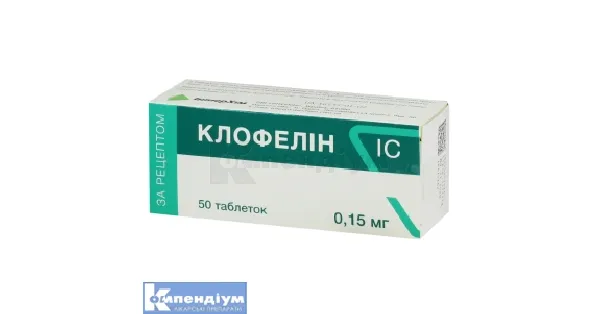
Table of Contents
INSTRUCTIONS FOR MEDICAL USE|CONSUMPTION| OF THE MEDICINAL PRODUCT CLOPHELIN-ZDOROVYE (CLOPHELIN-ZDOROVYE)
Composition:
Active substance: clonidine;
1 tablet|tablet| contains|contains| clonidine| hydrochloride 150 mcg (0.15 mg);
Excipients: lactose monohydrate, magnesium stearate|, maize starch.
Pharmaceutical form. Tablets|tablets|.
Main physico-chemical|physico-chemical| properties: tablets|tablets| white or white with a yellowish tint, flat cylindrical shape, bevelled edges.
Pharmacotherapeutic group. Antihypertensive agents. Antiadrenergic agents with central mechanism of action. Imidazoline receptor agonists. ATC code C02AC01.
Pharmacological Properties.
Pharmacodynamics. An antihypertensive agent acting at the level of neurohumoral regulation of vascular tone.
After crossing the blood-brain barrier, clonidine selectively stimulates α2-adrenergic receptors in the nuclei of the vasomotor center of the medulla oblongata, thereby inhibiting sympathetic impulses from the central nervous system, resulting in vasodilation and reduction of arterial pressure. The reduction in sympathetic activity is accompanied by decreased levels of catecholamines (particularly norepinephrine) in plasma and urine. Clonidine does not directly affect catecholamine synthesis; instead, it suppresses the release of norepinephrine from nerve endings via a negative feedback mechanism due to stimulation of central α2-adrenergic receptors.
Clonidine is an agonist of imidazoline receptors.
The use of clonidine leads to a reduction in heart rate, systolic and diastolic blood pressure, as well as systemic vascular resistance. Cardiac output and stroke volume are slightly reduced. Long-term use of clonidine reduces myocardial hypertrophy and improves left ventricular function.
Clonidine exerts a sedative and moderate analgesic effect. Due to its central action, it can alleviate somatic and vegetative symptoms of opioid and alcohol withdrawal. Clonidine reduces intraocular pressure by decreasing aqueous humor secretion and improving its outflow. Prolonged use may be associated with fluid retention in the body.
Pharmacokinetics. After oral administration, the antihypertensive effect begins to manifest within 30–60 minutes. The maximum effect develops within 2–4 hours and lasts approximately 5–12 hours. The duration of action may extend to 24–36 hours in some patients. It is well absorbed from the gastrointestinal tract, independent of food intake, with peak plasma concentration reached within 1.5–2.5 hours. Bioavailability during long-term use is approximately 65%. Plasma protein binding ranges from 20–40%. It is metabolized in the liver (approximately 50% of the absorbed dose). The elimination half-life is 12–16 hours with normal renal function, increasing up to 41 hours in cases of impaired renal function. Clonidine readily crosses histohematogenous barriers, including the blood-brain and placental barriers, and penetrates into breast milk. It is excreted by the kidneys (40–60%) and through the intestine (20%). It is practically not removed by hemodialysis (up to 5%).
Clinical characteristics.
Indications. Hypertensive crises (except hypertensive crisis in pheochromocytoma); rarely – for the treatment of arterial hypertension (as part of combination therapy); opioid withdrawal syndrome (as part of combination therapy).
Contraindications. Hypersensitivity to clonidine or any of the excipients; arterial hypotension, cardiogenic shock, AV-conduction disturbances (second- and third-degree atrioventricular block), marked bradycardia, sick sinus syndrome, severe ischemic heart disease, recent myocardial infarction, cerebrovascular disorders, pronounced cerebral atherosclerosis, severe peripheral circulatory disorders, peripheral arterial occlusive diseases (including Raynaud's syndrome), depressive states (including in history), concomitant use of tricyclic antidepressants, severe renal function impairment, alcohol intake.
Interaction with other medicinal products and other forms of interaction. When used concomitantly with central nervous system depressants (tranquilizers, sedatives), an enhanced sedative effect is possible, as well as mutual potentiation of CNS depression and development of depressive disorders. The antihypertensive effect of clonidine is reduced by corticosteroids, tricyclic antidepressants, anorexigenic agents (except fenfluramine), sympathomimetics, nonsteroidal anti-inflammatory drugs, and nifedipine; enhanced by anesthetics, vasodilators, diuretics, and antihistamines. β-adrenoblockers and cardiac glycosides increase the risk of bradycardia or (in individual cases) development of atrioventricular block. Concomitant use with atenolol or propranolol results in additive hypotensive effect, sedative action, and dry mouth. Hormonal contraceptives taken orally may enhance the sedative effect of the drug. Clonidine may reduce the efficacy of levodopa and piribedil in patients with Parkinson's disease. Clonidine may increase cyclosporine concentration and blood glucose levels due to reduced insulin secretion, which should be considered when used concomitantly with insulin. Do not administer together with α-adrenoblockers. Concomitant use with antiarrhythmics, phenothiazine derivatives, narcotic analgesics, noradrenaline, reserpine, cardiac glycosides, oral hypoglycemic agents, and antacids is not recommended.
Special precautions in use. During treatment with the drug, consumption of alcoholic beverages is prohibited.
Sudden discontinuation of the drug may lead to withdrawal syndrome: increased blood pressure, anxiety, headache, nausea; therefore, discontinuation should be gradual over 1–2 weeks, taking into account concomitant therapy with other medicinal products. If withdrawal syndrome develops, immediately resume the drug and subsequently discontinue it gradually, replacing it with other antihypertensive agents. To prevent withdrawal syndrome, the drug should not be prescribed to patients who do not have conditions for regular use.
If temporary discontinuation of treatment is required during combined use of clonidine and β-adrenoreceptor blockers, the β-blocker should be discontinued first to prevent sympathetic hyperreactivity, followed by gradual discontinuation of clonidine, especially if it was used in high doses.
Clonidine should be prescribed with caution to patients with diabetes mellitus, as it may mask symptoms of hypoglycemia and reduce insulin secretion.
Use with caution in elderly patients due to possible increased sensitivity to the drug; in patients with renal insufficiency, delayed elimination of the drug is possible. Transient increase in growth hormone concentration may occur. Clonidine use may lead to decreased and suppressed salivation, promoting development of caries, periodontitis, and oral candidiasis.
During clonidine therapy, regular monitoring of blood pressure is recommended. Caution is advised during prolonged physical exertion, especially in upright position and hot weather, due to risk of orthostatic reactions.
The drug should be used cautiously in patients with polyneuropathy or constipation.
Patients should be warned that the sedative effect of the drug is enhanced when used concomitantly with barbiturates or other sedative drugs.
Patients wearing contact lenses should be informed that decreased secretion of lacrimal glands may occur during treatment.
If a patient has intolerance to certain sugars, consultation with a physician is required before taking this medicinal product.
Use in pregnancy or lactation. The drug is contraindicated during pregnancy. If use is necessary during lactation, breastfeeding should be discontinued.
Ability to influence reaction rate when driving vehicles or operating machinery. During therapy with the drug, potentially hazardous activities requiring increased attention and rapid psychomotor reactions should be avoided.
Method of administration and dosage. Administered orally, with water, regardless of food intake. Dosage must be strictly individualized.
Arterial hypertension. Initial dose is 75 mcg (using clonidine preparations of different strengths) twice daily. If necessary, the dose may be gradually increased under physician supervision to an effective therapeutic dose, typically 150 mcg 2–3 times daily. Single doses exceeding 300 mcg may be prescribed only in exceptional cases and, if possible, under hospital conditions.
Duration of treatment is determined individually by the physician depending on disease course, clinical efficacy, and drug tolerability.
Hypertensive crisis. 150–300 mcg sublingually (in absence of pronounced dry mouth).
Withdrawal syndrome. Administered in hospital setting at a daily dose of 300–750 mcg, divided into 4–6 doses, with daily monitoring of blood pressure and pulse rate.
Children. The drug is contraindicated for use in pediatric practice.
Overdose. Symptoms. Drowsiness, miosis (marked pupil constriction), bradycardia, intractable vomiting, xerostomia, respiratory depression (up to apnea), impaired consciousness, collapse, decreased or increased blood pressure, widened QRS complex, hypothermia, possible slowing of atrioventricular conduction, and early repolarization syndrome.
Treatment. Symptomatic therapy (fluid infusion; in case of marked central nervous system depression or apnea – intravenous naloxone 2–4 mg, repeated if necessary). Atropine sulfate should be used for symptomatic bradycardia. Tolazoline may be used as a specific antidote: 1 mg tolazoline intravenously or 50 mg orally neutralizes the effect of 600 mcg clonidine.
Adverse Reactions
Central nervous system: increased fatigue, drowsiness, slowed psychomotor reactions, anxiety, nervousness, depression, vivid or nightmares, dizziness, asthenia, transient confusion, perception disturbances, hallucinations, delirium, headache, paresthesia, tremor, sleep disorders, including insomnia.
Cardiovascular system: bradycardia, tachycardia, orthostatic hypotension, congestive heart failure, ECG changes (sinus node block, nodal bradycardia, high-degree AV block, arrhythmias), palpitations, syncope. Cases of sinus bradycardia and AV block have been reported both with concomitant use of cardiac glycosides and without them, Raynaud's syndrome (pallor, cold extremities).
Gastrointestinal system: dry mouth, decreased appetite, nausea, vomiting, constipation, reduced gastric secretion, anorexia, abdominal pain, pseudo-obstruction of the colon, pain in salivary glands including parotid gland, parotitis, mild transient disturbances in liver function tests, hepatitis.
Skin and subcutaneous tissue: pallor/hyperemia of the skin, urticaria, angioneurotic edema, alopecia.
Musculoskeletal system: intermittent cramps of calf muscles, myalgia, arthralgia.
Allergic reactions: hypersensitivity reactions including skin rashes, pruritus; with sublingual administration (in hypertensive crisis) – mucosal edema, breathing difficulties.
Respiratory system: dryness of nasal mucosa, breathing difficulties.
Visual system: accommodation disorders, blurred vision, decreased lacrimation, dry eyes, burning sensation in eyes.
Other: thrombocytopenia, transient increase in serum glucose and creatine phosphokinase levels, sodium and water retention manifesting as lower limb edema, weight gain, nasal congestion, nocturia, urinary retention, erectile dysfunction, gynecomastia in males, fever, malaise, weakly positive Coombs test, increased sensitivity to alcohol. Upon abrupt discontinuation – withdrawal syndrome (sudden increase in blood pressure, nervousness, headache, nausea).
Shelf life. 4 years.
Storage conditions. Store in original packaging at a temperature not exceeding 25 °C. Keep out of reach of children.
Packaging. Tablets | tablets | No. 10x3, No. 30 in blister pack in a box, No. 30 in blister pack.
Prescription category. Prescription only.
Manufacturer. LIMITED LIABILITY COMPANY "CORPORATION "ZDOROVYA".
Manufacturer's address and location of business activity. 22, Shevchenka Street, Kharkiv, Kharkiv region, 61013, Ukraine.