Clonidine-darnitsa
Ukraine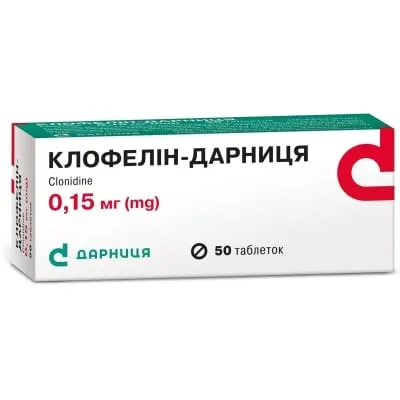
Table of Contents
INSTRUCTION FOR MEDICAL USE OF THE MEDICINAL PRODUCT Clophelin-Darnitsa (Clophelin-Darnitsa)
Composition:
Active substance: clonidine;
1 tablet contains clonidine hydrochloride (clopheline) 150 mcg (0.15 mg);
Excipients: lactose monohydrate, potato starch, magnesium stearate.
Pharmaceutical form. Tablets.
Main physicochemical properties: white-colored, flat cylindrical tablets with bevel and score line.
Pharmacotherapeutic group. Antihypertensive agents. Central-acting antiadrenergic agents. Imidazoline receptor agonists. ATC code C02AC01.
Pharmacological properties.
Pharmacodynamics.
Clonidine is a centrally-acting antihypertensive agent and a selective agonist of postsynaptic α2-adrenoceptors of adrenergic neurons. It reduces the tone of the sympathetic division of the nervous system. It does not affect catecholamine synthesis but decreases the release of norepinephrine from nerve endings via feedback inhibition resulting from stimulation of α2-adrenoceptors. As a result of this action, total peripheral vascular resistance is reduced, heart rate and cardiac output are decreased, and arterial blood pressure is lowered. In addition to its central action, clonidine may act as an agonist of peripheral postsynaptic α1-adrenoceptors in blood vessels, which in some cases may manifest as a slight increase in arterial blood pressure at the beginning of treatment. The drug increases renal blood flow and slightly reduces cerebral blood flow. It lowers intraocular pressure, has sedative and analgesic effects, reduces symptoms of opioid and alcohol withdrawal, and alleviates feelings of unexplained fear.
Pharmacokinetics.
Absorption after oral administration is rapid. Bioavailability during long-term use is approximately 65%. Time to reach maximum plasma concentration (Tmax) after oral administration is 1.5–2.5 hours. Plasma protein binding ranges from 20% to 40%. The drug readily and rapidly penetrates the blood-brain barrier, placenta, and into breast milk.
It is metabolized in the liver (approximately 50% of the absorbed dose). Excretion occurs via the kidneys (40–60%) and through the intestine (20%). Elimination half-life (T1/2) is 12–16 hours; in case of impaired renal function, it may extend up to 41 hours.
Clinical characteristics.
Indications.
Hypertensive crisis (except hypertensive crisis in pheochromocytoma); rarely for the treatment of arterial hypertension (as part of combination therapy); opioid withdrawal syndrome (as part of combination therapy).
Contraindications.
Hypersensitivity to clonidine or to any other component of the medicinal product.
Arterial hypotension.
Cardiac rhythm disorders – sinus node dysfunction, marked bradyarrhythmia, second- and third-degree atrioventricular block.
Cardiogenic shock. Recent myocardial infarction.
Severe ischemic heart disease.
Marked cerebral atherosclerosis. Cerebrovascular disorders due to arteriosclerosis.
Obliterative peripheral arterial diseases. Severe peripheral circulatory disorders. Raynaud's syndrome.
Renal function impairment.
Depressive disorders (including in medical history), concomitant use of tricyclic antidepressants.
Galactose intolerance, lactase deficiency, glucose-galactose malabsorption syndrome.
Alcohol consumption.
Interaction with other medicinal products and other forms of interaction.
When used concomitantly with medicinal products that depress the central nervous system (including ethanol), mutual enhancement of central nervous system depression and development of depressive disorders are possible. Cases of acute delirium have been reported with concomitant use of fluphenazine and clonidine. Symptoms disappeared upon discontinuation of clonidine and reappeared upon resumption of treatment.
The hypotensive effect of clonidine is reduced by corticosteroids, tricyclic antidepressants, anorexigenic agents (except fenfluramine), sympathomimetics, nonsteroidal anti-inflammatory drugs, nifedipine, and nonselective α-adrenergic blockers (including phentolamine, tolazoline – due to blockade of α2-adrenergic receptors); enhanced by vasodilators, diuretics, antihistamines, and antipsychotic agents (chlorpromazine, haloperidol).
β-adrenergic blockers, calcium channel blockers, and cardiac glycosides increase the risk of bradycardia or (in individual cases) may lead to development of atrioventricular block. The risk of withdrawal syndrome increases with concomitant use of β-blockers, and the risk of development or worsening of peripheral vascular disorders also increases. Cases of severe bradycardia have been reported with concomitant use of clonidine and diltiazem, leading to hospitalization and requirement for cardiac pacing.
Concomitant administration with antiarrhythmic agents, phenothiazine derivatives, narcotic analgesics, norepinephrine, reserpine, cardiac glycosides, oral hypoglycemic agents, and antacids is not recommended.
Concomitant use with atenolol and propranolol may result in additive hypotensive effects, sedation, and dry mouth.
Hormonal contraceptives taken orally may enhance the sedative effect of the medicinal product.
Clonidine may reduce the efficacy of levodopa and piribedil in patients with Parkinson's disease.
Clonidine may increase cyclosporine concentration, as well as blood glucose concentration due to reduced insulin secretion, which should be considered when used concomitantly with insulin.
Special precautions for use
Alcoholic beverages are contraindicated during treatment with clonidine.
Abrupt discontinuation of the drug may lead to withdrawal syndrome (elevated arterial pressure, nervousness, headache, nausea). Therefore, discontinuation of the drug should be carried out gradually over 1-2 weeks, taking into account concomitant therapy with other medicinal products.
Withdrawal syndrome may develop 18–72 hours after the last dose of the drug. If withdrawal syndrome occurs, immediate resumption of the drug is required, followed by gradual tapering and replacement with other antihypertensive agents. Cases of hypertensive encephalopathy, cerebrovascular disorders, and fatal outcomes have been reported following abrupt discontinuation of the drug. The likelihood of such a reaction increases with high-dose therapy or concomitant use of β-blockers; therefore, special caution is recommended in such cases. To prevent withdrawal syndrome, the drug should not be prescribed to patients who do not have conditions for its regular use.
If temporary discontinuation of treatment is required during combined use of clonidine and β-adrenergic blockers, the β-blocker should be discontinued first to prevent sympathetic hyperreactivity, followed by gradual tapering of clonidine, especially if it has been used in high doses.
Use with caution in patients with polyneuropathy or constipation.
Patients should be warned that the sedative effect of the drug is enhanced when used concomitantly with barbiturates or other sedative medicinal products.
Use with caution in patients with diabetes mellitus, as clonidine may mask symptoms of hypoglycemia and reduce insulin secretion.
Use with caution in elderly patients – increased sensitivity to the drug is possible; in patients with renal impairment – delayed elimination of the drug may occur. Transient increase in somatotropin concentration is possible. Use of clonidine may lead to reduced and suppressed salivation, promoting the development of dental caries, periodontosis, and oral candidiasis.
Ineffective in pheochromocytoma.
Administration of Clophelin-Darnytsia may trigger an acute attack of porphyria and is considered dangerous for patients with porphyria.
Patients who wear contact lenses should be aware that the drug reduces tear production.
During treatment with Clophelin-Darnytsia, regular monitoring of arterial pressure is recommended. Caution is advised during prolonged physical exertion, especially in the upright position and in hot weather, due to the risk of orthostatic reactions. A weakly positive Coombs' test reaction may develop.
The drug contains lactose. Patients with rare hereditary problems of galactose intolerance, lactase deficiency, or Lapp-type glucose-galactose malabsorption should not take this medicinal product.
Use during pregnancy or breastfeeding
Data on the use of clonidine in pregnant women are limited. Clonidine should not be used during pregnancy, especially during the first trimester, unless the expected benefit to the mother outweighs the potential risk to the fetus. The drug should be used during pregnancy only under medical supervision. Careful monitoring of both mother and child is required during clonidine therapy.
During pregnancy, oral formulations of clonidine are preferred; intravenous administration should be avoided.
Clonidine crosses the placental barrier and may reduce fetal heart rate. A postpartum transient increase in arterial pressure in newborns cannot be excluded.
Preclinical studies do not indicate a direct or indirect harmful effect on reproductive function.
If use of the drug is necessary, breastfeeding should be discontinued.
Ability to affect reaction rate when driving or operating machinery
During treatment, patients should refrain from driving vehicles or engaging in potentially hazardous activities requiring increased attention and rapid psychomotor reactions.
Method of Administration and Dosage
Administer orally to adults. Take tablets after meals, swallowing with a small amount of liquid. The dosage of Clonidine-Darnytsia is individually determined by a physician for each patient.
Arterial hypertension. Initiate therapy with low doses. In mild to moderate arterial hypertension, start with 75 mcg twice daily. If necessary, the single and daily dose may be gradually increased as directed by a physician. The average dosage is 75–150 mcg (1/2–1 tablet) 2–3 times daily. To achieve a 75 mcg dose, the tablet should be split in half along the scored line.
Single doses of clonidine exceeding 300 mcg may be administered only in exceptional cases and, if possible, under inpatient conditions.
The duration of treatment is determined individually by the physician, depending on the course of the disease, the clinical effect achieved, and the drug's tolerability.
Hypertensive crisis. Administer 150–300 mcg (1–2 tablets) sublingually (provided there is no pronounced dry mouth).
Withdrawal syndrome. Administer in a hospital setting with daily monitoring of arterial pressure and pulse rate. For this purpose, Clonidine-Darnytsia should be administered at a daily dose of 300–750 mcg, divided into 4–6 doses.
Children.
The drug is contraindicated in children.
Overdose.
Symptoms: apnea, respiratory depression, miosis (marked pupillary constriction), hypothermia, somnolence, disturbances of consciousness including coma, collapse, QRS complex widening, possible AV conduction slowing and early repolarization syndrome, a sharp drop in arterial pressure, orthostatic reactions, bradycardia, periodic vomiting, xerostomia. Paradoxical increase in arterial pressure is possible.
Treatment. In case of overdose symptoms, discontinue the drug and provide symptomatic therapy. As a specific antidote, unithiol (dimercaptopropanesulfonate) and sodium thiosulfate may be used. Hemodialysis is ineffective.
Adverse reactions.
Eye disorders: decreased tear production, dry eyes, accommodation disorders, blurred vision, burning sensation in the eyes.
Respiratory, thoracic and mediastinal disorders: dryness of nasal mucosa, nasal congestion, breathing difficulties.
Gastrointestinal disorders: dryness of oral mucosa, decreased appetite, anorexia, nausea, vomiting, pain in salivary glands (including parotid gland), parotitis, decreased gastric secretion, abdominal pain, constipation, pseudo-obstruction of the large intestine, mild transient disturbances in liver function tests, hepatitis.
Renal and urinary system disorders: frequent – erectile dysfunction; frequency not known – decreased libido, micturition disorders and urinary retention, nocturia.
Nervous system disorders: dizziness, headache, depression, sedation, asthenia, weakness, anxiety, excitement, sleep disturbances, including somnolence/insomnia, increased fatigue, slowing of mental and motor reaction speed; paresthesia, perception disturbances, hallucinations, delirium, nightmares, nervousness, confusion, tremor.
Cardiovascular system disorders: orthostatic hypotension, "hemitonous crisis" – sudden transient decrease in arterial pressure followed by a sharp increase at the beginning of treatment, congestive heart failure, syncope, sinus bradycardia, arrhythmias including bradyarrhythmia, tachycardia, AV block, palpitations, Raynaud's syndrome (pallor, cold extremities). Cases of sinus bradycardia and AV block have been reported both with concomitant use of cardiac glycosides and without them.
Blood and lymphatic system disorders: thrombocytopenia.
Immune system disorders: hypersensitivity reactions including urticaria, angioedema. Very rarely with sublingual administration (during hypertensive crisis) – mucosal edema, breathing difficulties.
Skin and subcutaneous tissue disorders: itching, pallor, hyperemia, skin rash (including urticaria), alopecia.
Musculoskeletal and connective tissue disorders: intermittent calf muscle cramps, myalgia, arthralgia.
Reproductive system and breast disorders: decreased potency and gynecomastia in males.
Laboratory findings: hyperglycemia, changes in liver function tests, increased serum creatine phosphokinase levels, weakly positive Coombs test.
Other: sodium and water retention manifested as edema of feet and calves, weight gain, fever, malaise, increased sensitivity to alcohol.
Upon abrupt discontinuation (withdrawal syndrome): arterial hypertension (5–20%), angina pectoris, anxiety or tension, nervousness, headache, hypersalivation, nausea, vomiting, rapid heartbeat. Trembling of hands and fingers, sweating. Stomach cramps, sleep disturbances.
Shelf life. 4 years.
Storage conditions.
Store in the original packaging, out of reach of children, at a temperature not exceeding 25 °C.
Packaging.
10 tablets in a blister pack; 5 blisters per carton.
Prescription status. Prescription only.
Manufacturer. JSC "Pharmaceutical company "Darnytsia".
Manufacturer's address and place of business.
13, Boryspilska Street, Kyiv, 02093, Ukraine.