Climen®
Ukraine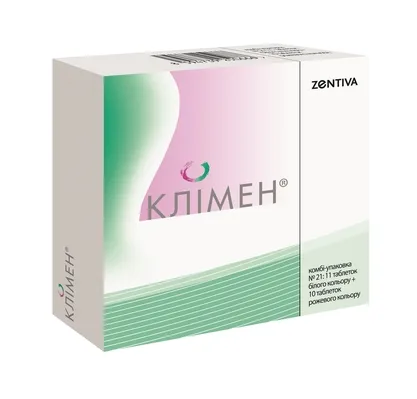
Table of Contents
INSTRUCTION for medical use of the medicinal product KLIEN® (CLIMEN®)
Composition:
Active substances: estradiol valerate, cyproterone acetate;
1 coated tablet, white, contains 2 mg of estradiol valerate; 1 coated tablet, pink, contains 2 mg of estradiol valerate and 1 mg of cyproterone acetate;
Excipients: lactose monohydrate, maize starch, povidone 25, talc, magnesium stearate, sucrose, povidone 90, macrogol 6000, calcium carbonate, montan glycol wax, glycerol 85%, titanium dioxide (E 171), yellow iron oxide (E 172), red iron oxide (E 172).
Pharmaceutical form. Coated tablets.
Main physicochemical properties: white coated tablets and pink coated tablets.
Pharmacotherapeutic group. Sex gland hormones. Estrogen-progestogen combinations.
ATC code G03C A53.
Pharmacological properties.
Pharmacodynamics.
The medicinal product Climene® contains estradiol valerate, an estrogen and a precursor of 17β-estradiol. The active substance—synthetic 17β-estradiol—is chemically and biologically identical to endogenous human estradiol; it compensates for the reduced estrogen production in menopausal women and alleviates associated symptoms.
Estrogens prevent bone mass loss in the postmenopausal period and after oophorectomy.
Cyproterone acetate, added during the second phase of treatment, is a synthetic derivative of hydroxyprogesterone with progestogenic, antigonadotropic, and antiandrogenic properties.
Since estrogens promote endometrial growth, unopposed estrogen therapy increases the risk of endometrial hyperplasia and cancer. Adding a progestogen significantly reduces the risk of estrogen-induced endometrial hyperplasia in women with an intact uterus.
Osteoporosis prevention
Estrogen deficiency during menopause is associated with increased bone remodeling rate and loss of bone mass.
The effect of estrogens on bone mineral density is dose-dependent. Effective protection is maintained throughout the treatment period. After discontinuation of hormone replacement therapy (HRT), bone mass is lost at the same rate as in untreated women.
Results from the Women's Health Initiative (WHI) study and meta-analyses of other trials indicate that HRT, used alone or in combination with a progestogen, reduces the risk of hip, vertebral, and other osteoporosis-related fractures in predominantly healthy women. HRT may also prevent fractures in women with low bone mineral density and/or confirmed osteoporosis, although data in this regard are limited.
According to a French epidemiological cohort study, a cumulative dose-dependent association has been identified between the use of cyproterone acetate and meningioma. This study was based on data from the French national health insurance database (CNAM) and included a population of 253,777 women using cyproterone tablets at doses of 50–100 mg. The incidence of meningioma requiring surgical or radiation treatment was compared between women exposed to high cumulative doses of cyproterone acetate (≥3 g) and those with minimal exposure (<3 g). The study demonstrated a cumulative dose-response relationship.
| Total dose of cyproterone acetate |
Incidence rate (per 100,000 person-years) |
Relative risk [95% confidence interval (CI)] |
| Exposed (<3 g) |
4.5/100,000 |
a |
| Exposed ≥3 g |
23.8/100,000 |
6.6 [4.0–11.1] |
| From 12 to 36 g |
26/100,000 |
6.4 [3.6–11.5] |
| From 36 to 60 g |
54.4/100,000 |
11.3 [5.8–22.2] |
| More than 60 g |
129.1/100,000 |
21.7 [10.8–43.5] |
a Adjusted to the age-dependent estrogen level. For example, a cumulative dose of 12 g may correspond to one year of treatment with a daily dose of 50 mg administered for 20 days per month.
Pharmacokinetics.
After oral administration, cyproterone acetate and estradiol valerate are rapidly and completely absorbed. During absorption and first-pass metabolism in the liver, estradiol valerate is converted into natural estradiol. Maximum plasma concentrations of both active substances are reached within 1–3 hours. Estrogen levels increase significantly over approximately 24 hours. Cyproterone acetate concentrations decline in a biphasic manner, with elimination half-lives of 3–4 hours and 2–4 days, respectively. With daily regular administration, accumulation of the minimum plasma concentration of estradiol is not expected, whereas the minimum plasma concentration of cyproterone acetate may increase 2–4 fold.
Both active substances are predominantly excreted in metabolized form: 30% of cyproterone acetate is excreted via the kidneys and 70% via the liver, with a half-life of 2 days; 90% of estradiol is excreted in urine and 10% in feces, with a half-life of 1 day.
Bioavailability
After oral administration, cyproterone acetate exhibits complete bioavailability. Following complete conversion from estradiol valerate, the bioavailability of estradiol is approximately 3%.
Clinical characteristics.
Indications.
Hormone replacement therapy (HRT) for the treatment of peri- and postmenopausal estrogen deficiency symptoms.
Prevention of postmenopausal osteoporosis in women at high risk of fractures who are intolerant of or for whom other approved osteoporosis-preventing medicinal products are contraindicated.
Experience with the use of Climene® in women aged 65 years and older is limited.
Contraindications.
˗ Hypersensitivity to the active substances or to any of the excipients;
˗ current or past history of breast cancer or suspected breast cancer;
˗ established or suspected estrogen-dependent malignant neoplasms (including endometrial cancer);
˗ undiagnosed genital bleeding;
˗ untreated endometrial hyperplasia;
˗ current or past venous thromboembolism (including deep vein thrombosis, pulmonary embolism);
˗ established thrombophilic disorders (e.g., protein C, protein S or antithrombin deficiency; see section "Special precautions");
˗ current or recent arterial thromboembolism (including angina pectoris, myocardial infarction, stroke);
˗ acute liver disease or history of liver disease until liver function tests have returned to normal;
˗ porphyria;
˗ pregnancy and lactation;
˗ current or past history of liver tumors (benign or malignant);
˗ severe hypertriglyceridemia;
˗ otosclerosis with deterioration during previous pregnancies;
˗ high risk of venous or arterial thromboembolism;
- meningioma or history of meningioma.
Interaction with other medicinal products and other forms of interaction.
Oral contraceptives should be discontinued when initiating therapy with Climene®.
Substances that increase sex hormone clearance (reduce effect via enzyme induction).
Concomitant use of enzyme-inducing substances, particularly cytochrome P450 enzymes, may enhance the metabolism of estrogens (and progestogens). Such substances include anticonvulsants (e.g., phenobarbital, phenytoin, primidone, carbamazepine) and antibacterial agents (e.g., rifampicin, rifabutin, nevirapine, efavirenz), and possibly also felbamate, griseofulvin, oxcarbazepine, topiramate, and herbal preparations containing St John’s wort (Hypericum perforatum).
Clinically, increased metabolism of estrogens and progestogens may lead to reduced efficacy and changes in the pattern of vaginal bleeding.
Enzyme induction may occur within a few days of starting treatment. Maximum enzyme induction is usually observed after several weeks, but may persist for at least 4 weeks after discontinuation of the inducing agent.
During treatment with an enzyme inducer and after its discontinuation, clinical monitoring is recommended and, if necessary, dose adjustment of HRT should be considered.
Substances with variable effects on sex hormone clearance
Concomitant use of the medicinal product with HIV/HCV protease inhibitors and non-nucleoside reverse transcriptase inhibitors may increase or decrease plasma concentrations of estrogen or progestogen. In some cases, such changes may be clinically significant.
Therefore, the patient should inform her physician about concomitant HIV/HCV medications so that potential interactions can be considered and appropriate recommendations provided.
Substances that decrease sex hormone clearance (enzyme inhibitors)
Concomitant use of strong CYP3A4 inhibitors, such as azole antifungals (e.g., fluconazole, itraconazole, ketoconazole, voriconazole), verapamil, macrolides (e.g., clarithromycin, erythromycin), diltiazem, and grapefruit juice, may increase plasma concentrations of estrogens and progestogens.
Other substances that undergo active conjugation in the gut (e.g., paracetamol) may compete with estrogens in conjugation processes, thereby increasing estradiol bioavailability.
The requirement for oral antidiabetic agents or insulin may change due to effects on glucose tolerance.
Interaction with alcohol
Excessive alcohol consumption during treatment with Climene® may lead to increased estradiol levels.
Effect on laboratory test results
The use of sex steroid hormones may affect the results of certain laboratory tests, including biochemical parameters of liver, thyroid, adrenal gland and kidney function, plasma levels of binding proteins such as sex hormone-binding globulin and lipid/lipoprotein fractions, carbohydrate metabolism parameters, as well as coagulation and fibrinolysis parameters. However, such changes are usually within normal reference ranges (see section "Special precautions").
Pharmacodynamic interactions
In clinical studies of combination hepatitis C (HCV) treatments including ombitasvir/paritaprevir/ritonavir and dasabuvir with or without ribavirin, ALT levels more than 5 times the upper limit of normal (ULN) were observed significantly more frequently in women receiving medicinal products containing ethinylestradiol, such as combined hormonal contraceptives (CHCs).
Moreover, increased ALT levels were also observed in women using ethinylestradiol-containing products such as CHCs during treatment with glecaprevir/pibrentasvir or sofosbuvir/velpatasvir/voxilaprevir combinations.
Women receiving estrogen-containing medicinal products other than ethinylestradiol, such as estradiol, in combination with ombitasvir/paritaprevir/ritonavir and dasabuvir with or without ribavirin, had a frequency of ALT elevation similar to those not receiving estrogens. However, due to the limited number of women receiving other estrogens, caution should be exercised when co-administering with such medicinal product combinations:
- ombitasvir/paritaprevir/ritonavir and dasabuvir with or without ribavirin,
- glecaprevir/pibrentasvir,
- sofosbuvir/velpatasvir/voxilaprevir (see section "Special precautions").
Special precautions for use.
HRT should be initiated exclusively for the treatment of postmenopausal symptoms negatively affecting a woman's quality of life. At least once a year, a thorough assessment of the benefits and risks of such therapy should be performed for each individual patient. HRT should be continued only if the benefits outweigh the risks.
Data on risks associated with HRT use in women with premature menopause are limited. However, based on the following absolute risk indicators in younger women, the benefit-risk ratio may be more favorable in younger women compared to older patients.
Medical examination/consultation
Before initiating or resuming HRT, a detailed personal and family medical history should be obtained for each patient. Based on this information and considering contraindications and special precautions, a clinical examination (including pelvic organs and breasts) should be performed. Regular medical check-ups are recommended during treatment, the frequency and nature of which depend on individual risk factors. Women should also be informed about changes in the breasts and advised to consult their physician if such changes occur (see below "Breast cancer"). Investigations, including imaging methods such as mammography, should be performed according to current screening standards and individual clinical needs.
Patients with prolactinoma require careful medical supervision (including regular monitoring of prolactin levels).
Conditions requiring monitoring
Patients who currently have or have a history of any of the following conditions, especially if they worsened during pregnancy or previous hormonal therapy, should be under close medical supervision. This also applies to cases where any of the following conditions first appear or worsen during HRT with Klimen®:
- uterine leiomyoma or endometriosis;
- risk factors for thromboembolism (see below);
- risk factors for estrogen-dependent tumors, e.g., breast cancer in first-degree relatives;
- arterial hypertension;
- liver disease (rare cases of benign liver tumors have been observed after hormonal substance use, and even more rarely malignant liver tumors; in isolated cases, these tumors led to life-threatening intra-abdominal hemorrhage);
- diabetes mellitus, with or without vascular complications;
- gallstone disease;
- migraine or (severe) headaches;
- systemic lupus erythematosus (SLE);
- epilepsy;
- asthma;
- history of endometrial hyperplasia (see below);
- mastopathy or other benign breast diseases;
- multiple sclerosis;
- Dubin-Johnson syndrome or Rotor syndrome (see below);
- sickle cell anemia;
- idiopathic jaundice of pregnancy, severe pruritus during pregnancy, or gestational herpes in history;
- Sydenham's chorea;
- severe obesity;
- minor chorea.
In women with hereditary angioedema, exogenous estrogen administration may trigger or worsen angioedema symptoms.
Reasons for immediate discontinuation of therapy
Treatment should be immediately discontinued if any contraindication is detected or if any of the following conditions occur:
- jaundice or worsening liver function;
- significant increase in blood pressure;
- pregnancy;
- symptoms of thrombosis or suspicion of thrombosis;
- increased frequency or severity of epileptic seizures;
- sudden sensory disturbances (e.g., visual or auditory disorders);
- endometrial hyperplasia or endometrial cancer;
- recurrence of cholestatic jaundice or cholestatic pruritus previously observed during pregnancy or prior steroid use;
- frequent and unusually severe headaches occurring for the first time, or other symptoms that may be prodromal signs of cerebrovascular disorders.
A possible synergistic increase in thrombosis risk may occur in women with multiple concurrent risk factors or one strongly expressed risk factor. In such cases, the risk may be higher than with several simultaneous risk factors. HRT should not be prescribed if the benefit-risk ratio is unfavorable.
Endometrial hyperplasia and cancer
In women with an intact uterus, the risk of endometrial hyperplasia and cancer increases during prolonged estrogen monotherapy. Depending on the duration and dosage of estrogen use, a 2- to 12-fold increased risk of endometrial cancer has been reported in women on estrogen monotherapy compared to non-HRT users (see section "Adverse reactions"). This elevated risk may persist for at least 10 years after treatment cessation.
Concomitant cyclic administration of a progestogen for at least 12 days per month, a 28-day cycle, or continuous combined estrogen-progestogen therapy in women with an intact uterus neutralizes the excess risk associated with estrogen monotherapy.
Regarding sequential HRT regimens with progestogen administered for only 10 days, there are insufficient data to confirm that endometrial protection is equivalent to that achieved with 12-day progestogen use.
Intermenstrual bleeding and spotting may occur during the first few months of treatment. Frequent, persistent, or recurrent irregular bleeding, or bleeding occurring after a treatment break or persisting after treatment cessation, requires investigation to determine the cause and, if necessary, endometrial biopsy to exclude malignant endometrial tumors.
Unopposed estrogen stimulation may lead to premalignant or malignant transformation of residual endometriotic foci. In cases where hysterectomy was performed for surgical treatment of endometriosis, progestogen administration is recommended as an adjunct to estrogen replacement therapy, especially if residual endometriosis is detected.
Breast cancer
Current data indicate an overall increased risk of breast cancer in women receiving combined estrogen-progestogen therapy, depending on treatment duration. This may also apply to estrogen-only HRT.
Combined therapy with estrogen-progestogen preparations
In the randomized placebo-controlled Women's Health Initiative (WHI) study and epidemiological studies, a sustained increase in breast cancer risk was observed in women using estrogen-progestogen combinations in HRT. The increased risk became apparent after approximately 3 years (see section "Adverse reactions").
Estrogen-only therapy
In the WHI study, no increased risk of breast cancer was observed in women after hysterectomy receiving estrogen monotherapy. Generally, observational studies on estrogen monotherapy show a slightly increased risk, but significantly lower than in women using estrogen-progestogen combinations (see section "Adive reactions").
The increased risk appears after several years of use and returns to baseline age-related levels within several years (up to five) after treatment cessation.
HRT, particularly combined estrogen-progestogen therapy, increases mammographic breast density, which may in some cases negatively affect radiological detection of breast cancer.
Ovarian cancer
Ovarian cancer is much rarer than breast cancer. Long-term (at least 5–10 years) use of estrogen-only HRT is associated with a slight increase in ovarian cancer risk (see section "Adverse reactions"). Results from some studies, including WHI, suggest that the corresponding risk with long-term combined HRT is similar or slightly lower (see section "Adverse reactions").
Venous thromboembolism (VTE)
HRT is associated with an increased risk of venous thromboembolism (VTE), particularly deep vein thrombosis or pulmonary embolism. The likelihood of VTE is higher during the first year of HRT than in subsequent years (see section "Adverse reactions").
Patients with a history of thrombophilia have an increased risk of VTE. HRT may further increase this risk and is therefore contraindicated in such patients (see section "Contraindications").
Known risk factors for VTE include: estrogen use, advanced age, major surgery, prolonged immobilization, obesity (BMI > 30 kg/m²), pregnancy/postpartum period, systemic lupus erythematosus (SLE), and cancer. The potential role of varicose veins in VTE development remains controversial.
After surgical procedures, as with all postoperative patients, preventive measures to avoid VTE should be considered. If prolonged immobilization is expected after elective surgery, HRT should be discontinued 4–6 weeks before the procedure. Treatment may be resumed only after full restoration of mobility.
Women without a history of VTE should be tested for thrombophilia if first-degree relatives had VTE at a young age. Before screening, patients should be informed about the limited predictive value of this procedure (only some thrombophilia-causing disorders may be detected). HRT is contraindicated if a thrombophilic disorder is diagnosed, if there is a family history of thrombosis, or if a severe thrombophilic condition is identified (e.g., antithrombin, protein S, and/or protein C deficiency, or their combination).
Before initiating HRT in women on continuous anticoagulant therapy, a careful benefit-risk assessment is required.
If VTE occurs after starting HRT, the medication should be discontinued. Patients should be informed about the necessity to immediately report symptoms suggestive of thromboembolism (including painful leg swelling, sudden chest pain, dyspnea).
Ischemic heart disease
Randomized controlled trials have not shown evidence that combined estrogen-progestogen HRT or estrogen-only therapy protects against myocardial infarction, regardless of pre-existing ischemic heart disease.
Combined estrogen-progestogen therapy
The relative risk of ischemic heart disease is slightly increased with combined HRT using estrogen and progestogen. Since the baseline risk of ischemic heart disease largely depends on age, the number of additional cases due to HRT with estrogen and progestogen is very small in healthy premenopausal women. However, this number increases with age.
Estrogen monotherapy
Randomized controlled trials have not shown an increased risk of ischemic heart disease in women who underwent hysterectomy and received estrogen monotherapy.
Stroke
The use of combined estrogen-progestogen therapy and estrogen monotherapy is associated with an approximately 1.5-fold increased risk of stroke. The relative risk is independent of age and time since menopause. However, since the baseline stroke risk strongly depends on patient age, the overall stroke risk increases with age in women receiving HRT (see section "Adverse reactions").
Liver tumors
Rare cases of benign, and even more rarely malignant, liver tumors have been observed after using hormonal substances contained in HRT preparations. In isolated cases, these tumors caused life-threatening intra-abdominal hemorrhage. In cases of upper abdominal pain, hepatomegaly, or signs of intra-abdominal bleeding, liver tumor should be considered in differential diagnosis.
Potential effects on male newborns
Despite the impossibility of extrapolating animal reproductive toxicity study results to humans, it should be considered that using Klimen® during the hormone-sensitive phase of sexual organ differentiation (approximately from day 45 of pregnancy or 59 days after the last menstrual-like bleeding) may cause feminization in male fetuses.
No signs of feminization were observed in newborns whose mothers used cyproterone acetate during pregnancy. Nevertheless, pregnancy is a contraindication for Klimen® use.
Other pathological conditions
Estrogens may cause fluid retention; thus, patients with cardiac or renal impairment require careful monitoring. Due to the potential increase in circulating active substances of Klimen® in plasma, careful monitoring is required in patients with end-stage renal failure.
Women with hypertriglyceridemia require close monitoring during estrogen or estrogen-progestogen HRT; in rare cases, significant increases in plasma triglyceride levels have been reported, leading to pancreatitis under similar circumstances with estrogen therapy.
Estrogens increase thyroxine-binding globulin (TBG) concentration, leading to elevated total circulating thyroid hormone levels, detectable by protein-bound iodine (PBI), T4 (measured by column or radioimmunoassay), or T3 (measured by radioimmunoassay). T3 uptake decreases, indicating elevated TBG. Free T3 and T4 concentrations remain unchanged. Levels of other serum binding proteins, such as corticosteroid-binding globulin (CBG) and sex hormone-binding globulin (SHBG), may increase, leading to elevated circulating corticosteroids and sex hormones. Concentrations of free or biologically active hormones remain unchanged. Levels of other plasma proteins (angiotensinogen/renin substrate, alpha-1-antitrypsin, ceruloplasmin) may also increase.
HRT does not improve cognitive function. There is no evidence that long-term combined HRT or estrogen monotherapy increases dementia risk in women aged 65 years or older at treatment initiation.
Elevated ALT levels
In clinical trials of patients receiving treatment for hepatitis C virus (HCV) with ombitasvir/paritaprevir/ritonavir and dasabuvir, with or without ribavirin, ALT elevations >5 times the upper limit of normal (ULN) were significantly more frequent in women using ethinylestradiol-containing medications, such as combined hormonal contraceptives (CHCs).
Additionally, ALT elevations were also observed in women using ethinylestradiol-containing medications, such as CHCs, during treatment with glecaprevir/pibrentasvir or sofosbuvir/velpatasvir/voxilaprevir.
Women using estrogen-containing medications other than ethinylestradiol (e.g., estradiol) in combination with ombitasvir/paritaprevir/ritonavir and dasabuvir, with or without ribavirin, had a similar frequency of ALT elevation as patients not using estrogens. However, due to the limited number of women using these other estrogens, caution is advised when co-administering with ombitasvir/paritaprevir/ritonavir and dasabuvir (with or without ribavirin), glecaprevir/pibrentasvir, or sofosbuvir/velpatasvir/voxilaprevir.
Uterine leiomyomas (fibroids) may increase in size under estrogen influence. If this occurs, treatment should be discontinued.
In two clinical trials with continuous combined conjugated estrogens and medroxyprogesterone acetate (MPA), a possible increased risk of ischemic heart disease (IHD) was observed during the first year of use, with no benefits thereafter. In one clinical trial with conjugated estrogens alone, a potential reduction in IHD incidence was observed in women aged 50–59 years, but no benefit in the overall study population. As a second outcome, in two clinical trials with conjugated estrogens alone or combined with MPA, a 30–40% increased stroke risk was observed.
It is unknown whether these findings apply to other HRT preparations or non-oral administration routes.
No established link exists between HRT and arterial hypertension development. Minor blood pressure increases have been reported in women undergoing HRT, but clinically significant elevations are rare. However, if persistently high blood pressure values are recorded during HRT, discontinuation should be considered.
Careful monitoring is required in patients with mild liver dysfunction, including hyperbilirubinemia such as Dubin-Johnson or Rotor syndrome, and periodic liver function tests should be performed. HRT should be discontinued if liver function worsens.
Although HRT may affect insulin resistance and glucose tolerance, overall, therapy adjustment is generally not required in diabetic patients undergoing HRT. However, careful monitoring of diabetic women is necessary during HRT.
Undesirable manifestations of estrogenic stimulation, such as abnormal uterine bleeding, may occur in some patients during HRT. Frequent or persistent uterine bleeding during treatment indicates the need for comprehensive endometrial evaluation.
Fibroid tumors (fibroids) may increase in size under estrogen influence. If this occurs, treatment should be discontinued.
Patients with prolactinoma require careful medical supervision (including periodic prolactin level monitoring).
Treatment should be discontinued if endometriosis recurs during therapy.
Estrogens are known to increase bile lithogenicity. Some women may develop gallstone disease during estrogen therapy.
Chloasma may occur, particularly in women with a history of chloasma of pregnancy. Women prone to chloasma should avoid sun exposure or ultraviolet radiation during HRT.
Meningiomas (single or multiple) have been reported in association with cyproterone acetate use, especially at high doses (≥25 mg) and long-term use. If a patient is diagnosed with meningioma, any treatment containing cyproterone, including Klimen®, should be discontinued as a precaution.
Klimen® should not be used as a contraceptive and does not protect against HIV. Non-hormonal contraceptive methods should be used if needed (except the Ogino-Knaus calendar method and temperature method).
Klimen® contains lactose, sucrose, and glycerol.
Patients with rare hereditary intolerance to galactose, fructose, glucose-galactose malabsorption, lactase deficiency, or sucrase-isomaltase deficiency should not use Klimen®.
Glycerol may exacerbate abdominal pain in patients with irritable bowel syndrome. Such patients should use the medication with caution.
Use during pregnancy or breastfeeding.
Pregnancy. Klimen® should not be prescribed during pregnancy. Pregnancy must be excluded before initiating Klimen®. If pregnancy occurs during treatment with Klimen®, the medication should be discontinued immediately.
Clinical data on cyproterone acetate use in pregnant women are limited but suggest no adverse effects. High-dose cyproterone acetate use during the hormone-sensitive phase of sexual organ differentiation (approximately from day 45 of pregnancy) may cause feminization in male fetuses. Reproductive toxicity was observed in animal studies (see section "Pharmacological properties").
According to most data from relevant epidemiological studies on unintentional use of estrogen-progestogen combinations during pregnancy, no teratogenic or fetotoxic effects were detected.
Breastfeeding. Klimen® should not be prescribed during breastfeeding. A small amount of sex hormones may pass into breast milk.
Ability to affect reaction speed when driving or operating machinery.
Klimen® has no or negligible effect on the ability to drive or operate machinery.
Method of Administration and Dosage
At the beginning of treatment and when resuming therapy for postmenopausal symptoms, the lowest effective dose should be used for the shortest possible duration (see also section "Special Warnings and Precautions for Use").
Initiating treatment with Klimen®
If no previous HRT treatment has been used
Take 1 tablet daily, without chewing and with sufficient liquid, from day 5 to day 25 of the cycle (the first day of menstruation corresponds to day 1 of the cycle).
In patients with amenorrhea or very irregular menstrual cycles (pregnancy must first be excluded; see section "Use in Pregnancy and Lactation"), postmenopausal women may start taking the medication on any day.
Switching from another HRT medication
Women switching from continuous combined HRT should start taking Klimen® the day after completing the previous medication. Women switching from cyclic HRT should start taking Klimen® the day after the break from the previous medication ends.
Dosage
Take 1 tablet daily for 21 days. Tablets should be swallowed whole, without chewing, and taken with sufficient liquid. For the first 11 days, take 1 white tablet per day; for the following 10 days, take 1 pink tablet per day.
Method of Administration
Tablets should be taken at approximately the same time each day.
After completing the first pack, the patient should take a 7-day break during which a menstruation-like bleeding usually occurs. The next pack of Klimen® should be started 4 weeks after beginning the previous pack, i.e., on the same day of the week, and this schedule should be followed thereafter.
Missed tablet
If a tablet is taken less than 24 hours late, it should be taken as soon as possible. However, if more than 24 hours have passed since the missed dose, do not take an additional tablet.
If several tablets are missed consecutively, intermenstrual bleeding may occur.
Absence of bleeding
As treatment duration increases, the frequency of absent withdrawal bleeding during the tablet-free interval also increases. If pregnancy is suspected, the use of the medication should be discontinued until pregnancy is ruled out.
Special Patient Groups
Elderly patients
There are no data indicating the need for dose adjustment in elderly patients. For use in women aged 65 years and older, see section "Special Warnings and Precautions for Use".
Patients with hepatic impairment
The use of Klimen® has not been studied in patients with hepatic impairment. Klimen® is contraindicated in patients with severe liver disease (see section "Contraindications").
Patients with renal impairment
The use of Klimen® has not been studied in patients with renal impairment. Dose adjustment is not required based on currently available data.
Children
Klimen® is not indicated for use in children.
Overdose
Acute toxicity studies have shown no risk of acute adverse effects following accidental ingestion of doses several times higher than the therapeutic daily dose.
Nausea, vomiting, and vaginal bleeding may be signs of overdose.
Side effects
The side effects listed below have been reported in women receiving HRT (post-marketing data), but the relationship to the use of Kliemine® has neither been confirmed nor ruled out.
Side effects are categorized by frequency as follows: very common (≥ 1/10); common (≥ 1/100 to < 1/10); uncommon (≥ 1/1000 to < 1/100); rare (≥ 1/10,000 to < 1/1000); very rare (< 1/10,000); frequency not known (cannot be estimated from available data).
| Organ systems |
Common |
Uncommon |
Rare |
| Immune system disorders |
hypersensitivity reactions |
||
| Metabolism and nutrition disorders |
changes in body weight |
||
| Psychiatric disorders |
depressed mood |
feeling of anxiety, changes in libido |
|
| Nervous system disorders |
headache |
dizziness |
migraine |
| Eye disorders |
visual disturbances |
intolerance to contact lenses |
|
| Cardiac disorders |
palpitations |
||
| Gastrointestinal disorders |
abdominal pain, nausea |
dyspepsia |
flatulence, vomiting |
| Skin and subcutaneous tissue disorders |
rash, pruritus |
nodular erythema, urticaria |
hirsutism, acne |
| Musculoskeletal and connective tissue disorders |
muscle cramps |
||
| Reproductive system and breast disorders |
changes in the nature of menstrual bleeding; increased or decreased intensity of withdrawal bleeding; intermenstrual bleeding manifesting as spotting or even breakthrough bleeding (these disorders usually resolve with continued treatment) |
breast tenderness, breast pain |
dysmenorrhea, changes in vaginal secretion, premenstrual-like syndrome, breast enlargement |
| General disorders and administration site reactions |
edema |
increased fatigue |
A preferred MedDRA term (version 8.0) was used to describe a specific adverse reaction.
Synonyms and related conditions are not listed but should also be considered.
Breast cancer risk
In women who received combined estrogen-progestogen therapy for more than 5 years, the risk of breast cancer was doubled.
In patients receiving estrogen-only monotherapy, the degree of increased risk is somewhat lower than in those taking combined estrogen and progestogen products.
The level of risk depends on the duration of treatment (see section "Special instructions").
Below are the results of the largest randomized placebo-controlled trial (WHI) and the largest epidemiological study (MWS).
MWS study: Estimation of additional risk of developing breast cancer after 5 years of HRT use
| Age group (years) |
Additional cases per 1000 women not using HRT over a five-year period* |
Relative risk# |
Additional cases per 1000 women using HRT over a five-year period (95% CI) |
| Estrogen-only therapy |
|||
| 50–65 |
9–12 |
1.2 |
1–2 (0–3) |
| Combined estrogen-progestagen therapy |
|||
| 50–65 |
9–12 |
1.7 |
6 (5–7) |
| * Relative to baseline incidence rates in industrialized countries. Note: Since baseline incidence rates of breast cancer in EU countries may vary, the number of additional breast cancer cases also varies accordingly. |
|||
WHI study in the USA: increased risk of breast cancer development after 5 years of HRT
| Age group (years) |
Number of cases per 1000 women in the placebo group over a 5-year period |
Relative risk# (95% CI) |
Additional cases per 1000 women using HRT over a 5-year period (95% CI) |
| Estrogen-only therapy (CEE) |
|||
| 50–79 |
21 |
0.8 (0.7–1.0) |
4 (–6 — 0)* |
| Combined estrogen-progestogen therapy (CEE + MPA) # |
|||
| 50–79 |
17 |
1.2 (1.0–1.5) |
+4 (0–9) |
| CCE — conjugated equine estrogens. MPA — medroxyprogesterone acetate. * WHI study in women with hysterectomy, which showed no increased risk of breast cancer. # In women who had not used HRT prior to the study, no clear risk was observed during the first 5 years of treatment; after 5 years, the risk was higher than in those who did not take HRT. |
|||
Endometrial cancer risk
Postmenopausal women with an intact uterus
Endometrial cancer develops in approximately 5 out of 1,000 women with an intact uterus who do not receive HRT. Estrogen-only therapy is not recommended in women with an intact uterus due to an increased risk of endometrial cancer (see section "Special precautions for use").
Depending on the duration of estrogen-only therapy and the doses administered, the increased risk of endometrial cancer observed in epidemiological studies ranged from 5 to 55 additional cases diagnosed per 1,000 women aged 50 to 65 years. Adding a progestagen component to estrogen therapy for at least 12 days per cycle can prevent this increased risk.
In the MWS study, the use of combined (sequential or continuous) HRT for 5 years did not increase the risk of endometrial cancer [relative risk 1.0 (95% CI 0.8–1.2)].
Ovarian cancer risk
Long-term use of estrogen-only and combined estrogen-progestagen medicinal products as part of HRT is associated with a slight increase in the risk of ovarian cancer. In the MWS study, after 5 years of HRT use, one additional case of ovarian cancer was observed per 2,500 women receiving this therapy.
Venous thromboembolism risk
The risk of venous thromboembolism (VTE), including deep vein thrombosis of the lower limbs, pelvic vein thrombosis, or pulmonary embolism, increases 1.3 to 3-fold during HRT. Thrombosis is most likely to occur during the first year of treatment (see section "Special precautions for use"). The results of the WHI study are presented below.
WHI study: increased risk of VTE over 5 years of HRT
| Age group (years) |
Frequency per 1000 women in the placebo group over a 5-year period |
Relative risk (95 % CI) |
Additional cases per 1000 women using HRT, over 5 years |
| Oral estrogen-only therapy* |
|||
| 50–59 |
7 |
1.2 (0.6–2.4) |
1 (–3 — 10) |
| Combined oral estrogen-progestogen therapy |
|||
| 50–59 |
4 |
2.3 (1.2–4.3) |
5 (1–13) |
*Study in women who have had a hysterectomy.
Risk of ischemic heart disease
The risk of developing ischemic heart disease is slightly increased in women receiving combined estrogen-progestagen HRT over the age of 60 years (see section "Special precautions").
Risk of ischemic stroke
Estrogen-only therapy or combined estrogen-progestagen therapy is associated with an almost 1.5-fold increased risk of ischemic stroke. The risk of hemorrhagic stroke is not increased during HRT. This mentioned relative risk does not depend on age or duration of treatment. However, since baseline risk rates are highly age-dependent, the overall risk in women using HRT increases with advancing age (see section "Special precautions").
Combined WHI studies: increased risk of ischemic stroke* after 5 years of HRT use
| Age group (years) |
Number of cases per 1000 women in the placebo group over a 5-year period |
Relative risk (95 % CI) |
Additional cases per 1000 women taking HRT over 5 years |
| 50–59 |
8 |
1.3 (1.1–1.6) |
3 (1–5) |
*Differentiation between ischemic and hemorrhagic stroke was not performed.
What to do if intermenstrual bleeding occurs
In women receiving hormone replacement therapy, diagnostic evaluation should be performed in case of recurrent intermenstrual bleeding (see section "Special precautions for use"). During intermenstrual bleeding, treatment with the medicinal product Kliemen**®** should be continued to prevent the development of more intense withdrawal bleeding. To stop intermenstrual bleeding, additional estrogen therapy may be used for 4–5 days. However, if intermenstrual bleeding cannot be controlled with the aforementioned additional therapy, or if several consecutive cycles occur with irregular intervals or occur for the first time after prolonged use of Kliemen**®**, a thorough gynecological examination, possibly including curettage, should be performed. In such cases, it is unlikely that the irregular bleeding is caused by the medicinal product, as these phenomena are predominantly due to organic causes (including submucosal myomas, polyps) (see section "Special precautions for use").
Liver tumors
In isolated cases, benign and, even more rarely, malignant liver tumors have been observed following administration of the active hormonal substances contained in Kliemen**®**, sometimes leading to life-threatening intra-abdominal hemorrhage. In cases of severe upper abdominal pain, hepatomegaly, or signs of intra-abdominal bleeding, the possibility of liver tumors should be considered during differential diagnosis (see section "Special precautions for use").
Carbohydrate metabolism
Depending on the type and amount of active substances contained in this combined estrogen/progestagen medicinal product, it may lead to increased plasma glucose levels and changes in insulin secretion (reduced glucose tolerance). Since the effect on carbohydrate metabolism cannot be predicted in this case, women with diabetes mellitus require careful monitoring. The need for insulin or oral antidiabetic agents may either decrease or increase (see sections "Special precautions for use", "Interaction with other medicinal products and other forms of interaction").
In addition, the following other adverse reactions have been reported with estrogen and progestagen therapy:
- gallbladder disease;
- skin and subcutaneous tissue disorders: chloasma, erythema multiforme, vasculitic purpura, eczema, alopecia;
- risk of developing dementia in women aged 65 years and older (see section "Special precautions for use");
- increased appetite.
In women with hereditary angioedema, exogenous estrogens may induce or exacerbate symptoms of angioedema (see section "Special precautions for use").
Adverse reactions observed in women receiving hormone replacement therapy: mood changes, arterial hypertension, onset or exacerbation of phlebitis, liver function disorders, excessive cervical mucus secretion, increase in size of uterine leiomyomas, galactorrhea, porphyria, reduced glucose tolerance, anxiety/depressive symptoms, chorea, gallstone disease, muscle cramps, leg pain, increase in size of uterine fibroids, irregular bleeding, salt and water retention, diarrhea, ectropion, nosebleeds, cystitis-like symptoms, vaginal candidiasis, cervical erosions.
Other adverse reactions have been reported during estrogen therapy:
- estrogen-dependent benign and malignant neoplasms, e.g., endometrial cancer;
- myocardial infarction and acute cerebrovascular accident.
Reporting of suspected adverse reactions
Reporting of suspected adverse reactions after medicinal product authorization is important. It allows continued monitoring of the benefit-risk balance of the medicinal product. Healthcare professionals should report any suspected adverse reactions.
Shelf life. 5 years.
Do not use the medicinal product after the expiry date stated on the packaging.
Storage conditions.
Store at temperatures not exceeding 30 °C in a place inaccessible to children.
Packaging.
Combipack № 21: 21 (21×1) coated tablets (white color № 11 and pink color № 10) in a blister with a calendar scale; 1 blister per cardboard box.
Prescription status. Prescription only.
Manufacturer.
DELPHARM LILLE SAS
DELPHARM LILLE SAS
Manufacturer's address and place of business.
Parc d’Activities Roubaix-Est, 22 rue de Toufflers CS 50070, LYS LEZ LANNOY, 59452, France.
Parc d’Activities Roubaix-Est, 22 rue de Toufflers CS 50070, LYS LEZ LANNOY, 59452, France.
Marketing authorization holder:
Zentiva, k.s.
Zentiva, k.s.
Address of marketing authorization holder.
Prague-10 Dolni Mecholupy, U kabelovny 130, PC 102 37, Czech Republic.
Prague-10 Dolni Mecholupy, U kabelovny 130, PC 102 37, Czech Republic.
If any adverse effects, side effects, or lack of therapeutic effect occur, please report to: LLC "Zentiva Ukraine", 5I Brovarskyi Avenue, Kyiv, 02660, Ukraine; tel./fax +38 044 517-75-00; e-mail: [email protected].