Kiscali
Ukraine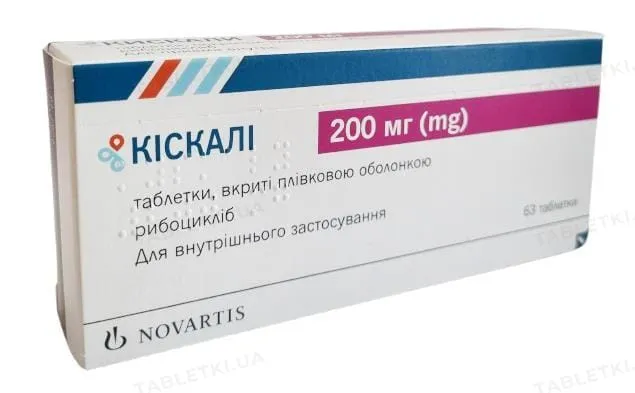
Table of Contents
INSTRUCTIONS FOR MEDICAL USE OF THE MEDICINAL PRODUCT KISQALI (KISQALI)
Composition:
active substance: ribociclib;
1 tablet contains ribociclib succinate in an amount equivalent to 200 mg of ribociclib;
excipients: microcrystalline cellulose, crospovidone (type A), low-substituted hydroxypropylcellulose, magnesium stearate, colloidal anhydrous silicon dioxide, iron oxide black (E 172), iron oxide red (E 172), soybean lecithin, polyvinyl alcohol partially hydrolyzed, talc, titanium dioxide (E 171), xanthan gum.
Pharmaceutical form. Film-coated tablets.
Main physicochemical characteristics: round, biconvex tablets with beveled edges, light greyish-violet in color, without a break line, with embossing "RIC" on one side and "NVR" on the other.
Pharmacotherapeutic group. Antineoplastic agents. Protein kinase inhibitors. Cyclin-dependent kinase (CDK) inhibitors. Ribociclib.
ATC code L01E F02.
Pharmacological Properties
Pharmacodynamics
Mechanism of action
Ribociclib is a selective inhibitor of cyclin-dependent kinases (CDK) 4 and 6, inducing 50% inhibition (IC50) in biochemical assays at concentrations of 0.01 (4.3 ng/mL) and 0.039 µM (16.9 ng/mL), respectively. These kinases are activated upon binding with D-type cyclins and play a crucial role in signaling pathways regulating the cell cycle and cellular proliferation. The cyclin D-CDK4/6 complex regulates cell cycle progression through phosphorylation of the retinoblastoma protein (pRb).
In vitro, ribociclib reduced pRb phosphorylation, leading to G1 phase cell cycle arrest, decreased proliferation, and senescence phenotype in breast cancer models. In vivo, monotherapy with ribociclib resulted in tumor regression, consistent with inhibition of pRb phosphorylation.
In in vivo studies using patient-derived xenograft models of estrogen receptor-positive (ER+) breast cancer, combination therapy with ribociclib and antiestrogens (e.g., letrozole) resulted in more pronounced suppression of tumor growth, sustained tumor regression, and delayed tumor regrowth after treatment cessation compared to each agent used alone.
When administered to patients, ribociclib may also exert immunomodulatory effects by reducing the number of regulatory T-cells and increasing the relative proportion of CD3+ T-cells.
Additionally, in vivo evaluation of the antitumor activity of ribociclib in combination with fulvestrant was conducted in immunodeficient mice bearing ER+ human breast cancer xenografts (ZR751); this combination resulted in complete suppression of tumor growth.
Panel analysis of breast cancer cell lines with known ER status demonstrated higher efficacy of ribociclib in ER+ breast cancer cell lines compared to ER- lines. In the studied preclinical models, intact pRb was required for ribociclib activity.
Cardiac Electrophysiology
To assess the effect of ribociclib on the QTc interval in patients with advanced cancer, serial ECGs were performed three times after administration of a single dose at steady state. A total of 997 patients receiving ribociclib treatment across dose ranges of 50 to 1200 mg were included in the pharmacokinetic-pharmacodynamic analysis. The analysis showed that ribociclib causes concentration-dependent prolongation of the QTc interval.
In patients with locally advanced or metastatic breast cancer, the estimated mean change from baseline in QTcF with KISQALI 600 mg in combination with a non-steroidal aromatase inhibitor (NSAI) or fulvestrant was 22.0 ms (90% CI: 20.56; 23.44) and 23.7 ms (90% CI: 22.31; 25.08), respectively, at geometric mean Cmax at steady state, compared to 34.7 ms (90% CI: 31.64; 37.78) when used in combination with tamoxifen (see section "Special precautions for use").
In patients with early-stage breast cancer, a similar concentration-dependent QTc interval prolongation occurs. Estimated mean change in QTcF from baseline is lower in patients with early-stage breast cancer receiving 400 mg KISQALI compared to patients with locally advanced or metastatic breast cancer receiving 600 mg KISQALI.
Clinical efficacy and safety
Early-stage breast cancer
Study CLEE011O12301C (NATALEE)
KISQALI was evaluated in a randomized, open-label, multicenter Phase III clinical trial, in which the drug was administered in combination with an aromatase inhibitor (AI) (letrozole or anastrozole) to pre-/postmenopausal women and men with hormone receptor-positive (HR+), human epidermal growth factor receptor 2-negative (HER2-) early anatomical stage II or III breast cancer, regardless of nodal status, and at high risk of recurrence, compared to treatment with AI alone:
- Stage IIB–III group, or
- Stage IIA group combined with any of the following criteria:
- Positive axillary lymph node, or
- Negative axillary lymph node:
- tumor grade 3, or
- tumor grade 2 combined with any of the following:
- Ki67 ≥ 20%;
- high risk of recurrence based on gene expression profiling.
Premenopausal women and men also received the LHRH agonist goserelin. According to TNM criteria, patients included in the NATALEE study had either any nodal involvement or, in the absence of nodal involvement, tumors > 5 cm in size, or tumors 2–5 cm in size with grade 2 (and high genomic risk of recurrence or Ki67 ≥ 20%) or grade 3.
A total of 5101 patients, including 20 men, were randomized in a 1:1 ratio to receive KISQALI 400 mg plus AI (n = 2549) or AI alone (n = 2552). Randomization was stratified by anatomical stage (Stage II [n = 2154 (42.2%)] vs. Stage III [n = 2947 (57.8%)]), prior therapy (neoadjuvant/adjuvant chemotherapy: yes [n = 4432 (86.9%)] or no [n = 669 (13.1%)]), menopausal status (premenopausal women and men [n = 2253 (44.2%)] vs. postmenopausal women [n = 2848 (55.8%)]), and region (North America/Western Europe/Oceania [n = 3128 (61.3%)] vs. other countries [n = 1973 (38.7%)]). KISQALI was administered orally at 400 mg once daily for 21 consecutive days followed by a 7-day treatment break, in combination with letrozole 2.5 mg or anastrozole 1 mg orally once daily for 28 days. Goserelin was administered at 3.6 mg as a subcutaneous implant injection on day 1 of each 28-day cycle. KISQALI treatment continued until completion of a 3-year treatment course from the date of randomization (approximately 39 cycles).
The median age of patients enrolled in this study was 52 years (range: 24 to 90 years). 15.2% of patients were aged 65 years or older, including 123 patients (2.4%) aged 75 years or older. Patient demographics included White (73.4%), Asian (13.2%), and Black or African American (1.7%). All patients had an ECOG performance status of 0 or 1. Overall, 88.2% of patients received chemotherapy in the neoadjuvant or adjuvant setting, and 71.6% received endocrine therapy in the neoadjuvant or adjuvant setting within 12 months prior to study entry.
The primary endpoint of the study was invasive disease-free survival (iDFS), defined as the time from randomization to first occurrence of: local recurrence of invasive breast cancer, regional recurrence of invasive cancer, distant recurrence, death (from any cause), contralateral invasive breast cancer, or another primary invasive cancer (excluding basal cell and squamous cell skin cancers).
The primary endpoint was met at the time of the primary analysis (data cutoff date: January 11, 2023). A statistically significant improvement in iDFS (HR: 0.748; 95% CI: 0.618; 0.906; p-value from one-sided stratified log-rank test: 0.0014) was demonstrated in patients receiving KISQALI plus AI compared to those receiving AI alone. Consistent results were observed across subgroups, including anatomical stage, menopausal status, region, nodal status, age, race, and prior adjuvant/neoadjuvant chemotherapy or hormonal therapy.
Additional analysis data (data cutoff date: July 21, 2023) are summarized in Table 1, and the Kaplan-Meier plot for iDFS is presented in Figure 1. The median duration of treatment at the time of the final iDFS analysis was approximately 30 months, and the median follow-up time for iDFS was 33.3 months in both treatment groups. Data for overall survival (OS) are currently insufficient. Overall, 172 patients (3.5%) died (83/2525 in the ribociclib group vs. 89/2442 in the AI-only group, HR 0.892; 95% CI: 0.661; 1.203).
Table 1. NATALEE – Efficacy results (iDFS) by investigator assessment (data cutoff date: July 21, 2023)
| Kisqali and AI* N = 2549 |
AI N = 2552 |
||
| Invasive Disease-Free Survival (IDFS) |
|||
| Number of patients with event (n, %) |
226 (8.9%) |
283 (11.1%) |
|
| Hazard ratio (95% CI) |
0.749 (0.628; 0.892) |
||
| p-valueb |
0.0006 |
||
| IDFS at 36 months (%, 95% CI) |
90.7 (89.3; 91.8) |
87.6 (86.1; 88.9) |
|
| CI – confidence interval; N – number of patients. a IDFS is defined as the time from randomization to first occurrence of: local recurrence of invasive breast cancer, regional recurrence of invasive cancer, distant recurrence, death (from any cause), contralateral invasive breast cancer, or another primary invasive cancer distinct from breast cancer (excluding basal cell and squamous cell skin cancer). b Nominal p-value was derived from stratified one-sided log-rank test. * Letrozole or anastrozole. |
|||
AI – aromatase inhibitor (letrozole or anastrozole)
P-value based on stratified log-rank test is one-sided.
Fig.1. NATALEE – Kaplan-Meier plot for iDFS based on investigator assessment (data cutoff date: 21 July 2023).
The rate of distant metastasis-free survival (DMFS) in the Kisqali plus AI treatment group was 204 (8.0%) compared to 256 (10%) in the AI-only treatment group (HR: 0.749; 95% CI: 0.623, 0.900).
Advanced breast cancer
Study CLEE011A2301 (MONALEESA-2)
Kisqali was evaluated in a randomized, double-blind, placebo-controlled, multicenter, phase III clinical trial in postmenopausal women with hormone receptor-positive, human epidermal growth factor receptor 2 (HER2)-negative advanced breast cancer who had not received prior therapy for advanced disease, in combination with letrozole versus letrozole alone.
A total of 668 patients were randomized in a 1:1 ratio to receive Kisqali 600 mg plus letrozole (n = 334) or placebo plus letrozole (n = 334), stratified by presence or absence of liver and/or lung metastases (yes [n = 292 (44%)] or no [n = 376 (56%)]). Demographic and baseline disease characteristics were balanced and comparable between study groups. Kisqali was administered orally at a dose of 600 mg once daily for 21 consecutive days followed by a 7-day treatment break, in combination with letrozole 2.5 mg once daily on Days 1 to 28 of each 28-day cycle. Crossover from placebo to Kisqali was not permitted during or after study progression.
The median age of patients enrolled in this study was 62 years (range: 23 to 91). 44.2% of patients were aged 65 years or older, including 69 patients aged over 75 years. Patients included representatives of Caucasian (82.2%), Mongoloid (7.6%), and Black (2.5%) races. All patients had an ECOG performance status of 0 or 1. In the Kisqali treatment group, 46.6% of patients had received chemotherapy in the neoadjuvant or adjuvant setting, and 51.3% had received prior endocrine therapy in the neoadjuvant or adjuvant setting before study entry. 34.1% of patients had de novo disease (newly diagnosed cancer). 22.0% of patients had bone-only metastases, and 58.8% had visceral metastases. Patients who had previously received (neo)adjuvant therapy with anastrozole or letrozole were required to have completed that therapy at least 12 months prior to randomization.
Primary analysis
The primary endpoint of the study was met at the pre-planned interim analysis conducted after observing 80% of the planned progression-free survival (PFS) events, assessed using Response Evaluation Criteria in Solid Tumors (RECIST, version 1.1) by investigator assessment in the full population (all randomized patients), and confirmed by independent central radiological review of blinded data.
Efficacy results demonstrated a statistically significant improvement in PFS in patients receiving Kisqali plus letrozole compared to those receiving placebo plus letrozole in the intent-to-treat population (hazard ratio 0.556; 95% CI: 0.429, 0.720; p-value by one-sided stratified log-rank test = 0.00000329), indicating a clinically meaningful treatment effect.
Global health status/quality of life data showed no difference between the Kisqali plus letrozole group and the placebo plus letrozole group.
A later update of efficacy data (data cutoff date: 2 January 2017) is presented in Tables 2 and 3 (MONALEESA-2: Efficacy results (PFS) based on investigator radiological assessment and MONALEESA-2: Efficacy results (OSa, CBGb) based on investigator assessment).
Median PFS was 25.3 months (95% CI: 23.0, 30.3) for patients receiving ribociclib and letrozole, and 16.0 months (95% CI: 13.4, 18.2) for patients receiving placebo and letrozole. At 24 months, 54.7% of patients receiving ribociclib and letrozole remained free of disease progression compared to 35.9% in the placebo plus letrozole group.
Table 2. MONALEESA-2: Efficacy results (PFS) based on investigator radiological assessment (data cutoff date: 2 January 2017)
| Updated analysis |
||
| Parameters |
Kisqali and letrozole N = 334 |
Placebo and letrozole N = 334 |
| Progression-free survival |
||
| Median PFS [months] (95 % CI) |
25.3 (23.0; 30.3) |
16.0 (13.4; 18.2) |
| Hazard ratio (95 % CI) |
0.568 (0.457; 0.704) |
|
| p-valuea |
9.63 × 10⁻⁸ |
|
| CI – confidence interval; N – number of patients a p-value was obtained using one-sided stratified log-rank test. |
||
 |
| Time points of censoring Ribociclib (N = 334) Placebo (N = 334) |
| Number of events: ribociclib – 140, placebo – 205 Risk ratio 0.568; 95% CI [0.457; 0.704] Kaplan-Meier median: ribociclib – 25.3 months; placebo – 16.0 months Log-rank p-value 9.63*10^(-8) |
Time (months)
| Number of patients still at risk |
||||||||||||||||||
| Time |
0 |
2 |
4 |
6 |
8 |
10 |
12 |
14 |
16 |
18 |
20 |
22 |
24 |
26 |
28 |
30 |
32 |
34 |
| Ribociclib |
334 |
294 |
277 |
257 |
240 |
227 |
207 |
196 |
188 |
176 |
164 |
132 |
97 |
46 |
17 |
11 |
1 |
0 |
| Placebo |
334 |
279 |
265 |
239 |
219 |
196 |
179 |
156 |
138 |
124 |
110 |
93 |
63 |
34 |
10 |
7 |
2 |
0 |
Fig. 2. MONALEESA-2: Kaplan–Meier plot for PFS based on investigator assessment (data cutoff date January 2, 2017)
A series of PFS analyses were conducted in predefined subgroups based on prognostic factors and baseline characteristics to assess the internal consistency of the treatment effect. A reduction in the risk of disease progression or death in favor of the Kisqali plus letrozole group was observed across all individual patient subgroups by age, race, prior adjuvant or neoadjuvant chemotherapy or hormonal therapy, liver and/or lung involvement, and bone-only metastases. The effect was evident in patients with liver and/or lung metastases (HR 0.561 [95% CI: 0.424; 0.743], median PFS [mPFS] was 24.8 months with Kisqali plus letrozole compared to 13.4 months with letrozole alone) and in those without liver and/or lung metastases (HR 0.597 [95% CI: 0.426; 0.837], mPFS 27.6 months versus 18.2 months).
Updated results on overall response and clinical benefit rate are presented in Table 3.
Table 3. MONALEESA-2: Efficacy assessment results (ORR, CBR) based on investigator assessment (data cutoff date January 2, 2017)
| Analysis |
Kisqali and letrozole (%, 95 % CI) |
Placebo and letrozole (%, 95 % CI) |
P-valuec |
| Full analysis population |
N = 334 |
N = 334 |
|
| Overall response ratea |
42.5 (37.2; 47.8) |
28.7 (23.9; 33.6) |
9.18 × 10⁻⁵ |
| Clinical benefit rateb |
79.9 (75.6; 84.2) |
73.1 (68.3; 77.8) |
0.018 |
| Patients with measurable disease |
n = 257 |
n = 245 |
|
| Overall response ratea |
54.5 (48.4; 60.6) |
38.8 (32.7; 44.9) |
2.54 × 10⁻⁴ |
| Clinical benefit rateb |
80.2 (75.3; 85.0) |
71.8 (66.2; 77.5) |
0.018 |
| a ORR: overall response rate = proportion of patients with complete response + partial response. b CBR: clinical benefit rate = proportion of patients with complete response + partial response (+ stable disease or incomplete response / no disease progression for ≥ 24 weeks). c P-value obtained using one-sided Cochran-Mantel-Haenszel chi-square criterion. |
|||
Summary Analysis of ORR
The results of the summary analysis of overall response (ORR) in the overall study population are presented in Table 4 and Figure 3.
Table 4. MONALEESA-2: Efficacy assessment results (ORR) (data cutoff date – June 10, 2021)
| Overall survival, overall study population |
Kisqali and letrozole N = 334 |
Placebo and letrozole N = 334 |
| Number of events, n [%] |
181 (54.2) |
219 (65.6) |
| Median OS [months] (95% CI) |
63.9 (52.4; 71.0) |
51.4 (47.2; 59.7) |
| Hazard ratioa (95% CI) |
0.765 (0.628, 0.932) |
|
| p-valueb |
0.004 |
|
| Event-free survival, (%) (95% CI) |
||
| 24 months |
86.6 (82.3, 89.9) |
85.0 (80.5, 88.4) |
| 60 months |
52.3 (46.5, 57.7) |
43.9 (38.3, 49.4) |
| 72 months |
44.2 (38.5, 49.8) |
32.0 (26.8, 37.3) |
| CI – confidence interval. a Hazard ratio derived from stratified Cox proportional hazards model. b p-value derived from one-sided stratified log-rank test (p < 0.0219 for claiming superiority). Stratification was based on lung and/or liver metastasis status by interactive response technology (IRT). |
||
| Time points of censoring Ribociclib (N = 334) Placebo (N = 334) |
| Number of events: ribociclib: 181, placebo: 219 Hazard ratio = 0.765 Kaplan-Meier median: ribociclib: 63.9 months placebo: 51.4 months Log-rank p-value = 0.004 |
| Time (months) |
 |
| Number of patients still at risk |
| Ribociclib Placebo |
Figure 3. MONALEESA-2: Kaplan–Meier plot for PFS in the overall population (data cutoff date June 10, 2021)
Log-rank test and stratified Cox proportional hazards model stratified by visceral metastases status (lung and/or liver) per IRT.
One-sided p-value derived from stratified log-rank test.
Study CLEE011E2301 (MONALEESA-7)
Kisqali was evaluated in a randomized, double-blind, placebo-controlled, multicenter, phase III clinical trial in pre- and perimenopausal women with hormone receptor-positive, HER2-negative advanced breast cancer treated in combination with an NSAI or tamoxifen and goserelin, compared to placebo in combination with an NSAI or tamoxifen and goserelin. Patients in the MONALEESA-7 trial had not received prior endocrine therapy for advanced breast cancer.
A total of 672 patients were randomized in a 1:1 ratio to receive Kisqali 600 mg plus NSAI/tamoxifen and goserelin (n = 335) or placebo plus NSAI/tamoxifen and goserelin (n = 337), stratified by presence of liver and/or lung metastases (yes [n = 344 (51.2%)] or no [n = 328 (48.8%)]), prior chemotherapy for advanced disease (yes [n = 120 (17.9%)] or no [n = 552 (82.1%)]), and type of endocrine agent in the combined endocrine therapy (NSAI and goserelin [n = 493 (73.4%)] or tamoxifen and goserelin [n = 179 (26.6%)]). Demographic and baseline disease characteristics were balanced and comparable between treatment groups. Kisqali was administered orally at a dose of 600 mg once daily for 21 consecutive days followed by a 7-day treatment break, in combination with an NSAI (letrozole 2.5 mg or anastrozole 1 mg) or tamoxifen (20 mg) administered orally once daily for 28 days, and goserelin (3.6 mg) administered subcutaneously every 28 days, until disease progression or unacceptable toxicity. Crossover from placebo to Kisqali was not permitted during or after disease progression. Switching of the endocrine agent within the combined endocrine therapy was also not allowed.
The median age of patients enrolled in this trial was 44 years (range 25–58), and 27.7% of patients were under 40 years of age. The majority of patients were of White (57.7%), Asian (29.5%), or Black (2.8%) race; nearly all patients (99.0%) had a baseline ECOG performance status of 0 or 1. Among these 672 patients at enrollment, 14% had received chemotherapy for metastatic disease, 32.6% had received adjuvant chemotherapy, and 18.0% had received neoadjuvant chemotherapy; 39.6% had received adjuvant endocrine therapy and 0.7% had received neoadjuvant endocrine therapy. In study E2301, 40.2% of patients had de novo metastatic disease (first diagnosis), 23.7% had bone-only metastases, and 56.7% had visceral metastases.
The primary endpoint of the study was met at the primary analysis, which was conducted after observing 318 progression-free survival (PFS) events based on investigator assessment using RECIST criteria, version 1.1, in the overall population (all randomized patients). The primary efficacy results were confirmed by PFS results based on independent central radiological review of blinded data. The median follow-up time at the time of the primary PFS analysis was 19.2 months.
In the overall population, efficacy results demonstrated a statistically significant improvement in PFS for patients receiving Kisqali plus NSAI/tamoxifen and goserelin compared to those receiving placebo plus NSAI/tamoxifen and goserelin (hazard ratio 0.553; 95% CI: 0.441, 0.694; one-sided p-value from stratified log-rank test 9.83 × 10⁻⁸), indicating a clinically meaningful treatment effect.
The median PFS was 23.8 months (95% CI: 19.2; not estimable (NE)) for patients receiving Kisqali plus NSAI/tamoxifen and goserelin, and 13.0 months (95% CI: 11.0; 16.4) for those receiving placebo plus NSAI/tamoxifen and goserelin.
The PFS distribution is summarized in the Kaplan–Meier plot for PFS shown in Figure 4.

| Time points of censoring Ribociclib (N = 335) Placebo (N = 337) |
| Number of events Ribociclib – 131, placebo – 187 Risk ratio 0.553 95% CI [0.441; 0.694] Kaplan-Meier median Ribociclib – 23.8 months Placebo – 13.0 months Log-rank p-value 9.83*10^(-8) |
Time (months)
| Number of patients still at risk |
||||||||||||||||
| Time (months) |
0 |
2 |
4 |
6 |
8 |
10 |
12 |
14 |
16 |
18 |
20 |
22 |
24 |
26 |
28 |
30 |
| Ribociclib |
335 |
301 |
284 |
264 |
245 |
235 |
219 |
178 |
136 |
90 |
54 |
40 |
20 |
3 |
1 |
0 |
| Placebo |
337 |
273 |
248 |
230 |
207 |
183 |
165 |
124 |
94 |
62 |
31 |
24 |
13 |
3 |
1 |
0 |
Figure 4. MONALEESA-7: Kaplan-Meier plot for PFS in the overall population based on investigator assessment.
PFS results based on independent central radiological assessment of masked data from a randomly selected subgroup comprising approximately 40% of randomized patients confirmed the primary efficacy results based on investigator assessment (hazard ratio 0.427; 95% CI: 0.288, 0.633).
At the time of the primary PFS analysis, overall survival data were immature, with 89 (13%) deaths reported (HR 0.916 [95% CI: 0.601; 1.396]).
The overall response rate (ORR) assessed by investigator according to RECIST version 1.1 criteria was higher in the Kisqali treatment group (40.9%; 95% CI: 35.6; 46.2) compared to the placebo group (29.7%; 95% CI: 24.8; 34.6; p = 0.00098). The clinical benefit rate (CBR) was higher in the Kisqali treatment group (79.1%; 95% CI: 74.8; 83.5) compared to the placebo group (69.7%; 95% CI: 64.8; 74.6; p = 0.002).
In an analysis of predefined subgroups among 495 patients who received Kisqali or placebo in combination with NSAI and goserelin, median PFS was 27.5 months (95% CI: 19.1; NR) in the Kisqali plus NSAI treatment subgroup and 13.8 months (95% CI: 12.6; 17.4) in the placebo plus NSAI subgroup [HR: 0.569; 95% CI: 0.436; 0.743]. Efficacy results are presented in Table 5, and Kaplan-Meier curves for PFS are shown in Figure 5.
| Table 5. MONALEESA-7: Efficacy results (PFS) in patients receiving endocrine therapy |
||
| Parameter |
Ribociclib and endocrine therapy plus goserelin N = 248 |
Placebo and endocrine therapy plus goserelin N = 247 |
| Progression-free survivala |
||
| Median PFS [months] (95 % CI) |
27.5 (19.1; NE) |
13.8 (12.6; 17.4) |
| Hazard ratio (95 % CI) |
0.569 (0.436; 0.743) |
|
| CI – confidence interval; N – number of patients; NE – not estimable. a PFS based on investigator radiological assessment. |
||
 |
| Times of censoring Ribociclib (N = 248) Placebo (N = 247) |
| Number of events Ribociclib – 92, placebo – 132 Risk ratio 0.569 95% CI [0.436; 0.743] Kaplan-Meier median Ribociclib – 27.5 months Placebo – 13.8 months |
Time (months)
| Number of patients still at risk |
||||||||||||||||
| Time (months) |
0 |
2 |
4 |
6 |
8 |
10 |
12 |
14 |
16 |
18 |
20 |
22 |
24 |
26 |
28 |
30 |
| Ribociclib |
248 |
223 |
212 |
199 |
183 |
175 |
163 |
132 |
100 |
66 |
38 |
27 |
15 |
2 |
1 |
0 |
| Placebo |
247 |
195 |
177 |
163 |
149 |
138 |
126 |
95 |
72 |
48 |
25 |
19 |
9 |
2 |
1 |
0 |
Fig. 5. MONALEESA-7: Kaplan-Meier plot for PFS based on investigator assessment in patients receiving NSAIs
The results of efficacy assessment regarding overall response rate (ORR) and clinical benefit rate (CBR) based on investigator assessment according to RECIST version 1.1 criteria are presented in Table 6.
| Table 6. MONALEESA-7: Efficacy results (ORR, CBR) based on investigator assessment in patients receiving NSAIs |
||
| Analysis |
Ribociclib plus NSAI and goserelin (%, 95 % CI) |
Placebo plus NSAI and goserelin (%, 95 % CI) |
| Full analysis population |
N = 248 |
N = 247 |
| Overall response rate (ORR)a |
39.1 (33.0; 45.2) |
29.1 (23.5; 34.8) |
| Clinical benefit rate (CBR)b |
80.2 (75.3; 85.2) |
67.2 (61.4; 73.1) |
| Patients with measurable disease |
n = 192 |
n = 199 |
| Overall response ratea |
50.5 (43.4; 57.6) |
36.2 (29.5; 42.9) |
| Clinical benefit rateb |
81.8 (76.3; 87.2) |
63.8 (57.1; 70.5) |
| a ORR: proportion of patients with complete response + partial response. b CBR: proportion of patients with complete response + partial response + (stable disease or incomplete response/no disease progression for ≥ 24 weeks). |
||
Results in the Kisqali and NSAID treatment subgroup were consistent across subgroups defined by age, race, prior adjuvant/neoadjuvant chemotherapy or hormonal therapy, liver and/or lung involvement, and bone-only metastases.
A later update of overall survival data (data cutoff date: November 30, 2018) is provided in Table 7 and Figures 6 and 7.
The second OS analysis of the study achieved its key secondary endpoint, demonstrating a statistically significant improvement in OS.
Table 7. MONALEESA-7: Efficacy results (OS) (data cutoff date: November 30, 2018)
| Updated analysis |
||
| Overall survival, overall study population |
Kisqali 600 mg N = 335 |
Placebo N = 337 |
| Number of events, n [%] |
83 (24.8) |
109 (32.3) |
| Median OS [months] (95% CI) |
NE (NE, NE) |
40.9 (37.8; NE) |
| Hazard ratio (95% CI) |
0.712 (0.535; 0.948) |
|
| p-valuea |
0.00973 |
|
| Overall survival, NSAI subgroup |
Kisqali 600 mg n = 248 |
Placebo n = 247 |
| Number of events, n [%] |
61 (24.6) |
80 (32.4) |
| Median OS [months] (95% CI) |
NE (NE, NE) |
40.7 (37.4; NE) |
| Hazard ratio (95% CI) |
0.699 (0.501; 0.976) |
|
| CI – confidence interval; NE – not estimable; N – number of patients. a p-value was obtained using a one-sided log-rank test stratified by presence of lung and/or liver metastases, prior chemotherapy for advanced disease, and additional agent in combination endocrine therapy by interactive response technology (IRT). |
||

| Time points of censoring Ribociclib (N = 335) Placebo (N = 337) |
| Number of events Ribociclib – 83, placebo – 109 Hazard ratio 0.712 95% CI [0.535; 0.948] Kaplan-Meier median Ribociclib – NR Placebo – 40.9 months Log-rank p-value 0.00973 |
Time (months)
Number of patients still at risk
Time (months)
Ribociclib
Placebo
Fig. 6. MONALEESA-7: Kaplan-Meier plot for final OS analysis (data cutoff date November 30, 2018)
Log-rank test and Cox model stratified by presence of lung and/or liver metastases, prior chemotherapy for advanced disease, and additional agent in the combined endocrine therapy by interactive response technology (IRT).

| Time points of censoring Ribociclib (N = 248) Placebo (N = 247) |
| Number of events Ribociclib – 61, placebo – 80 Risk ratio 0.699 95 % CI [0.501; 0.976] Kaplan-Meier median Ribociclib – NR Placebo – 40.7 months |
Time (months)
Number of patients still at risk
Time (months)
Ribociclib
Placebo
Fig. 7. MONALEESA-7: Kaplan–Meier plot for final OS analysis in patients receiving NSAI (data cutoff date November 30, 2018)
Hazard ratio is based on an unstratified Cox model.
Additionally, the probability of progression on next-line therapy or death (PFS2) in patients previously treated with ribociclib in the study was lower compared to patients in the placebo group, with a HR of 0.692 (95 % CI: 0.548; 0.875) in the overall study population. Median PFS2 was 32.3 months (95 % CI: 27.6; 38.3) in the placebo group and not reached (95 % CI: 39.4; NR) in the ribociclib group. Similar results were observed in the NSAI subgroup, with a HR of 0.660 (95 % CI: 0.503; 0.868), and median PFS2 of 32.3 months (95 % CI: 26.9; 38.3) in the placebo group compared to not reached (95 % CI: 39.4; NR) in the ribociclib group.
Study CLEE011F2301 (MONALEESA-3)
Kisqali was evaluated in a randomized, double-blind, placebo-controlled, multicenter, phase III clinical trial involving 726 postmenopausal women with hormone receptor-positive, HER2-negative advanced breast cancer who had received either no prior endocrine therapy or only one line of prior endocrine therapy, in combination with fulvestrant compared to fulvestrant alone.
The mean age of patients included in this study was 63 years (range 31 to 89). 46.7 % of patients were aged 65 years or older, including 13.8 % aged 75 years or older. Patients enrolled in the study were of Caucasian (85.3 %), Asian (8.7 %), and Black (0.7 %) race, and nearly all patients (99.7 %) had a baseline ECOG performance status of 0 or 1. Patients from both first- and second-line settings were included (19.1 % of whom had de novo metastatic disease). Prior to enrollment, 42.7 % of patients had received adjuvant chemotherapy and 13.1 % neoadjuvant chemotherapy, while 58.5 % had received adjuvant endocrine therapy and 1.4 % neoadjuvant endocrine therapy, and 21 % had received prior endocrine therapy for advanced breast cancer. In study F2301, 21.2 % of patients had bone-only metastases, and 60.5 % had visceral organ metastases.
Primary analysis
The primary endpoint of the study was met at the primary analysis, conducted after 361 progression-free survival (PFS) events were assessed by investigator using RECIST criteria, version 1.1, in the overall population (all randomized patients; data cutoff date: November 3, 2017). The median follow-up time at the time of the primary PFS analysis was 20.4 months.
The results of the primary efficacy assessment demonstrated a statistically significant improvement in PFS in patients receiving Kisqali plus fulvestrant compared to those receiving placebo plus fulvestrant in the overall population (hazard ratio 0.593; 95 % CI: 0.480; 0.732; p-value from one-sided stratified log-rank test 4.1 × 10⁻⁷), representing a 41 % reduction in the relative risk of disease progression or death in favor of the Kisqali plus fulvestrant treatment group.
PFS results based on independent central radiological review of masked data from a randomly selected subgroup of approximately 40 % of randomized patients confirmed the primary efficacy results based on investigator assessment (hazard ratio 0.492; 95 % CI: 0.345; 0.703).
A descriptive PFS update was performed at the time of the second interim overall survival analysis; updated PFS results for the overall population and subgroups based on prior endocrine therapy are summarized in Table 8, and the Kaplan–Meier curve is shown in Figure 8.
| Table 8. MONALEESA-3 (F2301): Updated results (PFS) based on investigator assessment (data cutoff date – 03.06.2019) |
||
| Parameters |
Kisqali and fulvestrant N = 484 |
Placebo and fulvestrant N = 242 |
| Progression-free survival, overall study population |
||
| Number of events, n [%] |
283 (58.5) |
193 (79.8) |
| Median PFS [months] (95% CI) |
20.6 (18.6; 24.0) |
12.8 (10.9; 16.3) |
| Hazard ratio (95% CI) |
0.587 (0.488; 0.705) |
|
| Subgroup of first-line treatment regimena |
Kisqali and fulvestrant n = 237 |
Placebo and fulvestrant n = 128 |
| Number of events, n [%] |
112 (47.3) |
95 (74.2) |
| Median PFS [months] (95% CI) |
33.6 (27.1; 41.3) |
19.2 (14.9; 23.6) |
| Hazard ratio (95% CI) |
0.546 (0.415–0.718) |
|
| Subgroup of second-line treatment or early relapseb |
Kisqali and fulvestrant n = 237 |
Placebo and fulvestrant n = 109 |
| Number of events, n [%] |
167 (70.5) |
95 (87.2) |
| Median PFS [months] (95% CI) |
14.6 (12.5; 18.6) |
9.1 (5.8; 11.0) |
| Hazard ratio (95% CI) |
0.571 (0.443; 0.737) |
|
| CI – confidence interval. a Patients with de novo metastatic breast cancer without prior endocrine therapy and patients with recurrence after completion of 12-month (neo)adjuvant endocrine therapy. b Patients with recurrence during adjuvant therapy or within 12 months after completion of (neo)adjuvant endocrine therapy and patients with progression after one line of endocrine therapy for advanced disease. |
||
| Number of events Ribociclib + fulvestrant: 283, Placebo + fulvestrant: 193 Hazard ratio = 0.587 95% CI [0.488, 0.705] Kaplan-Meier median Ribociclib + fulvestrant: 20.6 months Placebo + fulvestrant: 12.8 months |
| Time points of censoring Ribociclib + fulvestrant (N = 484) Placebo + fulvestrant (N = 242) |
| 100 |
| 80 |
| 60 |
| 40 |
| 20 |
| 0 |
| 0 |
| 2 |
| 4 |
| 6 |
| 8 |
| 10 |
| 12 |
| 14 |
| 16 |
| 18 |
| 20 |
| 22 |
| 24 |
| 26 |
| 28 |
| 30 |
| 32 |
| 34 |
| 36 |
| 38 |
| 40 |
| 42 |
| 44 |
| 46 |
| Time (months) |
| Placebo |
| Ribociclib |
| 242 |
| 484 |
| 168 |
| 156 |
| 144 |
| 364 |
| 346 |
| 323 |
| 106 |
| 98 |
| 88 |
| 258 |
| 239 |
| 225 |
| 68 |
| 62 |
| 198 |
| 181 |
| 47 |
| 156 |
| 41 |
| 127 |
| 13 |
| 65 |
| 2 |
| 11 |
| 0 |
| 0 |
| 1 |
| 4 |
| 6 |
| 29 |
| 21 |
| 92 |
| 45 |
| 149 |
| 59 |
| 51 |
| 174 |
| 159 |
| 82 |
| 205 |
| 134 |
| 116 |
| 305 |
| 282 |
| 195 |
| 403 |
Figure 8. MONALEESA-3 (F2301): Investigator-assessed PFS Kaplan-Meier curve (data cutoff date: 03.06.2019)
Results of efficacy assessment regarding objective response rate (ORR) and clinical benefit rate (CBR) based on investigator assessment according to RECIST version 1.1 criteria are presented in Table 9.
| Table 9. MONALEESA-3: Efficacy results (ORR, CBR) based on investigator assessment (data cutoff date – 03.11.2017) |
||
| Analysis |
Ribociclib and fulvestrant (%, 95 % CI) |
Placebo and fulvestrant (%, 95 % CI) |
| Full analysis population |
N = 484 |
N = 242 |
| Overall response rate (ORR)a |
32.4 (28.3; 36.6) |
21.5 (16.3; 26.7) |
| Clinical benefit rate (CBR)b |
70.2 (66.2; 74.3) |
62.8 (56.7; 68.9) |
| Patients with measurable disease |
n = 379 |
n = 181 |
| Overall response ratea |
40.9 (35.9; 45.8) |
28.7 (22.1; 35.3) |
| Clinical benefit rateb |
69.4 (64.8; 74.0) |
59.7 (52.5; 66.8) |
| a ORR: proportion of patients with complete response + partial response. b CBR: proportion of patients with complete response + partial response + (stable disease or incomplete response/no disease progression for ≥ 24 weeks). |
||
The risk-benefit assessment based on the analysis of predefined subgroups of patients treated with Kisqali and fulvestrant demonstrated consistent efficacy across various subgroups, including age, race, prior treatment (early-stage or advanced cancer), prior adjuvant/neoadjuvant chemotherapy or hormonal therapy, presence of liver and/or lung involvement, and bone-only metastases.
OS Analysis
A second OS analysis was performed for the secondary endpoint of the study, revealing a statistically significant improvement in OS.
The results of the final OS analysis in the overall study population and subgroup analyses are presented in Table 10 and Figure 9.
| Table 10. MONALEESA-3 (F2301): Efficacy results (OS) (data cutoff date – 03/06/2019) |
||
| Parameters |
Ribociclib and fulvestrant |
Placebo and fulvestrant |
| Overall study population |
N = 484 |
N = 242 |
| Number of events, n [%] |
167 (34.5) |
108 (44.6) |
| Median OS [months] (95% CI) |
NR (NR, NR) |
40 (37, NR) |
| Hazard ratio (95% CI)a |
0.724 (0.568; 0.924) |
|
| p-value b |
0.00455 |
|
| Subgroup of first-line treatment |
n = 237 |
n = 128 |
| Number of events, n [%] |
63 (26.6) |
47 (36.7) |
| Hazard ratio (95% CI)c |
0.700 (0.479; 1.021) |
|
| Subgroup of second-line treatment or early relapse |
n = 237 |
n = 109 |
| Number of events, n [%] |
102 (43.0) |
60 (55.0) |
| Hazard ratio (95% CI)c |
0.730 (0.530; 1.004) |
|
| NR – not reached. a Hazard ratio derived from stratified Cox proportional hazards model, stratified by presence of lung and/or liver metastases and prior endocrine therapy. b One-sided p-value derived from stratified log-rank test, stratified by presence of lung and/or liver metastases and prior endocrine therapy per IRT. The p-value is one-sided and compared to the boundary value of 0.01129 determined by the Lan-DeMets (O'Brien-Fleming) alpha-spending function for an overall significance level of 0.025. c Hazard ratio derived from unstratified Cox proportional hazards model. |
||
| Number of events Ribociclib + fulvestrant: 167; placebo + fulvestrant: 108 Hazard ratio = 0.724 95% CI [0.568; 0.924] Kaplan-Meier median Ribociclib + fulvestrant: NE Placebo + fulvestrant: 40.0 months Log-rank p-value = 0.00455 |
| Time of censoring Ribociclib + fulvestrant (N = 484) Placebo + fulvestrant (N = 242) |
| 242 |
| 233 |
| 227 |
| 223 |
| 218 |
| 213 |
| 207 |
| 199 |
| 194 |
| 187 |
| 184 |
| 174 |
| 169 |
| 159 |
| 155 |
| 147 |
| 141 |
| 134 |
| 107 |
| 64 |
| 37 |
| 14 |
| 3 |
| 0 |
| 100 |
| 80 |
| 60 |
| 40 |
| 20 |
| 0 |
| 0 |
| 2 |
| 4 |
| 6 |
| 8 |
| 10 |
| 12 |
| 14 |
| 16 |
| 18 |
| 20 |
| 22 |
| 24 |
| 26 |
| 28 |
| 30 |
| 32 |
| 34 |
| 36 |
| 38 |
| 40 |
| 42 |
| 44 |
| 46 |
| 48 |
| 484 |
| 470 |
| 454 |
| 444 |
| 436 |
| 428 |
| 414 |
| 402 |
| 397 |
| 389 |
| 374 |
| 365 |
| 348 |
| 334 |
| 326 |
| 309 |
| Time (months) |
| Placebo |
| Ribociclib |
| 300 |
| 287 |
| 237 |
| 159 |
| 92 |
| 41 |
| 14 |
| 2 |
| 0 |
| 0 |
Fig. 9. MONALEESA-3 (F2301): Kaplan–Meier plot for OS (full analysis dataset [FADS]) (data cutoff date – 03.06.2019)
The log-rank test and Cox model were stratified by presence of lung and/or liver metastases, prior chemotherapy for advanced disease, and endocrine combination component per IRT.
Time to next-line therapy progression or death (PFS2) was longer in patients in the Kisqali group compared to patients in the placebo group (HR (hazard ratio): 0.670 [95 % CI: 0.542; 0.830]) in the overall study population. Median PFS2 was 39.8 months (95 % CI: 32.5; NR) in the Kisqali group and 29.4 months (95 % CI: 24.1; 33.1) in the placebo group.
Older patients
Among all patients receiving Kisqali in the MONALEESA-2 and MONALEESA-3 studies, patients aged ≥ 65 years and ≥ 75 years were represented. No overall differences in safety or efficacy of Kisqali treatment were observed between these patients and younger patients (see section “Dosage and administration”).
Patients with renal impairment
In the three pivotal studies (MONALEESA-2, MONALEESA-3, and MONALEESA-7), 510 (53.8 %) patients with normal renal function, 341 (36 %) with mild renal impairment, and 97 (10.2 %) with moderate renal impairment received ribociclib treatment. No patients with severe renal impairment were included. PFS data were similar in patients with mild and moderate renal impairment receiving ribociclib at the initial dose of 600 mg compared to patients with normal renal function. The safety profile in patients with impaired renal function was generally comparable to that in patients without renal impairment (see section “Adverse reactions”).
Children
The European Medicines Agency has deferred the obligation to submit the results of Kisqali studies in all pediatric subgroups for breast cancer (see information on pediatric use in section “Dosage and administration”).
Pharmacokinetics
The pharmacokinetics of ribociclib were studied in patients with advanced cancer after oral administration of doses ranging from 50 to 1200 mg daily. Healthy volunteers received single oral doses ranging from 400 mg to 600 mg or repeated doses of 400 mg daily (8 days).
Absorption
The mean geometric value of absolute bioavailability of ribociclib after a single oral dose of 600 mg was 65.8 % in healthy volunteers.
The time to reach Cmax (Tmax) after oral administration of ribociclib was 1–4 hours. A slight supraproportional increase in ribociclib exposure (Cmax and AUC) was observed across the studied dose range (50 to 1200 mg). After repeated once-daily administration, steady state was generally achieved by day 8, and ribociclib accumulation occurred with a mean geometric accumulation ratio of 2.51 (range: 0.97 to 6.40).
Effect of food
Compared to fasting conditions, oral administration of ribociclib film-coated tablets as a single 600 mg dose with a high-calorie, high-fat meal did not affect the rate and extent of ribociclib absorption.
Distribution
In vitro binding of ribociclib to human plasma proteins was approximately 70 % and independent of drug concentration (10 to 10,000 ng/mL). Ribociclib was evenly distributed between erythrocytes and plasma, with a mean blood-to-plasma ratio in vivo of 1.04. Based on population pharmacokinetic analysis, the apparent volume of distribution at steady state (Vss/F) was 1090 L.
Biotransformation
In vitro and in vivo studies demonstrated that ribociclib is primarily metabolized in the liver, mainly by CYP3A4 in humans. After oral administration of a single 600 mg dose of [14C] ribociclib in humans, the main metabolic pathways of ribociclib were oxidation (dealkylation, C and/or N-oxidation, oxidation (-2H)) and their combinations. Phase II conjugates of ribociclib Phase I metabolites underwent N-acetylation, sulfation, cysteine conjugation, glycosylation, and glucuronidation. Ribociclib was the main circulating active drug substance in plasma. The main circulating metabolites were metabolite M13 (CCI284, N-hydroxylation), M4 (LEQ803, N-demethylation), and M1 (secondary glucuronide). The clinical activity (pharmacological properties and safety) of ribociclib was primarily attributed to the parent compound, with minimal contribution from circulating metabolites.
Ribociclib was extensively metabolized, with unchanged drug accounting for 17.3 % and 12.1 % of the dose in feces and urine, respectively. The metabolite LEQ803 was significantly detected in feces and accounted for approximately 13.9 % and 3.74 % of the administered dose in feces and urine, respectively. Many other metabolites were detected in feces and urine in minor amounts (≤ 2.78 % of the administered dose).
Elimination
At steady state with a 600 mg dose in patients with advanced cancer, the mean geometric value of the effective plasma half-life (based on the accumulation ratio) was 32.0 hours (63 % CV), and the mean geometric value of apparent oral clearance (CL/F) was 25.5 L/h (66 % CV). Based on population pharmacokinetic analysis, ribociclib exposure in patients with early-stage breast cancer is expected to be slightly lower than in patients with metastatic breast cancer receiving the same dose. The mean geometric value of the apparent terminal plasma half-life (T1/2) of ribociclib ranged from 29.7 to 54.7 hours, and the mean geometric value of CL/F of ribociclib ranged from 39.9 to 77.5 L/h following a 600 mg dose in healthy volunteers across all studies.
Ribociclib and its metabolites are primarily excreted via the gastrointestinal tract, with only a minor amount eliminated via the kidneys. In 6 healthy male volunteers, 91.7 % of the total administered radioactive dose was excreted within 22 days after a single oral dose of [14C] ribociclib; the primary excretion route was feces (69.1 %), and 22.6 % of the dose was excreted in urine.
Linearity/non-linearity
A slight supraproportional increase in ribociclib exposure (Cmax and AUC) was observed across the studied dose range (50 to 1200 mg) after both single and repeated dosing. This analysis is limited by the small sample size in most cohorts receiving specific doses; the largest amount of data was obtained in the 600 mg dose cohort.
Special patient populations
Renal impairment
The effect of renal impairment on the pharmacokinetics of ribociclib was evaluated in a study that included 14 healthy volunteers with normal renal function (glomerular filtration rate [GFR] ≥ 90 mL/min), 8 subjects with mild renal impairment (GFR 60 to < 90 mL/min), 6 with moderate renal impairment (GFR 30 to < 60 mL/min), 7 with severe renal impairment (GFR 15 to < 30 mL/min), and 3 with end-stage renal disease (GFR < 15 mL/min), who received a single 400 mg dose of ribociclib.
AUCinf increased by 1.6-, 1.9-, and 2.7-fold, and Cmax increased by 1.8-, 1.8-, and 2.3-fold, respectively, in subjects with mild, moderate, and severe renal impairment compared to exposure in subjects with normal renal function. Since efficacy and safety studies of ribociclib included a large proportion of patients with mild renal impairment (see section “Pharmacodynamics”), data in patients with moderate or severe renal impairment in the renal impairment study were also compared with pooled data from subjects with normal renal function and mild renal impairment. Compared to the pooled data from subjects with normal renal function and mild renal impairment, AUCinf increased by 1.6- and 2.2-fold, and Cmax increased by 1.5- and 1.9-fold in subjects with moderate and severe renal impairment, respectively. The fold difference in subjects with end-stage renal disease was not calculated due to the small number of subjects, but results suggest a similar or slightly higher increase in ribociclib exposure compared to subjects with severe renal impairment.
The effect of renal impairment on the pharmacokinetics of ribociclib was also evaluated in patients with locally advanced or metastatic breast cancer included in efficacy and safety studies, where patients received an initial dose of 600 mg (see section “Pharmacodynamics”). Pharmacokinetic analysis in subgroups of patients with locally advanced or metastatic breast cancer after oral administration of 600 mg ribociclib as a single or repeated dose showed that AUCinf and Cmax of ribociclib in patients with mild (n = 57) or moderate (n = 14) renal impairment were comparable to those in patients with normal renal function (n = 86), indicating no clinically significant effect of mild or moderate renal impairment on ribociclib exposure.
Hepatic impairment
Pharmacokinetic data from a study in subjects without cancer showed that mild hepatic impairment did not affect ribociclib exposure (see section “Dosage and administration”). Mean ribociclib exposure in patients with moderate (geometric mean ratio [GMR]: 1.44 for Cmax; 1.28 for AUCinf) and severe (GMR: 1.32 for Cmax; 1.29 for AUCinf) hepatic impairment was increased by less than 2-fold (see section “Dosage and administration”).
Population pharmacokinetic analysis data, including 160 patients with locally advanced or metastatic breast cancer and normal liver function and 47 patients with mild hepatic impairment, also demonstrated that mild hepatic impairment did not affect ribociclib exposure. The use of ribociclib in patients with breast cancer and moderate or severe hepatic impairment has not been studied.
Effect of patient age, body weight, sex, and race
Population pharmacokinetic analysis showed that patient age, body weight, and sex had no clinically significant effect on systemic ribociclib exposure that would necessitate dose adjustment. Data on pharmacokinetic differences due to race are too limited to draw conclusions.
In vitro interaction data
Effect of ribociclib on cytochrome P450 enzymes
In vitro, ribociclib is a reversible inhibitor of CYP1A2, CYP2E1, and CYP3A4/5, and a time-dependent inhibitor of CYP3A4/5 at clinically relevant concentrations. In vitro studies showed that ribociclib does not inhibit the activity of CYP2A6, CYP2B6, CYP2C8, CYP2C9, CYP2C19, and CYP2D6 at clinically relevant concentrations. Ribociclib has no potential for time-dependent inhibition of CYP1A2, CYP2C9, and CYP2D6.
In vitro data indicate that ribociclib has no potential to induce UGT enzymes or CYP enzymes such as CYP2C9, CYP2C19, and CYP3A4 via the pregnane X receptor (PXR). Therefore, it is unlikely that Kisqali will affect substrates of these enzymes. In vitro data are insufficient to exclude the potential of ribociclib to induce CYP2B6 via the constitutive androstane receptor (CAR).
Effect of transporters on ribociclib
In vitro, ribociclib is a substrate of P-gp; however, based on mass balance data, inhibition of P-gp or BCRP is unlikely to affect ribociclib exposure at therapeutic doses. In vitro, ribociclib is not a substrate of the hepatic uptake transporters OATP1B1, OATP1B3, or OCT-1.
Effect of ribociclib on transporters
In vitro studies showed that ribociclib has the potential to inhibit the activity of drug transporters P-gp, BCRP, OATP1B1/1B3, OCT1, OCT2, MATE1, and BSEP. Ribociclib did not inhibit OAT1, OAT3, or MRP2 at clinically relevant concentrations in vitro.
Preclinical safety data
Pharmacological safety
In vivo cardiac safety studies in dogs demonstrated dose- and concentration-dependent QTc interval prolongation at exposures achievable in patients after the recommended 600 mg dose. At higher exposure levels (approximately 5 times higher than expected clinical Cmax), there is a potential for induction of premature ventricular contractions.
Repeated-dose toxicity
In repeated-dose toxicity studies (treatment schedule: 3 weeks on / 1 week off) of up to 27 weeks in rats and 39 weeks in dogs, the main target organ for ribociclib toxicity was the hepatobiliary system (proliferative changes, cholestasis, gallbladder stones resembling sand, and thick bile). Target organs related to the pharmacological action of ribociclib in repeated-dose studies include bone marrow (hypocellularity), lymphoid system (lymphoid tissue depletion), intestinal mucosa (atrophy), skin (atrophy), bone (reduced bone formation), kidneys (concurrent degeneration and regeneration of tubular epithelial cells), and testes (atrophy). Except for the atrophic changes observed in the testes, which showed a tendency toward reversibility, all other changes were fully reversible after a 4-week drug-free period. Ribociclib exposure in animals in toxicity studies was generally lower than or comparable to that observed in patients receiving multiple doses of 600 mg/day for locally advanced or metastatic breast cancer (based on AUC).
Reproductive toxicity / effect on fertility
Ribociclib showed fetotoxicity and teratogenicity in rats and rabbits at doses that were not toxic to the pregnant female. After prenatal exposure in rats, increased post-implantation fetal loss and reduced fetal body weight were observed, and in rabbits, ribociclib was teratogenic at exposures ≤ 1.5 times higher than in humans when administered at the highest recommended dose of 600 mg/day (based on AUC).
In rats, reduced fetal body weight was observed, accompanied by skeletal changes considered temporary and/or related to lower fetal body weight. In rabbits, adverse effects on embryo/fetal development were observed, including increased frequency of fetal developmental abnormalities (malformations and external, visceral, and skeletal anomalies) and fetal growth (reduced fetal body weight). These abnormalities included small/reduced lung lobes, an additional vessel on the aortic arch, and diaphragmatic hernia, absent or (partially) fused lung lobes, and reduced/small additional lung lobes (30 and 60 mg/kg), additional/rudimentary 13th ribs, deformed hyoid bone, and reduced number of phalanges of the first digit. No embryo/fetal deaths occurred.
In a fertility study in female rats, ribociclib did not affect reproductive function, fertility, or early embryonic development at any dose up to 300 mg/kg/day (likely at exposures lower than or equal to clinical exposure in patients at the highest recommended ribociclib dose of 600 mg/day based on AUC).
Ribociclib has not been evaluated in male fertility studies. However, atrophic changes in the testes were reported in toxicity studies in rats and dogs at exposures lower than or equal to human exposures at the highest recommended daily dose of 600 mg/day based on AUC. These effects may be related to the direct antiproliferative effect on germ cells in the testes, leading to seminiferous tubule atrophy.
Ribociclib and its metabolites readily penetrated into the milk of rats. Ribociclib exposure in milk was higher than in plasma.
Genotoxicity
In genotoxicity studies in bacterial in vitro systems and in vitro and in vivo mammalian systems, with and without metabolic activation, no evidence of genotoxic potential of ribociclib was observed.
Carcinogenicity
The carcinogenic potential of ribociclib was evaluated in a 2-year study in rats.
Oral administration of ribociclib for 2 years resulted in an increased incidence of endometrial epithelial tumors, glandular and squamous hyperplasia of the uterus/cervix in female rats at doses ≥ 300 mg/kg/day, and an increased incidence of follicular thyroid tumors in male rats at a dose of 50 mg/kg/day. The mean steady-state exposure (AUC0–24 h) in female and male rats with neoplastic changes was 1.2 and 1.4 times higher, respectively, than in patients at the recommended dose of 600 mg/day. The mean steady-state exposure (AUC0–24 h) in female and male rats with neoplastic changes was 2.2 and 2.5 times higher, respectively, than in patients at a dose of 400 mg/day.
Additional non-neoplastic proliferative changes included increased incidence of focal liver lesions (basophilic and clear cells) and interstitial cell hyperplasia of the testes (Leydig cells) in male rats at doses ≥ 5 mg/kg/day and 50 mg/kg/day, respectively.
Potential mechanisms for thyroid changes in male rats include rodent-specific induction of hepatic microsomal enzymes, which is considered not relevant to humans. The effect on the uterus/cervix and testicular interstitial cells (Leydig cells) may be related to prolonged hypoprolactinemia due to CDK4 inhibition in pituitary lactotrophs, altering the hypothalamic-pituitary-gonadal axis.
Any potential increase in the estrogen/progesterone ratio in humans due to this mechanism is counterbalanced by the inhibitory effect of concomitant antiestrogen therapy on estrogen synthesis, as Kisqali is indicated for use in combination with estrogen-lowering agents.
Given the significant differences between rodents and humans regarding prolactin synthesis and function, this mechanism is not expected to have consequences in humans.
Clinical Characteristics
Indications
Early-stage breast cancer
Kisqali is indicated in combination with an aromatase inhibitor for adjuvant treatment of women with early-stage breast cancer who are hormone receptor-positive (HR+) and human epidermal growth factor receptor type 2-negative (HER2−), and who are at high risk of recurrence (see section "Pharmacological properties" for selection criteria).
In premenopausal or perimenopausal women or in men, aromatase inhibitor therapy should be administered in combination with a gonadotropin-releasing hormone (GnRH) agonist.
Locally advanced or metastatic breast cancer
Kisqali is indicated in combination with an aromatase inhibitor or fulvestrant for the treatment of women with locally advanced or metastatic HR-positive, HER2-negative breast cancer, either as initial endocrine therapy or for treatment of women who have previously received endocrine therapy.
In premenopausal or perimenopausal women, endocrine therapy should be administered in combination with a GnRH agonist.
Contraindications
Hypersensitivity to the active substance or to peanuts, soy, or any of the excipients of the medicinal product.
Interaction with other medicinal products and other forms of interaction
Medicinal products that may increase plasma concentrations of ribociclib
Ribociclib is primarily metabolized by CYP3A4. Therefore, medicinal products affecting CYP3A4 enzyme activity may influence the pharmacokinetics of ribociclib. Concomitant administration of the strong CYP3A4 inhibitor ritonavir (100 mg twice daily for 14 days) with a single 400 mg dose of ribociclib to healthy volunteers resulted in a 3.2-fold and 1.7-fold increase in ribociclib exposure (AUCinf) and maximum concentration (Cmax), respectively, compared to administration of a single 400 mg dose of ribociclib alone. Cmax and AUClast for LEQ803 (the main metabolite of ribociclib, accounting for less than 10% of parent compound exposure) decreased by 96% and 98%, respectively. Physiologically based pharmacokinetic modelling (PBPK) with concomitant administration of ritonavir (100 mg twice daily) showed that Cmax and AUC0–24h of ribociclib at steady state (400 mg once daily) increased by 1.5-fold and 1.8-fold, respectively.
Concomitant use of strong CYP3A4 inhibitors such as clarithromycin, indinavir, itraconazole, ketoconazole, lopinavir, ritonavir, nefazodone, nelfinavir, posaconazole, saquinavir, telaprevir, telithromycin, verapamil, and voriconazole should be avoided (see section "Special precautions for use"). Consideration should be given to using alternative medicinal products that are less potent inhibitors of CYP3A4, and patients should be monitored for adverse reactions (ARs) associated with ribociclib (see sections "Method of administration and dosage", "Special precautions for use", and "Pharmacokinetics").
If concomitant use of Kisqali with a strong CYP3A4 inhibitor cannot be avoided, the dose of Kisqali should be adjusted as described in the section "Method of administration and dosage". However, clinical data on such dose adjustment are lacking. Due to inter-individual variability, the recommended dose adjustment may not be optimal for all patients; therefore, careful monitoring for ARs associated with ribociclib is recommended. In the event of ribociclib-related toxic effects, dose adjustment or temporary discontinuation of treatment should be considered until toxicities resolve (see sections "Method of administration and dosage" and "Pharmacokinetics"). After discontinuation of the strong CYP3A4 inhibitor, at least 5 elimination half-lives after its last dose (see the prescribing information of the CYP3A4 inhibitor for guidance), Kisqali should be resumed at the same dose as prior to initiation of the strong CYP3A4 inhibitor.
PBPK modelling demonstrated that at a ribociclib dose of 600 mg, a moderate CYP3A4 inhibitor (erythromycin) may increase Cmax and AUC of ribociclib at steady state by 1.1- and 1.1-fold, respectively. PBPK modelling also demonstrated that at a ribociclib dose of 400 mg, a moderate CYP3A4 inhibitor may increase Cmax and AUC of ribociclib at steady state by 1.1- and 1.2-fold, respectively. An increase in Cmax and AUC by 1.3- and 1.5-fold, respectively, at steady state is expected when ribociclib is administered at 200 mg once daily. Dose adjustment of ribociclib is not required at the initiation of treatment with weak or moderate CYP3A4 inhibitors. However, monitoring for ARs associated with ribociclib is recommended.
Patients should be advised to avoid consumption of grapefruit and grapefruit juice. These products are known to inhibit cytochrome CYP3A4 enzymes and may increase ribociclib exposure.
Medicinal products that may decrease plasma concentrations of ribociclib
Concomitant administration of the strong CYP3A4 inducer rifampicin (600 mg daily for 14 days) with a single 600 mg dose of ribociclib to healthy volunteers reduced AUCinf and Cmax of ribociclib by 89% and 81%, respectively, compared to administration of a single 600 mg dose of ribociclib alone. Cmax of LEQ803 increased by 1.7-fold, while AUCinf decreased by 27%. Thus, concomitant use of strong CYP3A4 inducers may lead to reduced exposure and, consequently, risk of loss of efficacy. Concomitant use of strong CYP3A4 inducers such as phenytoin, rifampicin, carbamazepine, and St. John’s wort (Hypericum perforatum) should be avoided. Consideration should be given to using an alternative medicinal product that does not induce or has minimal CYP3A4 induction potential.
The effect of moderate CYP3A4 inducers on ribociclib exposure has not been studied clinically. PBPK modelling demonstrated that a moderate CYP3A4 inducer (efavirenz) may reduce Cmax and AUC of ribociclib at steady state by 55% and 74%, respectively, and by 52% and 71%, respectively, when ribociclib is administered at 600 mg. Thus, concomitant use of moderate CYP3A4 inducers may lead to reduced exposure and, consequently, risk of reduced efficacy, particularly in patients receiving ribociclib at 400 mg or 200 mg once daily.
Medicinal products whose plasma concentrations may be affected by Kisqali
Ribociclib is a moderate to strong CYP3A4 inhibitor and may interact with medicinal substances metabolized by CYP3A4, potentially increasing serum concentrations of concomitantly administered drugs.
Concomitant administration of midazolam (a CYP3A4 substrate) with multiple doses of Kisqali (400 mg) to healthy volunteers increased midazolam exposure by 280% (3.8-fold) compared to midazolam administered alone. PBPK modelling predicted that administration of Kisqali at 600 mg would increase midazolam AUC by 5.2-fold. Therefore, when ribociclib is co-administered with other medicinal products, recommendations regarding concomitant use with CYP3A4 inhibitors in the prescribing information of these products should generally be consulted. Caution is recommended when co-administering with sensitive CYP3A4 substrates with a narrow therapeutic index (see section "Special precautions for use"). Dose reduction of sensitive CYP3A4 substrates with a narrow therapeutic index such as alfentanil, cyclosporine, everolimus, fentanyl, sirolimus, and tacrolimus may be required, as ribociclib may increase their exposure.
Concomitant use of ribociclib with the following CYP3A4 substrates should be avoided: alfuzosin, amiodarone, cisapride, pimozide, quinidine, ergotamine, dihydroergotamine, quetiapine, lovastatin, simvastatin, sildenafil, midazolam, triazolam.
Concomitant administration of caffeine (a CYP1A2 substrate) with multiple doses of Kisqali (400 mg) to healthy volunteers increased caffeine exposure by 20% (1.2-fold) compared to caffeine administered alone. PBPK modelling at a clinically relevant dose of 600 mg predicted only a weak inhibitory effect of ribociclib on CYP1A2 substrates (increase in AUC < 2-fold).
Medicinal products that are transporter substrates
In vitro studies have demonstrated that ribociclib has the potential to inhibit the activity of transporter proteins P-gp, BCRP, OATP1B1/1B3, OCT1, OCT2, MATE1, and BSEP. Caution is recommended, and monitoring for signs of toxicity should be performed during concomitant treatment with sensitive substrates of these transporters that have a narrow therapeutic index, such as digoxin, pitavastatin, pravastatin, rosuvastatin, and metformin.
Interaction with food
Kisqali may be administered independently of food intake (see sections "Method of administration and dosage" and "Pharmacokinetics").
Medicinal products that increase gastric pH
Ribociclib exhibits high solubility at pH 4.5 or lower and in biological media (at pH 5.0 and 6.5). Concomitant administration of ribociclib with medicinal products that increase gastric pH has not been evaluated in clinical studies; however, no absorption impairment of ribociclib was observed in either population pharmacokinetic analysis or non-compartmental pharmacokinetic analysis.
Interaction between ribociclib and letrozole
Data from a clinical study in patients with breast cancer and population pharmacokinetic analysis demonstrated no interaction between ribociclib and letrozole after concomitant administration of these medicinal products.
Interaction between ribociclib and anastrozole
Data from a clinical study in patients with breast cancer demonstrated no clinically significant interaction between ribociclib and anastrozole after concomitant administration of these medicinal products.
Interaction between ribociclib and fulvestrant
Data from a clinical study in patients with breast cancer demonstrated no clinically significant effect of fulvestrant on ribociclib exposure after concomitant administration of these medicinal products.
Interaction between ribociclib and tamoxifen
Data from a clinical study in patients with breast cancer demonstrated that exposure to tamoxifen increased approximately 2-fold after concomitant administration of ribociclib and tamoxifen.
Interaction between ribociclib and oral contraceptives
Interaction studies between ribociclib and oral contraceptives have not been conducted (see section "Use during pregnancy or breastfeeding").
Anticipated interactions
Antiarrhythmic medicinal products and other medicinal products that may cause QT interval prolongation
Concomitant use of Kisqali with medicinal products capable of causing QT interval prolongation, such as antiarrhythmic agents (e.g., amiodarone, disopyramide, procainamide, quinidine, and sotalol) and other agents (e.g., chloroquine, halofantrine, clarithromycin, ciprofloxacin, levofloxacin, azithromycin, haloperidol, methadone, moxifloxacin, bepridil, pimozide, and intravenous ondansetron) should be avoided (see section "Special precautions for use"). Kisqali is also not recommended for use in combination with tamoxifen (see sections "Indications", "Special precautions for use", and "Pharmacodynamics").
Special precautions for use
Life-threatening visceral disease
The efficacy and safety of ribociclib in patients with life-threatening visceral disease have not been studied.
Neutropenia
Depending on the severity of neutropenia, treatment with Kisqali may require temporary interruption, dose reduction, or discontinuation, as described in the sections "Posology and method of administration" and "Undesirable effects".
Hepatobiliary toxicity
Liver function tests should be performed prior to initiation of treatment with Kisqali. Liver function should be monitored after initiation of treatment (see sections "Posology and method of administration" and "Undesirable effects").
Depending on the degree of transaminase elevation, treatment with Kisqali may require temporary interruption, dose reduction, or discontinuation, as described in the sections "Posology and method of administration" and "Undesirable effects". Recommendations for patients with baseline aspartate aminotransferase (AST)/alanine aminotransferase (ALT) elevations ≥ 3× upper limit of normal are not available.
QT interval prolongation
Kisqali should be avoided in patients with QTc prolongation or with a significant risk of developing QTc prolongation. These include patients with:
- QT prolongation syndrome;
- uncontrolled or significant cardiac disease, including recent myocardial infarction, congestive heart failure, unstable angina, and bradyarrhythmias;
- electrolyte imbalances.
Concomitant use of Kisqali with medicinal products capable of prolonging the QTc interval and/or with strong CYP3A4 inhibitors should be avoided, as this may lead to clinically significant prolongation of the QTcF interval (see sections "Posology and method of administration", "Interaction with other medicinal products and other forms of interaction", and "Pharmacodynamics"). If co-administration of Kisqali with a strong CYP3A4 inhibitor cannot be avoided, the dose of Kisqali should be adjusted as described in the section "Posology and method of administration".
Based on results from study E2301 (MONALEESA-7), Kisqali is not recommended to be used in combination with tamoxifen (see sections "Undesirable effects" and "Pharmacodynamics").
Early breast cancer
In the O12301C (NATALEE) study, QTcF prolongation > 60 ms from baseline was observed in 19 (0.8%) patients receiving Kisqali plus an aromatase inhibitor.
An ECG should be performed prior to initiation of treatment. Treatment with Kisqali should only be initiated in patients with QTcF values less than 450 ms. The ECG should be repeated approximately on day 14 of the first cycle and subsequently as clinically indicated (see sections "Posology and method of administration" and "Undesirable effects").
Patients with early breast cancer should have appropriate monitoring of serum electrolytes (including potassium, calcium, phosphorus, and magnesium) before starting treatment, at the beginning of the first 6 cycles, and thereafter as clinically indicated. Any abnormalities should be corrected prior to initiating treatment with Kisqali and during treatment.
Depending on the observed QT prolongation, treatment with Kisqali may require temporary interruption, dose reduction, or discontinuation, as described in Table 14 (see sections "Posology and method of administration", "Undesirable effects", and "Pharmacokinetics").
Locally advanced or metastatic breast cancer
In study E2301 (MONALEESA-7), QTcF prolongation of > 60 ms from baseline was observed in 14/87 (16.1%) patients receiving Kisqali in combination with tamoxifen and in 18/245 (7.3%) patients receiving Kisqali in combination with a non-steroidal aromatase inhibitor (NSAI).
An ECG should be performed prior to initiation of treatment. Treatment with Kisqali should only be initiated in patients with QTcF values less than 450 ms. The ECG should be repeated approximately on day 14 of the first cycle and subsequently as clinically indicated (see sections "Posology and method of administration" and "Undesirable effects").
Patients with locally advanced or metastatic breast cancer should have appropriate monitoring of serum electrolytes (including potassium, calcium, phosphorus, and magnesium) before starting treatment, at the beginning of the first 6 cycles, and thereafter as clinically indicated. Any abnormalities should be corrected prior to initiating treatment with Kisqali and during treatment.
Depending on the observed QT prolongation during treatment, treatment with Kisqali may require temporary interruption, dose reduction, or discontinuation, as described in sections "Posology and method of administration", "Undesirable effects", and "Pharmacokinetics".
Severe skin reactions
Toxic epidermal necrolysis (TEN) has been reported with Kisqali treatment. If signs and symptoms suggestive of severe skin reactions (e.g., progressive widespread rash, often with blistering or mucosal involvement) occur, treatment with Kisqali should be immediately discontinued.
Interstitial lung disease / pneumonitis
Interstitial lung disease (ILD)/pneumonitis has been observed with Kisqali. Patients should be monitored for pulmonary symptoms indicative of ILD/pneumonitis, which may include hypoxia, cough, and dyspnoea, and dose adjustments should be made (see section "Posology and method of administration", Table 15).
Depending on the severity of ILD/pneumonitis, which may be fatal, temporary interruption, dose reduction, or permanent discontinuation of Kisqali may be required (see section "Posology and method of administration", Table 15).
Elevated blood creatinine
Ribociclib may cause elevated blood creatinine levels as an inhibitor of renal transporters, organic cation transporter 2 (OCT2) and multidrug and toxin extrusion protein 1 (MATE1), involved in the active secretion of creatinine from proximal tubules (see section "Interaction with other medicinal products and other forms of interaction"). In case of elevated blood creatinine levels during treatment, further assessment of renal function is recommended to exclude renal impairment.
CYP3A4 substrates
Ribociclib is a strong CYP3A4 inhibitor at a dose of 600 mg and a moderate CYP3A4 inhibitor at a dose of 400 mg. Thus, ribociclib may interact with medicinal products metabolized by CYP3A4, potentially leading to increased serum concentrations of CYP3A4 substrates (see section "Interaction with other medicinal products and other forms of interaction"). Caution is recommended when co-administering with sensitive CYP3A4 substrates with a narrow therapeutic index, and the prescribing information for these drugs regarding concomitant use with CYP3A4 inhibitors should be consulted.
Renal impairment
It is estimated that the recommended starting dose of 200 mg in patients with severe renal impairment results in approximately 45% lower exposure compared to the standard starting dose of 600 mg in patients with locally advanced or metastatic breast cancer and normal renal function. Efficacy at this starting dose has not been studied. Kisqali should be used with caution in patients with severe renal impairment, and careful monitoring for signs of toxicity should be performed (see sections "Posology and method of administration" and "Pharmacokinetics").
Women of childbearing potential
Women of childbearing potential should be advised to use effective contraception during treatment with Kisqali and for at least 21 days after the last dose (see section "Pregnancy and breastfeeding").
Soy lecithin
Kisqali contains soy lecithin. Patients with hypersensitivity to peanuts or soy should not take Kisqali (see section "Contraindications").
Pregnancy and breastfeeding
Women of childbearing potential / contraception
A pregnancy test should be performed prior to initiating treatment with Kisqali.
Women of childbearing potential receiving Kisqali should use effective contraception (e.g., double barrier method) during treatment and for at least 21 days after stopping treatment with Kisqali.
Pregnancy
There are no adequate and well-controlled studies in pregnant women. Based on animal data, ribociclib may cause harm to the foetus when administered to a pregnant woman (see section "Preclinical safety data"). Kisqali is not recommended for use in pregnant women or in women of childbearing potential who are not using contraceptive measures.
Breastfeeding
It is unknown whether ribociclib is excreted in human breast milk. Data on the effect of ribociclib on the breastfed infant or on milk production are lacking. Ribociclib and its metabolites readily crossed into the milk of lactating rats. Breastfeeding should be avoided by patients receiving Kisqali for at least 21 days after the last dose.
Fertility
Clinical data on the effect of ribociclib on fertility are lacking. Based on animal studies, ribociclib may affect fertility in males with reproductive potential (see section "Preclinical safety data").
Effects on ability to drive and use machines
Kisqali may have a minor influence on the ability to drive and use machines. Patients should be advised to exercise caution when driving or operating machinery if fatigue, dizziness, or vertigo occurs during treatment with Kisqali (see section "Undesirable effects").
Administration and Dosage
Treatment with Kisqali should be initiated under the supervision of a physician experienced in the use of anticancer medicinal products.
Testing for HR-positive and HER2-negative status
Patient selection for treatment with Kisqali based on HR and HER2 expression in the tumor should be performed using an in vitro diagnostic (IVD) medical device with CE marking and intended for this purpose. If a CE-marked IVD is unavailable, an alternative validated test should be used.
Dosage
Early Breast Cancer
The recommended dose is 400 mg (two 200 mg film-coated tablets) of ribociclib once daily for 21 consecutive days followed by a 7-day treatment-free period, resulting in a complete cycle of 28 days. For patients with early breast cancer, treatment with Kisqali should continue until completion of a 3-year treatment course, until disease recurrence, or until unacceptable toxicity occurs.
When Kisqali is used in combination with an aromatase inhibitor, the aromatase inhibitor should be administered orally once daily continuously throughout the 28-day cycle. For more detailed information, refer to the SmPC (Summary of Product Characteristics) of the aromatase inhibitor.
For the treatment of premenopausal or perimenopausal women or men, the aromatase inhibitor should be combined with a GnRH agonist.
Locally Advanced or Metastatic Breast Cancer
The recommended dose is 600 mg (three 200 mg film-coated tablets) of ribociclib once daily for 21 consecutive days followed by a 7-day treatment-free period, resulting in a complete cycle of 28 days. For patients with locally advanced or metastatic breast cancer, treatment should continue as long as clinical benefit is maintained or until unacceptable toxicity occurs.
When Kisqali is used in combination with an aromatase inhibitor, the aromatase inhibitor should be administered orally once daily continuously throughout the 28-day cycle. For more detailed information, refer to the SmPC of the aromatase inhibitor.
When Kisqali is used in combination with fulvestrant, fulvestrant should be administered intramuscularly on days 1, 15, and 29, and then once monthly. For more detailed information, refer to the SmPC of fulvestrant.
Treatment of premenopausal and perimenopausal women with approved combinations containing Kisqali should also include GnRH agonists in accordance with local clinical practice standards.
Dose Adjustment
Management of severe or intolerable adverse reactions may require temporary interruption of treatment, dose reduction, or discontinuation of Kisqali. Guidance for dose reduction is provided in Table 11.
Table 11. Guidance for dose adjustment of the recommended dose
| Kisqali |
||
| Dose |
Number of 200 mg tablets |
|
| Early breast cancer |
||
| Initial dose |
400 mg/day |
2 |
| Dose reduction |
200 mg*/day |
1 |
| Locally advanced or metastatic breast cancer |
||
| Initial dose |
600 mg/day |
3 |
| First dose reduction |
400 mg/day |
2 |
| Second dose reduction |
200 mg*/day |
1 |
| * If further dose reduction below 200 mg/day is required, treatment should be permanently discontinued. |
||
Tables 12–16 summarize recommendations for interruption of treatment, dose reduction, or discontinuation of Kisqali due to management of individual adverse reactions. When making clinical assessments, physicians should follow a patient management plan, considering the benefit-risk assessment for each individual case (see section "Special warnings and precautions").
Prior to initiating treatment with Kisqali, a complete blood count (CBC) should be performed. After treatment initiation, CBC should be monitored every 2 weeks during the first 2 cycles, at the beginning of each of the next 4 cycles, and thereafter as clinically indicated.
Table 12. Dose modification and management for neutropenia
| Neutropenia |
Grade 1 or 2* (ANC 1000/mm3 – ≤ LLN) |
Grade 3* (ANC 500 – < 1000/mm3) |
Grade 3* febrile neutropenia** |
Grade 4* (ANC < 500/mm3) |
| No dose adjustment required. |
Temporarily discontinue until recovery to ≤ Grade 2. Resume Kisqali at the same dose. Upon recurrent Grade 3 toxicity: temporarily discontinue until recovery to ≤ Grade 2, then resume Kisqali at a dose reduced by 1 dose level. |
Temporarily discontinue until recovery to ≤ Grade 2. Resume Kisqali at a dose reduced by 1 dose level. |
Temporarily discontinue until recovery to ≤ Grade 2. Resume Kisqali at a dose reduced by 1 dose level. |
|
| * Grading according to CTCAE, version 4.03 (CTCAE – Common Terminology Criteria for Adverse Events). ** Grade 3 neutropenia with a single episode of fever > 38.3°C (or ≥ 38°C for more than 1 hour and/or accompanying infection). ANC – absolute neutrophil count; LLN – lower limit of normal. |
||||
Liver function tests (LFTs) should be performed prior to initiating Kisqali treatment. After treatment initiation, LFTs should be performed every 2 weeks during the first 2 cycles, at the beginning of each of the subsequent 4 cycles, and thereafter as clinically indicated. If abnormalities ≥ grade 2 occur, more frequent monitoring is recommended.
Table 13. Dose modification and management for hepatobiliary toxicity
| Parameters |
Grade 1* (> ULN – 3 × ULN) |
Grade 2* (> 3–5 × ULN) |
Grade 3* (> 5–20 × ULN) |
Grade 4* (> 20 × ULN) |
| Elevation of AST and/or ALT compared to baseline** without increase in total bilirubin above 2 × ULN |
No dose adjustment required. |
Baseline < 2: temporarily interrupt Kisqali until recovery to ≤ baseline level, then resume Kisqali at the same dose. If recurrent Grade 2 toxicity, resume Kisqali at the next lower dose level. |
Temporarily interrupt Kisqali until recovery to ≤ baseline level, then resume treatment at the next lower dose level. If recurrent Grade 3 toxicity, permanently discontinue Kisqali. |
Permanently discontinue Kisqali. |
| Baseline = 2: no interruption required. |
||||
| Concurrent elevation of AST and/or ALT with elevation of total bilirubin in the absence of cholestasis |
If the patient experiences ALT and/or AST > 3 × ULN together with total bilirubin > 2 × ULN, regardless of baseline level, permanently discontinue Kisqali. |
|||
| * Grading according to CTCAE, version 4.03. ** Baseline – prior to initiation of treatment. ULN – upper limit of normal. |
||||
An ECG should be performed in all patients before starting treatment with Kisqali.
Treatment with Kisqali should be initiated only in patients with QTcF values less than 450 ms.
After initiation of treatment, ECG should be repeated approximately on day 14 of the first cycle, and thereafter as clinically indicated.
In case of QTcF prolongation during treatment, more frequent monitoring is recommended for patients with early breast cancer and locally advanced or metastatic breast cancer.
Table 14. Dose adjustment and management for QT prolongation
| QTcF prolongation* |
Early breast cancer |
Locally advanced or metastatic breast cancer |
| > 480 ms – ≤ 500 ms |
Temporarily discontinue KISQALI treatment until QTcF interval recovers to < 481 ms. |
|
| Resume treatment with KISQALI at the same dose level. |
Reduce dose to the next lower dose level. |
|
| If QTcF interval increases again to ≥ 481 ms, temporarily discontinue KISQALI until QTcF interval recovers to < 481 ms, then resume KISQALI at a reduced dose level (next lower dose level). |
||
| > 500 ms |
Temporarily discontinue KISQALI until QTcF interval recovers to < 481 ms, then resume KISQALI at a reduced dose level (next lower dose level). If QTcF interval increases again to > 500 ms, discontinue KISQALI treatment. |
|
| If QTcF exceeds 500 ms or there is an increase of more than 60 ms from baseline in combination with ventricular tachycardia of the torsades de pointes type, polymorphic ventricular tachycardia, or signs/symptoms of severe arrhythmia, permanently discontinue KISQALI. |
||
| Note. If further dose reduction below 200 mg/day is required, KISQALI treatment should be permanently discontinued. *QTcF – QT interval corrected using Fridericia's formula. |
||
Table 15. Dose adjustment and treatment for ILD/pneumonitis
| Grade 1* (asymptomatic) |
Grade 2* (symptomatic) |
Grade 3 or 4* (severe) |
|
| ILD/pneumonitis |
No dose adjustment required. Initiate appropriate medical therapy and monitor clinically as indicated. |
Temporarily withhold Kisqali until improvement to ≤ Grade 1, then resume at the next lower dose level**. |
Permanently discontinue Kisqali. |
| * Grading according to CTCAE, version 4.03. ** Individual benefit-risk assessment should be performed when considering resumption of Kisqali. ILD — interstitial lung disease. |
|||
Table 16. Dose adjustment and management of other toxic effects*
| Other toxic effects |
Grade 1 or 2** |
Grade 3** |
Grade 4** |
| No dose adjustment required. Initiate appropriate medical therapy and monitor clinically as indicated. |
Temporarily interrupt treatment until recovery to ≤ Grade 1, then resume Kisqali at the same dose. Upon recurrent occurrence of Grade 3 toxicity, resume Kisqali at the next lower dose level. |
Permanently discontinue Kisqali. |
|
| * Except for neutropenia, hepatotoxicity, QT prolongation, and ILD/pneumonitis. ** Grading according to CTCAE, version 4.03. |
|||
Dosage adjustment recommendations and other relevant safety information in the event of toxic effects are provided in the Summary of Product Characteristics for the concomitantly used aromatase inhibitor, fulvestrant, or GnRH agonist.
Dosage adjustment when using Kisqali with strong CYP3A4 inhibitors
Concomitant use of strong CYP3A4 inhibitors should be avoided. Consider using alternative medicinal products that are less potent inhibitors of CYP3A4. If concomitant use of a strong CYP3A4 inhibitor with ribociclib is necessary, the dose of Kisqali should be reduced (see section "Interaction with other medicinal products and other forms of interaction").
For patients receiving 600 mg of ribociclib daily who cannot avoid concomitant use of a strong CYP3A4 inhibitor, the dose should be further reduced to 400 mg.
For patients receiving 400 mg of ribociclib daily who cannot avoid concomitant use of a strong CYP3A4 inhibitor, the dose should be further reduced to 200 mg.
For patients whose ribociclib dose has already been reduced to 200 mg daily who cannot avoid concomitant use of a strong CYP3A4 inhibitor, temporary interruption of Kisqali treatment is recommended.
Due to inter-individual variability, the recommended dose adjustment may not be optimal for all patients; therefore, careful monitoring for signs of toxicity is advised. After discontinuation of the strong CYP3A4 inhibitor, the Kisqali dose should be adjusted back to the dose used prior to initiating the strong CYP3A4 inhibitor, after a minimum of 5 half-lives of the strong CYP3A4 inhibitor (see sections "Special warnings and precautions for use", "Interaction with other medicinal products and other forms of interaction", and "Pharmacokinetics").
Special patient populations
Renal impairment
Dosage adjustment is not required for patients with mild or moderate renal impairment. For patients with severe renal impairment, a recommended starting dose is 200 mg. The use of Kisqali in patients with breast cancer and severe renal impairment has not been studied (see sections "Special warnings and precautions for use", "Pharmacodynamics", and "Pharmacokinetics").
Hepatic impairment
Dosage adjustment is not required for patients with early breast cancer and hepatic impairment (see section "Pharmacokinetics"). For patients with locally advanced or metastatic breast cancer and mild hepatic impairment (Child-Pugh class A), dosage adjustment is not required. In patients with moderate (Child-Pugh class B) or severe (Child-Pugh class C) hepatic impairment, increased exposure (less than 2-fold) to ribociclib may occur; therefore, the recommended starting dose of Kisqali is 400 mg once daily (see section "Pharmacokinetics").
Elderly patients
Dosage adjustment is not required for patients aged 65 years and older (see section "Pharmacokinetics").
Method of administration
Kisqali is intended for oral use once daily, with or without food (see section "Interaction with other medicinal products and other forms of interaction"). Patients should be advised to take the dose at approximately the same time each day, preferably in the morning. If a patient vomits after taking the dose or misses a dose, an additional dose should not be taken on that day. The next prescribed dose should be taken at the usual time. Tablets should be swallowed whole, without chewing, splitting, or dividing. A tablet should not be taken if it is broken, cracked, or otherwise damaged.
Any unused medicinal product or waste material should be disposed of in accordance with local requirements.
Paediatric population
The safety and efficacy of Kisqali in children (under 18 years of age) have not been established. No data are available.
Overdose
Reports of Kisqali overdose are limited. In the event of overdose, symptoms such as nausea and vomiting may occur. In addition, hematological toxicity (e.g., neutropenia, thrombocytopenia) and QT interval prolongation may be observed. In all cases of overdose, general supportive measures should be instituted as clinically indicated.
Adverse Reactions
Summary of safety profile
Early breast cancer
In the pooled data set, the most common adverse reactions (ARs) (≥ 20%), which occurred at a higher frequency with Kisqali and an aromatase inhibitor (AI) than with AI alone, were neutropenia, infections, nausea, headache, fatigue, leukopenia, and abnormalities in liver function tests.
In the pooled data set, the most common grade 3/4 ARs (> 2%), which occurred at a higher frequency with Kisqali and AI than with AI alone, were neutropenia, abnormalities in liver function tests, and leukopenia.
Dose reductions due to adverse events regardless of causality were reported in 22.8% of patients receiving Kisqali and AI in a phase III clinical trial. Treatment was permanently discontinued in 19.7% of patients receiving Kisqali and AI in a phase III clinical trial.
Locally advanced or metastatic breast cancer
In the pooled data set, the most common ARs (≥ 20%), which occurred at a higher frequency with Kisqali in any combination than with placebo in any combination, were: neutropenia, infections, nausea, fatigue, diarrhea, leukopenia, vomiting, headache, constipation, alopecia, cough, rash, back pain, anemia, and abnormalities in liver function tests.
In the pooled data set, the most common grade 3/4 ARs (> 2%), which occurred at a higher frequency with Kisqali in any combination than with placebo in any combination, were neutropenia, leukopenia, abnormalities in liver function tests, lymphopenia, infections, back pain, anemia, fatigue, hypophosphatemia, and vomiting.
Dose reductions due to adverse events regardless of causality were reported in 39.5% of patients receiving Kisqali in phase III clinical trials regardless of combination. Treatment was permanently discontinued in 8.7% of patients receiving Kisqali in any combination in phase III clinical trials.
List of adverse drug reactions
Early breast cancer
The overall safety profile of Kisqali is based on data from 2525 patients who received Kisqali in combination with an AI and were included in the randomized, open-label phase III clinical trial NATALEE.
The median duration of treatment with ribociclib in the study was 33.0 months, with 69.4% of patients receiving ribociclib for more than 24 months and 42.8% of patients completing the 36-month treatment regimen.
Locally advanced or metastatic breast cancer
The overall safety profile of Kisqali is based on pooled data from 1065 patients who received Kisqali in combination with endocrine therapy (582 patients in combination with an aromatase inhibitor and 483 patients in combination with fulvestrant) and were included in randomized, double-blind, placebo-controlled phase III clinical trials MONALEESA-2, MONALEESA-7 (NSAI subgroup), and MONALEESA-3.
The median duration of treatment with Kisqali in the phase III trials was 19.2 months, with 61.7% of patients receiving the drug for ≥ 12 months.
Adverse drug reactions observed during phase III clinical trials (Table 16) in patients with early breast cancer and locally advanced or metastatic breast cancer are listed by MedDRA system organ class [Medical Dictionary for Regulatory Activities]. Within each system organ class, adverse reactions are listed in descending order of frequency. Within each frequency group, adverse reactions are listed in descending order of severity. Additionally, the corresponding frequency category for each adverse reaction is defined as follows (CIOMS III): very common (≥ 1/10); common (≥ 1/100 to < 1/10); uncommon (≥ 1/1000 to < 1/100); rare (≥ 1/10,000 to < 1/1000); very rare (< 1/10,000); frequency not known (cannot be estimated from available data).
Table 17. Adverse drug reactions observed in phase III clinical trials and during post-marketing surveillance
| Frequency |
Patients with early breast cancer receiving ribociclib at the initial dose of 400 mg |
Patients with locally advanced or metastatic breast cancer receiving ribociclib at the initial dose of 600 mg |
| Infections and infestations |
||
| Very common |
Infections1 |
Infections1 |
| Blood and lymphatic system disorders |
||
| Very common |
Neutropenia, leukopenia |
Neutropenia, leukopenia, anemia, lymphopenia |
| Common |
Anemia, thrombocytopenia, lymphopenia |
Thrombocytopenia, febrile neutropenia |
| Uncommon |
Febrile neutropenia |
- |
| Metabolism and nutrition disorders |
||
| Very common |
- |
Decreased appetite |
| Common |
Hypocalcemia, hypokalemia, decreased appetite |
Hypocalcemia, hypokalemia, hypophosphatemia |
| Nervous system disorders |
||
| Very common |
Headache |
Headache, dizziness |
| Common |
Dizziness |
Vertigo |
| Eye disorders |
||
| Common |
- |
Increased lacrimation, dry eye |
| Cardiac disorders |
||
| Common |
- |
Syncope |
| Respiratory, thoracic and mediastinal disorders |
||
| Very common |
Cough |
Dyspnea, cough |
| Common |
Dyspnea, interstitial lung disease (ILD)/pneumonitis |
Interstitial lung disease (ILD)/pneumonitis |
| Gastrointestinal disorders |
||
| Very common |
Nausea, diarrhea, constipation, abdominal pain2 |
Nausea, diarrhea, vomiting, constipation, abdominal pain2, stomatitis, dyspepsia |
| Common |
Vomiting, stomatitis3 |
Dysgeusia |
| Hepatobiliary disorders |
||
| Common |
Hepatotoxicity4 |
Hepatotoxicity4 |
| Skin and subcutaneous tissue disorders |
||
| Very common |
Alopecia |
Alopecia, rash5, pruritus |
| Common |
Rash5, pruritus |
Dry skin, erythema, vitiligo |
| Uncommon |
- |
Multiform erythema |
| Frequency unknown |
- |
Toxic epidermal necrolysis (TEN) |
| Musculoskeletal and connective tissue disorders |
||
| Very common |
- |
Back pain |
| General disorders and administration site conditions |
||
| Very common |
Fatigue, asthenia, pyrexia |
Fatigue, peripheral edema, pyrexia, asthenia |
| Common |
Peripheral edema, oropharyngeal pain |
Oropharyngeal pain, dry mouth |
| Investigations |
||
| Very common |
Abnormal liver function tests6 |
Abnormal liver function tests6 |
| Common |
Increased blood creatinine, QT interval prolongation on electrocardiogram |
Increased blood creatinine, QT interval prolongation on electrocardiogram |
| 1 Infections: urinary tract infections, respiratory tract infections, gastroenteritis (only in patients with locally advanced or metastatic breast cancer), sepsis (only in < 1 % of patients with locally advanced or metastatic breast cancer). 2 Abdominal pain: abdominal pain, upper abdominal pain. 3 Stomatitis in early breast cancer: stomatitis, mucositis. 4 Hepatotoxicity: hepatic cytolysis, hepatic cell damage (only in patients with locally advanced or metastatic breast cancer), drug-induced liver injury (only in < 1 % of patients with early breast cancer and patients with locally advanced or metastatic breast cancer), hepatotoxicity, hepatic failure (only in patients with locally advanced or metastatic breast cancer), autoimmune hepatitis (one case in a patient with early breast cancer and one case in a patient with locally advanced or metastatic breast cancer). 5 Rash: rash, maculopapular rash, pruritic rash. 6 Abnormal liver function tests: increased ALT levels, increased AST levels, increased blood bilirubin levels. |
||
Description of individual adverse reactions to the medicinal product
Neutropenia
In a Phase III study involving patients with early breast cancer, the most common adverse reaction to the medicinal product was neutropenia (62.5%), and grade 3 or 4 neutrophil count reduction (based on laboratory data) was observed in 45.1% of patients receiving Kisqali and endocrine therapy (ET).
In the group of patients with early breast cancer who experienced grade 2, 3, or 4 neutropenia, the median time to onset of the event was 0.6 months. The median time to resolution of grade ≥3 neutropenia (to normalization or grade <3) was 0.3 months in the Kisqali and ET group after interruption and/or dose reduction, and/or discontinuation of treatment. Febrile neutropenia was observed in 0.3% of patients receiving Kisqali and ET. The frequency of treatment discontinuation due to neutropenia was low (1.1%) in patients receiving Kisqali and ET (see sections "Method of administration and dosage" and "Special instructions").
In Phase III studies involving patients with locally advanced or metastatic breast cancer, the most common adverse reaction to the medicinal product was neutropenia (75.4%), and grade 3 or 4 neutrophil count reduction (based on laboratory data) was observed in 62.0% of patients receiving Kisqali in combination with any regimen.
In patients with locally advanced or metastatic breast cancer who experienced grade 2, 3, or 4 neutropenia, the median time to onset was 17 days. The median time to recovery from grade ≥3 neutropenia (to normalization or grade <3) was 12 days in the treatment groups receiving Kisqali and any combination after interruption and/or dose reduction, and/or discontinuation of treatment. Febrile neutropenia was observed in approximately 1.7% of patients receiving Kisqali in Phase III studies.
The frequency of treatment discontinuation due to neutropenia was low (0.8%) (see sections "Method of administration and dosage" and "Special instructions").
All patients should be instructed to immediately report any fever.
Hepatobiliary toxicity
In Phase III clinical trials in patients with early breast cancer and locally advanced or metastatic breast cancer, elevations in transaminase levels were observed.
In a Phase III study involving patients with early breast cancer, hepatobiliary toxicity occurred more frequently in the Kisqali and ET group compared to the ET-only group (26.4% vs. 11.2%, respectively), with grade 3/4 adverse events occurring more frequently in patients receiving Kisqali and ET (8.6% vs. 1.7%, respectively). Concurrent elevations of ALT or AST >3 times the upper limit of normal (ULN) and total bilirubin >2 times ULN with normal alkaline phosphatase levels were observed in 8 patients receiving Kisqali and ET (in 6 patients, ALT or AST levels normalized within 65 and 303 days after discontinuation of Kisqali treatment, respectively).
Temporary treatment interruption due to hepatobiliary toxicity occurred in 12.4% of patients with early breast cancer receiving Kisqali and ET, primarily due to elevated ALT (10.1%) and/or elevated AST (6.8%). Dose adjustments due to hepatobiliary toxicity were reported in 2.6% of patients receiving Kisqali and ET, primarily due to elevated ALT (1.9%) and/or elevated AST (0.6%). Permanent discontinuation of Kisqali due to abnormal liver function tests or hepatotoxicity was reported in 8.9% and 0.1% of patients, respectively (see sections "Method of administration and dosage" and "Special instructions").
In the Phase III clinical trial in patients with early breast cancer, 80.9% (165/204) of grade 3 or 4 elevations in ALT or AST occurred within the first 6 months of treatment. In patients with grade 3 or 4 elevations in ALT/AST, the median time to onset of these events was 2.8 months in the Kisqali and ET treatment group. The median time to recovery (to normalization or grade ≤2) was 0.7 months in the Kisqali and ET treatment group.
In Phase III clinical trials involving patients with locally advanced or metastatic breast cancer, hepatobiliary toxicity occurred more frequently in patients in the treatment groups receiving Kisqali and any combination compared to placebo and any combination groups (27.3% vs. 19.6%, respectively), with grade 3/4 adverse events occurring more frequently in patients receiving Kisqali and any combination (13.2% vs. 6.1%, respectively). Grade 3 or 4 elevations in ALT (11.2% vs. 1.7%) and AST (7.8% vs. 2.1%) were observed in the Kisqali and placebo groups, respectively. Concurrent elevations of ALT or AST >3 times ULN and total bilirubin >2 times ULN with normal alkaline phosphatase levels and in the absence of cholestasis were observed in 6 patients (4 patients in study A2301 [MONALEESA-2], in whom these parameters normalized within 154 days, and 2 patients in study F2301 [MONALEESA-3], in whom these parameters normalized within 121 and 532 days, respectively, after discontinuation of Kisqali treatment). No such cases were reported in study E2301 (MONALEESA-7).
Temporary treatment interruption and/or dose adjustment due to hepatobiliary toxicity were required in 12.3% of patients with locally advanced or metastatic breast cancer receiving Kisqali and any combination, primarily due to elevated ALT (7.9%) and/or elevated AST (7.3%). Permanent discontinuation of Kisqali and any combination due to abnormal liver function tests or hepatotoxicity was reported in 2.4% and 0.3% of patients, respectively (see sections "Method of administration and dosage" and "Special instructions").
In Phase III clinical trials involving patients with locally advanced or metastatic breast cancer, 70.9% (90/127) of grade 3 or 4 elevations in ALT or AST occurred within the first 6 months of treatment. In patients with grade 3 or 4 elevations in ALT/AST, the median time to onset of these events was 92 days in the treatment groups receiving Kisqali and any combination. The median time to recovery (to normalization or grade ≤2) was 21 days in the treatment groups receiving Kisqali with any combination.
QT interval prolongation
In a Phase III study involving patients with early breast cancer, QT interval prolongation was observed in 5.3% of patients in the Kisqali and ET treatment group and in 1.4% of patients in the ET-only group. In the Kisqali and ET treatment group, QT interval prolongation was primarily represented by QT prolongation on ECG (4.3%), which was the only confirmed adverse reaction associated with Kisqali administration. Treatment interruption due to QT prolongation on ECG and syncope was required in 1.1% of patients receiving Kisqali. Dose adjustment due to QT prolongation on ECG was required in 0.1% of patients receiving Kisqali.
Centralized ECG analysis showed that at least one episode of QTcF >480 ms occurred after treatment initiation in 10 patients (0.4%) in the Kisqali and ET treatment group and in 4 patients (0.2%) in the ET-only group. In patients with QTcF >480 ms in the Kisqali and ET treatment group, the median time to onset of these events was 15 days, and these changes were reversible with temporary treatment interruption and/or dose adjustment. A change in QTcF >60 ms from baseline was observed in 19 patients (0.8%) in the Kisqali and ET treatment group, and QTcF >500 ms after treatment initiation was observed in 3 patients (0.1%) in the Kisqali and ET treatment group.
In study E2301 (MONALEESA-7) involving patients with locally advanced or metastatic breast cancer, the observed mean increase in QTcF from baseline was approximately 10 ms greater in the tamoxifen and placebo subgroup compared to the NSAIs and placebo subgroup, indicating that tamoxifen alone caused QTcF prolongation and may have contributed to the QTcF values observed in the Kisqali and tamoxifen group. QTcF prolongation >60 ms from baseline was observed in 6/90 (6.7%) patients receiving tamoxifen and in none of the patients receiving NSAIs (see section "Pharmacokinetics"). QTcF prolongation >60 ms from baseline was observed in 14/87 (16.1%) patients receiving Kisqali and tamoxifen and in 18/245 (7.3%) patients receiving Kisqali and NSAIs. Kisqali is not recommended to be used in combination with tamoxifen (see section "Pharmacodynamics").
In Phase III clinical trials, at least one episode of QT prolongation (including QT prolongation on ECG and syncope) was observed in 9.3% of patients with locally advanced or metastatic breast cancer in the treatment groups receiving Kisqali and ET or fulvestrant and in 3.5% of patients in the placebo and ET or fulvestrant groups. ECG data review showed that QTcF >500 ms after treatment initiation occurred in 15 patients (1.4%) and QTcF increase >60 ms from baseline occurred in 61 patients (5.8%). No cases of torsades de pointes were reported. Treatment interruption/dose adjustment due to QT prolongation on ECG and syncope were required in 2.9% of patients receiving Kisqali and ET or fulvestrant.
ECG data analysis showed that at least one episode of QTcF >480 ms after treatment initiation occurred in 55 patients (5.2%) in the groups receiving Kisqali and an aromatase inhibitor or fulvestrant and in 12 patients (1.5%) in the groups receiving placebo and an aromatase inhibitor or fulvestrant. In patients with QTcF >480 ms, the median time to onset of this event was 15 days regardless of combination, and these changes were reversible with temporary treatment interruption and/or dose reduction (see sections "Method of administration and dosage", "Special instructions", and "Pharmacokinetics").
Patients with renal impairment
In a Phase III clinical trial involving patients with early breast cancer, 983 patients with mild renal impairment and 71 patients with moderate renal impairment received ribociclib. No patients with severe renal impairment were included in the study (see section "Pharmacodynamics").
In three pivotal studies, 341 patients with locally advanced or metastatic breast cancer and mild renal impairment and 97 patients with moderate renal impairment received ribociclib treatment. No patients with severe renal impairment were included in the studies (see section "Pharmacodynamics"). A correlation was observed between the degree of baseline renal impairment and serum creatinine levels during treatment. A slight increase in the frequency of QT interval prolongation and thrombocytopenia was observed in patients with mild or moderate renal impairment. Recommendations for monitoring and dose adjustment in case of such toxic effects are provided in sections "Method of administration and dosage" and "Special instructions".
Reporting suspected adverse reactions
Reporting of adverse reactions after medicinal product registration is of great importance. It allows continuous monitoring of the benefit-risk balance of the medicinal product. Healthcare and pharmaceutical professionals, as well as patients or their legal representatives, should report all suspected adverse reactions and lack of efficacy through the Automated Pharmacovigilance Information System at the following link: https://aisf.dec.gov.ua
Shelf life. 1 year.
Storage conditions
Store in a refrigerator (from 2 to 8 °C) for up to 10 months in the warehouse area.
Store at a temperature not exceeding 25 °C for up to 2 months during patient use. Store in the original packaging. Keep out of reach of children.
Packaging
- 21 tablets in a blister, 3 blisters in a cardboard box.
- 21 tablets in a blister, 3 blisters in a cardboard box, 3 boxes in a cardboard box.
Prescription status. Prescription only.
Manufacturer
Novartis Pharmaceutical Manufacturing LLC.
Manufacturer's location and address of place of business
Verovskova 57, Ljubljana, 1000, Slovenia