Helpex® anticold neo ginger
Ukraine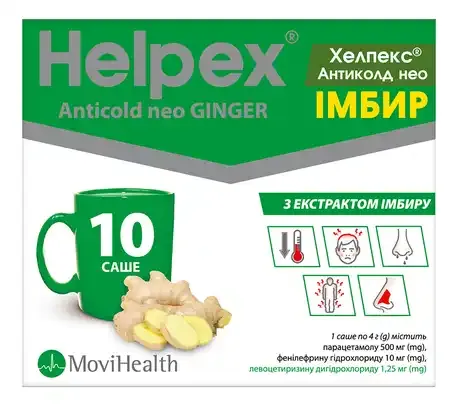
Table of Contents
INSTRUCTIONS FOR MEDICAL USE OF THE MEDICINAL PRODUCT HELPEX® ANTICOLD NEO GINGER
Composition:
Active substances: paracetamol, levocetirizine dihydrochloride, phenylephrine hydrochloride;
One 4 g sachet contains: paracetamol 500 mg, phenylephrine hydrochloride 10 mg, levocetirizine dihydrochloride 1.25 mg;
Excipients: aspartame (E 951), sucralose, honey flavor, ginger flavor, colloidal anhydrous silicon dioxide, sodium lauryl sulfate, sucrose, anhydrous citric acid, tartrazine (E 102), maltodextrin, ginger root extract (6:1).
Pharmaceutical form. Oral soluble powder.
Main physicochemical properties: powder ranging from white to light yellow.
Pharmacotherapeutic group.
Analgesics and antipyretics. Anilides. Paracetamol combinations without psychotropic agents.
ATC code N02B E51.
Pharmacological Properties
Pharmacodynamics
A combined medicinal product for symptomatic treatment of acute respiratory viral infections, influenza, and colds. Possesses antipyretic, analgesic, antiallergic, and mild anti-inflammatory properties. Relieves symptoms of nasal congestion, rhinorrhea, lacrimation, sneezing, headache, and body aches.
Paracetamol exerts analgesic, antipyretic, and mild anti-inflammatory effects.
The mechanism of action of paracetamol is associated with its influence on the thermoregulatory center in the hypothalamus, ability to inhibit the synthesis of prostaglandins and inflammatory mediators (kinins, serotonin), and increased pain threshold sensitivity.
Levocetirizine dihydrochloride is a non-sedating antihistamine, the active and stable R-enantiomer of cetirizine, belonging to the group of competitive histamine antagonists. Its pharmacological effect is due to blockade of H1-histamine receptors. The affinity of levocetirizine for H1-histamine receptors is twice higher than that of cetirizine. It affects the histamine-dependent stage of allergic reaction development, reduces eosinophil migration, vascular permeability, and limits the release of inflammatory mediators. Prevents the development and suppresses the progression of allergic reactions, exerts anti-exudative, anti-pruritic, and anti-inflammatory effects. It does not exert anticholinergic or anti-serotonergic activity and does not penetrate into the central nervous system.
Levocetirizine inhibits the late phase of inflammation reaction induced by intradermal administration of kallikrein in patients. It also reduces the expression of adhesion molecules such as ICAM-1 and VCAM-1, which are markers of allergic inflammation. By reducing ICAM-1 adhesiveness, an indirect antiviral effect is achieved, as cellular resistance to rhinovirus increases. Additionally, levocetirizine reduces the secondary adhesion of Staphylococcus aureus and Haemophilus influenzae to nasopharyngeal epithelial cells infected with rhinovirus.
Phenylephrine hydrochloride is a relatively selective α1-adrenomimetic agent. It exerts weak effects on α2- and β-adrenergic receptors. Due to its vasoconstrictive effect, phenylephrine reduces nasal mucosal edema, decreases nasal secretion volume, and improves nasal breathing by facilitating airflow through the nose. It is used to provide temporary relief from nasal congestion associated with acute respiratory viral infections and colds.
Pharmacokinetics
Paracetamol is rapidly and almost completely absorbed in the gastrointestinal tract. The elimination half-life is 1–4 hours. It is evenly distributed throughout all body fluids. Plasma protein binding is variable. It is primarily excreted by the kidneys in the form of conjugated metabolites.
Levocetirizine dihydrochloride. Pharmacokinetic parameters show linear dependence and are almost identical to those of cetirizine. It is rapidly absorbed after oral administration; food intake does not affect the extent of absorption but reduces its rate.
There is no available information regarding tissue distribution of levocetirizine in humans or its penetration through the blood-brain barrier. The volume of distribution is 0.4 L/kg. Plasma protein binding is 90%.
Approximately 14% of levocetirizine undergoes metabolism in the body. Due to the low extent of metabolism and lack of enhanced inhibitory activity, interactions between levocetirizine and other substances (and vice versa) are unlikely.
Drug excretion occurs mainly via glomerular filtration and active tubular secretion. The elimination half-life (T1/2) is 7.9 ± 1.9 hours; total clearance is 0.63 mL/min/kg. It does not accumulate and is completely eliminated from the body within 96 hours. 85.4% of the active substance dose is excreted unchanged in urine, and approximately 12.9% in feces.
In patients with impaired renal function (creatinine clearance < 40 mL/min), levocetirizine clearance is reduced and elimination half-life (T1/2) is prolonged (e.g., in patients undergoing hemodialysis, total clearance is reduced by 80%), necessitating appropriate dose adjustment. During standard 4-hour hemodialysis, only a small fraction (less than 10%) of levocetirizine is removed. It passes into breast milk.
Phenylephrine hydrochloride. The onset of action is rapid and lasts approximately 20 minutes. It is metabolized in the liver or gastrointestinal tract and excreted by the kidneys.
Clinical characteristics.
Indications.
Treatment of symptoms associated with acute respiratory viral infections and influenza (to reduce elevated body temperature, relieve rhinitis, alleviate nasal mucosal edema, relieve headache, and eliminate body aches).
Contraindications.
Hypersensitivity to any component of the medicinal product or to piperazine derivatives in medical history. Severe forms of cardiovascular diseases, arterial hypertension, conduction disorders, ischemic heart disease, atherosclerosis, or heart failure. Hyperthyroidism, pheochromocytoma. Epilepsy, increased excitability, sleep disorders. Thrombosis, thrombophlebitis, predisposition to vascular spasm. Bronchial asthma. Blood disorders (including severe anemia, leukopenia). Acute pancreatitis. Severe impairment of liver and/or kidney function (creatinine clearance < 10 mL/min). Alcoholism. Prostate adenoma with obstructed urination, bladder neck obstruction. Diabetes mellitus. Closed-angle glaucoma. Congenital hyperbilirubinemia, glucose-6-phosphate dehydrogenase deficiency. Concomitant use with tricyclic antidepressants, beta-blockers, or other antihypertensive agents, sympathomimetics; with monoamine oxidase inhibitors and within 2 weeks after discontinuation of their use; with drugs that suppress or increase appetite; amphetamine-like psychostimulants.
Interaction with other medicinal products and other types of interactions.
When used concomitantly with paracetamol, the following interactions may occur:
- may slow down elimination of antibiotics from the body;
- barbiturates reduce the antipyretic effect of paracetamol;
- concomitant use of paracetamol with hepatotoxic agents increases hepatotoxic effects;
- inducers of hepatic microsomal enzymes (anticonvulsants (phenytoin, barbiturates, carbamazepine), rifampicin), alcohol, and isoniazid enhance the hepatotoxicity of paracetamol;
- metoclopramide and domperidone increase, while cholestyramine, antacids, and food reduce the absorption of paracetamol;
- salicylamide prolongs the elimination period of paracetamol;
- tetracycline increases the risk of anemia and methemoglobinemia caused by paracetamol;
- paracetamol reduces the effectiveness of diuretics;
- paracetamol intake may affect the results of blood glucose and uric acid measurements.
With prolonged concomitant use, the anticoagulant effect of coumarins (e.g., warfarin) is enhanced, increasing the risk of bleeding.
Concomitant use of paracetamol with nonsteroidal anti-inflammatory agents increases the risk of kidney function impairment.
Concomitant use with flucloxacillin may lead to metabolic acidosis with a high anion gap as a result of pyroglutamic acidosis, especially in patients with risk factors (see section "Special precautions").
Studies on levocetirizine regarding drug interactions have not been conducted. Studies with cetirizine (racemic mixture) showed that concomitant use with antipyrine, pseudoephedrine, cimetidine, ketoconazole, erythromycin, azithromycin, glipizide, or diazepam does not result in clinically significant adverse interactions. When used concomitantly with theophylline (400 mg/day), a slight reduction (by 16%) in total clearance of levocetirizine was observed (theophylline distribution was unchanged). In a study of multiple-dose administration of ritonavir (600 mg twice daily) and cetirizine (10 mg daily), cetirizine exposure increased by approximately 40%, while ritonavir distribution was slightly impaired (-11%) with concomitant cetirizine use.
Food intake does not affect the extent of drug absorption but reduces the rate of absorption.
Concomitant use of cetirizine or levocetirizine with alcohol or other central nervous system depressants in susceptible patients may cause additional reduction in alertness and ability to perform tasks.
Concomitant use of phenylephrine hydrochloride with monoamine oxidase inhibitors, tricyclic antidepressants (amitriptyline), indomethacin, and bromocriptine may cause severe arterial hypertension; may reduce the effectiveness of beta-blockers and other antihypertensive agents (debrisoquin, guanethidine, reserpine, methyldopa), increasing the risk of arterial hypertension and cardiovascular adverse reactions; with sympathomimetic amines, digoxin, and cardiac glycosides increases the risk of arrhythmias and myocardial infarction. Rauwolfia alkaloids reduce the therapeutic effect of phenylephrine hydrochloride; alpha-adrenergic blockers (phentolamine), phenothiazines, furosemide, and other diuretics counteract vasoconstriction.
Special precautions for use
Do not exceed the recommended dose; do not take the medicine concurrently with other products containing paracetamol, as this may lead to paracetamol overdose, which can cause liver failure.
Consult a physician if symptoms persist and/or are accompanied by high fever lasting more than 3 days; or if headache becomes persistent.
Do not use concurrently with alcohol.
Use with caution in elderly patients; in patients with Raynaud's disease.
Patients should consult a physician before using the medicine if they are taking analgesics daily for mild forms of arthritis; if they are taking warfarin or similar anticoagulant drugs; or if they have liver disease (increased risk of hepatotoxic effects of paracetamol) or kidney disease.
Cases of liver failure/dysfunction have been reported in patients with reduced glutathione levels, for example, in severe malnutrition, anorexia, low body mass index, or chronic alcoholism. In patients with reduced glutathione levels, such as those with severe infections like sepsis, the use of paracetamol increases the risk of metabolic acidosis. Symptoms of metabolic acidosis include deep, rapid, or labored breathing, nausea, vomiting, and loss of appetite. Seek immediate medical attention if these symptoms occur.
Cases of high anion gap metabolic acidosis (HAGMA) due to 5-oxoproline (pyroglutamic) acidosis have been reported in patients with severe conditions such as severe renal failure and sepsis, or in patients with malnutrition or other sources of glutathione deficiency (e.g., chronic alcoholism), who were treated with therapeutic doses of paracetamol over a prolonged period or with a combination of paracetamol and flucloxacillin. If HAGMA due to pyroglutamic acidosis is suspected, immediate discontinuation of paracetamol is recommended, along with careful monitoring. Measurement of 5-oxoproline levels in urine may be helpful in identifying pyroglutamic acidosis as the underlying cause of HAGMA in patients with multiple risk factors.
Use with caution in patients with chronic renal insufficiency (dose adjustment required) and in elderly patients with renal impairment (possible reduction in glomerular filtration rate).
Contains natural extract of medicinal ginger, which has the ability to reduce blood glucose levels and glycated hemoglobin levels.
Phenylephrine may provoke an angina attack.
Use the medicine with caution in patients prone to urinary retention (e.g., spinal cord injury, benign prostatic hyperplasia), or with difficulty in urination, as the risk of urinary retention may increase; and in patients at risk of seizures or with epilepsy.
There are no data on enhanced sedative effects when used at therapeutic doses. However, concomitant use of sedatives should be avoided during treatment with this medicine.
Antihistamines suppress skin allergic reactions; therefore, the medicine should be discontinued at least 3 days before skin allergy testing (elimination period).
Tartrazine (E 102) may cause allergic reactions.
Aspartame (E 951) is a phenylalanine derivative and poses a risk for patients with phenylketonuria.
The medicine contains sucrose; therefore, patients with diagnosed intolerance to certain sugars should consult a physician before taking this medicine.
Use during pregnancy or breastfeeding
Pregnancy
The medicine is not recommended for use during pregnancy, as levocetirizine dihydrochloride is contraindicated in pregnancy.
Breastfeeding
Since the active ingredients of the medicine pass to some extent into breast milk, the medicine should not be used during breastfeeding. If treatment with the medicine is necessary, breastfeeding should be discontinued.
Fertility
There are no data on the effect of the medicine on fertility.
Ability to affect reaction speed when driving or operating machinery
During treatment with this medicine, patients should refrain from activities requiring high concentration and alertness (e.g., driving vehicles or operating potentially hazardous machinery).
Dosage and Administration.
Adults and children aged 12 years and older: 1 sachet up to 4 times daily. Intervals between doses should be at least 4 hours. Dissolve the contents of the sachet in a glass of hot water and drink.
The duration of treatment should not exceed 5 days.
Maximum duration of use without medical consultation – 3 days.
Children.
Do not use in children under 12 years of age.
Overdose.
Liver damage is possible in adults who have ingested 10 g or more of paracetamol, or 5 g in the presence of risk factors, and in children who have ingested more than 0.15 g/kg body weight.
In paracetamol overdose, symptoms such as pallor, nausea, vomiting, loss of appetite, and abdominal pain may develop within the first 24 hours.
The first clinical and biochemical signs of liver damage may appear 12–48 hours after overdose. Disturbances in glucose metabolism, hypokalemia, and metabolic acidosis (including lactic acidosis) may occur, along with increased hepatic transaminase activity, elevated bilirubin levels, prolonged prothrombin time, and hemorrhages.
Occasionally, nephrotoxicity has been observed involving the urinary system, including renal colic, interstitial nephritis, and acute renal failure with acute tubular necrosis, which may manifest as severe lumbar pain, hematuria, proteinuria, and may develop even in the absence of severe liver damage.
In severe cases, liver damage (hepatocellular necrosis) and worsening liver function may occur, potentially progressing to hepatic encephalopathy, hepatic coma, cerebral edema, and may be fatal.
In patients with risk factors (long-term treatment with carbamazepine, phenobarbital, phenytoin, primidone, rifampicin, St. John's wort, or other drugs inducing liver enzymes; alcoholism; glutathione deficiency (digestive disorders, cystic fibrosis, HIV infection, starvation, cachexia)), ingestion of 5 g or more of paracetamol may lead to liver damage.
Cardiac arrhythmias and acute pancreatitis have also been reported, usually accompanied by liver function disturbances and hepatotoxicity.
Following ingestion of large doses, central nervous system effects such as disorientation may occur.
With prolonged use of the drug in high doses, hematological disorders such as aplastic anemia, pancytopenia, agranulocytosis, neutropenia, leukopenia, and thrombocytopenia may develop.
Treatment of overdose: Immediate medical assistance is required in case of overdose. The patient should be taken to hospital immediately, even if early symptoms of overdose are absent.
Symptoms may be limited to nausea and vomiting and may not reflect the severity of overdose or risk of organ damage. Gastric lavage should be performed within the first hours after suspected overdose. Activated charcoal may be beneficial if the excessive dose of paracetamol was ingested within the past hour.
Plasma paracetamol concentration should be measured 4 hours or later after ingestion (earlier measurements are unreliable). Intravenous administration of N-acetylcysteine should be initiated within 24 hours of paracetamol ingestion according to current guidelines. The maximum therapeutic effect is achieved within 8 hours after paracetamol ingestion; beyond this time, the efficacy of the antidote decreases sharply. In the absence of vomiting, oral methionine may be used as an alternative in remote areas outside hospital settings.
Symptoms of levocetirizine dihydrochloride overdose may include drowsiness in adults and initial excitation and increased irritability followed by drowsiness in children.
Treatment of overdose. There is no specific antidote for levocetirizine. In case of overdose symptoms, symptomatic and supportive therapy is recommended. Gastric lavage may be considered shortly after drug ingestion. Hemodialysis is ineffective for removing levocetirizine from the body.
Overdose of phenylephrine manifests with symptoms from the cardiovascular system and respiratory depression. Symptoms may include restlessness, headache, dizziness, insomnia, nausea, vomiting, elevated blood pressure, or reflex bradycardia, tachycardia, palpitations, and urinary retention (more common in patients with prostatic hypertrophy).
Treatment of overdose. To counteract hypertensive effects, intravenous α-adrenergic blockers are administered; in case of seizures, diazepam is indicated.
Adverse reactions.
Immune system disorders: hypersensitivity reactions, including pruritus, urticaria, rash, angioneurotic edema, anaphylactic shock, erythema multiforme, Stevens-Johnson syndrome, toxic epidermal necrolysis (Lyell's syndrome).
Nervous system disorders: drowsiness, headache, increased fatigue, weakness, asthenia, tremor, seizures, paresthesia, dizziness, fainting, dysgeusia, sleep disturbances, aggression, psychomotor agitation, insomnia, suicidal thoughts, hallucinations, nervousness, irritability, anxiety, fear, depression, disorientation.
Eye disorders: visual disturbances and accommodation disorders, mydriasis, increased intraocular pressure.
Cardiac disorders: increased blood pressure, decreased blood pressure, tachycardia, palpitations, dyspnea, chest pain.
Renal and urinary system disorders: dysuria, urinary retention, renal colic, nephrotoxicity.
Ear and labyrinth disorders: tinnitus, vertigo.
Respiratory system disorders: bronchospasm in patients sensitive to aspirin and other nonsteroidal anti-inflammatory drugs.
Gastrointestinal disorders: nausea, vomiting, dry mouth, abdominal discomfort and pain, diarrhea, constipation, increased appetite, heartburn, flatulence, hypersalivation.
Hepatobiliary disorders: liver function abnormalities, increased liver enzyme activity, liver failure, hepatitis.
Endocrine disorders: hypoglycemia, up to hypoglycemic coma.
Blood and lymphatic system disorders: thrombocytopenia, agranulocytosis, anemia, including hemolytic anemia (bruising or bleeding); sulfhemoglobinemia and methemoglobinemia (cyanosis, dyspnea, chest pain); leukopenia, pancytopenia, neutropenia.
Musculoskeletal and connective tissue disorders: myalgia, arthralgia.
Metabolism and nutrition disorders: metabolic acidosis with a high anion gap.
General disorders: weight gain, fever, edema.
Description of selected adverse reactions
Metabolic acidosis with a high anion gap as a result of pyroglutamic acidosis has been observed in patients with risk factors who used paracetamol (see section "Special precautions"). Pyroglutamic acidosis may occur due to low glutathione levels in these patients.
Reporting suspected adverse reactions
Reporting suspected adverse reactions after drug authorization is important. It allows continuous monitoring of the benefit-risk balance of the medicinal product. Healthcare and pharmaceutical professionals, as well as patients or their legal representatives, should report all suspected adverse reactions and lack of efficacy via the Automated Pharmacovigilance Information System at the following link: https://aisf.dec.gov.ua.
Shelf life. 4 years.
Storage conditions.
Store in the original packaging, out of reach of children, at a temperature not exceeding 25 °C.
Packaging.
4 g of powder in sachets; 10 sachets in a cardboard box.
Dispensing category. Over-the-counter.
Manufacturer. Alpex Pharma SA.
Manufacturer's address and location of its business operations.
Via Cantonale, 6805 Mezzovico-Vira, Switzerland.