Hepferol
Ukraine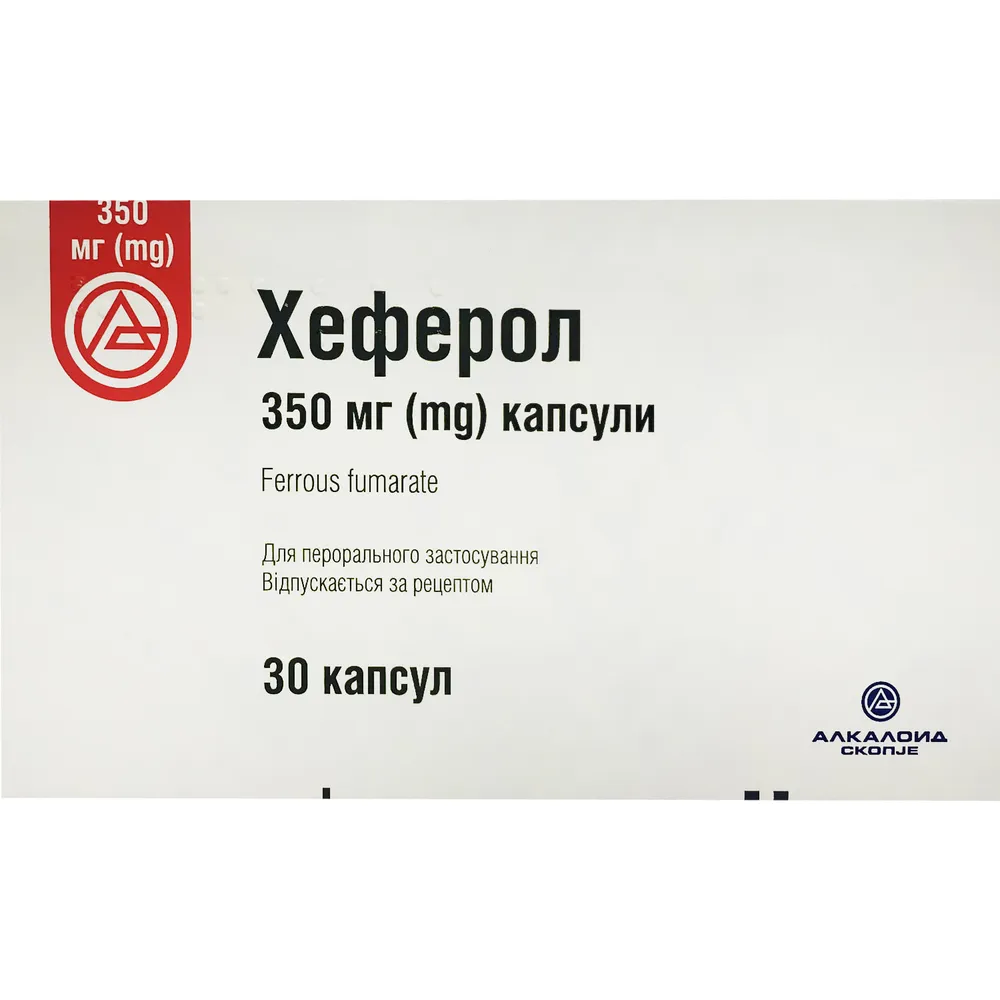
Table of Contents
INSTRUCTIONS FOR MEDICAL USE OF THE MEDICINAL PRODUCT HEPHEROL (HEFEROL®)
Composition:
Active ingredient: ferrous fumarate;
1 capsule contains 350 mg of ferrous fumarate, equivalent to 115 mg of elemental iron;
Excipients: magnesium stearate; lactose monohydrate; sodium lauryl sulfate; colloidal anhydrous silicon dioxide;
Capsule shell composition: titanium dioxide (E 171), quinoline yellow (E 104), azorubine (E 122), patent blue V (E 131), diamond black BN (E 151), gelatin.
Pharmaceutical form. Capsules.
Main physicochemical characteristics:
hard gelatin capsules size № 1: body – dull yellowish-beige; cap – dull dark green; capsule contents – fine granular powder of reddish-brown color with white specks.
Pharmacotherapeutic group.
Antianemic agents. Iron preparations. Divalent iron preparations for oral use. Iron fumarate. ATC code B03A A02.
Pharmacological Properties
Pharmacodynamics
Heferol contains elemental iron in the form of iron fumarate. Approximately two-thirds of the iron in the body is contained in hemoglobin within circulating red blood cells. Insufficient dietary intake of iron or impaired absorption leads to latent or clinically evident iron deficiency (iron-deficiency anemia). Adequate iron supply is particularly important during pregnancy to ensure normal fetal development and to prevent low birth weight in newborns.
The dosage form of Heferol (capsules) prevents direct contact of iron with the gastric mucosa. Capsule administration protects teeth and the rapid passage of iron through the stomach helps prevent gastrointestinal side effects caused by the irritant effect of iron on gastric mucosa. In the intestine, iron is gradually released from the capsule and absorbed.
Pharmacokinetics
Iron fumarate ensures gradual and uniform release of iron from the gastrointestinal tract. Iron absorption occurs almost entirely via active transport in the duodenum and jejunum. In healthy individuals, approximately 5–10% of the orally administered dose is absorbed; in iron deficiency, absorption may increase to 80–95%. Muscle tissues (proteins containing cysteine) and orally administered ascorbic acid enhance the absorption of non-heme iron. Foods containing phytic acid (soy, legumes, and cereal grains) and polyphenols (tea, coffee, chocolate, red wine) impair non-heme iron absorption. Hydrolyzed tannins in tea are the main inhibitors; calcium—in organic compounds or food—and certain proteins (soy, eggs, casein)—also reduce absorption.
Maximum concentration of iron fumarate is reached 4 hours after administration. Iron is stored in the body in the form of ferritin and hemosiderin. The biological half-life of iron is 12.9 hours. The elimination half-life following oral or parenteral administration of iron is 6 hours. Only minimal amounts of iron are excreted from the body via bile and sweat, while 12–30 mg of iron is lost during a normal menstrual cycle. During normal lactation, approximately 0.25 mg/day (0.15–0.3 mg) of iron is excreted in breast milk.
Clinical characteristics.
Indications.
Treatment and prevention of iron deficiency anemia.
Contraindications.
Hypersensitivity to the active substance or to any of the excipients of the medicinal product.
Paroxysmal nocturnal hemoglobinuria.
Hemochromatosis, hemosiderosis, and other types of anemia not associated with iron deficiency in the body (hemolytic anemia, aplastic anemia, thalassemia).
Hemoglobinopathy.
Active peptic ulcer.
Regional enteritis (Crohn's disease) and ulcerative colitis.
Repeated blood transfusions.
Parenteral administration of iron-containing medicinal products.
Children under 12 years of age.
Interaction with other medicinal products and other forms of interaction.
If Heferol is taken simultaneously with tetracycline (or ciprofloxacin), it is recommended to take these antibiotics 3 hours before or 2 hours after taking the iron preparation.
Concomitant use with antacids, calcium carbonate, phosphates, oxalates, trientine, coffee, tea, eggs, milk, and dairy products is not recommended, as they reduce iron absorption. Therefore, Heferol should be taken 1 hour before or 2 hours after ingestion of these products.
Ascorbic acid and proteins containing cysteine enhance iron absorption. Cholestyramine, food, and antacids reduce iron absorption from the gastrointestinal tract.
Iron delays gastrointestinal absorption of tetracycline, certain quinolone agents (ciprofloxacin), and methyldopa.
Iron-containing preparations reduce the absorption of penicillamine when used concomitantly.
Hematological response to iron therapy develops more slowly in patients who are simultaneously receiving chloramphenicol therapy.
Iron salts reduce gastrointestinal absorption of quinolone antibiotics (ciprofloxacin, ofloxacin, levofloxacin), levodopa, methyldopa, penicillamine, bisphosphonates, levothyroxine (thyroxine), entacapone, and zinc. Concomitant use is not recommended; these agents should be taken either 2 hours before or 2 hours after taking Heferol.
Iron salts delay gastrointestinal absorption of tetracycline and cholestyramine; therefore, this combination should not be used. If concomitant administration is necessary, the drugs should be taken at an interval of at least 2 hours.
Iron salts may reduce the efficacy of levothyroxine.
Special precautions for use
The drug should not be taken for longer than 6 months, except for patients with prolonged bleeding, menorrhagia, or recurrent pregnancy.
Particular caution should be exercised in patients with peptic ulcer and hepatitis.
To prevent constipation, the drug should be taken with a large amount of fluid. If the drug causes stomach discomfort, it should be taken during meals.
Poor iron absorption has been observed in some patients after gastrectomy.
Since anemia may be of microcytic type due to combined iron and vitamin B12 deficiency or folate deficiency, patients with microcytic anemia who are resistant to iron therapy should be evaluated for folate or vitamin B12 deficiency.
Iron preparations may darken stools to black. This may interfere with tests used to detect occult blood in feces.
Before initiating iron therapy in patients over 50 years of age, the cause of anemia should be determined, as anemia at this age may be due to gastrointestinal bleeding.
Heferyl contains lactose monohydrate and therefore should not be administered to patients with rare hereditary intolerance to galactose, lactase deficiency, or glucose-galactose malabsorption.
The medicinal product contains azorubine (E 122) and patent blue V (E 151), which may cause allergic reactions.
Use during pregnancy or breastfeeding
Heferyl is indicated for iron deficiency during pregnancy or breastfeeding.
Administration of medicinal products during the first trimester of pregnancy is recommended only after careful assessment of the benefit-risk ratio and only when strictly necessary. During the later stages of pregnancy, iron preparations should be used only on a physician's recommendation.
Pregnant women should also take folic acid.
Ability to affect reaction speed when driving or operating machinery
No effect.
Dosage and Administration
Take capsules on an empty stomach, 30 minutes before breakfast, with a large amount of liquid.
Adults and children aged 12 years and older:
For prophylaxis – 1 capsule once daily;
For treatment – 1 capsule twice daily.
During the II and III trimesters of pregnancy, the usual adult doses are recommended for both treatment and prophylaxis.
Elderly patients.
For treatment and prophylaxis, the dosage is the same as for adults.
Treatment duration is 6 to 12 weeks. The medication should be continued for some time after normalization of peripheral blood parameters in order to replenish iron stores in the body.
In some patients, doses exceeding 30 mg/kg body weight may cause symptoms of overdose. For children, doses exceeding 75 mg/kg body weight may be toxic.
Children.
Capsules must not be divided; therefore, there are no recommendations for the use of Heferol in children under 12 years of age.
Overdose.
Ingestion of 20 mg/kg of elemental iron is potentially toxic, and 200–250 mg/kg is potentially lethal. No single assessment method is entirely satisfactory—both clinical features and laboratory tests must be considered. Serum iron concentration measured approximately 4 hours after ingestion is the best laboratory indicator of the severity of the patient's condition.
| Serum iron |
Severity |
| < 3 mg/L (55 µmol/L) |
Mild toxicity |
| 3–5 mg/L (55–90 µmol/L) |
Moderate toxicity |
| > 5 mg/L (90 µmol/L) |
Severe toxicity |
Symptoms
Early signs and symptoms include nausea, vomiting, abdominal pain, and diarrhea. Vomiting and stool may be gray or black. In more severe cases, signs of hypoperfusion (cold extremities and hypotension), metabolic acidosis, and systemic toxicity may occur. In serious cases, recurrent vomiting and gastrointestinal bleeding may reappear 12 hours after ingestion. Shock may result from hypovolemia or direct cardiotoxicity.
At this stage, signs of hepatocellular necrosis appear, manifesting as jaundice, bleeding, hypoglycemia, encephalopathy, and metabolic acidosis with an elevated anion gap. Poor tissue perfusion may lead to renal failure. Rarely, gastric scarring causing pyloric stricture or stenosis may result in partial or complete intestinal obstruction 2–5 weeks after ingestion.
Treatment
Supportive and symptomatic measures include maintaining airway patency, monitoring heart rhythm, blood pressure, and urine output, establishing intravenous access, and administering adequate fluids to ensure proper hydration. Consideration should be given to intestinal decontamination. If metabolic acidosis persists despite correction of hypoxia and adequate fluid resuscitation, sodium bicarbonate may be administered at an initial dose of 50 mmol for adults, repeated as needed based on arterial blood gas monitoring (target pH – 7.4). Administration of deferoxamine should be considered in symptomatic patients (other than nausea) if serum iron concentration is 3–5 mg/L (55–90 µmol/L) and continues to rise. Hemodialysis is not effective, but it may be beneficial in acute renal failure, as it accelerates the elimination of the "iron–deferoxamine" complex.
Side effects.
Most commonly, treatment with iron preparations may cause gastrointestinal disturbances: epigastric pain, nausea, vomiting, anorexia, black discoloration of stools, diarrhea, metallic taste in the mouth; allergic reactions including skin rashes and itching. Prolonged unjustified use may lead to constipation and hemosiderosis.
Shelf life.
5 years.
Storage conditions.
Store at a temperature not exceeding 25 °C.
Keep out of reach of children.
Packaging.
10 capsules in a blister; 3 blisters (30 capsules) in a cardboard pack.
Prescription status.
Prescription only.
Manufacturer.
ALKALOID AD Skopje.
Manufacturer's address and place of business.
Boulevard Alexander the Great No. 12, Skopje, 1000, Republic of North Macedonia.