Ketorolac-microkhim
Ukraine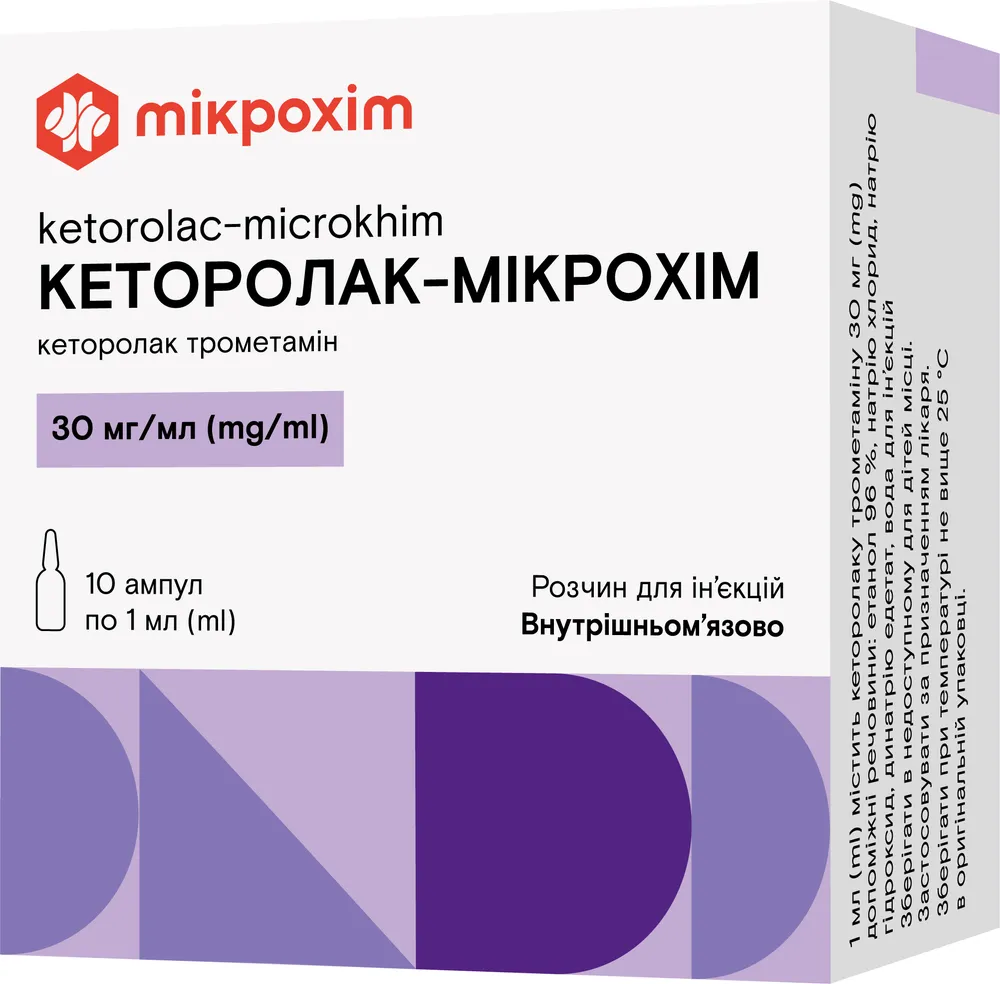
Table of Contents
- INSTRUCTIONS FOR MEDICAL USE OF THE MEDICINAL PRODUCT KETOROLAC-MICROKHIM (KETOROLAC-MICROKHIM)
- Composition:
- Pharmacological Properties.
- Special precautions.
- Method of Administration and Dosage.
- Adverse Reactions
- Composition:
- Pharmacological Properties
- Clinical characteristics.
- Special precautions for use.
- Dosage and Administration
- Side effects.
INSTRUCTIONS FOR MEDICAL USE OF THE MEDICINAL PRODUCT KETOROLAC-MICROKHIM (KETOROLAC-MICROKHIM)
Composition:
Active substance: ketorolac;
1 ml of injection solution contains ketorolac tromethamine 30 mg;
Excipients: sodium chloride, disodium edetate, ethanol 96 %, water for injections, sodium hydroxide.
Pharmaceutical form. Injection solution.
Main physicochemical properties: clear yellowish solution.
Pharmacotherapeutic group.
Medicinal products affecting the musculoskeletal system. Anti-inflammatory and antirheumatic agents. Nonsteroidal anti-inflammatory and antirheumatic agents. Acetic acid derivatives and related substances. Ketorolac. ATC code M01AB15.
Pharmacological Properties.
Pharmacodynamics.
Ketorolac tromethamine is a nonsteroidal anti-inflammatory agent that demonstrates analgesic activity. The mechanism of action of ketorolac, as with other NSAIDs, is not completely understood but may involve inhibition of prostaglandin synthesis. The biological activity of ketorolac tromethamine is associated with the S-form. Ketorolac tromethamine does not possess sedative or anxiolytic properties.
The maximum analgesic effect of ketorolac is achieved within 2–3 hours. This effect shows no statistically significant differences within the recommended dosage range. The main difference between higher and lower doses of ketorolac lies in the duration of analgesia.
Pharmacokinetics.
Ketorolac tromethamine is a racemic mixture of [−] S- and [+] R-enantiomeric forms, with analgesic activity attributed to the S-form. After intramuscular administration, ketorolac is rapidly and completely absorbed. The mean peak plasma concentration of 2.2 µg/mL is reached on average within 50 minutes after a single 30 mg dose.
Linear Pharmacokinetics
In adults, following intramuscular administration of ketorolac tromethamine at recommended doses, racemate clearance remains unchanged. This indicates that the pharmacokinetics of ketorolac tromethamine in adults after single or multiple intramuscular doses are linear. With higher recommended doses, a proportional increase in concentrations of both free and bound racemate is observed.
Distribution
The mean apparent volume of distribution (Vβ) of ketorolac tromethamine after complete distribution is approximately 13 liters. This parameter was determined from single-dose data. The racemate of ketorolac tromethamine has been shown to have a high capacity for binding to plasma proteins (99%). However, plasma concentrations above 10 µg/mL occupy approximately 5% of albumin binding sites. Thus, the unbound fraction for each enantiomer remains constant within the therapeutic range. Nevertheless, decreased serum albumin levels will lead to an increased concentration of free drug.
Ketorolac penetrates into breast milk.
Metabolism
Ketorolac tromethamine is extensively metabolized in the liver. Metabolites include hydroxylated and conjugated derivatives of the drug. Metabolites and a portion of unchanged drug are excreted in urine.
Excretion
The primary route of elimination for ketorolac and its metabolites is renal. Approximately 92% of the administered dose is recovered in urine: 40% as metabolites and 60% as unchanged ketorolac. Approximately 6% of the dose is excreted in feces. In a single-dose study of 10 mg ketorolac (n = 9), the S-enantiomer was shown to be eliminated twice as fast as the R-enantiomer, and clearance was independent of the route of administration. This implies that the plasma concentration ratio of S-enantiomer to R-enantiomer decreases over time after each dose. Differences between S- and R-forms in humans are minimal or absent.
The elimination half-life of the S-enantiomer of ketorolac tromethamine is approximately 2.5 hours (SD ± 0.4), and that of the R-enantiomer is 5 hours (SD ± 1.7). Other studies have reported the half-life of the racemate to be 5–6 hours.
Accumulation
Ketorolac tromethamine administered intravenously as bolus doses every 6 hours for 5 days to healthy volunteers (n = 13) did not show a significant difference in Cmax between day 1 and day 5. Minimum levels averaged 0.29 µg/mL (SD ± 0.13) on day 1 and 0.55 µg/mL (SD ± 0.23) on day 6. Steady state was achieved after the fourth dose. Accumulation of ketorolac tromethamine in specific patient groups (elderly patients, children, patients with renal or hepatic impairment) has not been studied.
Pharmacokinetics in Specific Patient Populations
Elderly Patients
Data from single-dose administration show that the elimination half-life of ketorolac tromethamine racemate increased from 5 to 7 hours in elderly patients (65–78 years) compared to younger healthy volunteers (24–35 years). No significant difference in Cmax was observed between the two groups (elderly patients: 2.52 µg/mL ± 0.77; younger patients: 2.99 µg/mL ± 1.03).
Children
Pharmacokinetic data on intramuscular administration of ketorolac tromethamine in children are lacking.
Renal Impairment
Following single-dose administration, the mean elimination half-life of ketorolac tromethamine in patients with impaired renal function ranges from 6 to 19 hours, depending on the severity of impairment. There is almost no correlation between creatinine clearance and total clearance of ketorolac tromethamine in elderly patients and patients with renal dysfunction (r = 0.5). In patients with kidney disease, the AUC∞ of each enantiomer increases by nearly 100% compared to healthy volunteers. The volume of distribution doubles for the S-enantiomer and increases by one-fifth for the R-enantiomer. The increased volume of distribution of ketorolac tromethamine indicates an increased unbound fraction.
The ratio of AUC∞ of enantiomers in healthy volunteers and patients remained similar, suggesting non-selective excretion of enantiomers in patients compared to healthy volunteers.
Hepatic Impairment
The values of elimination half-life, AUC∞, and Cmax in 7 patients with liver disease did not differ significantly from those in healthy volunteers.
Clinical Characteristics.
Indications.
Ketorolac tromethamine is indicated for short-term (≤ 5 days) management of moderate to severe pain requiring opioid-level analgesia, typically in the postoperative period.
Contraindications.
- Hypersensitivity to ketorolac or any other component of the drug;
- patients with active peptic ulcer, recent gastrointestinal bleeding or perforation, or history of peptic ulcer or gastrointestinal bleeding;
- bronchial asthma, angioneurotic edema, or urticaria induced by acetylsalicylic acid or other nonsteroidal anti-inflammatory drugs (due to the potential for severe anaphylactic reactions);
- not to be used as an analgesic prior to major surgery;
- ketorolac tromethamine is contraindicated during coronary artery bypass graft (CABG) surgery;
- severe renal impairment or risk of developing renal failure due to reduced fluid volume;
- not to be used during labor and delivery (due to the inhibitory effect of ketorolac tromethamine on prostaglandin synthesis, which may adversely affect fetal circulation and inhibit uterine contractions, thereby increasing the risk of uterine bleeding);
- suspected or confirmed cerebrovascular hemorrhage, hemorrhagic diathesis, including coagulation disorders and high risk of bleeding (due to the ability to inhibit platelet function);
- concomitant use with other NSAIDs or acetylsalicylic acid (due to cumulative risk of serious adverse reactions associated with NSAIDs);
- concomitant use with probenecid;
- concomitant use with pentoxifylline;
- neuraxial (epidural or intrathecal) administration of the drug (due to alcohol content).
Interaction with Other Medicinal Products and Other Forms of Interactions.
Ketorolac is highly bound to plasma proteins (on average, 99.2%). Ketorolac tromethamine does not alter the pharmacokinetics of other drugs via induction or inhibition of enzymes.
Warfarin, digoxin, salicylates, and heparin
Ketorolac tromethamine slightly reduced the protein binding of warfarin in vitro and did not alter the protein binding of digoxin. In vitro studies indicate that at therapeutic salicylate concentrations (300 µg/mL), ketorolac binding decreased from approximately 99.2% to 97.5%, suggesting a potential doubling of unbound ketorolac levels in plasma. Therapeutic concentrations of digoxin, warfarin, ibuprofen, naproxen, piroxicam, acetaminophen, phenytoin, and tolbutamide do not alter the protein binding of ketorolac tromethamine.
The combined effect of warfarin and NSAIDs on gastrointestinal bleeding is synergistic; thus, the risk of serious gastrointestinal bleeding is higher in patients taking both drugs compared to those taking either alone.
Acetylsalicylic acid
When used with acetylsalicylic acid, the protein binding of ketorolac decreases, although the clearance of free ketorolac remains unchanged. The clinical significance of this interaction is unknown; however, as with other NSAIDs, concomitant administration of ketorolac tromethamine and acetylsalicylic acid is not recommended due to the potential for increased adverse effects.
Diuretics
Clinical studies and post-marketing experience with ketorolac tromethamine have shown that in some patients it may reduce the natriuretic effect of furosemide and thiazides. This effect is explained by NSAID inhibition of renal prostaglandin synthesis. During concomitant therapy with NSAIDs, patients should be closely monitored for signs of renal impairment and to ensure diuretic efficacy.
Probenecid
Concomitant use of ketorolac tromethamine and probenecid results in decreased clearance and volume of distribution of ketorolac tromethamine and a significant increase in its plasma levels (total AUC increased approximately threefold from 5.4 to 17.8 µg·h/mL) and elimination half-life (approximately doubled from 6.6 to 15.1 hours). Therefore, concomitant use of ketorolac tromethamine and probenecid is contraindicated.
Lithium
NSAIDs have been reported to increase plasma lithium levels and decrease renal lithium clearance. The mean minimum lithium concentration increased by 15%, and renal clearance decreased by approximately 20%. This effect is explained by NSAID inhibition of renal prostaglandin synthesis. Patients receiving concomitant NSAIDs and lithium should be closely monitored for signs of lithium toxicity.
Methotrexate
It has been reported that NSAIDs competitively inhibit methotrexate accumulation in rabbit kidney slices. This suggests that NSAIDs may potentiate methotrexate toxicity. Caution is required when using NSAIDs concomitantly with methotrexate.
ACE inhibitors / Angiotensin II receptor antagonists
Concomitant use of ACE inhibitors and/or angiotensin II receptor antagonists may increase the risk of renal dysfunction, particularly in patients with reduced extracellular fluid volume.
NSAIDs may reduce the antihypertensive effect of ACE inhibitors and/or angiotensin II receptor antagonists. This interaction should be considered when prescribing NSAIDs together with ACE inhibitors and/or angiotensin II receptor antagonists.
Anticonvulsants
Isolated cases of seizures have been reported during concomitant use of ketorolac tromethamine and anticonvulsants (phenytoin, carbamazepine).
Psychotropic agents
Hallucinations have been reported during concomitant use of ketorolac and psychotropic agents (fluoxetine, thiethylazine, alprazolam).
Pentoxifylline
Concomitant use of ketorolac tromethamine and pentoxifylline increases the risk of bleeding.
Non-depolarizing muscle relaxants
During the post-marketing period, cases of possible interaction between ketorolac tromethamine and non-depolarizing muscle relaxants leading to apnea have been reported. No formal studies on the concomitant use of ketorolac tromethamine and muscle relaxants have been conducted.
Selective serotonin reuptake inhibitors (SSRIs)
There is an increased risk of gastrointestinal bleeding when SSRIs and NSAIDs are used concomitantly. Caution should be exercised when using them together.
Special precautions.
Combined intramuscular and oral administration of ketorolac tromethamine in adult patients should not exceed 5 days.
Masking symptoms of corticosteroid insufficiency
Ketorolac tromethamine cannot be expected to replace corticosteroids or treat corticosteroid insufficiency. Abrupt discontinuation of corticosteroids may lead to exacerbation of disease. Patients receiving long-term corticosteroid therapy should be gradually tapered if a decision is made to discontinue corticosteroid use. The pharmacological anti-inflammatory activity of ketorolac tromethamine may reduce the usefulness of this diagnostic sign in detecting complications of non-infectious inflammatory conditions.
Gastrointestinal effects
Ketorolac tromethamine is contraindicated in patients with active peptic ulceration and/or history of gastrointestinal bleeding.
Ketorolac tromethamine may cause severe adverse gastrointestinal reactions, including bleeding, ulceration, and perforation of the stomach, small intestine, and large intestine, which may be fatal. These adverse events may occur at any time during treatment with ketorolac tromethamine, with or without preceding symptoms.
Only one in five patients receiving NSAIDs experiences serious upper gastrointestinal symptoms. Minor upper gastrointestinal problems, such as dyspepsia, are common and may also occur at any time during NSAID therapy.
The frequency and severity of gastrointestinal complications increase with higher doses and longer duration of ketorolac tromethamine treatment. Use of ketorolac tromethamine for more than 5 days is not recommended.
However, even short-term therapy is not without risk. In addition to a history of prior peptic ulcer disease, predisposing factors that increase the risk of gastrointestinal bleeding in patients receiving NSAIDs include concomitant use of oral corticosteroids or anticoagulants, prolonged NSAID therapy, smoking, alcohol consumption, advanced age, and poor general health. Most spontaneous reports of fatal gastrointestinal events involved elderly or debilitated patients; therefore, caution should be exercised when prescribing to these patient groups.
To minimize the potential risk of gastrointestinal adverse events, the lowest effective dose of ketorolac tromethamine should be used for the shortest duration of treatment. Monitoring for signs and symptoms of gastrointestinal adverse events and bleeding during NSAID therapy is necessary, and appropriate treatment should be initiated if needed. Such actions should include discontinuation of ketorolac tromethamine until complete resolution of symptoms of serious gastrointestinal adverse events. Alternative non-NSAID treatment options should be considered for patients at high risk of such adverse events.
NSAIDs should be used with caution in patients with a history of inflammatory bowel disease (ulcerative colitis, Crohn’s disease) due to the risk of exacerbation.
Use of NSAIDs, including ketorolac, may be associated with an increased risk of gastrointestinal anastomotic failure. Careful medical supervision and caution are recommended when using ketorolac after gastrointestinal surgery.
Hematological effects
Cases of anemia have been reported in patients receiving NSAIDs. This may be due to occult or significant blood loss, fluid retention, or effects on erythropoiesis, which are not fully characterized. If a patient exhibits any signs or symptoms of anemia during treatment with ketorolac tromethamine, hemoglobin or hematocrit levels should be monitored. In some patients, NSAIDs inhibit platelet aggregation and have been shown to prolong bleeding time. Unlike acetylsalicylic acid, their effect on platelet function is quantitatively less, shorter in duration, and reversible. Patients with coagulation disorders or those receiving anticoagulants should be closely monitored.
Bleeding
Since prostaglandins play an important role in hemostasis and NSAIDs also affect platelet aggregation, the use of ketorolac tromethamine in patients with coagulation disorders should be done with special caution and under medical supervision. Patients receiving therapeutic doses of anticoagulants (e.g., heparin or dicoumarol derivatives) have an increased risk of bleeding; therefore, such concomitant therapy should be used with extreme caution. Concomitant use of ketorolac tromethamine with prophylactic low-dose heparin (2500 to 5000 units every 12 hours), warfarin, or dextran has not been studied, but such regimens may also increase the risk of bleeding. Due to the lack of data from such studies, the benefit-risk ratio should be carefully evaluated, and such concomitant therapy should be used with special caution. Close monitoring is required for patients taking other medications that adversely affect hemostasis when using ketorolac tromethamine.
Post-marketing experience with perioperative intramuscular administration of ketorolac tromethamine indicates the occurrence of postoperative hematomas and other signs of wound bleeding. Therefore, perioperative and postoperative use of ketorolac tromethamine should be avoided; caution should be exercised when administering to patients at increased risk of bleeding.
Renal effects
Prolonged use of NSAIDs has led to renal papillary necrosis and other renal impairments.
Nephrotoxicity has also been observed in patients in whom renal prostaglandins play a compensatory role in maintaining renal perfusion. In these patients, NSAID use may cause dose-dependent reduction in prostaglandin production and, consequently, decreased renal blood flow, potentially leading to significant renal decompensation. Patients at increased risk of these reactions include those with impaired renal function, dehydration, hypovolemia, heart failure, hepatic dysfunction, patients taking diuretics or ACE inhibitors, and elderly patients. Discontinuation of the drug usually results in return to the pre-treatment state.
Ketorolac tromethamine and its metabolites are primarily excreted by the kidneys, leading to reduced drug clearance in patients with decreased creatinine clearance. Therefore, ketorolac tromethamine should be used with caution and under close medical supervision in patients with impaired renal function (see section "Dosage and administration"). Reports of acute renal failure, interstitial nephritis, and nephrotic syndrome have been documented.
Renal function impairment
Ketorolac tromethamine is contraindicated in patients with severe renal impairment (see section "Contraindications"). Since ketorolac tromethamine is a potent inhibitor of prostaglandin synthesis, it should be used with caution in patients with existing renal dysfunction or a history of kidney disease. Because patients with renal impairment have an increased risk of developing acute renal decompensation or failure, the benefit-risk ratio of using ketorolac tromethamine in such patients should be carefully evaluated.
Anaphylactic/anaphylactoid reactions
As with other NSAIDs, anaphylactic/anaphylactoid reactions may occur in patients without prior exposure to ketorolac tromethamine. The drug should not be administered to patients with aspirin triad. This syndrome typically occurs in patients with asthma and diagnosed rhinitis with or without nasal polyps, or in whom severe, potentially fatal bronchospasm occurs following administration of acetylsalicylic acid or other NSAIDs (see sections "Contraindications" and "Special precautions"). In case of anaphylactic/anaphylactoid reactions, immediate medical attention is required.
Cardiovascular system effects
Cardiovascular and thrombotic events
Clinical trials of several selective and non-selective COX-2 inhibitors (NSAIDs) lasting up to 3 years have demonstrated an increased risk of serious cardiovascular thrombotic events, including myocardial infarction and stroke, which may be fatal. Based on available data, it is unclear whether the risk of thrombotic cardiovascular complications is similar for all NSAIDs. The relative increase in the frequency of serious thrombotic cardiovascular complications associated with NSAID use occurs both in patients with known cardiovascular diseases and risk factors, and in patients without such conditions or risk factors. However, patients with known cardiovascular disease or cardiovascular risk factors had even higher absolute rates of serious thrombotic cardiovascular complications due to the higher baseline frequency of these factors and diseases. In some observational studies, this increased risk of serious thrombotic cardiovascular complications appeared as early as the first weeks of treatment. The increased risk of thrombotic cardiovascular complications is most consistently observed with higher doses of the drug.
To minimize the potential risk of cardiovascular adverse reactions in patients using NSAIDs, the lowest effective dose should be used for the shortest possible duration of treatment. Physicians and patients should closely monitor for such reactions throughout the treatment course, even in the absence of prior cardiovascular symptoms. Patients should be informed about symptoms of serious cardiovascular adverse reactions and measures to be taken if they occur.
There is no direct evidence that concomitant use of acetylsalicylic acid reduces the increased risk of serious thrombotic cardiovascular complications associated with NSAID use. Concomitant use of acetylsalicylic acid and NSAIDs, including ketorolac tromethamine, increases the risk of serious gastrointestinal adverse reactions (see section "Special precautions").
Post-aortocoronary bypass surgery state
In two large controlled clinical trials, use of COX-2 selective NSAIDs for pain control during the first 10–14 days after aortocoronary bypass surgery was associated with increased incidence of myocardial infarction and stroke. Use of NSAIDs after aortocoronary bypass surgery is contraindicated (see section "Contraindications").
Patients after myocardial infarction
Observational studies conducted by the Danish National Registry demonstrated that patients using NSAIDs after myocardial infarction had an increased risk of recurrent infarction, cardiovascular death, and all-cause mortality, starting from the first week of treatment. In comparable cohorts, the mortality rate in the first year after MI was 20 per 100 person-years in patients receiving NSAIDs compared to 12 per 100 person-years in those not receiving NSAIDs. Although the absolute number of deaths decreases over one year after MI, analysis of results from at least four years of follow-up showed that the elevated relative risk of death in patients using NSAIDs persists.
Ketorolac tromethamine should be avoided in patients with recent myocardial infarction, except when the expected benefit outweighs the risk of recurrent thrombotic cardiovascular complications. If ketorolac tromethamine is used in patients with recent myocardial infarction, monitoring for signs of cardiac ischemia should be performed.
Arterial hypertension
Use of NSAIDs, including ketorolac tromethamine, may lead to the development or worsening of existing arterial hypertension, and in each case may increase the frequency of cardiovascular adverse reactions. In patients taking thiazide diuretics or loop diuretics, impaired response to these drugs may occur during NSAID use. NSAIDs, including ketorolac tromethamine, should be used with caution in patients with arterial hypertension. Blood pressure should be monitored at the beginning of NSAID therapy and throughout the treatment course.
Heart failure and edema
A meta-analysis of randomized controlled trials by the "Trialists’ Collaboration" on coxibs and traditional NSAIDs demonstrated approximately a twofold increase in hospitalizations due to heart failure in patients receiving selective COX-2 inhibitors and those using non-selective NSAIDs compared to patients receiving placebo.
In the Danish National Registry study, NSAID use in patients with heart failure increased the risk of myocardial infarction, hospitalization due to heart failure, and death.
Additionally, fluid retention and edema have been observed in some patients using NSAIDs. Use of ketorolac tromethamine may attenuate the cardiovascular effects of several drugs used to treat these conditions (e.g., diuretics, ACE inhibitors, or angiotensin receptor blockers) (see section "Interaction with other medicinal products and other forms of interaction").
Ketorolac tromethamine should be avoided in patients with severe heart failure, except when the expected benefit outweighs the risk of worsening heart failure. If ketorolac tromethamine is used in patients with severe heart failure, monitoring for signs of worsening heart failure should be performed.
Serious skin reactions
Ketorolac tromethamine may cause serious skin adverse reactions such as exfoliative dermatitis, Stevens-Johnson syndrome, and toxic epidermal necrolysis, which may be fatal. These serious reactions may develop without warning symptoms. Patients should be informed about signs and symptoms of serious skin reactions and the necessity to discontinue ketorolac tromethamine at the first appearance of skin rash or any other signs of hypersensitivity.
Drug reaction with eosinophilia and systemic symptoms (DRESS)
Cases of drug reaction with eosinophilia and systemic symptoms (DRESS) have been reported in patients taking NSAIDs, such as ketorolac tromethamine. Some of these events were fatal or life-threatening. DRESS typically, but not exclusively, presents with fever, rash, lymphadenopathy, and/or facial swelling. Other clinical manifestations may include hepatitis, nephritis, hematological abnormalities, myocarditis, or myositis. Sometimes DRESS may resemble acute viral infection. Eosinophilia is often present. Since this disorder presents variably, other organ systems not listed here may be involved. Early signs of hypersensitivity, such as fever or lymphadenopathy, may be present even if rash is not evident. If such signs or symptoms are present, ketorolac tromethamine should be discontinued and immediate medical attention sought.
Hepatic function impairment
Ketorolac tromethamine should be used with caution in patients with hepatic dysfunction or a history of liver disease. Elevations in liver enzymes have been observed in 15% of patients receiving NSAIDs, including ketorolac tromethamine. These laboratory abnormalities may progress, remain unchanged, or be transient during continued therapy. Significant elevations in ALT and AST (more than 3 times the upper limit of normal) in serum were observed in less than 1% of patients in controlled clinical trials. Additionally, there have been reports of rare cases of severe hepatic reactions, including jaundice and fatal fulminant hepatitis, liver necrosis, and liver failure, some of which were fatal.
Patients with symptoms and signs of liver dysfunction or abnormal liver tests should be evaluated for signs of more severe hepatic failure. Ketorolac tromethamine should be discontinued if clinical symptoms of liver disease or systemic manifestations (e.g., eosinophilia, rash) develop.
The total daily dose for patients aged 65 years and older should not exceed 60 mg.
Exacerbation of bronchial asthma associated with sensitivity to acetylsalicylic acid
Patients with bronchial asthma may have aspirin-induced asthma. Use of acetylsalicylic acid in patients with aspirin-induced asthma associated with severe bronchospasm may lead to fatal outcomes. Since cross-reactivity, including bronchospasm, between acetylsalicylic acid and other NSAIDs has been documented in such aspirin-sensitive patients, ketorolac tromethamine should not be administered to patients with this form of aspirin sensitivity and should be used with caution in patients with bronchial asthma.
Monitoring of laboratory test results
Since serious gastrointestinal bleeding, hepatotoxicity, and renal injury may occur without warning symptoms or signs, consideration should be given to monitoring patients on long-term therapy with periodic complete blood count and biochemical blood tests.
Use of ketorolac tromethamine should be discontinued if clinical signs and symptoms of hepatotoxicity or renal injury, systemic manifestations (e.g., eosinophilia, rash), or if abnormal liver function tests persist or worsen.
This medicinal product contains a small amount of ethanol (alcohol), less than 100 mg per dose.
This medicinal product contains less than 1 mmol (23 mg) per dose of sodium, i.e., practically sodium-free.
Use during pregnancy or breastfeeding.
Data from animal studies
Reproductive studies were conducted during organogenesis using daily oral doses of ketorolac tromethamine of 3.6 mg/kg (0.37 times the human AUC) in rabbits and 10 mg/kg (1.0 times the human AUC) in rats. These studies did not reveal evidence of fetal teratogenicity. Animal studies do not always adequately predict the potential for adverse developmental outcomes in humans. Oral doses of ketorolac tromethamine of 1.5 mg/kg (0.14 human AUC), administered after day 17 of pregnancy, caused dystocia and increased neonatal mortality in rats. Based on animal data, prostaglandins play an important role in endometrial vascular permeability, blastocyst implantation, and decidualization. Preclinical studies showed that inhibitors of prostaglandin synthesis, such as ketorolac tromethamine, increased pre- and post-implantation losses. Prostaglandins have also been shown to play an important role in fetal kidney development. Published animal studies reported that prostaglandin synthesis inhibitors disrupt kidney development when administered at clinically relevant doses. The baseline risk of serious congenital malformations and miscarriage in the specified population is unknown. All pregnancies carry a background risk of congenital anomalies, loss, or other adverse outcomes.
Data from human studies
Adequate and controlled studies on the use of ketorolac tromethamine in pregnant women are lacking. Use of ketorolac tromethamine during pregnancy is recommended only when the benefit to the mother outweighs the potential risks to the fetus.
Due to the known effects of NSAIDs on the fetal cardiovascular system (premature closure of the ductus arteriosus), use of the drug during pregnancy (especially in the third trimester) should be avoided.
Starting from the 20th week of pregnancy, use of the medicinal product KETOROLAC-MIKROKHIM may cause oligohydramnios due to fetal renal dysfunction. This may occur soon after initiation of treatment and is usually reversible upon discontinuation of treatment. Additionally, there are reports of ductus arteriosus constriction after treatment in the second trimester of pregnancy, which in most cases resolved after discontinuation of treatment. Therefore, administration of ketorolac in the first and second trimesters of pregnancy is possible only in cases of extreme necessity. When prescribing ketorolac to women planning pregnancy or during the first and second trimesters of pregnancy, the lowest possible effective dose should be used for the shortest possible duration of treatment.
After exposure to the medicinal product KETOROLAC-MIKROKHIM for several days starting from the 20th gestational week, oligohydramnios and constriction of the ductus arteriosus should be considered in prenatal monitoring. If oligohydramnios or constriction of the ductus arteriosus is detected, use of the medicinal product KETOROLAC-MIKROKHIM should be discontinued.
During the third trimester of pregnancy, all prostaglandin synthesis inhibitors cause:
Risks to the fetus:
- cardiopulmonary toxic syndrome (premature constriction/closure of the ductus arteriosus and pulmonary hypertension);
- impaired renal function (see above), which may progress to renal failure with development of oligohydramnios;
Risks at the end of pregnancy for mother and child:
- prolonged bleeding time (due to platelet aggregation inhibition), which may occur even with low-dose use;
- delayed uterine contractions with consequent delayed labor and prolonged delivery.
Labor and delivery
Use of ketorolac tromethamine is contraindicated during labor and delivery because its inhibitory effect on prostaglandin synthesis may negatively affect fetal circulation and suppress uterine contractions, thereby increasing the risk of bleeding.
Fertility
Use of ketorolac tromethamine, like any other medicinal product that inhibits cyclooxygenase/prostaglandin synthesis, may impair fertility and is not recommended for women attempting to conceive. Consideration should be given to discontinuing ketorolac tromethamine in women experiencing difficulties with conception or undergoing infertility evaluation.
Breastfeeding
Limited data from one published study involving 10 lactating women breastfeeding 2–6 days after delivery indicate low levels of ketorolac in breast milk. Levels were undetectable (less than 5 mg/mL) in 4 patients. After a single 10 mg dose of ketorolac, the maximum concentration in milk was 7.3 ng/mL, and the maximum milk-to-plasma ratio was 0.037.
After daily dosing of ketorolac (10 mg every 6 hours), the maximum concentration in milk was 7.9 ng/mL, and the maximum milk-to-plasma ratio was 0.025. Assuming daily consumption of 400–1000 mL of breast milk and a maternal body weight of 60 kg, the calculated maximum daily dose for infants was 0.00263 mg/kg – 0.4% of the dose adjusted for maternal body weight.
Do not use during breastfeeding due to the potential negative effects of prostaglandin synthesis inhibitors on infants.
Ability to affect reaction speed when driving vehicles or operating machinery.
During treatment, patients should refrain from potentially hazardous activities requiring heightened attention and rapid psychomotor reactions due to the possible development of nervous system adverse reactions.
Method of Administration and Dosage.
The potential benefits and risks of using ketorolac tromethamine and other treatment options should be carefully evaluated before deciding to initiate therapy with ketorolac tromethamine. Use the lowest effective dose for the shortest duration consistent with individual patient treatment goals. In adults, the total duration of treatment with both intramuscular ketorolac tromethamine and oral ketorolac tromethamine should not exceed 5 days. In adults, oral ketorolac tromethamine is indicated only as continuation therapy following intramuscular administration of ketorolac tromethamine.
Ketorolac tromethamine injections may be administered as a single dose or multiple scheduled or "as-needed" doses for the management of moderate to severe acute pain requiring opioid-level analgesia, typically in the postoperative setting. Hypovolemia must be corrected prior to administration of ketorolac tromethamine (see section "Special Warnings and Precautions" – Renal Effects). Patients should be transitioned to alternative analgesics as soon as possible; ketorolac tromethamine therapy should not exceed 5 days.
Administer intramuscular injections slowly and deeply into the muscle.
Analgesic effect begins approximately within 30 minutes, with maximum pain relief achieved within 1–2 hours. Overall, the average duration of analgesia is 4–6 hours.
Single Dose: The following recommendations are limited to single-dose administration only
- Patients under 65 years of age: single dose of 60 mg
- Patients aged ≥ 65 years, with impaired renal function and/or body weight less than 50 kg: single dose of 30 mg.
Multiple Dosing
- Patients under 65 years of age: the recommended dose is 30 mg of ketorolac tromethamine for injection every 6 hours. The maximum daily dose in this age group should not exceed 120 mg.
- For patients aged ≥ 65 years, patients with impaired renal function (see section "Special Warnings and Precautions"), and patients with body weight less than 50 kg: the recommended dose is 15 mg of ketorolac tromethamine for injection every 6 hours. The maximum daily dose in these patients should not exceed 60 mg.
In the event of breakthrough pain, the dose or frequency of ketorolac tromethamine should not be increased. Consider supplementing these regimens with low-dose opioids on an "as-needed" basis.
Pediatric Patients
The drug is not intended for use in the pediatric population. The safety and efficacy of ketorolac tromethamine in children under 17 years of age have not been established.
Overdose.
Symptoms
Symptoms of acute NSAID overdose are generally limited to lethargy, drowsiness, nausea, vomiting, and epigastric abdominal pain, and are usually reversible with supportive care. Gastrointestinal bleeding has been reported. Rarely, arterial hypertension, acute renal failure, respiratory depression, and coma have been observed. Anaphylactoid reactions may occur following both therapeutic doses and overdose of NSAIDs.
Treatment
Symptomatic and supportive treatment is required for NSAID overdose. There are no specific antidotes. Forced diuresis, alkalinization of urine, hemodialysis, or blood transfusion are ineffective due to the high plasma protein binding of the drug. Single overdoses of ketorolac at various times have resulted in abdominal pain, nausea, vomiting, hyperventilation, peptic ulcers and/or erosive gastritis, and impaired renal function, all of which resolved after discontinuation of the drug.
Adverse Reactions
The frequency of adverse reactions increases with higher doses of ketorolac tromethamine. Serious complications associated with the use of ketorolac tromethamine must be carefully considered, including gastrointestinal ulcers, bleeding and perforation, postoperative bleeding, acute renal failure, anaphylactic and anaphylactoid reactions, and hepatic failure. With improper use of ketorolac tromethamine, these complications may have serious consequences.
The following adverse reactions have been reported in 1–10% of patients receiving ketorolac tromethamine or other NSAIDs in clinical trials:
Gastrointestinal: abdominal pain, flatulence, gastrointestinal bleeding or perforation, stomatitis, constipation, diarrhea, bloating, heartburn, vomiting, dyspepsia, peptic ulcer (gastric/duodenal), nausea.
Other: renal function impairment, drowsiness, headache, injection site pain, rash, anemia, edema, hypertension, pruritus, tinnitus, dizziness, elevated liver enzymes, prolonged bleeding time, purpura, sweating.
Individual adverse reactions reported in clinical trials in <1% of patients receiving ketorolac tromethamine or other NSAIDs:
Infections and infestations: fever, infections, sepsis.
Cardiovascular system: congestive heart failure, palpitations, pallor, tachycardia, syncope.
Skin and subcutaneous tissue: alopecia, photosensitivity, urticaria.
Gastrointestinal system: anorexia, dry mouth, belching, esophagitis, increased thirst, gastritis, glossitis, hematemesis, hepatitis, increased appetite, jaundice, melena, rectal bleeding.
Blood and lymphatic system: ecchymoses, eosinophilia, epistaxis, leukopenia, thrombocytopenia.
Metabolism and nutrition disorders: changes in body weight.
Nervous system: unusual dreams, thinking disturbances, anxiety, asthenia, confusion, depression, euphoria, extrapyramidal symptoms, hallucinations, hyperkinesia, inability to concentrate, insomnia, nervousness, paresthesia, somnolence, stupor, tremor, vertigo, malaise.
Reproductive system: female infertility.
Respiratory, thoracic and mediastinal system: asthma, cough, dyspnea, pulmonary edema, rhinitis.
Specific reactions: taste disturbances, vision disturbances, blurred vision, hearing loss, optic neuritis.
Renal and urinary system: cystitis, dysuria, hematuria, increased urinary frequency, interstitial nephritis, oliguria/polyuria, proteinuria, renal failure, urinary retention.
Other rare adverse reactions reported during the post-marketing period:
General disorders: angioneurotic edema, hypersensitivity reactions such as anaphylaxis (which may be fatal), anaphylactoid reactions, laryngeal edema, tongue edema, myalgia.
Cardiovascular system: arrhythmia, bradycardia, chest pain, hyperemia, hypotension, myocardial infarction, vasculitis.
Skin and subcutaneous tissue: exfoliative dermatitis, erythema multiforme, Lyell's syndrome, bullous reactions including Stevens-Johnson syndrome and toxic epidermal necrolysis.
Gastrointestinal system: acute pancreatitis, hepatic failure, ulcerative stomatitis, exacerbation of ulcerative colitis and Crohn's disease.
Blood and lymphatic system: agranulocytosis, aplastic anemia, hemolytic anemia, lymphadenopathy, pancytopenia, postoperative bleeding (rarely requiring blood transfusion).
Metabolism and nutrition disorders: hyperglycemia, hyperkalemia, hyponatremia.
Central nervous system: aseptic meningitis, seizures, coma, psychosis.
Respiratory, thoracic and mediastinal system: bronchospasm, respiratory depression, pneumonia.
Specific reactions: conjunctivitis.
Renal and urinary system: flank pain (with/without hematuria and/or azotemia), hemolytic uremic syndrome.
Reporting of adverse reactions after drug registration is of great importance. It enables ongoing monitoring of the benefit-risk balance of the medicinal product. Healthcare professionals, pharmacists, patients, and their legal representatives should report all suspected adverse reactions and lack of efficacy through the Automated Pharmacovigilance Information System at: https://aisf.dec.gov.ua
Shelf life.
2 years.
Storage conditions.
Store at a temperature not exceeding 25 °C in the original packaging.
Keep out of reach of children.
Incompatibility.
Ketorolac tromethamine injections must not be mixed in small volumes (e.g., in a syringe) with morphine sulfate, meperidine hydrochloride, promethazine hydrochloride, or hydroxyzine hydrochloride due to precipitate formation.
Packaging.
1 ml in vials made of light-protective glass, 10 vials (5×2) in cassettes in a cardboard box.
Prescription status.
Prescription only.
Manufacturers.
- Private Joint-Stock Company "Lekhim-Kharkiv" (responsible for manufacturing and batch control/testing, excluding batch release).
- LLC NPF "MIKROKHIM" (responsible for batch release, excluding batch control/testing).
Manufacturer addresses and locations of business activities.
- 36 Severina Pototskogo Street, Kharkiv, Kharkiv Region, Ukraine.
- 5 Budynstustrii Street, Kyiv, 01013, Ukraine.
Marketing Authorization Holder.
LLC NPF "MIKROKHIM"
You can report an adverse event associated with the use of this medicinal product to the pharmacovigilance system of LLC NPF "MIKROKHIM" at phone number: +38 (050) 309-83-54 (24/7) or via https://microkhim.com.ua/farmakonaglyad/
Address of the Marketing Authorization Holder.
5 Budynstustrii Street, Kyiv, 01013, Ukraine
INSTRUCTIONS
for medical use of the medicinal product
KETOROLAC-MICROKHIM
(KETOROLAC-MICROKHIM)
Composition:
Active substance: ketorolac;
1 ml of injection solution contains 30 mg of ketorolac tromethamine;
Excipients: sodium chloride, disodium edetate, ethanol 96%, water for injections, sodium hydroxide.
Pharmaceutical form. Injection solution.
Main physicochemical properties: transparent yellowish solution.
Pharmacotherapeutic group.
Drugs affecting the musculoskeletal system. Anti-inflammatory and antirheumatic agents. Non-steroidal anti-inflammatory and antirheumatic agents. Acetic acid derivatives and related compounds. Ketorolac. ATC code M01AB15.
Pharmacological Properties
Pharmacodynamics
Ketorolac tromethamine is a nonsteroidal anti-inflammatory agent that demonstrates analgesic activity. The mechanism of action of ketorolac, as with other NSAIDs, is not completely understood but may involve inhibition of prostaglandin synthesis. The biological activity of ketorolac tromethamine is associated with the S-form. Ketorolac tromethamine does not possess sedative or anxiolytic properties.
The maximum analgesic effect of ketorolac is achieved within 2–3 hours. This effect does not show statistically significant differences across the recommended dosage range. The main difference between higher and lower doses of ketorolac lies in the duration of analgesia.
Pharmacokinetics
Ketorolac tromethamine is a racemic mixture of [–] S- and [+] R-enantiomeric forms, with analgesic activity attributed to the S-form. After intramuscular administration, ketorolac is rapidly and completely absorbed. A mean peak plasma concentration of 2.2 mcg/mL is reached on average within 50 minutes following a single 30 mg dose.
Linear Pharmacokinetics
In adults, after intramuscular administration of ketorolac tromethamine at recommended doses, the clearance of the racemate does not change. This indicates that the pharmacokinetics of ketorolac tromethamine in adults following single or multiple intramuscular doses are linear. With higher recommended doses, proportional increases in concentrations of both free and bound racemate are observed.
Distribution
The mean apparent volume of distribution (Vβ) of ketorolac tromethamine after complete distribution is approximately 13 liters. This parameter was determined based on data from single doses. The racemic mixture of ketorolac tromethamine has been shown to have a high degree of plasma protein binding (99%). However, plasma concentrations above 10 mcg/mL occupy approximately 5% of albumin binding sites. Thus, the unbound fraction for each enantiomer remains constant within the therapeutic range. Nevertheless, reduced serum albumin levels will lead to an increase in free drug concentration.
Ketorolac penetrates into breast milk.
Metabolism
Ketorolac tromethamine is extensively metabolized in the liver. Metabolites include hydroxylated and conjugated derivatives of the parent drug. Metabolites and some unchanged drug are excreted in urine.
Excretion
The primary route of elimination of ketorolac and its metabolites is renal. Approximately 92% of the administered dose is recovered in urine: 40% as metabolites and 60% as unchanged ketorolac. About 6% of the dose is excreted in feces. In a study of a single 10 mg dose of ketorolac (n = 9), it was demonstrated that the S-enantiomer is eliminated twice as fast as the R-enantiomer, and clearance is independent of the route of administration. This implies that the plasma concentration ratio of S-enantiomer to R-enantiomer decreases over time after each dose. Differences between S- and R-forms in the human body are negligible or absent.
The elimination half-life of the S-enantiomer of ketorolac tromethamine is approximately 2.5 hours (SD ± 0.4), and that of the R-enantiomer is 5 hours (SD ± 1.7). In other studies, the half-life of the racemate has been reported to be 5–6 hours.
Accumulation
Ketorolac tromethamine administered intravenously as a bolus every 6 hours for 5 days to healthy volunteers (n = 13) did not show a significant difference in Cmax between Day 1 and Day 5. Trough levels averaged 0.29 mcg/mL (SD ± 0.13) on Day 1 and 0.55 mcg/mL (SD ± 0.23) on Day 6. Steady state was achieved after the fourth dose. Accumulation of ketorolac tromethamine in specific patient populations (elderly patients, children, patients with renal or hepatic impairment) has not been studied.
Pharmacokinetics in Specific Patient Populations
Elderly Patients
Data obtained after single-dose administration show that the elimination half-life of the ketorolac tromethamine racemate increased from 5 to 7 hours in elderly patients (65–78 years) compared to younger healthy volunteers (24–35 years). There was no significant difference in Cmax between the two groups (elderly patients: 2.52 mcg/mL ± 0.77; younger patients: 2.99 mcg/mL ± 1.03).
Children
Pharmacokinetic data on intramuscular administration of ketorolac tromethamine in children are lacking.
Renal Impairment
Data obtained after single-dose administration indicate that the mean elimination half-life of ketorolac tromethamine in patients with impaired renal function ranges from 6 to 19 hours, depending on the severity of impairment. There is almost no correlation (r = 0.5) between creatinine clearance and total clearance of ketorolac tromethamine in elderly patients and those with renal dysfunction. In patients with kidney disease, AUC∞ values for each enantiomer are nearly doubled compared to healthy volunteers. The volume of distribution doubles for the S-enantiomer and increases by one-fifth for the R-enantiomer. The increased volume of distribution of ketorolac tromethamine indicates an increased unbound fraction.
The ratio of AUC∞ of ketorolac enantiomers in healthy volunteers and patients remained similar, suggesting non-selective excretion of enantiomers in patients compared to healthy volunteers.
Hepatic Impairment
The values of elimination half-life, AUC∞, and Cmax in 7 patients with liver disease did not differ significantly from those in healthy volunteers.
Clinical characteristics.
Indications.
Ketorolac tromethamine is indicated for short-term (≤ 5 days) management of moderate to severe pain requiring opioid-level analgesia, typically in the postoperative period.
Contraindications.
- Hypersensitivity to ketorolac or to any other component of the drug;
- patients with active peptic ulcer, recent gastrointestinal bleeding or perforation, history of peptic ulcer or gastrointestinal bleeding;
- bronchial asthma, angioedema, or urticaria induced by acetylsalicylic acid or other nonsteroidal anti-inflammatory drugs (due to the possibility of severe anaphylactic reactions);
- not to be used as an analgesic prior to major surgery;
- ketorolac tromethamine is contraindicated during coronary artery bypass graft (CABG) surgery;
- severe renal impairment or risk of developing renal impairment due to reduced fluid volume;
- not to be used during labor and delivery (due to the inhibitory effect of ketorolac tromethamine on prostaglandin synthesis, which may adversely affect fetal circulation and inhibit uterine contractions, thereby increasing the risk of uterine bleeding);
- suspected or confirmed cerebrovascular hemorrhage, hemorrhagic diathesis, including coagulation disorders and high risk of bleeding (due to the ability to inhibit platelet function);
- concomitant use with other NSAIDs or acetylsalicylic acid (due to cumulative risk of serious adverse reactions associated with NSAIDs);
- concomitant use with probenecid;
- concomitant use with pentoxifylline;
- neuraxial (epidural or intrathecal) administration of the drug (due to alcohol content).
Interaction with other medicinal products and other forms of interaction.
Ketorolac is highly bound to plasma proteins (on average 99.2%). Ketorolac tromethamine does not alter the pharmacokinetics of other drugs via induction or inhibition of enzymes.
Warfarin, digoxin, salicylates, and heparin
Ketorolac tromethamine slightly reduced the plasma protein binding of warfarin in vitro and did not alter the plasma protein binding of digoxin. In vitro studies indicate that at therapeutic concentrations of salicylates (300 mcg/mL), the binding of ketorolac decreased from approximately 99.2% to 97.5%, suggesting a potential twofold increase in unbound ketorolac levels in plasma. Therapeutic concentrations of digoxin, warfarin, ibuprofen, naproxen, piroxicam, acetaminophen, phenytoin, and tolbutamide do not alter the plasma protein binding of ketorolac tromethamine.
The combined effect of warfarin and NSAIDs on gastrointestinal bleeding is synergistic; therefore, the risk of serious gastrointestinal bleeding is higher in patients receiving both agents compared to those receiving only one.
Acetylsalicylic acid
When used concomitantly with acetylsalicylic acid, the plasma protein binding of ketorolac is reduced, although the clearance of free ketorolac remains unchanged. The clinical significance of this interaction is unknown; however, as with other NSAIDs, concomitant administration of ketorolac tromethamine and acetylsalicylic acid is not recommended due to the potential for increased frequency of adverse effects.
Diuretics
Clinical studies and post-marketing experience with ketorolac tromethamine have shown that in some patients it may reduce the natriuretic effect of furosemide and thiazides. This effect is explained by inhibition of renal prostaglandin synthesis by NSAIDs. During concomitant therapy with NSAIDs, patients should be closely monitored for signs of renal impairment and to ensure the effectiveness of diuretic agents.
Probenecid
Concomitant use of ketorolac tromethamine and probenecid results in decreased clearance and volume of distribution of ketorolac tromethamine and a significant increase in its plasma levels (total AUC increased approximately threefold from 5.4 to 17.8 mcg·hr/mL) and elimination half-life (approximately doubled from 6.6 to 15.1 hours). Therefore, concomitant use of ketorolac tromethamine and probenecid is contraindicated.
Lithium
NSAIDs have been shown to increase plasma lithium levels and decrease renal lithium clearance. The mean minimum lithium concentration increased by 15%, and renal clearance decreased by approximately 20%. This effect is explained by inhibition of renal prostaglandin synthesis by NSAIDs. Patients receiving concomitant NSAIDs and lithium should be closely monitored for signs of lithium toxicity.
Methotrexate
It has been reported that NSAIDs competitively inhibit methotrexate accumulation in rabbit kidney slices. This suggests that NSAIDs may potentiate methotrexate toxicity. Caution is advised when using NSAIDs concomitantly with methotrexate.
ACE inhibitors/angiotensin II receptor antagonists
Concomitant use of ACE inhibitors and/or angiotensin II receptor antagonists may increase the risk of renal dysfunction, particularly in patients with reduced extracellular fluid volume.
NSAIDs may reduce the antihypertensive effect of ACE inhibitors and/or angiotensin II receptor antagonists. This interaction should be considered when prescribing NSAIDs together with ACE inhibitors and/or angiotensin II receptor antagonists.
Anticonvulsants
Isolated cases of seizures have been reported during concomitant use of ketorolac tromethamine and anticonvulsants (phenytoin, carbamazepine).
Psychotropic agents
Hallucinations have been reported during concomitant use of ketorolac and psychotropic agents (fluoxetine, thiothixene, alprazolam).
Pentoxifylline
Concomitant use of ketorolac tromethamine and pentoxifylline increases the risk of bleeding.
Nondepolarizing muscle relaxants
During the post-marketing period, cases of possible interaction between ketorolac tromethamine and nondepolarizing muscle relaxants leading to apnea have been reported. No formal studies on concomitant use of ketorolac tromethamine and muscle relaxants have been conducted.
Selective serotonin reuptake inhibitors (SSRIs)
There is an increased risk of gastrointestinal bleeding with concomitant use of SSRIs and NSAIDs. Caution should be exercised when using them together.
Special precautions for use.
Concomitant intramuscular and oral administration of ketorolac tromethamine in adult patients should not exceed 5 days.
Masking of corticosteroid insufficiency symptoms
Ketorolac tromethamine cannot be expected to replace corticosteroids or treat corticosteroid insufficiency. Abrupt discontinuation of corticosteroid therapy may result in disease exacerbation. Patients receiving prolonged corticosteroid therapy should be tapered slowly if a decision is made to discontinue corticosteroids. The pharmacological anti-inflammatory activity of ketorolac tromethamine may reduce the usefulness of this diagnostic sign in detecting complications of non-infectious painful conditions.
Gastrointestinal effects
Ketorolac tromethamine is contraindicated in patients with active peptic ulcer and/or history of gastrointestinal bleeding.
Ketorolac tromethamine may cause severe adverse reactions affecting the gastrointestinal tract, including bleeding, ulceration, and perforation of the stomach, small intestine, and large intestine, which may be fatal. These adverse events may occur at any time during treatment, with or without preceding symptoms.
Only one out of five patients receiving NSAIDs who develop serious upper gastrointestinal symptoms is symptomatic. Minor upper gastrointestinal problems, such as dyspepsia, are common and may also occur at any time during NSAID therapy.
The frequency and severity of gastrointestinal complications increase with increasing dose and duration of ketorolac tromethamine treatment. Use of ketorolac tromethamine for more than 5 days is not recommended.
However, even short-term therapy is not without risk. In addition to a history of prior peptic ulcer disease, predisposing factors that increase the risk of gastrointestinal bleeding in patients receiving NSAIDs include concomitant use of oral corticosteroids or anticoagulants, prolonged NSAID therapy, smoking, alcohol consumption, advanced age, and poor general health. Most spontaneous reports of fatal gastrointestinal events involved elderly or debilitated patients; therefore, caution should be exercised when prescribing to this patient group.
To minimize the potential risk of gastrointestinal adverse events, the lowest effective dose of ketorolac tromethamine should be used for the shortest duration possible. Patients should be monitored for signs and symptoms of gastrointestinal adverse events and bleeding during NSAID therapy, and appropriate treatment should be initiated if necessary. Such measures should include discontinuation of ketorolac tromethamine until symptoms of serious gastrointestinal adverse events have completely resolved. Alternative treatment methods not involving NSAIDs should be considered for patients at high risk of such adverse events.
NSAIDs should be prescribed with caution to patients with a history of inflammatory bowel disease (ulcerative colitis, Crohn’s disease) due to the risk of exacerbation.
Use of NSAIDs, including ketorolac, may be associated with an increased risk of gastrointestinal anastomotic failure. Careful medical supervision and caution are recommended when using ketorolac after gastrointestinal surgery.
Hematological effects
Cases of anemia have been reported in patients receiving NSAIDs. This may be due to occult or significant blood loss, fluid retention, or an effect on erythropoiesis not fully characterized. If a patient develops any signs or symptoms of anemia during treatment with ketorolac tromethamine, hemoglobin or hematocrit levels should be monitored. In some patients, NSAIDs inhibit platelet aggregation and have been shown to prolong bleeding time. Unlike acetylsalicylic acid, their effect on platelet function is quantitatively less, shorter in duration, and reversible. Patients with coagulation disorders or those receiving anticoagulants should be closely monitored.
Bleeding
Since prostaglandins play an important role in hemostasis and NSAIDs also affect platelet aggregation, administration of ketorolac tromethamine in patients with coagulation disorders should be performed with special caution and under physician supervision. Patients receiving therapeutic doses of anticoagulants (e.g., heparin or dicoumarol derivatives) have an increased risk of bleeding; therefore, concomitant therapy should be used with extreme caution. Concomitant use of ketorolac tromethamine with prophylactic low-dose heparin (2500 to 5000 units every 12 hours), warfarin, or dextran has not been studied, but such regimens may also increase the risk of bleeding. Since data from such studies are lacking, the benefit-risk ratio should be carefully evaluated, and such concomitant therapy should be used with special caution. Patients receiving other medications that negatively affect hemostasis should be closely observed when ketorolac tromethamine is administered.
Post-marketing experience with perioperative intramuscular administration of ketorolac tromethamine has shown the occurrence of postoperative hematomas and other signs of wound bleeding. Therefore, perioperative and postoperative use of ketorolac tromethamine should be avoided; caution should be exercised when administering to patients at increased risk of bleeding.
Renal effects
Prolonged use of NSAIDs has led to renal papillary necrosis and other renal impairments.
Nephrotoxicity has also been observed in patients in whom renal prostaglandins play a compensatory role in maintaining renal perfusion. In such patients, NSAID use may cause dose-dependent reduction in prostaglandin production and, consequently, decreased renal blood flow, potentially leading to significant renal decompensation. Patients at increased risk of these reactions include those with impaired renal function, dehydration, hypovolemia, heart failure, hepatic dysfunction, patients taking diuretics or ACE inhibitors, and elderly patients. Discontinuation of the drug usually results in return to the pre-treatment state.
Ketorolac tromethamine and its metabolites are primarily excreted by the kidneys, leading to reduced drug clearance in patients with decreased creatinine clearance. Therefore, ketorolac tromethamine should be used with caution and under close physician supervision in patients with impaired renal function (see section "Dosage and administration"). Cases of acute renal failure, interstitial nephritis, and nephrotic syndrome have been reported.
Renal function impairment
Ketorolac tromethamine is contraindicated in patients with severe renal impairment (see section "Contraindications"). Since ketorolac tromethamine is a potent inhibitor of prostaglandin synthesis, it should be used with caution in patients with existing renal dysfunction or history of kidney disease. Because patients with renal impairment have an increased risk of developing acute renal decompensation or failure, the benefit-risk ratio of using ketorolac tromethamine in such patients should be carefully evaluated.
Anaphylactic/anaphylactoid reactions
As with other NSAIDs, anaphylactic/anaphylactoid reactions may occur in patients without prior exposure to ketorolac tromethamine. The drug should not be prescribed to patients with aspirin triad. This symptom complex typically occurs in patients with asthma and diagnosed rhinitis with or without nasal polyps, or in whom severe, potentially fatal bronchospasm occurs following administration of acetylsalicylic acid or other NSAIDs (see sections "Contraindications" and "Special precautions for use"). In case of anaphylactic/anaphylactoid reactions, immediate medical attention is required.
Cardiovascular effects
Cardiovascular and thrombotic events
Clinical trials of several selective and non-selective COX-2 inhibitors (NSAIDs) lasting up to 3 years have demonstrated an increased risk of serious cardiovascular thrombotic events, including myocardial infarction and stroke, which may be fatal. Based on available data, it is unclear whether the risk of thrombotic cardiovascular complications is similar for all NSAIDs. The relative increase in frequency of serious thrombotic cardiovascular complications associated with NSAID use occurs both in patients with known cardiovascular diseases and risk factors, and in patients without such conditions. However, patients with known cardiovascular disease or cardiovascular risk factors had a higher absolute frequency of serious thrombotic cardiovascular complications due to the higher baseline frequency of these factors and diseases. In some observational studies, this increased risk of serious thrombotic cardiovascular complications appeared as early as the first weeks of treatment. The risk of thrombotic cardiovascular complications is most consistently increased with higher doses of the drug.
To minimize the potential risk of cardiovascular adverse reactions in patients receiving NSAIDs, the lowest effective dose should be used for the shortest possible duration. Physicians and patients should closely monitor for such reactions throughout the treatment course, even in the absence of prior cardiovascular symptoms. Patients should be informed about symptoms of serious cardiovascular adverse reactions and the actions to take if they occur.
There is no direct evidence that concomitant use of acetylsalicylic acid reduces the increased risk of serious thrombotic cardiovascular complications associated with NSAID use. Concomitant use of acetylsalicylic acid and NSAIDs, including ketorolac tromethamine, increases the risk of serious gastrointestinal adverse reactions (see section "Special precautions for use").
Post-coronary artery bypass graft (CABG) surgery
In two large controlled clinical trials, use of a selective COX-2 inhibitor NSAID for pain control during the first 10–14 days after CABG surgery was associated with increased incidence of myocardial infarction and stroke. Use of NSAIDs after CABG surgery is contraindicated (see section "Contraindications").
Patients after myocardial infarction
Observational studies conducted by the Danish National Registry demonstrated that patients using NSAIDs after myocardial infarction had an increased risk of recurrent myocardial infarction, cardiovascular death, and death from any cause, starting from the first week of treatment. In comparable cohorts, the mortality rate in the first year after MI was 20 per 100 person-years in patients receiving NSAIDs compared to 12 per 100 person-years in patients not receiving NSAIDs. Although the absolute number of deaths decreases after one year following MI, analysis of results from at least four years of follow-up showed that the elevated relative risk of death in patients using NSAIDs persists.
Ketorolac tromethamine should be avoided in patients with recent myocardial infarction, except when the expected benefit outweighs the risk of recurrent thrombotic cardiovascular complications. If ketorolac tromethamine is used in patients with recent myocardial infarction, the patient should be monitored for signs of cardiac ischemia.
Arterial hypertension
Use of NSAIDs, including ketorolac tromethamine, may lead to the development of arterial hypertension or worsening of existing hypertension, and in each case may increase the frequency of cardiovascular adverse reactions. In patients taking thiazide or loop diuretics, impaired response to these medications may occur with NSAID use. NSAIDs, including ketorolac tromethamine, should be used with caution in patients with arterial hypertension. Blood pressure should be monitored at the beginning of NSAID therapy and throughout the treatment course.
Heart failure and edema
A meta-analysis of randomized controlled trials by the "Trialists’ Collaboration" on coxibs and traditional NSAIDs demonstrated approximately a twofold increase in hospitalizations due to heart failure in patients receiving selective COX-2 inhibitors and non-selective NSAIDs compared to patients receiving placebo.
In the Danish National Registry study, NSAID use in patients with heart failure increased the risk of myocardial infarction, hospitalization due to heart failure, and death.
Additionally, fluid retention and edema have been observed in some patients receiving NSAIDs. Use of ketorolac tromethamine may attenuate the cardiovascular effects of several medications used to treat these conditions (e.g., diuretics, ACE inhibitors, or angiotensin receptor blockers) (see section "Interaction with other medicinal products and other forms of interaction").
Ketorolac tromethamine should be avoided in patients with severe heart failure, except when the expected benefit outweighs the risk of worsening heart failure. If ketorolac tromethamine is used in patients with severe heart failure, patients should be monitored for signs of worsening heart failure.
Serious skin reactions
Ketorolac tromethamine may cause serious adverse skin reactions such as exfoliative dermatitis, Stevens-Johnson syndrome, and toxic epidermal necrolysis, which may be fatal. These serious reactions may develop without warning symptoms. Patients should be informed about the signs and symptoms of serious skin reactions and the need to discontinue ketorolac tromethamine at the first sign of skin rash or any other signs of hypersensitivity.
Drug reaction with eosinophilia and systemic symptoms (DRESS)
Cases of drug reaction with eosinophilia and systemic symptoms (DRESS) have been reported in patients taking NSAIDs such as ketorolac tromethamine. Some of these events were fatal or life-threatening. DRESS typically, but not exclusively, presents with fever, rash, lymphadenopathy, and/or facial swelling. Other clinical manifestations may include hepatitis, nephritis, hematological abnormalities, myocarditis, or myositis. Sometimes DRESS may resemble acute viral infection. Eosinophilia is often present. Because this disorder presents variably, other organ systems not listed here may be involved. Early signs of hypersensitivity, such as fever or lymphadenopathy, may be present even if rash is not apparent. If such signs or symptoms are present, ketorolac tromethamine should be discontinued and immediate medical attention sought.
Hepatic function impairment
Ketorolac tromethamine should be prescribed with caution to patients with hepatic dysfunction or history of liver disease. Elevated liver enzymes have been observed in 15% of patients receiving NSAIDs, including ketorolac tromethamine. These laboratory abnormalities may progress, remain unchanged, or be transient during continued therapy. Significant elevations in ALT and AST (more than 3 times the upper limit of normal) in serum were observed in less than 1% of patients in controlled clinical trials. Additionally, there have been reports of rare cases of severe hepatic reactions, including jaundice and fatal fulminant hepatitis, liver necrosis, and liver failure, in some cases fatal.
Patients with symptoms and signs of hepatic dysfunction or abnormal liver function tests should be evaluated for signs of more severe hepatic failure. Ketorolac tromethamine should be discontinued if clinical signs of liver disease or systemic manifestations (e.g., eosinophilia, rash) develop.
The total daily dose for patients aged 65 years and older should not exceed 60 mg.
Exacerbation of bronchial asthma associated with acetylsalicylic acid sensitivity
Patients with bronchial asthma may have aspirin-induced asthma. Use of acetylsalicylic acid in patients with aspirin-induced asthma associated with severe bronchospasm may lead to fatal outcomes. Since cross-reactivity, including bronchospasm, between acetylsalicylic acid and other NSAIDs has been reported in such acetylsalicylic acid-sensitive patients, ketorolac tromethamine should not be prescribed to patients with this form of acetylsalicylic acid sensitivity and should be used with caution in patients with bronchial asthma.
Monitoring of laboratory test results
Since serious gastrointestinal bleeding, hepatotoxicity, and renal injury may occur without warning symptoms or signs, periodic monitoring with complete blood count and biochemical blood tests should be considered for patients on long-term therapy.
Use of ketorolac tromethamine should be discontinued if clinical signs and symptoms of hepatotoxicity or renal injury, systemic manifestations (e.g., eosinophilia, rash), or if abnormal liver function test results persist or worsen.
This medicinal product contains a small amount of ethanol (alcohol), less than 100 mg per dose.
This medicinal product contains less than 1 mmol (23 mg) of sodium per dose, i.e., practically sodium-free.
Use during pregnancy or breastfeeding.
Data from animal studies
Reproductive studies were conducted during organogenesis using daily oral doses of ketorolac tromethamine of 3.6 mg/kg (0.37 times the AUC in humans) in rabbits and 10 mg/kg (1.0 times the AUC in humans) in rats. These studies did not show evidence of fetal teratogenicity. Animal studies do not always adequately predict the potential for adverse developmental outcomes in humans. Oral doses of ketorolac tromethamine of 1.5 mg/kg (0.14 AUC in humans), administered after the 17th day of pregnancy, caused dystocia and increased neonatal mortality in rats. Based on animal data, prostaglandins play an important role in endometrial vascular permeability, blastocyst implantation, and decidualization. Preclinical studies have shown that inhibitors of prostaglandin synthesis, such as ketorolac tromethamine, increase pre- and post-implantation losses. Prostaglandins have also been shown to play an important role in fetal kidney development. Published animal studies have reported that prostaglandin synthesis inhibitors disrupt kidney development when administered at clinically relevant doses. The estimated background risk of serious congenital defects and miscarriage in the specified population is unknown. All pregnancies carry a background risk of congenital malformations, loss, or other adverse outcomes.
Data from human studies
Adequate and controlled studies on the use of ketorolac tromethamine in pregnant women are lacking. Use of ketorolac tromethamine during pregnancy is recommended only when the benefit to the mother outweighs the potential risks to the fetus.
Due to the known effects of NSAIDs on the fetal cardiovascular system (premature closure of the ductus arteriosus), use of the drug during pregnancy (especially in the third trimester) should be avoided.
Starting from the 20th week of pregnancy, use of the medicinal product KETOROLAC-MIKROKHEM may cause oligohydramnios due to fetal renal dysfunction. This may occur soon after initiation of treatment and is usually reversible upon discontinuation of therapy. Additionally, there are reports of ductus arteriosus constriction after treatment in the second trimester, which in most cases resolved after discontinuation of therapy. Therefore, administration of ketorolac in the first and second trimesters of pregnancy is possible only if absolutely necessary. When prescribing ketorolac to women planning pregnancy or during the first and second trimesters of pregnancy, the lowest possible effective dose should be used for the shortest possible duration.
After exposure to the medicinal product KETOROLAC-MIKROKHEM for several days starting from the 20th gestational week, oligohydramnios and constriction of the ductus arteriosus should be considered in antenatal monitoring. If oligohydramnios or constriction of the ductus arteriosus is detected, use of the medicinal product KETOROLAC-MIKROKHEM should be discontinued.
During the third trimester of pregnancy, all prostaglandin synthesis inhibitors cause:
Risks to the fetus:
- cardiopulmonary toxic syndrome (premature constriction/closure of the ductus arteriosus and pulmonary hypertension);
- impaired renal function (see above), which may progress to renal failure with oligohydramnios;
Risks at the end of pregnancy for mother and child:
- prolonged bleeding time (due to inhibition of platelet aggregation), which may occur even with low-dose use;
- delayed uterine contractions with corresponding delayed labor and prolonged delivery.
Labor and delivery
Use of ketorolac tromethamine is contraindicated during labor and delivery because, due to its inhibitory effect on prostaglandin synthesis, it may negatively affect fetal circulation and suppress uterine contractions, thereby increasing the risk of bleeding.
Fertility
Use of ketorolac tromethamine, like any other medicinal product that inhibits cyclooxygenase/prostaglandin synthesis, may impair fertility and is not recommended for women attempting to conceive. Discontinuation of ketorolac tromethamine should be considered for women experiencing difficulty conceiving or undergoing infertility evaluation.
Breastfeeding
Limited data from one published study involving 10 lactating women breastfeeding 2–6 days postpartum indicate low levels of ketorolac in breast milk. Levels were undetectable (<5 mg/ml) in 4 patients. After a single 10 mg dose of ketorolac, the maximum concentration in milk was 7.3 ng/ml, and the maximum milk-to-plasma ratio was 0.037.
With daily dosing of ketorolac (10 mg every 6 hours), the maximum concentration in milk was 7.9 ng/ml, and the maximum milk-to-plasma ratio was 0.025. Assuming daily intake of 400–1000 ml of breast milk and a maternal body weight of 60 kg, the calculated maximum daily dose for infants was 0.00263 mg/kg – 0.4% of the dose adjusted for maternal body weight.
Do not use during breastfeeding due to the potential negative effects of prostaglandin synthesis inhibitors on infants.
Ability to affect reaction speed when driving or operating machinery.
During treatment, patients should refrain from potentially hazardous activities requiring increased attention and psychomotor speed due to the possible development of nervous system adverse reactions.
Dosage and Administration
It is recommended to evaluate the potential benefits and risks of using ketorolac tromethamine and other treatment options before making a decision to initiate ketorolac tromethamine therapy. Use the lowest effective dose for the shortest duration consistent with individual treatment goals. In adults, the total duration of intramuscular ketorolac tromethamine and oral ketorolac tromethamine treatment should not exceed 5 days. In adults, oral ketorolac tromethamine is indicated only as continuation therapy following intramuscular administration of ketorolac tromethamine.
Ketorolac tromethamine injections may be used as a single dose or multiple scheduled or "as needed" doses for the management of moderately severe acute pain requiring opioid-level analgesia, typically in the postoperative setting. Hypovolemia should be corrected prior to administration of ketorolac tromethamine (see section "Special Warnings and Precautions" – Renal Effects). Patients should be transitioned to alternative analgesics as soon as possible; ketorolac tromethamine therapy should not exceed 5 days.
Administer intramuscular injections slowly and deeply into the muscle.
Analgesic effect occurs approximately within 30 minutes, with maximum pain relief achieved within 1–2 hours. Overall, the average duration of analgesia is 4–6 hours.
Single dose: the dosing regimen below should be limited to single administration only
- Patients under 65 years of age: single dose of 60 mg
- Patients aged ≥ 65 years, with impaired renal function and/or body weight less than 50 kg: single dose of 30 mg
Multiple dosing
- Patients under 65 years of age: the recommended dose is 30 mg of injectable ketorolac tromethamine every 6 hours. The maximum daily dose for this age group should not exceed 120 mg.
- For patients aged ≥ 65 years, patients with impaired renal function (see section "Special Warnings and Precautions"), and patients with body weight less than 50 kg: the recommended dose is 15 mg of injectable ketorolac tromethamine every 6 hours. The maximum daily dose for these patients should not exceed 60 mg.
In the event of breakthrough pain, the dose or frequency of ketorolac tromethamine should not be increased. Consider supplementing these regimens with low doses of "as needed" opioids.
Pediatric population
The drug is not intended for use in the pediatric population. Safety and efficacy of ketorolac tromethamine in patients under 17 years of age have not been established.
Overdose
Symptoms
Symptoms of acute NSAID overdose are generally limited to lethargy, drowsiness, nausea, vomiting, and epigastric pain, and are usually reversible with supportive care. Cases of gastrointestinal bleeding have been reported. Rarely, arterial hypertension, acute renal failure, respiratory depression, and coma have been observed. Anaphylactoid reactions may occur following therapeutic doses of NSAIDs as well as in overdose situations.
Treatment
In cases of NSAID overdose, symptomatic and supportive treatment should be provided. There are no specific antidotes. Forced diuresis, alkalinization of urine, hemodialysis, or blood transfusions are ineffective due to the high plasma protein binding of the drug. Single overdoses of ketorolac at various times have resulted in abdominal pain, nausea, vomiting, hyperventilation, peptic ulcers and/or erosive gastritis, and impaired renal function, all of which resolved after discontinuation of the drug.
Side effects.
The frequency of adverse reactions increases with higher doses of ketorolac tromethamine. Serious complications associated with the use of ketorolac tromethamine must be carefully considered, including gastrointestinal ulceration, bleeding and perforation, postoperative bleeding, acute renal failure, anaphylactic and anaphylactoid reactions, and hepatic failure. Improper use of ketorolac tromethamine may lead to serious consequences.
The following adverse reactions have been reported in 1–10 % of patients treated with ketorolac tromethamine or other NSAIDs in clinical trials:
Gastrointestinal disorders: abdominal pain, flatulence, gastrointestinal bleeding or perforation, stomatitis, constipation, diarrhea, bloating, heartburn, vomiting, dyspepsia, peptic ulcer (gastric/duodenal), nausea.
Other: renal function impairment, somnolence, headache, injection site pain, rash, anemia, edema, hypertension, pruritus, tinnitus, dizziness, elevated liver enzymes, prolonged bleeding time, purpura, sweating.
Isolated adverse reactions reported in clinical trials in < 1 % of patients treated with ketorolac tromethamine or other NSAIDs:
Infections and infestations: fever, infections, sepsis.
Cardiovascular system disorders: congestive heart failure, palpitations, pallor, tachycardia, syncope.
Skin and subcutaneous tissue disorders: alopecia, photosensitivity, urticaria.
Gastrointestinal disorders: anorexia, dry mouth, belching, esophagitis, increased thirst, gastritis, glossitis, hematemesis, hepatitis, increased appetite, jaundice, melena, rectal bleeding.
Blood and lymphatic system disorders: ecchymoses, eosinophilia, epistaxis, leukopenia, thrombocytopenia.
Metabolism and nutrition disorders: weight changes.
Nervous system disorders: abnormal dreams, thinking disturbances, anxiety, asthenia, confusion, depression, euphoria, extrapyramidal symptoms, hallucinations, hyperkinesia, inability to concentrate, insomnia, nervousness, paresthesia, somnolence, stupor, tremor, vertigo, malaise.
Reproductive system disorders: female infertility.
Respiratory, thoracic and mediastinal disorders: asthma, cough, dyspnea, pulmonary edema, rhinitis.
Specific reactions: taste disturbances, visual disturbances, blurred vision, hearing loss, optic neuritis.
Renal and urinary system disorders: cystitis, dysuria, hematuria, increased urinary frequency, interstitial nephritis, oliguria/polyuria, proteinuria, renal failure, urinary retention.
Other rare adverse reactions reported during the post-marketing period:
General disorders: angioedema, hypersensitivity reactions such as anaphylaxis (which may be fatal), anaphylactoid reactions, laryngeal edema, tongue edema, myalgia.
Cardiovascular system disorders: arrhythmia, bradycardia, chest pain, hyperemia, hypotension, myocardial infarction, vasculitis.
Skin and subcutaneous tissue disorders: exfoliative dermatitis, erythema multiforme, Lyell’s syndrome (toxic epidermal necrolysis), bullous reactions including Stevens-Johnson syndrome and toxic epidermal necrolysis.
Gastrointestinal disorders: acute pancreatitis, hepatic failure, ulcerative stomatitis, exacerbation of ulcerative colitis and Crohn’s disease.
Blood and lymphatic system disorders: agranulocytosis, aplastic anemia, hemolytic anemia, lymphadenopathy, pancytopenia, postoperative bleeding (rarely requiring blood transfusion).
Metabolism and nutrition disorders: hyperglycemia, hyperkalemia, hyponatremia.
Central nervous system disorders: aseptic meningitis, seizures, coma, psychosis.
Respiratory, thoracic and mediastinal disorders: bronchospasm, respiratory depression, pneumonia.
Specific reactions: conjunctivitis.
Renal and urinary system disorders: flank pain (with/without hematuria and/or azotemia), hemolytic uremic syndrome.
Reporting of adverse reactions after drug registration is of great importance. It enables continuous monitoring of the benefit-risk balance of the medicinal product. Healthcare professionals, pharmacists, as well as patients or their legal representatives, are encouraged to report all suspected adverse reactions and lack of efficacy via the Automated Pharmacovigilance Information System at: https://aisf.dec.gov.ua
Shelf life.
2 years.
Storage conditions.
Store at temperatures not exceeding 25 °C in the original packaging.
Keep out of reach of children.
Incompatibilities.
Ketorolac tromethamine injections must not be mixed in small volumes (e.g., in a syringe) with morphine sulfate, meperidine hydrochloride, promethazine hydrochloride, or hydroxyzine hydrochloride due to the formation of precipitate.
Packaging.
1 ml in vials made of light-protective glass. 10 vials (5×2) in cassettes, packed in a cardboard box.
Prescription status.
Prescription only.
Manufacturers.
- Private Joint-Stock Company "Lekhym-Kharkiv" (responsible for manufacturing and batch control/testing, excluding batch release).
- LLC NPF "MIKROKHIM" (responsible for manufacturing and batch control/testing, including batch release).
Manufacturers' addresses.
- 36 Severina Pototskogo Street, Kharkiv, Kharkiv Oblast, Ukraine.
- 33 Lenina Street, Rubizhne, Luhansk Oblast, 93000, Ukraine.
Marketing Authorization Holder.
LLC NPF "MIKROKHIM"
To report an adverse event during the use of this medicinal product, please contact the pharmacovigilance system of LLC NPF "MIKROKHIM" at +38 (050) 309-83-54 (24/7) or via https://microkhim.com.ua/farmakonaglyad/
Marketing Authorization Holder's address.
5 Budynstustriyi Street, Kyiv, 01013, Ukraine.