Ketorol express
Ukraine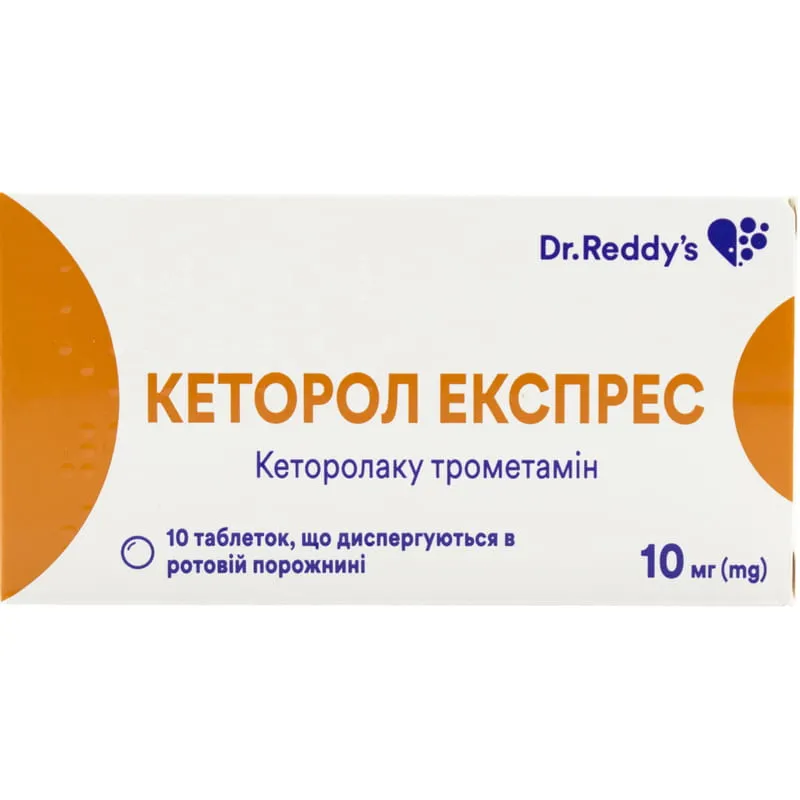
Table of Contents
INSTRUCTIONS FOR MEDICAL USE OF THE MEDICINAL PRODUCT KETOROL EXPRESS
Composition:
Active substance: ketorolac tromethamine;
1 tablet contains 10 mg of ketorolac tromethamine;
Excipients: microcrystalline cellulose, silicon dioxide, butylated hydroxyanisole (E 320), mannitol (E 421), crospovidone, sucralose, magnesium stearate, colouring agent (Lake of Quinoline Yellow WS), flavouring agent (Spearmint Flavour).
Pharmaceutical form. Orodispersible tablets.
Main physicochemical properties: round, flat tablets of pale yellow colour, with bevelled edges and an imprint «׀» on one side.
Pharmacotherapeutic group. Non-steroidal anti-inflammatory and antirheumatic agents. Ketorolac. ATC code M01A B15.
Pharmacological Properties
Pharmacodynamics
Ketorolac is a nonsteroidal anti-inflammatory drug (NSAID) that exerts a pronounced analgesic (pain-relieving) effect, as well as anti-inflammatory and mild antipyretic activity. The analgesic action of the drug is based on its ability to inhibit the synthesis of cyclooxygenase enzymes (COX-1 and COX-2). As a result, prostaglandins, which cause inflammation, fever, and pain, are not formed in the body tissues. In terms of analgesic potency, ketorolac is comparable to morphine, significantly exceeding other NSAIDs.
Ketorolac does not affect opioid receptors, does not suppress respiration, does not cause drug dependence, and has no sedative or anxiolytic effects.
The onset of analgesic action occurs within 1 hour after oral administration. Maximum analgesic effect is achieved within 2–3 hours and does not show statistically significant differences across the recommended dosage range of ketorolac tromethamine. The main difference between higher and lower doses of ketorolac tromethamine lies in the duration of analgesia.
Pharmacokinetics
After oral administration, ketorolac is rapidly and completely absorbed, reaching maximum plasma concentrations of 0.52–1.31 mcg/mL within 35 minutes following a single 10 mg dose administered on an empty stomach. A high-fat meal reduces the rate of absorption (by approximately 1 hour) but does not affect the extent of absorption. Antacids do not influence the drug's absorption. The pharmacokinetics of ketorolac are linear.
Ketorolac tromethamine crosses the placental barrier and is excreted in very small amounts into breast milk.
More than 99% of the ketorolac tromethamine racemate is highly bound to plasma proteins. Steady-state concentrations are achieved within 24 hours after administration of 10 mg of ketorolac four times daily.
The drug is extensively metabolized in the liver, forming inactive metabolites.
Ketorolac and its metabolites are primarily excreted by the kidneys: on average, 91.4% of the administered dose is excreted in urine and 6.1% in feces.
The elimination half-life in patients with normal renal function is approximately 5–6 hours.
In patients aged 65 years and older, the elimination half-life may increase from 5 to 7 hours. The mean elimination half-life of ketorolac in patients with renal impairment depends on the severity of the disease and ranges from 6 to 19 hours, indicating the need for dose adjustment.
Hepatic dysfunction does not affect the drug's elimination half-life.
Ketorolac is not removed by hemodialysis.
Clinical characteristics.
Indications.
Ketorol Express is indicated for short-term (no more than 5 days) treatment of moderate-intensity pain, as well as acute pain of various origins, including postoperative pain.
Contraindications.
- Hypersensitivity to ketorolac or to any component of the medicinal product;
- patients with active peptic ulcer, recent gastrointestinal bleeding or perforation, history of peptic ulcer or gastrointestinal bleeding;
- bronchial asthma, rhinitis, angioedema or urticaria induced by acetylsalicylic acid or other NSAIDs (due to the possibility of severe anaphylactic reactions);
- history of bronchial asthma;
- should not be used as an analgesic before and during surgery or after coronary artery procedures;
- severe heart failure;
- nasal polyposis with complete or partial obstruction, Quincke's edema or bronchospasm;
- should not be used in patients who have undergone surgical procedures with high risk of bleeding or incomplete hemostasis, and in patients receiving anticoagulants, including low-dose heparin (2500–5000 units every 12 hours);
- hepatic or moderate/severe renal impairment (serum creatinine clearance above 160 μmol/L);
- ketorolac is contraindicated during labor and delivery, as due to its inhibitory effect on prostaglandin synthesis, it may adversely affect fetal circulation and suppress uterine contractions, thereby increasing the risk of uterine bleeding;
- suspected or confirmed cerebrovascular hemorrhage, hemorrhagic diathesis, including coagulation disorders and high risk of bleeding;
- concomitant use with other NSAIDs (including selective cyclooxygenase inhibitors), acetylsalicylic acid, warfarin, pentoxifylline, probenecid, or lithium salts;
- hypovolemia, dehydration;
- risk of developing renal failure due to reduced fluid volume.
Interaction with other medicinal products and other types of interactions.
Ketorolac tromethamine is highly bound to plasma proteins (on average 99.2%). There are no data from animal or human studies indicating that ketorolac tromethamine induces or inhibits liver enzymes capable of metabolizing it or other drugs.
Warfarin, digoxin, salicylates, and heparin
Ketorolac tromethamine slightly reduced the protein binding of warfarin in vitro (99.5% in control vs. 99.3%) at plasma ketorolac concentrations of 5–10 μg/mL. Ketorolac tromethamine did not alter the protein binding of digoxin. In vitro studies indicate that at therapeutic salicylate concentrations (300 μg/mL), ketorolac binding decreased from approximately 99.2% to 97.5%, suggesting a potential twofold increase in unbound ketorolac levels in plasma. Therapeutic concentrations of digoxin, warfarin, ibuprofen, naproxen, piroxicam, acetaminophen, phenytoin, and tolbutamide did not alter the protein binding of ketorolac tromethamine.
The effects of warfarin and NSAIDs on gastrointestinal (GI) bleeding are synergistic, such that patients taking these drugs together have a higher risk of serious GI bleeding than patients taking either drug alone.
Acetylsalicylic acid
When ketorolac tromethamine is used concomitantly with acetylsalicylic acid, its protein binding decreases, although the clearance of free ketorolac tromethamine remains unchanged. The clinical significance of this interaction is unknown; however, as with other NSAIDs, concomitant administration of ketorolac tromethamine and acetylsalicylic acid is generally not recommended due to the potential for increased adverse effects.
Diuretics
Clinical studies and post-marketing surveillance have shown that in some patients, ketorolac tromethamine may reduce the natriuretic effect of furosemide and thiazides. This effect is attributed to inhibition of prostaglandin synthesis. During concomitant therapy with NSAIDs, patients should be closely monitored for signs of renal impairment and to ensure diuretic efficacy.
Probenecid
Concomitant use of ketorolac tromethamine tablets and probenecid results in decreased clearance and volume of distribution of ketorolac, and a significant increase in plasma levels (total area under the concentration-time curve (AUC) increased approximately threefold—from 5.4 to 17.8 μg·h/mL) and prolonged elimination half-life (increased approximately twofold—from 6.6 to 15.1 hours). Therefore, concomitant use of ketorolac tromethamine tablets and probenecid is contraindicated.
Lithium
NSAIDs have been shown to increase plasma lithium levels and reduce renal lithium clearance. The average minimum lithium concentration increased by 15%, and renal clearance decreased by approximately 20%. These effects are attributed to NSAID inhibition of renal prostaglandin synthesis. Therefore, patients receiving concomitant NSAIDs and lithium should be closely monitored for signs of lithium toxicity.
Methotrexate
It has been reported that NSAIDs competitively inhibit methotrexate accumulation in rabbit kidney slices. This may suggest that they could enhance methotrexate toxicity. Caution should be exercised when using NSAIDs concomitantly with methotrexate.
ACE inhibitors/angiotensin II receptor antagonists
Concomitant use of ACE inhibitors and/or angiotensin II receptor antagonists may increase the risk of renal dysfunction, particularly in patients with reduced extracellular fluid volume.
Reports indicate that NSAIDs may reduce the antihypertensive effect of ACE inhibitors and/or angiotensin II receptor antagonists. This interaction should be considered when prescribing NSAIDs together with ACE inhibitors and/or angiotensin II receptor antagonists.
Anticonvulsants
Isolated cases of seizures have been reported with concomitant use of ketorolac tromethamine and anticonvulsants (phenytoin, carbamazepine).
Psychotropic agents
Hallucinations have been reported when ketorolac tromethamine was used in patients taking psychotropic agents (fluoxetine, thiothixene, alprazolam).
Pentoxifylline
Concomitant use of ketorolac tromethamine and pentoxifylline increases the risk of bleeding.
Non-depolarizing muscle relaxants
During the post-marketing period, cases of possible interaction between ketorolac tromethamine and non-depolarizing muscle relaxants leading to apnea have been reported. Concomitant use of ketorolac tromethamine and muscle relaxants has not been formally studied.
Selective serotonin reuptake inhibitors (SSRIs)
There is an increased risk of gastrointestinal bleeding when SSRIs are used in combination with NSAIDs. Caution should be exercised when using NSAIDs concomitantly with SSRIs.
Special precautions for use.
Ketorolac tablets, a nonsteroidal anti-inflammatory drug (NSAID), are indicated for short-term use (up to 5 days in adult patients). The drug should be used for symptomatic treatment of moderate to severe acute pain, including postoperative pain requiring opioid-level analgesia. Ketorolac tablets are not indicated for use in children and are not indicated for chronic pain syndromes. The total duration of combined use of ketorolac (as intravenous or intramuscular injections and as tablets) should not exceed 5 days due to the potential for increased frequency and severity of adverse reactions associated with recommended doses.
The lowest effective dose should be used for the shortest duration appropriate for each individual patient.
The dosing interval must not be reduced to less than 4–6 hours.
Exceeding the maximum daily dose of ketorolac tablets (40 mg in adults) will not provide greater efficacy but will increase the risk of serious adverse reactions.
Gastrointestinal effects – ulceration, bleeding, and perforation
Ketorolac tromethamine is contraindicated in patients with a history of peptic ulcer and/or gastrointestinal (GI) bleeding. Ketorolac tromethamine may cause serious adverse GI effects, including bleeding, ulceration, and perforation of the stomach, small intestine, or large intestine, which may be fatal. These serious adverse reactions may occur at any time during treatment, with or without preceding symptoms.
Only one out of five patients who experienced serious upper GI adverse reactions while receiving NSAIDs had preceding symptoms. Minor upper GI problems such as dyspepsia are common and may also occur at any time during NSAID therapy. The frequency and severity of GI complications increase with higher doses and longer duration of ketorolac tromethamine treatment. Ketorolac tromethamine should not be used for more than 5 days. However, even short-term therapy does not exclude risk. In addition to a history of peptic ulcer disease, other factors that increase the risk of GI bleeding in patients receiving NSAIDs include concomitant use of oral corticosteroids or anticoagulants, longer duration of NSAID therapy, smoking, alcohol consumption, advanced age, and poor general health. Most spontaneous reports of fatal GI events have been recorded in elderly or debilitated patients; therefore, special attention should be paid when treating these populations.
To minimize the potential risk of GI adverse reactions, the drug should be used at the lowest effective dose for the shortest possible duration. Patients and physicians should remain alert for signs and symptoms of ulceration and GI bleeding during NSAID therapy, and if a serious GI adverse event is suspected, immediate additional evaluation and treatment should be initiated. This should include discontinuation of ketorolac tromethamine until a serious GI adverse event is ruled out. Alternative non-NSAID therapy should be considered for patients at high risk.
NSAIDs, including ketorolac, should be used cautiously in patients with inflammatory bowel disease (ulcerative colitis, Crohn’s disease), as their condition may worsen.
NSAIDs, including ketorolac, may be associated with an increased risk of gastrointestinal anastomotic rupture. Careful medical supervision and caution are recommended when using ketorolac after gastrointestinal surgery.
Bleeding
Since prostaglandins play an important role in hemostasis and NSAIDs also affect platelet aggregation, ketorolac tromethamine should be used with extreme caution in patients with coagulation disorders, and such patients should be closely monitored. Patients receiving therapeutic doses of anticoagulants (e.g., heparin derivatives or dicoumarol) have an increased risk of bleeding when concurrently receiving ketorolac tromethamine; therefore, physicians should use such concomitant therapy with extreme caution. The concomitant use of ketorolac tromethamine and agents affecting hemostasis, including prophylactic low-dose heparin (2500 to 5000 units once every 12 hours), warfarin, and dextran, has not been thoroughly studied but may also be associated with an increased risk of bleeding. Until data from such studies are available, physicians should carefully weigh the benefits and risks and use such concomitant therapy with extreme caution in these patients. Close monitoring is required in patients receiving drugs affecting hemostasis.
Renal effects
Prolonged use of NSAIDs has led to renal papillary necrosis and other kidney damage. Nephrotoxicity has also been observed in patients in whom renal prostaglandins play a compensatory role in maintaining renal perfusion. In these patients, NSAID use may cause dose-dependent reduction in prostaglandin synthesis and secondarily in renal blood flow, potentially leading to overt renal decompensation. Patients at highest risk for such reactions include those with impaired renal function, heart failure, hepatic dysfunction, patients taking diuretics and ACE inhibitors, and elderly patients. After discontinuation of NSAID therapy, patients usually return to their pre-treatment condition.
Ketorolac tromethamine and its metabolites are primarily excreted by the kidneys, which in patients with reduced creatinine clearance will result in decreased drug clearance.
Therefore, ketorolac tromethamine should be used with caution in patients with impaired renal function, and such patients should be closely monitored. Acute renal failure, interstitial nephritis, and nephrotic syndrome have been reported with the use of ketorolac tromethamine.
Renal function impairment
Ketorolac tromethamine is contraindicated in patients with serum creatinine concentrations indicating progressive renal failure. Ketorolac tromethamine should be used cautiously in patients with impaired renal function or a history of kidney disease, as it is a potent inhibitor of prostaglandin synthesis. Since patients with renal impairment have an increased risk of developing acute renal decompensation or failure, the risks and benefits of treatment should be evaluated before prescribing ketorolac tromethamine to these patients.
Anaphylactoid reactions
As with all other NSAIDs, anaphylactoid reactions may occur in patients without prior exposure or known hypersensitivity to ketorolac tromethamine. Ketorolac tromethamine should not be administered to patients with aspirin triad. This syndrome typically occurs in patients with bronchial asthma who have rhinitis with or without nasal polyps, or who experience severe, potentially fatal bronchospasm after taking acetylsalicylic acid or other NSAIDs. Anaphylactoid reactions, such as anaphylaxis, may be fatal. In the event of an anaphylactoid reaction, emergency medical assistance should be sought immediately.
Cardiovascular system effects
Cardiovascular thrombotic events
Clinical trials of several COX-2 selective and non-selective NSAIDs lasting up to 3 years have demonstrated an increased risk of serious cardiovascular (CV) thrombotic events, including myocardial infarction and stroke, which may be fatal. Based on available data, it is unclear whether the risk of CV thrombotic events is the same for all NSAIDs. The relative increase in the frequency of serious CV thrombotic events compared to baseline due to NSAID use is similar in patients with and without known CV disease or CV risk factors. However, patients with known CV disease or CV risk factors had a higher absolute frequency of additional serious CV thrombotic events due to their higher baseline frequency. Some observational studies have found that this increased risk of serious CV thrombotic events begins within the first weeks of treatment. The increased risk of CV thrombotic events was greater with higher doses of the drug.
To minimize the potential risk of CV system adverse reactions in patients receiving NSAIDs, the lowest effective dose should be used for the shortest possible duration. Physicians and patients should remain vigilant for such events throughout the treatment course, even in the absence of prior CV symptoms. Patients should be informed about symptoms of serious CV events and actions to take if they occur.
There is no conclusive evidence that concomitant use of acetylsalicylic acid reduces the increased risk of serious CV thrombotic events associated with NSAID use. Concomitant use of acetylsalicylic acid and NSAIDs such as ketorolac tromethamine increases the risk of serious GI events.
Post-aortocoronary bypass surgery (CABG)
In two large controlled clinical trials, the use of COX-2 selective NSAIDs for pain treatment during the first 10–14 days after CABG surgery was associated with an increased incidence of myocardial infarction and stroke. NSAIDs are contraindicated in the setting of CABG.
Patients after myocardial infarction
Observational studies conducted in the Danish National Registry have shown that patients who received NSAIDs after myocardial infarction had an increased risk of recurrent infarction, CV death, and all-cause mortality starting from the first week of treatment. In this same cohort, the mortality rate in the first year after myocardial infarction was 20 per 100 patient-years in patients receiving NSAIDs compared to 12 per 100 patient-years in patients not receiving NSAIDs. Although the absolute frequency of fatal outcomes slightly decreased after the first year following myocardial infarction, the elevated relative risk of fatal outcomes in those taking NSAIDs persisted for at least the next 4 years of observation.
Ketorolac tromethamine should be avoided in patients with recent myocardial infarction, except when the expected benefits of treatment outweigh the risk of recurrent CV thrombotic events. If ketorolac tromethamine is used in patients with recent myocardial infarction, patients should be monitored for signs of cardiac ischemia.
Arterial hypertension
NSAIDs, including ketorolac tromethamine, may lead to the development or worsening of pre-existing arterial hypertension, which may contribute to an increased frequency of CV events.
In patients receiving thiazide or loop diuretics, the response to these drugs may be impaired with NSAID use. NSAIDs, including ketorolac tromethamine, should be used cautiously in patients with arterial hypertension. Blood pressure should be closely monitored at the beginning of NSAID therapy and throughout the treatment course.
Heart failure and edema
A meta-analysis of randomized controlled trials conducted by the Coxib and traditional NSAID Trialists’ Collaboration demonstrated approximately a twofold increase in hospitalizations for heart failure in patients receiving COX-2 selective and non-selective NSAIDs compared to patients receiving placebo. In the Danish National Registry, NSAID use in patients with heart failure increased the risk of myocardial infarction, hospitalization for heart failure, and death.
Additionally, fluid retention and edema have been observed in some patients receiving NSAIDs. The use of ketorolac tromethamine may reduce the CV effects of certain medications used to treat these conditions [e.g., diuretics, ACE inhibitors, or angiotensin receptor blockers (ARBs)].
Ketorolac tromethamine should be avoided in patients with severe heart failure, except when the expected benefits of treatment outweigh the risk of worsening heart failure. If ketorolac tromethamine is used in patients with severe heart failure, patients should be monitored for signs of worsening heart failure.
Skin reactions
NSAIDs, including ketorolac tromethamine, may cause serious skin adverse reactions such as exfoliative dermatitis, Stevens-Johnson syndrome, and toxic epidermal necrolysis, which may be fatal. These serious events may occur without warning. Patients should be informed about signs and symptoms of serious skin manifestations and that the drug should be discontinued at the first appearance of a skin rash, mucosal lesions, or any other sign of hypersensitivity.
Pregnancy
In late pregnancy, as with other NSAIDs, ketorolac tromethamine use should be avoided as it may lead to premature closure of the ductus arteriosus.
PRECAUTIONS
General
Ketorolac tromethamine should not be expected to replace corticosteroids or treat corticosteroid insufficiency. Abrupt discontinuation of corticosteroids may lead to disease exacerbation. In patients who have been receiving long-term corticosteroid therapy, if a decision is made to discontinue corticosteroids, their dose should be tapered gradually.
The pharmacological activity of ketorolac tromethamine in reducing inflammation may reduce the usefulness of this diagnostic sign in detecting complications of non-infectious, painful conditions.
Hepatic effects
Ketorolac tromethamine should be used cautiously in patients with impaired liver function or a history of liver disease. Borderline elevations in one or more liver function tests may occur in 15% of patients receiving NSAIDs, including ketorolac tromethamine. These laboratory abnormalities may progress, remain unchanged, or be transient with continued treatment. Significant elevations in ALT and AST (approximately 3 times or more above the upper limit of normal) were observed in approximately 1% of patients in NSAID clinical trials. Additionally, severe hepatic reactions, including jaundice and fatal fulminant hepatitis, liver necrosis, and liver failure, some with fatal outcomes, have been reported in individual cases.
Patients with symptoms and/or signs indicating liver dysfunction or with abnormal liver function tests should be evaluated for the development of more severe hepatic reactions during ketorolac tromethamine therapy. If clinical signs and symptoms suggest liver disease or if systemic manifestations (e.g., eosinophilia, rash) occur, ketorolac tromethamine should be discontinued.
Hematological effects
Anemia has been observed occasionally in patients receiving NSAIDs, including ketorolac tromethamine. This may be related to fluid retention, occult or overt GI blood loss, or incompletely described effects on erythropoiesis. In patients receiving long-term NSAID therapy, including ketorolac tromethamine, hemoglobin or hematocrit should be checked if any signs or symptoms of anemia appear. NSAIDs inhibit platelet aggregation and have been shown to prolong bleeding time in some patients. Unlike acetylsalicylic acid, their effect on platelet function is quantitatively less, shorter in duration, and reversible. Careful monitoring is required in patients receiving ketorolac tromethamine who may experience adverse reactions related to platelet function changes, such as in coagulation disorders or in patients receiving anticoagulants.
Pre-existing bronchial asthma
Aspirin-induced asthma may occur in patients with bronchial asthma. The use of acetylsalicylic acid in patients with aspirin-induced asthma has been associated with severe bronchospasm, which may be fatal. Since cross-reactivity between acetylsalicylic acid and other NSAIDs, including bronchospasm, has been reported in patients sensitive to acetylsalicylic acid, ketorolac tromethamine should not be prescribed to patients with this form of sensitivity to acetylsalicylic acid, and should be used with caution in patients with pre-existing bronchial asthma.
Laboratory tests
Since serious GI ulcers and bleeding may occur without preceding symptoms, physicians must monitor for signs or symptoms of GI bleeding. In patients receiving long-term NSAID therapy, complete blood count and biochemical blood tests should be performed periodically. If clinical signs and symptoms of liver or kidney disease appear, systemic manifestations (e.g., eosinophilia, rash) occur, or if liver function tests persist or worsen, ketorolac tromethamine should be discontinued.
Pediatric use
Ketorolac tromethamine tablets are not intended for use in children. The safety and efficacy of ketorolac tromethamine tablets in children under 16 years of age have not been established.
Use in elderly patients (≥ 65 years)
Since ketorolac tromethamine may be eliminated more slowly in elderly patients, who are also more sensitive to NSAID adverse reactions, the drug should be used with extreme caution at reduced doses, and careful clinical monitoring should be performed during treatment of elderly patients with ketorolac tromethamine.
Use during pregnancy or breastfeeding.
Pregnancy
The safety of ketorolac use during pregnancy in humans has not been established. Due to the known effects of NSAIDs on the fetal cardiovascular system (risk of premature closure of the ductus arteriosus), ketorolac is not used during pregnancy, labor, and delivery. Onset of labor may be delayed, and duration prolonged, with an increased tendency for bleeding in both mother and child.
Starting from the 20th week of pregnancy, drug use may cause oligohydramnios due to fetal renal dysfunction. This may occur soon after initiation of treatment and is usually reversible upon discontinuation of therapy.
The drug should not be prescribed during the first and second trimesters of pregnancy. Ketorolac tromethamine should be used during pregnancy only if the expected benefit to the mother justifies the potential risk to the fetus.
If the drug is used in women attempting to conceive or during the first and second trimesters of pregnancy, the dose should be as low as possible and the duration of treatment as short as possible.
Oligohydramnios monitoring should be considered after drug exposure for several days starting from the 20th gestational week. Drug use should be discontinued if oligohydramnios is detected.
During the third trimester of pregnancy, all inhibitors of prostaglandin synthesis may cause:
Risks to the fetus:
- Cardio-pulmonary toxicity (premature closure of the ductus arteriosus and pulmonary hypertension);
- Renal dysfunction;
Risks to the mother at the end of pregnancy and to the newborn:
- Possible prolonged bleeding time, anti-aggregatory effect, which may occur even at very low doses;
- Inhibition of uterine contractions, leading to delayed or prolonged labor.
Therefore, ketorolac tromethamine is contraindicated during the third trimester of pregnancy.
Labor and delivery
Ketorolac tromethamine is contraindicated during labor and delivery because, due to its inhibitory effect on prostaglandin synthesis, it may negatively affect fetal circulation and inhibit uterine contractions, thereby increasing the risk of uterine bleeding.
Teratogenic effects. Pregnancy category C
Reproductive toxicity studies were conducted during organogenesis using daily oral doses of ketorolac tromethamine of 3.6 mg/kg (0.37 times the human AUC) in rabbits and 10 mg/kg (equal to human AUC) in rats. Results of these studies did not reveal teratogenic effects on the fetus. However, animal reproductive toxicity studies do not always reflect human outcomes.
Lactation period
Ketorolac passes into breast milk in very small amounts.
After 1 day of use (10 mg every 6 hours), the maximum concentration in milk was 7.9 ng/mL, and the maximum milk/plasma ratio was 0.025. Assuming daily milk consumption in humans is 400–1000 mL per day and maternal body weight is 60 kg, the calculated maximum daily exposure for the infant was 0.00263 mg/kg/day, which is 0.4% of the maternal dose adjusted for body weight.
Caution should be exercised when administering ketorolac to women who are breastfeeding. Available information indicates no specific adverse reactions in breastfed infants; however, if any adverse reactions are observed, patients should be advised to consult their infant’s physician.
Effects on fertility
The use of ketorolac tromethamine, like other drugs capable of inhibiting cyclooxygenase/prostaglandin synthesis, may impair fertility. Therefore, if the drug is used in women attempting to conceive or during the first and second trimesters of pregnancy, the dose should be as low as possible and the duration of treatment as short as possible. Women who are unable to conceive or undergoing infertility evaluation should consider discontinuing ketorolac tromethamine.
Ability to affect reaction speed when operating vehicles or machinery.
Some patients may experience dizziness, somnolence, visual disturbances, headache, vertigo, insomnia, or depression when using ketorolac. If patients experience these or other similar adverse reactions, they should not drive vehicles or operate machinery.
Method of administration and dosage.
The medicinal product KETOROL EXPRESS in the form of orally disintegrating tablets should be taken only with dry hands.
The tablet should be placed on the tongue, where it will immediately start to dissolve. Hold in the mouth for several seconds until it completely dissolves; if desired, it can be followed with water.
Orally disintegrating tablets do not require mandatory administration with water, do not affect saliva production, and allow administration to patients with swallowing disorders due to behavioral or neurological conditions.
To prevent gastrointestinal disturbances, it is advisable to take the medication during or after a meal (main meal or snack) or with antacids.
The medicinal product KETOROL EXPRESS is administered orally as a single dose or several times daily, depending on the intensity of pain.
The recommended initial dose for adults is 10 mg. If repeated administration is necessary, 10 mg is recommended up to 4 times daily, at intervals of 4–6 hours. The maximum daily dose should not exceed 40 mg.
For patients receiving ketorolac parenterally, via intravenous or intramuscular injections, who are simultaneously prescribed oral ketorolac in tablet form, the total combined dose should not exceed 90 mg (60 mg for elderly patients, patients with impaired renal function, and patients with body weight less than 50 kg).
The table below summarizes dosing instructions for ketorolac tablets in different age groups:
| Patient population |
Ketorolac tromethamine tablets (following IV or IM administration of ketorolac tromethamine) |
| Age ˂ 16 years |
Oral administration not approved |
| Adult patients aged 16 to 64 years |
20 mg once, then 10 mg every 4–6 hours as needed, but not more than 40 mg per day |
| Adult patients aged ≥ 65 years, with impaired renal function and/or body weight ˂ 50 kg |
10 mg once, then 10 mg every 4–6 hours as needed, but not more than 40 mg per day |
The drug is recommended for short-term use only (up to 5 days).
Children.
Do not use in children under 16 years of age.
Overdose.
Symptoms following acute NSAID overdose are usually limited to lethargy, drowsiness, nausea, vomiting, and epigastric pain, which are usually reversible with supportive treatment. Gastrointestinal bleeding may occur. Rarely, arterial hypertension, acute renal failure, respiratory depression, and coma may develop. Anaphylactoid reactions have been reported with therapeutic doses of NSAIDs and may also occur following overdose.
Treatment
Treatment of NSAID overdose should be symptomatic and supportive. There is no specific antidote. In the presence of symptoms following drug administration or after significant oral overdose (ingestion of doses 5–10 times higher than usual), within 4 hours, vomiting may be induced and/or activated charcoal (60–100 g for adults, 1–2 g/kg for children) and/or an osmotic laxative may be administered. Forced diuresis, alkalinization of urine, hemodialysis, or blood transfusion may be ineffective due to the high plasma protein binding of the drug.
Single overdoses of ketorolac tromethamine have been associated with abdominal pain, nausea, vomiting, hyperventilation, peptic ulcers and/or erosive gastritis, and renal function impairment, which resolved after discontinuation of the drug.
Adverse Reactions
The frequency of adverse reactions increases with higher doses of ketorolac tromethamine. Physicians should be vigilant for serious complications associated with ketorolac tromethamine therapy, such as gastrointestinal ulceration, bleeding and perforation, postoperative bleeding, acute renal failure, anaphylactic and anaphylactoid reactions, as well as hepatic failure. These complications associated with NSAID use can be severe in some patients, particularly with inappropriate drug use.
In patients who received ketorolac tromethamine or other NSAIDs in clinical studies, the most commonly observed adverse reactions, occurring in approximately 1–10% of patients, were:
| Gastrointestinal tract (GIT) |
heartburn, stomatitis, vomiting, nausea*, abdominal pain*, dyspepsia*, constipation/diarrhea, flatulence, feeling of fullness, gastrointestinal ulcers (in stomach/duodenum), major bleeding/perforation |
| Other adverse reactions |
renal function impairment, dizziness, somnolence, anemia, edema, increased liver enzymes, headache*, arterial hypertension, prolonged bleeding time, injection site pain, pruritus, purpura, rash, tinnitus, increased sweating |
* Frequency greater than 10%.
Additional adverse reactions reported in isolated cases (< 1% of patients receiving ketorolac tromethamine or other NSAIDs in clinical trials) include:
General disorders: fever, infections, sepsis.
Cardiovascular system: congestive heart failure, palpitations, pallor, tachycardia, syncope.
Skin and subcutaneous tissue: alopecia, photosensitivity, urticaria.
Gastrointestinal system: anorexia, dry mouth, belching, esophagitis, excessive thirst, gastritis, glossitis, hematemesis, hepatitis, increased appetite, jaundice, melena, rectal bleeding.
Blood and lymphatic system: petechiae, eosinophilia, epistaxis, leukopenia, thrombocytopenia.
Metabolism and nutrition: weight changes.
Nervous system: abnormal dreams, pathological thoughts, anxiety, asthenia, confusion, depression, euphoria, extrapyramidal symptoms, hallucinations, hyperkinesia, difficulty concentrating, insomnia, nervousness, paresthesia, somnolence, stupor, tremor, vertigo, weakness.
Female reproductive system: infertility.
Respiratory system: bronchial asthma, cough, dyspnea, pulmonary edema, rhinitis.
Sensory organs: taste disturbances, visual disturbances, blurred vision, hearing loss.
Urinary system: cystitis, dysuria, hematuria, frequent urination, interstitial nephritis, oliguria/polyuria, proteinuria, renal failure, urinary retention.
Other reactions observed rarely (reported in the post-marketing period in patients taking ketorolac tromethamine or other NSAIDs) include:
General disorders: angioneurotic edema, fatal outcome, hypersensitivity reactions such as anaphylaxis, anaphylactoid reactions, laryngeal edema, tongue edema, myalgia.
Cardiovascular system: arrhythmia, bradycardia, chest pain, flushing, arterial hypotension, myocardial infarction, vasculitis.
Skin and subcutaneous tissue: exfoliative dermatitis, erythema multiforme, Lyell's syndrome, bullous reactions including Stevens-Johnson syndrome and toxic epidermal necrolysis.
Gastrointestinal system: acute pancreatitis, liver failure, ulcerative stomatitis, exacerbation of inflammatory bowel diseases (ulcerative colitis, Crohn's disease).
Blood and lymphatic system: agranulocytosis, aplastic anemia, hemolytic anemia, lymphadenopathy, pancytopenia, increased postoperative wound bleeding (rarely requiring blood transfusion).
Metabolism and nutrition: hyperglycemia, hyperkalemia, hyponatremia.
Nervous system: aseptic meningitis, seizures, coma, psychosis.
Respiratory system: bronchospasm, respiratory depression, pneumonia.
Sensory organs: conjunctivitis.
Renal and urinary system: flank pain with hematuria and/or azotemia or without hematuria/azotemia, hemolytic uremic syndrome.
Reporting of adverse reactions after drug registration is of great importance. It allows continuous monitoring of the benefit-risk balance of the drug. Medical and pharmaceutical professionals, as well as patients or their legal representatives, are encouraged to report all suspected adverse reactions and lack of drug efficacy via the Automated Pharmacovigilance Information System at the following link: https://aisf.dec.gov.ua.
Shelf life. 2 years.
Storage conditions.
Store in the original packaging at a temperature not exceeding 25 °C.
Keep out of reach of children.
Packaging.
10 tablets in a blister; 1 or 10 blisters per carton.
Prescription status. Prescription only.
Manufacturer.
Dr. Reddy’s Laboratories Limited.
Manufacturer's address and location of operations.
Formulation Unit 6, Vill. Khol, Nalagarh Road, Baddi, Distt. Solan, H. P. 173205, India.