Ketanix
Ukraine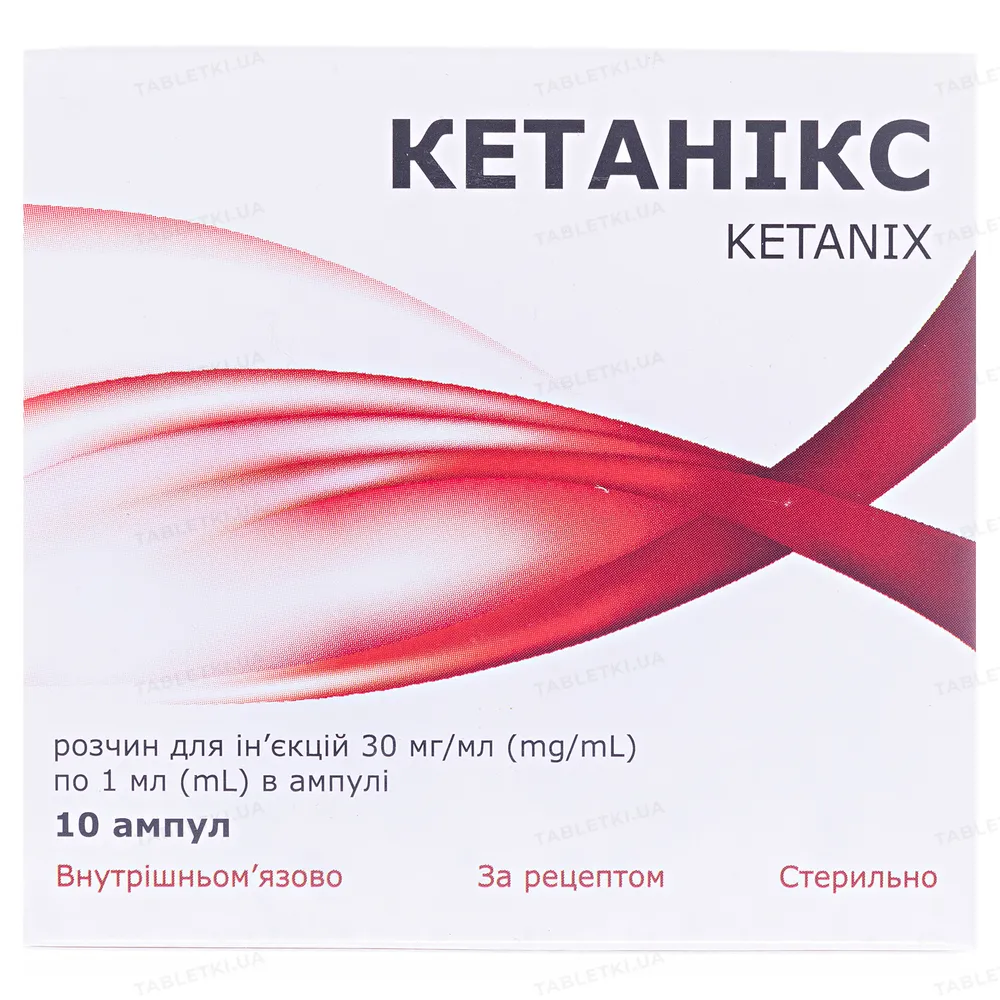
Table of Contents
INSTRUCTIONS FOR MEDICAL USE OF THE MEDICINAL PRODUCT KETANIX (KETANIX)
Composition:
Active substance: ketorolac tromethamine;
1 ml of solution contains 30 mg of ketorolac tromethamine calculated as 100% dry substance;
Excipients: sodium chloride, propylene glycol, disodium edetate, chlorobutanol hemihydrate, tromethamine, water for injections.
Pharmaceutical form. Injection solution.
Main physicochemical characteristics: clear yellowish liquid.
Pharmacotherapeutic group. Non-steroidal anti-inflammatory and antirheumatic agents. Acetic acid derivatives and related compounds. ATC code M01A B15.
Pharmacological properties
Pharmacodynamics
Ketorolac is a non-steroidal anti-inflammatory drug (NSAID), a cyclooxygenase (COX) inhibitor, and a derivative of pyrrolizinecarboxylic acid, exerting pronounced analgesic effect. Due to the specific drug formulation, the duration of analgesic action of the drug is 10–12 hours. It is capable of suppressing or reducing mild to moderate pain.
Like other NSAIDs, it exerts antipyretic and anti-inflammatory effects. It can inhibit platelet aggregation.
Pharmacokinetics
After intramuscular administration, a depot is formed at the injection site, from which ketorolac gradually enters the systemic circulation.
Time to reach maximum plasma concentration (Cmax = 3 mg/L), Tmax, is 40–50 minutes. Plasma protein binding exceeds 99%. Up to 10% of the administered dose is metabolized in the liver, and the remainder in the kidneys. The drug is primarily excreted via the urine (up to 90%), with 60% of the administered dose excreted unchanged. Up to 10% of the administered dose is excreted in feces. The elimination half-life (T1/2) of the drug is 4–6 hours. In patients with impaired renal function and in elderly individuals, elimination rate is reduced and half-life is prolonged. The drug crosses the placental barrier and is excreted into breast milk.
Clinical characteristics.
Indications.
Short-term management of moderate to severe postoperative pain.
Contraindications.
Hypersensitivity to ketorolac or to any other component of the drug, as well as to other NSAIDs.
Active peptic ulcer, recent gastrointestinal bleeding or perforation, or history of peptic ulcer disease or gastrointestinal bleeding.
Presence of or suspicion of gastrointestinal bleeding or intracranial hemorrhage.
Conditions with a high risk of bleeding or incomplete hemostasis, hemorrhagic diathesis.
Contraindicated in patients with moderate to severe renal impairment (serum creatinine >160 μmol/L) or in patients at risk of renal failure due to hypovolemia or dehydration.
Ketorolac inhibits platelet function; therefore, it is contraindicated in patients with suspected or confirmed cerebrovascular hemorrhage, in patients after surgical procedures with a high risk of bleeding or incomplete hemostasis, and in patients with a high risk of bleeding due to hemorrhagic diathesis, including coagulation disorders.
Concomitant use of antiplatelet agents (acetylsalicylic acid), anticoagulants, including warfarin and low-dose heparin (2500–5000 IU every 12 hours).
Severe heart, liver, or kidney failure.
Contraindicated in patients in whom other inhibitors of prostaglandin synthesis cause allergic reactions such as asthma, rhinitis, angioedema, or urticaria.
Bronchial asthma, bronchospasm, nasal polyps, angioedema in medical history.
The drug is contraindicated during pregnancy, labor, and lactation.
The drug is not used in children under 16 years of age.
Concomitant treatment with other NSAIDs, including selective COX inhibitors, acetylsalicylic acid, warfarin, pentoxifylline, probenecid, or lithium salts.
Hypersensitivity to acetylsalicylic acid or to other inhibitors of prostaglandin synthesis (in such patients, severe anaphylactic reactions are observed).
Should not be used as an analgesic prior to surgery, as it delays platelet aggregation; also contraindicated during surgery due to increased risk of bleeding.
Epidural or intrathecal administration of the drug is contraindicated.
Interaction with other medicinal products and other types of interactions.
Ketorolac is highly bound to plasma proteins (on average, 99.2%).
Ketorolac tromethamine does not alter the pharmacokinetics of other drugs via induction or inhibition of enzymes.
Warfarin, digoxin, salicylates, and heparin. In vitro, ketorolac tromethamine significantly reduced the protein binding of warfarin and did not alter the protein binding of digoxin. In vitro studies indicate that at therapeutic concentrations of salicylates (300 μg/mL), the binding of ketorolac decreased from approximately 99.2% to 97.5%, suggesting a potential doubling of unbound ketorolac levels in plasma. Therapeutic concentrations of digoxin, warfarin, ibuprofen, naproxen, piroxicam, acetaminophen, phenytoin, and tolbutamide do not alter the protein binding of ketorolac tromethamine.
Acetylsalicylic acid. When used concomitantly with acetylsalicylic acid, the protein binding of ketorolac is reduced, although the clearance of free ketorolac remains unchanged. The clinical significance of this interaction is unknown; however, as with other NSAIDs, concomitant use of ketorolac tromethamine and acetylsalicylic acid is not recommended due to the potential increase in the frequency of adverse effects.
Thromboxane. Ketorolac inhibits platelet aggregation, reduces thromboxane concentration, and prolongs bleeding time. Platelet function returns to normal within 24–28 hours after discontinuation of ketorolac.
Probenecid. Concomitant use of ketorolac tromethamine and probenecid is contraindicated.
Non-depolarizing muscle relaxants. No formal studies on the concomitant use of ketorolac tromethamine and muscle relaxants have been conducted.
Zidovudine. Concomitant use of NSAIDs with zidovudine increases the risk of hematological toxicity. There is an increased risk of hemarthrosis and hematoma in HIV-infected patients with hemophilia who are treated concomitantly with zidovudine and ibuprofen.
Concomitant use with anticoagulants may enhance bleeding. Concomitant use with anticoagulants (such as warfarin) is contraindicated.
Concomitant use of the drug with other NSAIDs may lead to the development of additive adverse effects.
Diuretics – diuretic effect is reduced, thereby increasing the nephrotoxic potential of ketorolac.
β-adrenergic blockers, ACE inhibitors – anti-hypertensive effect of β-blockers is reduced under the influence of ketorolac, potentially leading to renal function impairment.
Cyclosporine-type antibiotics – increased nephrotoxicity of cyclosporines.
Glucocorticoids – due to increased risk of gastrointestinal bleeding, concomitant use of ketorolac with glucocorticoids should be performed with caution.
Quinolones – increased risk of seizures. Data from animal studies indicate that NSAIDs can increase the risk of convulsions associated with quinolone antibiotics.
Mifepristone – ketorolac reduces the efficacy of mifepristone; therefore, use of ketorolac is permitted only 8–12 days after initiation of mifepristone.
Oxpentifylline – not recommended due to increased risk of hemorrhage.
Lithium salts – excretion of lithium from the body is delayed.
Opioid analgesics – effect of opioid analgesics is enhanced, allowing for reduction of their dosage in pain management.
Cardiac glycosides – NSAIDs may worsen heart failure, reduce glomerular filtration rate, and increase plasma levels of cardiac glycosides.
Methotrexate – concomitant use should be with caution, as some drugs that inhibit prostaglandin synthesis have been reported to reduce methotrexate clearance, thus increasing its toxic effects.
Anticonvulsants – isolated cases of seizures have been reported with concomitant use of ketorolac tromethamine and anticonvulsants (phenytoin, carbamazepine).
Psychotropic agents – hallucinations have been reported with concomitant use of ketorolac and psychotropic agents (fluoxetine, thiothixene, alprazolam).
Pentoxifylline – increases the risk of bleeding.
Products containing garlic, onion, or Ginkgo biloba may enhance the effect of ketorolac and increase the risk of hemorrhagic complications.
Special precautions for use.
It is recommended to use the drug under hospital conditions.
The risk of adverse effects can be minimized by using the lowest effective dose for the shortest duration necessary to control symptoms.
The combined use of intramuscular and oral ketorolac tromethamine in adult patients should not exceed 5 days.
It should be noted that analgesia may occur only 30 minutes after intramuscular administration.
Careful monitoring of diuresis and renal function is required in patients with cardiac, renal, or hepatic impairment, those receiving diuretics, or those who have undergone surgery with hypovolemia.
Effect on fertility.
Ketorolac tromethamine should be discontinued in women who are unable to conceive and are undergoing diagnostic evaluation for this reason.
Gastrointestinal effects.
Ketorolac tromethamine may cause severe gastrointestinal adverse reactions at any stage of treatment, with or without preceding symptoms; such adverse reactions may be fatal. The risk of clinically significant gastrointestinal bleeding is dose-dependent. However, adverse effects may occur even during short-term therapy. In addition to a history of peptic ulcer disease, predisposing factors include concomitant use of oral corticosteroids, anticoagulants, prolonged NSAID therapy, smoking, alcohol consumption, advanced age, and poor general health. Most spontaneous reports of gastrointestinal events involved elderly or debilitated patients; therefore, special attention should be paid when treating such patients, and ketorolac should be discontinued if any suspicion arises. Alternative therapies not involving NSAIDs should be considered for patients at high risk.
NSAIDs should be used with caution in patients with a history of Crohn's disease or ulcerative colitis due to the potential for worsening of the disease.
NSAIDs, including ketorolac, may be associated with an increased risk of gastrointestinal anastomotic dehiscence. Careful medical supervision and caution are recommended when using ketorolac after gastrointestinal surgery.
Effects on hemostasis.
Concomitant use of ketorolac tromethamine in patients receiving anticoagulant therapy may increase the risk of bleeding. Detailed studies on the simultaneous use of ketorolac and prophylactic low-dose heparin (2500–5000 IU every 12 hours) have not been conducted; therefore, this regimen may also increase the risk of bleeding.
Patients already taking anticoagulants or requiring low-dose heparin should not use ketorolac tromethamine. Close monitoring is required in patients receiving other agents that negatively affect hemostasis when ketorolac tromethamine is administered. Ketorolac inhibits platelet aggregation and prolongs bleeding time. Unlike the prolonged effect after acetylsalicylic acid intake, platelet function returns to normal within 24–48 hours after discontinuation of ketorolac. Ketorolac tromethamine should not be used in patients who have undergone surgery with a high risk of bleeding or incomplete hemostasis. The drug has no sedative or anxiolytic properties.
Use in patients with impaired renal function.
Like other NSAIDs, ketorolac inhibits prostaglandin synthesis and may have nephrotoxic effects; therefore, it should be used with caution in patients with impaired renal function or a history of kidney disease. Risk groups include patients with impaired renal function, hypovolemia, heart failure, hepatic impairment, those taking diuretics, and elderly patients.
Patients with mild to moderate renal impairment should receive lower doses of ketorolac (no more than 60 mg/day intramuscularly). Renal function in these patients should be closely monitored. Patients should be well hydrated before starting treatment. In patients undergoing hemodialysis, ketorolac clearance was reduced by approximately half compared to normal rates, and the terminal half-life was nearly tripled.
Sodium/fluid retention in cardiovascular disease and peripheral edema.
Caution is required when administering the drug to patients with a history of arterial hypertension and/or cardiovascular insufficiency, as there have been reports of fluid retention and edema associated with NSAID use.
Effects on the cardiovascular system and cerebral vessels.
Appropriate monitoring and patient counseling are required for patients with a history of arterial hypertension and/or moderate congestive heart failure, as there have been reports of fluid retention and edema associated with NSAID therapy.
To minimize the potential risk of cardiovascular complications in patients using NSAIDs, the lowest effective dose should be used for the shortest possible duration. Ketorolac tromethamine should be prescribed to patients with uncontrolled arterial hypertension, congestive heart failure, established ischemic heart disease, peripheral arterial disease, and/or cerebrovascular disease only after careful assessment of the benefits and risks of such treatment. Similarly, the appropriateness of prescribing ketorolac should be considered before initiating long-term treatment in patients at risk of cardiovascular disease (e.g., those with arterial hypertension, hyperlipidemia, diabetes mellitus, or smokers).
Clinical trials and epidemiological data suggest that the use of certain NSAIDs, particularly at high doses and over prolonged periods, may be associated with a small increased risk of arterial thrombotic events, such as myocardial infarction or stroke. Such a risk cannot be excluded for ketorolac.
Use in patients with impaired hepatic function.
Ketorolac tromethamine should be used with caution in patients with hepatic impairment or a history of liver disease. Significant elevations (more than 3 times the upper limit of normal) of ALT and AST in serum were observed in less than 1% of patients in controlled clinical trials.
Mild elevations in one or more liver function tests may occur. These abnormalities may be transient, remain unchanged, or progress with continued therapy.
Additionally, isolated cases of severe hepatic reactions, including jaundice and fatal fulminant hepatitis, liver necrosis, and hepatic failure, some fatal, have been reported. Ketorolac should be discontinued if clinical signs of liver disease or systemic manifestations (e.g., eosinophilia, rash) occur.
Respiratory system.
Patient status should be monitored due to the high likelihood of bronchospasm development.
Use of the drug in patients with systemic lupus erythematosus or connective tissue diseases may be associated with an increased risk of aseptic meningitis.
Serious skin reactions, such as exfoliative dermatitis, Stevens-Johnson syndrome, and toxic epidermal necrolysis, have been reported. The highest risk of these reactions occurs early in the treatment course, with most cases appearing within the first month of therapy. Patients should discontinue the drug at the first sign of rash, mucosal lesions, or other signs of hypersensitivity.
Use during pregnancy or breastfeeding.
The use of ketorolac tromethamine is contraindicated during pregnancy, labor, and delivery due to the known effects of NSAIDs on the fetal cardiovascular system.
From the 20th week of pregnancy, the use of ketorolac tromethamine may cause oligohydramnios due to fetal renal dysfunction. This condition may occur soon after starting treatment and is usually reversible upon discontinuation of therapy. Additionally, there have been reports of arterial duct constriction after treatment in the second trimester, which in most cases resolved after stopping the drug.
Prenatal monitoring for oligohydramnios and arterial duct constriction may be advisable after exposure to ketorolac tromethamine for several days starting from the 20th gestational week.
During pregnancy, the use of all prostaglandin synthesis inhibitors is associated with fetal risks:
- toxic effects on the heart and lungs (premature constriction/closure of the arterial duct and pulmonary hypertension);
- impaired renal function, which may progress to renal failure with oligohydramnios (see above);
for the woman at the end of pregnancy and the newborn:
- prolonged bleeding time, anti-aggregatory effect, which may occur even after very low doses;
- uterine contractions weakening, leading to delayed or prolonged labor.
Ketorolac crosses the placenta in amounts of approximately 10%.
It has been demonstrated that ketorolac and its metabolites pass into the fetus and animal milk. Ketorolac is present in human milk in low concentrations; therefore, ketorolac is contraindicated in breastfeeding women due to the potential negative effects of prostaglandin synthesis inhibitors on infants.
Ability to affect reaction speed when driving or operating machinery.
In some patients, the use of ketorolac tromethamine may cause dizziness, drowsiness, visual disturbances, headache, vertigo, insomnia, or depression. If these or other similar adverse effects occur, patients should refrain from driving or operating precision machinery.
Method of Administration and Dosage
It is recommended to use the drug under hospital conditions. After intramuscular administration, analgesic effect occurs approximately within 30 minutes, and maximum pain relief is achieved within 1-2 hours. Overall, the average duration of analgesia is 8-12 hours. The dose should be adjusted according to the severity of pain and the patient's response to treatment.
Continuous intramuscular administration of multiple daily doses of ketorolac should not exceed 2 days, as prolonged use increases the risk of adverse reactions. Experience with long-term use is limited, since the majority of patients were either switched to oral administration of the drug or no longer required analgesic therapy after the period of intramuscular administration.
The likelihood of adverse effects can be minimized by using the lowest effective dose for the shortest duration necessary to control symptoms. The drug must not be administered epidurally or intraspinally.
Adults.
The recommended initial dose of ketorolac tromethamine, solution for intramuscular injection, is 10 mg, followed by 10-30 mg every 4-6 hours as needed. During the initial postoperative period, ketorolac tromethamine may be administered every 2 hours if necessary. The lowest effective dose should be prescribed. The total daily dose must not exceed 90 mg in younger patients, and 60 mg in elderly patients, patients with renal impairment, and patients with body weight less than 50 kg. The maximum duration of treatment should not exceed 2 days. In patients with body weight less than 50 kg, the dose should be reduced. Concomitant use of opioid analgesics (morphine, meperidine) is possible. Ketorolac has no negative effect on opioid receptor binding and does not potentiate respiratory depression or sedative effects of opioid drugs. For patients receiving parenteral Ketanix solution and being switched to oral administration of Ketanix® tablets, the total combined daily dose must not exceed 90 mg (60 mg for elderly patients, patients with impaired renal function, and patients with body weight less than 50 kg), and on the day of switching formulations, the oral dose must not exceed 40 mg. Patients should be switched to oral therapy as soon as possible.
Elderly Patients.
For patients aged 65 years and older, it is recommended to prescribe the lowest dose within the recommended range. The total daily dose must not exceed 60 mg.
Patients with Renal Impairment.
Ketorolac is contraindicated in moderate to severe renal impairment. In cases of mild renal impairment, dosage reduction is required (not exceeding 60 mg per day by intramuscular administration).
Children.
The drug is contraindicated in children under 16 years of age.
Overdose.
Symptoms: depressed state, headache, disorientation, agitation, excitement, dizziness, tinnitus, unconsciousness, drowsiness, nausea, vomiting, epigastric pain, gastrointestinal bleeding, arterial hypertension, acute renal failure, respiratory depression, and coma. Anaphylactoid reactions have been reported and may also occur in cases of overdose.
Treatment: Symptomatic and supportive therapy. There is no specific antidote. For patients presenting symptoms of overdose or after a large overdose (oral dose 5-10 times higher than usual), emesis should be induced within 4 hours of drug intake, followed by activated charcoal (60-100 g for adults) and/or osmotic laxative.
Forced diuresis, urine alkalinization, hemodialysis, or blood transfusion are ineffective due to the high degree of plasma protein binding of the drug. Single episodes of ketorolac overdose have resulted in abdominal pain, nausea, vomiting, hyperventilation, peptic ulcers and/or erosive gastritis, and renal function disturbances, which resolved after discontinuation of the drug.
Side effects.
Gastrointestinal system: anorexia, abdominal discomfort, feeling of fullness in the stomach, dry mouth, nausea, dyspepsia, gastrointestinal pain, epigastric pain, diarrhea; less frequently – flatulence, belching, vomiting, constipation, erosive-ulcerative changes including gastrointestinal bleeding and perforation, sometimes fatal (especially in elderly patients), hematemesis, gastritis, peptic ulcer, pancreatitis, melena, rectal bleeding, ulcerative stomatitis, esophagitis, exacerbation of Crohn's disease and colitis.
Liver and biliary system: very rarely – liver function abnormalities, hepatic failure, jaundice, hepatitis, hepatomegaly, increased liver transaminase activity.
Central and peripheral nervous system: headache, dizziness, syncope, increased fatigue, weakness, irritability, dry mouth, increased thirst, hyperactivity (mood changes, restlessness), nervousness, confusion, paraesthesia, functional disturbances, unusual dreams, depression, somnolence, sleep disturbances, insomnia, difficulty concentrating, euphoria, hallucinations, excitement, hyperkinesia, convulsions, psychotic reactions, pathological thoughts, aseptic meningitis (with corresponding symptoms), nuchal rigidity, anxiety, vertigo, disorientation, thinking disorders.
Sensory organs: taste disturbances, blurred vision, optic neuritis, retrobulbar neuritis, tinnitus, hearing loss, and deafness.
Musculoskeletal system: myalgia, functional disturbances.
Urinary system: severe pain in the renal area, dysuria, frequent urination, oliguria, hyponatremia, hyperkalemia, hematuria, proteinuria, increased serum urea and creatinine levels, azotemia, urinary retention, acute renal failure, renal failure, interstitial nephritis, papillary necrosis, nephrotic syndrome, hemolytic uremic syndrome, flank pain (with or without hematuria).
Cardiovascular system: pallor, flushing, chest pain, palpitations, bradycardia, heart failure, arterial hypertension, palpitation, edema, arterial hypotension. Data from clinical and epidemiological studies indicate that the use of certain NSAIDs, especially at high doses and for prolonged periods, may be associated with an increased risk of arterial thromboembolic complications (myocardial infarction or stroke).
Blood system: purpura, leukopenia, eosinophilia, thrombocytopenia, neutropenia, agranulocytosis, aplastic anemia, hemolytic anemia, which may result in subcutaneous hemorrhages, hematomas, epistaxis, reduced blood coagulation speed, prolonged bleeding time, and increased postoperative wound bleeding.
Respiratory system: dyspnea, tachypnea or dyspnea, chest tightness, wheezing, asthma, worsening of asthma, pulmonary edema.
Genital system (in women): infertility.
Skin: pruritus, urticaria, photosensitivity reactions, Lyell's syndrome, bullous reactions, exfoliative dermatitis, toxic epidermal necrolysis, Stevens-Johnson syndrome, maculopapular and weeping rashes, skin eruptions, facial skin discoloration.
Allergic reactions: anaphylactic and anaphylactoid reactions, urticaria, respiratory tract reactivity, asthma, worsening of asthma, bronchospasm, laryngeal edema, angioneurotic edema, eyelid swelling, periorbital edema, facial swelling, swelling of calves, fingers, feet, tongue swelling, dyspnea, arterial hypotension, flushing, exfoliative dermatitis, bullous dermatosis. Such reactions may occur in patients with or without known hypersensitivity to ketorolac or other NSAIDs. They may also occur in individuals with a history of angioneurotic edema or bronchospastic reactivity. Anaphylactoid reactions such as anaphylaxis can be fatal.
General reactions: asthenic syndrome, malaise, edema, fever with or without chills, increased sweating, chest pain, increased fatigue, weight gain; pain, swelling, and hyperemia at the injection site.
Shelf life. 2 years.
Storage conditions. Store in the original packaging, out of reach of children, at a temperature not exceeding 25 °C.
Incompatibility. Ketorolac injection solution should not be mixed in small containers (e.g., in the same syringe) with morphine sulfate, meperidine hydrochloride, promethazine, or hydroxyzine, as ketorolac may precipitate.
Packaging. 1 ml in a vial; 10 or 100 vials per pack, or 5 vials in a blister pack, 2 blisters per pack.
Prescription status. Prescription only.
Manufacturer. Private Joint-Stock Company "Lekhym-Kharkiv".
Manufacturer's address and location of business activity.
36 Severina Pototskoho Street, Kharkiv, Kharkiv region, 61115, Ukraine.