Kenalog 40
Ukraine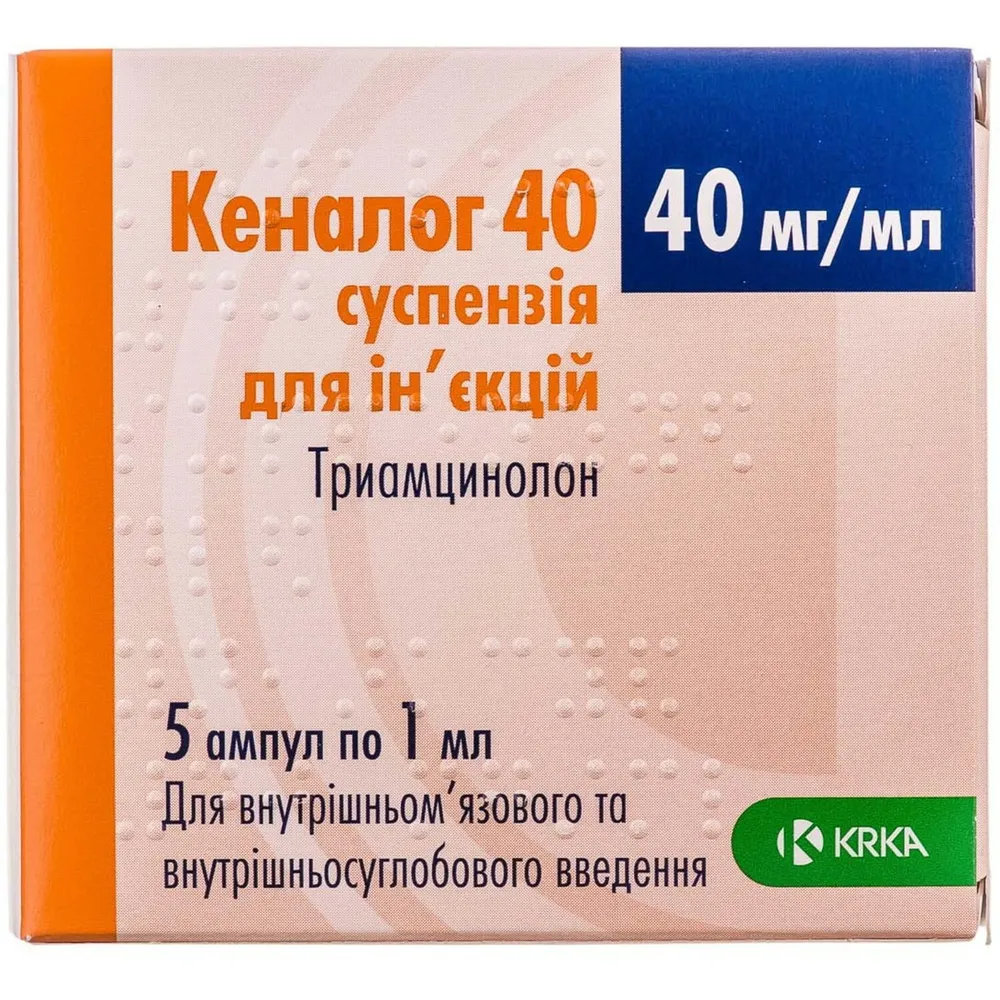
Table of Contents
INSTRUCTIONS FOR MEDICAL USE OF THE MEDICINAL PRODUCT KENALOG 40 (KENALOG 40)
Composition:
Active substance: triamcinolone acetonide;
1 ml of injectable suspension contains 40 mg of triamcinolone acetonide;
Excipients: sodium carboxymethylcellulose, sodium chloride, benzyl alcohol, polysorbate 80, water for injections.
Pharmaceutical form. Injectable suspension.
Main physicochemical properties: white suspension, practically free of visible mechanical particles and lumps, with a slight odor of benzyl alcohol.
Pharmacotherapeutic group. Corticosteroids for systemic use. Glucocorticoids.
ATC code H02AB08.
Pharmacological properties.
Pharmacodynamics.
Triamcinolone acetonide is a derivative of triamcinolone intended for broad application. Although triamcinolone itself is nearly twice as potent as prednisone, as demonstrated in animal models of inflammation, triamcinolone acetonide is almost eight times more effective than prednisone.
The main effects of triamcinolone in humans are related to glucocorticoid activity and suppression of the inflammatory response. Glucocorticoid activity leads to enhanced gluconeogenesis and reduced glucose utilization in tissues. Protein catabolism is accelerated, while synthesis from dietary protein is reduced, although the overall effect on nitrogen balance depends on other factors, including diet, dose, and duration of treatment. Administration of doses of 12–24 mg per day may cause a negative nitrogen balance. Fats are metabolized, and fat deposits in the shoulders, face, and abdomen increase. Triamcinolone has minimal mineralocorticoid activity. During corticosteroid therapy, the number of erythrocytes and neutrophils increases, while the number of eosinophils and basophils decreases. Lymphoid tissue mass is also reduced.
Corticosteroids prevent or suppress the early signs of inflammation—redness, pain, localized increase in body temperature, sweating—as well as later complications, including fibroblast proliferation and collagen deposition.
Pharmacokinetics.
Absorption and distribution
After intramuscular administration of 120 mg of triamcinolone acetonide, maximum plasma concentration reaches 44–54 mcg/100 ml within 8–10 hours; this level decreases to 8.9 mcg/100 ml within 72 hours after administration.
Within three days after intra-articular injection, 58% to 67% of triamcinolone acetonide is absorbed. Comparison of the area under the plasma concentration-time curve (AUC) following intra-articular and intramuscular injections indicates complete absorption of the drug with both routes of administration.
Metabolism
Like prednisone, triamcinolone is likely metabolized in the liver. Less than 15% of the drug is excreted unchanged in urine. After absorption through the skin, topically applied corticosteroids behave similarly to systemic corticosteroids: metabolism occurs primarily in the liver.
Three metabolites of triamcinolone have been identified, and the metabolic pattern is similar for all three routes of administration. The metabolites of triamcinolone include 6-beta-hydroxytriamcinolone acetonide, 21-carboxy-6-beta-hydroxytriamcinolone acetonide, and 21-carboxytriamcinolone acetonide.
Elimination
Pharmacokinetic clinical studies have not shown sufficient systemic absorption of topical corticosteroids to result in significant quantities of the drug being present in breast milk. Systemically administered corticosteroids pass into breast milk in amounts unlikely to have a negative effect on the infant.
After an intramuscular dose of 40 mg triamcinolone acetonide, excreted radioactivity in urine reached 12.5% of the administered dose. After an oral dose of 32 mg triamcinolone, the drug was present in urine for four days in one patient and five days in another. After a single intramuscular dose of 80 mg triamcinolone acetonide, the drug was present in urine for 7 days in two patients and 11 days in one patient.
Topical corticosteroids and their inactive metabolites enter the bile in small amounts following systemic absorption.
The plasma half-life of orally administered triamcinolone ranges from 2 to more than 5 hours.
Pharmacokinetics are dose-dependent. In studies, following a dose of 5 mg/kg, the mean half-life was 85 minutes; at 10 mg/kg, it was 88 minutes. Total body clearance was 61.6 L/h in the 5 mg/kg group and 48.2 L/h in the 10 mg/kg group; the difference was statistically significant. The pharmacokinetics of triamcinolone and its phosphate ester were studied after intravenous injection of 5 mg/kg and 10 mg/kg. One group received 80 mg of triamcinolone acetonide.
Clinical characteristics.
Indications.
Triamcinolone acetonide is recommended for the treatment of:
- Allergic conditions, including seasonal and perennial allergic rhinitis, atopic and contact dermatitis, drug reactions, serum sickness, and acute non-infectious laryngeal edema. Corticosteroids are not beneficial in the treatment of acute manifestations of anaphylactic reactions; however, they are useful in preventing the onset of the late phase of the allergic reaction;
- Rheumatic disorders:
Corticosteroids should be used in patients with severe rheumatoid arthritis who are awaiting beneficial effects of long-acting antirheumatic agents. They are indicated for short-term management of acute gouty arthritis, acute nonspecific ankylosing spondylitis, bursitis, epicondylitis, post-traumatic osteoarthritis, psoriatic arthritis, and synovitis associated with osteoarthritis;
- Dermatological diseases:
Corticosteroids are recommended for dermatitis herpetiformis, exfoliative dermatitis, severe polymorphic erythema, severe psoriasis, severe seborrheic dermatitis, eczema, atopic dermatitis, discoid lupus erythematosus, contact dermatitis, alopecia areata, pemphigus, and various acute and chronic dermatoses;
- Ophthalmic diseases:
Corticosteroids are recommended for severe acute and chronic allergic and inflammatory conditions, including allergic conjunctivitis, allergic corneal marginal ulcers, anterior segment inflammation, choroidoretinitis, diffuse posterior uveitis and chorioiditis, herpes zoster ophthalmicus, iritis and iridocyclitis, keratitis, optic neuritis, and sympathetic ophthalmia;
- Endocrine disorders:
Corticosteroids are indicated for the treatment of primary and secondary adrenocortical insufficiency, congenital adrenal hyperplasia, hypercalcemia associated with malignancy, De Quervain's thyroiditis, and Addison's disease;
- Respiratory tract diseases:
Corticosteroids are indicated for the treatment of aspiration pneumonitis, berylliosis, and Loeffler's syndrome;
- Other diseases:
Tuberculous meningitis, multiple sclerosis (corticosteroids should be used to treat exacerbations of multiple sclerosis; they reduce the duration of the exacerbation but do not halt disease progression).
Contraindications.
Hypersensitivity to the active substance or to any of the excipients.
Systemic infections, except when specific antibacterial therapy is administered.
Chronic primary hemorrhagic diathesis due to platelet component deficiency of hemostasis, with subcutaneous hemorrhages and mucosal bleeding into natural cavities (Würm's disease).
Intravenous, intrathecal, epidural, or intraocular administration.
History of corticosteroid-induced proximal myopathy.
Interaction with other medicinal products and other forms of interaction.
When used concomitantly with amphotericin B and potassium-sparing agents, the patient should be monitored for possible development of hypokalemia.
Anticholinesterase agents exert an antagonistic effect on corticosteroids.
Corticosteroids exhibit antagonism toward antihypertensive agents and diuretics. The hypokalemic effect of diuretics, including acetazolamide, may be enhanced.
Antituberculosis agents: serum concentrations of isoniazid may increase.
Cyclosporine: careful monitoring for signs of increased cyclosporine toxicity is required when used concomitantly with corticosteroids.
Digitalis glycosides: concomitant use increases the risk of digitalis toxicity.
Estrogens, including oral contraceptives: the half-life and concentration of corticosteroids may increase, while clearance may decrease.
Hepatic enzyme inducers (including barbiturates, phenytoin, carbamazepine, rifampicin, primidone, aminoglutethimide): may increase the metabolic clearance of Kenalog 40. The patient requires careful monitoring for possible reduced steroid effects and appropriate dosage adjustment.
Human growth hormone: the growth-promoting effect may be inhibited.
Thyroid preparations: metabolic clearance of adrenocorticoids is reduced in patients with hypothyroidism and increased in those with hyperthyroidism. Changes in the patient’s thyroid status may require adjustment of adrenocorticoid dosages.
Combination of corticosteroids with nonsteroidal anti-inflammatory drugs increases the risk of peptic ulceration and gastrointestinal bleeding.
Medicinal products containing acetylsalicylic acid should be used with caution when administered concomitantly with corticosteroids in patients with hypoprothrombinemia.
Serum salicylate concentrations at steady state decrease following intra-articular injection of corticosteroids, including triamcinolone.
Concomitant administration of corticosteroids and muscle relaxants may oppose neuromuscular blockade.
Clinical studies have shown that corticosteroids accelerate and reduce the activity of oral anticoagulants when used concomitantly. Therefore, careful monitoring of patients receiving oral anticoagulants and corticosteroids is required.
Phenytoin has been shown to increase hepatic metabolism of corticosteroids and reduce the efficacy of triamcinolone.
Concomitant vaccination against measles and immunosuppressive therapy (with corticosteroids) has been associated with diminished immune response to the vaccine.
Corticosteroids may increase blood glucose levels; therefore, diabetes should be monitored, especially when corticosteroid therapy is initiated, discontinued, or dosage adjusted.
Concomitant use of phenobarbital and corticosteroids may lead to reduced plasma levels and therapeutic effects of the corticosteroid.
Corticosteroid preparations for local injection may be diluted with water for injections or 0.9% sodium chloride solution for injection.
Unused diluted suspension should be discarded after 7 days.
Prior to local injection, corticosteroids may be mixed with local anesthetics. Prepared mixtures should be used immediately; unused portions should be discarded. Suitable anesthetics: 1% or 2% lidocaine hydrochloride solution or 1% procaine hydrochloride solution.
CYP3A4 inhibitors: triamcinolone acetonide is a substrate of CYP3A4. Concomitant use of strong CYP3A4 inhibitors (e.g., ritonavir, atazanavir, clarithromycin, indinavir, itraconazole, nefazodone, nelfinavir, saquinavir, ketoconazole, telithromycin) with triamcinolone is not recommended, as it may lead to enhanced systemic corticosteroid side effects (see section "Side effects").
Concomitant use of triamcinolone and protease inhibitors (ritonavir, lopinavir) may increase systemic triamcinolone concentrations; therefore, caution is recommended.
Non-depolarizing muscle relaxants: corticosteroids may decrease or enhance neuromuscular blocking action.
Additionally, corticosteroids may reduce serum salicylate levels, thereby decreasing their efficacy. Conversely, discontinuation of corticosteroids during high-dose salicylate therapy may lead to salicylate toxicity.
Concomitant therapy with CYP3A inhibitors, including products containing cobicistat, is expected to increase the risk of systemic corticosteroid side effects. Such combinations should be avoided unless the potential benefit outweighs the increased risk of systemic corticosteroid adverse effects. If such combination is used, systemic corticosteroid effects should be monitored. During post-marketing use, reports have been received of clinically significant drug interactions in patients receiving triamcinolone acetonide and ritonavir, resulting in systemic corticosteroid effects, including Cushing's syndrome and adrenal suppression. Therefore, concomitant use of triamcinolone acetonide and ritonavir is not recommended unless the potential benefit outweighs the risk of systemic corticosteroid effects (see section "Special precautions for use").
Special precautions for use.
Kenalog 40 must not be administered intravenously.
Since complications associated with glucocorticoid therapy (including triamcinolone) depend on the dose and duration of treatment, in each individual case, a risk/benefit assessment should be performed to determine the appropriate dose and duration of therapy, and whether daily or short-term therapy should be applied.
Adequate and well-controlled studies demonstrating the safety of Kenalog 40 for injections into the nasal cavity, subconjunctival, subtenon, retrobulbar, and intraocular (intravitreal) injections have not been conducted. Cases of endophthalmitis, ocular inflammation, increased intraocular pressure, and visual disturbances (including vision loss) have been reported following intraocular (intravitreal) injections. Isolated cases of blindness have been reported after intranasal injection of corticosteroid suspensions and following intracranial injection into the head of a patient.
Reports of rare cases of serious anaphylactic reactions and anaphylactic shock, including fatal outcomes, have been received regardless of the route of administration.
During prolonged therapy, adequate protein intake is important to prevent progressive weight loss, which may sometimes be associated with negative nitrogen balance and skeletal muscle atrophy.
Patients or caregivers should be aware of the potential for severe psychiatric disorders associated with systemic steroid use. Typical symptoms may appear within days or weeks after starting treatment. The risk may increase with higher doses or greater systemic exposure, although the level of dosing does not allow prediction of the onset, type, severity, or duration of the reaction. Most reactions resolve after dose reduction or discontinuation of the drug, but specific treatment may be required. Patients or caregivers should seek medical help if they experience troubling psychiatric symptoms, especially if depressive mood or suicidal thoughts occur. Patients or caregivers should be prepared for possible psychiatric disorders that may occur immediately after or during dose tapering and/or discontinuation of systemic steroids, although reports of such adverse reactions are extremely rare.
Particular caution is required when considering systemic steroid use in patients with a history of severe affective disorders in themselves or their close relatives. This includes depressive or manic-depressive disorders or previous steroid-induced psychoses.
The drug should be used with special caution in: recent intestinal anastomosis, diverticulitis, thrombophlebitis, history of severe affective disorder (especially previous steroid psychosis), exanthematous diseases, chronic nephritis or renal insufficiency, metastatic carcinoma, osteoporosis (in postmenopausal women); patients with active peptic ulcer (or history of peptic ulcer); myasthenia gravis; latent or inactive tuberculosis; presence of local or systemic viral infection, systemic fungal infection, or active infection not controlled by antibiotics; acute psychoses, acute glomerulonephritis; arterial hypertension; congestive heart failure; glaucoma (or family history of glaucoma), previous steroid-induced myopathy or epilepsy; hepatic insufficiency.
The effects of corticosteroids may be more pronounced in patients with hypothyroidism or cirrhosis and less pronounced in patients with hyperthyroidism.
All corticosteroids increase calcium excretion.
Patients on corticosteroid therapy who experience significant stress should receive rapid-acting corticosteroid support, and the dose should be increased before, during, and after the stressful event.
Adrenal suppression may persist for several months after discontinuation of therapy; therefore, replacement therapy may be required during periods of stress.
Corticosteroids may mask signs of infection and reduce resistance to infection.
Corticosteroid therapy may increase the risk of tuberculosis reactivation in patients with latent tuberculosis or a positive Mantoux test. The use of corticosteroids in active tuberculosis should be restricted to fulminant or disseminated disease, in which corticosteroids are used in conjunction with appropriate antituberculosis treatment regimens.
Corticosteroids may increase the risk of severe or fatal infections in individuals with viral infections such as varicella (chickenpox) or measles.
Patients receiving corticosteroid therapy should not be vaccinated.
Corticosteroids should be used with caution in patients with simple herpes of the eye due to the risk of corneal perforation.
Corticosteroids may cause psychiatric disorders ranging from euphoria, insomnia, mood swings, and personality changes to severe depression and overt psychosis. Corticosteroids may also exacerbate existing emotional instability or psychotic tendencies.
Corticosteroids should be used cautiously in patients with nonspecific ulcerative colitis, diverticulitis, recent anastomosis, active or latent peptic ulcers, renal insufficiency, hypertension, osteopor游戏副本
Dosage and Administration
It should be noted that dosage requirements for triamcinolone vary, and the dose should be individually adjusted depending on the disease and patient response. The lowest possible doses of corticosteroids should be used to control treatable conditions, and if dose reduction is possible, it should be done gradually.
Dosage should be determined according to joint size, severity of symptoms, and patient response.
Therapeutic effects should be observed within 2–3 weeks. However, in some cases, it may take more than 6 weeks before definite positive results become apparent.
Kenalog must not be administered intravenously!
Intramuscular Administration
Kenalog 40 can be administered intramuscularly in doses ranging from 40 to 80 mg.
The recommended initial dose for adults and children aged 12 years and older is 60 mg.
If necessary, a dose of 100–120 mg may be administered immediately.
The recommended initial dose for children aged 6–12 years is 0.03–0.2 mg/kg intramuscularly at intervals of 1–7 days.
Intramuscular administration of Kenalog 40 often can replace initial oral therapy.
The dose should be injected deeply into the gluteal muscle.
Generally, a single parenteral dose may be sufficient to provide disease control for 4–7 days up to 3–4 weeks. A single dose of 40–60 mg may induce symptom remission for the entire season in patients with allergic rhinitis or pollen-induced asthma.
This route of administration may provide beneficial effects, for example, in asthma, but it may be associated with adverse effects typical of chronic corticosteroid use, such as fever.
Intra-articular Administration
Currently, triamcinolone acetonide is rarely used for symptomatic treatment of rheumatoid arthritis; however, it can be administered intra-articularly to relieve pain and inflammation in rheumatoid arthritis, gouty arthritis (gout), psoriatic arthritis, and osteoarthritis. Patients should avoid overloading joints after symptomatic improvement has been achieved. Repeated intra-articular injections over prolonged periods may lead to severe joint destruction and bone necrosis.
Usual intra-articular doses of triamcinolone acetonide for adults are 5–10 mg for smaller joints and 20–60 mg for larger joints. However, doses of 6–10 mg per injection for smaller joints and 40 mg per injection for larger joints have been successfully used. When injecting multiple joints, up to 80 mg of triamcinolone acetonide may be administered.
The recommended initial dose for children aged 12–18 years is 2.5–40 mg. Subsequent doses may be increased based on clinical response.
Triamcinolone acetonide may be administered locally to relieve bursitis and tenosynovitis. Care should be taken to inject into the space between the tendon sheath and the tendon, not directly into the tendon itself, due to the risk of tendon rupture. The dose depends on the size of the joint or synovial space and the degree of inflammation.
Local Lesion Injection
The dose for injection into the affected area with triamcinolone acetonide usually ranges from 5 to 10 mg. This dose should be divided according to the extent of the affected area.
The recommended initial dose for children aged 12–18 years is 2.5–40 mg. Subsequent doses may be increased based on clinical response.
Generally, larger areas require multiple injections with smaller doses per injection site. Usually, 2–3 injections at 2–3 week intervals are needed. Injection into the affected area is suitable for treating large lesions, such as psoriasis and alopecia areata.
Renal Impairment
No dose adjustment is required.
Hepatic Impairment
In patients with severe hepatic impairment, treatment should be initiated at half the usual dose, as corticosteroid effects may be enhanced in these patients.
Triamcinolone acetonide may be diluted or mixed with certain local anesthetics (see section "Interaction with Other Medicinal Products and Other Forms of Interaction").
Children
Intramuscular injection of triamcinolone acetonide is not recommended for children under 6 years of age. Intra-articular injection or injection into the affected area is not recommended for children under 12 years of age unless there are clear clinical indications. During treatment, careful monitoring of a child's growth and development is required.
Overdose
There have been isolated reports of fatal outcomes following acute overdose.
Generally, most adverse effects, including Cushing's syndrome, restlessness, anxiety, depression, gastrointestinal colic or hemorrhage, ecchymoses, arterial hypertension, and hyperglycemia, occur only after several weeks of treatment with very high doses.
There is no specific antidote. Supportive and symptomatic treatment should be administered.
Hemodialysis is not an effective method for accelerating the elimination of triamcinolone from the body.
Adverse reactions.
Adverse effects that may occur during the use of triamcinolone acetonide are categorized by frequency as follows:
- very common (≥ 1/10);
- common (≥ 1/100 to < 1/10);
- uncommon (≥ 1/1000 to < 1/100);
- rare (≥ 1/10000 to < 1/1000);
- very rare (< 1/10000);
- frequency not known (cannot be estimated from the available data).
Within each frequency group, adverse effects are listed in order of decreasing severity.
| Often |
Uncommon |
Rare |
Very rare |
Frequency unknown |
|
| Infections and infestations |
Infection |
Sterile injection site abscess, masked infection, tuberculosis, candidal infection, viral eye infection, fungal eye infection, rhinitis, conjunctivitis |
Sepsis necrosis (especially in patients with systemic lupus erythematosus or rheumatoid arthritis) |
||
| Disorders of blood and lymphatic system |
Granulocytosis, lymphopenia, monocytopenia |
||||
| Immune system disorders |
Anaphylactoid reaction, anaphylactic reaction, anaphylactoid shock |
||||
| Endocrine disorders |
Cushingoid, adrenal suppression, secondary adrenal insufficiency, hypopituitarism |
||||
| Metabolism and nutrition disorders |
Sodium retention, fluid retention, alkalosis, hypokalemia, hyperglycemia, inadequate control of diabetes mellitus, calcium deficiency, increased appetite |
Porphyria |
|||
| Psychiatric disorders |
Psychiatric symptoms, depression, sedation, euphoric mood, mood swings, psychotic disorder, personality change, insomnia, drug dependence, mental disorder, irritability, suicidal thoughts, anxiety, cognitive disorder, mania |
Hallucinations |
|||
| Nervous system disorders |
Headache |
Convulsions, epilepsy, syncope, benign intracranial hypertension neuritis, paresthesia, increased intracranial pressure, dizziness |
|||
| Eye disorders |
Blindness, cataract, glaucoma, exophthalmos, corneal perforation, papilledema |
Blurred vision (see "Special precautions") |
|||
| Ear and labyrinth disorders |
Vertigo |
||||
| Cardiac disorders |
Heart failure, arrhythmia |
||||
| Vascular disorders |
Hypertension, embolism, thrombophlebitis, necrotic vasculitis, hypotension, flushing |
||||
| Gastrointestinal disorders |
Dry mouth |
Perforation of peptic ulcer, hemorrhagic peptic ulcer, pancreatitis, abdominal distension, ulcerative esophagitis, dyspepsia |
Hiccups |
||
| Skin and subcutaneous tissue disorders |
Urticaria, rash, skin hyperpigmentation, skin hypopigmentation, skin atrophy, fragile skin, petechiae, ecchymosis, erythema, hyperhidrosis, purpura, striae, hirsutism, acneiform dermatitis, cutaneous lupus erythematosus, angioneurotic edema, pruritus |
||||
| Musculoskeletal and connective tissue disorders |
Arthralgia |
Osteoporosis, osteonecrosis, pathological fracture, delayed fracture healing, musculoskeletal discomfort, muscle weakness, myopathy, muscle atrophy, growth retardation, neuropathic arthropathy, myalgia |
|||
| Renal and urinary disorders |
Glucosuria |
||||
| Reproductive system and breast disorders |
Menstrual cycle disturbance, amenorrhea and postmenopausal vaginal bleeding |
||||
| General disorders and administration site conditions |
Injection site reaction |
Synovitis, pain, irritation at injection site, discomfort at injection site, fatigue, impaired healing, hyperthermia |
|||
| Investigations |
Infection |
Decreased blood potassium, electrocardiogram changes, decreased carbohydrate tolerance, negative nitrogen balance, increased intraocular pressure, weight loss, changes in blood calcium levels, changes in total protein levels |
|||
| Injury, poisoning and procedural complications |
Spinal compression fracture |
Shelf life. 3 years.
Storage conditions.
Store at a temperature between 8 and 25 °C. Do not freeze. Store in an upright position. Keep out of reach of children.
Packaging.
1 ml of injectable suspension in an ampoule; 5 ampoules per blister in a cardboard box.
Prescription status.
Prescription only.
Manufacturer.
KRKA, d.d., Novo mesto, Slovenia.
Manufacturer's address and place of business.
Smarjeska cesta 6, 8501 Novo mesto, Slovenia.