Candid-b
Ukraine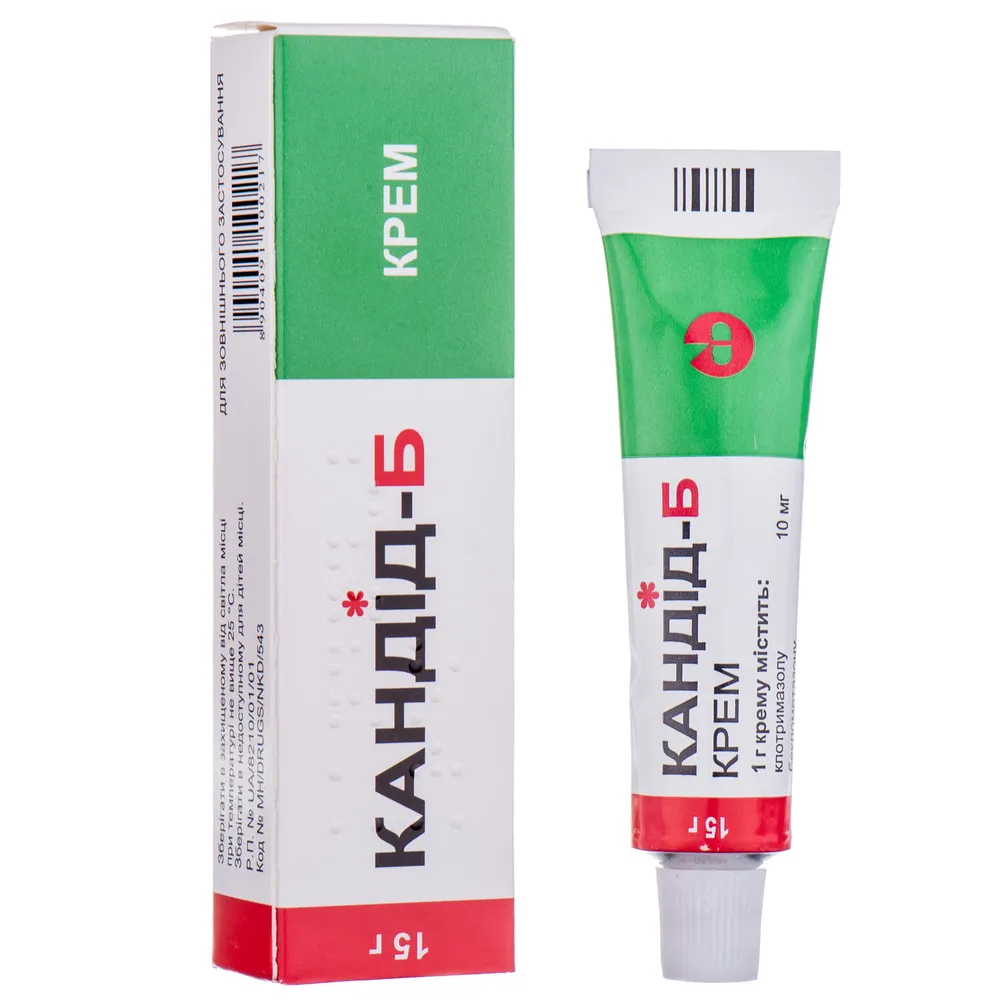
Table of Contents
INSTRUCTION FOR MEDICAL USE OF THE MEDICINAL PRODUCT CANDID-B (CANDID-B)
Composition:
active substances: clotrimazole, beclometasone dipropionate;
1 g of cream contains clotrimazole 10 mg, beclometasone dipropionate 0.25 mg;
excipients: white soft paraffin; mineral oil; non-ionic emulsifying wax; benzyl alcohol; methylparaben (E 218); propylparaben (E 216); butylhydroxytoluene (E 321); propylene glycol; disodium hydrogen phosphate anhydrous; sodium phosphate, dihydrate; purified water.
Pharmaceutical form. Cream.
Main physicochemical characteristics: white soft cream.
Pharmacotherapeutic group.
Antifungal preparations for topical use. Combinations.
ATC code D01AC20.
Pharmacological properties.
Pharmacodynamics. Kandid-B is a combined antifungal preparation with anti-inflammatory action for topical use. The pharmacological effect of the drug is due to the properties of clotrimazole and beclomethasone dipropionate contained in its composition. Clotrimazole is a broad-spectrum antifungal agent from the group of imidazole derivatives. Dermatophytes, yeasts (genus Candida, Torulopsis glabrata, Rhodotorula), molds, as well as causative agents of Pityriasis versicolor (tinea versicolor) and erythrasma are sensitive to clotrimazole. The effect of clotrimazole is associated with disruption of ergosterol synthesis, a component of the fungal cell membrane, resulting in changes in membrane structure and properties, followed by cell lysis.
Beclomethasone dipropionate is a synthetic analogue of adrenal cortex hormones and exerts anti-inflammatory, antiallergic, anti-exudative, and antipruritic effects.
Pharmacokinetics. Specific pharmacokinetic studies of the drug have not been conducted.
Clinical characteristics.
Indications.
Fungal infections of the skin, especially when accompanied by acute eczematous manifestations: dermatomycoses of various body parts; tinea pedis (athlete's foot); dermatoses complicated by secondary infection.
Contraindications.
Hypersensitivity to the components of the drug, other imidazoles, or corticosteroids.
Cutaneous forms of tuberculosis, varicella, herpes simplex, measles, vaccinations, syphilitic skin rashes.
Widespread plaque psoriasis, varicose veins, perioral dermatitis, rosacea, other bacterial skin infections without appropriate antibacterial therapy.
Interaction with other medicinal products and other forms of interactions.
Concomitant use of agents capable of inhibiting CYP3A4 (e.g., cobicistat) has been shown to inhibit corticosteroid metabolism, potentially leading to systemic effects. The clinical significance of such interaction depends on the dose of the drug, the route of administration of the corticosteroid, and the potency of the CYP3A4 inhibitor.
Special precautions for use
The product is intended for dermatological use only.
After the disappearance of eczematous symptoms, treatment may be continued using monotherapy with topical clotrimazole preparations.
If irritation or hypersensitivity develops during use of the product, treatment should be discontinued and appropriate therapy initiated. Avoid contact with the face, eyes, mucous membranes, axillae, perianal and genital areas.
Topical corticosteroids should be used with caution in the periorbital area. Application to the eyelids may lead to the development of glaucoma. Systemic absorption of beclometasone dipropionate may significantly increase when the product is applied to large skin areas or under occlusive dressings. Therefore, avoid application to open wounds or damaged skin areas, and do not use under occlusive dressings.
Any adverse effects associated with systemic corticosteroids, including adrenal cortex suppression, Cushing's syndrome, and increased intracranial pressure, may also occur with topical application of glucocorticosteroids. Prolonged use should be avoided due to the risk of adrenal suppression, even without the use of occlusive dressings.
Visual disturbances may occur with both systemic and topical corticosteroid use. If a patient develops symptoms such as blurred vision or other visual disturbances, they should be referred to an ophthalmologist to evaluate possible causes, including cataract, glaucoma, or rare conditions such as central serous chorioretinopathy, which have been reported following systemic and topical corticosteroid use.
Use during pregnancy or breastfeeding
Although there are no data indicating harmful effects of topical corticosteroids and clotrimazole (when used topically) on the fetus or infant during pregnancy and breastfeeding, the safety of their use in these patient groups has not been established.
As a precautionary measure, it is advisable to avoid the use of clotrimazole during the first trimester of pregnancy.
Breastfeeding should be discontinued during treatment with this product. Do not apply the cream to the area of the mammary glands throughout the breastfeeding period.
Ability to influence reaction speed while driving or operating machinery
Does not affect.
Method of Administration and Dosage
Apply externally 2–3 times daily. Before application, the affected area should be washed and dried thoroughly. Then rub in the cream. Do not apply the cream under occlusive dressings.
The duration of treatment is determined by the physician depending on the type of infection and severity of the lesion. Typically, the treatment duration for dermatoses is 3–4 weeks. Do not use for longer than 4 weeks without consulting a physician.
Children
There is no experience with the use of the drug in children.
Overdose
Acute overdose with topical application of the drug is unlikely and is not expected to lead to life-threatening consequences. However, topical application over large skin areas using occlusive dressings may result in systemic absorption of beclomethasone. In addition, when applied under occlusive dressings, skin rashes, folliculitis, and pyoderma may occur.
With prolonged or excessive use, suppression of the pituitary-adrenal function may occur, leading to secondary adrenal insufficiency and symptoms of hypercorticism, including Cushing's syndrome.
Treatment
Symptomatic therapy should be administered as appropriate. Symptoms of acute hypercorticism are usually reversible. If necessary, correction of electrolyte imbalance should be performed. In cases of chronic toxic effects, gradual withdrawal of corticosteroids is recommended.
Adverse reactions.
In case of hypersensitivity to the components of the medication, local allergic reactions may occur: skin redness, burning sensation, and tingling at the site of cream application. If adverse reactions occur, the medication should be discontinued.
Allergic reactions (loss of consciousness, arterial hypotension, dyspnea); discomfort/pain, rash, feeling of warmth, skin irritation, dryness of skin, desquamation, folliculitis, hypertrichosis, acneiform eruptions, exudation, vesicles, epidermal peeling, swelling, itching, urticaria, pigmentation disorders, hypopigmentation, perioral dermatitis, allergic contact dermatitis, skin maceration, telangiectasias, skin atrophy, striae, miliaria, hair loss.
Reactions related to systemic effects of beclometasone: hyperglycemia, glucosuria, suppression of pituitary-adrenal function, cataract, Cushing's syndrome, hirsutism, arterial hypertension, edema, gastric ulcer formation, visual disturbances (frequency unknown) (see section "Special precautions").
Methylparaben (E 218) and propylparaben (E 216) present in the formulation may cause allergic reactions (possibly delayed); propylene glycol may cause skin irritation.
Shelf life.
3 years.
Storage conditions.
Store in a light-protected place at a temperature not exceeding 25 °C.
Keep out of reach of children.
Packaging.
15 g of cream in a tube, 1 tube per cardboard package.
Prescription status.
Prescription only.
Manufacturer.
Glenmark Pharmaceuticals Ltd.
Manufacturer's address.
Plot No E-37/39, M.I.D.C., Industrial Estate, Satpur, Nasik – 422 007, India.