Calcium chloride
Ukraine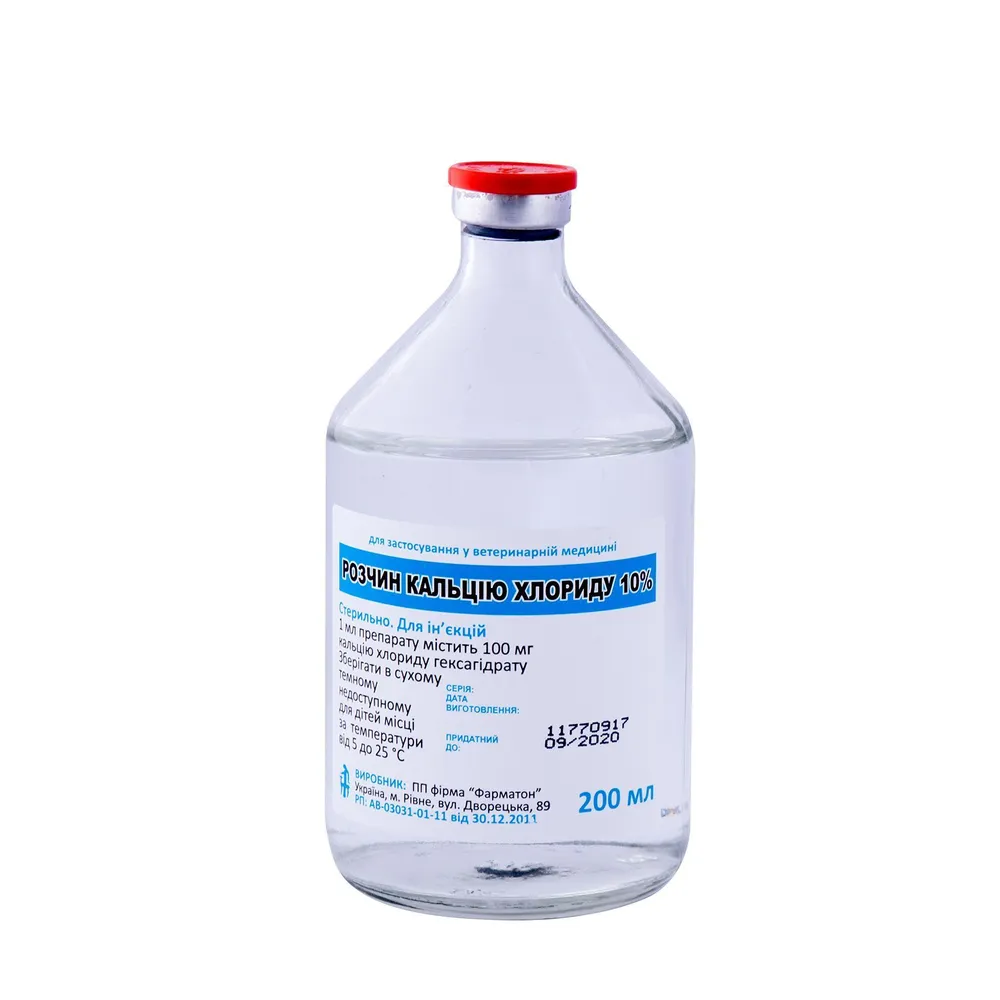
Table of Contents
INSTRUCTIONS FOR MEDICAL USE OF THE MEDICINAL PRODUCT CALCIUM CHLORIDE (CALCIUM CHLORIDE)
Composition:
Active substance: 1 ml of solution contains calcium chloride 100 mg;
Excipient: water for injections.
Pharmaceutical form. Injection solution.
Main physicochemical properties: clear, colorless liquid.
Pharmacotherapeutic group. Plasma substitutes and perfusion solutions. Electrolyte solutions. ATC code B05XA07.
Pharmacological properties.
Pharmacodynamics.
The drug eliminates calcium ion deficiency. Calcium ions are involved in the transmission of nerve impulses, contraction of smooth and skeletal muscles, myocardial functional activity, and blood coagulation; they are essential for bone tissue formation and the functioning of other systems and organs. The concentration of calcium ions in the blood decreases due to various pathological processes, and pronounced hypocalcemia promotes the development of tetany. Calcium chloride, in addition to correcting hypocalcemia, reduces vascular permeability and exhibits hemostatic effects.
Pharmacokinetics.
In the blood, calcium exists in both bound and ionized forms. Physiological activity is associated with ionized calcium. It is deposited in bone tissue. Eliminated from the body in urine, but mainly in feces.
Clinical characteristics.
Indications.
Cases of hypocalcemia requiring rapid increase in plasma calcium ion concentration (tetany due to functional parathyroid insufficiency, tetany due to vitamin D deficiency, hypocalcemia during massive blood transfusion or infusion of citrate-containing blood, alkalosis). As part of complex therapy in acute lead colic. Cases of magnesium intoxication arising from magnesium overdose. Hyperkalemia with cardiac function disturbances recorded on ECG.
Contraindications.
Hypersensitivity to the components of the drug. Hypercalcemia, marked hypercalciuria, nephrolithiasis (calcium type), severe renal insufficiency, sarcoidosis, hypercoagulation. Atherosclerosis with signs of arterial occlusion. Tendency to thrombosis. Ventricular fibrillation. Asystole and electromechanical dissociation. Concomitant use of cardiac glycosides. Simultaneous administration with ceftriaxone.
Interaction with other medicinal products and other types of interactions.
Should not be used with thiazide diuretics or vitamin D due to increased risk of hypercalcemia. Calcium chloride and ceftriaxone should not be administered simultaneously. For patients of any age, ceftriaxone must not be mixed or administered concurrently with calcium-containing infusion solutions, even via different infusion systems or at different infusion sites. However, ceftriaxone and calcium-containing solutions may be administered sequentially if different infusion sites are used, or if the infusion system is changed or thoroughly flushed with physiological saline to prevent precipitate formation.
Calcium-containing products may reduce the effectiveness of calcium channel blockers, reduce the effect of calcitonin in hypercalcemia, and reduce phenytoin bioavailability. Calcium chloride reduces the cardiotonic effects of dobutamine. Calcium salts reduce the absorption of drugs such as bisphosphonates, fluorides, and certain fluoroquinolones. Concurrent use may reduce the effect of calcium channel blockers; when used with quinidine, possible slowing of intraventricular conduction and increased quinidine toxicity may occur. Parenteral administration of calcium chloride is not recommended during treatment with cardiac glycosides due to enhanced cardiotoxic effects.
Concomitant use with other calcium- or magnesium-containing medicinal products increases the risk of hypercalcemia or hypermagnesemia, respectively, especially in patients with chronic renal insufficiency.
The drug reduces the efficacy of non-depolarizing muscle relaxants. May prolong the duration of action of tubocurarine chloride.
Special precautions for use.
With prolonged use in high doses, hypercalcemia with deposition of calcium salts in the body is possible.
The injection should be administered through a thin needle into a large vein to minimize the damaging effect of the drug on the vascular wall. The solution should be warmed to body temperature. Calcium chloride must not be administered subcutaneously or intramuscularly due to its strong irritant and necrotizing effect. In case of accidental extravasation of the solution into subcutaneous tissue or muscle, the solution should be aspirated as much as possible using a syringe, and 10 ml of sodium sulfate 25% solution for injection or 5–10 ml of magnesium sulfate 25% solution for injection should be administered into the injection site. To counteract resorptive effects, dimedrol should be administered; in cases of hypercalcemia, EDTA should be used.
After intravenous administration of the drug, a common reaction is a sensation of warmth in the mouth, followed by a feeling of warmth throughout the body.
Careful monitoring of blood calcium levels is required during treatment.
The drug should be used with caution in patients with kidney disease, dehydration, electrolyte imbalances (risk of hypercalcemia), heart disease (risk of arrhythmia), nephrolithiasis, or conditions associated with hypercalcemia (e.g., malignancies and sarcoidosis), "pulmonary heart" disease, respiratory acidosis, or respiratory insufficiency (risk of toxic reactions due to oxidation of calcium chloride). Careful monitoring of blood calcium levels is required during treatment. Calcium chloride for injection should not be administered orally to children due to the potential for severe gastrointestinal irritation.
The drug should not be administered into scalp veins in children.
Use during pregnancy or breastfeeding.
Use during pregnancy is possible only if the benefit to the mother outweighs the potential risk to the fetus.
The drug may be used during breastfeeding.
Ability to influence reaction rate while driving or operating machinery.
During treatment with this drug, driving and working with hazardous machinery are contraindicated.
Method of Administration and Dosage
Calcium chloride should be administered intravenously as a bolus (very slowly) or by intravenous infusion (slowly).
Adults.
Intravenous bolus administration: 5 mL of a 10% solution administered at a rate of 1 mL/min.
Intravenous infusion: 5–10 mL of a 10% solution diluted in 100–200 mL of 0.9% sodium chloride solution or 5% glucose solution; administer at a rate of 6–8 drops/min.
Exchange transfusion and citrated blood transfusion: 30 mg (0.3 mL) per 100 mL of blood for both adults and children.
Hypocalcemia: 500 mg to 1 g (5–10 mL), repeated every 1 to 3 days depending on patient response or plasma calcium levels. If necessary, a repeat dose may be administered.
Magnesium intoxication: 500 mg (5 mL) administered rapidly. Patient should be monitored until clinical improvement is achieved before administering subsequent doses.
Hyperkalemia with ECG-documented cardiac dysfunction: dosage should be individually adjusted according to the patient's condition under continuous ECG monitoring.
Tetany in adults: 10 mL of a 10% solution (1 g) administered over 10–30 minutes; repeat administration may be necessary after 6 hours if required.
Children.
Hypocalcemia: administer slowly at a rate of up to 0.5 mL/min, at a dose of 10–20 mg/kg body weight (0.1–0.2 mL/kg body weight), repeated every 4–6 hours as needed.
Tetany: 10 mg/kg body weight (0.1 mL/kg body weight) administered over 5–10 minutes; repeat administration may be necessary after 6 hours or continued as an infusion. Maximum daily dose for children (regardless of age) is 10 mL (1000 mg).
Dosages for elderly patients are the same as those for adults.
Children. Use in children is possible from the age of 1 year.
Overdose.
Overdose may lead to suppression of cardiac function, tachycardia, and a sharp drop in arterial pressure, as well as acute hypercalcemic syndrome: anorexia, nausea, vomiting, constipation, abdominal pain; psychiatric disturbances, drowsiness, muscle weakness, arthralgia, polyuria, polydipsia, nephrolithiasis, and in severe cases, cardiac arrhythmias and coma.
Treatment. Discontinue administration of the drug. Symptomatic therapy.
Adverse Reactions.
Hypersensitivity reactions: sensation of warmth starting in the oral cavity and then spreading throughout the body; facial skin hyperemia;
Cardiovascular system: moderate and transient decrease in arterial pressure; bradycardia, arrhythmia, arterial hypertension, venous thrombosis; rapid intravenous administration may cause vasodilation, ventricular fibrillation;
Skin and subcutaneous tissue: calcification of soft tissues;
General disorders: chalky taste sensation, hypercalcemia;
Local reactions: tissue necrosis, pain and hyperemia at the injection site.
Shelf life. 5 years.
Storage conditions.
Store in the original packaging at a temperature not exceeding 25°C.
Keep out of reach of children.
Incompatibility.
Calcium chloride should not be mixed with carbonates, phosphates, sulfates, tartrates, and tetracycline antibiotics in parenteral mixtures. Calcium chloride should not be mixed in the same injection with ceftriaxone due to the possibility of precipitate formation.
Packaging.
5 ml or 10 ml in a vial; 5 vials in a blister pack; 2 blister packs in a carton.
Prescription status.
Prescription only.
Manufacturer.
JSC "Halychpharm".
Manufacturer's location and address of business activity.
6/8 Opryshkivska Street, Lviv, 79024, Ukraine.