Calcium gluconate - darnitsa (stabilized)
Ukraine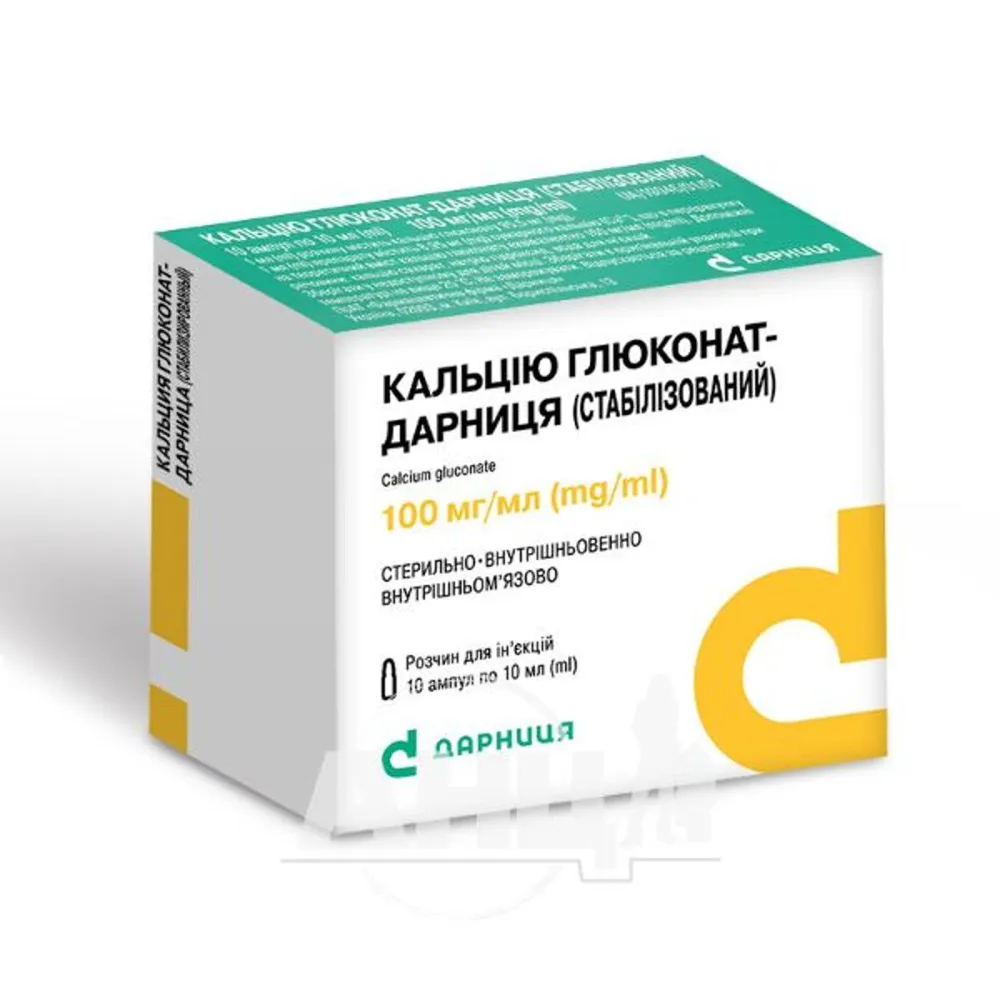
Table of Contents
INSTRUCTIONS FOR MEDICAL USE OF THE MEDICINAL PRODUCT KALSIYU HLYUKONAT-DARNITSA (STABILIZED) CALCIUM GLUCONATE-DARNITSA (STABILIZED)
Composition:
Active substance: calcium gluconate;
1 ml of solution contains 95.5 mg of calcium gluconate;
Excipients: calcium saccharate, sodium hydroxide, water for injections.
Each 1 ml of the preparation contains 8.95 mg of total calcium (Ca²⁺), equivalent to 100 mg/ml calculated according to the theoretical content of calcium gluconate.
Pharmaceutical form. Injection solution.
Main physicochemical properties: clear, colorless liquid.
Pharmacotherapeutic group.
Calcium preparations. Calcium gluconate. ATC code A12A A03.
Solutions affecting electrolyte balance. Electrolytes. ATC code B05B B01.
Pharmacological properties.
Pharmacodynamics.
Calcium gluconate (stabilized) is an agent that regulates metabolic processes, replenishes calcium deficiency in the body, exerts hemostatic and antiallergic effects, and reduces capillary permeability.
Calcium ions are involved in nerve impulse transmission, contraction of smooth and striated muscles, myocardial function, and blood coagulation; they are necessary for bone tissue formation and the functioning of other systems and organs. The concentration of calcium ions in blood decreases in many pathological conditions; pronounced hypocalcemia promotes the development of tetany. In addition to correcting hypocalcemia, calcium compounds reduce vascular permeability and exert antiallergic, anti-inflammatory, and hemostatic effects.
Pharmacokinetics.
After parenteral administration, the drug is evenly distributed throughout all tissues and organs. In blood plasma, calcium is present in ionized form. It crosses the placental barrier and is excreted into breast milk. It is mainly excreted from the body by the kidneys.
Clinical characteristics.
Indications.
Use in parathyroid insufficiency; increased calcium excretion from the body (particularly during prolonged dehydration); as an adjunctive agent in allergic diseases (serum sickness, urticaria, angioneurotic edema) and allergic complications of drug therapy; to reduce vascular permeability in pathological processes of any origin (exudative phase of inflammation, hemorrhagic vasculitis, radiation sickness); in parenchymal hepatitis; toxic liver damage; nephritis; eclampsia; hyperkalemia; hyperkalemic form of periodic paralysis; skin diseases (skin pruritus, eczema, psoriasis); as a hemostatic agent; as an antidote in poisoning with magnesium salts, oxalic acid or its soluble salts, and soluble salts of hydrofluoric acid.
Contraindications.
Hypersensitivity to the components of the medicinal product; predisposition to thrombosis; hypercalcemia (e.g., in hyperparathyroidism, hypervitaminosis D, malignancies with bone decalcification, sarcoidosis, immobilization osteoporosis, milk-alkali syndrome); severe hypercalciuria; pronounced atherosclerosis; increased blood coagulation; severe renal insufficiency; concomitant use with cardiac glycosides.
Aluminum oxide may leach from glass vials into calcium gluconate solution; therefore, to limit aluminum exposure in patients, particularly in patients with impaired renal function and children, calcium gluconate should not be used for the preparation of total parenteral nutrition.
Repeated and long-term treatment is contraindicated in children (under 18 years of age) and patients with impaired renal function (due to the risk of aluminum accumulation in the body).
Calcium gluconate must not be administered concomitantly with ceftriaxone due to the risk of formation of an insoluble ceftriaxone-calcium complex, in the following cases:
- preterm neonates aged ≤ 41 weeks postmenstrual age (gestational age + postnatal age);
- term neonates (aged ≤ 28 days).
Interaction with other medicinal products and other forms of interactions.
Ethanol interacts with calcium gluconate, causing precipitation of the latter.
Concomitant administration of calcium and adrenaline reduces the β-adrenergic effect of adrenaline in patients after cardiac surgery.
Co-administration with other calcium-containing preparations is not recommended.
Calcium reduces the effects of calcium channel blockers. Intravenous administration of calcium gluconate before and after verapamil intake reduces its hypotensive effect but does not affect its antiarrhythmic action.
When used concomitantly with nifedipine, calcium preparations reduce its efficacy.
Combination with thiazide diuretics may lead to hypercalcemia, as these drugs reduce renal calcium excretion.
Concomitant use with quinidine may result in slowed intraventricular conduction and increased quinidine toxicity.
Parenteral administration of calcium gluconate is not recommended during treatment with cardiac glycosides due to enhanced cardiotoxic effects. The effect of digoxin and other cardiac glycosides is potentiated in the presence of calcium.
Calcium gluconate reverses neuromuscular blockade caused by aminoglycoside antibiotics.
Magnesium and calcium have a mutual antagonistic effect.
Special precautions for use
Calcium salts should be administered with caution to patients with impaired renal function, cardiac diseases, sarcoidosis, patients receiving adrenaline, and elderly individuals.
Calcium salts are irritants; therefore, the injection site should be monitored continuously to prevent extravasation injury.
Patients with a predisposition to calculus formation in the urinary tract should increase their fluid intake during treatment.
Serum calcium levels and calcium excretion should be monitored, especially in children, patients with chronic renal insufficiency, or nephrolithiasis. If plasma calcium levels exceed 2.75 mmol/L or daily urinary calcium excretion exceeds 5 mg/kg, treatment must be discontinued immediately due to the risk of developing cardiac arrhythmias.
Calcium gluconate is physically incompatible with many compounds (see section "Incompatibilities"); therefore, caution is required when administering medicinal products to avoid co-administration of incompatible components or their interaction after separate administration.
Before filling a syringe with calcium gluconate solution, ensure that no ethanol residues remain in the syringe, as calcium gluconate precipitates upon contact with alcohol.
Serious complications, including fatal outcomes, have occurred following microcrystallization of insoluble calcium salts in the body after separate administration of physically incompatible solutions or total parenteral nutrition solutions containing calcium and phosphates.
Fatal reactions due to precipitation of ceftriaxone-calcium complexes in the lungs and kidneys have been reported in premature and full-term neonates up to 1 month of age. At least one of these patients received ceftriaxone and calcium at different times.
Available scientific data do not confirm the formation of intravascular ceftriaxone–calcium complexes in patients of other age groups. In vitro studies have shown that neonates have an increased risk of ceftriaxone-calcium precipitation compared to other age groups.
Ceftriaxone must not be mixed or co-administered with intravenous solutions containing calcium, even via different infusion systems or at different injection sites.
Sequential infusions of ceftriaxone and calcium-containing products should be avoided in cases of hypovolemia.
However, in patients aged 28 days and older, ceftriaxone and calcium-containing solutions may be administered sequentially one after another, provided that infusions are administered at different sites or the infusion system is replaced to prevent precipitate formation.
In patients receiving calcium salts, careful monitoring is required to ensure proper calcium balance and prevent tissue accumulation.
Patients should avoid taking large doses of vitamin D.
Precautionary measures during use. Calcium-containing solutions must be administered slowly to minimize peripheral vasodilation and cardiac suppression.
Intravenous injections should be accompanied by monitoring of heart rate (HR) or ECG due to the risk of bradycardia, vasodilation, or arrhythmias in case of rapid administration. When large doses of calcium are administered parenterally, plasma calcium levels and urinary calcium excretion must be monitored.
Use during pregnancy or breastfeeding
Calcium crosses the placenta, and its concentration in fetal tissues is higher than in maternal blood. The use of the medicinal product during pregnancy or breastfeeding is possible only if the benefit to the mother outweighs the potential risk to the fetus (child).
The prescribed dose should be carefully calculated. Serum calcium levels should be regularly monitored to avoid hypercalcemia, which may be harmful to the fetus.
Calcium is excreted in breast milk. The decision whether to discontinue breastfeeding or to stop treatment with calcium gluconate should be made considering the benefits of breastfeeding for the infant and the benefits of therapy for the mother.
Ability to affect reaction speed when driving or operating machinery
There are no data indicating a negative effect of the medicinal product on reaction speed when driving or operating machinery.
Administration and Dosage
Administered intravenously or intramuscularly.
The ampoule with solution should be warmed to body temperature before administration. The solution should be injected slowly.
The rate of intravenous administration should not exceed 2 ml (0.45 mmol calcium) per minute. The patient must be in a lying position and under close supervision during injection (monitoring should include pulse rate or ECG).
Avoid diluting the solution in fluids containing bicarbonate, phosphate, or sulfate.
When administering less than 1 ml of the solution, the dose should be adjusted to the appropriate volume (syringe volume) with 0.9% sodium chloride solution or 5% glucose solution.
Dosage and administration should be reviewed according to updated safety data. Normal plasma calcium concentration ranges from 2.25–2.75 mmol/L, or 4.5–5.5 mEq/L. Treatment should aim to restore or maintain this level.
Adults and children aged 14 years and older: Administer 5–10 ml of "Calcium Gluconate-Darnytsia (stabilized)" daily or every 1–2 days, depending on the course of the disease and the patient's condition.
Children under 14 years of age: The drug should be administered intravenously only. Depending on age, 10% calcium gluconate solution is administered in the following doses: children under 6 months – 0.1–1 ml; 6–12 months – 1–1.5 ml; 1–3 years – 1.5–2 ml; 4–6 years – 2–2.5 ml; 7–14 years – 3–5 ml.
Elderly patients. Although there is no direct evidence that advanced age affects tolerance to calcium gluconate injection, factors sometimes associated with aging—such as impaired renal function and malnutrition—may indirectly affect tolerance and may require dosage reduction. Renal function declines with age; therefore, when prescribing this medication to elderly patients, it should be noted that calcium gluconate injection is contraindicated (see section "Contraindications") for repeated or prolonged use in patients with impaired renal function.
Serum calcium levels should be closely monitored during therapy.
Children.
This medication should not be used routinely in children (under 18 years of age).
Intramuscular administration of the drug is not recommended in children under 14 years of age due to the risk of necrosis.
Overdose.
Symptoms: Hypercalcemia may develop, manifesting as anorexia, nausea, vomiting, constipation, abdominal pain, muscle weakness, polydipsia, polyuria, dehydration, bone pain, psychiatric disorders, nephrocalcinosis, nephrolithiasis, drowsiness, confusion, hypertension, and in severe cases, cardiac arrhythmias, cardiac arrest, and coma. If intravenous injection is too rapid, symptoms of hypercalcemia may occur, along with a chalky taste, hot flashes, and hypotension.
Treatment: The goal of treatment is to reduce hypercalcemia. Infusion of sodium chloride to increase intravascular volume, followed by administration of furosemide, may enhance calcium excretion. However, thiazide diuretics should be avoided as they may enhance renal calcium reabsorption.
In cases of severe overdose (serum calcium concentration >2.9 mmol/L), calcitonin may be administered parenterally at a dose of 5–10 IU/kg body weight per day (diluted in 500 ml of 0.9% sodium chloride solution), given intravenously by infusion over 6 hours. Slow intravenous bolus injections may be administered 2–4 times daily. Non-thiazide diuretics should be used. Serum potassium and magnesium levels should be monitored and potassium and magnesium supplements administered if necessary. Cardiovascular function should be monitored, and β-blockers administered to prevent arrhythmias.
Hemodialysis or peritoneal dialysis may be considered if other measures fail and the patient continues to exhibit acute symptoms.
Side effects.
The frequency of the adverse effects listed below is defined as follows:
Very common: ≥ 1/10; Common: ≥ 1/100 to < 1/10; Uncommon: ≥ 1/1,000 to < 1/100; Rare: ≥ 1/10,000 to < 1/1,000; Very rare: < 1/10,000; Frequency not known: frequency cannot be estimated from the available data.
Systemic adverse effects and cardiovascular adverse effects are likely to occur as symptoms of acute hypercalcemia in cases of intravenous overdose or excessively rapid administration. Their occurrence and frequency are directly dependent on the rate and dose of administration.
Gastrointestinal disorders: Frequency not known: nausea, vomiting, diarrhea.
Cardiovascular system disorders: Frequency not known: bradycardia, arrhythmias, hypotension, vasodilation, circulatory collapse (potentially fatal), flushing, mostly after rapid injection.
General disorders and administration site conditions: Very rare: allergic and anaphylactic reactions, up to anaphylactic shock; Frequency not known: sensation of warmth, sweating.
Ceftriaxone-calcium precipitation.
Rare, severe, and in some cases fatal adverse reactions have been reported in premature and full-term neonates (aged < 28 days) who were treated with intravenous ceftriaxone and calcium.
Post-mortem ceftriaxone-calcium precipitate has been found in the lungs and kidneys. The high risk of precipitation in neonates is due to their small blood volume and the long elimination half-life of ceftriaxone compared to adults (see sections "Contraindications", "Special precautions").
Adverse reactions due to incorrect administration technique.
Frequency not known: skin calcinosis has been reported, which may lead to subsequent skin sloughing and necrosis due to extravasation. Redness of the skin, burning sensation, pain during intravenous injection may indicate accidental extravascular injection, which may lead to tissue necrosis.
Reporting of suspected adverse reactions.
Reporting of suspected adverse reactions after marketing authorization is an important procedure. It allows continuous monitoring of the benefit-risk ratio of the medicinal product. Healthcare professionals are required to report any suspected adverse reactions through the national reporting system.
Shelf life. 3 years.
Storage conditions.
Store in the original packaging at a temperature not exceeding 25 °C. Do not freeze.
Keep out of reach and sight of children.
Incompatibilities.
Pharmaceutically incompatible with ethanol, oxidizing agents, citric acid, carbonates, bicarbonates, phosphates, salicylates, sulfates, tartrates.
Physically incompatible with amphotericin, cephalothin solution, cefamandole, ceftriaxone, novobiocin sodium, dobutamine hydrochloride, prochlorperazine, tetracycline.
Packaging.
5 ml in a vial; 5 vials in a blister pack; 2 blister packs in a carton; 10 ml in a vial; 5 vials in a blister pack; 1 or 2 blister packs in a carton.
Prescription category. Prescription only.
Manufacturer. JSC "Pharmaceutical Company "Darnitsya".
Manufacturer's address and location of its business activity.
13, Borispilska Street, Kyiv, 02093, Ukraine.