Calcium folinate
Ukraine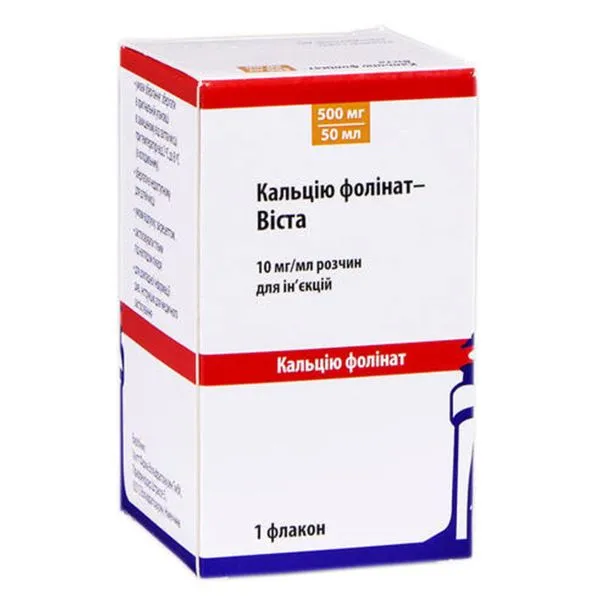
Table of Contents
INSTRUCTIONS FOR MEDICAL USE OF THE MEDICINAL PRODUCT CALCIUM FOLINATE (CALCIUM FOLINATE)
Composition:
Active substance: calcium folinate;
1 ml of solution contains 10 mg of folinic acid (as calcium folinate hydrate);
Excipients: sodium chloride, sodium hydroxide, diluted hydrochloric acid, water for injections.
Pharmaceutical form. Solution for injection.
Main physicochemical properties: clear, colorless or slightly yellow solution.
Pharmacotherapeutic group. Agents used to counteract toxic effects of antineoplastic therapy. ATC code V03AF03.
Pharmacological properties.
Pharmacodynamics.
Calcium folinate is the calcium salt of 5-formyltetrahydrofolate. It is an active metabolite of folic acid and an important cofactor required for nucleic acid synthesis.
Calcium folinate is frequently used to prevent toxic effects or to neutralize the action of folic acid antagonists (particularly methotrexate). Calcium folinate and folic acid antagonists compete for the same membrane transporter, thereby stimulating the efflux of folic acid antagonists. Calcium folinate also protects cells from the action of folic acid antagonists by replenishing the depleted body folate stores. It serves as a source of reduced tetrahydrofolate, thus enabling bypassing of the blockade caused by folate antagonists and providing various cofactor forms of folic acid.
Calcium folinate is also commonly used as a biochemical modulator to enhance the cytotoxic activity of 5-fluorouracil. 5-Fluorouracil inhibits thymidylate synthase (a key enzyme involved in pyrimidine biosynthesis), and calcium folinate enhances the inhibition of thymidylate synthase by increasing the intracellular folate pool, thereby stabilizing the 5-fluorouracil-thymidylate synthase complex and increasing cytotoxic activity.
Pharmacokinetics.
Absorption
After intramuscular administration of an aqueous solution, the systemic bioavailability of calcium folinate is comparable to that after intravenous administration, although the maximum plasma concentration (Cmax) is lower.
Metabolism
Calcium folinate is a racemate. The active enantiomer is the L-form (L-formyltetrahydrofolate, L-5-formyltetrahydrofolate). The main metabolite of folinic acid is 5-methyltetrahydrofolate, with transformation occurring primarily in the liver and gastrointestinal mucosa.
Distribution
The volume of distribution of calcium folinate is unknown. The maximum plasma concentration of the parent compound (folinic acid, D/L-formyltetrahydrofolate) is reached within 10 minutes after intravenous administration.
After administration of a 25 mg dose, the area under the pharmacokinetic curve (AUC) for L-5-formyltetrahydrofolate and 5-methyltetrahydrofolate is 28.4±3.5 mg∙min/mL and 129±11 mg∙min/mL, respectively. The inactive D-isomer is present at higher concentrations than L-5-formyltetrahydrofolate.
Elimination
The elimination half-life is 32–35 minutes for the active L-form and 352–485 minutes for the inactive D-form.
The elimination half-life of active metabolites is approximately 6 hours (after both intravenous and intramuscular administration).
Excretion
80–90% of the dose is excreted in urine (as 10-formyltetrahydrofolate and other inactive metabolites), and 5–8% of the dose is excreted in feces.
Clinical characteristics.
Indications.
- For reducing toxicity and counteracting folic acid antagonists such as methotrexate, in cytotoxic therapy and in cases of overdose in adults and children. In cytotoxic therapy, this procedure is widely known as "Calcium folinate rescue".
- As part of combined cytotoxic therapy with 5-fluorouracil.
Contraindications.
Hypersensitivity to calcium folinate or to any of the other components of the medicinal product.
Pernicious anemia or other types of anemias caused by vitamin B12 deficiency.
Special precautions.
Calcium folinate must be administered only intravenously or intramuscularly. Intrathecal administration of the drug is strictly prohibited.
There have been reports of fatal outcomes following intrathecal administration of folic acid after intrathecal methotrexate overdose.
The solution should be visually inspected before use. It should be clear, colorless or pale yellow. If the solution is cloudy or contains visible mechanical particles, the product must not be used.
Interaction with other medicinal products and other forms of interaction.
Calcium folinate may reduce or completely neutralize the effect of folic acid antagonists (e.g., co-trimoxazole, pyrimethamine).
Calcium folinate may reduce the efficacy of antiepileptic drugs (phenobarbital, phenytoin, primidone, succinimides), potentially leading to an increased frequency of epileptic seizures (since folates act as cofactors enhancing hepatic metabolism, resulting in decreased plasma levels of enzyme-inducing anticonvulsants).
Concomitant use of calcium folinate and 5-fluorouracil enhances both the therapeutic and toxic effects of 5-fluorouracil.
Special precautions for use.
Treatment with calcium folinate in combination with methotrexate or 5-fluorouracil must be administered under the supervision of an experienced oncologist.
Calcium folinate may mask the symptoms of pernicious anemia and other anemias caused by vitamin B12 deficiency.
Many cytotoxic agents that are direct or indirect inhibitors of DNA synthesis may cause macrocytosis (e.g., hydroxyurea, cytarabine, mercaptopurine, thioguanine). Such macrocytosis should not be treated with folic acid.
In patients with epilepsy receiving phenobarbital, phenytoin, primidone, or succinimides, treatment with calcium folinate may increase the frequency of epileptic seizures due to reduced plasma concentrations of antiepileptic drugs. Therefore, close clinical monitoring is required in such cases, and, if necessary, monitoring of plasma concentrations of antiepileptic drugs and dose adjustments during and after calcium folinate therapy.
Use of calcium folinate in combination with 5-fluorouracil
Calcium folinate may enhance the toxic effects of 5-fluorouracil, particularly in elderly and debilitated patients. The most common manifestations of toxicity are leukopenia, mucositis, stomatitis, and diarrhea. These adverse effects may be dose-limiting. When dose reductions are required due to toxicity during combined treatment with 5-fluorouracil and calcium folinate, the dose of 5-fluorouracil should be reduced more than during monotherapy with 5-fluorouracil.
Treatment with 5-fluorouracil in combination with calcium folinate should not be initiated or continued until all symptoms of gastrointestinal toxicity have completely resolved, regardless of severity. Since diarrhea may be a sign of gastrointestinal toxicity (which can rapidly lead to clinical deterioration and even fatal outcomes), patients with diarrhea must be closely monitored until symptoms have fully resolved. If diarrhea and/or stomatitis occur, it is recommended to reduce the dose of 5-fluorouracil until symptoms have completely disappeared. Particular caution is required when treating debilitated patients and elderly patients.
Lower initial doses of 5-fluorouracil are recommended for elderly patients and those who have previously received radiotherapy. Calcium folinate and 5-fluorouracil should be administered separately.
During combination therapy with 5-fluorouracil and calcium folinate, serum calcium levels should be monitored, and calcium supplements should be administered if necessary.
Use of calcium folinate in combination with methotrexate
Recommendations for preventing toxic effects during methotrexate therapy are provided in the medical instructions for methotrexate.
Calcium folinate does not protect against non-hematological toxic effects of methotrexate therapy (e.g., nephrotoxicity due to precipitation of methotrexate and/or its metabolites in renal tubules). Patients with delayed elimination of methotrexate in the early phase have a higher risk of developing reversible renal failure and other toxic effects associated with methotrexate use. Renal impairment (whether developed during methotrexate therapy or present before treatment initiation) may potentially be associated with delayed excretion of methotrexate; therefore, in such cases, higher doses or prolonged administration of calcium folinate may be required.
Excessive doses of calcium folinate should be avoided, as they may reduce the antitumor activity of methotrexate, especially in central nervous system tumors where accumulation of calcium folinate may occur after several treatment cycles.
Resistance to methotrexate due to impaired membrane transport also results in resistance to calcium folinate, as both substances are transported by the same system.
In cases of overdose with folic acid antagonists (e.g., methotrexate), calcium folinate administration should be initiated as soon as possible. The effectiveness of calcium folinate as an antidote decreases with increasing time interval between methotrexate and calcium folinate administration.
If laboratory abnormalities or clinical signs of toxicity are observed, it is essential to verify whether the patient is taking other medicinal products that interact with methotrexate (e.g., affecting methotrexate elimination or plasma protein binding).
The medicinal product contains sodium, which should be taken into account when treating patients on a sodium-restricted diet.
Use during pregnancy or breastfeeding.
There is no evidence that calcium folinate causes harmful effects when used during pregnancy; however, adequate data on the use of calcium folinate for treatment in pregnant women are lacking.
If methotrexate or other folic acid antagonists are administered during pregnancy or breastfeeding (which is only permissible when the expected benefit to the mother clearly outweighs the potential risk to the fetus), there are no restrictions on the use of calcium folinate for prevention of adverse effects or neutralization of methotrexate toxicity.
The use of 5-fluorouracil during pregnancy and breastfeeding is contraindicated. This also applies to combination therapy with 5-fluorouracil and calcium folinate.
Detailed information on this subject is provided in the medical instructions for methotrexate, other folic acid antagonists, and 5-fluorouracil.
It is unknown whether calcium folinate is excreted in breast milk. If necessary, calcium folinate may be used during breastfeeding according to therapeutic indications.
Ability to affect the speed of reactions when driving vehicles or operating machinery.
There is no information available on the effect.
Method of Administration and Dosage
Calcium folinate must be administered only intravenously or intramuscularly.
Intrathecal administration of the drug is strictly contraindicated.
All doses listed below are expressed in terms of folic acid.
The intravenous infusion rate should not exceed 160 mg/min due to the calcium content of the preparation.
Infusion solutions are prepared by diluting the drug with 0.9% sodium chloride solution or 5% glucose solution.
Calcium Folinate Rescue Therapy in Methotrexate Treatment
Since the doses and regimens of calcium folinate depend on the dosing and treatment protocols of intermediate- and high-dose methotrexate, appropriate information should be obtained from the methotrexate treatment protocol.
Calcium folinate should be administered parenterally to patients with malabsorption syndrome or other gastrointestinal disorders where intestinal absorption of the drug cannot be guaranteed. Doses exceeding 25–50 mg should be administered only parenterally, considering the saturation effect of calcium folinate absorption in the gastrointestinal tract.
Calcium folinate rescue is necessary when methotrexate is administered at doses exceeding 500 mg/m² body surface area and is advisable at methotrexate doses of 100–500 mg/m² body surface area.
Below are recommendations for the use of calcium folinate in adults, elderly patients, and children.
The dosage and duration of calcium folinate therapy are primarily determined based on the dose and regimen of methotrexate treatment, presence of toxic symptoms, and individual parameters of methotrexate excretion. Typically, calcium folinate is administered at a dose of 15 mg (6–12 mg/m² body surface area) 12–24 hours (no later than 24 hours) after the start of methotrexate infusion. Subsequent doses of calcium folinate are then administered every 6 hours for 72 hours. After several parenteral administrations, transition to oral administration in capsule form may be considered.
Residual methotrexate concentration in blood is measured 48 hours after the start of methotrexate infusion. If the concentration is below 0.5 µmol/L, calcium folinate therapy may be discontinued. If methotrexate concentration exceeds 0.5 µmol/L, rescue therapy must be continued and intensified. Calcium folinate should be administered at the following doses every 6 hours for another 48 hours or until methotrexate concentration drops below 0.05 µmol/L:
- At methotrexate concentration ≥0.5 µmol/L – 15 mg/m² body surface area;
- At methotrexate concentration ≥1.0 µmol/L – 100 mg/m² body surface area;
- At methotrexate concentration ≥2.0 µmol/L – 200 mg/m² body surface area.
In addition to calcium folinate therapy, measures to accelerate methotrexate excretion (maintenance of high diuresis, urine alkalinization) should be implemented, and serum creatinine levels should be monitored daily to assess renal function.
Combination Therapy with 5-Fluorouracil
Various regimens of 5-fluorouracil in combination with calcium folinate are used, but superiority of any particular regimen has not yet been established. Below are described some treatment regimens for adults and elderly patients with advanced or metastatic colorectal cancer. Data on the use of these combinations in pediatric patients are lacking.
Biweekly regimen: On days 1 and 2 of each cycle, calcium folinate is administered at a dose of 200 mg/m² body surface area via a two-hour intravenous infusion, followed by 5-fluorouracil at a dose of 400 mg/m² body surface area as an intravenous bolus injection, and 5-fluorouracil at a dose of 600 mg/m² body surface area via a 22-hour intravenous infusion, repeated every 2 weeks on days 1 and 2.
Weekly regimen: Calcium folinate is administered at a dose of 20 mg/m² body surface area as an intravenous bolus injection or at a dose of 200–500 mg/m² body surface area via a two-hour intravenous infusion; 5-fluorouracil at a dose of 500 mg/m² body surface area is administered as an intravenous bolus injection during or at the end of the calcium folinate infusion.
Monthly regimen: For the first 5 days of each cycle, calcium folinate is administered daily at a dose of 20 mg/m² body surface area as an intravenous bolus injection or at a dose of 200–500 mg/m² body surface area via a two-hour intravenous infusion, immediately followed by 5-fluorouracil at a dose of 425 or 370 mg/m² body surface area as an intravenous bolus injection.
During combination therapy with 5-fluorouracil and calcium folinate, dose adjustments of 5-fluorouracil and intervals between administrations may be required depending on the patient's condition, clinical response to therapy, and dose-limiting toxic effects. Appropriate recommendations are provided in the medical instructions for 5-fluorouracil. Dose reduction of calcium folinate is not required.
The required number of treatment cycles is determined by the physician.
Use of Calcium Folinate as an Antidote for Folic Acid Antagonists: Trimetrexate, Trimethoprim, and Pyrimethamine
Prevention of trimetrexate toxic effects: Calcium folinate is administered daily during trimetrexate therapy and for 72 hours after the last dose of trimetrexate. Calcium folinate can be administered intravenously over 5–10 minutes at a dose of 20 mg/m² body surface area every 6 hours (daily dose 80 mg/m² body surface area) or orally at 20 mg/m² body surface area four times daily at regular intervals. The daily dose of calcium folinate should be adjusted according to hematological toxicity symptoms caused by trimetrexate.
Treatment of trimetrexate overdose: In case of overdose (possible at trimetrexate doses exceeding 90 mg/m² body surface area without concomitant calcium folinate administration), trimetrexate therapy is discontinued and calcium folinate is administered intravenously at a dose of 40 mg/m² body surface area every 6 hours for 3 days.
Prevention of trimethoprim toxic effects: After discontinuation of trimethoprim therapy, calcium folinate is administered at a dose of 3–10 mg/day until hematological parameters normalize.
Prevention of pyrimethamine toxic effects: During high-dose pyrimethamine therapy or prolonged low-dose treatment, concomitant calcium folinate therapy is prescribed at doses ranging from 5 to 50 mg/day, depending on the number of formed elements in peripheral blood.
Children.
Calcium folinate is used in children as a protective agent to prevent methotrexate toxicity, as well as an antidote in cases of overdose or intoxication with methotrexate and other folic acid antagonists.
Overdose.
No adverse consequences have been reported with administration of calcium folinate at doses significantly higher than recommended. However, excessive doses of calcium folinate may neutralize the chemotherapeutic effect of folic acid antagonists.
In case of 5-fluorouracil overdose in combination with calcium folinate, measures recommended for 5-fluorouracil overdose should be implemented.
Adverse Reactions
Undesirable adverse reactions are listed by organ systems and frequency: very common (≥ 1/10); common (≥ 1/100, < 1/10); uncommon (≥ 1/1,000, < 1/100); rare (≥ 1/10,000, < 1/1,000); very rare (< 1/10,000); frequency not known (cannot be estimated from available data).
When used for all indications
Nervous system disorders:
uncommon – increased frequency of epileptic seizures.
Gastrointestinal disorders:
uncommon – gastrointestinal disturbances with high-dose calcium folinate.
General disorders and administration site conditions:
common – fever.
Immune system disorders:
rare – allergic reactions, including urticaria and anaphylactoid reactions.
Psychiatric disorders:
uncommon – insomnia, agitation, and depression with high-dose calcium folinate.
In combination therapy with 5-fluorouracil
The overall safety profile depends on the 5-fluorouracil treatment regimen, as the combination enhances the toxicity of 5-fluorouracil.
Blood and lymphatic system disorders:
very common – bone marrow suppression, including fatal cases.
Metabolism and nutrition disorders:
frequency not known – hyperammonaemia.
General disorders and administration site conditions:
very common – mucosal inflammation, including stomatitis and cheilitis. Fatal cases due to mucosal inflammation have been reported.
Skin and subcutaneous tissue disorders:
common – palmar-plantar erythrodysesthesia syndrome.
Adverse effects with monthly administration regimen
Gastrointestinal disorders:
very common – nausea and vomiting.
General disorders and administration site conditions:
very common – (severe) mucosal inflammation.
Adverse effects with weekly administration regimen
Gastrointestinal disorders:
very common – severe diarrhoea and dehydration requiring hospitalization; in rare cases, even with fatal outcome.
Shelf life
The medicinal product in the original packaging – 2 years.
Infusion solutions prepared by diluting the product with 0.9% sodium chloride solution or 5% glucose solution are physically and chemically stable for at least 24 hours when stored at a temperature not exceeding 25 °C.
From a microbiological standpoint, the infusion solution should be used immediately after preparation. If not used immediately, the storage duration and conditions must be controlled by medical personnel. Generally, storage should not exceed 24 hours at 2–8 °C, unless the solution was prepared under controlled and validated aseptic conditions.
Storage conditions
Store in the original packaging, out of reach of children, at a temperature between 2 and 8 °C.
Incompatibilities
Incompatibility (precipitation) has been observed when calcium folinate solutions are mixed with droperidol, fluorouracil, foscarnet, and methotrexate solutions.
Droperidol
- Mixing 1.25 mg/0.5 mL droperidol with 5 mg/0.5 mL calcium folinate in a syringe at 25 °C for 5 minutes, followed by centrifugation for 8 minutes, resulted in precipitate formation.
- Mixing 2.5 mg/0.5 mL droperidol with 10 mg/0.5 mL calcium folinate resulted in immediate precipitate formation after sequential injection into a Y-site connector without flushing the side port between injections.
Fluorouracil
Calcium folinate and 5-fluorouracil should be administered separately, as mixing may result in precipitate formation. Incompatibility has been observed between 5-fluorouracil at 50 mg/mL and calcium folinate at 20 mg/mL, with or without 5% dextrose in water, when mixed in various proportions and stored in polyvinyl chloride containers at 4 °C, 23 °C, or 32 °C.
Foscarnet
Mixing foscarnet solution at 24 mg/mL with calcium folinate solution at 20 mg/mL resulted in a cloudy yellow discoloration.
Calcium folinate must not be mixed with other medicinal products.
Packaging
3 mL or 5 mL in a vial; packs of 5 or 100 vials, or 5 vials in a blister pack, 1 blister pack per carton.
Prescription category
By prescription only.
Manufacturer
Private Joint-Stock Company "Lechim-Kharkiv".
Manufacturer's address
36 Severina Pototskogo Street, Kharkiv, Kharkiv Region, 61115, Ukraine.