Calquens
Ukraine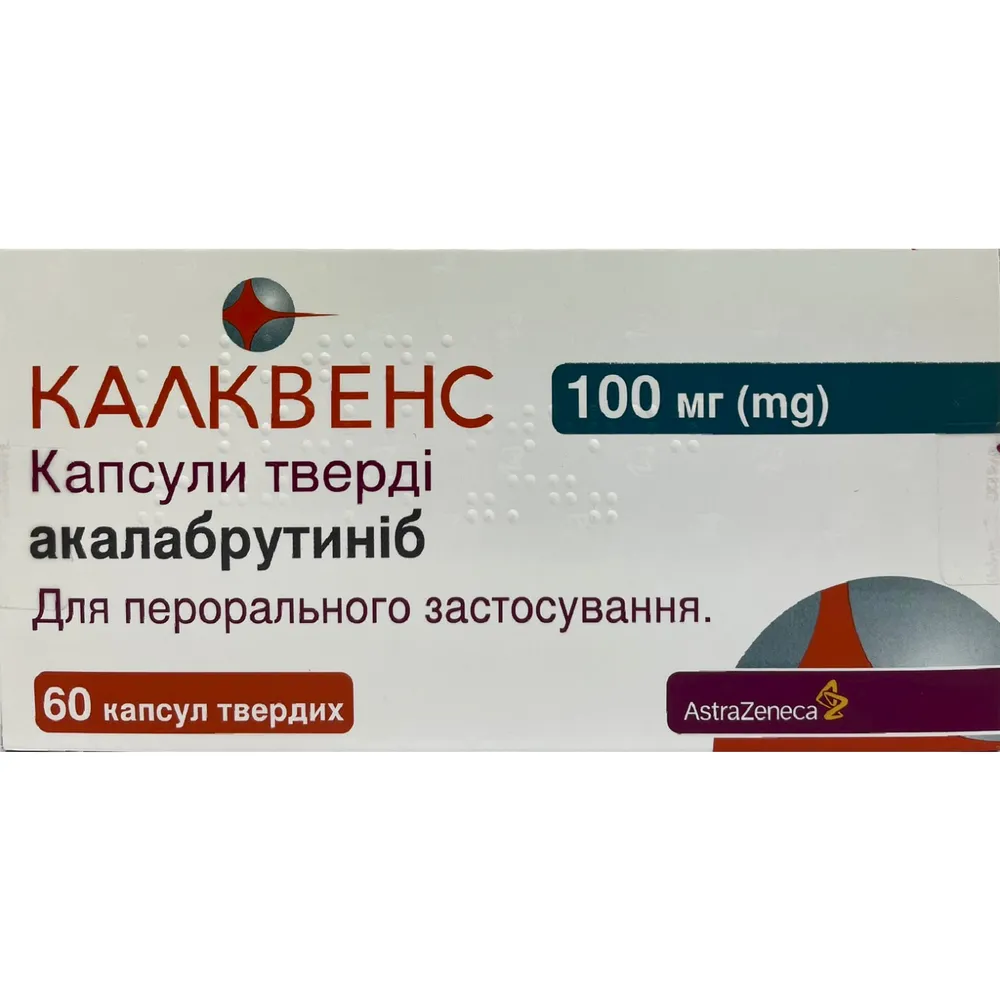
Table of Contents
INSTRUCTIONS FOR MEDICAL USE OF THE MEDICINAL PRODUCT KALQVENZ (CALQUENCE®)
Composition:
Active substance: acalabrutinib;
1 hard capsule contains: acalabrutinib 100 mg;
Excipients: siliconized microcrystalline cellulose; partially pregelatinized starch; sodium starch glycolate, type A; magnesium stearate;
composition of the hard gelatin capsule shell: shell (gelatin, iron oxide yellow (E 172), indigotine – FD&C Blue 2 (E 132), titanium dioxide (E 171)); printing ink (shellac glaze – 45% (20% esterified) in ethanol, iron oxide black (E 172), propylene glycol, ammonium hydroxide 28%).
Pharmaceutical form. Hard capsules.
Main physicochemical characteristics: hard capsule size №1 with an opaque blue cap and an opaque yellow body, with black print “ACA100mg”.
Pharmacotherapeutic group.
Antineoplastic agents, protein kinase inhibitors. Acalabrutinib. ATC code L01EL02.
Pharmacological Properties
Pharmacodynamics
Mechanism of action
Acalabrutinib is a selective, low-molecular-weight inhibitor of Bruton's tyrosine kinase (BTK). BTK is a signaling molecule for B-cell antigen receptors (BCR) and cytokine receptors. In B-cells, BTK-mediated signaling promotes B-cell survival and proliferation and is essential for cellular adhesion, migration, and chemotaxis.
Acalabrutinib and its active metabolite, ACP-5862, form a covalent bond with the cysteine residue in the active site of BTK, resulting in irreversible inactivation of BTK with minimal off-target interactions.
Pharmacodynamic effect
In patients with B-cell lymphoproliferative disorders receiving acalabrutinib at a dose of 100 mg twice daily, the median BTK occupancy in peripheral blood at steady state was ≥ 95%, maintained for over 12 hours, resulting in sustained BTK inactivation throughout the recommended dosing interval.
Cardiac electrophysiology
The effect of acalabrutinib on the QTc interval was evaluated in 46 healthy men and women in a randomized, double-blind, placebo- and positive-controlled thorough QT study. At a supratherapeutic dose four times higher than the maximum recommended dose, Calquence did not result in a clinically meaningful increase in QT/QTc interval (e.g., exceeding or equaling 10 ms) (see sections "Special precautions for use" and "Adverse reactions").
Clinical efficacy and safety
Patients with previously untreated chronic lymphocytic leukemia (CLL)
The safety and efficacy of Calquence for the treatment of previously untreated CLL were evaluated in a randomized, multicenter, open-label Phase 3 study (ELEVATE-TN) involving 535 patients. Patients were assigned to one of the following treatment regimens: Calquence + obinutuzumab, Calquence monotherapy, or obinutuzumab + chlorambucil. The ELEVATE-TN study included patients aged 65 years or older, or patients aged 18 to 65 years with comorbid conditions; 27.9% of patients had a creatinine clearance (CrCl) < 60 mL/min. Among patients aged 18 to 65 years (16.1% of total), the mean CIRS-G score was 8. Study participants were permitted to take antithrombotic medications. Patients requiring anticoagulation therapy with warfarin or similar vitamin K antagonists were excluded from the study.
Patients were randomized in a 1:1:1 ratio into three groups and received:
- Calquence + obinutuzumab (Calquence + O): Calquence was administered at a dose of 100 mg twice daily starting on day 1 of cycle 1 until disease progression or unacceptable toxicity. Obinutuzumab was administered starting on day 1 of cycle 2 for up to 6 cycles of therapy. Obinutuzumab was given at 1000 mg on days 1 and 2 (100 mg on day 1 and 900 mg on day 2), days 8 and 15 of cycle 2, and then on day 1 of cycles 3–7. Each cycle lasted 28 days.
- Calquence monotherapy: Calquence was administered at a dose of 100 mg twice daily until disease progression or unacceptable toxicity.
- Obinutuzumab + chlorambucil (O + C): obinutuzumab and chlorambucil were administered for up to 6 cycles of therapy. Obinutuzumab was given at 1000 mg on days 1 and 2 (100 mg on day 1 and 900 mg on day 2), days 8 and 15 of cycle 1, and then on day 1 of cycles 2–6. Chlorambucil was administered at 0.5 mg/kg on days 1 and 15 of cycles 1–6. Each cycle lasted 28 days.
Patients were stratified by 17p deletion mutation status (presence or absence), ECOG performance status (0 or 1 vs. 2), and geographic region (North America and Western Europe vs. other regions). After confirmed disease progression, 45 patients originally randomized to the O + C group crossed over to Calquence monotherapy. Table 1 presents the key demographic and disease characteristics of the study population.
Table 1
Baseline characteristics of patients with previously untreated CLL (in the ELEVATE-TN study)
| Characteristic |
Calquence + obinutuzumab N = 179 |
Calquence as monotherapy N = 179 |
Obinutuzumab + chlorambucil N = 177 |
| Median age in years (range) |
70 (41–88) |
70 (44–87) |
71 (46–91) |
| Male, % |
62 |
62 |
59.9 |
| Caucasian race, % |
91.6 |
95 |
93.2 |
| ECOG performance status 0-1, % |
94.4 |
92.2 |
94.4 |
| Median time since diagnosis (months) |
30.5 |
24.4 |
30.7 |
| Generalized lymphadenopathy with nodes ≥ 5 cm, % |
25.7 |
38 |
31.1 |
| Cytogenetic profile/ chromosomal abnormality assessed by fluorescence in situ hybridization (FISH), % |
|||
| Chromosome 17p deletion |
9.5 |
8.9 |
9 |
| Chromosome 11q deletion |
17.3 |
17.3 |
18.6 |
| TP53 gene mutation |
11.7 |
10.6 |
11.9 |
| Unmutated immunoglobulin heavy-chain variable region gene |
57.5 |
66.5 |
65.5 |
| Complex karyotype (≥ 3 abnormalities) |
16.2 |
17.3 |
18.1 |
| Rai stage of CLL, % |
|||
| 0 |
1.7 |
0 |
0.6 |
| I |
30.2 |
26.8 |
28.2 |
| II |
20.1 |
24.6 |
27.1 |
| III |
26.8 |
27.9 |
22.6 |
| IV |
21.2 |
20.7 |
21.5 |
The primary endpoint was progression-free survival (PFS) of patients receiving Calquence + O compared to patients receiving O + Chl, as assessed by an Independent Review Committee (IRC) according to the 2008 International Workshop on Chronic Lymphocytic Leukemia (IWCLL) criteria, including clarification regarding treatment-related lymphocytosis (Cheson 2012). With a median follow-up of 28.3 months, PFS of previously untreated CLL patients assessed by IRC in the Calquence + O group demonstrated a statistically significant 90% reduction in the risk of disease progression or death compared to the O + Chl combination group. Efficacy results are presented in Table 2.
Table 2
Efficacy of treatment in patients with CLL as assessed by IRC (in the ELEVATE-TN study)
| Calquence + obinutuzumab |
Calquence as monotherapy |
Obinutuzumab + chlorambucil N = 177 |
|
| Progression-free survival * |
|||
| Number of events (%) |
14 (7.8) |
26 (14.5) |
93 (52.5) |
| PD, n (%) |
9 (5) |
20 (11.2) |
82 (46.3) |
| Deaths (%) |
5 (2.8) |
6 (3.4) |
11 (6.2) |
| Median (95% CI), months |
NR |
NR (34.2, NR) |
22.6 (20.2, 27.6) |
| HR† (95% CI) |
0.10 (0.06, 0.17) |
0.20 (0.13, 0.30) |
- |
| P-value |
< 0.0001 |
< 0.0001 |
- |
| Estimated at 24 months, |
92.7 (87.4, 95.8) |
87.3 (80.9, 91.7) |
46.7 (38.5, 54.6) |
| Overall survivala |
|||
| Deaths (%) |
9 (5) |
11 (6.1) |
17 (9.6) |
| Hazard ratio (95% CI)† |
0.47 (0.21, 1.06) |
0.60 (0.28, 1.27) |
- |
| Best overall response rate * (CR + CRi + PR + PRi) |
|||
| ORR, n (%) |
168 (93.9) |
153 (85.5) |
139 (78.5) |
| (95% CI) |
(89.3, 96.5) |
(79.6, 89.9) |
(71.9, 83.9) |
| P-value |
< 0.0001 |
0.0763 |
- |
| CR, n (%) |
23 (12.8) |
1 (0.6) |
8 (4.5) |
| CRi, n (%) |
1 (0.6) |
0 |
0 |
| PRi, n (%) |
1 (0.6) |
2 (1.1) |
3 (1.7) |
| PR, n (%) |
143 (79.9) |
150 (83.8) |
128 (72.3) |
CI – confidence interval; HR – hazard ratio; NR – not reached; PR with incomplete blood count recovery – partial response with incomplete blood count recovery; nPR – nodular partial response; PR – partial response.
*Assessed by IRC.
†Based on stratified Cox proportional hazards model.
aMedian PFS was not reached in either group.
PFS results for regimens including Calquence with or without obinutuzumab were consistent across all subgroups, including subgroups with high-risk features. In the high-risk CLL population (with 17p deletion, 11q deletion, TP53 gene mutation, and unmutated immunoglobulin heavy-chain variable gene), HR for PFS for regimens including Calquence with or without obinutuzumab was 0.08 [95% CI (0.04, 0.15)] compared to 0.13 [95% CI (0.08, 0.21)] for obinutuzumab + chlorambucil regimen.
Table 3
PFS analysis in subgroups (in the ELEVATE-TN study)
| Calquence as monotherapy |
Calquence+O |
|||||
| N |
Risk ratio |
95% CI |
N |
Risk ratio |
95% CI |
|
| All |
179 |
0.20 |
(0.13; 0.30) |
179 |
0.10 |
(0.06, 0.17) |
| patients |
||||||
| 17p deletion Yes |
19 |
0.20 |
(0.06; 0.64) |
21 |
0.13 |
(0.04, 0.46) |
| No |
160 |
0.20 |
(0.12, 0.31) |
158 |
0.09 |
(0.05, 0.17) |
| TP53 gene mutation Yes |
19 |
0.15 |
(0.05, 0.46) |
21 |
0.04 |
(0.01, 0.22) |
| No |
160 |
0.20 |
(0.12, 0.32) |
158 |
0.11 |
(0.06, 0.20) |
| 17p deletion and/or TP53 mutation Yes |
23 |
0.23 |
(0.09, 0.61) |
25 |
0.10 |
(0.03, 0.34) |
| No |
156 |
0.19 |
(0.11; 0.31) |
154 |
0.10 |
(0.05, 0.18) |
| Immunoglobulin heavy chain variable gene mutation |
58 |
0.69 |
(0.31, 1.56) |
74 |
0.15 |
(0.04, 0.52) |
| Without mutation |
119 |
0.11 |
(0.07, 0.19) |
103 |
0.08 |
(0.04, 0.16) |
| 11q deletion Yes No |
31 148 |
0.07 0.26 |
(0.02, 0.22) (0.16, 0.41) |
31 148 |
0.09 0.10 |
(0.03, 0.26) (0.05, 0.20) |
| Complex karyotype No |
31 117 |
0.10 0.27 |
(0.03, 0.33) (0.16, 0.46) |
29 126 |
0.09 0.11 |
(0.03, 0.29) (0.05, 0.21) |
In the long-term data, the median follow-up was 58.2 months for the Calquence + O group, 58.1 months for the Calquence monotherapy group, and 58.2 months for the O + ChL group. The median PFS assessed by the investigator was not reached for the Calquence + O group and the Calquence monotherapy group, and was 27.8 months in the O + ChL group. At the time of the last data cutoff, a total of 72 patients (40.7%) initially randomized to receive O + ChL had switched to Calquence monotherapy. The median overall survival was not reached in any group; the total number of deaths was 76: 18 (10.1%) in the Calquence + O group, 30 (16.8%) in the Calquence monotherapy group, and 28 (15.8%) in the O + ChL group.
Table 4
Investigator-assessed efficacy results in patients with CLL
(in the ELEVATE-TN study)
| Calquence + obinutuzumab N=179 |
Calquence as monotherapy N=179 |
Obinutuzumab + N=177 |
|
| Progression-free survival |
|||
| Number of events (%) |
27 (15.1) |
50 (27.9) |
124 (70.1) |
| PD, n (%) |
14 (7.8) |
30 (16.8) |
112 (63.3) |
| Deaths (%) |
13 (7.3) |
20 (11.2) |
12 (6.8) |
| Median (95% CI), months* |
NR |
NR (66.5, NR) |
27.8 (22.6, 33.2) |
| HR† (95% CI) |
0.11 (0.07, 0.16) |
0.21 (0.15, 0.30) |
- |
| Overall survival |
|||
| Deaths (%) |
18 (10.1) |
30 (16.8) |
28 (15.8) |
| Hazard ratio (95% CI) |
0.55 (0.30, 0.99) |
0.98 (0.58, 1.64) |
- |
CI – confidence interval; HR – hazard ratio; NR – not reached; PD – progressive disease.
* 95% confidence interval based on Kaplan-Meier estimate.
† Estimate based on stratified Cox proportional hazards model for hazard ratio (95% CI), stratified by 17p deletion status (yes or no).
Figure 1. Kaplan-Meier curve for PFS by investigator assessment in patients with CLL (ITT population) (in the ELEVATE-TN study)
Time from randomization (months)
| Month |
0 |
3 |
6 |
9 |
12 |
15 |
18 |
21 |
24 |
27 |
30 |
33 |
36 |
39 |
42 |
45 |
48 |
51 |
54 |
57 |
60 |
63 |
66 |
69 |
70 |
| Calquens |
179 |
167 |
163 |
158 |
156 |
155 |
153 |
150 |
149 |
146 |
142 |
141 |
137 |
135 |
133 |
130 |
129 |
124 |
120 |
93 |
63 |
39 |
22 |
6 |
1 |
| Calquens+O |
179 |
175 |
170 |
168 |
164 |
163 |
160 |
157 |
156 |
156 |
153 |
152 |
151 |
146 |
144 |
141 |
140 |
138 |
133 |
99 |
65 |
39 |
27 |
7 |
1 |
| O+CHL |
177 |
163 |
156 |
153 |
139 |
125 |
110 |
100 |
86 |
82 |
67 |
66 |
56 |
49 |
44 |
40 |
38 |
31 |
30 |
20 |
13 |
8 |
7 |
2 |
0 |
Patients with CLL who received at least one prior line of therapy
The safety and efficacy of Calquence for the treatment of relapsed or refractory CLL were evaluated in a randomized, multicenter, open-label, phase 3 study (ASCEND) involving 310 patients who had received at least one prior line of therapy that did not include BCL-2 inhibitors or B-cell receptor inhibitors. Patients were randomized to receive one of the following treatment regimens: Calquence as monotherapy or investigator’s choice of idelalisib plus rituximab or bendamustine plus rituximab. Participants in the study were permitted to take antithrombotic agents. Patients requiring anticoagulation therapy with warfarin or similar vitamin K antagonists were excluded from the study.
Patients were randomized in a 1:1 ratio and received:
- Calquence 100 mg twice daily until disease progression or unacceptable toxicity, or
- Investigator’s choice of:
- Idelalisib 150 mg twice daily in combination with rituximab 375 mg/m² intravenously on day 1 of cycle 1, followed by 500 mg/m² intravenously every 2 weeks for 4 doses, then every 4 weeks for 3 additional doses, for a total of 8 infusions, or
- Bendamustine 70 mg/m² (on days 1 and 2 of each 28-day cycle) in combination with rituximab (375 mg/m² or 500 mg/m²) on day 1 of each 28-day cycle for up to 6 cycles.
Patients were stratified by 17p deletion mutation status (present or absent), ECOG performance status (0 or 1 vs. 2), and number of prior lines of therapy (1–3 vs. ≥4). After confirmed disease progression, 35 patients randomized to investigator’s choice of idelalisib plus rituximab or bendamustine plus rituximab crossed over to Calquence monotherapy. Table 5 presents the key demographic and disease characteristics of the study population.
Table 5
Baseline characteristics of patients with CLL (in the ASCEND study)
| Characteristic |
Calquence as monotherapy |
Idelalisib + rituximab or bendamustine + rituximab at investigator's choice |
| Median age in years (range) |
68 (32–89) |
67 (34–90) |
| Male, % |
69.7 |
64.5 |
| White race, % |
93.5 |
91.0 |
| ECOG performance status, % |
||
| 0 |
37.4 |
35.5 |
| 1 |
50.3 |
51.0 |
| 2 |
12.3 |
13.5 |
| Median time since diagnosis (months) |
85.3 |
79.0 |
| Generalized lymphadenopathy with nodes ≥ 5 cm, % |
49.0 |
48.4 |
| Median number of prior CLL treatment regimens received (range) |
1 (1–8) |
2 (1–10) |
| Number of prior CLL treatment regimens received, % |
||
| 1 |
52.9 |
43.2 |
| 2 |
25.8 |
29.7 |
| 3 |
11.0 |
15.5 |
| ≥ 4 |
10.3 |
11.6 |
| Cytogenetic profile/chromosomal abnormality assessed by fluorescence in situ hybridization (FISH), % |
||
| Chromosome 17p deletion |
18.1 |
13.5 |
| Chromosome 11q deletion |
25.2 |
28.4 |
| TP53 gene mutation |
25.2 |
21.9 |
| Unmutated immunoglobulin heavy-chain variable region gene |
76.1 |
80.6 |
| Complex karyotype (≥ 3 abnormalities) |
32.3 |
29.7 |
| Rai stage of CLL, % |
||
| 0 |
1.3 |
2.6 |
| I |
25.2 |
20.6 |
| II |
31.6 |
34.8 |
| III |
13.5 |
11.6 |
| IV |
28.4 |
29.7 |
The primary endpoint was PFS assessed by IRC according to the criteria of the International Workshop on Chronic Lymphocytic Leukemia (IWCLL) held in 2008, including clarification regarding treatment-related lymphocytosis (Cheson 2012). With a median follow-up of 16.1 months, PFS demonstrated a statistically significant 69% reduction in the risk of death or disease progression in patients receiving Calquence. Efficacy results are presented in Table 6. Kaplan–Meier curves for PFS are shown in Figure 2.
Table 6
Efficacy of treatment in patients with CLL as assessed by IRC (in the ASCEND study)
| Calquence as monotherapy |
Idelalisib + rituximab or bendamustine + rituximab at investigator's choice |
|
| Progression-free survival* |
||
| Number of events (%) |
27 (17.4) |
68 (43.9) |
| PD, n (%) |
19 (12.3) |
59 (38.1) |
| Deaths (%) |
8 (5.2) |
9 (5.8) |
| Median (95% CI), months |
NR |
16.5 (14.0, 17.1) |
| HR† (95% CI) |
0.31 (0.20, 0.49) |
|
| P-value |
< 0.0001 |
|
| Estimated at 15 months, % (95% CI) |
82.6 (75.0, 88.1) |
54.9 (45.4, 63.5) |
| Overall survivala |
||
| Deaths (%) |
15 (9.7) |
18 (11.6) |
| Hazard ratio (95% CI)† |
0.84 (0.42, 1.66) |
- |
| Best overall response rate* (CR + CRi + PRi + PR)** |
||
| ORR, n (%) |
126 (81.3) |
117 (75.5) |
| (95% CI) |
(74.4, 86.6) |
(68.1, 81.6) |
| P-value |
0.2248 |
- |
| CR, n (%) |
0 |
2 (1.3) |
| PR, n (%) |
126 (81.3) |
115 (74.2) |
| Duration of response (DOR) |
||
| Median (95% CI), months |
NR |
13.6 (11.9, NR) |
CI – confidence interval; HR – hazard ratio; NR – not reached; PR with incomplete blood count recovery – partial response with incomplete blood count recovery; nPR – nodular partial response; PR – partial response; PD – progressive disease.
*According to IRC assessment.
aMedian PFS was not reached in either group. The P-value for PFS was < 0.6089.
**PR with incomplete blood count recovery and nPR account for 0.
†Based on stratified Cox proportional hazards model.
Figure 2. Kaplan–Meier curve for PFS in patients with CLL (ITT population) according to IRC assessment (in the ASCEND study)
Time from randomization (months)
| Number of patients at risk |
||||||||||||||||||||||||
| Month |
0 |
1 |
2 |
3 |
4 |
5 |
6 |
7 |
8 |
9 |
10 |
11 |
12 |
13 |
14 |
15 |
16 |
17 |
18 |
19 |
20 |
21 |
22 |
23 |
| Calquense |
155 |
153 |
153 |
149 |
147 |
146 |
145 |
143 |
143 |
139 |
139 |
137 |
118 |
116 |
73 |
61 |
60 |
25 |
21 |
21 |
1 |
1 |
1 |
0 |
| Investigator's choice |
155 |
150 |
150 |
146 |
144 |
142 |
136 |
130 |
129 |
112 |
105 |
101 |
82 |
77 |
56 |
44 |
39 |
18 |
10 |
8 |
0 |
|||
The PFS results for the medicinal product Calquence were similar across all subgroups, including subgroups with features of high risk. In the high-risk CLL population (with 17p deletion, 11q deletion, TP53 gene mutation, and unmutated immunoglobulin heavy-chain variable gene), the HR for PFS was 0.27 [95 % CI (0.17, 0.44)].
Table 7
PFS analysis by investigator assessment in subgroups (in the ASCEND study)
| Calquence as monotherapy |
|||||
| N |
Risk ratio |
95% CI |
|||
| All patients |
155 |
0.30 |
(0.19, 0.48) |
||
| Deletion 17p |
|||||
| Yes |
28 |
0.21 |
(0.07, 0.68) |
||
| No |
127 |
0.33 |
(0.21, 0.54) |
||
| TP53 gene mutation |
|||||
| Yes |
39 |
0.24 |
(0.11, 0.56) |
||
| No |
113 |
0.33 |
(0.20, 0.57) |
||
| Deletion 17p or TP53 mutation |
|||||
| Yes |
45 |
0.21 |
(0.09, 0.48) |
||
| No |
108 |
0.36 |
(0.21, 0.61) |
||
| Mutation of immunoglobulin heavy chain variable region gene |
|||||
| With mutation |
33 |
0.32 |
(0.11, 0.94) |
||
| Without mutation |
118 |
0.32 |
(0.19, 0.52) |
||
| Deletion 11q |
|||||
| Yes |
39 |
0.28 |
(0.11, 0.70) |
||
| No |
116 |
0.31 |
(0.19, 0.53) |
||
| Complex karyotype |
50 |
0.32 |
(0.16, 0.63) |
||
| No |
97 |
0.23 |
(0.12, 0.44) |
||
At the final analysis with a median follow-up of 46.5 months for Calquence and 45.3 months for the investigator’s choice of rituximab plus bendamustine (IR/BR), a 72% reduction in the risk of disease progression or death, as assessed by the investigator, was observed in the group of patients receiving Calquence. Median progression-free survival (PFS) as assessed by the investigator was not reached in the Calquence group and was 16.8 months in the IR/BR group. Results of the investigator-assessed efficacy outcomes at the final analysis are presented in Table 8. Kaplan–Meier curves for investigator-assessed PFS are shown in Figure 3.
Table 8
Results of investigator-assessed efficacy outcomes at final analysis in patients with CLL (in the ASCEND study)
| Calquence as monotherapy N=155 |
Idelalisib + rituximab N=155 |
|
| Progression-free survival* |
||
| Number of events (%) |
62 (40.0) |
119 (76.8) |
| PD, n (%) |
43 (27.7) |
102 (65.8) |
| Deaths (%) |
19 (12.3) |
17 (11.0) |
| Median (95% CI), months |
NR |
16.8 (14.1, 22.5) |
| HR† (95% CI) |
0.28 (0.20, 0.38) |
|
| Overall survivala |
||
| Deaths (%) |
41 (26.5) |
54 (34.8) |
| Hazard ratio (95% CI)† |
0.69 (0.46, 1.04) |
- |
CI – confidence interval; HR – hazard ratio; NR – not reached; PD – progressive disease.
*Investigator-assessed.
a Median PFS was not reached in either group. P-value for PFS was 0.0783.
†Based on stratified Cox proportional hazards model.
Figure 3. Kaplan–Meier curve for PFS by investigator assessment in patients with CLL (in the ASCEND study)
Time from randomization (months)
| Month |
0 |
3 |
6 |
9 |
12 |
15 |
18 |
21 |
24 |
27 |
30 |
33 |
36 |
39 |
42 |
45 |
48 |
51 |
54 |
| Calquens |
155 |
151 |
143 |
139 |
133 |
128 |
121 |
117 |
111 |
110 |
100 |
94 |
85 |
80 |
79 |
52 |
21 |
4 |
0 |
| Investigator's choice |
155 |
147 |
138 |
118 |
95 |
76 |
66 |
62 |
52 |
42 |
35 |
32 |
28 |
26 |
23 |
12 |
5 |
0 |
The results of PFS for the medicinal product Calquence in the final analysis were similar across all subgroups, including subgroups with features of high risk, and were consistent with the results of the primary analysis.
Pediatric population
The European Medicines Agency has waived the obligation to submit results of studies with Calquence in all subgroups of the pediatric population with CLL (information on use in children is provided in section "Posology and method of administration").
Pharmacokinetics
The pharmacokinetics of acalabrutinib and its active metabolite ACP-5862 were studied in trials involving healthy subjects and patients with B-cell lymphoproliferative disorders. Acalabrutinib exhibits dose proportionality, with pharmacokinetic parameters of both acalabrutinib and ACP-5862 being nearly linear over the dose range of 75 to 250 mg. According to population pharmacokinetic modeling, the pharmacokinetics of acalabrutinib and ACP-5862 are similar in patients with various B-cell lymphoproliferative disorders. In patients with B-cell lymphoproliferative disorders (including patients with CLL), the geometric mean steady-state area under the concentration-time curve over 24 hours (AUC24h) for acalabrutinib and ACP-5862 was 1679 ng × h/mL and 438 ng × h/mL, respectively, and the maximum plasma concentration (Cmax) was 4166 ng/mL and 446 ng/mL, respectively, following administration of the recommended dose of 100 mg twice daily.
Absorption
The time to reach maximum plasma concentration (Tmax) of acalabrutinib and ACP-5862 was 0.5–1.5 hours and 1 hour, respectively. The absolute bioavailability of Calquence was 25%.
Effect of food on acalabrutinib
In healthy subjects, administration of a single 75 mg dose of acalabrutinib with a high-fat, high-calorie meal (approximately 918 kcal, 59 g carbohydrates, 59 g fat, and 39 g protein) did not affect the mean AUC compared to administration under fasting conditions. However, Cmax decreased by 69%, and Tmax was prolonged by 1–2 hours.
Distribution
Plasma protein binding was 99.4% for acalabrutinib and 98.8% for ACP-5862. The mean blood-to-plasma concentration ratio in vitro was 0.8 for acalabrutinib and 0.7 for ACP-5862. The mean steady-state volume of distribution (Vss) of acalabrutinib was approximately 34 L.
Biotransformation/metabolism
In vitro, acalabrutinib is primarily metabolized by CYP3A enzymes and to a lesser extent via glutathione conjugation and amide hydrolysis. ACP-5862 is the major metabolite in plasma, which is further metabolized predominantly via CYP3A-mediated oxidation, and its geometric mean exposure (AUC) is approximately 2–3 times higher than that of acalabrutinib. ACP-5862 is approximately 50% less potent in inhibiting BTK than acalabrutinib.
In vitro studies indicate that acalabrutinib does not inhibit CYP1A2, CYP2B6, CYP2C8, CYP2C9, CYP2C19, CYP2D6, UGT1A1, or UGT2B7 at clinically relevant concentrations and is unlikely to affect the clearance of substrates of these CYP enzymes.
In vitro studies indicate that ACP-5862 does not inhibit CYP1A2, CYP2B6, CYP2C8, CYP2C9, CYP2C19, CYP2D6, CYP3A4/5, UGT1A1, or UGT2B7 at clinically relevant concentrations, and its effect on the clearance of substrates of these CYP enzymes is unlikely.
Interaction with transporter proteins
In vitro studies indicate that acalabrutinib and ACP-5862 are substrates of P-gp and BCRP. However, concomitant administration with BCRP inhibitors is unlikely to result in clinically significant interactions with other medicinal products. Concomitant administration with an OATP1B1/1B3 inhibitor (a single 600 mg dose of rifampicin) resulted in a 1.2- and 1.4-fold increase in Cmax and AUC of acalabrutinib, respectively (N = 24, healthy volunteers), which is not clinically significant.
Acalabrutinib and ACP-5862 do not inhibit P-gp, OAT1, OAT3, OCT2, OATP1B1, OATP1B3, or MATE2-K at clinically relevant concentrations. At clinically relevant concentrations, acalabrutinib may inhibit BCRP in the intestine, while ACP-5862 may inhibit MATE1 (see section "Interaction with other medicinal products and other forms of interaction"). Acalabrutinib does not inhibit MATE1, and ACP-5862 does not inhibit BCRP at clinically relevant concentrations.
Elimination
After a single 100 mg oral dose of acalabrutinib, the elimination half-life (t1/2) was 1–2 hours. The t1/2 of the active metabolite ACP-5862 was approximately 7 hours.
The mean apparent oral clearance (CL/F) in patients with B-cell lymphoproliferative disorders was 134 L/h and 22 L/h for acalabrutinib and ACP-5862, respectively.
After a single 100 mg dose of radiolabeled [14C]-acalabrutinib administered to healthy volunteers, 84% of the administered dose was excreted in feces and 12% in urine; less than 2% was excreted unchanged.
Special patient populations
According to population pharmacokinetic analysis, age (>18 years), sex, race (Caucasian, African American), and patient body weight did not have a clinically significant effect on the pharmacokinetics of acalabrutinib and its active metabolite ACP-5862.
Pediatric population
Pharmacokinetic studies of Calquence in patients under 18 years of age have not been conducted.
Patients with renal impairment
Acalabrutinib is minimally excreted in urine. Pharmacokinetic studies in patients with renal impairment have not been conducted.
According to population pharmacokinetic analysis, no clinically significant differences in pharmacokinetics were observed between 408 patients with mild renal impairment (estimated glomerular filtration rate [eGFR] 60–89 mL/min/1.73 m²), 109 patients with moderate renal impairment (eGFR 30–59 mL/min/1.73 m²), and 192 patients with normal renal function (eGFR ≥90 mL/min/1.73 m²). The pharmacokinetics of acalabrutinib have not been studied in patients with severe renal impairment (eGFR <29 mL/min/1.73 m²) or in patients requiring dialysis. Patients with creatinine levels more than 2.5 times the upper limit of normal (ULN) were excluded from clinical trials (see section "Posology and method of administration").
Patients with hepatic impairment
Acalabrutinib is metabolized in the liver. In dedicated pharmacokinetic studies of acalabrutinib in patients with mild (n = 6, Child-Pugh class A), moderate (n = 6, Child-Pugh class B), and severe (n = 8, Child-Pugh class C) hepatic impairment (HI), AUC was increased by 1.9-, 1.5-, and 5.3-fold, respectively, compared to patients with normal hepatic function (n = 6). However, no significant changes in drug elimination were observed in patients with moderate HI, suggesting that the impact of moderate HI may have been underestimated in this study. According to population pharmacokinetic analysis, no clinically significant differences were observed between patients with mild (n = 79) or moderate hepatic impairment (n = 6) (total bilirubin 1.5–3 times ULN at any AST level) and patients with normal hepatic function (n = 613) (total bilirubin and AST within ULN) (see section "Posology and method of administration").
Clinical Characteristics
Indications
Calquence is indicated as monotherapy or in combination with obinutuzumab for the treatment of adult patients with previously untreated chronic lymphocytic leukemia (CLL).
Calquence is indicated as monotherapy for the treatment of adult patients with chronic lymphocytic leukemia (CLL) who have received at least one prior therapy.
Contraindications
Hypersensitivity to the active substance or to any of the excipients listed in the section "Composition".
Interaction with other medicinal products and other forms of interaction
Acalabrutinib and its active metabolite are primarily metabolized by cytochrome P450 enzyme 3A4 (CYP3A4), and both substances are substrates of P-glycoprotein (P-gp) and breast cancer resistance protein (BCRP).
Medicinal products that may lead to increased plasma concentrations of acalabrutinib
Inhibitors of CYP3A/P-gp
Concomitant administration of acalabrutinib with a strong CYP3A/P-gp inhibitor (200 mg itraconazole once daily for 5 days) in healthy volunteers (n = 17) resulted in a 3.9-fold increase in Cmax and a 5-fold increase in AUC of acalabrutinib.
Concomitant use with strong CYP3A/P-gp inhibitors should be avoided. Temporary discontinuation of Calquence therapy is required if short-term use of strong CYP3A/P-gp inhibitors (e.g., ketoconazole, conivaptan, clarithromycin, indinavir, itraconazole, ritonavir, telaprevir, posaconazole, voriconazole) is anticipated (see section "Dosage and administration").
Concomitant administration of the medicinal product with moderate CYP3A inhibitors (400 mg fluconazole as a single dose or 200 mg isavuconazole under repeated dosing for 5 days) in healthy volunteers increased Cmax and AUC of acalabrutinib by 1.4 to 2 times, while Cmax and AUC of its active metabolite ACP-5862 decreased by 0.65 to 0.88 times compared to acalabrutinib administered alone. Dose adjustment is not required when used in combination with moderate CYP3A inhibitors. Patients should be closely monitored for adverse reactions (see section "Dosage and administration").
Medicinal products that may lead to decreased plasma concentrations of acalabrutinib
Inducers of CYP3A
Concomitant administration of acalabrutinib with a strong CYP3A inducer (600 mg rifampicin once daily for 9 days) in healthy volunteers (n = 24) resulted in a 68% reduction in Cmax and a 77% reduction in AUC of acalabrutinib.
Concomitant use with strong inducers of CYP3A activity (e.g., phenytoin, rifampicin, carbamazepine) should be avoided. Concomitant use of St. John’s wort should also be avoided, as it may unpredictably reduce plasma concentrations of acalabrutinib.
Medicinal products that reduce gastric acid secretion
The solubility of acalabrutinib decreases with increasing pH. Concomitant administration of acalabrutinib with an antacid (1 g calcium carbonate) in healthy volunteers resulted in a 53% reduction in AUC of acalabrutinib. Concomitant administration with a proton pump inhibitor (40 mg omeprazole for 5 days) reduced AUC of acalabrutinib by 43%.
If use of a medicinal product that reduces gastric acid secretion is necessary, consider administration of an antacid (e.g., calcium carbonate) or an H2-receptor antagonist (e.g., ranitidine or famotidine). When co-administered with antacids, the interval between doses should be at least 2 hours (see section "Dosage and administration"). Calquence should be taken 2 hours before or 10 hours after H2-receptor antagonists.
Separate administration of proton pump inhibitors and Calquence may not eliminate their interaction due to the prolonged effect of proton pump inhibitors; therefore, concomitant use should be avoided (see section "Dosage and administration").
Medicinal products whose plasma concentrations may be altered by Calquence
Substrates of CYP3A
Based on in vitro study data, inhibition of intestinal CYP3A4 by acalabrutinib cannot be excluded, which may increase exposure to orally administered CYP3A substrates sensitive to CYP3A metabolism in the intestine. Caution should be exercised when co-administering acalabrutinib with oral CYP3A4 substrates that have a narrow therapeutic index (e.g., cyclosporine, ergotamine, pimozide).
Effect of acalabrutinib on CYP1A2 substrates
In vitro studies indicate that acalabrutinib induces CYP1A2. Concomitant administration of acalabrutinib with CYP1A2 substrates (e.g., theophylline, caffeine) may reduce their exposure.
Effect of acalabrutinib and its active metabolite ACP-5862 on drug transport systems
When co-administered with substrates of breast cancer resistance protein (BCRP) (e.g., methotrexate), acalabrutinib may increase their exposure due to inhibition of BCRP in the intestine (see section "Pharmacokinetics"). To minimize the potential for interaction in the gastrointestinal tract, oral BCRP substrates with a narrow therapeutic index, such as methotrexate, should be administered at least 6 hours before or after acalabrutinib.
ACP-5862 may increase exposure to substrates of multidrug and toxin extrusion protein 1 (MATE1) (e.g., metformin) when co-administered due to inhibition of MATE1 (see section "Pharmacokinetics"). When co-administering medicinal products with MATE1-dependent disposition (e.g., metformin), careful monitoring of the patient is required to detect changes in tolerability due to increased exposure to the co-administered medicinal product during Calquence therapy.
Special precautions for use
Bleeding
In patients with hematologic malignancies receiving the medicinal product Calquence as monotherapy and in combination with obinutuzumab, major bleeding events were observed, including central nervous system and gastrointestinal bleeding, some of which were fatal. These bleeding events occurred both in patients with and without thrombocytopenia. Overall, less severe bleeding included bruising and petechiae (see section "Adverse reactions").
The mechanism of bleeding is not fully understood.
Patients taking antithrombotic medicinal products may have an increased risk of bleeding. If concomitant use of acalabrutinib and antithrombotic agents is necessary, it should be done with caution, and patients should be closely monitored for possible signs of bleeding. Warfarin or other vitamin K antagonists should not be taken concomitantly with the medicinal product Calquence.
The benefit and risks of temporarily discontinuing Calquence should be considered for at least 3 days before and after surgical procedures.
Infections
In patients with hematologic malignancies receiving the medicinal product Calquence as monotherapy and in combination with obinutuzumab, severe infections (bacterial, viral, or fungal), including fatal cases, were observed. These infections mostly occurred in the absence of grade 3 or 4 neutropenia, while neutropenic infection was observed in 1.9% of patients. Cases of infections due to reactivation of hepatitis B virus (HBV), herpes zoster, aspergillosis, and cases of progressive multifocal leukoencephalopathy (PML) were observed (see section "Adverse reactions").
Viral reactivation
Cases of hepatitis B virus (HBV) reactivation have been observed in patients receiving Calquence. The hepatitis B virus (HBV) status should be determined prior to initiating treatment with Calquence. Patients with positive serological test results for hepatitis B virus should be referred to hepatologists before starting treatment. These patients should be monitored and managed according to local medical standards to prevent hepatitis B virus reactivation.
Cases of progressive multifocal leukoencephalopathy (PML), some of which were fatal, have been observed in patients receiving Calquence in the context of prior or concomitant immunosuppressive therapy. Physicians should consider the risk of PML when differentially diagnosing patients presenting with new neurological, cognitive, or behavioral signs or symptoms or with worsening of such symptoms. In case of suspected PML, appropriate diagnostic investigations should be performed and treatment with Calquence should be suspended until PML is ruled out. In case of any suspicion, referral to a neurologist and appropriate diagnostic testing for PML, including MRI preferably with contrast, cerebrospinal fluid (CSF) analysis for JC virus (polyomavirus) DNA, and repeated neurological evaluations, should be considered.
For patients at increased risk of opportunistic infections, prophylactic measures should be considered. Patients should be monitored for signs and symptoms of infection and appropriate therapy should be administered according to standard medical practice.
Cytopenia
In patients with hematologic malignancies receiving the medicinal product Calquence as monotherapy and in combination with obinutuzumab, cases of grade 3 or 4 cytopenia, including neutropenia, anemia, and thrombocytopenia, related to treatment were observed. Complete blood counts should be performed as clinically indicated (see section "Adverse reactions").
Other primary malignancies
In patients with hematologic malignancies receiving the medicinal product Calquence as monotherapy and in combination with obinutuzumab, other primary malignancies, including skin and non-skin malignancies, were observed. Skin cancer was frequently reported. Patients should be monitored for the development of skin cancer, and patients should be advised to avoid prolonged sun exposure (see section "Adverse reactions").
Atrial fibrillation
Atrial fibrillation/flutter was observed in patients with hematologic malignancies receiving the medicinal product Calquence as monotherapy and in combination with obinutuzumab. Patients should be monitored for symptoms of atrial fibrillation and flutter (such as palpitations, dizziness, syncope, chest pain, dyspnea), and ECG should be performed as clinically indicated (see sections "Interaction with other medicinal products and other forms of interaction" and "Posology and method of administration"). Patients who develop atrial fibrillation during treatment with Calquence should undergo a thorough assessment of the risk of thromboembolic disease. For patients at high risk of thromboembolic disease, carefully controlled anticoagulant therapy and alternative treatment options to Calquence should be considered.
Other medicinal products
Concomitant use of strong CYP3A inhibitors with Calquence leads to increased plasma exposure of acalabrutinib and, consequently, increases the risk of toxicity. Conversely, concomitant use of CYP3A inducers leads to decreased plasma exposure of Calquence, thus increasing the risk of inadequate treatment efficacy. Concomitant use with strong CYP3A inhibitors should be avoided. Temporary discontinuation of Calquence therapy should be considered if short-term use of such inhibitors is anticipated (e.g., antimicrobial agents for no more than seven days). Patients receiving a moderate CYP3A inhibitor should be closely monitored for signs of toxicity (see sections "Posology and method of administration" and "Interaction with other medicinal products and other forms of interaction"). Concomitant use with strong CYP3A4 inducers should be avoided due to the risk of inadequate treatment efficacy.
Calquence contains sodium
One dose of this medicinal product contains less than 1 mmol sodium (23 mg), i.e., it is considered essentially "sodium-free".
Use during pregnancy or breastfeeding
Females of reproductive potential
Females of reproductive potential are advised to avoid pregnancy during treatment with Calquence.
Use during pregnancy
Data on the use of acalabrutinib in pregnant women are lacking or limited. Animal studies indicate that exposure to acalabrutinib during pregnancy may pose a risk to the fetus. Dystocia (difficult or prolonged labor) was observed in rats, and administration to pregnant rabbits resulted in fetal growth retardation.
Calquence should not be used during pregnancy, except when the woman's clinical condition requires treatment with acalabrutinib.
Use during breastfeeding
It is unknown whether acalabrutinib is excreted in human breast milk. Data on the effect of acalabrutinib on breastfed children or on milk production are lacking. Acalabrutinib and its active metabolite were detected in the milk of rats. Risk to the breastfed infant cannot be excluded. Women are advised to avoid breastfeeding during treatment with Calquence and for 2 days after the last dose.
Fertility
Data on the effect of Calquence on human reproductive function are lacking. Preclinical studies of acalabrutinib in male and female rats did not show adverse effects on reproductive function.
Ability to influence the speed of reaction while driving or operating machinery
The medicinal product Calquence has no effect or has a negligible effect on the ability to drive vehicles or operate machinery. However, fatigue and dizziness may occur during treatment with acalabrutinib, and patients experiencing these symptoms should be advised not to drive or operate machinery until symptoms resolve.
Method of Administration and Dosage
This medicinal product should be prescribed and administered only under the supervision of a physician experienced in the use of anticancer medicinal products.
Dosage
The recommended dose is 100 mg of acalabrutinib twice daily (corresponding to a total daily dose of 200 mg). See dosing information for obinutuzumab in the obinutuzumab medical instructions.
The interval between doses should be approximately 12 hours.
Treatment with Kalkvens should be continued until disease progression or occurrence of unacceptable toxicity.
Dose Adjustment
Adverse reactions
Dose modification recommendations for Calquence in the event of adverse reactions of grade 3 and higher are provided in Table 9.
Table 9
Dose modification recommendations in the event of adverse reactions*
| Adverse reaction |
Frequency of occurrence of adverse reaction |
Dose modification |
| Grade 3 thrombocytopenia with bleeding
Grade 3 or higher non-hematologic toxicity |
First or second occurrence |
Temporarily discontinue treatment with Calquens. After toxicity decreases to grade 1 or baseline level, treatment with Calquens may be resumed at a dose of 100 mg every 12 hours. |
| Third occurrence |
Temporarily discontinue treatment with Calquens. After toxicity decreases to grade 1 or baseline level, treatment with Calquens may be resumed with dose reduction to 100 mg once daily. |
|
| Fourth occurrence |
Permanently discontinue treatment with Calquens. |
*Classification of adverse reactions according to version 4.03 of the National Cancer Institute Common Terminology Criteria for Adverse Events (NCI CTCAE).
Interactions
Recommendations for the use of Calquence with CYP3A inhibitors or inducers and with medicinal products that reduce gastric acid secretion are provided in Table 10 (see section "Interaction with other medicinal products and other forms of interactions").
Table 10
Use with CYP3A inhibitors or inducers and medicinal products that reduce gastric acid secretion
| Concomitant medicinal product |
Recommendations for use of Calquens medicinal product |
|
| CYP3A inhibitors |
Strong CYP3A inhibitor |
Avoid concomitant use. Temporarily discontinue therapy with Calquens medicinal product if short-term use of such medicinal products is anticipated (e.g. anti-infectives, for no more than seven days). |
| Moderate CYP3A inhibitor |
No dose adjustment required. Monitor patients for adverse reactions when moderate CYP3A inhibitors are administered. |
|
| Weak CYP3A inhibitor |
No dose adjustment required. |
|
| CYP3A inducers |
Strong CYP3A inducer |
Avoid concomitant use. |
| Medicinal products that reduce gastric acid secretion |
Proton pump inhibitors |
Avoid concomitant use. |
| H2-histamine receptor antagonists |
Take Calquens medicinal product 2 hours before or 10 hours after administration of H2-histamine receptor antagonist. |
|
| Antacid medicinal products |
The interval between administration of these medicinal products should be at least 2 hours. |
|
Missed Dose of the Medicinal Product
If a patient misses a dose of Calquens by more than 3 hours, the next dose should be taken at the next regularly scheduled time. An additional dose of the medicinal product should not be taken to compensate for the missed dose.
Special Patient Categories
Elderly Patients
Dose adjustment is not required for elderly patients (over 65 years of age) (see section "Pharmacokinetics").
Patients with Renal Impairment
Specific studies on the use of the medicinal product in patients with renal impairment have not been conducted. Clinical trials of Calquens included patients with mild or moderate renal impairment. Dose adjustment is not required for patients with mild or moderate renal impairment (creatinine clearance >30 mL/min). Adequate hydration should be maintained, and serum creatinine levels should be monitored periodically. Calquens should be administered to patients with severe renal impairment (creatinine clearance <30 mL/min) only if the potential benefit outweighs the risk, and such patients require careful monitoring for signs of toxicity. Data are lacking in patients with severe renal impairment or in patients undergoing dialysis (see section "Pharmacokinetics").
Patients with Hepatic Impairment
Dose adjustment is not required for patients with mild or moderate hepatic impairment (Child-Pugh class A or B, or with total bilirubin concentrations 1.5 to 3 times the upper limit of normal [ULN], at any AST activity). However, patients with moderate hepatic impairment require careful monitoring for signs of toxicity. Calquens is not recommended for use in patients with severe hepatic impairment (Child-Pugh class C or with total bilirubin concentrations more than 3 times ULN, at any AST activity) (see section "Pharmacokinetics").
Patients with Severe Cardiac Disease
Patients with severe cardiac disease were not included in clinical trials of Calquens.
Method of Administration
Calquens is intended for oral administration. Capsules should be swallowed whole with water, approximately at the same time each day, and can be taken independently of food (see section "Interaction with Other Medicinal Products and Other Forms of Interaction"). Capsules should not be chewed, dissolved in liquid, or opened, as this may affect drug absorption.
Children
The safety and efficacy of Calquens in children (under 18 years of age) have not been established. Data are lacking.
Overdose.
Symptoms and specific treatment for acalabrutinib overdose have not been defined. In case of overdose, patients should be closely monitored medically for possible signs or symptoms of adverse reactions and should receive symptomatic treatment as necessary.
Adverse Reactions
▼The medicinal product is subject to additional monitoring. This will enable rapid identification of new safety information. Healthcare professionals are requested to report any suspected adverse reactions.
Summary of safety profile
The most common (≥ 20%) adverse reactions (ARs) of any grade reported in 1,040 patients receiving Calquence as monotherapy were infection (66.7%), headache (37.8%), diarrhea (36.7%), bruising (34.1%), musculoskeletal pain (33.1%), nausea (21.7%), fatigue (21.3%), cough (21%), and rash (20.3%). The most common (≥ 5%) adverse reactions of grade 3 or higher were infection (17.6%), leukopenia (14.3%), neutropenia (14.2%), and anemia (7.8%).
The most common (≥ 20%) ARs of any grade reported in 223 patients receiving Calquence in combination therapy were infection (74%), musculoskeletal pain (44.8%), diarrhea (43.9%), headache (43%), leukopenia (31.8%), neutropenia (31.8%), cough (30.5%), fatigue (30.5%), arthralgia (26.9%), nausea (26.9%), dizziness (23.8%), and constipation (20.2%). The most common (≥ 5%) adverse reactions of grade 3 or higher were leukopenia (30%), neutropenia (30%), infection (21.5%), thrombocytopenia (9%), and anemia (5.8%).
Summary table of adverse reactions
Listed below are adverse reactions (ARs) reported in clinical trials involving patients treated with Calquence for hematological malignancies. The median duration of treatment with Calquence in the pooled dataset was 26.2 months.
Adverse reactions are listed by system organ classes according to the Medical Dictionary for Regulatory Activities (MedDRA). Within each system organ class, adverse reactions are presented in order of decreasing frequency. Adverse reaction frequency categories are defined as follows: very common (≥ 1/10), common (≥ 1/100 to < 1/10), uncommon (≥ 1/1,000 to < 1/100), rare (≥ 1/10,000 to < 1/1,000), very rare (< 1/10,000), and not known (cannot be estimated from available data). Within each frequency category, adverse reactions are listed in order of decreasing severity.
Table 11
Adverse reactions* in patients with hematological malignancies receiving acalabrutinib monotherapy (n = 1040)
| MedDRA SOC |
MedDRA Term |
Overall incidence of adverse reactions (all grades by CTCAE) |
Incidence of adverse reactions of grade 3 severity and higher by CTCAE† |
| Infections and infestations |
Upper respiratory tract infection |
Very common (22%) |
0.8% |
| Sinusitis |
Very common (10.7%) |
0.3% |
|
| Pneumonia |
Common (8.7%) |
5.1% |
|
| Urinary tract infections |
Common (8.5%) |
1.5% |
|
| Nasopharyngitis |
Common (7.4%) |
0% |
|
| Bronchitis |
Common (7.6%) |
0.3% |
|
| Herpesvirus infections† |
Common (5.9%) |
0.7% |
|
| Aspergillosis† |
Uncommon (0.5%) |
0.4% |
|
| Hepatitis B reactivation |
Uncommon (0.1%) |
0.1% |
|
| Benign, malignant and unspecified neoplasms |
Other primary malignancy† Non-melanoma skin cancer† Other primary malignancy (excluding non-melanoma skin cancer)† |
Very common (12.2%) Common (6.6%) Common (6.5%) |
4.1% 0.5% 3.8% |
| Blood and lymphatic system disorders |
Neutropenia† |
Very common (15.7%) |
14.2% |
| Anemia† |
Very common (13.8%) |
7.8% |
|
| Thrombocytopenia† |
Common (8.9%) |
4.8% |
|
| Lymphocytosis |
Uncommon (0.3%) |
0.2% |
|
| Metabolism and nutrition disorders |
Tumor lysis syndrome± |
Uncommon (0.5%) |
0.4% |
| Nervous system disorders |
Headache |
Very common (37.8%) |
1.1% |
| Dizziness |
Very common (13.4%) |
0.2% |
|
| Cardiac disorders |
Atrial fibrillation/flutter† |
Common (4.4%) |
1.3% |
| Vascular disorders |
Contusion† Ecchymosis Petechiae Ecchymoses |
Very common (34.1%) Very common (21.7%) Very common (10.7%) Common (6.3%) |
0% 0% 0% 0% |
| Bleeding/hematoma† Gastrointestinal hemorrhage Intracranial hemorrhage |
Very common (12.6%) Common (2.3%) Common (1%) |
1.8% 0.6% 0.5% |
|
| Hypertension† |
Common (7.6%) |
3.5% |
|
| Nosebleed |
Common (7%) |
0.3% |
|
| Gastrointestinal disorders |
Diarrhea |
Very common (36.7%) |
2.6% |
| Nausea |
Very common (21.7%) |
1.2% |
|
| Constipation |
Very common (14.5%) |
0.1% |
|
| Vomiting |
Very common (13.3%) |
0.9% |
|
| Abdominal pain† |
Very common (12.5%) |
1% |
|
| Skin and subcutaneous tissue disorders |
Rash† |
Very common (20.3%) |
0.6% |
| Musculoskeletal and connective tissue disorders |
Musculoskeletal pain† |
Very common (33.1%) |
1.5% |
| Arthralgia |
Very common (19.1%) |
0.7% |
|
| General disorders and administration site conditions |
Fatigue |
Very common (21.3%) |
1.7% |
| Asthenia |
Common (5.3%) |
0.8% |
|
| Investigations¶ (identified by laboratory tests) |
Decreased hemoglobin level§ |
Very common (42.6%) |
10.1% |
| Decreased absolute neutrophil count§ |
Very common (41.8%) |
20.7% |
|
| Decreased platelet count§ |
Very common (31.1%) |
6.9% |
*According to the classification of adverse reactions based on version 4.03 of the National Cancer Institute's Common Terminology Criteria for Adverse Events (NCI CTCAE).
†Includes multiple terms indicating adverse drug reactions.
±One case of tumor lysis syndrome related to the study drug was reported in the acalabrutinib group in the ASCEND study.
§Represents the frequency of laboratory parameter abnormalities, not the frequency of reported adverse reactions.
¶Presented as grades of deviation from normal according to CTCAE.
Table 12
Adverse reactions* in patients with hematologic malignancies who received combination therapy with acalabrutinib (n = 223)
| MedDRA SOC |
MedDRA Term |
Overall frequency of adverse reactions (all grades according to CTCAE) |
Frequency of adverse reactions of grade 3 severity and higher according to CTCAE† |
| Infections and infestations |
Upper respiratory tract infection |
Very common (31.4%) |
1.8% |
| Sinusitis |
Very common (15.2%) |
0.4% |
|
| Nasopharyngitis |
Very common (13.5%) |
0.4% |
|
| Urinary tract infections |
Very common (13%) |
0.9% |
|
| Pneumonia |
Very common (10.8%) |
5.4% |
|
| Bronchitis |
Common (9.9%) |
0% |
|
| Herpesvirus infections† |
Common (6.7%) |
1.3% |
|
| Progressive multifocal leukoencephalopathy |
Uncommon (0.4%) |
0.4% |
|
| Hepatitis B reactivation |
Uncommon (0.9%) |
0.1% |
|
| Aspergillosis† |
Very rare (0%) |
0% |
|
| Benign, malignant and unspecified neoplasms |
Other primary malignant neoplasm† Non-melanoma skin cancer† Second primary malignant neoplasm (excluding non-melanoma skin cancer)† |
Very common (13%) Common (7.6%) Common (6.3%) |
4.0% 0.4% 3.6% |
| Blood and lymphatic system disorders |
Neutropenia† |
Very common (31.8%) |
30% |
| Thrombocytopenia† |
Very common (13.9%) |
9% |
|
| Anemia† |
Very common (11.7%) |
5.8% |
|
| Lymphocytosis |
Uncommon (0.4%) |
0.4% |
|
| Metabolism and nutrition disorders |
Tumour lysis syndrome± |
Uncommon (1.8%) |
1.3% |
| Nervous system disorders |
Headache |
Very common (43%) |
0.9% |
| Dizziness |
Very common (23.8%) |
0% |
|
| Cardiac disorders |
Atrial fibrillation/flutter† |
Common (3.1%) |
0.9% |
| Vascular disorders |
Contusion† Haematoma Petechiae Ecchymoses |
Very common (38.6%) Very common (27.4%) Very common (11.2%) Common (3.1%) |
0% 0% 0% 0% |
| Bleeding/hematoma† Gastrointestinal haemorrhage Intracranial haemorrhage |
Very common (17.5%) Common (3.6%) Uncommon (0.9%) |
1.3% 0.9% 0% |
|
| Hypertension† |
Very common (13.5%) |
3.6% |
|
| Nosebleed |
Common (8.5%) |
0% |
|
| Gastrointestinal disorders |
Diarrhoea |
Very common (43.9%) |
4.5% |
| Nausea |
Very common (26.9%) |
0% |
|
| Constipation |
Very common (20.2%) |
0% |
|
| Vomiting |
Very common (19.3%) |
0.9% |
|
| Abdominal pain† |
Very common (14.8%) |
1.3% |
|
| Skin and subcutaneous tissue disorders |
Rash† |
Very common (30.9%) |
1.8% |
| Musculoskeletal and connective tissue disorders |
Musculoskeletal pain† |
Very common (44.8%) |
2.2% |
| Arthralgia |
Very common (26.9%) |
1.3% |
|
| General disorders and administration site conditions |
Fatigue |
Very common (30.5%) |
1.8% |
| Asthenia |
Common (7.6%) |
0.4% |
|
| Investigations¶ (identified by laboratory tests) |
Decreased absolute neutrophil count§ |
Very common (57.4%) |
35% |
| Decreased platelet count§ |
Very common (46.2%) |
10.8% |
|
| Decreased hemoglobin level§ |
Very common (43.9%) |
9% |
*According to the classification of adverse reactions based on version 4.03 of the National Cancer Institute Common Terminology Criteria for Adverse Events (NCI CTCAE).
† Includes multiple terms describing adverse drug reactions.
± One case of tumor lysis syndrome related to the medicinal product was reported in the acalabrutinib arm of the ASCEND study.
§ Represents the frequency of laboratory parameter abnormalities, not the frequency of reported adverse reactions.
¶ Presented as grades of deviation from normal according to CTCAE.
Description of selected adverse reactions
Reduction or discontinuation of therapy due to adverse reactions
Among 1040 patients who received Calquence as monotherapy, 9.3% discontinued treatment due to adverse reactions. The main adverse reactions included pneumonia, thrombocytopenia, and diarrhea. Dose reduction was required in 4.2% of patients due to adverse reactions. The main adverse reactions included hepatitis B virus reactivation, sepsis, and diarrhea.
Among 223 patients who received Calquence in combination therapy, 10.8% discontinued treatment due to adverse reactions. The main adverse reactions included pneumonia, thrombocytopenia, and diarrhea. Dose reduction was required in 6.7% of patients due to adverse reactions. The main adverse reactions included neutropenia, diarrhea, and vomiting.
Elderly patients
Among 1040 participants in clinical trials receiving Calquence as monotherapy, 41% were aged over 65 years and up to 75 years, and 22% were over 75 years of age. No clinically significant differences in terms of safety or efficacy were observed between patients over 65 years of age and younger patients.
Among 223 patients who participated in clinical trials of Calquence in combination with obinutuzumab, 47% were over 65 years and up to 75 years of age, and 26% were over 75 years of age. No clinically significant differences in terms of safety or efficacy were observed between patients over 65 years of age and younger patients.
Reporting of adverse reactions
Reporting of adverse reactions following marketing authorization is important. It allows continuous monitoring of the benefit-risk balance of the medicinal product. Healthcare and pharmaceutical professionals, as well as patients or their legal representatives, should report all suspected adverse reactions and lack of efficacy through the Automated Pharmacovigilance Information System at the following link: https://aisf.dec.gov.ua.
Shelf life.
36 months.
Storage conditions.
Store at a temperature not exceeding 30 °C. Keep out of reach of children.
Packaging.
6 hard capsules in a blister; 10 blisters in a cardboard box, or 8 hard capsules in a blister; 7 blisters in a cardboard box.
Prescription status.
Prescription only.
Manufacturer.
AstraZeneca AB / AstraZeneca AB.
Manufacturer's address and location of operations.
Gertunavägen, Södertälje, 152 57, Sweden / Gartunavagen, Sodertalje, 152 57, Sweden.